
| DIRECTORY OF NIGHTCLUBS | ||
|
|
|
|
|
|
|
|
|
|
|
|
|
|
|
|
|
|
|
|
|
|
|
|



| DIRECTORY OF NIGHTCLUBS | ||
|
|
|
|
|
|
|
|
|
|
|
|
|
|
|
|
|
|
|
|
|
|
|
|
Latin America / Puerto Rico / Puerto Rico

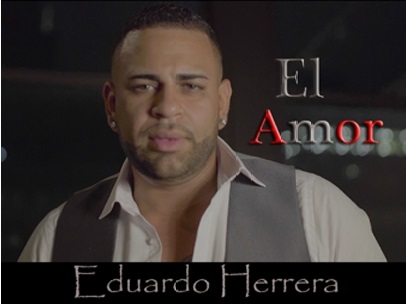
“There’s a wide variety of artists, singers, and famous orchestras in different parts of the world, but that doesn’t mean you can’t discover new artists who have the motivation and desire to boost their musical talent. Here, we have as our guest Eduardo Herrera, a salsa and ballad singer.
Eduardo is the son of Puerto Rican parents, raised in New York with a ‘boricua sazón’ (Puerto Rican flavor/style). From a very young age, he fell in love with music, and over time, he gained many musical experiences in different genres with Latin nuances and foreign fusions.
He mentions that when he was younger, he participated in youth choirs on stages and attended concerts of great artists, learning the lyrics of urban music. As time passed, he captivated the perfect school that shaped his unique style; it includes spiritual music, Latin rhythms, and the influence of American styles without abandoning his Puerto Rican roots. He also mentions that he had the opportunity to share and collaborate with very famous artists who influenced him with their exceptional style and talent, even to this day.
When you hear the melody, you fall in love; when you pay attention to the lyrics, you are captivated; when you listen to it again, you turn it into something that identifies you, regardless of your age, race, condition, or gender.
It simply identifies what no one else sees or knows in or about you. In fact, his songs tell stories; they tell your life, his, and mine. Each story on a bus or train in New York, each event in family life or with a stranger, the stories of the fans, among others.”
“Eduardo Herrera comments that his music is a collection of life experiences that many people identify with. It has no age or time; it has ‘sazón,’ Caribbean rhythm, and soulfulness.
When you hear the melody, you fall in love; when you pay attention to the lyrics, you are captivated; when you listen to it again, you turn it into something that identifies you, regardless of your age, race, condition, or gender. It simply identifies what no one else sees or knows in or about you. In fact, his songs tell stories; they tell your life, his, and mine. Each story on a bus or train in New York, each event in family life or with a stranger, the stories of the fans, among others.
In the course of his life, he mentions that it was a transition as he went through many positive and negative life experiences, which allowed him to gain different meanings for the emotions he felt, whether real or false. All these experiences helped him help others, such as in personal growth.
In ‘Salsa‘ and ‘Balada,’ he has found his perfect space to express what he carries in his life’s baggage. Hoping that many couples will have a happy life to the rhythm of his music. Eduardo told us, ‘To achieve that emotional catharsis that lifts you up from any tragedy, it is necessary to LOVE YOURSELF BEFORE LOVING SOMEONE.’ So remember that when you listen to Eduardo Herrera’s music: ‘LOVE YOURSELF BEFORE LOVING SOMEONE.’
Recognizing the value of an individual and appreciating their abilities while learning from mistakes, that is what defines every song you will hear from Eduardo. The message will arrive; it’s up to you for the outcome to be happy. Because you learn from the difficulties in the process, the final result depends on how you handle the ‘tests’ to qualify yourself in feelings for the life you choose to live.
If you wish to know more about him:
Latin America / Venezuela / Caracas
“Continuing the musical biography of Oscar D’ León. He moved on to new horizons, new learnings, difficult experiences, and decisions, as life always holds a wide variety of surprises over time. One of those changes was his breakup with Dimensión Latina due to various internal group problems.
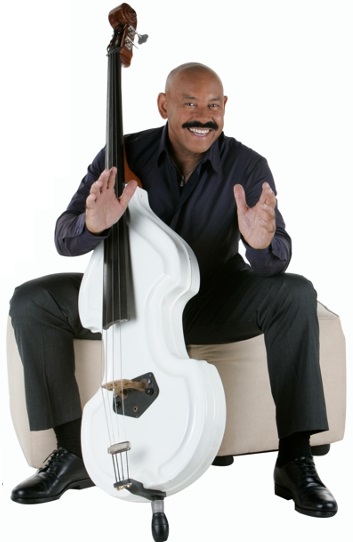
Oscar’s departure caused issues for the group, as several of their scheduled performances in other countries were canceled, and over time, they lost audience, leading most of their members to split up and leave. Nevertheless, the group managed to carry on successfully but without the unique touch or ‘sazón’ that Oscar D’ León provided.
After leaving Dimensión Latina, Oscar ingeniously created La Salsa Mayor in 1976 and was able to release his first discography with his new group, thanks to the record label TH, which provided it because they were very interested in his new project, naming it ‘Con bajo y to’.’ From that moment, Oscar knew that he could consolidate himself with this group or any other, as his exceptional and unparalleled talents, so much originality, had never been witnessed”
“In any generation of Venezuelan artists. He also created another group called ‘La Crítica’ with the purpose that if any member of the Salsa Mayor Group was absent, one of them would substitute. However, the orchestra ‘La Salsa Mayor’ lasted only 4 years due to a strong disagreement Oscar had with his band on stage because the songs played during those two performances ‘were not accepted,’ leading to the closure of ‘Salsa Mayor.’ From that moment, he began to practice with his orchestra ‘La Crítica’ before his performances in Curaçao, where his songs, ‘Suavecito,’ ‘No ha pasado nada,’ served as a way to allude that everything had been overcome.”
“With this group, he achieved significant success. From that era, Oscar D’ León was known as the leading artistic figure in the country and on the American continent, with his music being heard in various homes in Venezuela and other Latin American countries. During that time, he traveled throughout the Latin American continent, the Caribbean islands, and the United States. From that moment, he leveraged his figure as he ventured into artistic promotion. He did so with Daniel Santos, Héctor Lavoe, El Gran Combo de Puerto Rico, and Celia Cruz.
If we have to mention which country Oscar liked or idolized the most, it was Cuba, because ever since he was very young, he loved the music played there, which over the years underwent various transformations in different stages, such as ‘La inmortal guaracha Celia Cruz’ which brought glory to the island; ‘la sonora Matancera’ carried the name of Martí’s land around the world; ‘Dámaso Pérez Prado,’ among other artists who contributed to the origin of Cuban music.”
“When Oscar D’ León first visited Cuba, it was an unforgettable experience and held extraordinary significance not only for the young artist but for the country itself. Its magnitude was such that, first and foremost, the ministers of culture and foreign affairs welcomed him, and every time he performed, large numbers of fans awaited to see and hear him. The respect and admiration for him were immense. In fact, this book mentions that ‘Cuban music,’ among other things, made Oscar D’ León’s existence as an artistic figure and as a person possible.”
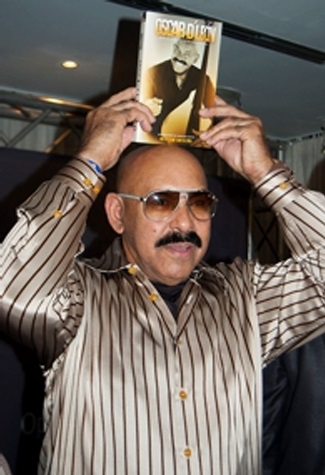
Oswaldo Ponte, in his research, mentions that when he looked for everything related to Oscar D’ León, there was immense admiration for him. Everyone he interviewed, even if they knew he was his manager and his biographer accompanied him, always said incredible things about Oscar. He not only rescued Cuban ‘son’ but also taught them to dance Cuban music, opening the minds and perspectives of Cubans, as Cuban ‘son’ continued to be known internationally. Everyone mentions what a good musician he is, that they can’t believe he isn’t Cuban and has that ‘sazón’ (flavor/charisma).
He was famous not only in Cuba but also in other countries. An example of this was Oscar’s participation in the Rome Festival when he sang a song by Adalberto. Mr. Adalberto Álvarez passed backstage and commented: ‘Cuba will never be able to repay Oscar for what he has done for Cuban music. He has kept it alive; if it hadn’t been for him, for Johnny Pacheco, for Celia Cruz, for La Sonora Ponceña and others who took it upon themselves to keep ‘son’ alive outside our country’… ‘and of all of them, the fundamental leader was Oscar D’ León because he is the most connected to authentic Cuban musical roots.'”
“In short, every time Oscar goes out to sing and dance, he is representing Cubans. For Cubans, dancing is almost a ritual. In 1950, they danced ‘son,’ ‘danzón,’ ‘mambo,’ ‘chachachá,’ ‘rumba,’ and other dances, some of which lasted a very short time, such as ‘dengue,’ ‘monzambique,’ ‘pilón,’ ‘carioca’; and others transcended time, like ‘conga’ and ‘rumba.’ Salsa is the continuation of, or the same as, ‘son,’ which can be danced with the same style or with different styles.
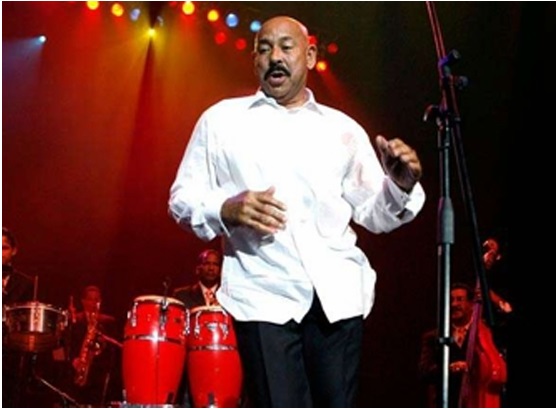
Oswaldo Ponte began his promoter plan by hiring figures, among whom was Oscar D’ León. Becoming a serious entertainment promoter, he took the risk of doing it internationally (outside Venezuela) where he bought a contract from Guillermo Arena to present Celia Cruz with La Sonora Matancera. He also partnered with Juan Caravallo and managed to present the biggest show in Higuerote, Venezuela; with this great step, he was becoming a potential successful entrepreneur in international shows.”
“In 1983, he hired Oscar for 3 performances with ‘Roberto Blades,’ two at the Ávila Hotel and one at San Jacinto Park (both in Venezuela). At that time, Oscar was returning from Cuba, and with a new event, Oswaldo, upon seeing the show, pondered the difference between the two artists.
The Panamanian star was well-managed by his team. However, when it came to judging which was the better show, it was Oscar D’ León’s. When Ponte went to talk with him, he proposed becoming his manager on the condition that Oscar follow his instructions, as he always directed everything, which Oscar accepted. From that moment, many things changed not only artistically but also personally, offering the public not just Oscar D’ León and his orchestra, but Oscar D’ León himself, giving more charm and charisma to his audience.
One of the challenges he had to face was a stagnation in record sales. His new record productions weren’t taking off, so he decided to rely on television. Venezuela was both a recipient and a transmitter country, so his performances were broadcast on different television channels that gave great musical importance, such as ‘Siempre en Domingo,’ which covered the center and north of the American continent, and ‘Sábado Gigante,’ which covered South America, thus giving him international exposure.
One of his best and most unforgettable collaborations was with singer Celia Cruz, who was a great friend of Oscar’s. They participated in many events, one of which was in 1993, where Ralph Mercado did what he called ‘The Perfect Combination,’ which consisted of combining stars for public performances.
Participants included Oscar D’ León, Celia Cruz, Marc Anthony, La India from New York, Tito Nieves, Tony Vega, Cheo Feliciano, José Alberto El Canario, and Domingo Quiñones, of which the most recommended songs were ‘El Son de Celia y Oscar’ and ‘Vivir lo nuestro’ by Marc Anthony and La India. At that time, Oscar had left the TH label and was now with Ralph Mercado; his colleagues were Tito Puente, Celia Cruz, Sergio George, Cheo Feliciano, Tito Nieves, La India, José Alberto El Canario, and other significant stars.
There are many other details and more events up to the present day, but it would be too much to explain in one article. What is very clear is that Oscar D’ León has conquered countless goals in his life, and we can all do the same in the different areas in which we operate, if we set our minds to it with determination and an iron will.
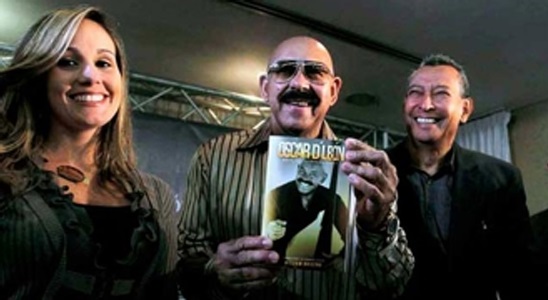
To learn more about this, we recommend reading ‘Oscar D’ León, Confesiones De Oswaldo Ponte’ by William Briceño, published by Fundación Simón Bolívar.”
It is increasingly common to find Puerto Rican artists who have had something to do with the United States Army, and our guest today is yet another example of how the music scene is not entirely separate from the military world. Bandleader and drummer Raúl Eliza has told us his fascinating story, focusing on his most important facets: military and art.
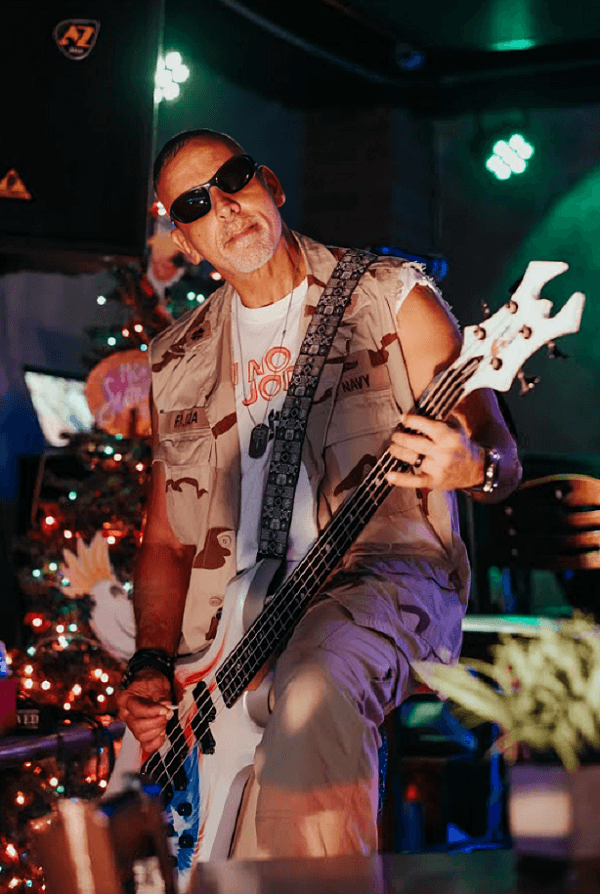
In the 1980s, Raúl was a young resident of the Fairview neighborhood, located between the city of San Juan and Trujillo Alto, who was an obsessive fan of rock music. Of course, that was until he turned 19, when he enlisted in the U.S. Army in search of his purpose in life.
According to his own tale, his poor academic performance and lack of interest in other disciplines led him to join the navy, where he would love his profession shortly after. At first, he and a group of friends joined up to opt for a different alternative to the one they had, move forward from the stalemate, and be able to travel the world, but in his case, he ended up in love with this world.
In fact, a short time after entering military service, he was involved in the Gulf War, which consisted of the Iraqi occupation of Kuwait and its subsequent liberation by a US military coalition. During those days, Raúl realized that he was into something greater than himself and that the shallowing mindset with which he chose that life could turn into something bigger.
So, the then-soldier dedicated himself to doing his work as good as possible, bringing with it rewards like the opportunity to go to college, become an officer, receive medals, and much more.
After three or four months of enlisting, he started to feel a wave of nostalgia for his country. He wanted to see his family and missed the music and food of his homeland. Then his sister sent him a package with two cassettes, one by Frankie Ruiz and the other by Eddie Santiago, which he says changed his life completely. He used to listen to them on old-fashioned players with headsets while cleaning the boat or doing the rest of his other assigned tasks.
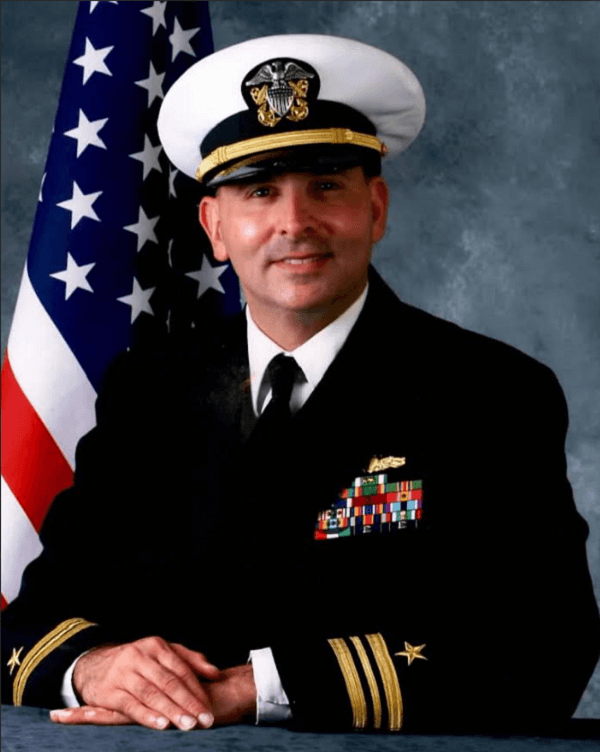
Subsequently, his brothers sent him cassettes by La Fania, Alex D’ Castro, Gilberto Santa Rosa, Cano Estremera, and many others. This made him reconnect with his roots and realize that he wanted a career in music at some point, which he would end up doing years later.
As the end of his military career approached, Raúl was designated as the United States representative for the Supreme Headquarters Allied Powers Europe (military wing of NATO) during President Donald Trump’s first term.
This was a tough stage of his service, as the president had a lot of run-ins with other member countries due to the excessive economic and armament burden borne solely by the United States. For this reason, every time he made some sort of announcement about that, Raúl received thousand calls from representatives of other countries asking him for explanations. He had his own office and received orders directly from the Pentagon.
Thanks to his position, he had a lot of freedom, so he always played salsa music in the background, and when his officers got into his office, they laughed and danced along with the tunes Raúl was listening to at that moment. Everyone knew that when he was in charge, there was always salsa music playing in the room.

Finally in 2018, Raúl retired from military service, but already in 2017, he was making arrangements to devote himself to music once his duty with the army had been fulfilled. Specifically, he was in talks with Puerto Rican artists who were sending him samples and demos based on original songs that he had previously sent them. He was also writing his own lyrics and taking bass lessons to get ready for the future.
Once in Puerto Rico in 2018, he released his first single with his orchestra Conciencia Clásica, which is so named because his music was intended to raise awareness to his fans on social issues such as war, the injury suffered by the civilian population during periods of armed conflict, post-traumatic stress in soldiers, and racism, to name a few.
Throughout his short career, Raúl has been blessed to count on the support and collaboration of music greats like Andy Montañez, Willito Otero, Jerry Medina, Carlos Esteban Fonseca, Medina Carrión, among others. While it is true that they all had much to contribute to the Puerto Rican artist at the level of knowledge, Montañez wrote him a song he dedicated to his Dominican wife called “Quisquellana,” which he is enormously thankful for.
He also has songs with Choco Orta and those already mentioned above. Raúl came into contact with these figures thanks to his music producer Manolo Navarro, who was the guy who introduced them to the project and managed to get them to collaborate.

Read also: Cristobal Verdecia and his quartet Son Qba in Miami




| Events – December 2025 | ||
|
|
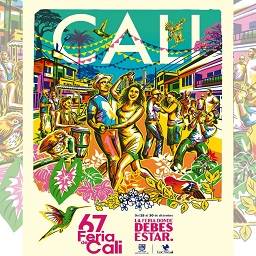 |
Feria de CaliDec 25 / 30, 2025 Santiago de Cali, Colombia |
|
|
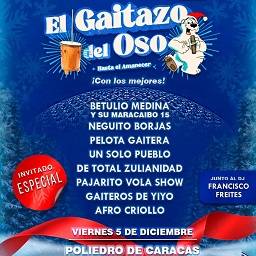 |
El Gaitazo del OsoDec 5, 2025 Poliedro de Caracas From $ 41 |
|
DIRECTORY OF NIGHTCLUBS |
||
|
|
|
|
|
|
|
|
|
|
|
|
|
|
|
|
|
|
|
|
|
|
|
|