







Jose Flores Perez, better known as Chevy El Pitirre De La Salsa, is a salsa singer who was born in the town of Cidra, Puerto Rico, but currently resides in Georgia. We have had a very pleasant conversation with the salsa exponent, in which we have touched on certain various professional and personal tissues never mentioned before. It is a real pleasure for us that he has agreed to talk with us and tell a little more of his personal story on this platform, which is International Salsa Magazine.

”Chevy” is a nickname his parents and friends always gave him and ”pitirre” refers to a Puerto Rican bird with very short dize, but a very strong character. Maestro Felix Ortiz name him ”El Pitirre” because of the way he sings and improvise in the stage and the trust between them was such that he even became the music director of his orchestra. This combination of nicknames was what made Flores start to become known by that way during the last four years of his career.
The reason Chevy opted for salsa was the great influence from his family. His father was a salsa singer for local orchestras in Chicago, which made him listen to various Puerto Rican genres such as salsa, bolero, jibaro music and trova throughout his childhood.
There were years when he really enjoyed listening to hip hop and rap in the late 80’s and early 90’s, but it didn’t take long for him to reconnect with salsa when he started listening to Héctor Lavoe, Ismael Rivera, Sammy Marrero, Bobby Valentín, Cano Estremera, among others. Listening to all these idols and what they achieved led him to take salsa much more seriously.

During his time in the military, he performed in different orchestras and accompanied various artists throughout Atlanta. Although this was a demanding career, he organized himself to pursue his interest in music. When he leaves the armed forces, he went to Puerto Rico, where he lived for a great deal of time until he moved to Georgia in 2016.
His current residence is still in this state for professional reasons totally unrelated to music, but he had been there around the time he served in the army, so this part of the United States was not unknown to him. It is there that he resumesd his musical career after so many years.
In 2017, he began to compose, but it was not until two years later when he decided to launch as a soloist, make his first single ”Instrumento de amor” and carry out his first independent musical project entitled ”Entre el amor y el vacilón”.
In this same year 2019, he took advantage of the internet and social networks to become known at an international level and released his second record production during the pandemic, but the singer does not think this situation has hurt his carrer. On the contrary, he believes that social media and digital platforms gave him the push he needed to promote his artistic proposal.

One of his most recent projects was carried out in 2019, is titled ”Atacando en Navidad” and was born from the songs ”Arbolito de Navidad” and ”Compay no se me raje”. The first is written by Chevy, but the latter was composed by the legend Johnny Vega. At some point, the artist decided that these two singles were not enough, so he created a full album based on the Puerto Rican parranda he always enjoyed as a child. The result is a mix of nostalgia, sadness, love and joy. He tells how Christmas was celebrated at home, his childhood dreams, what this time meant to his family and the sadness when a loved one dies that year.
One of the most significant songs is ”Navidad Sin Parranda”, which was written a year before Chevy’s mother died. She was so ill at the time that the whole family thought she suddenly would lose her life, but fortunately she did not. Back then, the salsero was beginning to imagine a life and a Christmas without his mother, as she kept the family together and her house was the meeting place for all the important dates.
It just so happens that Venezuelan musical arranger Willy Melo lost his father within a few days of receiving the song, so he was very connected to that same pain around the same time.
Read also: Isaac and Esteban Hernández, two brothers making history
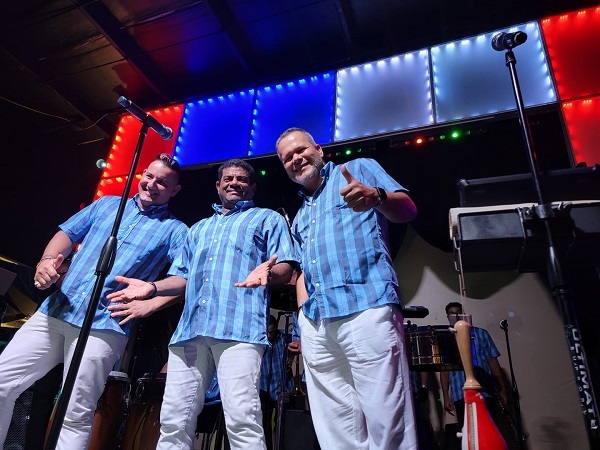
We have been fortunate to talk with founder and bongo player of the Son Latino de Orlando Orchestra, Carlos Rodríguez, who started out with him thanking us for the opportunity to talk a little about the group he leads and how has the process of reaching more and more audiences been.

Rodriguez started in the world of music in the 70’s in his native Puerto Rico, where he was part of a few orchestras. His first group was Imperial Orchestra and later he played percussion with Conjunto Secas in the town of Sábana Seca, but it was not long before he created the Sabrosona Orchestra. He started making vocals with Tony Vega and very small performances until he decided to retire for a while and go to Florida.
While in the United States, he realized that his love for music was still intact and decided to form another orchestra in the city of Orlando about eight years ago, which he decided to name ”Son Latino de Orlando ”. It was Carlos himself who decided to name his group that way while he was at home one day, which was when he thought of ”Son Latino” and decided to add ”de Orlando” in honor of the place where they are living and working.
In addition to being the owner and founder, he also plays the bongo, does vocals and plays minor percussion. Another role he plays in the orchestra is to carefully select the members who will become part of his orchestra, but he confesses that he has been lucky enough to have several of the same collaborators for many years, such as Davin Rojas, Rafael Rico, Luis Soriano, Danny Rojas, Chris Torres and Kevin Figueroa (music director of the orchestra and pianist). All of them have been very important in the group’s growth in recent years from their very specific roles. If there are any changes, they are made known to the fans so that they keep it in mind.
Carlos tells us that one of the biggest challenges faced by he and his guys is that those who usually hire their services do not pay what is fair for their work. Club owners are not really interested in paying for a good orchestra that offers a quality show, so they just choose the cheapest.
One of the biggest problems they have had to face is that if contractors consider that those in charge of the orchestra are asking for a very high payment, they will always choose the group that less money demands, no matter its quality is not the best.
Rodríguez makes it clear that at no point does he criticize any colleague for this, since all musicians do what is necessary to survive and excel in the industry through the work they do. However, he thinks that club owners and managers should modify the elements relied upon by them to choose their artists, since the bigger loser is always the audience.
”You have musicians behind you and you have to meet with them. To be able to keep your orchestra, you have to go outside to look for your events and guarantee your work” was the first thing the musician said when we asked him how he balances business with the love for music. It is he himself who is in charge of knocking on the doors of the establishments, making his proposals, waiting for calls, indicating prices, signing contracts and arranging dances.
He also stated that it is very important to always lay out the terms of each contract so there are no unpleasant surprises such as last minute cancellations or misunderstandings.

”We always try to have a balance between romantic salsa, melodic salsa and hard salsa,” says Carlos. The orchestra has three singers who take turns on lead vocals depending on the type of salsa to be played, but there are mamy times when they are all combined in one song and adapt to the rhythms.
In all its performances, the orchestra sings both covers with different arrangements and original numbers. Depending on the place and the type of event, they always try to combine the music and build up a whole repertoire based on that specific audience preferences.
On this topic, Rodriguez said that there are very talented new artists, but they must be allowed to grow and be original. ”Just because you have a middleweight name doesn’t mean you have to be arrogant and put aside humility. You have to be willing to listen and learn from the older guys in the business” said the artist.
For the bongo player, the speed of progress in this career makes many talented kids lose the north and get carried away by arrogance and the desire to know everything. He always tries to give advice to the kids who want to devote themselves to music with whom he has the opportunity to talk so that they can do their best.

Read also: Producer, composer, and singer D’ William tells his story
William Pagán Díaz, artistically known as D’ William, is a talented producer, composer and singer with extensive experience in various tropical genres. He was part of the Oro Negro Orchestra and the Tañón Band before starting his solo career. We were fortunate to talk to him and learn a little more about his history and career.

The Oro Negro Orchestra represented his first musical experience and he was about 17 years old at the time. In fact, his mother had to sign a contract for him to be part of the group because he was underage. He stayed there for a year until he got asked to audition for the Tañón Band, a group that Olga Tañón was creating at the time.
After auditioning with 300 or 400 candidates, I was chosen as the last missing member for the group because it required four and there were only three. D’ William told us that he felt he had the world in his hands due to work with Olga Tañón, but unfortunately she decided to broke up the band because she had other plans. At that time, Pagan did not know what to do with his life because he thought he had already pursued the ultimate in his career, so he decided to turn his life around, enlist in the army and forget all music.
These years of his life contributed a lot to strengthen his discipline, but he also realized that he did not want to dedicate himself to military life forever. After he retired, he moved to Japan and lived there for about seven years, during that time he was introduced to Puerto Rican salsa thanks to some friends. He started singing salsa, but always saw music as sort of a hobby and not as something he wanted to do professionally.
He toured all over Japan with the Conquistando Orchestra and composed for other artists and various franchises, but nothing for himself. In 2010, he decided that he wanted to change that situation and recorded six salsa songs with the idea of moving to Puerto Rico thinking he was going to find the same country in the musical field. Then, all the songs recorded by him stayed on the hard drive of his computer and he could not do anything with them.
Unable to get a job, he decides to use his veteran’s benefits to complete his education, which leads him to study criminal justice and law. In 2018, a job opportunity as a lawyer for the federal government in Washington DC arose, so he moves there and meets some people who reconnect him with music thanks to his career in Japan.
When the COVID-19 pandemic arrived, he finally made the decision to start his solo career and choose a stage name that referred to his real name, which led him to use D’ William. In September 2020, he recorded his first song titled “24 horas enteras” giving start to his solo career.
Although merengue has not had such a boom in recent years, D’ William is passionate about this genre that he never wanted to leave aside and even said that “a party without merengue is not a party”. The artist wanted to do something that included a tropical genre handled very well by him and he knows he was right about deciding on merengue, since he has observed a renaissance in the popularity of this set of rhythms with the help of artists such as Elvis Crespo, who was again seen in awards recently.
D’ William points out that the most important elements of merengue will always be present in his work, but in his own words, ”the years and generations make the music evolve”. Since the performer did not want to stignate in the same thing, he tries to experiment with a new style of singing merengue and writes some of his lyrics with other genres in mind, such as dembow. He also incorporates kicks, snares, synthesizers and other sounds to reach millenial ears.
This combination of the above elements has made the reception to the artist’s music great.

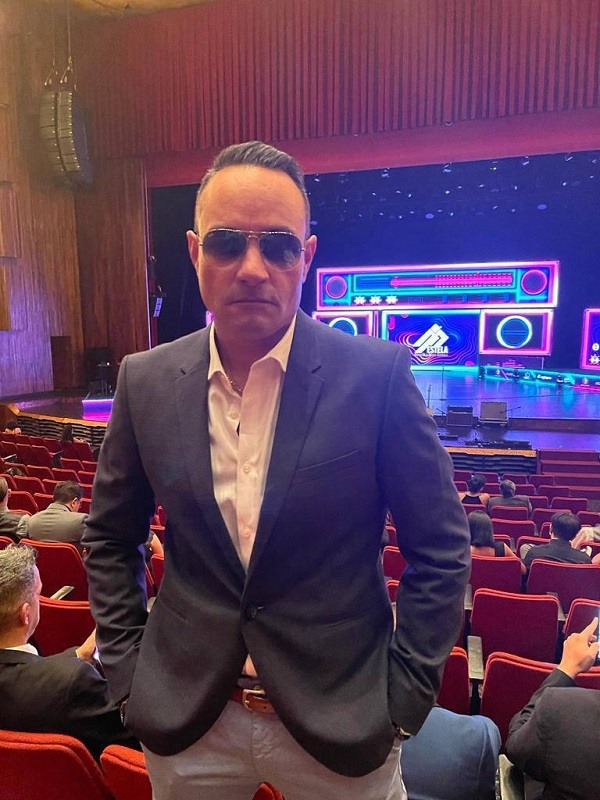
D’ William also told us about the Estela Awards in Guatemala, which he did not knew nothing about until he was invited to attend. Once there, he noticed the importance of these awards for Central America, as they recognize the talent of Guatemala, El Salvador, Costa Rica, Nicaragua, Mexico and many more.
He had the honor of being in its sixth edition and seeing how artists who did not have the opportunity to be in bigger events such as Billboard, Tu Música, Latin Grammy, among others, were awarded. Something very special about this year was the participation of a Puerto Rican delegation of for the first time in its history, in which D’ William was with several of his compatriots.
The reception of the public and press towards this group was great and they really enjoyed the show. They were so well received that they plan to return soon in December to continue delighting Guatemalans with their talent.
D’ William told us that he did a lot of things for himself and other colleagues during the pandemic. He did a great collaboration on a track with Dominique Patrick Noel, a French percussionist with whom we had the pleasure to talk beforehand. They have done several songs together in which the Puerto Rican sings and does some arrangements with Noel.
He also sang with Eduardo Padua, who is a very famous Puerto Rican conguero in Virginia and Peruvian Andy Caseda.

Read Also: The interesting story of French percussionist Dominique Patrick Noel