• Skip to primary navigation
  • Skip to main content

International Salsa Magazine

  • HOME
  • Previous editions
    • 2026
      • ISM / March 2026
      • ISM / February 2026
      • ISM / January 2026
    • 2025
      • ISM / December 2025
      • ISM / November 2025
      • ISM / October 2025
      • ISM / September 2025
      • ISM / August 2025
      • ISM / July 2025
      • ISM / June 2025
      • ISM / May2025
      • ISM / April 2025
      • ISM / March 2025
      • ISM / February 2025
      • ISM / January 2025
    • 2024
      • ISM / December 2024
      • ISM / November 2024
      • ISM / October 2024
      • ISM / September 2024
      • ISM / August 2024
      • ISM / July 2024
      • ISM / June 2024
      • ISM / May 2024
      • ISM / April 2024
      • ISM / March 2024
      • ISM / February 2024
      • ISM / January 2024
    • 2023
      • ISM / December 2023
      • ISM / November 2023
      • ISM / October 2023
      • ISM – September 2023
      • ISM – August 2023
      • ISM July 2023
      • ISM Edition June 2023
      • ISM – May 2023
      • ISM April 2023
      • ISM March 2023
      • ISM February 2023
      • ISM January 2023
    • 2022
      • ISM December 2022
      • ISM November 2022
      • ISM October 2022
      • ISM September 2022
      • ISM August 2022
      • ISM July 2022
      • ISM June 2022
      • ISM May 2022
      • ISM February 2022
      • ISM January 2022
    • 2021
      • ISM December 2021
      • ISM November 2021
      • ISM October – 2021
      • ISM September 2021
      • ISM August 2021
      • ISM July 2021
      • ISM May 2021
      • ISM April 2021
      • ISM June 2021
      • ISM March 2021
      • ISM February 2021
      • ISM January 2021
    • 2020
      • ISM December 2020
      • ISM November 2020
      • ISM October 2020
      • ISM September 2020
      • ISM August 2020
      • ISM July 2020
      • ISM June 2020
      • ISM May 2020
      • ISM April 2020
      • ISM March 2020
      • ISM February 2020
      • ISM January 2020
    • 2019
      • ISM December 2019
      • ISM November 2019
      • ISM October 2019
      • ISM Septembre 2019
      • ISM August 2019
      • ISM July 2019
      • ISM June 2019
  • Download Salsa App
    • Android
    • Apple
  • Spanish

Search Results for: Puerto Rico

“El Caballero de la Salsa” Kicks Off “Íntimo” in Puerto Rico

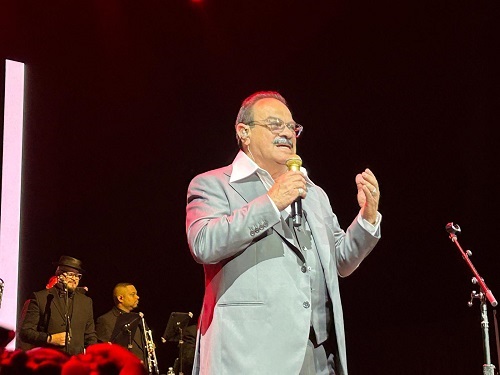
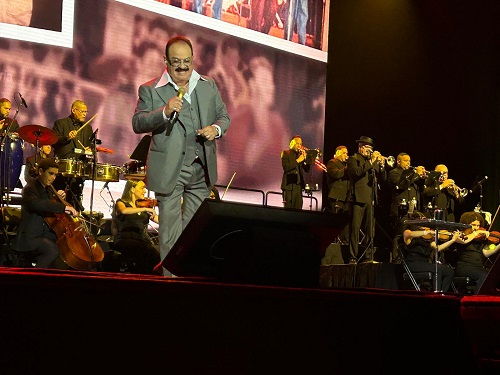
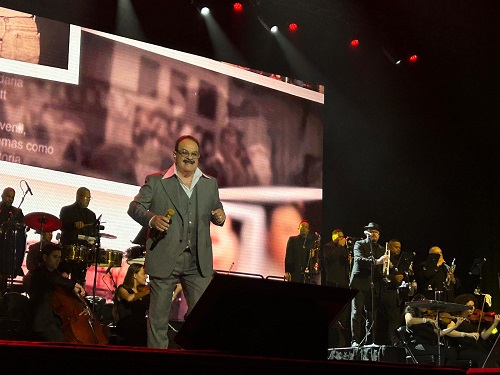
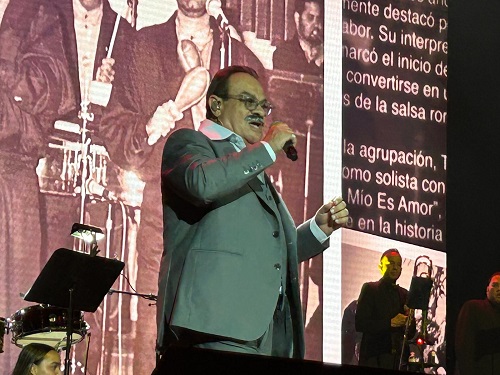
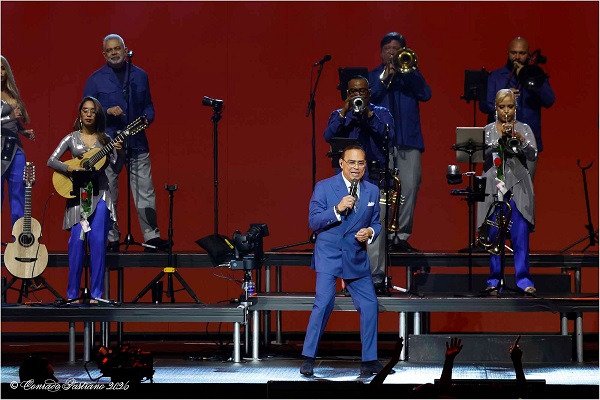
With performances on February 14 and 15, 2026, at the Coliseo de Puerto Rico, Gilberto Santa Rosa started the year “at home” with two sold-out shows and the successful launch of his “Íntimo” tour. That is always the goal. On the island, the audience is as demanding as they are generous and the singer knows it. Following the concerts, “El Caballero” posted on social media: “Puerto Rico, thank you for giving us two nights full of love, dancing, and so much music at home! What a thrill it is to sing at home!”

“El Caballero de la Salsa” Kicks Off "Íntimo" in Puerto Rico
“El Caballero de la Salsa” Kicks Off “Íntimo” in Puerto Rico

On January 30 of this year, the album that shares the tour’s title was released. In Puerto Rico, two shows were scheduled for Valentine’s Day weekend. The first coincided with Valentine’s Saturday; the second was added for the following day due to how quickly the first round of tickets sold out.

At exactly 6:46 PM on Sunday, February 15, 2026, the stage of the Coliseo de Puerto Rico welcomed Gilberto Santa Rosa’s orchestra to begin the second concert, marking the salsa singer’s long-awaited reunion with the Puerto Rican public. According to a press release from Edumil Ruiz’s agency: “These performances are part of a series of special concerts celebrating the month of love (…) and represent the long-awaited reunion of ‘El Caballero de la Salsa’ with his Puerto Rican audience after two years since his last performance on the island.”

A Night of Rhythms and Ovations

The performance began with high energy and impact from the very first track. The opening bars were seasoned with the sounds of the Puerto Rican cuatro, played by Fabiola Muñoz. “Déjate querer” featured a timbal solo by Pete Perignon, while “Cartas sobre la mesa” highlighted Saviel Cartagena’s saxophone. These were followed by “Ahora o nunca,” “Tú,” “Amor para la historia,” “Quiéreme,” and “Almas gemelas,” which featured Juan Carlos Vega on an aerophone solo; followed by “Yo no te pido” and “Conciencia,” for which the audience gave the artist a thunderous standing ovation.

Between songs, Santa Rosa took a moment to address the crowd: “I was born, raised, and live here. And it moves me to know that here in Puerto Rico, I am still dearly loved.” He added that he is a fan of singing to the brokenhearted with “scorned” lyrics set to savory, danceable arrangements. Addressing the contradiction of that combination, he stated, “We Puerto Ricans are capable of crying and dancing at the same time,” capping the explanation with: “That’s just how passionate we are.”

152 With the performances on February 14 and 15, 2026 at the Coliseo de Puerto Rico, Gilberto Santa Rosa began the year in "his home" with two sold-out shows.

152
With the performances on February 14 and 15, 2026 at the Coliseo de Puerto Rico, Gilberto Santa Rosa began the year in “his home” with two sold-out shows.

After his remarks, “Gilbertito” explained he would welcome a beloved artist to sing “Misterio,” an urban salsa track with lyrics “about a relationship where you don’t know if it’s coming or going, starting or ending.” Gerardo Rivas took the lead in his solo role, which required Pete Perignon to fill in on the congas while Pedro Marcano took over the timbales.

Tributes and Special Guests

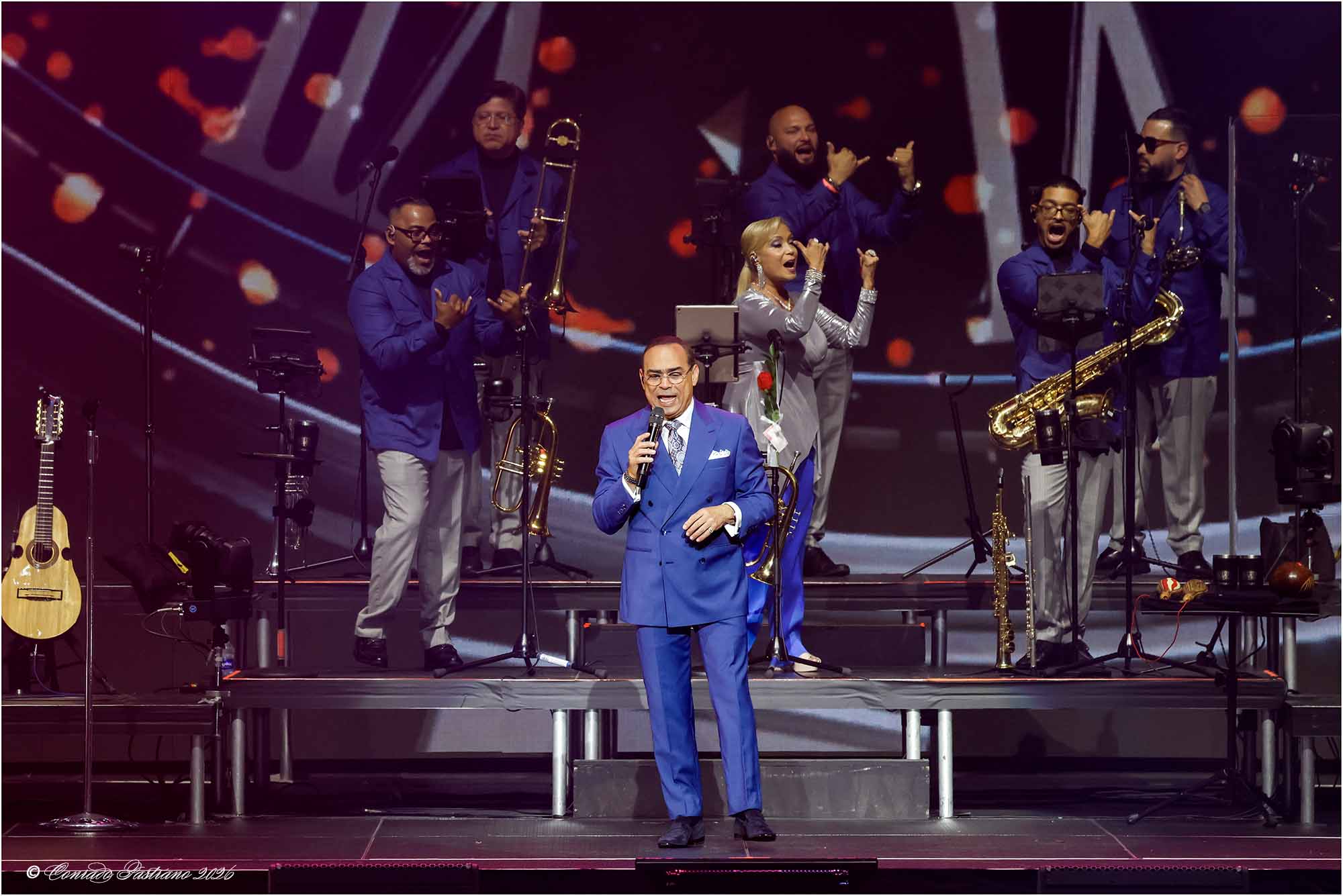
Later, Gilberto Santa Rosa dedicated a segment of the concert to a legend Puerto Rico bid farewell to last December. He stated that Rafael Ithier was a musical genius whom he considered a mentor and a father in music, dedicating the iconic “Las hojas blancas” to him. Notably, the production featured a team of sign language interpreters who translated the entire concert in real time.

The repertoire also included “Vino tinto,” “Cosas nuevas” highlighting Pedro Marcano on the flugelhorn and “No me dejes solo,” which kicked off with a mozambique rhythm and rumba clave on the drums, courtesy of Gerardo Rivas and Tito Echevarría. The most anticipated moment arrived when Santa Rosa asked the crowd to join him in a chorus that allowed “El Caballero” to pay his respects to special guests. The “Choliseo” vibrated as the crowd chanted: “Mira quien llegó / Quién está ahí / Qué bueno que te vino a ver” (Look who arrived / Who is there / How good they came to see you). The tenacious sonero greeted the following guests in perfect rhyme and with his trademark elegance: Don Perignon, Luisito Ayala, Luis Vázquez, Juan José Hernández, Elwood Cruz, Marilin Pupo, Cucco Peña, Lissette Álvarez, Willie Chirino, his wife Alexandra Malagón (whom he called “The owner of my heart”), and Ismael Miranda, among others.

The evening continued with “No pensé enamorarme otra vez” and “Para vivir,” for which he was joined by Yeika Álvarez and “a representation of the Arturo Somohano Philharmonic Orchestra of Puerto Rico.”

Gerardo Rivas (Hijo de Jerry Rivas el reemplaso de Jimmie Morales), Gilberto Santa Rosa y Pete Pergnon

A Monument to Nostalgia

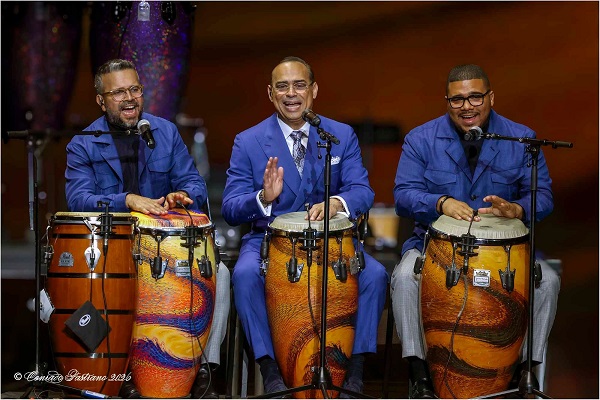
“Tengo una muñeca,” followed by a fusion that progressed from boogaloo to cha-cha-cha and finally to salsa with Gilberto showcasing his skill on the maracas led us into a monument of nostalgia. The memory of the conga player Santa Rosa had worked with since their days in Willie Rosario’s orchestra until his passing in 2021 was honored with “Impaciencia.” The song showcased the Jimmie Morales Signature Series drums by Remo Percussion©, which sponsored “El Rey del Seco” (The King of the Dry Hit) from 2005 to 2016.

During this segment, “El Caballero” displayed his own skills as a talented conguero while singing, accompanied by Gerardo Rivas (the orchestra’s conga player) and Pete Perignon (the timbalero) on either side. While the audience was spellbound by the sight of the three musicians at their drums, this writer wondered if Gilberto was reminiscing about the days when he used to imagine he was a singer, using an upside-down trash can as a drum in the group led by Don Perignon.

The “Army of One”

This intervention was followed by “La agarro bajando,” which preceded the introduction of the band members, “musically directed by the master of the trombone,” Georgie Torres. The lineup included:

  • Backing vocals: Yeika Alvarez and Gino Ramírez.
  • Puerto Rican Cuatro: Fabiola “The one who holds her own” Muñoz.
  • Trumpet: Rebecca Zambrana (with the orchestra for 29 years) and Pedro Marcano.
  • Trombone: Anthony Rosado (also a ballroom dance champion).
  • Saxophone/Flute: Francisco “Paquito” Cruz and Saviel Cartagena.
  • Piano: Luis Marín.
  • Congas: Gerardo Rivas.
  • Timbales: Pete Perignon Morales.
  • Bongos: Rafael “Tito” Echevarría.
  • Bass: The legend Johnny Torres.
  • Keyboard/Aerophone: Dr. Juan Carlos Vega.
  • Vocals: Michael Pérez.

Santa Rosa also praised the technical and audiovisual teams, producer Rafo Muñiz, and Edumil Ruiz, noting that “all these people make this work.”

After identifying his team who gave a masterclass in what the military calls an “Army of One” the hits “Conteo regresivo,” “Perdóname,” “Que alguien me diga,” and “Que manera de quererte” rang out. Gilberto Santa Rosa celebrated Valentine’s weekend by once again proving why he holds the loyalty and preference of his Puerto Rican fanbase.

From the start, the energy never wavered. The crowd sang and danced along with the artist, the musicians, and the dancers on stage. The vast repertoire serves as a reminder of the countless hits “El Caballero de la Salsa” has collected throughout his prolific career.

Bella Martinez Puerto Rico


Also Read: Bandleader and conga player Tony Rosa tells us how he built his career

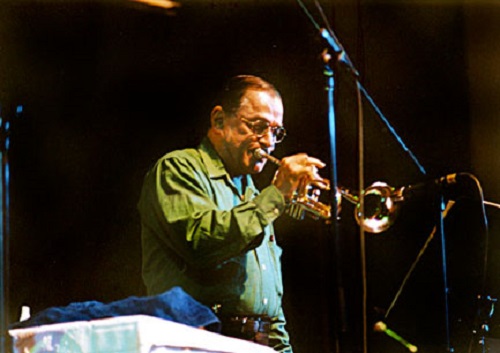
Juancito Torres: The National Trumpet of Puerto Rico

We present the musical life of one of the greatest trumpeters in Latin music, the master Juan “Juancito” Torres Vélez, known as “The National Trumpet of Puerto Rico.”

La Trompeta Nacional de Puerto Rico Juan Torres Vélez

Born on January 14, 1936, in Caguas, Puerto Rico, to Justina Vélez Vázquez and Félix Torres Varcárcel, he began his musical journey playing the violin in his hometown. He joined the Municipal Band, where he was taught by Adrián Benjamín and Carlos Julio Bosch, who also taught him the intricacies of the trumpet.

Juancito was a fan of Placido Acevedo, the trumpeter and director of the Mayarí quartet, and Acevedo was his biggest influence for his development as a professional trumpeter. At the age of fourteen, he studied at the Escuela Libre de Música. In 1952, he joined the orchestra of jazz musician Ramón “Moncho” Usera Vives and stayed with him for a year before joining his teacher Miguelito Miranda’s band.

In 1955, he traveled to New York, where he worked with Xavier Cugat, Noro Morales, and the Lecuona Cuban Boys. It is also said that he was part of the orchestras of Pupy Campo and Tito Rodríguez and that he recorded with René Touzet, Dámaso Pérez Prado, and Eddie Cano.

Juancito Torres Primera Trompeta de Fania All Stars

Juancito returned to Puerto Rico in 1960 and enrolled at the Puerto Rico Conservatory to further his musical knowledge. In 1965, he appeared on the list of musicians who recorded the album Bobby Capó and His Orchestra with the great Bobby Capó. In the late 1960s, Juancito joined master Bobby Valentín’s orchestra, recording five albums with them between 1969 and 1975. During the 1970s, he recorded with Frank Ferrer, Justo Betancourt, Puerto Rico All Stars, and Marvin Santiago.

In 1979, Juan began his participation in recordings, concerts, and international tours with the Fania All Stars. He appeared as a member of the Pacheco and Masucci collective on at least ten albums between 1979 and 1997. These include Habana Jam, Commitment, Latin Connection, Lo que Pide la Gente, “Live”, Viva Colombia, and Bravo 97.

Juancito’s extraordinary musical career and great talent also allowed him to participate in recordings for many singers, musicians, and groups such as Cheo Feliciano, Tommy Olivencia y su Orquesta, Adalberto Santiago, Roberto Roena, Sonora Ponceña, Eddie Palmieri, Tito Rojas, Pedro Arroyo, Descarga Boricua, Lalo Rodríguez, and Ray Barreto, among many others. “The National Trumpet of Puerto Rico” also participated in recordings by musicians and singers of other rhythms and musical genres such as Pop, Tropical, Jazz-Rock, Progressive Metal, Rock, Reggae, and Funk/Soul.

Juancito Torres
Juancito Torres

Regarding our music, we remember some of the tracks in which our great musician from Caguas recorded immortal trumpet solos: “Cuando Te Vea” with Bobby Valentín, “Dime,” “Menéame La Cuna,” “Quítate La Máscara,” and “Puerto Rico/Adoración” with Fania, “Amada Mía” and “Salí Porque Salí” with Cheo Feliciano. “Pedregal” with Justo Betancourt, “Canto A Borinquen” and “Alianza De Generales” with Puerto Rico All Stars, and “Palo Pa’ Rumba,” “Prohibición de Salida,” and “Solito” with Eddie Palmieri.

Through this work on Juancito Torres’ artistic life, we want to pay a small but well-deserved tribute to one of the ambassadors of Puerto Rican music. Juan Torres Vélez’s musical career spanned half a century, during which he participated in more than a hundred albums in our music alone, which was named Salsa from the beginning of the 1970s. The National Trumpet of Puerto Rico will live forever in the hearts of Salseros around the world.

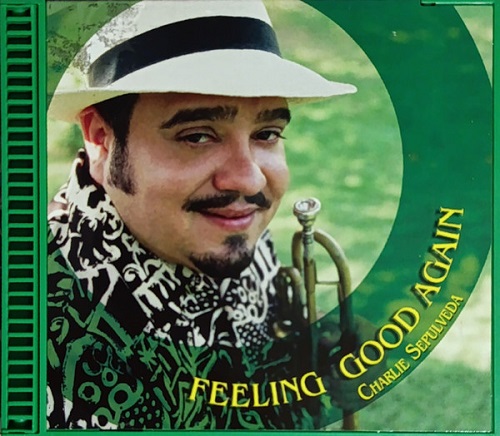
The trumpeter and producer Charlie Sepúlveda presented his new musical work titled Feeling Good Again, a jazz album released in 2003 on the Metrix label, which included our Juancito Torres on flugelhorn. Los Licenciados is the name of an album published by the Duque Records label and Omar Duque y su Orquesta. The recording year for this album is not specified, but Juancito Torres also participated as a trumpeter.

Charlie Sepulveda Feeling Good Again, Lanzado en 2003

Juancito Torres suffered from high blood pressure and bronchial asthma. Unfortunately, he passed away from a heart attack while sleeping at his home in Carolina on July 26, 2003. We will always remember him.

Long Live Music! Long Live Salsa! Long Live Juancito Torres!

By:

The Best Salseros in the World

Dj. Augusto Felibertt

Read Also: Luis “Perico” Ortiz: six decades of impeccable musical trajectory

Alain Pérez Triumphs in Puerto Rico with a Confident Stride

The exclusive Tropicoro Club at the Fairmont El San Juan Hotel in Isla Verde was overflowing to welcome the multifaceted Cuban musician Alain Pérez, who performed in Puerto Rico for the first time as a solo artist. Before the dance concert, held on Puerto Rican soil, which closed Alain’s first solo tour of the United States, he had performed in New York, Los Angeles, Miami, and Tampa.

Alain Pérez
Alain Pérez

To open the concert, the Cubanísimo concept, led by Puerto Rican bassist and cuatrista Jesús Algarín, set the mood for the audience. The young musician made a confident entrance, accompanying himself with powerful interpretations on his instruments, skillfully directing his own orchestra. Prior to Alain Pérez’s show, the musicians of Cubanísimo—cuatrista, singer, and director Jesús Algarín, trumpeter Miguel Ortiz, vocalists Carmen Jiménez and Gilberto Félix, bassist Félix Juan Algarín, bongos player Freddy Camacho, conga player Jeren Guzmán, and flutist Juan Ortiz—brought to life songs like ‘El yerbero moderno,’ ‘Esa niña,’ ‘El bodeguero,’ ‘La rosa oriental,’ ‘El paralítico,’ ‘Así fue,’ ‘Parampampam,’ ‘Lo que fue no será,’ ‘Que te pedí,’ and ‘El cuarto de Tula.’ Once the musicians, directed by Algarín, finished their set, Alain Pérez made his triumphant entrance.

The singer, bassist, guitarist, percussionist, pianist, orchestra director, arranger, and music producer had been in Puerto Rico on a handful of occasions as a backing musician for artists of the stature of Issac Delgado and Chucho Valdés, to name a few. This time, of course, he arrived as a solo artist and with force, to the rhythm of ‘El cuento de la buena pipa.’ Once on stage, the “guajiro,” who confessed in an interview to having “converted to flamenco,” showed that he felt at home while singing, dancing, guaraching, playing the bass, soneando, and rumbando. Once Alain and his orchestra warmed up the luxurious venue, which was overflowing with people, the virtuous multi-instrumentalist performed songs such as ‘ADN,’ ‘El sabor de mi rumba,’ ‘Amor fugaz,’ ‘Son con moña,’ ‘Hablando con Juana,’ ‘Shorcito,’ ‘Modo avión,’ ‘Batilongo,’ ‘La lámpara,’ ‘Pa’ to’ la vida,’ ‘La moneda,’ the title track from his most recent production: ‘Bingo,’ ‘Andaba solo’—a duet with the “Caballero de la Salsa,” Gilberto Santa Rosa—and ‘Pistolero,’ the latter loudly requested by the elegant audience.

Alain Pérez acompañado de su bajista Mauro Cabrejas

Gilberto joined Alain to sing ‘Andaba solo’ as a duet, but not before giving a “welcome to this beast of music, with whom I had the opportunity to record and whom I had the opportunity to meet in person recently,” clarifying that he already knew him musically, adding that they would sing “without rehearsal, but with affection.”

During the show, the musician who defines himself as a guajiro, sonero, guarachero, and rumbero, delivered fusions characteristic of Alain’s great contribution to Latin music, within Afro-Cuban traditions influenced by his exposure to Hispanic folklore. Pérez built the show using a varied repertoire that included salsa, timba, son, and bolero in interesting fusions. Accompanied by his band—composed of Mauro Cabrejas, Josué Puig, Roberto Medina, Víctor Oliva, Alejandro Sosa, Robelis Arévalo, Julio Puig, Yunnier Stoker, Cristhian Díaz, Darío Andrés, Alejandro Fernández, and Isaac Cambar—Alain Pérez delivered on his promise: “a night full of Caribbean flavor, rhythm, and

Alain Pérez y su orquesta

energy.”

From the moment Alain started the dance, the energy did not wane. The audience connected with the artist and the person, who visibly emotional, repeatedly expressed gratitude “for the affection received and the nobility perceived,” adding that since setting foot on Puerto Rican soil he has “felt a lot of peace” and that he’s going to have to buy “a little ranch here.”

With the Puerto Rico performance, Alain successfully concluded his first solo tour of the United States with resounding success. That was the idea. Here in beautiful Borinquen, the audience while demanding makes sure the artist feels the love and respect with which they are received and celebrated. Congratulations!

Cubanísimo
Cubanísimo

Also Read: Bella Martinez, the irreverent Salsa writer
Bella Martinez Puerto Rico

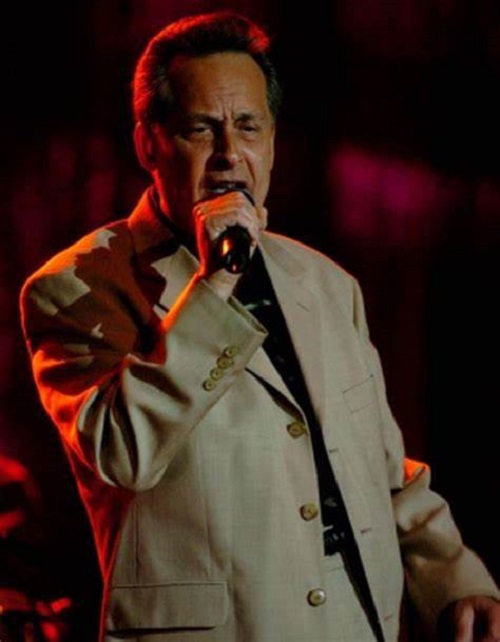
Ismael ‘Pat’ Quintana, born in Ponce Puerto Rico, began his musical career in 1961 alongside Eddie Palmieri and La Perfecta

Ismael ‘Pat’ Quintana, born in Ponce, Puerto Rico, began his musical career in 1961 alongside Eddie Palmieri and La Perfecta

smael 'Pat' Quintana, born in Ponce, Puerto Rico, began his musical career in 1961 alongside Eddie Palmieri and La Perfecta
smael ‘Pat’ Quintana, born in Ponce, Puerto Rico, began his musical career in 1961 alongside Eddie Palmieri and La Perfecta

Commemorating one more anniversary of the departure of the Maestro: Ismael Quintana (Ponce, June 3, 1937-Colorado, April 16, 2016) was a Puerto Rican singer and composer of salsa, bolero and other genres of Caribbean music.

He began his musical career in 1961 alongside Eddie Palmieri and La Perfecta, and later continued as a solo singer.

In 1970, he signed with Fania Records and joined the Fania All Stars, in addition to recording more solo albums.

By 2012, his health condition prevented him from continuing to perform and he stopped giving concerts.

In April 2016, he died of a heart attack at his residence in Colorado in the United States at 78 years of age and paid the first tributes.

Quintana was the singer who gave the name salsa to Afro-Caribbean music, after having heard it in Venezuela.

Ismael ‘Pat’ Quintana, born in Ponce, a town rich in culture on the beautiful island of Puerto Rico, moved to New York when he was very young. It was in the South Bronx that he fell in love with Latin music.

Ismael 'Pat' Quintana
Ismael ‘Pat’ Quintana

During these early years, he played percussion with a variety of bands throughout New York City.

He persevered and eventually joined Angel Natel’s orchestra as a teenage bongosero.

During one memorable night in 1959, the band was asked to play a particular number for one of the club’s dancers.

Natel’s singer was not familiar with the song, but Ismael was. He stepped up to the microphone, performed the song and in the process electrified the crowd with his talented voice. That night launched a magnificent career, a career that would eventually position Quintana as one of the most prominent vocalists in Latin music.

In 1961, visionary keyboardist Eddie Palmieri decided to leave the sanctuary of Tito Rodriguez’s eminent orchestra to pursue the dream of forming his own band.

Eddie was present when Quintana auditioned for Orlando Marin’s popular orchestra.

The pianist would eventually track him down and offer him the opportunity to become the lead singer of his new orchestra, La Perfecta.

This proved to be a vital move in Eddie’s quest to become one of the top Latin music bandleaders. Their alliance would last 12 years.

Together, Quintana and Palmieri pushed the boundaries of progressive salsa, creating dissonant improvisations that fused the raw tradition of Afro-Caribbean music (exemplified by the singer’s hardcore sonics) with a relentless desire to experiment (illustrated by Palmieri’s choice of electronic keyboards, use of structures borrowed from other musical formats, as well as meandering solos that had their own idiosyncratic logic).

Quintana inició su carrera musical en 1961 al lado de Eddie Palmieri y La Perfecta

The 1965 album Azúcar Pa’Tí is probably the aesthetic pinnacle of their collaboration. It featured classic salsa anthems such as “Oyelo Que Te Conviene”, included here for your listening pleasure.

Another unforgettable moment was Eddie’s decision to record a double LP set in the Sing Sing penitentiary.

Quintana’s voice sounds appropriately impassioned on that socially significant 1972 concert recording.

By 1973, Quintana had decided to embark on a solo career. He signed a contract with UA Latino Records and recorded two albums of excellent quality.

Quintana En 1970, firma con el sello Fania Records

The second of these two releases gave him the opportunity to sing tangos and ballads, backed by a spectacular orchestra led by South American arrangers Héctor Garrido and Jorge Calandrelli.

Surprisingly, the singer has stated in interviews that he prefers to dance ballads and boleros rather than sing more fast-paced material.

Quintana’s first work for Vaya Records was recorded in 1974, It included the hit “La Blusita Colorá”, which is featured in this collection.

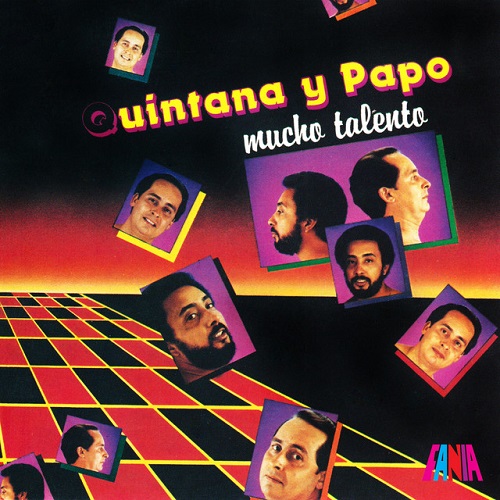
The singer also collaborated with keyboardist and bandleader of La Sonora Ponceña Papo Lucca, as well as Ricardo Marrero.

Quintana y Papo Mucho Talento

In 1975, Quintana was invited to join the legendary Fania All-Stars as one of their lead vocalists.

He appeared in the movie Salsa and participated in many of the combo’s historic performances, delivering a blistering version of the self-written “Mi Debilidad” at Yankee Stadium.

When not traveling the world with the All-Stars, Quintana could be found in the recording studio, working on material that appeared on his albums for Vaya Records.

Ismael Quintana’s name appears on many classic albums from the salsa explosion of the 1970s, both as a background singer and as a percussionist.

His phenomenal vocal abilities have obscured the fact that he is one of the most exciting maracas players in the genre.

He is also an innovative composer, having written many of the songs that make up Eddie Palmieri’s seminal albums of that era.

Quintana is also known as one of the nicest guys in the Latin music business.

A true professional who is never late for his concerts and a devoted family man who doesn’t smoke or drink.

Ponce in Puerto Rico has given birth to several legendary Latin singers, from Héctor Lavoé and Cheo Feliciano to Ednita Nazario and Pete ‘El Conde’ Rodríguez. Ismael Quintana is yet another luminary from that region.

This Latin Heritage compilation is a well-deserved tribute to one of salsa’s best. Fania All Stars.

By:

Marino Del Jesus

Historia Salsera

Dj. Augusto Felibertt

Also Read: The Royalty of our Latin Music Pete “El Conde” Rodríguez first singer signed by Fania Records label

The multifaceted Aymée Nuviola delivers her ‘Corazón Sonero’ to Puerto Rico, at the historic Tapia Theater in Old San Juan

Pete Perignon’s orchestra kicked off Aymée Nuviola’s concert, entitled Corazón Sonero, with a powerful Latin jazz introduction. During the first minute, the instrumental melody settled into a salsa key, giving way to the voices of Lorna Marcano and Ricely Colón, who chanted: “Yo te invito a bailar y a gozar con Aymée, la sonera del mundo” (I invite you to dance and enjoy with Aymée, the sonera of the world). The chorus duo of Marcano and Colón prepared the theater for the triumphant entrance of the voice of La Sonera del Mundo.

La multifacética Aymée Nuviola Imágenes Conrado Pastrano

As the curtain rose at the historic Alejandro Tapia y Rivera Theater in Old San Juan, the stage design by José “Quenepo” Ramos Vega, which revealed two transparent fabric borders held in the middle by an imposing white star, caught the attention of the audience. The red of the triangle of the Cuban flag was represented by the pendant unfurled to the left of the star, while the cloth representing the Puerto Rican flag was held on the right hand side of the same star. The inspiration of the design demonstrates that the Cuban and Puerto Rican flags are fraternal twins.

The opening lyric that resounded in the theater, which was filled to capacity, with the vocal power of Aymée Nuviola read: “A little bit of good salsa, a little bit of pure salsa, so that new people, get to know our culture”. From then on, the music obeyed Nuviola’s command, singing: “Let the clave get into your body, let the conga and the bongo move the floor”. Sure enough, three hours later we were still letting the stage delivery of the musical team continue to move the floor. Pete masterfully directed: Jean Carlos Camuñas on tumbadoras, Carlos Pagán on bongó, campana, güiro and maracas, Miguel Camilo on piano, Jorge Rivera on bass, Pedro Marcano and Víctor Ambert on trumpets, César Ayala and Léster Pérez on trombones and Saviel Cartagena on tenor and soprano saxophones.

Ten minutes into the music under the direction of the leader of the generation of the present, as timbalero Pete Perignon is known on Puerto Rican soil, Aymée greeted the audience with a heartfelt, “¡Buenas noches, Puerto Rico!” She thanked the attendees in a candid manner for joining her, while making jokes about how heavy her dress was as she elegantly adjusted the flounce and wings of her sleeves. She also commented on the design of the theater, inaugurated in 1832.

Gilberto SantaRosa y Aymée Nuviola Imágenes Conrado Pastrano

That first conversation with the audience served to connect with a: “we are survivors”, in clear reference to the COVID-19 pandemic, shortly before quoting Celia Cruz saying: “As Celia said so well: ‘Thank you Puerto Rico, for lending me your flag’. She also recognized actor Willy Denton, who played Pedro Knight when Aymée impersonated Celia Cruz in the soap opera Celia and who was among those present.

Nuviola boasted of having reached the fifth floor, as she recounted that she was going to record her version of ‘El ratón’ with Cheo Feliciano, whose unexpected death thwarted the long-awaited collaboration. However, Aymée decided to record it anyway, in order to pay tribute to Señor Sentimiento. The evening’s repertoire included: ‘Un poco de salsa’, ‘Salsa con timba’, ‘Yo sé que es mentira’, ‘El ratón’, ‘La tierra del olvido’ and ‘La gota fría’.

Many remember Aymée for her character of Celia Cruz in an acting performance that marked “a before and after” in the singer’s career. This was acknowledged by the actress, shortly before paying tribute to Celia, with her versions of ‘Cúcala’ and ‘Quimbara’, in addition to performing a medley of some of the songs with which Celia was crowned the Queen of Salsa. The medley included ‘Toro mata’ and ‘Bemba colorá’, among others.

The concert included a bohemian part during which Aymée accompanied herself on the classical piano to share with us her passion for the filin. The selected repertoire was: ‘Obsesión’, ‘Bésame mucho’, ‘Me faltabas tú’, ‘Perfidia’ and ‘Lágrimas negras’.

Before performing ‘El espacio’, of her own composition, and accompanied by Miguel Camilo on piano, Aymée said that the song was inspired by “someone else’s skeleton”, as the composer described it. Aymée emphasized that ‘El espacio’ is not dedicated to her husband. Between jokes and laughter, the sonera shared with those present her love story with Paulo Simeón, while acknowledging the presence of Fabio Díaz Vilela, who was the owner of the place where the couple met more than 14 years ago. Aymée expressed her gratitude to Fabio, for also having been a great support for the career of the producer, “from day one”.

Aymée Nuviola Imágenes Conrado Pastrano

The climax of the concert came as the sonera took off ‘El cuarto de Tula’, Gilberto Santa Rosa -who was among the attendees- went up on stage to duet with Aymée, between each soneo to describe the scope of the talent of the Cuban who gave her sonero heart to Puerto Rico. El Caballero de la Salsa was also able to tell La Sonera del Mundo the fascination that the Puerto Rican public has for her. For their part, Aymée’s soneos expressed to Gilberto the admiration she has for him for being “a great maestro”.

The repertoire of this last section included the songs ‘Fiesta’ and ‘El manisero’, which incorporated correspondences between the singer and the pianist. The coda of ‘El manisero’ coincided with the closing of the curtain, while the audience shouted “another, another, another”. The ñapa corresponded to ‘Chan chan’, a song included in the album that won Nuviola a Grammy for his production A Journey through Cuban Music. The interpretation was sprinkled with the strength brought by the trumpets of Pedro Marcano and Víctor Ambert, along with the trombones of César Javier Ayala and Léster Pérez. Chan Chan’ announced the farewell with which Aymée Nuviola’s energetic “God bless Puerto Rico” resounded as the curtain came down on her first solo concert on Puerto Rican soil. For my part, I reciprocate: “God bless Aymée Nuviola and her team (including Paulo Simeón and Luis Solís)”.

Here in the Island of Enchantment we are pleased to know that Corazón Sonero has consolidated this high-end artist, whom we already consider our own.

Bella Martinez Puerto Rico

Images: Conrado Pastrano

Also Read: Mel Martinez I come from Puerto Rico and Puerto Rico is Salsero

  • Page 1
  • Page 2
  • Page 3
  • Interim pages omitted …
  • Page 97
  • Go to Next Page »

International Salsa Magazine (ISM) is a monthly publication about Salsa activities around the world, that has been publishing since 2007. It is a world network of volunteers coordinated by ISM Magazine. We are working to strengthen all the events by working together.