• Skip to primary navigation
  • Skip to main content

International Salsa Magazine

  • HOME
  • Previous editions
    • 2026
      • ISM / April 2026
      • ISM / March 2026
      • ISM / February 2026
      • ISM / January 2026
    • 2025
      • ISM / December 2025
      • ISM / November 2025
      • ISM / October 2025
      • ISM / September 2025
      • ISM / August 2025
      • ISM / July 2025
      • ISM / June 2025
      • ISM / May2025
      • ISM / April 2025
      • ISM / March 2025
      • ISM / February 2025
      • ISM / January 2025
    • 2024
      • ISM / December 2024
      • ISM / November 2024
      • ISM / October 2024
      • ISM / September 2024
      • ISM / August 2024
      • ISM / July 2024
      • ISM / June 2024
      • ISM / May 2024
      • ISM / April 2024
      • ISM / March 2024
      • ISM / February 2024
      • ISM / January 2024
    • 2023
      • ISM / December 2023
      • ISM / November 2023
      • ISM / October 2023
      • ISM – September 2023
      • ISM – August 2023
      • ISM July 2023
      • ISM Edition June 2023
      • ISM – May 2023
      • ISM April 2023
      • ISM March 2023
      • ISM February 2023
      • ISM January 2023
    • 2022
      • ISM December 2022
      • ISM November 2022
      • ISM October 2022
      • ISM September 2022
      • ISM August 2022
      • ISM July 2022
      • ISM June 2022
      • ISM May 2022
      • ISM February 2022
      • ISM January 2022
    • 2021
      • ISM December 2021
      • ISM November 2021
      • ISM October – 2021
      • ISM September 2021
      • ISM August 2021
      • ISM July 2021
      • ISM May 2021
      • ISM April 2021
      • ISM June 2021
      • ISM March 2021
      • ISM February 2021
      • ISM January 2021
    • 2020
      • ISM December 2020
      • ISM November 2020
      • ISM October 2020
      • ISM September 2020
      • ISM August 2020
      • ISM July 2020
      • ISM June 2020
      • ISM May 2020
      • ISM April 2020
      • ISM March 2020
      • ISM February 2020
      • ISM January 2020
    • 2019
      • ISM December 2019
      • ISM November 2019
      • ISM October 2019
      • ISM Septembre 2019
      • ISM August 2019
      • ISM July 2019
      • ISM June 2019
    • 2016
      • ISM December 2016
  • Spanish
  • Download Salsa App
    • Android
    • Apple

Search Results for: Puerto Rico

Puerto Rican singer and talented sonero Charlie Maldonado

Interview with Charlie Maldonado 

José Charlie Maldonado Rodríguez, artistically known only as Charlie Maldonado, is a Puerto Rican singer who has a great talent as a backup singer and sonero, which he has been developing throughout a prominent and very successful career in the world of music.    

After having read his biography and being interested in the journey he has been on in salsa, we decided to contact him and arrange a conversation in which we could learn more about him and everything he has done to get here. Next, is a little bit of Charlie’s beginnings and, later on, everything he told us.   
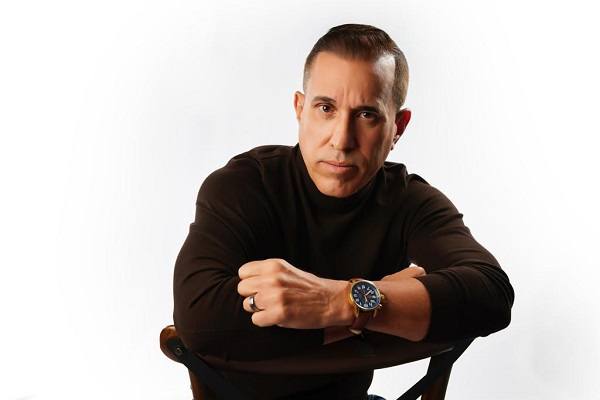
Charlie talked to us
Talented Puerto Rican singer Charlie Maldonado, who kindly accepted to talk to us

Beginnings                                                                                          

Charlie was born on October 4, 1964 in the city of San Juan, Puerto Rico. At a very young age, he was always exposed to boleros and salsa music, as his father belonged to a musical trio that was very popular at the time.    

For those years, he listened to Ismael Rivera, Cheo Feliciano, Gilberto Monroig, Danny Rivera, Marco Antonio Muñiz, among others. Charlie said that, with such references at that time, it was impossible not to be enchanted by the music, so his interest in this branch of the arts grew and grew over time.  

His interest got to the point where he wanted to learn to play percussion instruments such as the tambourines, the maracas, the drums and, most especially, the bongo (it was the first instrument Charlie learned to play).    

Although he does not consider himself as the best bongo player of the world, he is believed to be very capable of playing it efficiently and delighting the listening audience. Most interestingly, he did not achieve this level through formal academic training at an institute, but through constant practice at ”rumbones de esquina” (congregation of people who play music, dance and drink alcohol on a street corner), school activities, family gatherings and Christmas parties. 

These informal activities in which he was able to participate gave him the opportunity to develop as an artist from a very young age. In addition, his father and other musicians in the family helped him a lot in this process. The magic you feel when you play music, the family warmth and interaction with the public are not learned in any academy,” said Charlie.   
Charlie at rumbones
Charlie Maldonado practiced his skills at ”rumbones de esquina”, school activities, family gatherings and Christmas parties

 The Saljaztet 

The first opportunity for Charlie to play in a professional group came with The Saljaztet in 1990 thanks to its founder Bobby Concepción, who saw him singing in one of those street parties and believed in his talent and what could be done with it. 

Bobby is an industry veteran who has worked with many orchestras such as Orquesta Panamericana and La Orquesta del Maestro Willie Rosario. Being around him taught him a lot and he gained a lot of experience by seeing him in action on stage.    

He even taught him some vocal and instrumental techniques to apply in his performances.   

Charlie keeps the best memories of this group, its director and his colleagues. He is extremely grateful for everything he learned from them and continues to apply many of these things today.   

Osvaldo Núñez, Sammy Marrero, La Selecta and more   

”Every human being who comes into our lives has a lot to contribute and teach us. Lord made is different, so all the musicians I’ve worked with have taught me different things” said the artist. 

Osvaldo ”Cuchón” Núñez is a brilliant musician who was very dynamic on stage. He was able to play the trumpet, do chorus and lead at the same time. He performed all of these functions excellently, which is why Charlie paid too much attention to what he was doing and copied him.   

Raphy Levitt from La Selecta de Puerto Rico was an extremely regimented person who ran the orchestra very well and was excellent for business. He had an almost military discipline and was extremely picky about his musicians and vocalists, to the point that he made them rehearse separately depending on their roles on stage.    
Levitt, Marreno, ,Núñez, and Charlie
Levitt, Marrero, and Núñez were very important in his career

In the case of Sammy Marrero, he was always at the height of Levitt’s demands and sometimes exceeded them. In addition to being extremely disciplined, he always lived up to what was required of him on each project and even a little more. He even worked with him when he had his own orchestra, a period in which Charlie learned even more from him.   

On this subject, the singer concludes that ”The personalities mentioned have taught me three fundamental things: discipline, perseverance and respect for the public”.   

Solo career 

The idea of becoming a soloist was always on his mind, but it was not until 2016 that he was able to carry it forward. The previous year, in 2015, the maestro Raphy Levitt unfortunately passed away, at which time Charlie had some songs recorded.   

He was already thinking about becoming independent and creating his own musical project, but had not decided to leave the orchestra until the death of Levitt. That is when he got hands on work and finished the record production he had already started. 

In 2016, he launched his first solo project entitled ”Dueño de Nada”, whose songs are mostly written by Charlie Ramos. The only cover in the album is precisely ”Dueño de Nada”, which was written by Manuel Alejandro and masterfully played by José Luis Rodríguez ”El Puma” in the 1980’s. 

His most recent album is entitled ”Vida Artificial”, which was released in September last year and addresses very interesting and current issues. The single that gives its name to the whole album, ”Vida Artificial”, ”is perfect for today. Phones, tablets and computers are damaging everyone’s mind. There are families who sit at the table, but don’t even talk to each other focus their attention to electronic devices. Technology is important, but we can’t be connected to it all the time. That was the message we wanted to bring with Artificial Life” said Charlie.  

Charlie on stage
Charlie Maldonado singing on stage

Future projects 

Charlie is about to release a song titled ”Señora Rumba” written by Eduardo Saya. The material has already been recorded and Charlie and his team are working on the video clip, which has a few shots filmed. It is expected to be released this August. 

Likewise, he is working on his concerts and private presentations in Puerto Rico, but some opportunities are opening up in Colombia in the future. 

También lee: We spoke with Andrea Chaparro from Lulada Club 

Did you know that more than 60 personalities and artists come together in the Puerto Rican Virtual Parade

North America/ Puerto Rico / Puerto Rico

The fervor and love for Puerto Rico have overflowed in the call for the first Puerto Rican Virtual Parade with the aim of not interrupting a 62-year tradition of the great party that is celebrated in New York City.

Puerto Rican Virtual
Puerto Rican Virtual 2020

Dedicated to the great master of the timbal Tito Puente, a large number of personalities of the stature of Hollywood actors Edward James Olmos, who launched a phrase that will last for history, saying present “I was not born in Puerto Rico, Puerto Rico was born in me”.

Olmos was also joined by the popular and versatile actor Luis Guzmán, Rodrigo Massa, Juan Pablo Di Pace, Luis Ramos from the Power series and Delilah Cotto from Empire and Hulk, as well as Puerto Rican Major League Baseball player Yadier Molina who will present her daughter Ari D and directors José Javi Ferrer and Virginia Romero, the popular Super Yadira, Vanessa de Roide, Top Model Monique Alexandra and many more.

This year three kings said yes to their people, the Queen of Reggaeton Ivy Queen, who also started the urban movement La Leyenda Vico C and the King of Hearts, Manny Manuel.

Also present at this important event will be the group MDO, the artists Baby Rasta and Gringo, Melina León, Tito Nieves, Daniela Droz, Giselle, Víctor Santiago, Javyy L’amour, Spanish Harlem Orchestra, Lalo Rodríguez, The Martínez Brothers, Tito Puente Jr., Tito Rojas, Julio Sanabria, Luis Damon, Hip Hop Jibarito, Grizelle “La Chichi” del Valle, DJ NEGRO, DJ Playero and Michael Stuart.

Among the invited international artists are Soleil from Argentina, Toño Rosario, Fulanito, Yolanda Duke and Proyecto Uno from the Dominican Republic, the Salsa Institution, Adolescents from Venezuela and Ms. Dayana from Cuba.

Darma Diaz, councilor of the 37th district of New York City, stated that she was pleasantly surprised by the response of the artists, the media and the general public, “which represents one more demonstration of what Puerto Rican Pride is and how capable we are of rise up in the face of adversity”.

The Puerto Rican Virtual Parade will be broadcast through the Vivalivetv application on channel 1 “it will be totally free as a way to globalize this project and that wherever there is a Puerto Rican in the world or a Latino, they can enjoy this party” said Jhon Sepúlveda Vice President of Vivalivetv operations.

The artistic production of this event is in charge of the company Miami Talents and the editing and post-production in charge of the three-time winner of the Sovereign Award in the Dominican Republic, Hugo Oscar Chávez Baldera.

Website: https://paradavirtualpr.com/

Press contacts

Puerto Rico:

Jeanette Delgado

+1 787.645.0966

Puerto Rican salsa singer Jai Ramos spoke to us of his life and projects

First years and military life

We are talking with Puerto Rican salsa singer Jai Ramos. How are you feeling? Glad to have you here.

I’m feeling fine. Thank you very much for the invitation. I feel blessed to be able to release my songs, but more important is the opportunity I have to be here talking to you and your audience.

person with clave in your hand
During his youth, Jai Ramos listened to ballads and popular music

Why did you choose salsa as your main genre? Was it to do with your environment or your roots?

It had much to do with my roots. When I started to lean towards music, I listened to ballads and various popular music singers that we had in Puerto Rico such as Chuco Avellanet, Lucecita, Lissette, among others. I also listened to other international artists such as Nino Bravo.

However, what made the switch was to go to the movies to see Our Latin Thing with the Fania stars. That’s when I made the change to salsa.

It’s very interesting because most of the artists you mentioned are boleristas or balladers, in other words, it was a huge change.

That’s correct.

You belonged to the United States Army, how did you combine your military career with your musical activities?

Interesting and very valid question. Even though I became interested in music, the places where I wanted to take music lessons would not accept me. After I finished school and became an adult, I joined the military and started to get exposure to different local music groups after arriving in the United States. That’s how I began to develop in my spare time. Admittedly, it was difficult, but where there’s a will, there’s a way.

I’ve talked to several Puerto Rican artists who were also in the U.S. Army at various ranks.

Did you get to coexist with other artists and salseros there? If so, do you think that helped you pursue your career in music?

Absolutely. Ar first, I met a lot of people who had a lot of musical experience in their spare time even though they were serving in the armed forces and they were the ones who provided me with the knowledge needed to improve this balance. With the passage of time, I also got to know people with musical experience who are very famous today such as Angel Santos. He and I served in the armed forces at the same time and retired at about the same time, so he chose composition, while I chose music performance.

I made a career in the army for 22 years of service. During all that time, I met many people and today I have communication with many of them even though we’re now civilians.

Jai Ramos
Jai Ramos shared with many other salsa artists during his time in the army

What Ramos learned from other artists

You got to share and sing along with artists such as Ray Barreto, Celia Cruz, Grupo Niche, Oscar D’ León, Nino Segarra, among many others. What did you learn from each of them?

Good question. They all taught me that they were still human beings and have a duty to the people in spite of being so famous. They were all very humble and that gave me to understand that they are flesh and blood people like us, but that they achieved success because of their talent.

When I was on a military base in Atlanta, I had an enormous exposure to many of them and it was Mr. Enrique Mercado who invited me to be part of his orchestra, which opened up for many great artists such as Celia Cruz, Ray Barreto, Grupo Niche, Eddie Palmieri, Conjunto Libre and the King of timbales Tito Puente. When I met them, I realized that they are devoted to people, prompted me to move forward in this career.

In musical and technical matters, what did these artists teach you?

Discipline and professionalism. Many people think that music is just entertainment, but those working on it see it as their profession. I also perceived the pride of providing entertainment for people, but always with quality. I understood that idea and started to apply this in my life.

Jai Ramos and family
Jai Ramos with all his family

What did you learn not to do?

Some of the musicians who accompanied orchestras had certain habits that I was able to observe and I became convinced that I did not wanted to copy them. Sooner or later, I knew that such habits would eventually affect anyone.

I want to clarify that I did not see these things in any of the artists. That is why they are so professional, since they always behave well, both on and off stage. At the same time, they are humble enough to speak directly to a person like me who approached them to ask questions and get some advice.

What led you to have a solo career after having belonged to several orchestras?

I’ve always loved to be a lead singer, but I wasn’t the only one in the orchestra. However, something I noticed while being part of an orchestra is that I was always subjected to the music projects of our musical director, which stopped me from implementing my own ideas and my own music. That’s why I ventured to pursue a solo career and implement what God has put in my heart and mind.

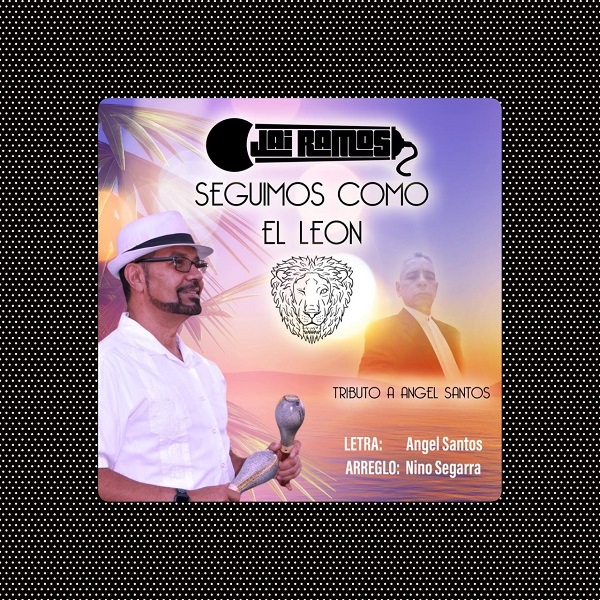
You had already told me about your most recent release “Seguimos Como El León”, a tribute to Angel Santos Junior. Why did it take you to embark on this project? Why pay tribute to Angel Santos Junior?

Thank you for that question. I want to keep giving credit where credit is due. Angel and I were very close friends and I’m using the past tense because unfortunately he passed away on 15 April 15 this year. When I came here to San Antonio, he was one of the first musicians I met and I shared with him in many performances. As I mentioned before, he and I were in the army at the same time.

One of the things Angel has achieved was to create many successful compositions. When I decide to launch my own project, one of the people that I had in mind to get an original song was Angel. When I called him and asked if he had something available, he told me that he only has one song, which was “Seguimos Como El León”. By that time, I knew he was having health problems, but I had no knowledge that he had already been evicted.

cover jai ramos
Cover of the song “Seguimos Como El León”

When I listened to the lyrics, I didn’t realize that he was giving a message about himself for when he left. Almost all of his compositions had a joking or small-town tone, but this one is a message of overcoming.

By the time we finished the song, maestro Nino Segarra and yours truly agreed to record the project, master it and record it. Then, I shared it with Angel so that he could listen to it and I told him that we gave him credit. Nino Segarra and I thought it was important that everyone who listened to the song always knew that it was one of his compositions.

When we were getting ready to do the release, we learned that he passed away. So, I proceeded to communicate with his family to ask permission from them to use his image and pay tribute to him with that song. They agreed, so I changed the cover and the title of the song to make it look like a posthumous tribute to Angel and thus to perpetuate his name.

What did you learn from Angel Santos artistically and musically?

He was my mentor in this release. I carried out the project, but he mentored me into most of the steps I followed. The biggest lesson I learned from him in the last years was how to be an independent producer and how to implement the ideas I had in mind.

You have songs with titles such as “Seguimos Como El León” and “Lo Que Dios Me Dio”. We can note that these songs are focused on bringing positive messages and about personal growth. Why are these aspects so important to you? Why reflect them in your music?

I am a servant of the Lord. In my spare time, I am a minister at a church. With all the things happening today, I felt in my heart that I had to be part of the solution and bring a positive message in the midst of what is going on.

My musical proposal is based on messages about personal growth with the idea of getting people closer to the Creator.


cover jai ramos lo que dios me dio
Cover of the song “Lo Que Dios Me Dio”

You can read: This is Roger Danilo Páiz Pérez from Danilo Y Su Orquesta Universal

Puerto Rican singer Wito Rodríguez talks about his success and career

How his career starts

We are here with the very talented Irwin Wito Rodriguez (https://www.facebook.com/nmjrecords). Pleased to meet you, Mr. Rodriguez, such a pleasure to have you here. How are you?

Thank you very much, Karina. Thank you for the invitation. Quite well, thanks to God. I am in Florida at the moment, where the temperature is very pleasant.

Talented Puerto Rican singer Wito Rodríguez

Your beginnings in the musical world occured in a rock band, which is very common in many of your colleagues. Many of them start as boleristas and rockers. How did you go from a rock band to singing salsa and other genres like this?

I was born in Chicago and my parents are Puerto Rican, so I was raised American and tended to speak more English than Spanish. I listened only to music in English, but I also listened to Daniel Santos, Los Panchos and Tito Rodriguez at hore since I was a little boy. However, they were my parents’ favorite artists, not mine. As the years went by, my dad bought me my first guitar, so I joined a rock band of four or five kids and we started playing very cool songs. This lasted until I was 14 years old, when my father decided to send us to Puerto Rico and it was a very drastic change for me because now I was going to be in a school where Spanish is spoken and my Spanish was very bad. When I arrived in Puerto Rico, it was very nice to see the island in person because I only knew it from what my dad told me.

Five or six months after I arrived in Puerto Rico, I started singing with another rock band until I turned 16, which was when a very famous percussionist named Chacón (he had a band called Chacón Y Sus Batirítmicos) heard me sing and told me that he would like me to sing with them. He lived near me, so I could go to his place. I started going about twice a week to learn to play the conga and the clave. Around that time, I started learning everything related to salsa and typical Puerto Rican rhythms.

So I started playing in a nightclub, but I wasn’t supposed to do that because I was still 16 years old. So, they got me a jacket, hid me and I started singing there. When I turned 17, I moved to Chicago to finish school and speak English again. Three months later, I started singing salsa with the first orchestra in Chicago whose name was La Orquesta La Justicia from 1971.

So, you didn’t like salsa, but you developed a taste for it.

That’s correct. I didn’t have the joy of attending music school, so I just tried to learn as much as I could from what I saw. If I saw someone playing on a stage, I would approach the musicians, ask questions and clear my doubts. I learned a lot of things on my own.

Image taken from his video clip You’ll Never Find Another Love Like Mine

Military service and his first orchestra

You were part of the German orchestra Conexión Latina while serving in the army. How did the idea of starting a Latin music group in such a country arise?

When I was in the Orquesta La Justicia, I met many salsa stars like La Lupe, Ismael Rivera, Larry Harlow, Ray Barreto, El Gran Combo de Puerto Rico, La Sonora Ponceña and many others. All these artists helped me and taught me many things.

When I joined the U.S. Army, I had the opportunity to sing with an orchestra in Puerto Rico, but I was in Chicago. I accepted and prepared everything to return to the island, but the orchestra had already gone on tour when I arrived and they didn’t take me. It was very sad for me because I left everything in Chicago, since I wasn’t thinking of returning.

From there, I decided to join the U.S. Army and wanted to be sent as far away as possible. A week later, I reveived word that I passed the test and that I would be sent to Germany. That’s when I started a band called Wito Y Su Conjunto Sabor in 1977 along with other Puerto Ricans who also sang or played instruments. We were the only salsa band in Germany at that time. In 1981, I already had an orchestra called La Sonora Antillana and we played for the German audience, which was very tough.

In 1983, I left the army. Then, Luis García, an excellent tres player, and Cano Robles from Conjunto Canayon, Puerto Rico, made my first album called Calorcito. The following year, I released my first album and it was awesome because it led me to release another record production that took me to tour all around Europe.

In 1992, I went back to Tampa, where my dad lived. I came back to be in need because nobody knew who I am there. It was very difficult, so I had to start working until I returned to the Army and was sent to Pennsylvania. In 2007, I finally retired with 30 years of service.

In 2013, I started making my first solo album whose name was Qué Mundo Maravilloso. In 2016, I moved to Orlando, where I finished my other three albums I released later.

Art for the song Qué Mundo Maravilloso

You took opera classes. How did this help you in salsa?

Those classes taught me how to stabilize my voice, know how to modulate, know how to breathe, know how to feel the tone in one part of the body (under your nose), know what tone comes after the previous one and all kinds of things. I also learned some very good exercises to warm up my voice.

Another thing these classes taught me was resistance. Spending an hour singing on stage is not easy.

A lot of singers have a good voice, but they don’t have the necessary training to get to the right tone for them and avoid singing off-key.

I read that you have been nominated for the Hollywood Media Music Awards and the Miami Fox Music Awards for both English and Spanish songs. Which songs are the most successful? English or Spanish?

I try to include even a salsa song in English in all my albums. My last song focuses more on the American audience than the Latin audience. It was a good choice because the video has about 42,000 views on YouTube, which means it attracks more attention than my other work.

One of the things that has done musicians in general most harm has been Covid-19. Many are recovering, but others had to get a job because they could no longer make a living from music.

Many of his songs are related to his Puerto Rican roots

Jesús Algarín is a Puerto Rican bassist who, at the age of 25, landed in the salsa scene


A graduate of Berklee College of Music, with his college degree in hand, the young bassist returned home to make his homeland in salsa time.

Jesús Algarín is a Puerto Rican bassist who, at the age of 25, landed in the salsa scene to make music his life project.  The young musician already walks with a firm step accompanied by the forceful interpretation of his bass, leading his own orchestra with confidence.

From the time he was born, according to what his parents told him, they used to party, so it was not surprising that at the age of 8 he was already the one who was the one who was livening up the parrandas while playing the Puerto Rican cuatro.  Algarín, who was born and raised in the heart of Puerto Rico (Caguas), candidly tells us that as a child, he discovered through our very own parrandera tradition, that music -which he refers to as a wonderful art- had a healing and restorative power.

Well advised by the adults in his family, he recounts that his uncle explained to him early in his life that if he failed to ignite his audience at the Choliseo during a parranda, it would become more difficult for him. Once he understood the advice, he applied it to himself.  Today he concludes that it is necessary to dominate every stage, from a marquee to a public square, and to take it one step at a time.

Through Puerto Rican folk music, studying and interpreting the seis, the aguinaldo, the bomba, and the plena, he was entering into what without planning it became his life project.  Later, playing the Puerto Rican cuatro purely by ear, he was able to enter the “magical” world of music, as he himself describes it.

Already in the sixth grade of elementary school, he began his formal apprenticeship at the Escuela Libre de Música de Caguas.  Before that time, he played the cuatro but did not read music.  Once he learned to read music, he decided to continue growing musically in his instrument.

Six years later, in grade 12, about to finish high school, he took part in the camps that Berklee College of Music brings to Puerto Rico every year. He auditioned for the Puerto Rican cuatro.  However, at the time, he did not achieve his goal of positioning himself. Determined not to give up, the following year he returned to the Berklee camp but changed tactics. He showed up to the workshops with a bass because he understood that the cuatro was not a good fit.  When he filled out the registration form for the workshops, he reported that his bass playing was at the advanced level, even though he knew it wasn’t true.  This adolescent idea, which added a good deal of pressure and stress to his musical performance, helped him get into the ensembles he aspired to qualify for. Today he admits that at that time, which today seems far away, he could not handle the bass because, as an instrument, it was still unknown to him.

In any case, Algarín qualified because, as we know, you have to take your chances with life.  The rest is history. 

With the bass as his main instrument, Algarín got Berklee to give him a scholarship and after four years in Boston, Massachusetts he graduated with a degree in Music Business. In other words, he spent four years making music while learning to see music as a business.

The young bass player confesses that he had not planned to be a musician nor had he thought he would make a living from music.  He did not see music as a possibility, since although it was always an integral part of his life, music was a hobby or a way to serve God in the church.  And that’s what he limited himself to until he came to Berklee’s summer workshops.  Before that, he saw himself as a lawyer and when it was his turn to enter college, he initially enrolled at Ana G. Mendez University.  There he attempted to complete a bachelor’s degree in accounting. However, from the very first accounting class he knew that accounting was not for him.

Algarín capitalized on what he learned, and has been able to stick to music as a way of life; from a more realistic and less idealistic perspective. Of course, all without losing the artistic focus of musical interpretation.  Along with his musical training, he has been preparing himself in legal issues, maintaining business awareness, focusing on the protection of music and copyrights.  He has also been responsible for making other musicians aware of the importance of registering their music with the Library of Congress and thus making the most of their work.  There is no doubt that Algarín knows his worth as a musician and from his space he has decided to serve and guide his counterparts to protect their work.

Before entering the studio to record his project, Algarín had recorded with Manolito Rodríguez.  During his student years in Boston, he was a musician in the Eric German Orchestra, the orchestra that accompanies visiting solo singers in the New England area.

Today, his main instrument is the bass, double bass, baby base or electric bass.

The bassist, a native of Caguas and graduate of Berklee College of Music, class of 2020, returned to Puerto Rico to lead his own musical project.

Two years after Algarín’s return home, the orchestra is already promoting its first production entitled “Dímelo Algarín”, which is part of his project “Jesús Algarín”. The format of the base orchestra of the project is as follows: winds (trumpet, trombone and baritone saxophone), bass, piano, conga, timbal, bongo and bell; backing singers and choirs. This, his first production, contains 5 songs, with contemporary themes in its lyrics. This lyric, however, embraces the nostalgic sonority of the sextet, complementing some of the songs with the Cuban tres. The bassist leader of his project arranged and composed these 5 unreleased tracks, which are merged in a production for which Jesús Algarín is also responsible.

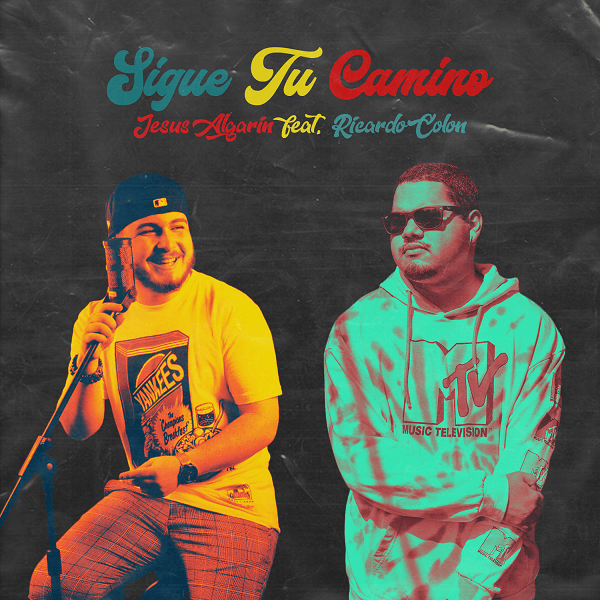
The production is available in digital format on all platforms. The promotional cut is Sigue tu camino performed by Ricardo Colón, who also sings in the Willie Rosario Orchestra. The other four tracks included in the production are:  Playita, Cadencia y sabor and La calle se prendió; performed by vocalist José Luis De Jesús and Caribeña, in the voice of Marisabel Vázquez Varela.

The recording studio musicians who participated in the production are from the Caribbean.  Puerto Ricans, Cubans and Venezuelans merge in a salsa embrace; as is to be expected.

Vocals: José Luis De Jesús, Ricardo Colón and Marisabel Vázquez Varela.

Backing vocals: Jorge Yadiel Santos, Carlos García, Ricardo Colón, José Luis De Jesús, Manolo Ruiz and Carloscar Cepero.

Bass: Jesús Algarín

Piano: Aníbal Cruz and Juan Rivera

Tres: Renesito Avich

Percussion: Miguel Martínez

Trumpets: Luis Arnaldo Ramos, Angel Segarra y Nicolás Benítez

Trombone: Johan Escalante y Carloscar Cepero

Baritone saxophone: Efraín Martínez

Cuatro: Jesús Algarín.

As the son of documentary filmmaker Juan Félix Algarín, Jesús considers himself blessed to have been mentored by a father with first-hand knowledge.  His father always instructed him to be aware of music as a business in the entertainment world. Jesus knows his worth and has kept himself informed as to the costs of production and is clear as to the rates of his work.  He identifies himself as a Puerto Rican and Caribbean musician. He is in every sense of the word, a music worker.

As it is, we are still in salsa.  Yes, salsa lives! The effort, discipline and talent -in that order- of this young bandleader attest to that. Congratulations, and may you continue to “catch the ride”.

For bookings, Ángel Ilarraza: 787-347-4662 or e-mail: [email protected]


By Bella Martinez, ISM Correspondents, San Juan, Puerto Rico


  • « Go to Previous Page
  • Page 1
  • Interim pages omitted …
  • Page 8
  • Page 9
  • Page 10
  • Page 11
  • Page 12
  • Interim pages omitted …
  • Page 99
  • Go to Next Page »

International Salsa Magazine (ISM) is a monthly publication about Salsa activities around the world, that has been publishing since 2007. It is a world network of volunteers coordinated by ISM Magazine. We are working to strengthen all the events by working together.