• Skip to primary navigation
  • Skip to main content

International Salsa Magazine

  • HOME
  • Previous editions
    • 2026
      • ISM / April 2026
      • ISM / March 2026
      • ISM / February 2026
      • ISM / January 2026
    • 2025
      • ISM / December 2025
      • ISM / November 2025
      • ISM / October 2025
      • ISM / September 2025
      • ISM / August 2025
      • ISM / July 2025
      • ISM / June 2025
      • ISM / May2025
      • ISM / April 2025
      • ISM / March 2025
      • ISM / February 2025
      • ISM / January 2025
    • 2024
      • ISM / December 2024
      • ISM / November 2024
      • ISM / October 2024
      • ISM / September 2024
      • ISM / August 2024
      • ISM / July 2024
      • ISM / June 2024
      • ISM / May 2024
      • ISM / April 2024
      • ISM / March 2024
      • ISM / February 2024
      • ISM / January 2024
    • 2023
      • ISM / December 2023
      • ISM / November 2023
      • ISM / October 2023
      • ISM – September 2023
      • ISM – August 2023
      • ISM July 2023
      • ISM Edition June 2023
      • ISM – May 2023
      • ISM April 2023
      • ISM March 2023
      • ISM February 2023
      • ISM January 2023
    • 2022
      • ISM December 2022
      • ISM November 2022
      • ISM October 2022
      • ISM September 2022
      • ISM August 2022
      • ISM July 2022
      • ISM June 2022
      • ISM May 2022
      • ISM February 2022
      • ISM January 2022
    • 2021
      • ISM December 2021
      • ISM November 2021
      • ISM October – 2021
      • ISM September 2021
      • ISM August 2021
      • ISM July 2021
      • ISM May 2021
      • ISM April 2021
      • ISM June 2021
      • ISM March 2021
      • ISM February 2021
      • ISM January 2021
    • 2020
      • ISM December 2020
      • ISM November 2020
      • ISM October 2020
      • ISM September 2020
      • ISM August 2020
      • ISM July 2020
      • ISM June 2020
      • ISM May 2020
      • ISM April 2020
      • ISM March 2020
      • ISM February 2020
      • ISM January 2020
    • 2019
      • ISM December 2019
      • ISM November 2019
      • ISM October 2019
      • ISM Septembre 2019
      • ISM August 2019
      • ISM July 2019
      • ISM June 2019
    • 2016
      • ISM December 2016
  • Spanish
  • Download Salsa App
    • Android
    • Apple

Search Results for: Puerto Rico

Puerto Rican singer Irma Kaché speaks exclusively to us

Irma Kaché is a talented singer born in Ponce, Puerto Rico, who has a very interesting story behind her, so we have set about communicating with her to talk about the most important facts of her life and career.   

Irma Ortiz, the artist’s real name, shows us that it is possible to achieve a lot with little whenever there is the will and desire to get what we want. What she tells us below proves it.   

Irma was born in Ponce
Talented singer Irma Kaché was born in Ponce, Puerto Rico

How Irma first became interested in music   

In her native Puerto Rico, music was always in Irma’s home since she was very young, as her mother was a singer in a radio station and won talent shows, but all that changed when she got married and had children, since it was not seemly for a wife participate in such activities.   

However, she and her siblings inherited the taste for music from their mother and she always instilled in them everything related to it. This is how the children began to play and sing the songs they listened to at home, many of which belonged to Los Condes, Los Panchos and other trios from that time.   

Although Irma’s mother was proud that her children played music as one of their main hobbies, she did not think they would follow it professionally. Irma’s older brothers already have their own orchestras and one of them calls himself Julio Kaché. That is where she took the name of Irma Kaché. 

While it is true that music had a very important place in her life, Irma finished high school and studied social work at the Pontifical Catholic University of Puerto Rico, so she did not practice her great passion at that time. She only limited herself to imitate her favorite artists of the time such as Yolandita Monjes, Ednita Nazario, Sophy, among others. 

Upon graduation, she moved to New York with the hope of singing professionally, but she became a single mother and found it difficult to have evening performances with a small child. In addition to that, her son presented certain language problems and had to attend therapy constantly. She only had her older sister’s support, who is also a singer by profession.    

On top of that, breaking into salsa as a woman was very complicated in a world dominated by men.    

Irma’s beginnings were not easy
Irma’s beginnings in music were not easy, but her talent and effort led her to be the artist she is today

Irma’s transit in music   

Just as Irma met ”dream merchants” who caused her to lose time and money with empty promises that went nowhere, she also met people who supported her and contributed a lot to her career as the composer and singer Miguel Angel Piñeiro, who is a very prominent figure in the salsa scene. 

Piñeiro discovered her on the local TV show Diamante Show, contacted her and they became good friends for a while. At that time, she was working with a record company, but things were not going as she wanted, so she let her new friend guide her in many aspects of her career. Piñeiro accompanied her to the studio, rehearsed with her, introduced her to important people in the industry and many other things that helped her become the singer she is today. 

Among those people she met thanks to Piñeiro, we can mention arranger Harry Rios, who was the one who made each and every one of the arrangements for her new album and played a pivotal role in its final result. 

In addition to this, he made a small monetary investment in Tumbao Media Productions, which is a marketing and PR agency, which has been highly beneficial for his career and the chance to become known to a wider audience. In addition to this, the work she has done in her own social networks to create her own community around her music.   
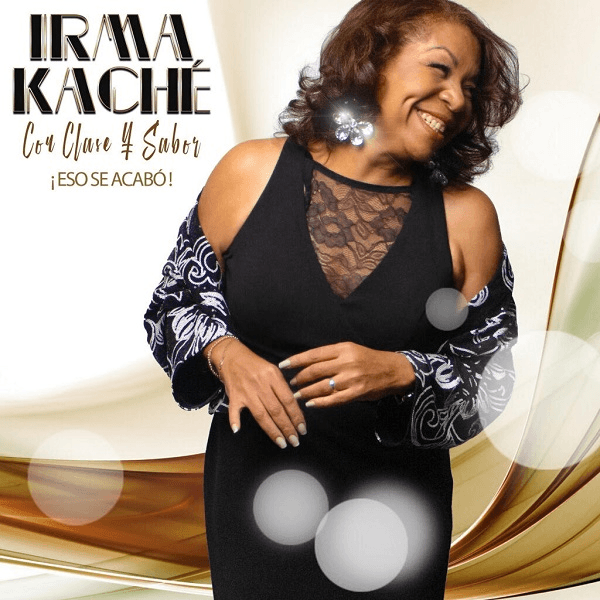
Con Clase Y Sabor
Cover of the album ”Con Clase Y Sabor”

Orquesta Salsa Libre NY 

Irma has been part of the Orquesta Salsa Libre NY since 2008 without uninterrupted, although the group has been through hard times such as the pandemic, which caused the loss of its most important members. This led Miguel, director of this orchestra, to seek new musicians to replace the previous ones. 

The pandemic had also prevented them from performing live for a very long time and Irma was anxious to return to sing in front of an audience, so she talked to Miguel to remedy the situation and be back to the stage as soon as possible. This is how Miguel, who was also Irma’s producer, contacted the Sound of Brazil (SOBs) nightclub to study the possibility of performing a small concert there. So, Miguel and Irma accepted the venue’s proposal and got to work.   

In fact, the Puerto Rican singer and her orchestra performed a wonderful show at SOBs with renowned producer and vocalist Javier Luis, who was already experienced in singing in that place and many others of its kind, so most of the responsibility fell on his shoulders. He was the one who made the arrangements for the show and sent her copies of the emails so that she could see how the organization of a show like theirs was handled.   

In the end, the performance was a success and Irma learned a lot from this experience, which would help her to replicate the right steps on other occasions. In addition, that night opened many doors for both of them. 

Read also: The road to success for Venezuelan harpist and cultural entrepreneur Ángel Tolosa 

Young Puerto Rican singer Jeremy Bosch supports the Spanish Harlem Salsa Museum

There are many people who believe that salsa is a genre of past generations that does not have worthy youth representatives who stick up for this set of rhythms that has been keeping so many people dancing for so long, but fortunately they are wrong. Jeremy Bosch, whom we had the opportunity to interview at The Johnny Cruz Shw a few weeks ago is a god example of this.   

We are honored to know that one of the new sensations of Latin music, specifically salsa, supports one of the most important institutions dedicated to the genre such as the Spanish Harlem Salsa Museum, so we want to take advantage to talk a little about the career of this young singer and everything he has achieved so far.   

Jeremy playing the flute
Jeremy Bosch playing the flute live

Jeremy’s beginnings in this world 

Jeremy Bosch is a singer and flutist born in the city of Ponce, Puerto Rico, who began his journey in the world of music singing and playing percussion in the church on his block while growing up listening to a great variety of artists including Hector Lavoe to Chicago and Tonny Bennett, so he had influences of all kinds.   

Not much time would past before Jeremy took achevable steps towards the direction he was meant to take. At only 17 years old, he won a scholarship to study at Berklee College of Music in the city of Boston, United States, and graduated in 2023, specializing in jazz composition. From then on, what followed for the young artist have been successes and great proposals he could seize.   

One of thse things he is best known for is having been the vocalist and flutist of the acclaimed group Spanish Harlem Orchestra, but that has not stopped him from collaborating with great figures in the industry such as musical director and Grammy-winning percussionist Pete Perignon, with whom he recorded the social short called ”Sería Una Pena”.   

Johnny and Jeremy
Johnny Cruz and Jeremy Bosch posing for the camera

Jeremy’s professional career 

Sometime later, he would have the opportunity to realize one of the most important works of his career, which is the tribute to the late Cheo Feliciano, which was recorded live at the Dizzy Club in New York City and was titled ”The Music of Cheo Feliciano. In addition, the project included Nelson Gonzalez, Johnny ”Dandy” Rodriguez and Spanish Harlem Orchestra leader Oscar Hernandez.   

With regard to this great night for his career, Jeremy commented that since his debut both he and arranger and vibraphonist Felipe Fourniel had long time wanting to work on something about Cheo Feliciano and his legacy for a long time until they finally made it. This show was the sign that Jeremy has everything to become an icon of salsa and Afro-Caribbean music in general.   

As for his solo career, he has made a few remarkable recordings and one of them was ”Prologo Hoy”, which included the participation of Nicaraguan singer Luis Enrique and Cuban vocalist and guitarist Alain Perez. It is a five-song EP that focuses a lot on Afro-Colombian and tropical music, while including some covers in English such as ”Love Holiday”, which gives a distinct flavor to the material as a whole. 

Jeremy and Johnny on the set
Jeremy Bosch and Johnny Cruz on the set of The Johnny Cruz Show

Later on, Jeremy released ”Epilogo: la clave del tiempo”, which includes 11 tracks and is basically a mix of Afro-Cuban rhythms, soneo, urban genres, modern synthesizers, among other elements. The album starts with ”Locura” and continues with singles such as ”Try Again”, ”La Mala”, ”Autopsia” and a few more.   

Support for the Spanish Harlem Salsa Museum 

In the social networks of the director of the Spanish Harlem Salsa Museum, Johnny Cruz, there is a clip in which the The Johnny Cruz Show host introduces Jeremy as his special guest on that occasion, promotes the interview with him and describes him as the sensation of the moment. Then, the camera goes n Jeremy’s face, who thanks the invitation with a smile and assures that they both will have a good time talking about his life and career. 

We are honred to support young talents like Jeremy and, at the same time, to get the same support and love back because that is what salsa and the Latin music scene in general needs, that all those involved join together around it to keep it alive. 

Johnny Cru ISM corresponde in New York City


Read also: Paquito D’Rivera supports the salsa museum 

Luis “Perico” Ortiz: six decades of impeccable musical trajectory

The lobby of the Centro de Bellas Artes in Caguas served as a prelude to the concert, entitled Tocando y contando historias (Playing and telling stories), for which we came to enjoy “Perico” and his guests. Mario Ortiz, Jr. brought together a dozen trumpet players (Luis Figueroa, Richie Segarra, Roby Texeira, Rafael Lebrón, Kevin Ibáñez, Ricardo Marrero, Kenneth Torres, Rubén Días, Ricky Zayas and Simón Rivera) to pay tribute to Luis “Perico” Ortiz by performing his most emblematic solo: ‘Coro Miyare’.

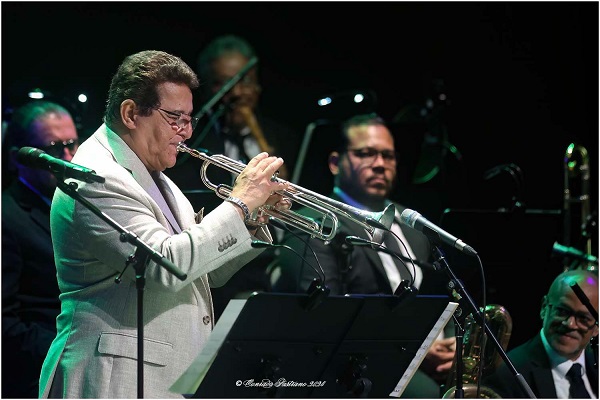
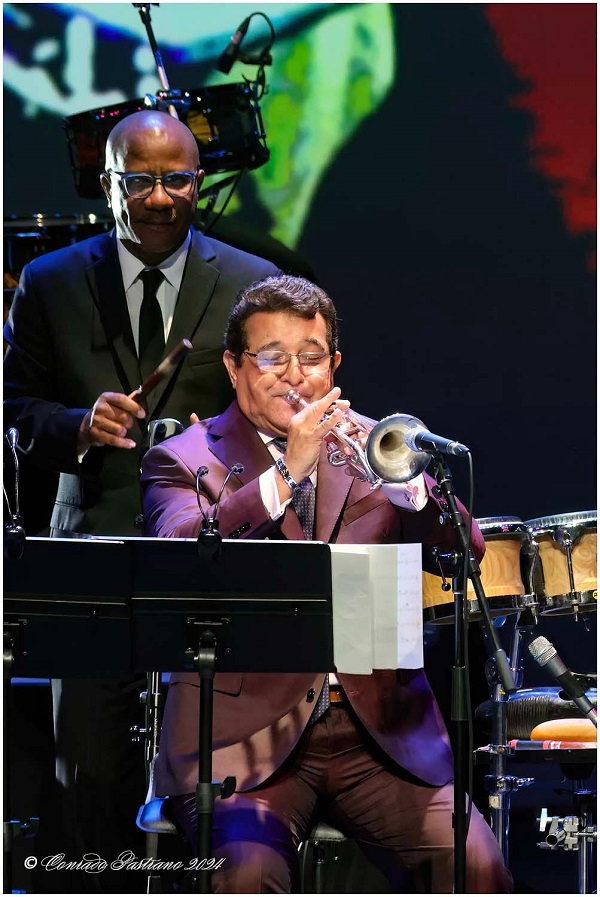
Luis "Perico" Ortiz and his Orchestra
Luis “Perico” Ortiz and his Orchestra

Once in the concert hall, the child trumpeter Daniel Torres (whom Perico predicted would be his successor) and Luis “Perico” Ortiz kicked off the concert with a fun trumpet correspondence. The musicians, turned into actors, shared with us the scene in which we saw Luis “Luisín” Ortiz as a child, playing ‘Quítate de la vía Perico’ with his trumpet; introduction that gave way to the custodian of Ismael Rivera’s legacy (“Moncho” Rivera) to sing the emblematic theme to which “Perico” owes his nickname, while the audience enjoyed images of “Maelo” on a giant screen. The short film defined how “El Sonero Mayor”, personified by “Moncho” told “Luisín”, that from that moment on he would be called “Perico”.

Moncho also interpreted ‘Bilongo’, a song in which Richard Carrasco stood out on the bongo after the saxophones made themselves felt with forcefulness. “Perico” also claimed his turn with the trumpet solo that preceded a resounding “Buenas noches” in the voice of the virtuoso trumpet player.

The orchestra was integrated by: Luis “Perico” Ortiz on musical direction; Yturvides Vilchez, Jan Duclerc and Rolando Alejandro Lora on trumpets; Rafy Torres, Jorge Díaz, Randy A. Román, Mario Alonso Ángel Marulanda on trombones; Roberto Calderón on baritone saxophone, Luis Daniel Valentín Muñiz on tenor saxophone; Antonio Luis Orta and Luis Fernando Hernández on alto saxophones; David Marcano on timbales; Gadwin Vargas Vélez on congas; Richard Carrasco Ayala on bongo; Juan Manuel Rivera Colón on piano; Carlos Luis Martínez Peña on bass; Henry Santiago and David Carrero on backing vocals.

Luis “Perico” Ortiz
Luis “Perico” Ortiz

Then, Henry Santiago received the microphone to sing ‘Tres grandes amigos’. For the song, which refers to Tito Rodríguez, Tito Puente, and Machito; “Perico” introduced “Manolito” Rodríguez and Arianelys Ortiz Cruz, a blind autistic timbalera player.

He was followed by Norberto Vélez, who performed ‘Julián Del Valle’ (1978, Súper salsa) and ‘De patitas’ (1979, Luis “Perico” Ortiz, One of a kind) – songs of great vocal and interpretative difficulty, popularized by the unmistakable voice of Rafael De Jesús – with his usual sympathy. Nor-Bert once again demonstrated his powerful voice, and was matched by the saxophones, whose forcefulness did not diminish the power of Vélez’s voice.

“La India” arrived with her usual energy to interpret ‘Químbara’ and “Manolito” did his part singing ‘La Reina es la rumba’, in company of “La India”, alternating on the soneos.

Coro Miyare” made use of Richard Carrasco’s unbeatable performance in the bongo solo with drumsticks -which had been popularized by Roberto Roena-, followed by the crushing solo by “Perico”, the piano solo by Juan Rivera, the conga solo by Gadwin Vargas and the timbales solo by David Marcano.

Richard Carrasco Ayala en el bongó y Luis “Perico” Ortiz

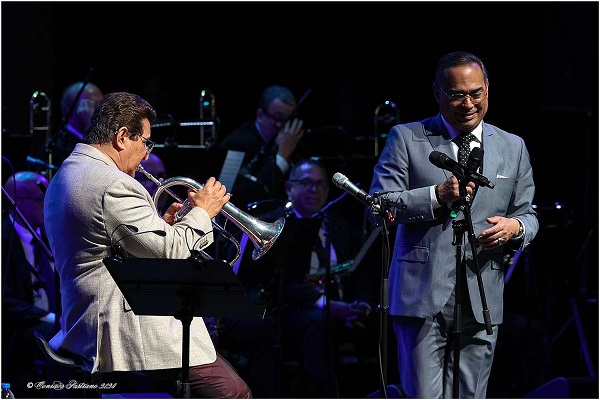
The highlight of the concert was Gilberto Santa Rosa’s brilliant renditions of ‘Atrevida’ and ‘Planté bandera’; recorded and immortalized by Tommy Olivencia’s La Primerísima, to which Santa Rosa briefly belonged.

After the intermission, as a tribute to the “Niño bonito de la salsa”, “Perico” invited Tony Vega to the stage to perform ‘Así se compone un son’ and ‘Borinquen tiene montuno’, the latter adorned with an elaborate trumpet solo by “Perico”.

“Perico” brought Gerardo Rivas to the stage to perform ‘Río abajo va’ (1985, La vida en broma), popularized in the voice of Domingo Quiñones. Gerardo explained that he had accepted the invitation to participate in the concert without knowing which song he was going to sing, in a clear allusion to the vocal difficulty of reaching Domingo’s vocal register. Gadwin Vargas sprinkled the theme with a conga solo with a mozambique beat, very well achieved. Gerardo’s second song, ‘Perico lo tiene’, brought to the stage the cacique of the Rivas dynasty (“Jerry” Rivas, singer of El Gran Combo de Puerto Rico) on the tres and Richie Bastar (bongos player of La Universidad de la Salsa). While Bastar took over on the bongo and the bell, Richard Carrasco took over the güiro. At the end of the intervention, “Jerry” asked for a round of applause for the mulato mayor, Don Rafael Ithier, who was enjoying the concert with all of us who were there.

Then, “Perico” dedicated ‘Perfume de gardenias’ to his mother; a speech that was enjoyed with an instrumental prelude performed by “Perico” and a great vocalization by “El Caballero de la Salsa”.

Next up was Rubén “Panamá” Blades, who received a standing ovation from the audience. This made visibility difficult, although it did not affect our enjoyment of the audio. Blades was in charge of the big hits ‘Plástico’ and ‘Pedro Navaja’ (1978, Siembra). During ‘Pedro Navaja’ Gadwin Vargas replicated the conga sound that Eddie Montalvo immortalized on the recording.

The stage was full when all the guests arrived to perform ‘Como vivo yo’, after Perico announced with a trumpet solo the song that would end the show.

As Luis “Perico” Ortiz said, the vote of love and confidence that we witnessed there will be remembered as an unrepeatable evening, which detailed what has been six decades of impeccable career that the trumpeter, composer, arranger and music producer has achieved.

Luis “Perico” Ortiz y Gilberto SantaRosa
Bella Martinez Puerto Rico 


Also Read: ¡Attack Sergio! Unbreakable: A fun read because of the contradictory content

La Puertorriqueña de Don Perignon presents her new recording work

Demostrando in time

With great enthusiasm, La Puertorriqueña de “Don Perignon” announces the release of its most transcendental recording production, entitled Demostrando a tiempo.

La Puertorriqueña de Don Perignon presents her new recording work

This release is a testament to more than forty-five years dedicated to music by the orchestra’s leader, Pedro Morales Cortijo, known artistically as “Don Perignon”. After overcoming health challenges,

“Don Perignon“, with renewed vigor, turns his attention to what he calls “an unprecedented chapter for the orchestra”.

And what better way to kick off this new phase than with the release of the album? Demostrando a tiempo, a title derived from Moncho Rivera’s composition arranged by Carlos García, adds a historical and significant nuance to the recording.

“Don Perignon” highlights the importance of paying tribute to the pioneers of Puerto Rican popular music, Ismael Rivera and Rafael Cortijo, underlining the crucial influence they had on the musical movement to which their group belongs:

“Moncho represents Ismael Rivera and I represent Rafael Cortijo. They (Cortijo and Rivera) were the ones who created what we do, that’s why we decided to pay tribute to these two greats of our music”.

The album opens with a composition by Sammy Ayala, entitled ‘Dilo tú’, previously recorded by Rafael Cortijo’s Combo. This song, on this occasion, includes an exquisite timbal solo by Perignon.

This, which is La Puertorriqueña’s thirteenth production, rescues two jewels of the prolific composer Catalino “Tite” Curet Alonso.

The first, ‘Aquí estoy con mi son’, was first recorded in 1991 by singer Frankie Hernández under the production of Bobby Valentín. The second, ‘Soy tu ley’, was initially recorded in bolero time by Cheo Feliciano, the so-called “Señor sentimiento”. For this occasion, the skillful musical arrangement -in salsa key- by Ramón Sánchez gives the song a fascinating nuance, by integrating it with the distinctive sonority of the orchestra.

Pedro Luis Morales Cortijo, is the first name of the Puerto Rican timbalero and musical director

It should be noted that ‘Soy tu ley’ was destined to be part of the album Música Maestro (2014), but like fine wines, it waited patiently until it reached its optimum point to be released.

Highlighting the musical diversity, the album includes ‘A quién iré’, a composition by singer-songwriter Héctor Olmo, which at Perignon’s request, seeks to express gratitude to God for all that He has given him, including what the orchestra leader calls “a new opportunity in life”.

“I have my way of thanking God, but not through a message as fine as that,” says the director of La Puertorriqueña, considering that the song written by Olmo came to answer questions about everything he has achieved musically, despite the many obstacles that have come his way. ‘A quién iré’ features the arrangement by Juan C. Cardona, the vocal participation of Alex D’ Castro and the creation of the chorus by “Don Perignon” himself.

Demostrando a tiempo includes the songs: ‘Sácala a bailar’ (composition and vocals by José Karlo Ribot, with a tasty arrangement by Andy Guzmán who incorporates a forceful piano solo); ‘Sin brújula’ (lyrics by Harold Aguirre, musical arrangement by Ramón Sánchez, sung by Joe González); ‘La clave me lleva’, ‘Como si me amaras’ and ‘Afinque, cadencia y sabor’ (title that lists the distinctive adjectives of La Puertorriqueña).

Demostrando a tiempo reflects the dedication and unparalleled talent of “Don Perignon” and La Puertorriqueña.

Through a careful fusion of tradition and innovation showcased in the repertoire, this album represents the invaluable contribution of the orchestra, captivating dancers around the world with its vibrant and distinctive sound.

La Puertorriqueña de “Don Perignon” invites the public to immerse themselves in this unique musical experience and enjoy Demostrando a tiempo, available on digital platforms and select music stores.

La Puertorriqueña de “Don Perignon” invites the public to immerse themselves in this unique musical experience and enjoy Demostrando a tiempo, available on digital platforms and select music stores.

Don’t miss the opportunity to experience the magic of Demostrando on time. Join us on this exciting musical journey.

About Don Perignon:

Pedro Luis Morales Cortijo, is the first name of the Puerto Rican timbalero and musical director known internationally as “Don Perignon,” whose musical career began in 1974.

Don Perignon y la Puetorriqueña

“Don Perignon” comes from a family with a long musical tradition, which includes his cousin, Rafael Cortijo.

After having stood out as musical director for singers Andy Montañez and Lalo Rodríguez, in 1989. “Don Perignon” released his first production La buena vida, which featured the participation of Victor Manuelle. This album was followed by Festival de soneros (1990) and Subiendo (1992).

In his career “Don Perignon” with his orchestra, La Puertorriqueña, has released thirteen recordings, in which figures such as Gilberto Santa Rosa, Víctor Manuelle, Luisito Carrión, Oswaldo Román, Pedro Brull, Josué Rosado, Rico Walker, José Alberto “El Canario” and Hermán Olivera, among others, have collaborated.

Bella Martinez Puerto Rico


Also Read: Déjalo, the latest track by Pedro Conga y su Orquesta Internacional

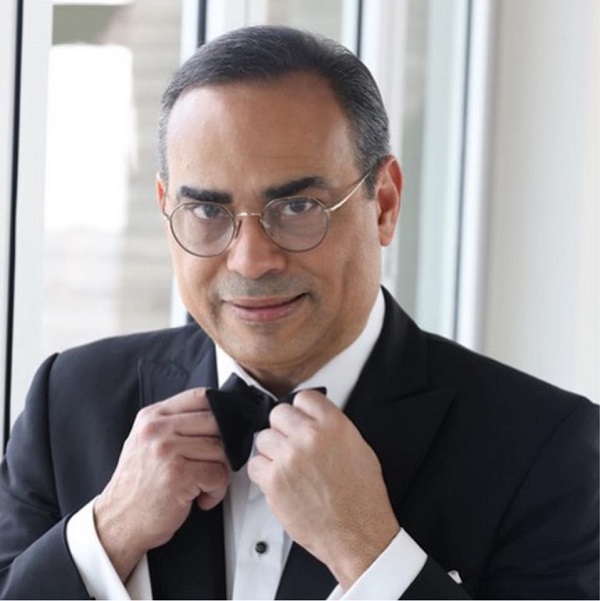
Gilberto Santa Rosa is a Puerto Rican singer, songwriter and sonero better known as “El Caballero de la Salsa” (The Gentleman of Salsa)

Gilberto Santa Rosa (born August 21, 1962) is a Puerto Rican singer, songwriter and also known as “El Caballero de la Salsa” from Carolina, Puerto Rico.

Growing up on the salsa music of the 50’s and 60’s, Rosa became interested in pursuing music during school, participating in her first concert in 1976 while still a tender teenager. After performing with the Mario Ortiz Orchestra.

Gilberto Santa Rosa ex-superior singer and sonero better known as "El Caballero de la Salsa" (The Gentleman of Salsa).
Gilberto Santa Rosa ex-superior singer and sonero better known as “El Caballero de la Salsa” (The Gentleman of Salsa).

Santa Rosa was recruited by La Grande Orchestra where she stayed for two years and met Elías López.

The 1980s brought a series of recordings for the singer with Orquesta Tommy Olivencia, El Gran Combo and the tribute album “Homenaje a Eddie Palmieri” with the Puerto Rican All Stars.

Gilberto Santa Rosa became a unique salsa improviser, walking the line between tropical and romantic styles of music, which contributed to his appreciation and popularity.

In 1986 Rosa signed with Combo Records and among others released the successful albums “Good Vibrations” featuring arrangements by Mario Ortiz, Ramon Sanchez and Tommy Villariny, “Keeping Cool! “and “De Amor y Salso”.

Due to the success of her fourth album entitled “Sala en Movimiento” released in 1989, Rosa signed with CBS Discos who could distribute her music internationally.

Teaming up with the young composer Omar Alfanno on the album “Punto de Vista” Rosa achieved consistent success with a series of hits including “Vivr sin Ella”, Perdoname” and De Cualquier”. The successor album “Perspectiva” released in 1991 was the Salsero’s biggest hit to date and included many of the same collaborators as its predecessor.

In 1990 Rosa was awarded the Billboard Lo Nuestro Award for Best Male Singer, recorded a live album at Carnegie Hall Theatre in New York, USA, the first tropical salsa artist to do so, and acted as Puerto Rican goodwill ambassador to Japan where he sang “De Cara al Viento” in Japanese.

Santa Rosa was recruited by La Grande Orchestra where she stayed for two years and met Elías López.

The singer generated a string of hits throughout the 1990s, always altering his particular sound and diversifying his music. From the orchestral “De Cara al Viento” (1994) and the energized “Esencia” (1996) to “De Corazón (1997) and “Expresión (1999).

At this point Rosa’s popularity and success had increased and the singer seemingly could do no wrong, with Rosa’s subsequent albums achieving both critical and commercial success, including 2002’s “Viceversa” which produced the hits “Por Más Que Intento” and “Un Montón de Estrellas”.

Santa Rosa ha sido honrada por Union City, New Jersey, USA con una llave de la ciudad y una estrella en su Paseo de la Fama, tiene el record de la mayor cantidad de álbumes número uno en la lista Billboard Tropical Albums, así como la mayor cantidad de nominaciones al Grammy por Mejor Salsa.

Canto y grabo varias producciones con el Maestro Mister “AFINQUE” Don Willie Rosario y ese fue el puente para grabar como solista.

En 1981, Gilberto Santa Rosa se unió a la banda Willie Rosario y su Orquesta, con la que grabó seis discos de larga duración. Su primera grabación se presentó en el álbum The Portrait Of a Salsa Man, en el sello Top Hits.

Canciones como “El Antifaz”, “La Mitad” y “El Condenado” se escuchan en la voz de Gilberto Santa Rosa, quien compartió la parte vocal con Tony Vega y Bobby Concepción en dicho álbum.

1982: Willie Rosario y su Orquesta graban el álbum Atízame el fogón para el sello Top Hits. Bobby Concepción, Tony Vega y Gilberto Santa Rosa participan como cantantes en este LP.

1983: El cantante santurcino participa en el álbum de Willie Rosario y su Orquesta, The Salsa Machine, en el sello Top Hits, de este álbum, canciones como “Amigo” y “Cuando Se Canta Bonito” son vocalizadas por Gilberto Santa Rosa.

Gilberto Santa Rosa (born August 21, 1962)

1984: Gilberto Santa Rosa comparte voz con Tony Vega en el álbum de Willie Rosario y su Orquesta llamado Nuevos Horizontes, publicado por Bronco Records, en ese álbum se grabó el tema “Lluvia”, uno de los primeros éxitos de nuestro caballero de la salsa. .

Willie Rosario celebrará 100 años de vida con un gran concierto en el Coliseo de Puerto Rico.

Para la celebración musical estará acompañado por sus amigos y colegas, Gilberto Santarosa y Tony Vega,

El legendario músico puertorriqueño Willie Rosario celebrará sus 100 años de vida en 2024 con un gran concierto en su tierra natal el próximo 27 de abril, junto a dos de los ilustres intérpretes que integraron su orquesta, Gilberto Santa Rosa y Tony Vega.

Willie Rosario celebrará 100 años de vida con un gran concierto en el Coliseo de Puerto Rico.

Source:

El Nuevo Dia

Also Read: The Royalty of our Latin Music Pete “El Conde” Rodríguez first singer signed by Fania Records label

  • « Go to Previous Page
  • Page 1
  • Interim pages omitted …
  • Page 7
  • Page 8
  • Page 9
  • Page 10
  • Page 11
  • Interim pages omitted …
  • Page 99
  • Go to Next Page »

International Salsa Magazine (ISM) is a monthly publication about Salsa activities around the world, that has been publishing since 2007. It is a world network of volunteers coordinated by ISM Magazine. We are working to strengthen all the events by working together.