• Skip to primary navigation
  • Skip to main content

International Salsa Magazine

  • HOME
  • Previous editions
    • 2026
      • ISM / April 2026
      • ISM / March 2026
      • ISM / February 2026
      • ISM / January 2026
    • 2025
      • ISM / December 2025
      • ISM / November 2025
      • ISM / October 2025
      • ISM / September 2025
      • ISM / August 2025
      • ISM / July 2025
      • ISM / June 2025
      • ISM / May2025
      • ISM / April 2025
      • ISM / March 2025
      • ISM / February 2025
      • ISM / January 2025
    • 2024
      • ISM / December 2024
      • ISM / November 2024
      • ISM / October 2024
      • ISM / September 2024
      • ISM / August 2024
      • ISM / July 2024
      • ISM / June 2024
      • ISM / May 2024
      • ISM / April 2024
      • ISM / March 2024
      • ISM / February 2024
      • ISM / January 2024
    • 2023
      • ISM / December 2023
      • ISM / November 2023
      • ISM / October 2023
      • ISM – September 2023
      • ISM – August 2023
      • ISM July 2023
      • ISM Edition June 2023
      • ISM – May 2023
      • ISM April 2023
      • ISM March 2023
      • ISM February 2023
      • ISM January 2023
    • 2022
      • ISM December 2022
      • ISM November 2022
      • ISM October 2022
      • ISM September 2022
      • ISM August 2022
      • ISM July 2022
      • ISM June 2022
      • ISM May 2022
      • ISM February 2022
      • ISM January 2022
    • 2021
      • ISM December 2021
      • ISM November 2021
      • ISM October – 2021
      • ISM September 2021
      • ISM August 2021
      • ISM July 2021
      • ISM May 2021
      • ISM April 2021
      • ISM June 2021
      • ISM March 2021
      • ISM February 2021
      • ISM January 2021
    • 2020
      • ISM December 2020
      • ISM November 2020
      • ISM October 2020
      • ISM September 2020
      • ISM August 2020
      • ISM July 2020
      • ISM June 2020
      • ISM May 2020
      • ISM April 2020
      • ISM March 2020
      • ISM February 2020
      • ISM January 2020
    • 2019
      • ISM December 2019
      • ISM November 2019
      • ISM October 2019
      • ISM Septembre 2019
      • ISM August 2019
      • ISM July 2019
      • ISM June 2019
    • 2016
      • ISM December 2016
  • Spanish
  • Download Salsa App
    • Android
    • Apple

Search Results for: Puerto Rico

Puerto Rican bandleader and musician Diana Sosa talks about her many projects in Nashville, Tennessee

We had a wonderful and very nice conversation with Puerto Rican percussionist, timbalera, conga player, and cuatro player Diana Sosa, who kindly told us about all the projects she has in the pipeline. Her husband and bandmate, guitarist and vocalist Chuck Nelson, put us in touch with her so we could learn more about both the project they share and the one she has undertaken on her own.

Then these are the things the talented Puerto Rican shared with us on this warm Sunday before Easter.

Diana Sosa is playing
Diana Sosa is posing for the camera while playing the timbales

How Diana got into the world of music

Diana was born and raised in Puerto Rico, where she began to love music and play, but not professionally yet. She was just experimenting with some traditional instruments of her homeland, such as the Puerto Rican cuatro, which she even studied with a private teacher. 

At the age of 39, she moved to Nashville, Tennessee, where she finally got her first big opportunities in music, and the background she brought for years helped her a lot. It all started with a short rehearsal she was invited to, and from there, she has done nothing but prove what she is really made of. 

Of course, she keeps studying and preparing to improve every day. When she is not learning to play with fellow musicians like John Santos, she is taking online courses to solve any doubts she may have.

Diana’s first opportunity with The Bicho Brothers

The first serious group that gave Diana the opportunity to develop professionally—and with which she keeps to playing to this day is The Bicho Brothers, a classic rock band whose members really appreciated the contribution provided by Diana. For this reason, it is she who brings that Latin flavor, the product of her heritage and years of training in these genres.

Something that really attracted the audience was that she was the only woman in the group and, incidentally, she played the timbales, which was uncommon back then. In addition, she added atypical sounds to certain well-known songs, which was also remarkable.

Diana Sosa and the rest of the Bicho Brothers
The Bicho Brothers from left to right: Jeff Krinks (guitar and vocals), Ron Krasinski (drums), Diana Sosa (timbales, congas, percussion, and Puerto Rican cuatro), Chuck Nelson (guitar and vocals), and Kenny Zarider (keyboards and vocals)

Another important personality who encouraged her to follow this route was the great producer Bill Cuomo, who told her she was very good at playing but needed to improve her technique. Twenty years later, it can be said that she took him at his Word seeing all she has achieved since then. From that point on, there have been many other projects and opportunities that make her very happy and keep her fulfilled.

Soul Sacrifice

Soul Sacrifice is a Santana tribute band founded in 1969 that has won a high reputation in Nashville by becoming one of the best tributes to Santana to date. The mix of familiar melodies and infectious rhythms they play at every show transports audiences to the biggest classics of the legendary Latin rock group created by Carlos Santana.

The band also includes some of the same members of The Bicho Brothers, such as the cases of Diana and Chuck due to all the years they have spent playing together, but including Cuban musician John Santos. He plays a fundamental role in making people feel they are listening to the original Santana rather than an imitation, which is why both he and Diana are key to the band’s performance.

Diana Sosa with Diana's Mambo Maniacs
Diana Sosa playing with Diana’s Mambo Maniacs

Diana’s Mambo Maniacs

Diana also has her own project, which she decided to call Diana’s Mambo Manics. This Latin music group was founded in the early summer of 2025 as part of Hispanic Heritage Month. In that time of year, there are always many festivals dedicated to Hispanic and Latin music in the United States and around the world, so Diana and a group of musicians she had been in contact with for some time took the opportunity to play wherever they were able to make themselves known.

Among some of the musicians in the band we can mention John Santos as singer and timbalero, whose presence is essential at every show. The group also includes conga player Josvany Cordero, bassist Isoel Villareal, pianist Kenny Zarider, trumpeter Joe Mercado, and trombonist Huge Lindsay.

The main difference between this band, The Bicho Brothers and Soul Sacrifice is that it plays exclusively Latin music, but of the great artists in the 1950s and 1960s who performed at the Palladium Ballroom, the Copacabana, El Corso, Chez José & 3 and 1, among many others. Diana feels that, to a certain extent, she pays tribute to her parents, who used to go dancing and enjoying these rhythms to some of these places in their youth.

However, not all are covers. She is about to release an original song featuring Puerto Rican cuatro player Prodigio Claudio, but she did not have the details to share with us yet.

Diana and Tito Puente Jr.
Diana Sosa Playing with Tito Puente Jr.

Read also: Bandleader and bongosero Ray Degaldo is here to talk about his life and career

Don Perignon Y La Puertorriqueña releases his new album ‘‘Classique et Savoureux’’

Today we welcome a friend of the house we have not spoken to in a long time, but who has a lot to tell. We are talking about bandleader and timbalero Pedro Luis Morales Cortijos, artistically known as Don Perignon, whom we have had the pleasure of interviewing after many years.

The artist and his orchestra La Puertorriqueña have released their latest album, ‘‘Classique et Savoureux,’’ which the Puerto Rican musician talks about in this conversation, among many other interesting topics regarding his personal life and career.

Don Perignon with a recognition
Don Perignon receiving recognition by the City of Los Angeles

A long-awaited reunion

When we were last in touch with Don Perignon, he was promoting his latest album, Demostrando A Tiempo, and, of course, much water has flowed under the bridge since then. After having released that album, the artist had many performances and quite emblematic events, such as the previous edition of El Crucero de La Salsa, which welcomed big names including El Gran Combo de Puerto Rico, La Sonora Ponceña, and many more. 

There were also some performances in Puerto Rico and travel to certain parts of the United States, such as Connecticut and New York. At the same time, they were already working on “Classique et Savoureux” and another production. With Christmas approaching, he and his team preferred to shove these projects aside for a while to leave center stage to Christmas music.

Arriving January, they finally got down to work to start the production without further delay. The premiere on digital platforms was held on January 23, and the physical release will be on February 13, but it does not end there, as they are also planning a second release on March 21, on the eve of Puerto Rico’s Día Nacional de La Zalsa. For the same date, vinyls are expected to be ready for collectors who want to buy them.

For the time of this interview, the music had already been recorded, and it was now the singers, including Alex D’Castro, Hermán Olivera, Josué Rosado, and Marcial Istúriz, who were in the studio recording their voices for the album.

Gilberto and Don Perignon
Gilberto Santa Rosa and Don Perignon

Why is the album called “Classique et Savoureux”?

With regard to the curious name he chose for his album, it was a whim of Don Perignon himself, who wanted to recognize and give thanks to the public of France and the French language, from which he adopted the name Don Perignon. The artist has been calling himself that for the last 40 years and has built his career on it. Although the name comes from a famous French champagne, he has never received any claims or lawsuits demanding that he stops using it, which is much appreciated. 

In fact, he got to talk to the person responsible for introducing that champagne in a beverage company in Puerto Rico and understood that Don Perignon’s career and fame in no way damages the brand’s name and reputation.

Authorized biography 

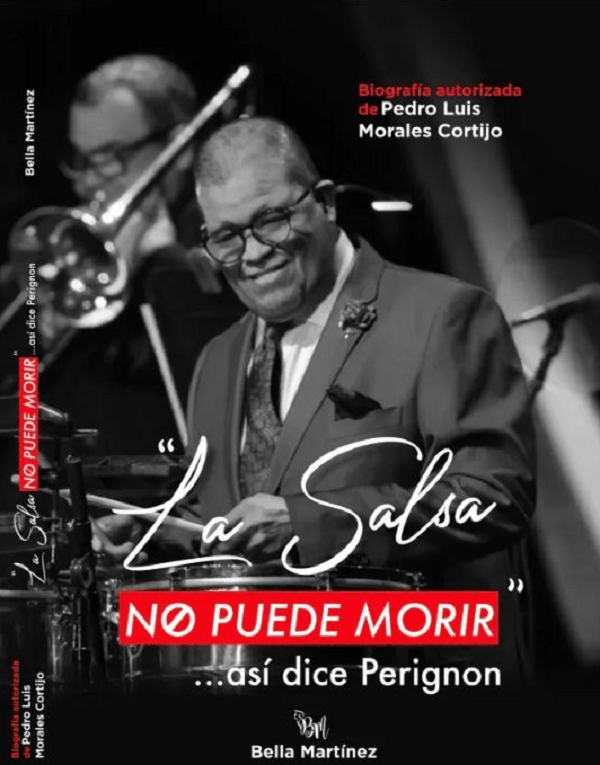
In addition to releasing his album, Don Perignon has also committed part of his time to engage in his authorized biography written by Puerto Rican author and International Salsa Magazine correspondent Bella Martínez. The book tells his story from his childhood to this day and includes the participation of the artist’s great friends and collaborators, including Andy Montañéz, Víctor Manuelle, and Gilberto Santa Rosa.

Some members of his family and other important people in his life also took part in the biography. 

Don Perignon and Victor
Don Perignon and Victor Manuelle

In each and every stage of his life described in the book, music plays a fundamental role given that, in his own words, it is an enjoyment that he has never been able to see as work.

It is titled “La Salsa No Puede Morir, así dice Perignon”, and is now available through platforms such as Amazon. In addition, the cover was designed by Félix Disla, the image is by Alina De Lourdes Luciano, the introduction is by Jaime Torres Torres, and the editorial care is by Robert Tellez M. 

Activities outside of music

Let us remember that Don Perignon was working as a bailiff at the Puerto Rico Department of Justice until April 2023, when he finally retired and was able to dedicate himself in full to music because he finally had time for it. He also pointed out that, should his health permit him, he will be involved in many other collaborations and projects with other singers who want to enter the Puerto Rican market, and he is happy to be able help them. 

Similarly, he assures us that he leaves it all in Our Lord Jesus Christ’s hands, who will let him know that he can achieve all this.

Cover of the book
Cover of ”La Salsa No Puede Morir, así dice Don Perignon”

Read also: Carlos Jimenez offers his talent and passion to charm the audience in universities, hotels, and restaurants all over New York

Don Perignon and La Puertorriqueña Release Classique et Savoureux

Timbalero, director, and music producer Pedro Luis Morales Cortijo, better known as “Don Perignon,” presents the 14th musical production from the “dancer’s orchestra” titled Classique et Savoureux. The leader of La Puertorriqueña features three guest vocalists on the album: Venezuelan musician and sonero Marcial Istúriz; Josué Rosado, one of the most iconic voices from La Puertorriqueña’s history; and “El Niño de Trastalleres,” Andy Montañez. With this record, Don Perignon reinforces his commitment to producing “flavorful” salsa with the dancer in mind.

In September 2025, Don Perignon and Andy Montañez reunited in the recording studio to reinvent “La Bikina.” The digital single fused the signature sound of Don Perignon’s La Puertorriqueña with the seasoned expertise of Andy Montañez. This alliance revives a nostalgic duo—the “dancing timbal” and the “singing compressor” that dates back to 1981. At that time, “Perín” took the reins as Andy’s musical director at the invitation of the legendary vocalist following his departure from Dimensión Latina. From that eight-year partnership, Andy Montañez still treasures Don Perignon’s participation in the 1988 recording of El Eterno Enamorado (TH-Rodven), where the latter not only played the timbales but also served as the album’s musical director. Regarding this, Andy says: “I remember him with great affection and appreciate his discipline in directing that recording, especially because every track became a hit.”

Don Perignon and La Puertorriqueña Release Classique et Savoureux

As promised in earlier press releases, that single was the prelude to Classique et Savoureux, where “La Bikina” is featured as the third track. Don Perignon released the song arranged by pianist and composer Domingo García 60 years after its original composition. The song, originally titled “The Beginning,” was penned by Mexican songwriter Rubén Fuentes Gasson.

Tracklist and Credits

The tracklist for Classique et Savoureux is as follows:

  • “Ella Sigue Bailando”: Composed and performed by Joe González; arranged by Andy Guzmán.
  • “Hay Que Quererlas”: Composed and performed by José Karlo Ribot; arranged by Roberto Pérez.
  • “Pura Imagen”: A classic piece by Adalberto Álvarez, vocalized by Joe González; arranged by Juan C. Cardona.
  • “Ayer Te Vi”: Written by Rubén Rada, featuring the vocals of Henry Santiago; arranged by Ramón Sánchez.
  • “No Se Equivocan”: Written and performed by José Karlo Ribot; arranged by Carlos “Cuto” Soto.
  • “Yo Soy Guaracha”: Written by Ángel Santos, performed by Marcial Istúriz; arranged by Carlos García.
  • A Medley of Boleros: Featuring “Necesito Llamar Su Atención” (Roberto and Erasmo Carlo) and “Mírame Más” (Julio Gutiérrez), performed by Henry Santiago and Joe González; arranged by Juan C. Cardona with a flute solo by Roberto Calderón.
  • “Será Mejor”: The closing track, written by Héctor Olmo and arranged by Juan C. Cardona, featuring vocalist Josué Rosado.

The Musicians

Leading his musical generation on the timbales and as director, Don Perignon was backed by the musicians of La Puertorriqueña and several guest artists. On the congas, Antonio “Coqui” Marrero, Jean Carlos Camuñas, and the late William “Kachiro” Thompson ensured the time and clave remained rhythmically precise. On the bongos, you can hear the distinctive touch of one of the original members of La Puertorriqueña, Miguel Aponte. On bass, the unmistakable Efraín Hernández interacts with Juan Rivera on piano. Other pianists on the recording include Luis Marín, Leni Prieto, and Ricky Rodríguez. The production is rounded out by the backing vocals of the incomparable Henry Santiago, Juan Bautista, and Joe González. The trumpet section featured Ángel and Richie Segarra along with Jesús Alonso; Sammy Vélez on baritone sax; and the trombones were handled by Juan C. Cardona, Gamalier González, César Javier Ayala, and Carlos “Cuto” Soto.

Pedro Luis Morales Cortijo “Don Perignon”

The album was recorded at the studios of Rolando Alejandro and Angelito Segarra, with mastering by Wiso Rivera.

This release “reaffirms Don Perignon’s commitment to the evolution of salsa in the digital age” without neglecting physical formats, as the album is available on CD and LP to ensure the music is accessible to everyone.

With the title Classique et Savoureux, Don Perignon honors more than four decades of using his stage name inspired by the French champagne Dom Pérignon. He expresses gratitude for the longevity of a concept that began without a clear goal but was built on heavy discipline and the firm purpose of making music for the dancer. In an interview, the bandleader stated that his musical project “is already a classic, thanks to the dancers who have appreciated and supported its sabrosura (flavor).”

Also Read: Long live the music! Repeat after me: “Long live the musicians so they can keep making it.” And I’ll add: “Long live SALSA!”

Bella Martinez Puerto Rico

Ángel Luis Canales is a renowned Puerto Rican singer and composer known as “El Diferente” (The Different One) for his particular and irreverent style

Angel Canales was born on June 29, 1950, in Santurce, Puerto Rico.

During his childhood, around the age of 8 or 10, he moved with his family to New York City, where he lived in East Harlem (Upper Manhattan). Musical influences indicate that from a young age, he was strongly influenced by the music of Cortijo y su Combo and Ismael Rivera.

Before or concurrently with his musical career, he worked in the jewelry business; he was a messenger and later learned to cut and polish diamonds, a skill that allowed him to self-finance his musical career and pay high salaries to his musicians.

Ángel Luis Canales is a renowned Puerto Rican singer and songwriter known as El Diferente for his unique and irreverent style.

Musical Career

His Beginnings: He started as a timbalero in Ray Jay’s orchestra, where he debuted as a singer, replacing the lead vocalist.

His first album (1970), titled “Brujería,” was released in 1970 and recorded under the Alegre Records label, with musical direction by Mark Dimond. Hits from this production include “El Barrio,” “Yo No Tengo Pena,” and the title track.

Notable Hits: Among his most popular songs are: “Nostalgia,” “Sol de Mi Vida,” “Perico Macoña,” “Lejos de Ti,” “Hace Tiempo,” “El Cantante y la Orquesta,” “Sabor de los Rumberos Nuevos,” “Bomba Carambomba,” and his celebrated rendition of the bolero “Dos Gardenias.”

His Unique Style is recognized for its unorthodox approach and distinctive vocal timbre, which earned him the nickname “El Diferente” (The Different One).

He was a highly independent artist who self-financed his albums and founded his own record label, Celanac Records.

Tours and Retirement

International Tours: He toured internationally, visiting countries such as Panama (his first), Venezuela (where he performed at the Poliedro de Caracas in 1982), Colombia, and Peru. It is said that he never performed with his orchestra in his native Puerto Rico.

He retired in the late 1990s, deciding to leave the stage.

Currently, he is reportedly battling Parkinson’s disease, which has limited him and led him to choose silence and retirement, although he occasionally attends private events. He is currently 75 years old.

Àngel Luis Canales, y el pianista, compositor y arreglista Gilberto el pulpo Colòn

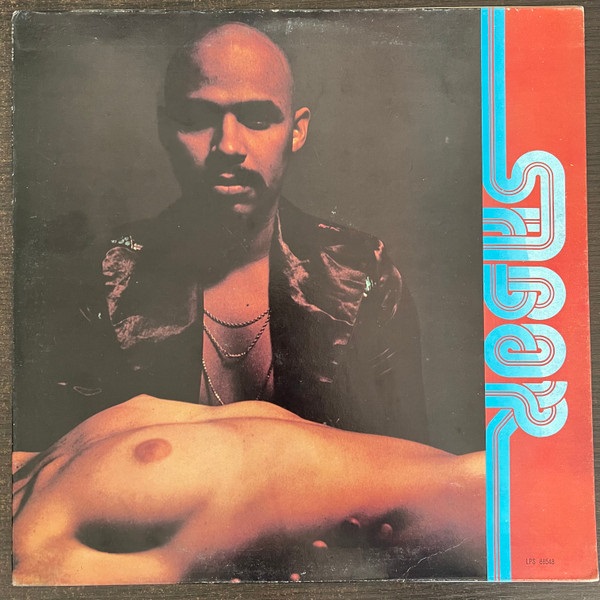
50 Years Since the Launch of “Sabor” (1975)

The Album: The album titled “Sabor” by Angel Canales was released under the Alegre Records label in 1975.

Only a boricua (Puerto Rican) who has been absent from their homeland knows what it’s like to be away from Puerto Rico when winter arrives in New York City. Or when you’re inside a taxi or walking the congested streets of the Bronx or the Latino barrio, and all you see around you are skyscrapers and more skyscrapers. The anxiety and sense of helplessness that overwhelm your spirit in the concrete jungle can only be calmed by memories.

50 years ago, on Monday, November 10, 1975, the unique voice of Puerto Rican singer Ángel Luis Canales consoled the thousands of boricuas oppressed by nostalgia with his composition “Lejos De Ti” (Far From You). It was a confession and affirmation of his Puerto Rican identity, in which he asserts that his love for his homeland will never die, even though he was raised in New York.

The song is a guaguancó with lyrics that evoke images of old San Juan, Villa Palmeras and its rich bomba heritage, Boca de Cangrejos, fried fritters on the grill, and the river that crosses through the old Ancón de Loíza Aldea, where his grandmother lived. “Lejos De Ti” remains the most remembered track from “Sabor,” an album produced by Joe Cain, recorded in late 1974, and released by Alegre Records on Monday, November 10, 1975.

Angle Canales Sabor 1975 Photography By Dominique

This album is considered one of the best salsa releases of the 1970s.

Canales’ Style: Canales favored a different style of interpreting Afro-Caribbean rhythms, combining elements from Héctor Lavoe, Ismael Rivera, Vicentico Valdés, and Paquito Pérez (the singer of the Orquesta Zodiac of Loíza). He extended the melodies with his nasal voice, challenging the poetry of the montunos, but going off-key and mispronouncing some words. His diction was far from perfect.

Production: The architect of Canales’ success was Colombian pianist Edy Martínez, who arranged seven of the eight tracks on this session, from cut #2 to #8. Due to a prior commitment with Mongo Santamaría’s band, he left his compatriot José Madrid in charge of the piano performance on this record.

Under Martínez’s direction, Canales embraced fame. “Sabor” was his second album between 1970 and 1971, he had recorded the “Brujería” session with pianist Mark Alexander “Markolino” Dimond, who founded Conjunto Sabor after spending several years with Willie Colón’s band.

Canales reappeared four years later with the Orquesta Sabor los Rumberos Nuevos with an arrangement by Louie Cruz. That same year, 1975, Larry Harlow produced Mark Dimond’s classic “Beethoven’s V” featuring vocalists Frankie Dante and Chivirico Dávila. “Sabor” was a huge hit.

Tours and Artistic Choices: The singer toured Europe, the United States, and South America, where Colombians, Panamanians, and Peruvians remember him fondly to this day, despite health issues forcing him to retire from the stage.

During the golden age of salsa, singers were expected to master all genres, and boleros were no exception. His vocalization on “La Hiedra” (a track written by Saverio Saratini and Vincenzo D’Acquisto) and “No Te Acostumbres” (a track belonging to Doris Aghian’s catalog) is notable for its theatricality, a trick Canales employed to mask the limitations of his voice.

Salsa dancers who thrive on piano, trombone, and percussion solos will be delighted with “Sabor Los Rumberos Nuevos,” “Sol De Mi Vida” (dedicated to his wife Brunilda), “El Cantante y La Orquesta,” and the hit “Hace Tiempo” (with its memorable chorus: ay, ay, ay, no me hagas padecer así – oh, oh, oh, don’t make me suffer like this).

Legacy: Before becoming a professional singer, Canales worked as a jeweler. A look at the covers of his first two albums is enough to conclude that he was a pioneer in the use of bling-bling in salsa. As a composer, Canales was a solid chronicler of barrio life. The story told in “Perico Macoña” is a good example: a man who smokes a joint and loses all self-control, insulting his own friends with his abrupt comments.

The re-issue of “Sabor” is a fitting tribute to the memory of the late Joe Cain.

Credits

  • Trombone: Juan Torres, Ricardo Montañez
  • Trumpet: Tom Malone
  • Baritone Saxophone, Flute: Emérito Benítez
  • Piano: José Madrid
  • Bass: Eddie Testo
  • Congas: Antonio Tapia
  • Timbales: Gadier Quiñones
  • Bongo: Aldemaro Luis Rivera
  • Producer: Joe Cain
  • Musical Director: Juan Torres
  • Recorded at: LE Studio NYC, December 1974
  • Engineer: Sandy Sina
  • Arrangements: Edy Martínez (except “Sabor Los Rumberos Nuevos” by Louie Cruz)

Torres, Montañez, Tapia, and Quiñones had previously collaborated with Canales on Markolino Dimond’s “Brujería” album.

Collaboration:

  • GonZalsa
  • L’Òstia Latin Jazz
  • Dj. Augusto Felibertt
  • Jaime Torres Torres
  • Fania Record
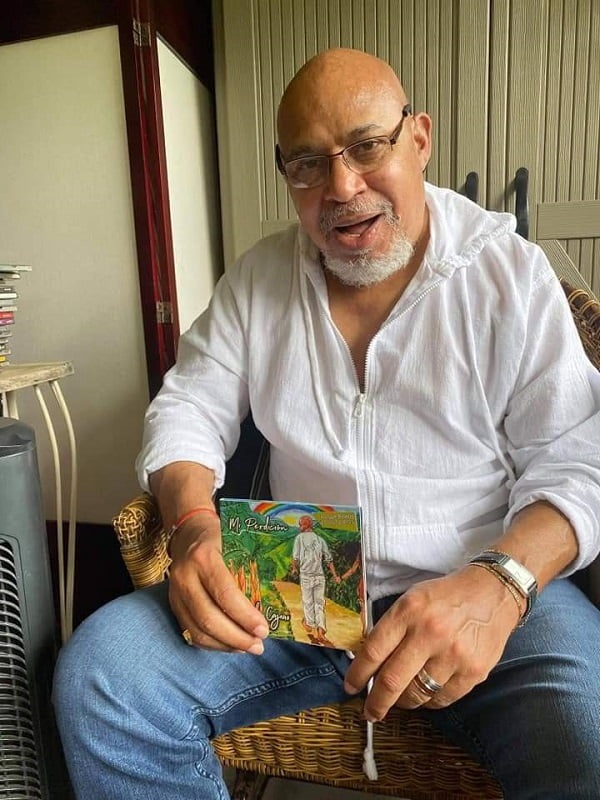
Angel Canales «El Diferente» recibiendo la produccion de Danilo Cajiao Titulada»Mi Perdicion» año 2020

Also Read: Angel Canales «El Diferente» receiving the production from Danilo Cajiao titled »Mi Perdicion» year 2020.

Charlie Sierra was a prominent Puerto Rican timbalero, recognized for his long musical career and virtuosity on the instrument

Carlos Manuel Sierra Sánchez, better known in the music world as “Charlie Sierra,” was born on October 10, 1956, in Vega Baja, Puerto Rico.

Charlie Sierra fue un destacado timbalero puertorriqueño

An excellent percussion musician from Barrio Sabana, Charlie Sierra recorded with important figures in music such as Don Mario Ortiz, Andy Montañez, Raphy Leavitt, Marc Anthony, Oscar D’León, Julito Alvarado, and many others. He even recorded the album Bravo by the Fania All-Stars in 1997.

To the worldwide community of salsa fans (salsómanos), he was a member, along with Chago Martínez, Tito De Gracia, Edgardo Morales, and Edwin Clemente, of the Gran Cumbre de Timbaleros (Great Summit of Timbaleros) that emerged in Puerto Rico’s rumbero (Afro-Cuban rhythm/rumba) scene during the penultimate decade of the 20th Century.

Charlie Sierra fue un destacado timbalero puertorriqueño reconocido por su larga trayectoria musical y su virtuosismo en el instrumento

Among these five virtuosos, the majority of the recording sessions in the Puerto Rican market were divided. The others were, practically, second choices for producers.

This fortunate circumstance allowed him to develop an impressive discography as a session musician, which includes the most stellar names in salsa. Likewise, he traveled across a large part of the globe as a member of the backing bands for many of those stars.

Our biographical subject was a child when he began, without a teacher, to learn the bongos and drums which he also played on recordings and on stage and the timbales, leading him to be identified as a fundamentally intuitive musician.

At the age of thirteen, he moved with his family to Bayamón, and it was during his time as a student at the Nuestra Señora del Rosario School that he began to show signs of his talent.

At fourteen, he enrolled in the Ernesto Ramos Antonini Free School of Music (Escuela Libre de Música), where he was a disciple of the Argentine master Samuel Lipchik.

During that time, he also advanced his knowledge of the flute, guitar, and piano, instruments he would never cultivate professionally, as percussion was always his great passion.

Papo Lucca, Charlie Sierra y Cheo Feliciano

However, his time at the Free School of Music was relatively brief (1972-1974). He soon began his professional career, gaining his first experiences with the Orquesta Rica and the Orquesta Tabú.

During this period, he received private lessons from the renowned professor Raúl Berríos Sánchez.

Fully immersed in the music scene, his name began to gain relevance in the salsa world following his tenure with the original Orquesta Mulenze, led by bassist Edwin Morales, during the 1976-1978 period.

At that time, this organization focused its work on providing accompaniment to solo singers affiliated with the genre, both national and foreign, who visited the island. He had the opportunity to travel with several of them: Santos Colón, Celia Cruz, Cheo Feliciano, Chivirico Dávila, Pellín Rodríguez, Yayo El Indio, etc.

From the Orquesta Mulenze, he moved to the lineup of Raphy Leavitt & La Selecta (1978-1979), with whom he had the opportunity to record hits like “La cosquillita,” vocalized by Tony Vega. He later worked with the orchestra led by pianist Tito Valentín, which featured Marvin Santiago as the vocalist.

He then joined trumpeter Mario Ortiz’s orchestra (1982-1984); he collaborated in the founding of the backing bands for the great sonero (Cuban son singer) Carlos «Cano» Estremera (1984) and the equally admired Tony Vega (1988).

In the interim, he worked independently and constantly recorded with other groups and a large number of soloists. He maintained this intense work routine until the present.

In 2009, Charlie Sierra organized his own orchestra, Paso Nivel, with which he recorded the album Ganas de bailar (Paso Nivel, CD-10692).

The album prominently features singer Efraín «Pichi» Gaetán, and included special guests such as Cheo Feliciano, Ismael Miranda, Andy Montañez, and Gilberto Santa Rosa, as well as Primi Cruz, Darvel García, and Héctor Luis «Pichie» Pérez.

Charlie Sierra was a distinguished Puerto Rican salsa timbalero, recognized for his long musical career and his virtuosity on the instrument.

He passed away on October 23, 2024, at the age of 67. Throughout his career, he collaborated with artists of the stature of Andy Montañez, Celia Cruz, Cheo Feliciano, and Bobby Cruz.

Musical Career: He began his career with the Orquesta Mulenze in 1970 and later joined Raphy Leavitt & La Selecta’s band.

Charlie Sierra y Orestes Vilato

Notable Collaborations:

He worked with Andy Montañez for over 25 years, being a key piece in his orchestra. He also collaborated with artists like Celia Cruz, Cheo Feliciano, Gilberto Santa Rosa, Bobby Cruz (on the hit “Sonido Bestial”), Tito Valentín, among others.

Own Orchestra: In 2009, he founded his own orchestra called Paso Nivel, with which he recorded the album “Ganas de bailar” (Desire to Dance).

 Collaborators:

L’Òstia Latin Jazz

Also Read: Orestes Vilato. Cuban multi-percussionist.

  • « Go to Previous Page
  • Page 1
  • Interim pages omitted …
  • Page 5
  • Page 6
  • Page 7
  • Page 8
  • Page 9
  • Interim pages omitted …
  • Page 99
  • Go to Next Page »

International Salsa Magazine (ISM) is a monthly publication about Salsa activities around the world, that has been publishing since 2007. It is a world network of volunteers coordinated by ISM Magazine. We are working to strengthen all the events by working together.