• Skip to primary navigation
  • Skip to main content

International Salsa Magazine

  • HOME
  • Previous editions
    • 2026
      • ISM / May 2026
      • ISM / April 2026
      • ISM / March 2026
      • ISM / February 2026
      • ISM / January 2026
    • 2025
      • ISM / December 2025
      • ISM / November 2025
      • ISM / October 2025
      • ISM / September 2025
      • ISM / August 2025
      • ISM / July 2025
      • ISM / June 2025
      • ISM / May2025
      • ISM / April 2025
      • ISM / March 2025
      • ISM / February 2025
      • ISM / January 2025
    • 2024
      • ISM / December 2024
      • ISM / November 2024
      • ISM / October 2024
      • ISM / September 2024
      • ISM / August 2024
      • ISM / July 2024
      • ISM / June 2024
      • ISM / May 2024
      • ISM / April 2024
      • ISM / March 2024
      • ISM / February 2024
      • ISM / January 2024
    • 2023
      • ISM / December 2023
      • ISM / November 2023
      • ISM / October 2023
      • ISM – September 2023
      • ISM – August 2023
      • ISM July 2023
      • ISM Edition June 2023
      • ISM – May 2023
      • ISM April 2023
      • ISM March 2023
      • ISM February 2023
      • ISM January 2023
    • 2022
      • ISM December 2022
      • ISM November 2022
      • ISM October 2022
      • ISM September 2022
      • ISM August 2022
      • ISM July 2022
      • ISM June 2022
      • ISM May 2022
      • ISM February 2022
      • ISM January 2022
    • 2021
      • ISM December 2021
      • ISM November 2021
      • ISM October – 2021
      • ISM September 2021
      • ISM August 2021
      • ISM July 2021
      • ISM May 2021
      • ISM April 2021
      • ISM June 2021
      • ISM March 2021
      • ISM February 2021
      • ISM January 2021
    • 2020
      • ISM December 2020
      • ISM November 2020
      • ISM October 2020
      • ISM September 2020
      • ISM August 2020
      • ISM July 2020
      • ISM June 2020
      • ISM May 2020
      • ISM April 2020
      • ISM March 2020
      • ISM February 2020
      • ISM January 2020
    • 2019
      • ISM December 2019
      • ISM November 2019
      • ISM October 2019
      • ISM Septembre 2019
      • ISM August 2019
      • ISM July 2019
      • ISM June 2019
    • 2016
      • ISM December 2016
      • ISM November 2016
  • Spanish
  • Download Salsa App
    • Android
    • Apple

Search Results for: Ruben Blades

Rubén Blades: What a magnificent way to celebrate 70 years of life and 50 of career!

North America / USA / Miami

Rubén Blades

The author of many of the most popular hits in the history of salsa, reached the seventh decade and music has not stopped playing for him.

The indisputable social sense of his songs made the difference in times when the themes of every other song were about love and unloved.

Rubén Blades
Rubén Blades

“The poet of salsa” was born on July 16, 1948 in a humble family, in Panama City, leaded by musicians, because his father was a percussionist and his mother was a pianist.


With an amazing multifaceted nature, Blades was the first in his family to go to college; so music was a hobby, like any other. Shortly after graduating as a lawyer, he arrived to Miami running away from Omar Torrijo’s dictatorship.


Since the time of Fania, he has walked through different currents of the same genre and composed the song Patria, which is still the second national anthem of his native Panama. In his last awarded albums, he returns to the company of great orchestras and to an intentional change in his voice to give nostalgia airs to the songs he sings. He has won 17 Grammy Awards and has been nominated 3 times for the Emmy Awards.


He has ventured into film, television and politics. His deeply critical nature does not allow him to ignore injustice and the abuse of power, and does not skimp on making his point of view known. Recently, he hinted his presidential aspirations in Panama for the 2019 elections, and this would not be his first time at the presidency’s run. In addition, he was Minister of Tourism between 2004 and 2009.

Photo of Rubén Blades

Blades has acted in 35 films and three series, and we must add the recently released documentary, “Yo no me llamo Rubén Blades” directed by Abner Benaim. Apart from his apparition in the popular TV series “Fear The Walking Dead”, he recently participated in the film “Hands of Stone” about the mythical Panamanian boxer Roberto “Manos de Piedra” Durán. There is no artistic space which Blades has not dabbled in.


How does he celebrate 70 years of life and 50 of career?

Singing! Although he has stated on several occasions that he wants to devote himself to other artistic facets and perhaps on purpose, he has allowed himself to think retired and then reappear with excellent albums like “Cantares del subdesarrollo” or, “Medoro Madera” the truth is that everybody is wondering, what will Rubén Blades do now, will he retire?

Rubén Blades
Rubén Blades

Currently, Blades writes opinion articles and publishes them on his website www.rubenblades.com, while on tour with the Panamanian group Roberto Delgado & Orquesta, until September. As if that was not enough, he prepares a book of poems, two scripts for cinema, is considering a couple of offers for the big screen, and will continue promoting the documentary “Yo no me llamo Rubén Blades” that although HBO has not revealed when it will be released on TV, will continues its journey in film festivals, and on cinema until August 30th in Panama, and 31th in Mexico to start the next premieres.


As a cherry pie will keep us in suspense about his possible presidential candidacy, because ” “antes necesito saber lo que el país quiere y si está dispuesto a abandonar el clientelismo a cambio de un plan nacional a largo plazo” Likewise, Blades clarified that ” no es algo que esté ya decidido “, it is a possibility, which requires society’s “apoyo masivo”.


This year near his 70th birthday, he affirmed without doubts:  ” No me despido de los escenarios, sino de las giras de salsa. En este momento tengo muchos otros planes y proyectos y, a mi edad, tengo que priorizarlos”.
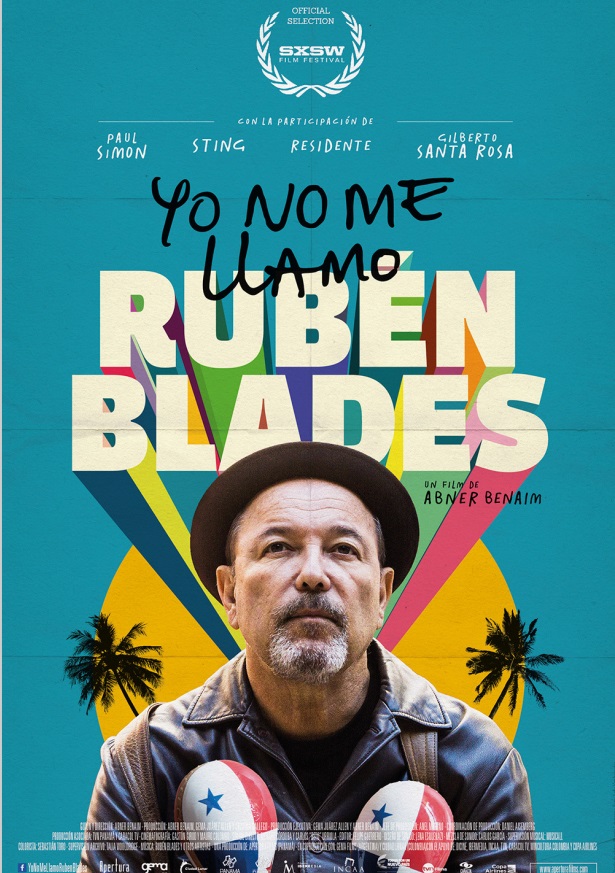
Yo no me llamo Rubén Blades

Anyway, Rubén Blades is that salsero that integrated action and politics into his social struggle. What else can we ask of him?

Rubén Blades’ National Tour

Review of Rubén Blades’ National Tour

The Ruben Blades concert at Oakland’s Paramount Theatre on Saturday, November 20th was sensational!  The anticipation of the packed intergenerational crowd to his first visit In 18 years was at a high peak.

Rubén Blades while singing
Rubén Blades while performing

Blades wowed the audience with a stunning performance backed by bassist Roberto Delgado’s dynamic Big Band.

Rubén Blades and his orchestra
Rubén Blades and Roberto Delgado’s Big Band

Ruben’s powerful voice was as crystal clear as when he started his career with Ray Barretto back in 1974.

Rubén Blades' great voice
Rubén Blades’ voice was incredible

Latin Grammy for Salswing!

His set list was a retrospective into his vast and deep repertoire that included his big hits, crowd favorites, esoteric song choices and selections from his Latin Grammy award winning album Salswing!

Rubén's stage
The lighting environment on stage was amazing and varied

The musicianship that accompanied Blades was top notch as Roberto Delgado’s crack band were tight, explosive and swinging!

Ruben's band
The performance of Roberto Delgado’ band was very appropriate for the show

The visuals projected on the huge screen above Ruben were imaginative displaying photo tributes to Hector Lavoe as well as to recently deceased Latin music giants and clever animation that was the backdrop for songs.

Tribute to Pérez-Bidó
Tribute to Carlos Pérez-Bidó displayed by the screen above Ruben Blades

This was a triumphant return to the SF Bay Area for Blades who last played a concert here in 2003 at Roccapulco.

Blades in front of his orchestra
Triumphant return to the San Francisco Bay Area for Rubén Blades

He performed for 2 hours and 40 minutes to the delight of the massive crowd.  What a show!!

Blades' two-hour show
Rubén Blades’ two-hour show delighted the audience

BY LUIS MEDINA, PRODUCER AND HOST OF CON SABOR ON KPFA 94.1 FM AND SABIDURIA CON TUMBAO ON WORLD SALSA RADIO.COM

Do You Know In Which Country Rubén Blades Start his Tour?

The United States Will Be The First Country Where The Panamanian Artist Will Present Salswing Tour!

Rubén Blades with blue hat on stage
Rubén Blades will be recognized as “Person of the Year” at the Latin Grammys on November 17th in sin city, Las Vegas (Nevada)

The multifaceted artist and political activist, Rubén Blades, announced his return to the American stage with his friend and fellow countryman Roberto Delgado & Big Band, starting next November 20th.

The Salsero icon announced the beginning of his tour through his official Facebook account: “We are very happy to be able to work and get in touch with our audience again, after almost two years without being able to do so. With the Roberto Delgado Big Band, an orchestra of 20 musicians that is sounding better, we are eager and want to share our latest album Salswing!, and the usual songs… Please, don’t stop getting vaccinated”.

There are eight cities that the living Salsa legend will visit in North America, starting on November 20th in Oakland (CA), Los Angeles (CA), Atlanta (GA), Miami (FL), passing through Boston (MA), and New York (NY) on November 28th and December 2nd respectively, and having as a special guest the extraordinary American actress, singer, and wife of Blades, Luba Manson who will be showing the repertoire of her Jazz album Triangle released in October 2020.

Rubén Blades with black hat and Luba Mason with white shirt
Rubén Blades and Luba Manson have been married since 2006

Later, Salswing Tour! & the Roberto Delgado Big Band will present their penultimate concert this year on Friday, December 3rd in Washington (DC), and will close this magnificent tour on Sunday, December 5th on the southwest shore of Lake Michigan at the mighty Arena Arie Crown Theater in Chicago (IL).

Regarding this great 2021 tour, Nelson Albareda, CEO of Loud And Live, the company in charge of carrying out this series of concerts and those of Latin stars such as Carlos Vives, Juanes, Farruko, among many others, commented: “It is an honor for us working with a Latin icon, who has inspired generations through his salsa music and long artistic career. Rubén Blades is not only a great artist but also a great ambassador, and activist for our Latin community”.

The prestigious Panamanian songwriter will show for the first time the eleven songs of his most recent album “Salswing!” title that also gives the name to the tour.

Digital album cover Salswing! in red background and yellow letters
“Music is a universal gift, and from Panama, we renew our contribution with this album, SALSWING!”. Rubén Blades

Salswing! has 11 tracks including, Mambo Gil, Cobarde, Canto Niche, and Ya No Me Duele, the latter written by Jeremy Bosch and Rubén Blades with arrangement by Tom Kubis. Salswing! was recorded in collaboration with the record’s bassist and musical producer, Roberto Delgado, and his band made up of 20 talented Panamanian musicians, and it was released on the digital market on April 15th, 2021.

“Although the connection between Jazz and Salsa has been historically documented, much remains to be described and recognized. The combinations and collaborations between musicians of these genres have been numerous over the years and include figures of the stature of Mario Bauza & Dizzy Gillespie, Machito & Charlie Parker, Luis Russell, and Louis Armstrong. With this record production, I try to continue that relationship, verifying that art does not have a nationality but rather represents a spirit that transcends races, geographies, and languages”. It is extracted from his official page.

Rubén Blades has been performing with Roberto Delgado & Bing Band for ten years in the most prestigious stages around the world. In these eight concerts, there will be a historical tour of recognition of the Latin origins of jazz as well as the influences of the son, Afro-Caribbean music, and swing. In addition to including the hits always chanted by the crowd in any corner of the planet.

  • You Can Keep Reading: Meet The Amazing Fasching Jazz Club In Sweden

Who Is Roberto Delgado?

Roberto Delgado dressed in black holding a Grammy in his hand
Roberto Delgado and his Orchestra along with Rubén Blades won a Grammy for Best Latin Tropical Album in 2018

Roberto Delgado was born in the capital of the Chiriquí province in western Panama on June 27th, 1961. This prodigious artist has developed in the musical environment as a Producer, Singer, Bassist, and Arranger.

His upward career began with his studies at the prestigious Conservatory of Music of Fine Arts in Mexico City (Mexico) and later at the Golden West College of Huntington Beach California (United States).

With more than 40 years of experience, Roberto has been a member of ten Panamanian groups counting the Salsa singer orchestra, Roberto Blades (1992) and he is currently the director of his big band made up of 20 musicians and with whom he has shared the stage since 1996 together with the master Rubén Blades.

In the enormous list of famous artists that Delgado has accompanied in productions and tours in addition to the Blades brothers are Cheo Feliciano, Celia Cruz, Gilberto Santa Rosa, Ismael Miranda, Andy Montañez, Tito Nieves, La India, Víctor Manuelle, José Alberto “El Canario”, Luigie Texidor, Maelo Ruiz, Charlie Aponte, Joan Manuel Serrat, Carlos Vives, and many more.

The conductor together with Rubén Blades has performed on the major international stages, including Madison Square Garden (New York), Hollywood Bowl (Los Angeles), Shepherd’s Bush (London), Poble Espanyol de Barcelona (Spain), numerous Latin American auditoriums, and acclaimed festivals in Europe and the Caribbean.

Also, this duo has three Latin Grammys (2015, 2017) and two Grammys for Best Traditional Tropical Latin Album in 2016 and 2018.

Currently, Roberto Delgado (60 years old) and Rubén Blades (73 years old) continue to transgress the barriers that will be the first Latin artists touring Salswing! in the middle of the pandemic throughout the North American territory.

An important fact to attend the Rubén Blades and Roberto Delgado & Big Band concert series in Los Angeles County is mandatory to wear masks. At the moment, mandatory vaccination in the United States only applies to public employees and workers of large companies.

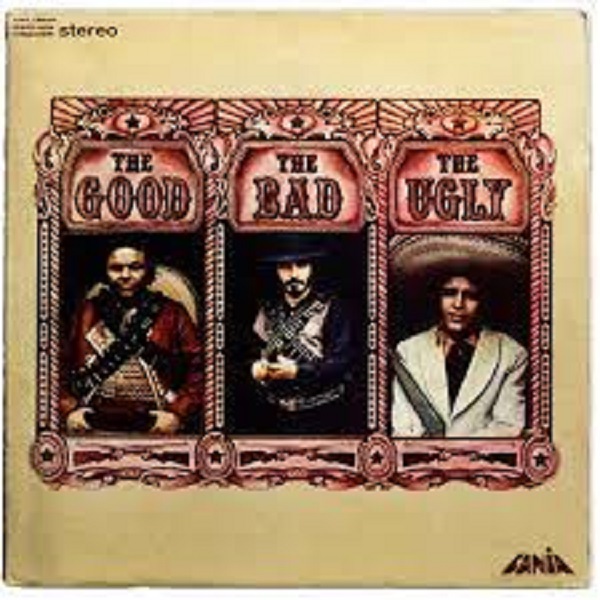
Synthesis on the song “El Cazanguero” written by Rubén Baldes for the album The Good, the Bad, the Ugly

“It is the lament of the cazanguero in Coiba at dawn, hurry up Chino Juan, they are already calling the line, the guard says not this time, don’t fall so far behind”.

“Whether it is sunny or raining hard, you have to take care of the sowing; don’t let the hunanga come to spoil your effort”.

In 1974, El Malo del Bronx, after 8 years of touring with El Jíbaro de Ponce, decided to take some time off, he did not attend the presentation of Fania All Star in Africa and dedicated himself to solving personal problems and producing.

He was working on his next album with Yomo and Hector, he remembered that there was a Panamanian boy he had met in 1969 at a carnival in Panama, whom he had invited to come on stage to sing with Hector in several of the presentations in clubs in the Big Apple.

This guy was already part of Barretto’s band and had given songs to luminaries of the genre that became hits, such as Guaguancó Triste to Richie and Bobby, Las Esquinas to Niño Bonito and Amor Pa’ que to Conjunto Candela.

These songs put him on Willie’s radar who asked him for a song to complete his next album. Ruben, who was that Panamanian boy, happy for El Malo’s request, writes his first song while living in New York.

Ruben arrives at the studio where that song was being recorded and Hector approaches him and tells him that he would not record it because he didn’t understand it, he didn’t feel it and that’s why it wouldn’t sound right.

Ruben is disappointed by what Hector said, but Willie really liked the song and asks Ruben to record it himself.

Ruben reminds Willie that he is part of the band El de Las manos Duras and that it would be a problem, Willie replies that he would fix it, which he did, obtaining don Masucci’s permission.

This marked the end of Ruben with Barreto and the beginning of what would become the duo that would dominate Salsa for the next 6 years.

This song we are talking about is El Cazanguero,

It is the lament of the cazanguero in Coiba de madrugá’. Hurry up Chino Juan, they’re already calling the line, the guard says not this time, don’t fall so far behind”.

“Whether it is sunny or raining hard, you have to take care of the sowing, so that the cazanga does not come to spoil your effort”.

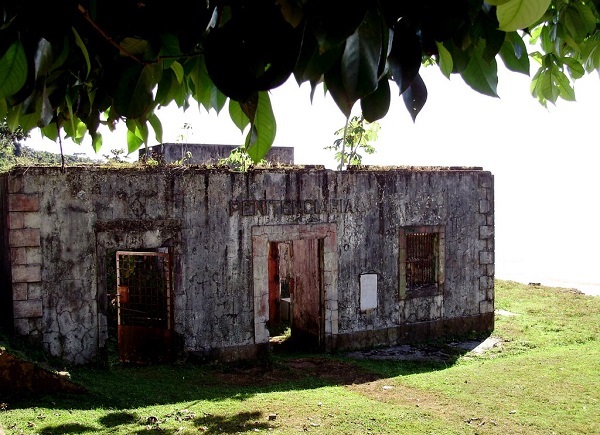
Part of Coiba’s history as a penal colony, for 74 years, is described in El Cazanguero, a song by Rubén Blades that began to be heard in 1975.

The song describes who the cazangueros were, some of the punishments to which inmates who broke the rules were subjected, and the sadness of being far from their families, with the uncertainty and fear of an enemy attack, in an open penal system like Coiba.

Although the main value of the island is in its natural wealth, it is also important its history and the history of the prisoners it housed, the anecdotes of those who paid long sentences for going against the laws and the rights of others.

How many cans of gravel are there from here to Catival?” Blades ask in his song. The rubble, which is everywhere in Coiba, was used to fill the holes in the roads, to fill land or in construction”.

The Cazangueros were the inmates who chased away the cazanga, a climbing bird of the parrot family, green in color, with a blue head and neck, black beak and legs, which killed, like a plague, any planting it found in its path.

“The cazanga would come down from the mountains by the thousands, in the early morning, and the hunters had to scare them away by ringing empty oil cans and shouting. Sometimes they had to make dolls in human shapes to win the battle against the birds”.

As mentioned above, El Cazanguero was the first song Ruben wrote in the United States. To write it, he was inspired by his trip to the penal island of Coiba where he wrote his law degree thesis. It seems that this song was placed as filler on the 1975 album “The good, the bad, and the ugly” featuring Willie Colon, Hector Lavoe and guitarist Yomo Toro on the cover. However, it was “El Cazanguero” that sold the acetate record.

“El Cazanguero” was cut 6 of the album “The good, the bad & the ugly” which was recorded in 1974, at Good Vibrations studios. It was the last album in which Willie Colón and Héctor Lavoe collaborated.

It contained 3 instrumental tracks, three sung by Colón in his first appearance as a solo singer on record (“Toma”, “Cua cua ra, cua cua” and “Guaracha”, 2 with Lavoe’s solo voice (“Popurri III” and “Que bien te ves”) and “El Cazanguero” written and sung by Blades.

Hablemos de EL CAZANGUERO

You can read: Louie Ramírez «El Quincy Jones de la Salsa» y su talento progresivo un Genio escondido de La Fania All Stars

Edgardo Cambon will celebrate his 40-year career at Yerba Buena Gardens

A few years ago, we had the great honor of interviewing Uruguayan bandleader, director, composer, percussionist, and singer Edgardo Cambón, with whom we talked again about his career anniversary as a musician next month.

Obviously, we wanted to recount the most important and interesting details of his wonderful career, but we could not fail to ask him how he has been the last few years, and that is how we wanted to begin our conversation today.

One of the things he revealed is that he recently released his new album, “For Export,” under the record label Latinbaum Records during a show at a venue known as The Fright, an event in which he enjoy the opportunity to celebrate his 65 years of life in April 2025. There were about 450 people present, with whom an excellent music video was filmed and the previously mentioned CD was released. 

At the end of last year, he made about eight radio appearances, one on TV, and another one live in Bogotá, Colombia, which is one of the locations where the producer of Latinbaum Records, arranger, producer, composer, and pianist Israel Tannenbaum, is based. We have also had the opportunity to interview him on other occasions.

He says he is very happy with the five albums he has recorded so far and how active he has been over the past year due to his many promotional trips to places like Puerto Rico.

Edgardo playing
Edgardo Cambon playing live at the Cigar Bar & Grill

How has Edgardo Cambón managed to remain relevant after so many decades?

After being performed for nearly 40 years continuously, it is important to know how Edgardo has managed to remain relevant for such a long time, which in his own words, has been possible thanks to the originality of his sound and lyrics. He has never stopped writing original material, but that does not mean he has not dared to experiment with other people’s compositions, as was the case with “Imagine” by John Lennon. The artist created his own salsa version of this classic, which is an extremely risky thing due to how different salsa is from the soft rock we all remember from the original song.

More importantly, he has never been afraid of changes, and that can be seen in all the genres with which he has experimented, except for reggaeton, since he cannot support many aspects of culture that accompanies this type of music and its leading artists.

He made romantic salsa songs when that genre was very fashionable, but he always tried not to be swayed by the thing of the moment, but to seek himself in each style. Something to acknowledge Israel Tannenbaum is to be the first producer to mold him as an artist and give him so much valuable advice such as reducing the duration of a song or how to keep the message with a shorter length of time.

Another big change to which he had to adapt over the years was the fact that his understanding of the local scene could no longer be the same. One of the many things that changed was the appearance of salsa congresses where DJs, who usually played the hottest tracks of the moment, took center stage. This led Edgardo and many other artists to adapt their repertoire and include covers of much better-known songs, as that was what a whole segment of the public demanded most.

Edgardo and his parents
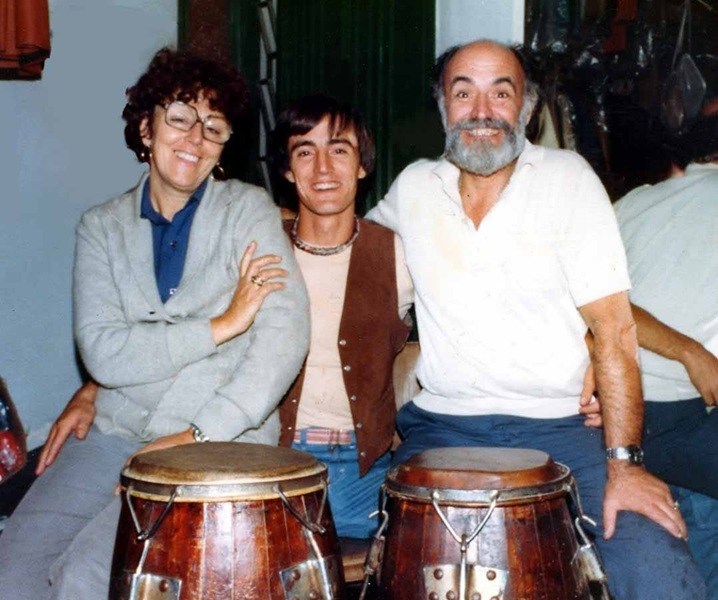
Edgardo Cambon with his parents Blanca Fraga and Jose Maria Cambon in 1981

Performance at the San Francisco Salsa Festival

One of the festivals he has attended was the 2026 edition of the San Francisco Salsa Festival, organized by John Narvaez and Elizabeth Rojas, who had previously hired him to offer percussion classes. Edgardo & Candela had an extremely successful performance on Thursday, March 26, which was the day of the opening.

The artist took the opportunity to remind us that he has also been performing for years at the San Jose Jazz Festival and the Monterrey Jazz Festival, the first time the organizers hired a Uruguayan bandleader, and he was one of the few to perform salsa that day. In addition, he had the honor of introducing candombe (a traditional Uruguayan rhythm) mixed with salsa and traditional drums.  

Top moments of his career

After such a long career, he has logically experienced moments that marked a watershed that forced him to adapt to the new trends. One of those changes was the replacement of the vibraphone (a very delicate instrument) by the trombone, which represented a significant sonic leap, as the musicians had to switch from a percussion instrument played with drumsticks to a brass instrument that runs on air and lip pressure.

With the arrival of Karl Perazzo, he proposed to Edgardo that they start using trombones, and he agreed to when seeing the potential of the instrument. So, that was when the group became a septet, having previously been a small ensemble in which the three percussionists played and sang simultaneously, making the band sound bigger than it really was.

Edgardo and Israel
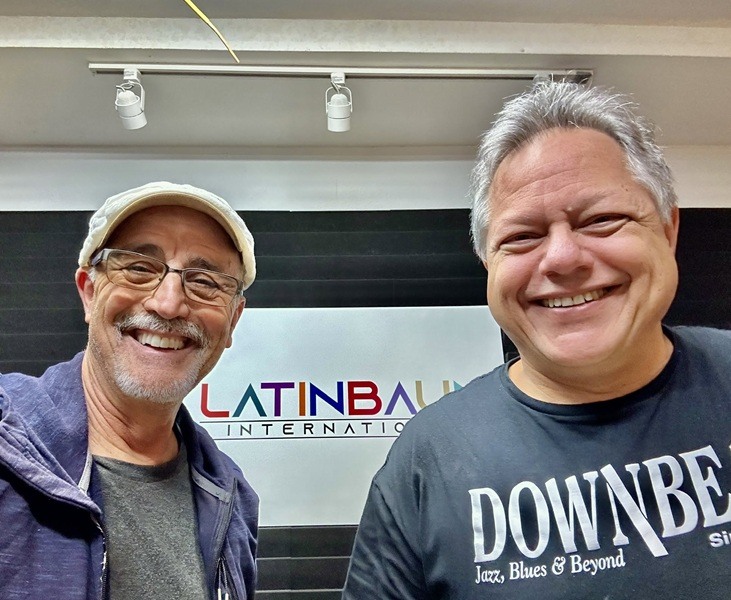
Edgardo Cambon and Israel Tannenbaum

Some time later, Edgardo made a series of trips to Cuba that completely transformed his mind and his way of seeing and playing music, since anyone could not go on stage in that country. It was then that he felt inspired to release his album “Madre Rumba, Padre Son,” in which he gives all credit to what he learned from Cuban music and its greatest exponents. He also took the opportunity to mention some of his other biggest influences, such as the politicized lyrics of Ruben Blades in the 1970s, Los Van Van, Isaac Delgado, and many others.

Another aspect that changed over the course of his career was the way the media, radio specifically, was transforming as the years went by. However, there were always communicators willing to promote his work, such as Chuy Varela, Louis Medina, and Chata Gutiérrez, who supported him at the time despite being a local artist from Uruguay playing salsa in such a competitive environment.

Thanks to all those moments and the support he received, Edgardo managed to meet his biggest dreams such as making great music, continuing to live from music, and achieving international popularity. Although he hopes to continue reaping the fruits, he feels he has already achieved what he set out to do early in his career.

Edgardo traveled to Bogota
Edgardo Cambon during his last trip to Bogota

40 Anniversary of Edgardo Cambon’s career

Before telling us of his plans for his 40-year career, he reminded us how he celebrated his 20-year career at Yerba Buena Gardens, where he released his album “20 Años de Sabor.” The event was so successful that he will use the same venue to celebrate his 40th anniversary on August 6 this year. The concert will be completely free, suitable for all ages, and outdoor from 6:00 p.m. to 7:30 p.m.

That day, he will perform the best of his repertoire together with special guests who will make it a very special night, especially for Edgardo and his team.

And Edgardo also wanted to thank International Salsa Magazine, its editor Eduardo Guilarte and me for such a very positive interview on the occasion of celebrating the anniversary of his amazing career. The honor is all us and it is what a first-class artist deserves for leaving our heritage high. 

Read also: The Latin Ensemble enchants the United States and Spain with its talents

  • Page 1
  • Page 2
  • Page 3
  • Interim pages omitted …
  • Page 24
  • Go to Next Page »

International Salsa Magazine (ISM) is a monthly publication about Salsa activities around the world, that has been publishing since 2007. It is a world network of volunteers coordinated by ISM Magazine. We are working to strengthen all the events by working together.