• Skip to primary navigation
  • Skip to main content

International Salsa Magazine

  • HOME
  • Previous editions
    • 2026
      • ISM / May 2026
      • ISM / April 2026
      • ISM / March 2026
      • ISM / February 2026
      • ISM / January 2026
    • 2025
      • ISM / December 2025
      • ISM / November 2025
      • ISM / October 2025
      • ISM / September 2025
      • ISM / August 2025
      • ISM / July 2025
      • ISM / June 2025
      • ISM / May2025
      • ISM / April 2025
      • ISM / March 2025
      • ISM / February 2025
      • ISM / January 2025
    • 2024
      • ISM / December 2024
      • ISM / November 2024
      • ISM / October 2024
      • ISM / September 2024
      • ISM / August 2024
      • ISM / July 2024
      • ISM / June 2024
      • ISM / May 2024
      • ISM / April 2024
      • ISM / March 2024
      • ISM / February 2024
      • ISM / January 2024
    • 2023
      • ISM / December 2023
      • ISM / November 2023
      • ISM / October 2023
      • ISM – September 2023
      • ISM – August 2023
      • ISM July 2023
      • ISM Edition June 2023
      • ISM – May 2023
      • ISM April 2023
      • ISM March 2023
      • ISM February 2023
      • ISM January 2023
    • 2022
      • ISM December 2022
      • ISM November 2022
      • ISM October 2022
      • ISM September 2022
      • ISM August 2022
      • ISM July 2022
      • ISM June 2022
      • ISM May 2022
      • ISM February 2022
      • ISM January 2022
    • 2021
      • ISM December 2021
      • ISM November 2021
      • ISM October – 2021
      • ISM September 2021
      • ISM August 2021
      • ISM July 2021
      • ISM May 2021
      • ISM April 2021
      • ISM June 2021
      • ISM March 2021
      • ISM February 2021
      • ISM January 2021
    • 2020
      • ISM December 2020
      • ISM November 2020
      • ISM October 2020
      • ISM September 2020
      • ISM August 2020
      • ISM July 2020
      • ISM June 2020
      • ISM May 2020
      • ISM April 2020
      • ISM March 2020
      • ISM February 2020
      • ISM January 2020
    • 2019
      • ISM December 2019
      • ISM November 2019
      • ISM October 2019
      • ISM Septembre 2019
      • ISM August 2019
      • ISM July 2019
      • ISM June 2019
    • 2016
      • ISM December 2016
      • ISM November 2016
  • Spanish
  • Download Salsa App
    • Android
    • Apple

Search Results for: Ruben Blades

Orestes Vilató is one of the most influential figures in the world of Latin percussion

The Cuban multi-percussionist, Orestes Vilato, is undoubtedly one of the greatest figures in the history of Cuban drums known as timbales.

He is one of the most influential figures in the world of Latin percussion.

He was born on May 4, 1944 in Camagüey, Cuba, and currently resides in San Francisco, California in the United States.

He has worked with many of the best exponents of Cuban popular dance music and Latin jazz, from José Antonio Fajardo and Israel López (Cachao) to Rubén Blades and Carlos Santana.

He is one of the most influential figures in the world of Latin percussion. He was born on May 12, 1944 in Camagüey, Cuba, currently resides in San Francisco, California in the United States
Orestes Vilato is one of the most influential figures in the world of Latin percussion

During the 1950s, the Vilato family moved to New York, the world capital of salsa, where the young Orestes would rise to fame as an innovator of his beloved traditional instrument, “Los Timbales.

While living in New York City for 25 years, Orestes was intimately involved with many musical organizations that played key roles in shaping the course of Latin music around the world.

Among the many groups were: Fania All Starts (founding member), Ray Barretto, Tipica 73 (founding member), Los Kimbos (founder-director), Tito Puente, Johnny Pacheco, Cheo Feliciano, Ismael Rivera, Joe Cuba, Eddie Palmieri, Ruben Blades, La Lupe, Celia Cruz, Rolando La Serie, Chico O’Farril, Lionel Hampton, Los Chavales de España, Cal Tjader.

Other artists he has recorded or worked with include: Winton and Bradford Marsalis, Paco De Lucía, Whitney Houston, Linda Ronstadt, Aretha Franklin, Willie Nelson, Herbie Hancock, McCoy Tyner, Cachao, Andy García, Emilio Estefan, Gloria Estefan, Paquito de Rivera, Dave Valentín, Mongo Santamaría, Armando Peraza, John Santos, Rebeca Mauleon, Giovanni Hidalgo and Raúl Rekow.

In 1980 he moved from New York to San Francisco, California, where he worked with Armando Peraza, in the band of Chicano rocker Carlos Santana.

He later recorded with American jazzmen Bobby Hucherson and Buddy Montgomery, and with Cuban percussionist Luis Conte.

He also works with Jon Santos’ Batachanga Orchestra and Machete Ensemble.

He is one of the most influential figures in the world of Latin percussion. He was born on May 12, 1944 in Camagüey, Cuba, currently resides in San Francisco, California in the United States
Orestes Vilató Born May 12, 1944 in Camagüey, Cuba

In 1992 he recorded with Israel López (Cachao) as well as with Cuban percussionist José Luis Quintana (Changuito).

In 2009 he recorded his production entitled Orestes Vilató ?- Its About Time, with a repertoire in the style of Salsa, Latin Jazz, Descarga.

In 1981, Mr. Vilato moved to the San Francisco Bay Area, where he continues to reside with his family.   From 1980 to 1989 he recorded and toured with Carlos Santana’s renowned band.

Orestes was nominated for a Grammy in 1995 (Latin Jazz category) for his CD, Ritmo y Candela con Patato y Changuito. In 2009 his solo CD Its About Time was nominated for a Latin Grammy.

Orestes has recorded several film soundtracks including  Our Latin Thing, Mambo Kings, Carlito’s Way, Steal Big Steal Little, The Bird Cage, Dance With Me, Just A Ticket, Things To Do In Denver and The Lost City.

He has been a special guest artist at multiple jazz festivals around the country and in Puerto Rico, including the San Jose Jazz Festival.   He has performed and taught at numerous music conservatories including the Berkeley School of Music, UCLA, the University of Fresno, Stanford University, as well as many conservatories abroad.

Orestes was honored at the Yerba Buena Garden, Monterey and San Francisco Jazz Festivals.

Orestes’ style is one of the most imitated and emulated among recording artists.

Orestes Vilató It's about time
Orestes Vilató It’s about Time

Credits
Acoustic Bass – Carlitos Puerto Jr.
Backing Vocals, Handclaps – James Zavaleta
Bass – René Camacho
Bongos, Cowbell – Johnny “Dandy” Rodriguez
Co-producer, Timbales, Bongos, Lead Vocals, Cowbell, Cajón, Guiro, Maracas, Claves, Handclaps, Backing Vocals, Music Director – Orestes Vilató
Congas – Joey De León
Engineer [Assistance] – Joshua Blanchard
Engineer, Mixed By – Jimmy Branly
Executive Producer – Camerina Campillo, Ralph Campillo
Flute, Soprano Saxophone, Alto Saxophone, Tenor Saxophone – Justo Almario
Lead Vocals, Handclaps, Backing Vocals – Adonis Puentes
Mastered By – Peter Doell
Piano – Alberto Salas
Piano, Arranged By, Handclaps, Backing Vocals, Music Director – Rebeca Mauleón
Producer [Associate] – Manolo Santana
Tres, Acoustic Guitar – Ramón Stagnaro
Trumpet – Luis Eric González*, Sean Billings
Home

Luis “Perico” Ortiz: six decades of impeccable musical trajectory

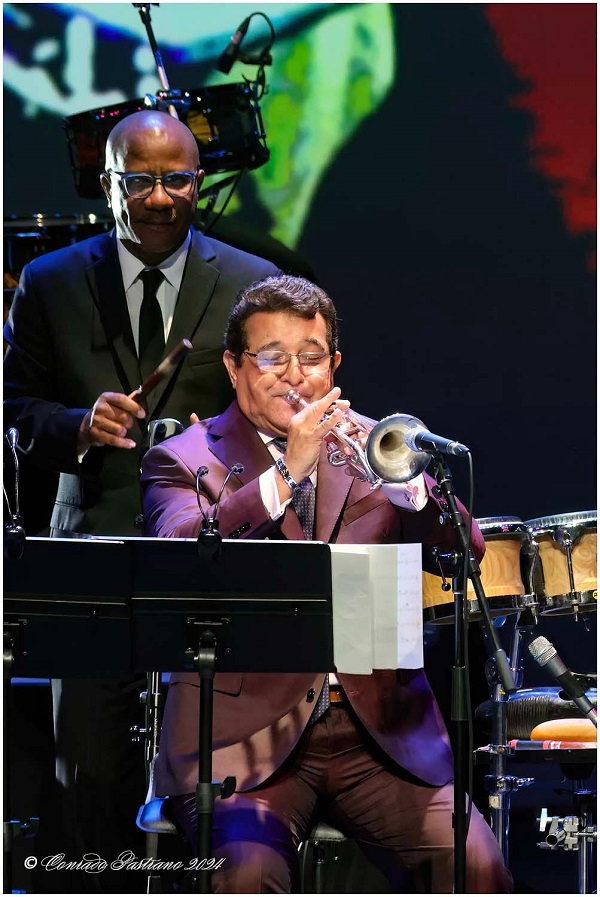
The lobby of the Centro de Bellas Artes in Caguas served as a prelude to the concert, entitled Tocando y contando historias (Playing and telling stories), for which we came to enjoy “Perico” and his guests. Mario Ortiz, Jr. brought together a dozen trumpet players (Luis Figueroa, Richie Segarra, Roby Texeira, Rafael Lebrón, Kevin Ibáñez, Ricardo Marrero, Kenneth Torres, Rubén Días, Ricky Zayas and Simón Rivera) to pay tribute to Luis “Perico” Ortiz by performing his most emblematic solo: ‘Coro Miyare’.

Luis "Perico" Ortiz and his Orchestra
Luis “Perico” Ortiz and his Orchestra

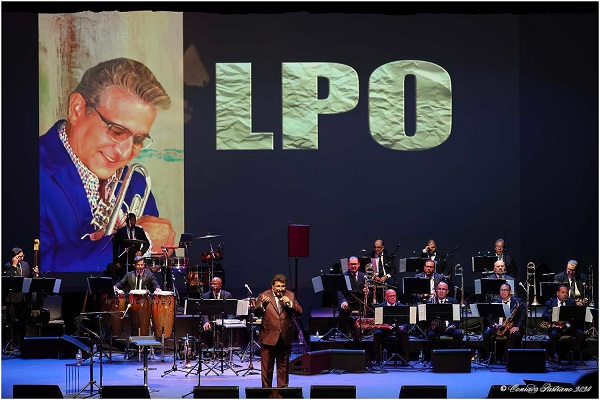
Once in the concert hall, the child trumpeter Daniel Torres (whom Perico predicted would be his successor) and Luis “Perico” Ortiz kicked off the concert with a fun trumpet correspondence. The musicians, turned into actors, shared with us the scene in which we saw Luis “Luisín” Ortiz as a child, playing ‘Quítate de la vía Perico’ with his trumpet; introduction that gave way to the custodian of Ismael Rivera’s legacy (“Moncho” Rivera) to sing the emblematic theme to which “Perico” owes his nickname, while the audience enjoyed images of “Maelo” on a giant screen. The short film defined how “El Sonero Mayor”, personified by “Moncho” told “Luisín”, that from that moment on he would be called “Perico”.

Moncho also interpreted ‘Bilongo’, a song in which Richard Carrasco stood out on the bongo after the saxophones made themselves felt with forcefulness. “Perico” also claimed his turn with the trumpet solo that preceded a resounding “Buenas noches” in the voice of the virtuoso trumpet player.

The orchestra was integrated by: Luis “Perico” Ortiz on musical direction; Yturvides Vilchez, Jan Duclerc and Rolando Alejandro Lora on trumpets; Rafy Torres, Jorge Díaz, Randy A. Román, Mario Alonso Ángel Marulanda on trombones; Roberto Calderón on baritone saxophone, Luis Daniel Valentín Muñiz on tenor saxophone; Antonio Luis Orta and Luis Fernando Hernández on alto saxophones; David Marcano on timbales; Gadwin Vargas Vélez on congas; Richard Carrasco Ayala on bongo; Juan Manuel Rivera Colón on piano; Carlos Luis Martínez Peña on bass; Henry Santiago and David Carrero on backing vocals.

Luis “Perico” Ortiz
Luis “Perico” Ortiz

Then, Henry Santiago received the microphone to sing ‘Tres grandes amigos’. For the song, which refers to Tito Rodríguez, Tito Puente, and Machito; “Perico” introduced “Manolito” Rodríguez and Arianelys Ortiz Cruz, a blind autistic timbalera player.

He was followed by Norberto Vélez, who performed ‘Julián Del Valle’ (1978, Súper salsa) and ‘De patitas’ (1979, Luis “Perico” Ortiz, One of a kind) – songs of great vocal and interpretative difficulty, popularized by the unmistakable voice of Rafael De Jesús – with his usual sympathy. Nor-Bert once again demonstrated his powerful voice, and was matched by the saxophones, whose forcefulness did not diminish the power of Vélez’s voice.

“La India” arrived with her usual energy to interpret ‘Químbara’ and “Manolito” did his part singing ‘La Reina es la rumba’, in company of “La India”, alternating on the soneos.

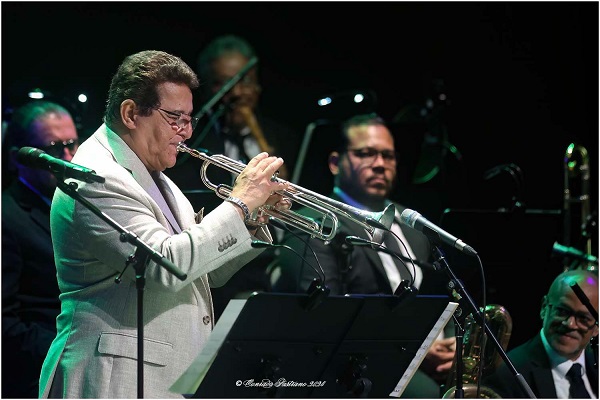
Coro Miyare” made use of Richard Carrasco’s unbeatable performance in the bongo solo with drumsticks -which had been popularized by Roberto Roena-, followed by the crushing solo by “Perico”, the piano solo by Juan Rivera, the conga solo by Gadwin Vargas and the timbales solo by David Marcano.

Richard Carrasco Ayala en el bongó y Luis “Perico” Ortiz

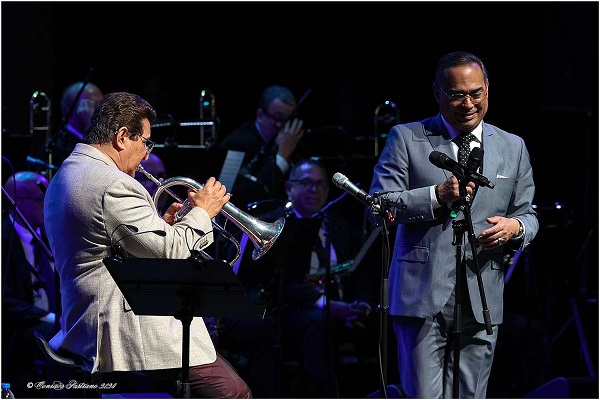
The highlight of the concert was Gilberto Santa Rosa’s brilliant renditions of ‘Atrevida’ and ‘Planté bandera’; recorded and immortalized by Tommy Olivencia’s La Primerísima, to which Santa Rosa briefly belonged.

After the intermission, as a tribute to the “Niño bonito de la salsa”, “Perico” invited Tony Vega to the stage to perform ‘Así se compone un son’ and ‘Borinquen tiene montuno’, the latter adorned with an elaborate trumpet solo by “Perico”.

“Perico” brought Gerardo Rivas to the stage to perform ‘Río abajo va’ (1985, La vida en broma), popularized in the voice of Domingo Quiñones. Gerardo explained that he had accepted the invitation to participate in the concert without knowing which song he was going to sing, in a clear allusion to the vocal difficulty of reaching Domingo’s vocal register. Gadwin Vargas sprinkled the theme with a conga solo with a mozambique beat, very well achieved. Gerardo’s second song, ‘Perico lo tiene’, brought to the stage the cacique of the Rivas dynasty (“Jerry” Rivas, singer of El Gran Combo de Puerto Rico) on the tres and Richie Bastar (bongos player of La Universidad de la Salsa). While Bastar took over on the bongo and the bell, Richard Carrasco took over the güiro. At the end of the intervention, “Jerry” asked for a round of applause for the mulato mayor, Don Rafael Ithier, who was enjoying the concert with all of us who were there.

Then, “Perico” dedicated ‘Perfume de gardenias’ to his mother; a speech that was enjoyed with an instrumental prelude performed by “Perico” and a great vocalization by “El Caballero de la Salsa”.

Next up was Rubén “Panamá” Blades, who received a standing ovation from the audience. This made visibility difficult, although it did not affect our enjoyment of the audio. Blades was in charge of the big hits ‘Plástico’ and ‘Pedro Navaja’ (1978, Siembra). During ‘Pedro Navaja’ Gadwin Vargas replicated the conga sound that Eddie Montalvo immortalized on the recording.

The stage was full when all the guests arrived to perform ‘Como vivo yo’, after Perico announced with a trumpet solo the song that would end the show.

As Luis “Perico” Ortiz said, the vote of love and confidence that we witnessed there will be remembered as an unrepeatable evening, which detailed what has been six decades of impeccable career that the trumpeter, composer, arranger and music producer has achieved.

Luis “Perico” Ortiz y Gilberto SantaRosa
Bella Martinez Puerto Rico 


Also Read: ¡Attack Sergio! Unbreakable: A fun read because of the contradictory content

ISM December 2021

North America – December 2021

Thumbnail about Arturo O'Farrill

Thumbnail about Latin soul

Thumbnail about effects of music

Thumbnail about Luis Medina

General Thumbnail for Johnny Cruz


Noticias con Sabor – Luis Medina

Thumbnail about Luis Medina

  • « Go to Previous Page
  • Page 1
  • Interim pages omitted …
  • Page 21
  • Page 22
  • Page 23
  • Page 24
  • Go to Next Page »

International Salsa Magazine (ISM) is a monthly publication about Salsa activities around the world, that has been publishing since 2007. It is a world network of volunteers coordinated by ISM Magazine. We are working to strengthen all the events by working together.