• Skip to primary navigation
  • Skip to main content

International Salsa Magazine

  • HOME
  • Previous editions
    • 2026
      • ISM / May 2026
      • ISM / April 2026
      • ISM / March 2026
      • ISM / February 2026
      • ISM / January 2026
    • 2025
      • ISM / December 2025
      • ISM / November 2025
      • ISM / October 2025
      • ISM / September 2025
      • ISM / August 2025
      • ISM / July 2025
      • ISM / June 2025
      • ISM / May2025
      • ISM / April 2025
      • ISM / March 2025
      • ISM / February 2025
      • ISM / January 2025
    • 2024
      • ISM / December 2024
      • ISM / November 2024
      • ISM / October 2024
      • ISM / September 2024
      • ISM / August 2024
      • ISM / July 2024
      • ISM / June 2024
      • ISM / May 2024
      • ISM / April 2024
      • ISM / March 2024
      • ISM / February 2024
      • ISM / January 2024
    • 2023
      • ISM / December 2023
      • ISM / November 2023
      • ISM / October 2023
      • ISM – September 2023
      • ISM – August 2023
      • ISM July 2023
      • ISM Edition June 2023
      • ISM – May 2023
      • ISM April 2023
      • ISM March 2023
      • ISM February 2023
      • ISM January 2023
    • 2022
      • ISM December 2022
      • ISM November 2022
      • ISM October 2022
      • ISM September 2022
      • ISM August 2022
      • ISM July 2022
      • ISM June 2022
      • ISM May 2022
      • ISM February 2022
      • ISM January 2022
    • 2021
      • ISM December 2021
      • ISM November 2021
      • ISM October – 2021
      • ISM September 2021
      • ISM August 2021
      • ISM July 2021
      • ISM May 2021
      • ISM April 2021
      • ISM June 2021
      • ISM March 2021
      • ISM February 2021
      • ISM January 2021
    • 2020
      • ISM December 2020
      • ISM November 2020
      • ISM October 2020
      • ISM September 2020
      • ISM August 2020
      • ISM July 2020
      • ISM June 2020
      • ISM May 2020
      • ISM April 2020
      • ISM March 2020
      • ISM February 2020
      • ISM January 2020
    • 2019
      • ISM December 2019
      • ISM November 2019
      • ISM October 2019
      • ISM Septembre 2019
      • ISM August 2019
      • ISM July 2019
      • ISM June 2019
    • 2016
      • ISM December 2016
      • ISM November 2016
  • Spanish
  • Download Salsa App
    • Android
    • Apple

Search Results for: Ruben Blades

Nicaraguan composer and pianist Donald Vega’s hard-luck story

The character’s story we are going to talk about today is extremely fascinating, since the challenges he has had to endure did not prevent him from becoming the great musician he is now. We are talking about Donald Vega and the inspiration he is for those who believe their dreams and goals impossible to achieve.

Donald and his piano
Nicaraguan composer and pianist Donald Vega and his piano

Donald Vega and his interesting story

Donald Vega is a composer and jazz pianist born in Masaya, Nicaragua, whose family has had musicians for several generations. His grandfather, Don Alberto Gutiérrez Laguna was a composer and multi-instrumentalist and had a love for music that was passed down through his children as they grew older. This was the case of his uncle, Tránsito Gutiérrez, who was honored in 2022 at the Rubén Dario National Theater for his great artistic career.

Tránsito was one of the great inspirations for his nephew to become interested in music and play the piano at the tender age of three, guided only by his ear. His grandfather Alberto, seeing this, wanted to teach his grandson Donald to read music and prepare him as well as possible for the future. As part of this preparation, he attended the conservatory to study the greatest exponents of classical music such as Beethoven, Chopin and Mozart. 

Unfortunately, his parents quickly understood that the country was not safe for their son to pursue his dreams. 

Challenges of adolescence 

At that time, 15- and 16-year-olds were forced to join the Nicaraguan army, so his mother left the Central American country to find a way to get him and his siblings out of there and give them a better future far from armed conflict. Something that struck him at that time was that there were many wakes in his neighborhood where the body was not even present, but some parts of the military uniform such as the helmet or boots. This led his mother to want to get her son out of the country, so she got him a visa to go to Mexico so he could cross the land border into the United States with his godmother. 

Donald and Poncho
Donald Vega when playing with Poncho Sanchez some years ago

His first stop was Los Angeles, where he joined his mother and applied for political asylum. At that moment, he did not have any resources to buy instruments, but he received a scholarship at a conservatory where he got much support to train properly despite the want of money.

While in school, a music teacher heard him play the piano and invited him to participate in a national music competition in Los Angeles where he won first place and was given 5000 dollars and a piano as a gift. It can be said that this was his official start in the world of music, so he is very grateful to have participated in the competition.

Sometime later, he received a scholarship to study at the Manhattan School of Music in New York and the Juilliard School of Music, of which he is now a music teacher.

Golden Striker Trio

The opportunity to belong to the Golden Striker Trio is described by Donald as incredible, since it has been a fascinating experience with an interesting beginning.

It all started when a Ron Carter’s student at Juilliard, with whom Donald made a recording together in New Orleans to be shown to Professor Carter to determine what aspects needed to be improved. Carter was so fascinated with Donald that he asked to meet him and talk with him to learn more about his work.

When they met, the professor proposed the artist to watch him live in one of his performances. After that, he had him come to his home to tell him that he was giving him the opportunity to participate in his Golden Striker Trio as a pianist, since the previous one wanted to dedicate more time to his own group. Donald has been working with Carter and his group for more than 15 years and is very grateful for what he has achieved and learned. 

Donald, Ron, and Russell
Donald Vega, maestro Ron Carter, and guitarist Russell Malone from Golder Striker Trio

Backcountry Jazz   

Backcountry Jazz is a non-profit organization that seeks to support talented youngsters with limited resources to achieve their dreams in the music industry. Donald has become part of this noble initiative motivated by the teachings of his parents, who have always told him to be generous and give of his time to others. It is for this same reason that he also teaches at the Juilliard School of Music, since sharing his time and knowledge with others gives him an incredible satisfaction.

Due to the situation he himself experienced with lack of money and instruments in order to get ahead in his passion, he understands perfectly how children and young people who do not have the resources to be successful with music feel, so he seeks to give them a hand through this organization and his mentoring.

Grammy Nomination for As I Travel

Donald talks about ”As I Travel” as a description of the path he had to pass to become the musician he is today. He was also inspired by his journey across more than 44 countries he has visited with different musicians including, of course, Ron Carter.

The whole album is inspired by his experiences. An example of that is ”Baila! Dance Like No One’s Watching”, which is inspired by the happiness of those around him, especially his son, his biggest inspiration for writing the song. It is a celebration of life, family and his countrymen in Nicaragua.

Donald and Ruben
Rubén Blades and Donald Vega posing for the camera

Another example worthy of mention is ”I Know I can Fly”, which was inspired by the host of challenges he faced upon arrival to the United States and the whole process of adapting to the country, its lifestyle, its climate and its language. It was also inspired by his determination to succeed despite all the challenges he faced along the way. 

Read also: Cuban pianist Daniel Amat achieves his dream abroad

Virgilio Martí was an excellent rumbero and composer of the classic “Cuba Linda” where he was vocalist and percussionist in Grupo Folklorico Experimental Newyorkino

Virgilio Martí, born in 1919 in Havana, Cuba.

Virgilio Marti
Virgilio Marti

Fine Rumbero, Singer, Composer, Arranger, Percussionist, Actor and Orchestra Director well known since the late 40’s, especially as a guaguancó singer.

He began touring the world in 1949 and met his later wife in 1960 in Peru.

That same year, he settled in New York, participating in the local scene. He participated in the LP “Patato y Totico” in 1967, he also participated with his brother Eloy Martí in a Quintet accompanied by Gene Golden for the year 1979.

Israel López (Cachao), Arsenio Rodríguez, Héctor Cadavieco, Francisco Valdés, Papaíto, Tony Mayari and Mario Cadavieco also worked on that album.

He participated in the “Grupo Folklórico Experimental Newyorkino” where he was their vocalist and percussionist in 1975. During his stay with them, he composed the song “Cuba Linda”.

Another work of Martí of great remembrance is the album titled: “Saludando A Los Rumberos” published by the Caimán label in the early 80’s and in which the Cuban acts as vocalist and main star.

Grupo Folklórico Experimental Newyorkino

In it Martí is involved with talents such as: Tony Cofresí, Andy and Jerry González, Yomo Toro, Paquito Pastor, Ray Romero, Claudio Roditti and Ignacio Berroa, among others.

“Iya Modapue” is in itself a guaguancó with open rumba, being at the same time the favorite number of the ‘Grupo Folklórico’, and even the first groove to be recorded.

The levels of experimentation and the freedom to unload several rhythms in a single musical performance are the factors producing the attraction of the musicians for “Iya Modupue” (which means Thank You Mother).

The vocal part is in the hands of Virgilio Martí. The trumpet of “Chocolate” Armenteros, the trombones of José Rodríguez and Reinaldo Jorge, the flute of Gonzalo Fernández and the percussion of Frankie Rodríguez stand out.

“Se Me Olvidó” a bolero by Lolita de la Colina but adapted in guaguancó to the style of the Grupo Folklórico, which, by the way, turned out to be the piece of greatest radio diffusion in the tropical environment and therefore, the one that would open the doors to the group.

The song was interpreted by Virgilio Martí, who also plays the congas. In “Se Me Olvidó”, the violin of Cuban Alfredo de la Fe, the quinto of Julito Collazo, the street redoblante of Jerry González and a Mexican marimba played by Andy González in counterpoint to the notes of the double bass, also played by Andy, stand out. Here it is worth mentioning that Alfredo de la Fe is a virtuoso violinist and among his many performances, I remember his work with Eddie Palmieri, Larry Harlow (the wonderful Jew), the Fania All-Stars and the avant-garde Típica 73.

In the early 80’s he formed a band with brothers Andy and Jerry González, and percussionist Ignacio Berroa.

It is worth mentioning Virgilio Martí’s 1985 performance in the film by Cuban filmmaker León Ichaso entitled “Crossover Dreams” (Sueños truncados).

In it, the Havana native plays the role of “Cheo Babalú” and vocalizes the song “Llora Timbero”.

In that film production made in New York City, he also participates with actor Rubén Blades, who plays the role of “Rudy Veloz”, where they sing the song “Todos Vuelven”.

In 1990, he contributed to the “Soundtrack” of the movie Azucar Amarga.

He maintained a great skill in converting songs from other genres into rumba arrangements.

We can mention the adaptation of the theme of the Brazilian composer Jorge Ben, “Más Que Nada” in which he appears on the LP with Patato and Totico.

Martí died on October 17, 1995.

Virgilio Marti – Guaguanco (1979)

Tracks:

  1. Amanecer (Armando Manzanero)
  2. Todos vuelven (Rafael Otero)
  3. A tus pies (D.R.) (Agustin Lara)
  4. My childhood (Laureano Martinez)
  5. Saluting the rumberos (Manolo Albo)
  6. I’m going to divide it (R. Livi)
  7. Acanapon (D.R.)
  8. The little handkerchief (D.R.)
  9. Que susto (Virgilio Marti)
  10. Odiame (Rafael Otero)
Virgilio Marti - Guaguanco (1979)
Virgilio Marti – Guaguanco (1979)

Information realized (June 1, 2024)

Also Read: Carlos “Nene” Quintero comes from a family of musical prodigies

Contributor: Dj. Augusto Felibertt (International Salsa Magazine)

Orestes Vilato

North America / USA / New York

Orestes Vilato. Cuban Multi-Percussionist.

Cuban multi-percussionist, Orestes Vilato, is undoubtedly one of the greatest figures in the history of the Cuban drums known as timbales.

Orestes Vilato
Orestes Vilato

During the fifties, the Vilato family moved to New York, salsa capital of the world, where young Orestes would rise to fame as an innovator of his beloved traditional instrument, “Los Timbales”.  While living in New York for 25 years, Orestes was intimately involved with many musical organizations that played seminal roles in shaping the course of Latin Music around the world.

Among the many groups were: Fania All Starts (founding member), Ray Barretto, Tipica 73 (founding member), Los Kimbos (founder-director), Tito Puente, Johnny Pacheco, Cheo Feliciano, Ismael Rivera, Joe Cuba, Eddie Palmieri, Ruben Blades, La Lupe, Celia Cruz, Rolando La Serie, Chico O’Farril, Lionel Hampton, Los Chavales de Espana, Cal Tjader.

Other artists with whom he has recorded or worked include: Winton and Bradford Marsalis, Paco De Lucia, Whitney Houston, Linda Ronstadt, Aretha Franklin, Willie Nelson, Herbie Hancock, McCoy Tyner, Cachao, Andy Garcia, Emilio Estefan, Gloria Estefan, Paquito de Rivera, Dave Valentin, Mongo Santamaria, Armando Peraza, John Santos, Rebeca Mauleon, Giovanni Hidalgo and Raul Rekow.

Orestes Vilato - Photo
Orestes Vilato – Photo

In 1981, Mr. Vilato moved to the San Francisco Bay area, where he still resides with his family.   From 1980 to 1989 he recorded and toured with the renowned Carlos Santana Band.

Orestes was nominated for a Grammy in 1995 (Latin Jazz category) for his CD, Ritmo Y Candela With Patato and Changuito. In 2009 his solo CD Its About Time was nominated for a Latin Grammy.

Orestes has recorded several movie sound tracks that include:  Our Latin Thing, Mambo Kings, Carlito’s Way, Steal Big Steal Little, The Bird Cage, Dance With Me, Just A Ticket, Things To Do In Denver and The Lost City.

He has been a special guest artist in multiple Jazz Festivals around the country and Puerto Rico including the San Jose Jazz Festival.   He has performed and taught at numerous music conservatories including The Berkeley School of Music, UCLA, Fresno University, Standford University as well as many conservatories overseas.

Orestes was given tribute at Yerba Buena Garden, Monterey and San Francisco Jazz Festivals.

Photo of Orestes Vilato

Orestes’ style is one of the most imitated and emulated among recording-performing artists.

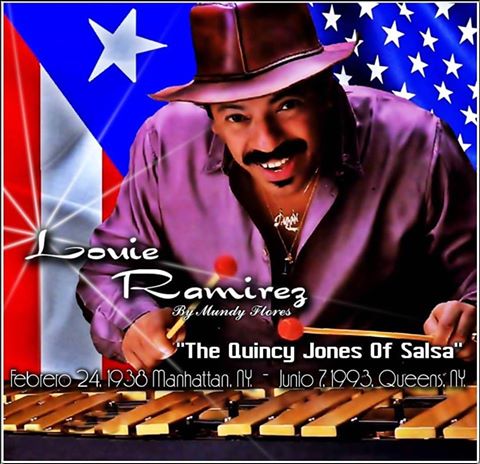
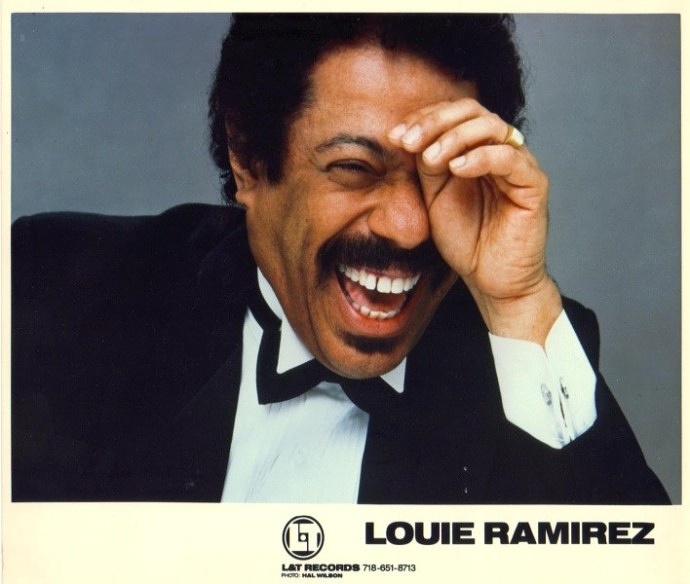
Louie Ramírez. The Hidden Talent of Salsa Ahead of its time

North America / USA / New York

Louie Ramírez.

Music often requires characters who are always behind the scenes and support the work of singers and performers with their talent, who are ultimately the ones who “put on their face” and become popular. Sometimes, however, these anonymous characters rise to fame in order to perform their own work and even become more popular than any popular singer.

In the case of Pop, this character is called Quincy Jones, of whom it is enough to say that he has been an arranger for Frank Sinatra and a producer for Michael Jackson. A nobody”. In the case of Salsa, these characters have been symbolized by Jones’ emulator, a guy named Louie Ramírez who has done everything with everyone.

Louie Ramírez
Louie Ramírez

One afternoon in 1994, Ramírez was driving his car down the highway that would take him to Variety Studios in New York. It was going to be a quick session since he only needed one song to complete his 20th album as conductor. Perhaps that was why he was nervous and that filled him with anxiety. Minutes later he couldn’t resist the feeling and had to pull over to the side of the car. He had not finished doing it when a cardiac arrest ended his life.

Louie Ramírez
Louie Ramírez

Louie Ramirez was a genius. The classic man to whom everyone turns for advice and solutions to their problems. It didn’t matter if they were young or old musicians. The fact was, Louie had the answer, and visiting him was like rubbing Aladdin’s lamp. That was a characteristic that always accompanied him, from that first recording “Conozca a Louie Ramírez” in 1963.

He was 20 years old at the time and had already stood out for composing some pachangas and arranging for Pete and Tito Rodríguez’s orchestras. The commentator Dick Sugar then presented it like this: Ramírez breaks the image of the director of a group that uses the talent of other composers and becomes a follower of a rhythm. No, Louie Ramírez is a creator in his genre.

Louie Ramírez Photo
Louie Ramírez Photo

That talent did not go unnoticed by the new Czar of Latin music in New York, Jerry Masucci, who hired him as a star for Fania Records and at the same time, as an arranger for the orchestras and ensembles that belonged to the record company. Ramírez was soon involved in work and was only able to record two albums during the sixties, “Good news” and “Alí Babá”.

On that last album appeared the hit that allowed him to be a famous artist, El Títere, a true Salsa classic. The theme was sung by Rudy Calzado, the third of the soneros that Louie had used without finding the ideal. That was a burden that accompanied him as a director during the seventies, when he used singers of the stature of Pete Bonet, Tito Allen, Jimmy Sabater, “Azuquita” Rodríguez, Adalberto Santiago, and even Rubén Blades.

Louie Ramírez
Louie Ramírez

It was with Blades, precisely, that he made an anthological album, “Louie Ramírez and his friends”, in which the song Paula C was included, with an arrangement of those that deserve -hats off-. By then, Ramírez was considered in New York as the most progressive arranger that Salsa had, thanks to the brilliant work done for the Fania All Stars. An excellent job had been the instrumental arrangement of Juan Pachanga, to be sung by Blades, of Canta Canta for a performance by Cheo Feliciano, and of the entire album “Algo nuevo” that Tito Rodríguez sang with Louie’s orchestra.

But the high point of Ramírez’s career came in 1980 when Joni Figueras, representative of the K-Tel International label, hired him to arrange the ballads Todo se derrumbó and Estar Enamorado de Manuel Alejandro. The album, which included these and other tracks, was released two years later under the title “Hot Night” and was recorded by Louie’s own orchestra.

Louie Ramírez - Salsa Progresiva
Louie Ramírez – Salsa Progresiva

This is how the Salsa-ballad or Salsa-romántica was born in a job that Ramírez continued until his death, making attempts at Latin Jazz from time to time, which he loved. That is why he recorded an album in tribute to Cal Tjader, where Louie was director, producer, composer and arranger, in addition to playing the timpani and his favorite instrument: the vibraphone.

Louie Ramírez was a genius in arranging, in a career where those of Guantanamera and Isadora stand out for Celia Cruz, El Guiro de Macorina for Johnny Pacheco and El Caminante for Roberto Torres. Apart from this, there are his works for the Alegre and the Cesta All Stars. Regarding this profile of Ramírez, the critic Eleazar López defined it very well:

Louie Ramírez - salsero
Louie Ramírez – salsero

It is not easy to arrange for a dance band, especially when it comes to a group that cultivates the hot tropical genre. Many musicians feel influenced by Jazz and the result of their orchestrations leaves a void in the dancer. Others arrange simple, but so simple that they repeat and copy themselves, and the result is tiresome music, without any degree of creativity: music that says nothing, that leaves nothing. Louie Ramírez has found the perfect balance… that’s why he always stays current.

Louie Ramírez flyers

Juan Karlos Jiménez talks about his orchestra Salsa Nueva Band and freelance career

Los Angeles is an inexhaustible source of Latin talent and this is proven every day with a large number of singers, musicians and groups that give all for all in each of their performances, with which they manage to earn a privileged place in the city and California’s music scene.    

On this occasion, we talked with the great Mexican percussionist Juan Karlos Jimenez, with whom we had the privilege of making contact to learn more about his career and contributions to Latin music in US territory.   

percussionist Juan Karlos
This is gifted Mexican percussionist Juan Karlos Jiménez, with whom we talked in this occasion

Juan Karlos’ beginnings in music   

Juan Karlos was born in Veracruz, place he describes as ”one of the most salsa-loving cities in Mexico”. The first musical influence in the artist’s life has been his own father, who played a lot of Cuban music of the time when Juan Karlos was still a child, and among his favorite groups and artists were La Orquesta Aragón and Tito Puente. 

Of his four brothers, he was the only one who devoted himself to music professionally and wanted to take salsa as a foundation, being something exceedingly rare for a Mexican, since most of the population does not usually see this genre as part of the typical music of the country. However, Juan Karlos also points out that, since Veracruz is located in the tropical part of the country, the city has a lot of Caribbean musical influence. This was one of the reasons that led the artist to become so passionate about salsa. 

In addition to music, he also studied a degree in communication and graphic design at the Universidad del Valle de Atemajac, Guadalajara. As for the communication part, being a 13-year-old boy, he began working at a radio station, which would be the beginning of interest he would have in the not too distant future for locution in a much more formal way. This led him to work in very prestigious places in Mexico such as Televisa Radio, giving him the necessary experience to know how to handle himself as a musician in relation to the media when he would promote his orchestra years later.   

While I was university studying, I worked in a music store and one day I had to serve to the Cuban Afro-jazz singer Rosalía de Cuba, who invited me to attend Cuban nights of which she was part of in restaurants and clubs in Guadalajara. One night, I was encouraged to go and started playing with one of the trios that performed that day and the leader of the group was so fascinated with my skills as a percussionist that he hired me permanently in exchange for 150 Mexican pesos per performance” said Juan Karlos about his time as a student.   

He also pointed out that in order to reach such a good level, he took a few classes with the late Cuban arranger, composer and bongocero Adalberto Alvarez, leader of the group Son 14, thanks to whom he was able to play percussion so efficiently.   

Today, he exercises his skills as a graphic designer with his orchestra Sangre Nueva Band, since he is the one who creates the album covers, flyers and artwork in general related to his musical project.  

Juan Karlos posing
Juan Karlos Jiménez posing for camera

Moving to the United States   

When Juan Karlos was just going to form his first band in Guadalajara, he met Maika Miller, who played for the Mexico’s Philharmonic orchestra and would be his partner for several years. Some time after they married, Milka was offered a master’s degree in Los Angeles and asked her husband to go with her, to which he gladly accepted because of the new opportunities he would have in his new home.   

A few years later, he retried creating his group in her new city of residence after 15 years of hard work. And while Juan Karlos and Milka are no longer a couple, they continue to be part of the same musical project, which they have baptized Sangre Nueva Band.   

However, in order to reach that point, he had to gain a lot of experience playing and perfecting his technique, but fortunately, many groups gave him the opportunity to make a living and be better every day at what he did, such as Conjunto Son 14, Carache, Santiago de Cuba, Rosalía de Cuba, Johnny Blas Y Afro Libre Orquesta, La Orquesta de Yari Moré, Tabaco y Ron, among others. 

His first attempt at creating an orchestra was Jazz Son, which he founded with Maika in Mexico with the idea that his music would be based on the fusion of jazz and son, but his plans were postponed with their sudden move to the United States. Finally, in 2009, he managed to found the orchestra he has today, which he called Sangre Nueva Band. 

Even so, he never stopped playing independently for other artists such as Gilberto Santa Rosa, Victor Manuelle, Ruben Blades, Cheo Feliciano and many more.  

Juan Karlos playing
Juan Karlos Jiménez playing and recording in a studio

Salsa Nueva Band   

One of the things that led Juan Karlos to create his own orchestra in Los Angeles was his desire to be the leader of his own project. He says he feels fortunate and grateful to be able to play with other orchestras, but in his own words ”it is better to be the head of mouse than the tail of a lion”. For the same reason, the idea of working in his own business without having to rely on other orchestras or singers was always in his head. 

When he decided it was time, he had a chance encounter with an Armenian musician who, from the street, saw his congas in the back of his car, asked him if he was a musician and invited him to play at a nightclub next Saturday. By that time, he had managed to gather six musicians playing three congas, a trumpet and a bongo. On the same day, a music entrepreneur asked him to play at another venue, so he ventured to enlarge the group and was asked to name the band, which he called ”Sangre Nueva”.  

Today, Juan Karlos is very happy with all the musicians who accompany him on this adventure and hopes that they will stay with him for a long time. 

Read also: Raúl Vargas and his flamenco rumba duo Dos Bandoleros 

  • « Go to Previous Page
  • Page 1
  • Interim pages omitted …
  • Page 3
  • Page 4
  • Page 5
  • Page 6
  • Page 7
  • Interim pages omitted …
  • Page 24
  • Go to Next Page »

International Salsa Magazine (ISM) is a monthly publication about Salsa activities around the world, that has been publishing since 2007. It is a world network of volunteers coordinated by ISM Magazine. We are working to strengthen all the events by working together.