• Skip to primary navigation
  • Skip to main content

International Salsa Magazine

  • Home
  • Previous editions
    • 2026
      • ISM / January 2026
      • ISM / February 2026
    • 2025
      • ISM / December 2025
      • ISM / November 2025
      • ISM / October 2025
      • ISM / September 2025
      • ISM / August 2025
      • ISM / July 2025
      • ISM / June 2025
      • ISM / May2025
      • ISM / April 2025
      • ISM / March 2025
      • ISM / February 2025
      • ISM / January 2025
    • 2024
      • ISM / December 2024
      • ISM / November 2024
      • ISM / October 2024
      • ISM / September 2024
      • ISM / August 2024
      • ISM / July 2024
      • ISM / June 2024
      • ISM / May 2024
      • ISM / April 2024
      • ISM / March 2024
      • ISM / February 2024
      • ISM / January 2024
    • 2023
      • ISM / December 2023
      • ISM / November 2023
      • ISM / October 2023
      • ISM – September 2023
      • ISM – August 2023
      • ISM July 2023
      • ISM Edition June 2023
      • ISM – May 2023
      • ISM April 2023
      • ISM March 2023
      • ISM February 2023
      • ISM January 2023
    • 2022
      • ISM December 2022
      • ISM November 2022
      • ISM October 2022
      • ISM September 2022
      • ISM August 2022
      • ISM July 2022
      • ISM June 2022
      • ISM May 2022
      • ISM February 2022
      • ISM January 2022
    • 2021
      • ISM December 2021
      • ISM November 2021
      • ISM October – 2021
      • ISM September 2021
      • ISM August 2021
      • ISM July 2021
      • ISM May 2021
      • ISM April 2021
      • ISM June 2021
      • ISM March 2021
      • ISM February 2021
      • ISM January 2021
    • 2020
      • ISM December 2020
      • ISM November 2020
      • ISM October 2020
      • ISM September 2020
      • ISM August 2020
      • ISM July 2020
      • ISM June 2020
      • ISM May 2020
      • ISM April 2020
      • ISM March 2020
      • ISM February 2020
      • ISM January 2020
    • 2019
      • ISM December 2019
      • ISM November 2019
      • ISM October 2019
      • ISM Septembre 2019
      • ISM August 2019
      • ISM July 2019
      • ISM June 2019
      • ISM May 2019
      • ISM April 2019
      • ISM March 2019
      • ISM February 2019
      • ISM January 2019
    • 2018
      • ISM December 2018
      • ISM November 2018
      • ISM October 2018
      • ISM September 2018
      • ISM August 2018
      • ISM July 2018
      • ISM June 2018
      • ISM May 2018
      • ISM April 2018
      • ISM March 2018
      • ISM February 2018
      • ISM January 2018
    • 2017
      • ISM December 2017
      • ISM November 2017
      • ISM October 2017
      • ISM September 2017
      • ISM August 2017
      • ISM July 2017
      • ISM June 2017
      • ISM May 2017
      • ISM April 2017
      • ISM March 2017
      • ISM February 2017
  • Download Salsa App
    • Android
    • Apple
  • Spanish

Search Results for: Salsa Fest

Oscar D’ León confessions of Oswaldo Ponte by William Briceño

Latinoamerica / Venezuela / Caracas

Oscar D' León
Oscar D’ León

Part 1

This book narrates the story of the famous singer Oscar D’ León from his birth and his life’s progress to who he is today; it also mentions how the era evolved, not only at a musical level but also regarding the situation of the country, both in Venezuela and other nations.

Before beginning to comment on the biography written by his manager, Oswaldo Ponte: biographies do not only try to remember great men who extend beyond their era. In this way, through this biography, the goal is to spread an idea about the work of the well-known artist “Oscar D’ León,” who has brought greatness to the country, crossing the line of his horizon and extending it toward other latitudes. One could say it is like a novel that not only speaks of successes or already known events, but also tells us about the reality of his life and not just what acquaintances or representatives of the artist think.

Photo1: Oscar D' León
Photo1: Oscar D’ León

The biography begins with the birth of Oscar Emilio León Simosa on July 11, 1943, in Caracas, Venezuela; where not only his family but other friends were present, one of whom ironically mentioned that in the future “he would be a great singer” since his crying was like a symphony. According to his mother, “Carmen Dionisia,” the midwife told her that he was born “enmantillado” (born with a caul), which meant the baby could have a multitude of gifts that he could take advantage of in the future.

It is worth mentioning that at an early age, he had more passion for music than for his studies, and he came to the conclusion that studies were not the best thing for his future; therefore, he dedicated himself to helping at his parents’ business to contribute to the household.

Since he was very young, he enjoyed listening to “Sonora Matancera” in a corner at night, which was the musical group of the era, and he would follow the percussion with his throat. He also listened to jazz orchestras, which led him to the conclusion that music would be his vocation; he was fascinated by listening to his mother hum the hits of 1953 by the Orquesta Aragón and Dámaso Pérez Prado.

Oscar D' León - Photo 1
Oscar D’ León – Photo 1

Fortunately for the future singer, his family was passionate about music and had close relationships with musicians, singers, and players of all types of instruments even if they were not professionals. This warm, joyful, and above all, musical atmosphere embraced Oscar from the moment he was born. It was even shown that at an early age he had a certain interest in any object that emitted a musical sound, and he longed to learn how to use musical instruments. Despite having a humble family, Oscar himself managed to use various objects to create something that generated a musical sound and to discover his own rhythm, which he enjoyed at that time.

Oscar D' León - Photo 2
Oscar D’ León – Photo 2

Simosa, which was on July 11, 1943, in Caracas, Venezuela; where not only his family but other friends were present, and ironically one of them mentioned that in the future “he would be a great singer” because his crying was like a symphony. According to his mother, “Carmen Dionisia,” the midwife told her that at birth he was “born with a veil” (enmantillado), which meant the baby could have a multitude of gifts that he could take advantage of in the future.

During his adolescence in Venezuela, many significant political changes were occurring for the population; however, they did not stop celebrating festive seasons with his family even in difficult times. Many “parrandas” (parties) were held, something that Oscar enjoyed very much.

In 1958, he mentions that a phenomenon was occurring with the musical style of “Dámaso Pérez Prado’s Mambo”; also, at the Club Las Fuentes, the Sonora Matancera resonated with “Celia Cruz” alternating with the “Caracas Swing Boys”. A movement of orchestras influenced by foreign rhythms that thrilled Venezuelans began to be observed on a national level, such as Billo’s, which won the precious title of the most popular orchestra in Venezuela. Oscar was not interested in societal events, except for events in Cuba, since Cuban music was what fascinated him.

Photo: Oscar D' León confessions of Oswaldo Ponte by William Briceño
Photo: Oscar D’ León confessions of Oswaldo Ponte by William Briceño

Starting in 1962, he became a father, and marveled by his new life and his firstborn, he dedicated himself to his role as a father, keeping his family supported by working; this caused him to step away from music, and his maturity can be witnessed despite his age.

By the age of 23, he already knew how to sing and play the bass; over time, he met friends who would influence great changes in his future life. In 1966, he met Kiko Pacheco, who invited him to the group “Los Junior,” where he would begin his professional career. During that same year, salsa was taking off in Venezuela, as it was heard on all the country’s radio stations.

During that era, life was expensive, so he worked hard both in clubs and discotheques or as a taxi driver. On one occasion, Kiko Pacheco asked Oscar to sing in the “Quinteto Los Junior” because their vocalist had to leave; this allowed Oscar to demonstrate his talent, and from that moment on, everyone was enchanted upon hearing him, and his musical profession began. Later, “La Dimensión Latina” was created, which at that time was known as “Dimensión Seis,” founded by Oscar D’ León and Cesar Monge.

The members who formed “La Dimensión Latina” were Oscar de León, Cesar Monge “Albóndiga,” and José Rojas “Rojita” on trombones; José Rodríguez “Joseíto” and Elio Pacheco on percussion; and Enrique “Culebra” Iriarte on piano. A significant event for Oscar was that, during their first rehearsals, he had a premonition of his success when they found the rhythm he wanted to hear and share with the rest of the musical world. This was proven during their first performance, which was a total success, leaving everyone who heard them stunned.

Oscar D' León singing
Oscar D’ León singing

From that moment on, with the debut of La Dimensión Latina, a new concept emerged that would change the landscape of popular Venezuelan music and make history both nationally and internationally with the rise of the legend Oscar D’ León. They began playing for five months at “La Distinción” from Friday to Saturday. On Sundays, after finishing there, they would go to El Junquito to continue the party, gaining so much popularity that some felt they should launch an international career. During that time, singer-songwriter Mireya Delgado hired them after being impressed by seeing them perform on stage.

They played on a cruise ship during a one-week tour through different Caribbean islands and achieved great success despite the inconveniences they faced. They paid these no mind, as they dedicated themselves wholeheartedly to playing for their audience. This caused venues to become packed, captivating their fans who idolized them. From that point forward, many people began wanting to hire them for various events.

Here is the translation of the text into American English:

In that same year, 1972, a dizzying and unstoppable recording career began. This was based on the fact that executive representatives from the TH label heard two tracks: one was “Oye mi canto,” which was a hit for Gran Combo de Puerto Rico, and the other was “Te voy a cortar las patas” by Oscar D’ León. Because this made a great impact and created absolute conviction among the executives that they were witnessing a success, the promoter Mesone, upon hearing them, agreed to carry out a recording. This recording was shared with the Víctor Mendoza Orchestra, one of the TH producers in Venezuela: El Clan de Víctor.
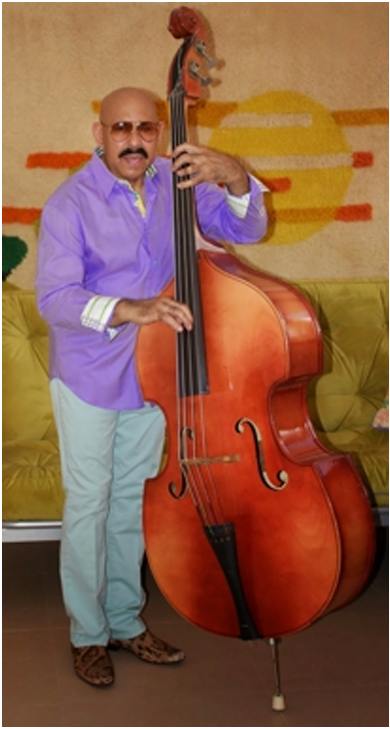
2- Oscar D' León
2- Oscar D’ León

The album featured three tracks by Oscar; he recorded two of them with Dimensión Latina and the other with El Clan de Víctor. However, he does not appear as the author in the credits. The same thing happened with an album in 1991 when recording the album Auténtico. Among the 80 tracks that Oscar wrote, two of them are his immortal classics and of his authorship: “Llorarás” and “Detalles”.

For the first time in Venezuela, Salsa festivals were held that moved everyone. From that moment on, a true proliferation of salsa was witnessed in the country, all thanks to “Pensando en ti,” which had a major impact on the history of Venezuelan popular music.

After the success of his new discography—which contains “La comprita,” “Barranquilla,” and “Barranquilla y Quiéreme,” among others—three important international contracts were signed. Oscar and Dimensión Latina would go to Curaçao, Aruba, and Bonaire; that same year, they would also go to Colombia and Santo Domingo. However, it is worth noting that the period from “Pensando en ti” to “Que bailen to’s” covered the stage that catapulted him internationally.

Here is the translation of the text into American English:

The production of Dimensión Latina’s 1975 discography was the one that left an eternal mark, whose immortality was glimpsed from the very moment of its appearance. Its tracks focused on themes of romantic heartbreak. However, the rhythmic conception of “Llorarás” was the most important conception and structure of Oscar D’ León and Dimensión Latina; in fact, the song “Llorarás” marked the rupture of the old dance empire represented by Billo’s, and Dimensión came to be considered the “Billo’s of Salsa”.

An important subject in the world of music tells us in this book that: “salsa singers used phrases worn out by the use of previous generations who popularized them; in contrast, Oscar projected original modifications created by him”.
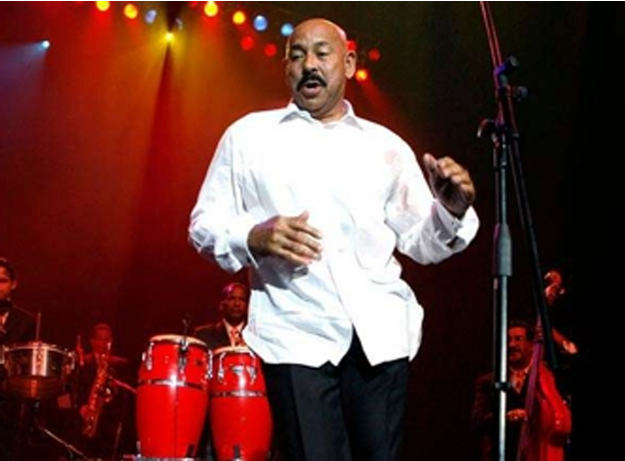
Oscar D' León in concert
Oscar D’ León in concert

When they traveled to New York, Oscar was very excited by the different stories he had experienced in the music world, and they were even happier to perform for the first time in the impressive metropolis. It was there where that musical genre that transformed them into idols, “Salsa,” was projected.

As time passes, Oscar manages to establish his own style and never changed it while climbing the steps of popularity and fame; the same happened with Dimensión Latina, though without achieving the countless triumphs Oscar D’ León obtained until his departure.

If you wish to know more about the history of Oscar D’ León, we recommend reading “Oscar D’ León: Confessions of Oswaldo Ponte by William Briceño, Editorial Fundación Simón Bolívar” to learn about the continuation, as it is a very broad topic to describe in this first part; likewise, in our next edition, we will conclude our final thoughts on this interesting and extensive biography.
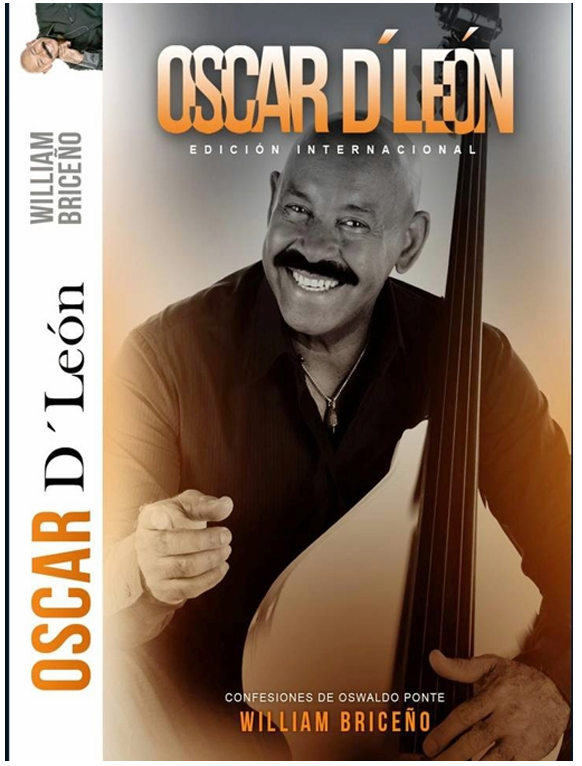

Oscar D' León confessions of Oswaldo Ponte by William Briceño
Oscar D’ León confessions of Oswaldo Ponte by William Briceño


ISM / January 2026

​

ISM Jan 2025-L ISM Jan 2026-R
SalsaApp Left SalsaApp Right
NA January 2026
LA January 2026
EU January 2026
AF January 2026
AS January 2026
OC January 2026
Salsa Festival 2026 San Diego

“We are the True Latin music world network”


Letter to the Editor Joint our team

Music reviewer and photojournalist Ricky Ricardo describes his work from the last 35 years

Ricky Richardson, better known as Ricky Ricardo, is one of those important figures who should be taken notice of for his significant contribution to Latin music, even if it is often not quite appreciated by the public. The Tampa-born photographer, writer, and music reviewer has honoured us by talking about his career and experience covering events related to Latin culture and music, so we invite our readers in the beginning of the year to enjoy the revelations of our talented guest.

Ricky Richardson at the festival
Ricky Richardson at the New Orleans Jazz & Heritage Festival entrance

How Ricky got started in the coverage and review to Latin music and cultural events

First of all, Ricky thanked us for the interview and went on to tell us that he started as a photographer for a local newspaper called California Crusader News. Over time, his superiors asked him to start writing articles to accompany his photographic work, resulting in music reviews based on his attendance at numerous events and festivals throughout Los Angeles and beyond.

His work also included meetings with newspaper and magazine publishers who were always searching for content for their own publications, which led Ricky to send reviews and photos to all kinds of publications.

Major publications Ricky has worked with

Among the most important publications Ricky has collaborated with is Latin Beat, which was the main means of communication related to Afro-Cuban music. The photographer met Rudy and Yvette Mangual many times at various concerts and festivals. They met backstage at the Hollywood Bowl during the Blue Note Jazz Festival, an event he covered just like all the artists who performed there.

He also covered events in other parts of the United States, such as the New Orleans & Jazz Heritage Festival and the French Quarter Fest.

Kathy, Lázaro, and Nelson. Photo by Ricky
Kathy “La Rumbera” Diaz, Lázaro Galarraga and Nelson Rodriguez (Photo by Ricky Richardson)

In the case of Vidasalsera, Ricky first heard that name coming out of a musician’s mouth at a Puerto Rican festival in Long Beach, where he often ran into Cal Sakaniwa, the photographer and videographer for this media outlet. That is when he reached out to the webmistress of Vidasalsera.com Dena Burroughs and began providing photo galleries for her website, even though they have never met in person.

What made Ricky fall in love with Afro-Cuban music

During his childhood and youth in Tampa, Ricky was very exposed to Latin music due to the large Cuban population living in the Ybor City area, and he and several of his friends used to frequent many places and stores where this music was played. 

When the young man heard Afro-Cuban music for the first time on radio stations KACE and KKGO (nowadays known as KJAZZ) was a point of no return for him. His love for this kind of music was greatly strengthened by radio programs such as Alma Del Barrio, Jazz on the Latin Side, Canto Tropical, Groove Time, and Canto Sin Fronteras. Not to mention that many international artists were constantly giving concerts at venues and festivals. 

Events covered by Ricky to date

Throughout his career as a photographer, Ricky covered a huge number of events, including the Long Beach Jazz Festival, Monterey Jazz Festival, Central Avenue Jazz Festival, Los Angeles Street Scene, San Diego Street Scene, Simon Rodia Watts Towers Jazz Festival, Watts Towers Day of The Drum Festival, Cuban-American Festival, Puerto Rican Festival, and many others. 

When we wanted to know more about his experiences at these events, he replied that he felt very honored to have been able to share with established and emerging artists over the past 35 years. He also feels very lucky to have been able to witness such wonderful performances by artists who always greet him and spend warm smiles at him whenever they meet him.

Kathy, Lázaro, and Nelson. Photo by Ricky
Kathy “La Rumbera” Diaz, Lázaro Galarraga and Nelson Rodriguez (Photo by Ricky Richardson)
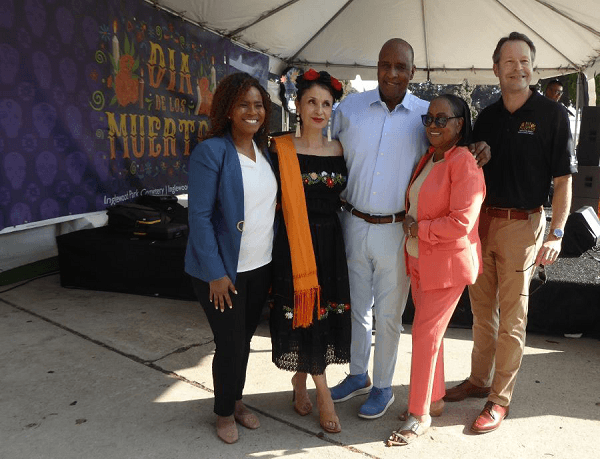
Dionne, Monica, and James. Photo by Ricky
Councilwoman Dionne Faulk, Monica Bracho, Mayor James T. Butts Jr., Councilwoman, and Brendt Stallings, Chief Executive Officer & Chief Investment Officer-Inglewood Park Cemetery (Photo by Ricky Richardson)

Alma Del Barrio Fest 2025

Ricky told us that he had the honor of attending the first and second iteration of the Alma Del Barrio Salsa Festival, which took place at different locations at Loyola Marymount University. Future attendees got really excited about the current venue chosen by the organization to host the event, which is Lawton Plaza with its amphitheater, seating arrangement, abundance of grass, and the dance floor. 

“I love the fact that many people get to meet and greet some of Alma Del Barrio Program Hosts (DJ’s) in person. I like the fact that Alma Del Barrio Salsa Festival attracts several generations of salseros, that are diverse, multi-cultural, and from all walks of life.,” Ricky said on the subject.

Why Ricky retired last year

Last year, Ricky finally made the decision to retire from music critics and photography after covering the Latin music scene for so many years in order to allow new generations of talented journalists to take over and keep Afro-Cuban music alive. 

He is currently looking for opportunities to work in public relations and marketing for sporting events that will be held in the next three years such as the NBA All-Star Weekend, the FIFA Worzld Cup, the Super Bowl, and the Olympic Games. 

Read also: Cache Live Music puts Miami to dance to traditional Latin music

North America / January 2026

La Nota Band 01-2026Conciencia Clásica 01-2026El cajón 2026

Ricky RichardsonAdalberto Santiago and Johnny CruzJon Horn 2026 Latin music

January 2026 / Festivals

United States flag
UNITED STATES
Big Salsa Fest 01 2026

BIG
Salsa & Bachata Festival
San Diego

Jan 16-19, 2026

Marriott Mission Valley
8757 Rio San Diego Dr
San Diego, CA 92108

$ 180

NAMM Show 2026PBSCanto Tropical 2025Luis Medina 2025Thumbnail about the salsa museum

Las Maracas promo

Martinez attorney

Directory of North American nightclubs

Canada flag
CANADA

Ontario, Canada
ONTARIO

Canada, Vancouver
VANCOUVER

United States flag
UNITED STATES
California US circular flag

CALIFORNIA

Florida circle flag
FLORIDA
Illinois circle flag

ILLINOIS

Michigan Circle flag

MICHIGAN

NJ circle flag

NEW JERSEY

New York Cicle flaga

NEW YORK

Ohio State
OHIO

Pennsylvania Circle Flag
PENNSYLVANIA

tEXAS CIRCULAR FLAG
TEXAS

Virginia Cirular Flag
VIRGINIA

Washington DC circle flag
WASHINGTON DC


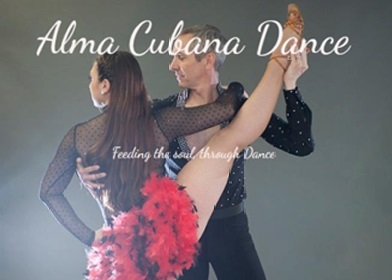
Alma Cubana Dance Academy

North America / USA / Portland

Alma Cubana Dance Academy

Alma Cubana Dance Academy

“They are a small dance group in Portland, ME. that offers Salsa and Bachata lessons and have student level teams for both those styles as well as ladies styling. Currently the lessons are on Sundays, you can find everything current on their website www.almacubanadance.com

Alma Cubana Dance was founded in the spring of 2015 by Vanessa Webber (Gutierrez). Alma Cubana means “Cuban Soul”, and being half Cuban, she wanted her group to reflect that heritage. It has been a long standing dream to offer classes, build a performance group and to help grow the Salsa and Latin dance community in Southern/Midcoast Maine. Their focus is to bring quality instruction while maintaining the social atmosphere of Salsa dance.

‘I danced Ballet and Modern growing up and helped develop a salsa company in Boston while in College which I believe is celebrating 10 years or more this year, although I am not with them anymore. I took 8 dancers to Miami last year and they competed in the first Miami Latin Dance Championships where all of them placed in at least one category.”

“They are a small dance group in Portland, ME. that offers Salsa and Bachata lessons and have student level teams for both those styles as well as ladies styling. Currently the My company is very young, only just 2 years, and it is mainly attended by those who love to dance but it is not a full time commitment. We perform locally a lot, and try to take the groups to 2-3 congresses or festivals, usually within driving distance. We have done Boston Salsa Festival twice, Connecticut Salsa Fest last year and Bachateando Miami last year, we plan to go to Connecticut and Boston again this year.” Vanessa Webber (Gutierrez), Alma Cubana Dance founder/director

They will be changing the schedule in April for Spring and Summer. Spring and Summer Schedule will have team practices on Sundays and Wednesday, classes for Salsa and Bachata before our regular latin night, which just celebrated 1 year.”

2017 Winter Schedule

Sundays

  • 3:00–4:00 pm Bachata and Body Movement
  • 4:00–5:30 pm Beginner Salsa Bootcamp
  • 4:00–5:30 pm Intermediate Salsa Bootcamp
  • 5:30–7:00 pm Open Level Salsa Team Rehearsal*

Tuesdays

  • 8:00–9:30 pm Bachata Team Rehearsal

2017 Spring/Summer Schedule

Sundays: Classes held at Aquarius Ballroom

  • 2:00–3:30 pm Ladies Choreography Class
  • 3:30–5:00 pm Bachata Performance Team*
  • 5:00–6:30 pm Salsa Performance Team*

Wednesdays: Classes held at Pearl Nightclub

7:30–8:15 pm Salsa for Social Dance 8:15–9:00 pm Bachata for Social Dance 8:00–9:00 pm Drop-in Class Salsa/Bachata (Note: There is a potential overlap/error in the Wednesday schedule near the end, listing 8:15-9:00 pm and 8:00-9:00 pm for different classes).

Esencia Latina Wednesdays at Pearl Nightclub

Esencia Latina means “Latin Essence” and that is what they want this night to embody. Start off the night with lessons to get your feet moving from 8-9pm. At 9, the lights go down and have a great mix of Salsa, Bachata, Merengue, Cha Cha and more to keep you on the dance floor. Latin dance is a social dance, its meant to be something you do with your friends and/or family. Loosen up, shake your hips and party like Latinas! Pearl Nightclub is located next to the Tap House 442 Fore St, Portland, ME

Alma Cubana Dance Academy - Flyers
Alma Cubana Dance Academy – Flyers
  • « Go to Previous Page
  • Page 1
  • Interim pages omitted …
  • Page 30
  • Page 31
  • Page 32
  • Page 33
  • Page 34
  • Interim pages omitted …
  • Page 126
  • Go to Next Page »

International Salsa Magazine (ISM) is a monthly publication about Salsa activities around the world, that has been publishing since 2007. It is a world network of volunteers coordinated by ISM Magazine. We are working to strengthen all the events by working together.