| Karina Bernales present | June 2026 | FESTIVAL |
|
|
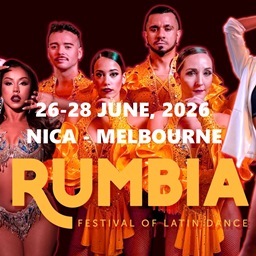 |
Rumbia FestivalJune 25 / 28, 2026 National Institute of Circus Arts (NICA) $ 330 |



| Directory of Australian and New Zealand nightclubs | ||
|
|
||
|
|
|
|
|
|
|
|
|
|
|
|
|
|
|
|
|
|
||
|
|
||
| Karina Bernales present | June 2026 | FESTIVAL |
|
|
|
Rumbia FestivalJune 25 / 28, 2026 National Institute of Circus Arts (NICA) $ 330 |
| Directory of Australian and New Zealand nightclubs | ||
|
|
||
|
|
|
|
|
|
|
|
|
|
|
|
|
|
|
|
|
|
||
|
|
||



| Karina Bernales present | June 2026 | FESTIVALS |
|
|
 |
Jeju Latin Culture FestivalJun 17 / 22, 2026 Jeju Shinwha World $ 250 |

Directory of Asian nightclubs |
||
 HONG KONG |
||
 Graffiti LKF Graffiti LKFG/F, 17-18 Lan Kwai Fong, Central Central, Hong Kong |
 SOLAR LKF SOLAR LKFCentral 2nd Floor, Ho Lee Commercial Building, 38-44 D’Aguilqr Street, Lang Kwai Fong Central HKI Hong Kong |
 Sole Mio Sole MioUpper Ground Floor, 51 Elgin Street, Soho Central Hong Kong, Hong Kong |
|
|
||
|
|
||
|
|
||
|
|
 Bar Mirage Bar Mirage5F VORT Roppongi Briller, 3-14-14 Roppongi, Minato-ku Tokyo 106-0032, Japan +03-5860-6946 |
 Fiesta Latin Spot Bar Fiesta Latin Spot Bar3F, 1 Chome-14-6 Kabukicho, Shinjuku City Tokyo 160-0021, Japan +81 90-1086-2878 |
 El Cafe Latino El Cafe Latino3 Chome-15-24 Roppongi, Minato City |
|
|
|
|
||
|
|
|
|
|
|
||
 2F Thi Sach Ho Chi Minh City, Vietnam 70000 +84 799 741 261
|
|
|
In this space, we have interviewed artists and groups from different countries of Latin America, but there have been a few times we had the opportunity to connect with talent from Brazil and not only that. They also sing and play typical music of their country, which makes them even more interesting, so we could not fail to speak with Diogo Brown and Isabelle Duarte.
Both have been very kind and shared with us some of their most significant experiences as Brazilian musicians in the United States and how that has shaped their way of making music.

The first to take the floor was Isabelle, who informed us that she started singing at a church in her home country, Brazil, when she was just six years old. Over time, she also got to sing at weddings, quinceañeras, local festivals, and events of all kinds.
About 10 years ago, she fell in love and married an American man, with whom she moved to the United States, where she met Diogo, a compatriot of hers who was born and raised in a city far from her own. However, their “Brazilianness” and love for music brought them together in the project they now share with other musicians, Gafieira Rio Miami.
In Diogo’s case, his passion for music awoke at 15, the age at which he knew he wanted to be a professional musician. His mother convinced him to enroll in a music school and an English academy, as she suspected that English would be extremely useful for his future career and this was indeed the case. His arrival to the United States was very similar to Isabelle’s, as he also met an American woman online; they eventually fell in love and moved there together. He attended a screening of a Brazilian film in which he had appeared, where he met her and finally live their relationship in person. That was over 20 years ago.
Since then, Diogo has worked with countless artists and companies such as Sony Music, Univision, and Warner. Among the stars he has collaborated with are Gloria Estefan, Ricky Martin, Lara Pausini, and many others.
Something interesting that Diogo tells us is that, in his early years as a musician in Brazil, he spent listening to Latin music, and some of his favorite artists were Buena Vista Social Club, Cachao, Jimmy Bosch, and many others of this kind. By his own admission, this is uncommon for a Brazilian resident in Brazil, who usually only listens to music of their own country. Both he and Isabelle agree that, in Brazil, very little music in Spanish is consumed, among other factors, due to the language barrier.
Isa tells us that her connection to Hispanic music began to form in the United States, and her husband contributed a lot to that, since he is of Hispanic origen. In addition, they settled in Miami, where there is a mix of cultures of each country, so she started to be exposed to genres like salsa, cumbia, merengue, and other rhythms that are not usually heard in Brazil. For her, Gafieira Rio Miami is a golden opportunity to demonstrate that Brazil is not separate from the rest of the Americas.
In addition, he noted that globalization and major musical phenomena in Portuguese and Spanish have managed to break that language barrier over the years.
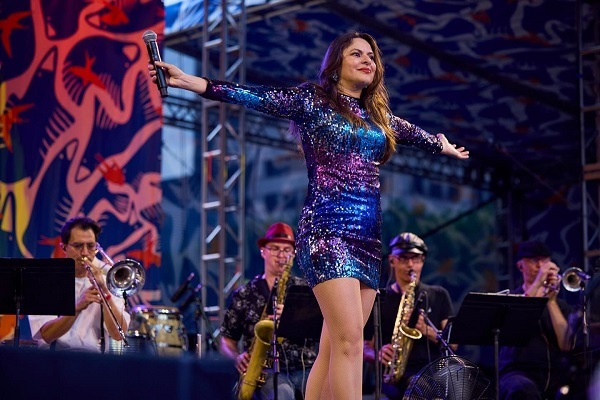
Gafieira Rio Miami was born from a much smaller idea that began with just seven musicians. As the project grew, the group managed to have a total of 11 members, including five brass players, the rhythmic part, and a singer. There are 10 musicians and one vocalist, Isabelle. The members include Brazilians, Venezuelans, and Americans, but they are all united by the passion for Brazilian music.

In a music scene that pushes bands and orchestras to make themselves smaller, Gafieira Rio Miami has always chosen to remain intact despite the circumstances. Diogo has been perfectly clear that if he’s offered a gig with fewer musicians, he prefers to say no. He says there are 11 members and all are needed for every performance, since otherwise, the impact of the live music would not be the same.
Read also: Rafaelito and his career between Munich and New York
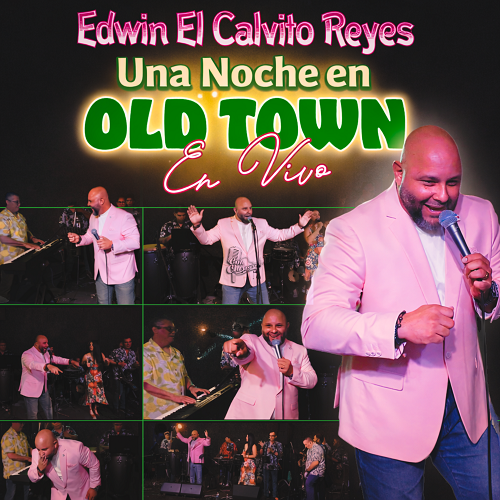
With this release, Edwin puts his salsa and his talent at the service of his followers. His repertoire spans classic salsa, romantic salsa, and what he calls “conscious salsa.”
Edwin “El Calvito” Reyes acknowledges that while everything has already been invented, the key is to stay focused and execute the ideas swirling in his mind. The press release for the new live album, titled Una noche en Old Town, notes: “Remember in the ’90s when many artists (…) recorded live productions? That was a trend that (…) went down in salsa history.”
The Production
The album features the collective performance of the musicians who have accompanied the singer for years, including their appearance at the 2025 Día Nacional de la Zalsa in Orlando. The lineup includes:
The Origin
The stage was set specifically at El Cilantrillo restaurant within Old Town. The event celebrated the birthday of Javier Colón, owner of La Feria Salsera and Edwin’s partner for the veteran-focused dance events that Edwin has successfully led in recent years. Javier hired “El Calvito’s” orchestra, the performance was recorded, and from that session, this authentic album was born.
According to Edwin, the performance was originally recorded for promotional purposes. However, the artist felt it was such a great capture of the evening’s energy that he consulted his musical director, Víctor Romero, to see what he thought of the idea.
The Release
Coincidence dictated that the album be published and available on digital platforms exactly one year after the recording. The producer admits it was a high-risk project because it was recorded live during an organic event outside of a controlled studio environment. The classic covers Edwin included as tributes to “those who have passed” (arranged as medleys) were his biggest concern, yet they ultimately earned widespread approval.
“El Calvito” Reyes says he doesn’t fear the critics. Driven by passion, he decided to release this 10-track production—eight of which he wrote himself, plus two salsa hit medleys—aiming to win over dancers, listeners, and collectors alike.
Tracklist:
For more on the music of Edwin “El Calvito” Reyes, visit: https://solo.to/elcalvitoreyes

Read Also: Edwin “El Calvito” Reyes el Sonero de la Sangre Nueva “Amor de Actualidad”
On April 13, 2020, in the quiet of a Bronx hospital, the “backbone” of Salsa Dura passed away at the age of 76: José Manuel Torres, known universally as “Professor Joe.”
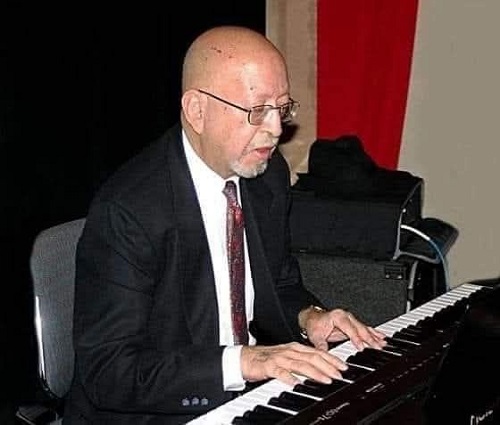
Born in Manhattan on November 29, 1943, a son of the Puerto Rican diaspora from Guayama and Ponce, Torres embodied the pure essence of the Nuyorican.
Raised on Fox Street, his destiny was sealed in the hallways of P.S. 52 an elementary school that would eventually become the academic sanctuary of Latin music in the South Bronx.
Excellence as the Standard: From Neighborhood Sound to Musical Glory
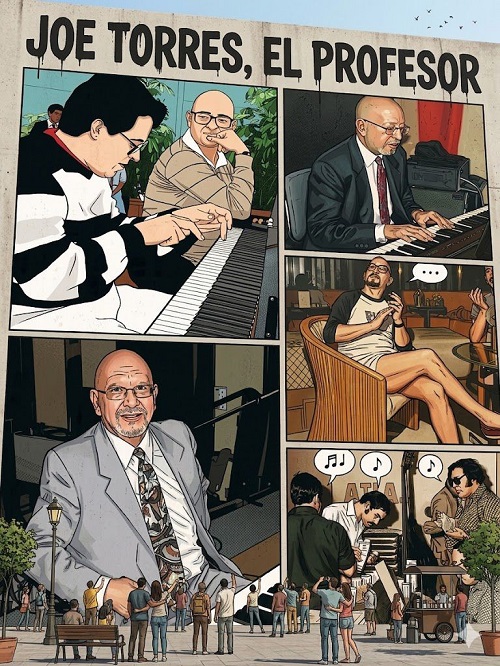
His technical precision allowed him to navigate elegantly between formal discipline and “street” flavor (sabor).
After debuting in the 1960s with the “King of the Bass,” Bobby Valentín, on seminal albums like Bad Breath, his career took a definitive turn when he joined the orchestra of a young, rebellious Willie Colón.
“As the pianist for the band, Professor Joe Torres was excellent,” Colón would recall years later.
It is his piano that resonates in the urban chronicles of Cosa Nuestra; the piano that provides the festive nostalgia in both volumes of Asalto Navideño a cornerstone of Puerto Rican identity and the piano that sustains the rhythmic tension in classics like The Big Break (La Gran Fuga) and Lo Mato.
Humility in the Shadows: The Man and the Legend
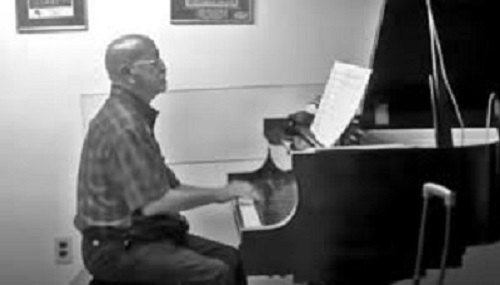
Despite participating in more than thirty productions that are now considered world cultural heritage, Joe Torres never felt the urge to claim the spotlight of a frontman.
As his colleague José Mangual Jr. noted, his humility was as vast as his talent. He preferred the rigor of the studio and the camaraderie of the stage, balancing his musical genius with his work as a computer technician a duality that spoke to his sharp intelligence and adaptability.
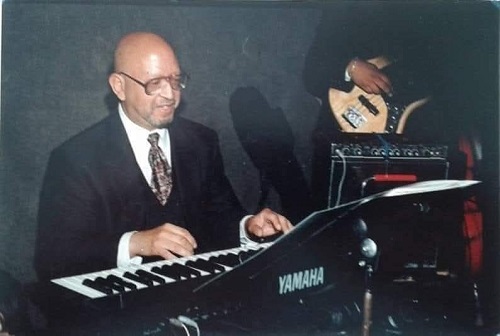
Today, years after his passing, the void at the piano bench remains felt. The “Professor” didn’t just teach people how to read music; he taught that true greatness does not require noise.
His music lives on in every descarga, reminding us that as long as there is a piano playing in the Bronx, the echo of José Manuel Torres will never stop schooling the world.
Also Read: International Salsa Magazine presents essential trivia and facts about Héctor Lavoe.