| Karina Bernales present | July 2026 | FESTIVALS |
|
|

![]() |
KizConnect EvolutionJuly 31/ August 2, 2026 KL Tower $ 248.71 |
Search Results for: Salsa Fest
Phil Robinson Blends Sensitivity and Tradition in His New Single “Allí Me Enamoré”
A Romantic Salsa Gem That Transforms the Bond of Friendship Into an Honest Declaration of Love
Romantic salsa adds a new gem to its repertoire with the release of “Allí Me Enamoré” (“There, I Fell in Love”), the latest single by Phil Robinson.

It is a track filled with sensitivity, nostalgia, and emotion that aims to reconnect the audience with the genre’s narrative essence.
Composed by Puerto Rican songwriter Andy Roldán renowned for his ability to translate intimate feelings into deeply human lyrics this song unfolds as a love story that blossoms from the complicity of a sincere friendship into an inevitable confession of the heart.
From its opening verses “Hola amiga, ahora que al fin puedo mirarte a los ojos…” (“Hello my friend, now that I can finally look into your eyes…”) the track draws us into an intimate, almost confessional conversation, where the protagonist opens the pages of his soul to reveal a long-held feeling.
The lyrics journey through memories, silences, glances, and restrained emotions, building a narrative that many listeners will easily identify with: that exact moment when friendship is no longer enough because love has already taken root.
Phil Robinson delivers a warm and honest performance, anchoring every phrase with an emotional weight that highlights the depth of the lyrics. His voice successfully balances tenderness and passion, turning the song into an intimate, almost cinematic experience where every word feels lived in real time.
One of the greatest achievements of “Allí Me Enamoré” is its capacity to bridge the present day without abandoning salsa traditions. The contemporary reference to the everyday act of “opening your profile where I can see you” embeds the song into the emotional language of the digital age, bringing modernity to a classic story of unrequited love.
The chorus “En las páginas de tu alma, amiga, allí me enamoré” (“In the pages of your soul, my friend, there I fell in love”) stands as the poetic centerpiece of the composition: a delicate metaphor that transforms the human soul into an open book, an intimate territory where true love is born. This imagery gives the track its own unique identity, making it a memorable piece within today’s romantic repertoire.

Musically, the single is built upon an elegant melodic foundation, remaining faithful to the core DNA of romantic salsa, with arrangements designed to embrace the lyrics without stealing the spotlight.
The instrumentation subtly accompanies the emotional development of the story, allowing both the vocals and the message to breathe naturally.
With this release, Phil Robinson reaffirms his commitment to a style of salsa that not only invites people to dance but also to feel, remember, and confess. “Allí Me Enamoré” is a song for those who have loved in silence, for those who discovered too late that a friendship concealed a deep love, and for those who still believe in the power of a great story sung with absolute truth.
THE MUSICAL CAREER OF PHIL ROBINSON
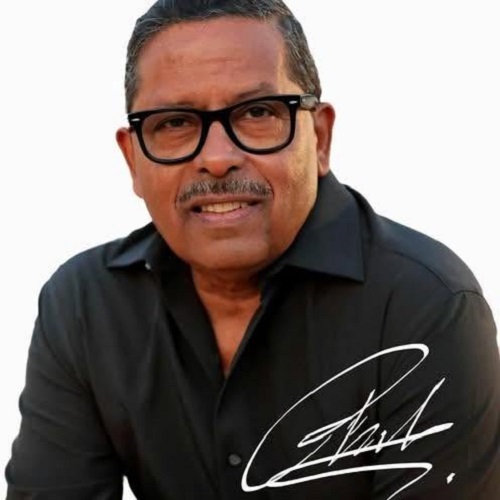
Phil Robinson is a sonero, songwriter, performer, and director of his own orchestra. His charisma and his entrepreneurial, creative, and positive attitude allow everyone who speaks with him to enter his world, captivated by his love for music and his passion for learning, evolving, and improving every day. Robinson has loved the arts from a very young age.
Orquesta Yaré was the dream of a young man who, like Phil, wanted to make it big in the world of Latin music. It was founded and directed by Leroy Gutiérrez (conguero, timbalero, and bongosero), featuring original tracks alongside his brothers Johnny (bongosero) and Loui (trumpeter).
At the time, Leroy was a percussionist, but he also taught himself to play the piano. Gutiérrez invited Phil to join the group to turn him into a star. Yaré was a 12-piece orchestra, and all of their music was entirely original.
During a performance at Landis Park in Vineland, New Jersey, Orquesta Yaré backed the legendary Néstor Sánchez and Larry Harlow, the “Judío Maravilloso” (The Marvelous Jew) of the Fania All-Stars, who attended as guest artists. For Phil, it was a dream come true to share the stage with icons he so deeply admired. Years after that historic performance, Robinson reunited with Larry Harlow in Los Angeles and was able to share a photograph of that very first experience together.
As his musical journey evolved, he became the lead vocalist for Henry Mora and the All Star Salsa Orchestra of Los Angeles, while also collaborating with various local bands.
From there, he went on to become the lead voice for Eric Matos and Orquesta La Caliente, as well as Papo Rodríguez y La Sorpresa.
With the latter group, he recorded two original songs composed by Puerto Rican pianist Nelson Montalvo: “Fantasía” and “Mi Regalo,” which were included in the 2005 album titled Oye Salsa Sabor y Clave.
During Phil’s tenure with Papo Rodríguez, the renowned Panamanian singer Camilo Azuquita arrived in the city, and the band transformed into Azuquita y su Melao.
Phil served as his lead vocalist and primary background singer for several years, performing at prestigious venues such as the Hollywood Palladium and sharing the stage with iconic industry figures. Thanks to these valuable collaborations, Robinson fully polished his signature style.

Throughout his career, Phil has shared the stage with legends of the stature of Adalberto Santiago, Tony Vega, Herman Olivera, Yolanda Rivera, Meñique, Luigi Texidor, Wichy Camacho, Cuban singer Franco, Willie Chirino, and Celia Cruz, among many others.
After seven years of dedicated work, Phil completed and released his latest musical project titled Entre Dos Mundos (Between Two Worlds), produced by Arturo Solar.
This production features classic compositions from renowned authors such as Armando Manzanero, Ted Koehler, Harold Arlen, Virgilio and Homero Expósito, Enrique Benítez, Vicente Garrido Calderón, and Jesús Alejandro, alongside original tracks penned by Phil himself.
Robinson notes that, starting in 2023, he became a TV spokesperson and the MC (master of ceremonies) for the San Juan Puerto Rican Festival.
Here at Malanga Radio, we celebrate this premiere as proof that romantic salsa remains alive, evolving with new voices, new pens, and new emotions.

Allí Me Enamoré” is now available on all digital platforms.
Chechy Rosado
Public Relations
+57 301 685 2655
Barranquilla – Colombia
Also Read: Phil Robinson Sonero, composer and performer bandleader
Europe – November 2016
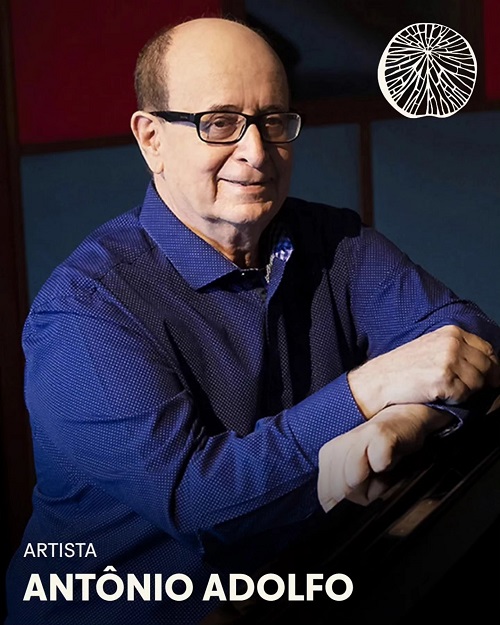
Antonio Adolfo: The Indelible Master of Brazilian Music
From Classical Cradle to the Jazz and Bossa Nova Revolution
That musical heritage is essential to understanding the greatness of Antonio Adolfo.
Being born into a home where the violin from the Rio de Janeiro Municipal Theater orchestra was part of the daily landscape shaped his sensibility from the cradle.
Although he grew up surrounded by the classical discipline of his father, his destiny lay within the keys, jazz, and the revolution of Brazilian popular music (MPB).

The son of a classical violinist, Antonio Adolfo was born in the bohemian neighborhood of Santa Teresa, Rio de Janeiro, under the sign of Aquarius in 1947. At the young age of 16, the young pianist was already part of the exclusive bossa nova club brewing in the famous Beco das Garrafas alley, leading ensembles that stood at the forefront of the scene, such as Conjunto Cinco and the Samba Trio 3-D.
Shortly after, he participated in the iconic musical Pobre menina rica by Carlos Lyra and Vinicius de Moraes, beginning to make a name for himself in the industry.
Starting in 1967, by forming a creative partnership with lyricist Tibério Gaspar, Adolfo became one of the great catalysts of modern melody in Brazil, composing massive hits like “Sá Marina” and “Juliana.”

At the same time, leading the group Brazuca, he established an electronic pop tone that was highly sophisticated for its time (with tracks like “Teletema” and “Ana Cristina”), culminating in the blistering musical highway of “BR-3″—a song that sparked great controversy and shook the core of the era’s music festivals.
A Pioneering Spirit and International Acclaim
After playing as a member of the backing band for the legendary Elis Regina on two European tours, and refining his technique in Paris with the renowned classical maestro Nadia Boulanger—in addition to studying in Brazil under masters Guerra-Peixe and Esther Scliar Antonio Adolfo was ready to take another giant leap.
In 1977, in an act of bravery and pioneering spirit, he released the album Feito em Casa (Homemade) under his own record label, Artezanal.
This was the opening kickoff for a liberating movement: the independent record industry in Brazil, triggering the rise of artistic dynamics that diverged from traditional market rules. Under this self-managed system, Adolfo recorded both original material (including children’s music that promoted free play) and foundational revisions of pianeiro classics, transforming the works of Ernesto Nazareth and Chiquinha Gonzaga for the contemporary piano.
This versatility proved that, as a performer and creator, Adolfo had achieved a rare distinction: mastering contemporary language from a place of timelessness.
Since 1985, the maestro has focused much of his energy on his music school, the Centro Musical Antonio Adolfo, while also participating in international events as an educator, without ever setting aside his stage career.
His profound work with the music of Chiquinha Gonzaga and jazz has earned him prestigious awards and nominations. Furthermore, he is the author of seven textbooks on Brazilian music published by Lumiar, a video lesson, and two books published abroad. For eight years, he proudly served as the Latin American representative for the IAJE (International Association for Jazz Education).
In recent years, Antonio Adolfo has returned to the stage more frequently, performing either in a solo piano format or with a group. From one of his performances at a U.S. university alongside his daughter, singer Carol Saboya, came an acclaimed live album released both in Brazil and abroad: Antonio Adolfo & Carol Saboya Ao Vivo / Live. This success has been followed by recording productions highly praised by international critics, such as Here and There / Aquí y Allá.

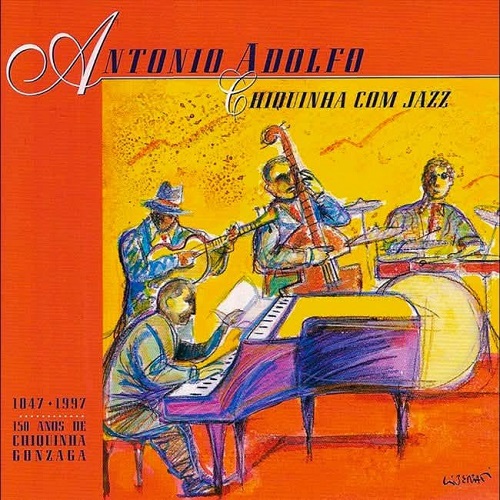
Discographic Gem: “Chiquinha Com Jazz” (1997)
A perfect example of his genius for fusing Brazilian roots with the freedom of jazz is his 1997 album dedicated to the pioneer Chiquinha Gonzaga.
Tracklist:
Atraente
Cordão Carnavalesco
Lua Branca
Angu
Gaúcho (Corta-Jaca)
O Forrobodó
Corte Na Roça
Satan
Ismênia
Faceiro
O Abre Alas
Personnel:
Antonio Adolfo: Piano and musical arrangements
Gabriel Vivas: Double bass
Ivan Conti: Drums
Claudio Spiewak: Acoustic guitar
Contributor:
Also Read: Carlos “Nene” Quintero comes from a family of musical prodigies