• Skip to primary navigation
  • Skip to main content

International Salsa Magazine

  • HOME
  • Previous editions
    • 2026
      • ISM / June 2026
      • ISM / May 2026
      • ISM / April 2026
      • ISM / March 2026
      • ISM / February 2026
      • ISM / January 2026
    • 2025
      • ISM / December 2025
      • ISM / November 2025
      • ISM / October 2025
      • ISM / September 2025
      • ISM / August 2025
      • ISM / July 2025
      • ISM / June 2025
      • ISM / May2025
      • ISM / April 2025
      • ISM / March 2025
      • ISM / February 2025
      • ISM / January 2025
    • 2024
      • ISM / December 2024
      • ISM / November 2024
      • ISM / October 2024
      • ISM / September 2024
      • ISM / August 2024
      • ISM / July 2024
      • ISM / June 2024
      • ISM / May 2024
      • ISM / April 2024
      • ISM / March 2024
      • ISM / February 2024
      • ISM / January 2024
    • 2023
      • ISM / December 2023
      • ISM / November 2023
      • ISM / October 2023
      • ISM – September 2023
      • ISM – August 2023
      • ISM July 2023
      • ISM Edition June 2023
      • ISM – May 2023
      • ISM April 2023
      • ISM March 2023
      • ISM February 2023
      • ISM January 2023
    • 2022
      • ISM December 2022
      • ISM November 2022
      • ISM October 2022
      • ISM September 2022
      • ISM August 2022
      • ISM July 2022
      • ISM June 2022
      • ISM May 2022
      • ISM February 2022
      • ISM January 2022
    • 2021
      • ISM December 2021
      • ISM November 2021
      • ISM October – 2021
      • ISM September 2021
      • ISM August 2021
      • ISM July 2021
      • ISM May 2021
      • ISM April 2021
      • ISM June 2021
      • ISM March 2021
      • ISM February 2021
      • ISM January 2021
    • 2020
      • ISM December 2020
      • ISM November 2020
      • ISM October 2020
      • ISM September 2020
      • ISM August 2020
      • ISM July 2020
      • ISM June 2020
      • ISM May 2020
      • ISM April 2020
      • ISM March 2020
      • ISM February 2020
      • ISM January 2020
    • 2019
      • ISM December 2019
      • ISM November 2019
      • ISM October 2019
      • ISM Septembre 2019
      • ISM August 2019
      • ISM July 2019
      • ISM June 2019
    • 2016
      • ISM December 2016
      • ISM November 2016
      • ISM October 2016
  • Spanish
  • Download Salsa App
    • Android
    • Apple

Search Results for: Spanish in the United States

Major Latin radio stations in New York

The current radio

Radio has always been present in a very important part of our lives, which is information and communication. Over time, it has also been a bridge for the most deprived to go public with their complaints and for new artists to make their work known. After the emergence of the internet, traditional radio stations had to adapt to the new era and air their content through the diverse digital platforms that have appeared in recent years. This is how all these shows have avoided their possible disappearance due to the lack of traditional radio listeners.

New York is one of the cities that has several of the most important radio stations in the United States whose content can be easily found in the web search engines. In view of the importance of radio and locution in entertainment and treatment of sensitive topics in society today, we consider it appropriate to name some of the main Latin radio stations in New York for the public to get to know them.

El Vacilón de La Mañana
El Vacilón de La Mañana team consisting of DJ Ash, Gerpis Correa, Natalia ”Vacilón”, Francis Mendez, Jessica Pereira and DJ New Era

Mega 97.9

Mega 97.9 is a radio station operating in New York City whose tropical format offers musical genres such as salsa, merengue, reggaeton, and bachata. Its official name is WSKQ FM and its headquarters is located in the Empire State Building, as it is the case with many other stations.

It was created in 1951 under the name WEBD FM and its programming consisted of pop and jazz music of the time, but that was slowly changing. There were many changes of names, personnel, directors, presidents and much more, so the current programming is radically different from that of past times. In 1993, its name changed to Mega 97.9 and its content became based on tropical and Latin genres, which caused a revival of the station and a very considerable increase in the audience that it had until that year.

Among its most watched programs, we can mention the now defunct ”El Vacilón De La Mañana” and ”On Fuego: The Daddy Yankee Show”.

El Palo Con Coco
El Palo Con Coco team consisting of Tony Sanchez ”El Tiburón”, Coco Cabrera and Diosa Fernández

WXNY X96.3

WXNY X96.3 is a station mainly focused on contemporary adults whose main language is Spanish and is broadcast on the frequency 96.3 FM. The programming focuses on providing the biggest hits of the moment in terms of Latin rhythms and some entertainment programs that address contemporary issues in the entertainment world. Two of the most popular shows are ”La Gozadera” and ”El Palo Con Coco”.

Radio Puerto Rico

Radio Puerto Rico offers the most popular music from both the present and the past in the salsa genre. It streams Latin music of all genres such as salsa, reggaeton, merengue, vallenato, among others. At any time of the day, listeners can tune in and listen to El Gran Combo de Puerto Rico, Marc Anthony, Ismael Miranda, Ismael Rivera, Marc Anthony, Daddy Yankee, Don Omar and many others. Some of its shows are ”Al Son de Harold Montañez”, ”La música de tierra adentro”, ”Música Tropical” and ”Repartiendo su fortuna”.
Havana Club Radio
Havana Club Radio’s logotype

Havana Club Radio

As the name suggests, Havana Club Radio is a radio station that seeks to unite all Cubans around the world in becoming one voice. Its waves play the island’s typical genres such as salsa, salsatón, rumba, danzón and more. It has very good ratings in several major cities in the United States and gives Cubans and Latinos in general the opportunity to connect with their homelands, even if they are far away.

Read also: Interview with Colombian singer-songwriter Potty Lozano
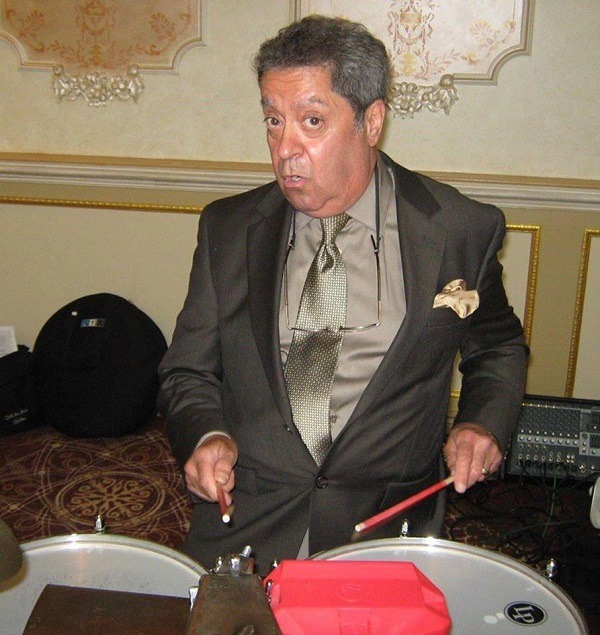
The magic timbales of Nicky Marrero

Today’s character

After a long wait, we have managed to make the talented New York musician Nicholas Marrero, better known as Nicky Marrero, to come to the Spanish Harlem Salsa Museum to share with Johnny Cruz and his friendly staff on February 26th of this year. Therefore, we would like to take this opportunity to talk a little about his brilliant career and the great contributions he has made to Latin music in the United States.

Nicky Marrero playing the timbales

Beginnings

Nicholas Marrero was born in the Bronx, New York, on June 17, 1950 and both his parents are Puerto Rican. This made the boy grow up among maracas, guitars, güiros and other instruments at home. In addition to the roots of his parents and the whole family, young Nicholas showed a talent that made him stand out very quickly and led him to study drums until his interests began to change and he started feeling drawn to the music made by Willie Bobo and ”The King of Timbales” Tito Puente. Both figures were arguably two of his greatest influences and inspirations in the world of music.

According to rumors in certain circles, his first recording was with Willie Colón’s band when he was only 15 years old, but the material was never released because of some alleged problems with the record label involved. The first albums with his participation as timbalero that were made public were ”El Malo” and ”The Hustler” by Willie Colón, both made in 1968. The usic productions were released in LP format in both cases.

Johnny Cruz and Nicky Marrero playing the timbales in 2017

Collaborations with Eddie Palmieri and others  (título 3)

That same year, the growing artist began collaborating with Eddie Palmieri’s orchestra and had an important participation in the album ”Champagne”, which was released through the Tico Records label and whose repertoire includes songs such as ”Cinturita”, ”Palo De Mango” and ”Ay Que Rico”. Marrero contribute his talent to Palmieri’s on 15 more productions over the next 50 years that followed. Many of them were extremely successful and earned him the Latin Grammy Award on several occasions.

Another important step in his career was the replacement of Orestes Vilato as timbalero in the Fania All Stars, with whom he performed all kinds of activities in many countries such as tours, concerts, press releases, among other things. He played in 25 music productions for this important salsa and Caribbean music orchestra during the time that he was a member of the group.

Johnny Cruz and Nicky Marrero again in 2023

Although the artist’s most outstanding collaborations have been with Eddie Palmieri and Fania All Stars, the timbalero has also collaborated with other great names in the world of salsa and Latin music such as Hector Lavoe, Louie Ramirez, Larry Harlow, Alfredo De La Fé, Ismael Miranda, Cheo Feliciano, Joe Quijano, Daniel Santos and many more.

Among the latest works in which Nicky participated is the album ”Full Circle” by Eddie Palmieri for the Ropeadope Records / Uprising Music label. The unmistakable sound of the musician is more than present with his characteristic bongos and timbalitos along with the unforgettable notes from the piano of maestro Palmieri, who has been more than a mentor since the artist started his prolific career.

Read also: Life and career of Ernie Acevedo

        By Johnny Cruz, ISM Correspondents, New York, New York City

Interview with Colombian singer-songwriter Potty Lozano

Conversation with Potty

It is a great honor for us to announce that we have spoken with the talented and prodigious Colombian singer and songwriter Potty Lozano, better known as Lozano, who had the kindness of spending a few minutes of his time to talk about his story, his former groups, his release as a solo artist, his current projects and much more.

Here are the most important details of the nice chat we had about the most interesting aspects of his career.

Potty Lozano singing on stage

Arrival in the United States

Potty has been living in the United States for over 30 years to further advance his career, which began in his native Colombia. That same year in which she came to the United States, the Kambaro Orchestra, a group where she participated, won the ”Congo de Oro” prize in the category of ”New Orchestra Of The Year”. The aforementioned award is one of the most important in Colombia and is given as part of of the world famous Carnivals of Barranquilla.

The reason why he left his native country is that he wanted to look for new airs and go international as a romantic salsa artist, something that would be extremely complicated if he continued to live in the same place. Thanks to the hard work of the artist, he managed to sign with the record label FONOVISA/MUSIVISA and turn his situation around.

It was the beginning of very successful years, touring Mexico and across the entire European Union and constant professional growth as time progressed.

When did you decide to go solo?

Lozano has said that it was precisely the award he won with the Kambaro Orchestra which motivated him to make progress in other areas of the music field. Another of his main motivations was the success of his song with the Cachaco Orchestra ”Si Tú Supieras”, which led him to continue making romantic salsa for a few more years under the label FONOVISA until the cessation of his contract with this record company. ”That’s when I decided to make some changes in my independent musical life with my own style, have the power to decide, choose songs to please myself and be free to make fusions between Latin Jazz, Bosa, Bolero Jazz and some Caribbean fusions” said the artist.

Potty Lozano next to songwriter and musician Francisco Zumaque

When asked about the best time for an artist to pursue a solo career, he replied that artists gradually mature both musically and personally, leadings them to the point where they feel ready to take that important step and decide that there is a high probability of success. ”There is a click or reset in your senses and you do what you think you have to do, but the important thing is to get it right”, he added.

Differences between commercial salsa and non-commercial salsa

Regarding this important issue, the singer-songwriter replied as follows: ”I love traditional salsa and it is the basis of everything that follows. I am from that generation, but I also grew up in an atmosphere of jazz, bosa, bolero, Colombian street genres and a lot of American pop music, so my brain mixes all that set of rhythms and fuses them in several ideas presented in workshops with my music producers. That’s why I don’t make COMMERCIAL radio music, which every day is more disposable and meaningless, my target has always been cultural, music with soul, harmony, intelligence and possitive messages and effects, but above all, pleasant the ear as music should be”.

He also pointed out that he mixes these genres according to his own musical tastes and the music he listened to when he was a child. All of this with the support from the members of his work team, who are on the same page, although they contribute their own ideas.

Potty Lozano during an interview

”Aquel Loco Miami”

In terms of his latest single ”Aquel Loco Miami”, he told us that ”it is the preamble to a CD in which we are working on, whch is also full of melting pots and rhythms such as salsa jazz, a little conventional salsa with fused touches and more modern salsa using fusions”.

Aquel Loco Miami is a song penned by BRAULIO, a famous Spanish singer and songwriter who is allowing me to record several of his songs. It is a chachachá song where there is no apology to the crime or what happened in Miami in the 70s/80s/90s. It’s just to remind the new generations that negativity can also bring positive things and Miami was in his time the Mecca of Rumba and enjoyment and, despite the violence there was space room for fun”-

Read also: Almost two years of Leon Gast’s departure to another plane

International Salsa Magazine showcases important facts about Héctor Lavoe

(Héctor Juan Pérez Martínez; Ponce, 1946 – New York, 1993) Puerto Rican singer and composer, considered one of the best interpreters of Caribbean music of all time and a pioneer in the introduction of New York salsa in the early 1970s.

He was part of the legendary orchestra of trombonist Willie Colón and was known by the nickname of El Cantante de los Cantantes.

-.Héctor Juan Pérez Martínez was born on September 30, 1946 in Ponce, Puerto Rico. His parents Luis and Francisca are musicians who, from song to song, manage to support a large family of several children.

-. In the year of Hector’s birth, the singers who would influence him are much older: Daniel Santos is 30 years old; Ismael Rivera, better known as “Maelo”, is 15; and Jose “Cheo” Feliciano is eleven.

-. At the age of three, he suffers his first loss: the death of Francisca Martínez, his mother.

-. Juan Morel Campos is a music academy where his father enrolls him. Héctor begins to learn classical music, but he quickly decides to learn what is played in the streets. Jesús Sánchez Erazo, better known as “Chuito el de Bayamón”, is his first idol.

-. Sings the song Campanitas de cristal, a bolero composed by Rafael Hernández Marín, at a school party.

-. In the early sixties, he forms with friends, including Papo Luca, a group that performs boleros and salsas. He earns 18 dollars a night and his talent seduces the people of Ponce. He is invited to sing on television programs. Musicians Felipe Rodríguez and Tito Lara give him a promising future.

-. At the age of 17, being recognized in his native Ponce, he travels to New York. His family does not agree with his departure. In the city he is greeted by the ghost of the death of a brother, who was supposedly a drug addict. He stays in the apartment of Priscila, one of his older sisters.

Héctor Juan Pérez Martínez

Before joining the Fania All Stars for the first time, a group directed by the Dominican Johnny Pacheco, he was part of bands such as Orquesta Nueva York and Alegre All Stars.

-. In 1966, at the age of 21, he sings alongside Pete Rodríguez, Adalberto Santiago, Tito Puente, Richie Ray, among other artists, in the incipient Fania All Stars. He meets Willie Colón, an American musician with Puerto Rican parents. “We both knew the world in the Bronx neighborhood. I learned to speak Spanish with Hector, although at first I understood what he was saying. I remember he had a brilliant sense of humor and was a great imitator of singers,” said Colón in an interview.

-. In 1967, he achieved fame with his first album with Willie Colón. It is a mixture of genres such as guaracha, plena and guaguancó, and is entitled El Malo. The album is a tribute to the slum culture of the United States and Latin America.

-. He tries to work as a painter, but his sister won’t allow it. After two weeks, he attends a musical rehearsal with his backing vocalist friend Roberto Garcia. Hector takes the microphone and makes the orchestra directors fall in love with him.

-. At the beginning of 1968 he meets Carmen, a follower he meets at a concert. On October 30 of that year Jose Alberto, his first son, is born.

-. After the birth of Jose Alberto, he has his second son with Nilda Román, another follower. With her, who is nicknamed “La Puchi”, he finally marries and stays in an apartment in Queens. Héctor Junior is the name of his second son.

-. At the end of the sixties he becomes addicted to drugs. In more than one stage he leaves the audience in a daze.

-. In 1971 he is called again to record, together with other stars, Fania All Stars at the Cheetah. This combo featured Cheo Feliciano, Richie Ray, Ismael Miranda, Celia Cruz and the young Rubén Blades. In 1973, the group filled the Yankee Stadium bleachers. Anacaona, Quítate tú and Ahora vengo yo are some of their hits.

-. With Willie Colón, he recorded more than 18 albums between 1967 and 1973. Thousands of reissues of Asalto navideño, El Juicio and Lo Mato were made. Che che colé, Ausencia, Calle luna calle sol, Todo tiene su final are the most requested songs by the Latin American public.

(H3) -. Willie Colón dissolves the duet in 1974. However, both continue to work. Lavoe’s talent continues despite his excesses and the author of Talento de televisión knows it well.

-. In 1975 he releases La voz, his first solo album. This incursion is interpreted as a second wind in his career. So much is his energy to continue that he releases eight more albums. De ti depende (1976) is a collection of boleros and Comedia (1978) breaks sales with the song El cantante, written by Rubén Blades. This work was also produced by Willie Colón, who that year teamed up with Blades to record Siembra, the best-selling salsa album.

-. His interpretation of El cantante helps to build the nickname “El cantante de los cantantes” (The singer of the singers).

-. He performs at the Coliseo Evangelista Mora in Cali in 1977. This concert was attended by the writer Andrés Caicedo, who managed to take a picture with Lavoe in the dressing room. Months later, the author of ¡Qué viva la música! committed suicide with an overdose of barbiturates.

-. As a result of a strong depression, Lavoe is interned in a mental sanatorium in the United States in 1977. His heroin addiction, which he had begun to suffer at the end of the sixties, is not only known by those close to him but also by his fans. “He paid a lot of attention to me and, when he was in trouble, he would call me”, confessed singer Ismael Miranda in an interview.

-. Lives in Cali between November 1982 and March 1983 at the Hotel Aristi. He is a regular singer at the Juan Pachanga discotheque, owned by Larry Landa, a concert organizer. In the capital of the Valley it is said that Lavoe takes drugs during the day and tries to sing at night.

Hector Lavoe el Cantante de los Cantantes

In February 1987, due to a fire, he jumps out of his apartment in Queens. At the same time, in Puerto Rico, his mother-in-law is stabbed to death.

-. On May 7, 1987, his son Hector is hit by a stray bullet. “That death broke his heart,” said Tito Nieves in an interview. “At that moment Héctor Lavoe’s soul dies”.

-. He is diagnosed with AIDS in 1988. Those who visit him in the hospital maintain that he does not lose his sense of humor nor his desire to return to the stage.

-. In Bayamón, Puerto Rico, he sings Mi Gente in a patron saint festival. But his presentation is sabotaged by one of the organizers who supposedly owes him money; in the middle of the song the lights are turned off and Lavoe is left without sound to continue.

-. In 1988, he throws himself from the ninth floor of a hotel in San Juan. He survives to continue fighting the battle. He sings on a Bronx street in 1989. His physical deterioration is a reflection of his state of mind. Lavoe is a ghost of his former self.

Héctor Lavoe
Héctor Lavoe

-. Tito Nieves is one of his friends who accompanies him in his difficult days. Lavoe depended on other people to live. A thrombosis paralyzes part of his body.

-. In March 1993, pushed by his record company, he makes his last presentation in New Jersey. He sings with Roberto Roena’s orchestra. Maestro Roena is not able to play in front of the “Singer of singers”. “It was too much to put him on stage”, he said indignantly.

-. At the age of 46 he dies of a cardiac arrest, on June 29, 1993, in New York. “He came into the world to enjoy it and suffer it. Although he was not happy, he made many people happy,” said his sister Priscila.

-. He is buried in Puerto Rico. He is accompanied by a horde of followers. The presence of his friend Ismael Miranda stands out, who bids him farewell saying: “He is not here with us, but his music continues”.

-. In 2007, El cantante, a movie inspired by his life, was released. It stars Marc Anthony and Jennifer Lopez.

-. Currently there are two monuments in his honor. One in his native Ponce, Puerto Rico, and another in Callao, Peru.

Héctor Lavoe

You can read: Génesis of Salsa, its essence, characteristics, rhythm, history and expansión

Gilberto Santa Rosa arrives in Spain with his “Camínalo Tour”


The great Puerto Rican singer Gilberto Santa Rosa continues his successful concert tour “Camínalo Tour” with four stops in Spain’s most representative cities. This tour is not only to relive his best hits, but also to celebrate his more than four decades on the stage. We tell you everything in the following lines.

Gilberto Santa Rosa, an artist with four decades on the stage

“El Caballero de la Salsa” was born in Puerto Rico in 1962 and from a very young age showed talent for music, especially Latin genres. After more than four decades on the stage, Santa Rosa has left an indelible mark on Latin music, hence his nickname.

This artist has managed to be very versatile in his work, even though he concentrates on a single genre such as salsa. Many of his songs show different sides of the genre, from a very romantic salsa to one that makes everyone dance.

Another of his great talents is his ability to improvise on stage, in many of his shows it is not surprising to hear different lines from the original ones. But all this, plus his great charisma, conquers his public, as he says: “In my concerts, music is always the star of the show.”

“Camínalo Spain Tour” is the reunion of Gilberto Santa Rosa with Spain

“Camínalo Tour” began in June 2021, when he returned to the stage after the COVID-19 pandemic. It has passed through the big cities of Latin America and the United States. Finally after 4 years without stepping on Spanish soil we will be able to enjoy Gilberto in this part of his tour.

The great Puerto Rican artist will be in four cities: Barcelona, Alicante, A Coruña, and Madrid; from March 2 to 5, 2023. The announcement was made in November 2022 and tickets are already on pre-sale, so if you want to see this great salsa singer, run and secure your ticket.

The love that the Spaniards have for Gilberto is so great that the best arenas in each city were reserved for these stops. And it will be a once-in-a-lifetime experience, as he himself explains: “We are a generation of artists who, if we didn’t sing on stage, would feel like we’re cheating people.”

And this love for the stage is also shown in these words: “I am very happy to be able to close this tour… which has given us so many unforgettable moments. These next concerts will be very special, because in some cities we haven’t been there for a long time and that always gives it a particular aura. The musicians who accompany me from Puerto Rico, all those who are part of the tour, and I are more than ready to present the Camínalo Tour”.

The talent, passion and charisma that Gilberto Santa Rosa imposes on his work is undeniable, which is reflected in his Latin Grammy awards for best salsa album in 2007 and 2010, best traditional tropical album in 2009, best traditional pop vocal album in 2015 and the Latin Grammy for musical excellence that he won in 2021. We are excited for this concert!

  • « Go to Previous Page
  • Page 1
  • Interim pages omitted …
  • Page 13
  • Page 14
  • Page 15
  • Page 16
  • Page 17
  • Interim pages omitted …
  • Page 23
  • Go to Next Page »

International Salsa Magazine (ISM) is a monthly publication covering salsa activities around the world and has been publishing since 2007. It is a worldwide network of volunteers coordinated by ISM Magazine. Together, we work to strengthen salsa events around the world.