• Skip to primary navigation
  • Skip to main content

International Salsa Magazine

  • HOME
  • Previous editions
    • 2026
      • ISM / June 2026
      • ISM / May 2026
      • ISM / April 2026
      • ISM / March 2026
      • ISM / February 2026
      • ISM / January 2026
    • 2025
      • ISM / December 2025
      • ISM / November 2025
      • ISM / October 2025
      • ISM / September 2025
      • ISM / August 2025
      • ISM / July 2025
      • ISM / June 2025
      • ISM / May2025
      • ISM / April 2025
      • ISM / March 2025
      • ISM / February 2025
      • ISM / January 2025
    • 2024
      • ISM / December 2024
      • ISM / November 2024
      • ISM / October 2024
      • ISM / September 2024
      • ISM / August 2024
      • ISM / July 2024
      • ISM / June 2024
      • ISM / May 2024
      • ISM / April 2024
      • ISM / March 2024
      • ISM / February 2024
      • ISM / January 2024
    • 2023
      • ISM / December 2023
      • ISM / November 2023
      • ISM / October 2023
      • ISM – September 2023
      • ISM – August 2023
      • ISM July 2023
      • ISM Edition June 2023
      • ISM – May 2023
      • ISM April 2023
      • ISM March 2023
      • ISM February 2023
      • ISM January 2023
    • 2022
      • ISM December 2022
      • ISM November 2022
      • ISM October 2022
      • ISM September 2022
      • ISM August 2022
      • ISM July 2022
      • ISM June 2022
      • ISM May 2022
      • ISM February 2022
      • ISM January 2022
    • 2021
      • ISM December 2021
      • ISM November 2021
      • ISM October – 2021
      • ISM September 2021
      • ISM August 2021
      • ISM July 2021
      • ISM May 2021
      • ISM April 2021
      • ISM June 2021
      • ISM March 2021
      • ISM February 2021
      • ISM January 2021
    • 2020
      • ISM December 2020
      • ISM November 2020
      • ISM October 2020
      • ISM September 2020
      • ISM August 2020
      • ISM July 2020
      • ISM June 2020
      • ISM May 2020
      • ISM April 2020
      • ISM March 2020
      • ISM February 2020
      • ISM January 2020
    • 2019
      • ISM December 2019
      • ISM November 2019
      • ISM October 2019
      • ISM Septembre 2019
      • ISM August 2019
      • ISM July 2019
      • ISM June 2019
    • 2016
      • ISM December 2016
      • ISM November 2016
      • ISM October 2016
  • Spanish
  • Download Salsa App
    • Android
    • Apple

Search Results for: Spanish in the United States

Once again, maestro Bobby Valentín delivers a very daring and innovative musical theme


While it is true that salsa is very much alive, it is also true that it has been enriched through fusions and transformations.  Of course, this is not the first time we see that the salsa sound is transformed to give way to increasingly daring musical themes.   

I’ve said it before and I’ll say it again: “I’m glad there are collaborations where the wallet of other sounds invests in producing music that I enjoy.  Note that the only music I enjoy with the passion I enjoy nothing else is salsa.  This salsa I’m talking about also includes fusions and other inventions, as long as I like them.”

Well, let’s get to the mambo….

During the “Tropical Music Festival” I was backstage and was able to share with the musicians before and after their performances.  That privilege gave me the opportunity to talk to them about their projects, among other things.  On a side note, Oria Rivera graciously let me know about the release that same day of Bobby Valentin’s latest single.  As soon as I got home I listened to the song via You Tube.

Once again, maestro Valentín delivers a very daring and innovative song. I know that “chinchas” are going to fall on me as usual; but without being repetitive, you know that I am one of those who believe that Valentin is never wrong. 
Let’s establish that boogaloo or bugaloo is a Latin music and dance genre that was popular in the United States in the 1960s. It originated in New York City, mainly among Hispanic and Latin American teenagers. The style was a fusion of popular African-American rhythm and blues (R&B), in turn combining soul music with mambo and son montuno.

In the 1950s and 1960s, African Americans in the United States listened to various styles of music, including jump blues, R&B and doo-wop. Latinos in New York City shared those tastes, but also listened to genres such as mambo and cha-cha-chá. There was a mix of Puerto Ricans, Cubans and African-Americans in clubs, whose groups tried to find common musical ground. In the end, boogaloo or bugaloo was the common musical ground, a fusion of many styles cooking American son montuno, guaguancó, guajira, guaracha, mambo, R&B and soul on the same stove.  That must have been the reason why the boogaloo or bugalú allowed Spanish and English on equal terms.

As you can see, fusions are not a recent fad.

Well then.  The time has come to tell you what my salsa ears have heard, since there will be those who say that this is not a salsa song.  Well, the truth of the matter is that it is not suitable for salseros without musical appreciation skills.

From the first bars of this song, Bobby Valentín’s musical arrangement highlights the bass, accompanied by trumpets and saxophones in an arrangement that sounds great.  In the first thirty seconds of the song you can appreciate the vocal part of the composer -Bobby Valentín- ultra well accompanied by his most recent acquisition for the front of his orchestra: Leró Martínez. And for the most skeptical, Bobby and Leró sing in impeccable English.

The song is perfect, since in three minutes it opens up a range of musical possibilities in “English without barriers”.  Despite the brevity of the song, it lacks nothing.  Nor does it feel or sound like musical creativity was curtailed by trying to shorten the time.  The track flows naturally from the prelude, to the mambo, to the closing. At one and a half minutes, the saxophones provide the melody and the trumpets the breaks.  At the fiftieth minute, the trumpets play challenging the rhythm section, formed by:  Victor Roque on the tumbadoras, Kevin Vega on the timbal and Javier Oquendo on the bongo. Ceferino Cabán’s piano complements the “king’s” bass in a masterful way.

Shortly after the second minute (2.19), Victor “Yuca” Maldonado’s baritone saxophone sets the stage for Julito Alvarado and Angie Machado’s trumpets to firmly establish their presence.  This second minute also highlights the dynamism of the trombone by Eliut Cintrón. Let’s not forget that the composer, arranger, producer and bassist of this song was a trumpet player in his beginnings. At exactly 2.40 the bass takes command of the orchestra with more forcefulness, melodically allying itself with the sound of the trumpets and saxophones. Well into the second minute (2.44) the electric guitar in command of Javier Perez begins a correspondence with the bass, which is maintained until the closing of the song.

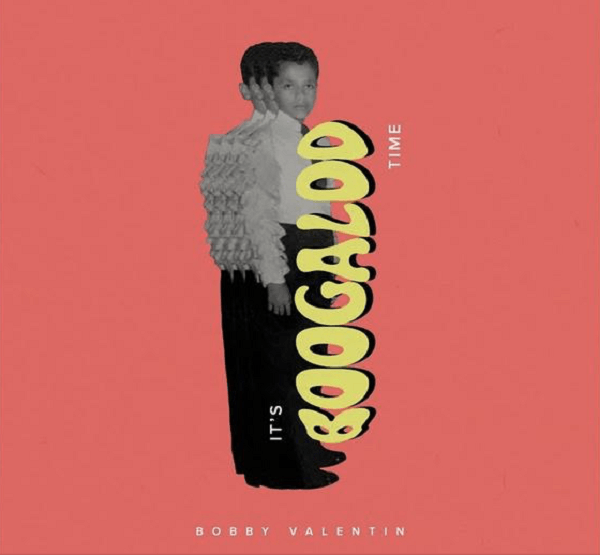
As for the cover art, it features a childish Bobby Valentine dressed as a musical celebrity.  The boy wears dark pants and a white shirt with those stylish puffed sleeves that scream mambo.  The title letters, which read It’s Boogaloo time are superimposed over the child’s image.  The style of the yellow letters that inscribe the word Boogaloo over the image described above make me imagine letters in some liquid material. The composition of the artwork rests on a rather garish salmon-colored background. According to the credits, both the graphic design and art direction were created by Orialis Valentin. Brava!

If you are one of those who say you are tired of the same old same old, I challenge you to listen to this gem, just as I recommended El Twist a while back. 
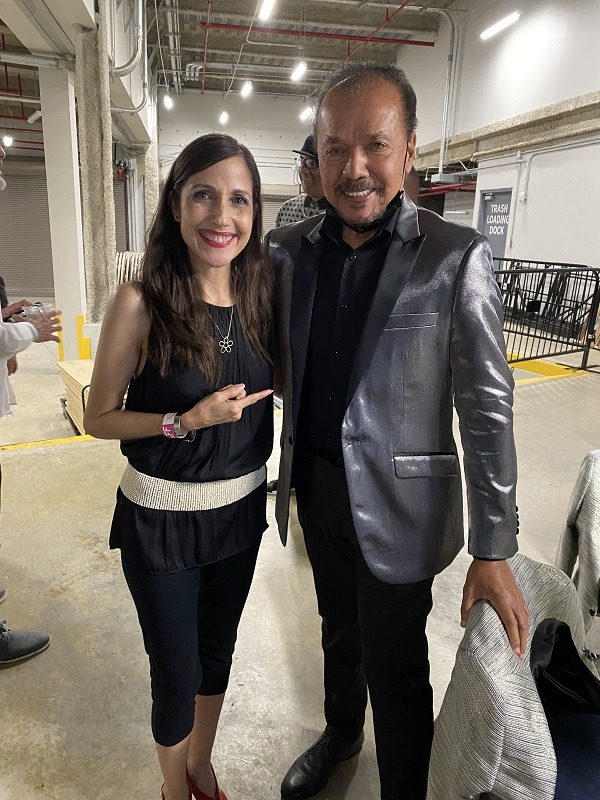
Salsa lives! I hope I have dispelled your doubts, if you had any.  If you still have any doubts, I confirm that you are not ready for this salsa conversation.

Musical Director: Bobby Valentín

Audio Recording & Mixing: Play Bach Studio

Engineer Carlitos Velázquez and Ramón Martínez

Mastering: WAVEM Acoustic LLC; Eduardo Ramos

Producer: Bobby Valentín

© 2022, Bronco Records, Inc. (Artist: Bobby Valentín)


By Bella Martinez, ISM Correspondents, San Juan, Puerto Rico
 

Once again, maestro Bobby Valentín delivers a very daring and innovative musical theme

While it is true that salsa is very much alive, it is also true that it has been enriched through fusions and transformations.  Of course, this is not the first time we see that the salsa sound is transformed to give way to increasingly daring musical themes.   

I’ve said it before and I’ll say it again: “I’m glad there are collaborations where the wallet of other sounds invests in producing music that I enjoy.  Note that the only music I enjoy with the passion I enjoy nothing else is salsa.  This salsa I’m talking about also includes fusions and other inventions, as long as I like them.”

Well, let’s get to the mambo….

During the “Tropical Music Festival” I was backstage and was able to share with the musicians before and after their performances.  That privilege gave me the opportunity to talk to them about their projects, among other things.  On a side note, Oria Rivera graciously let me know about the release that same day of Bobby Valentin’s latest single.  As soon as I got home I listened to the song via You Tube.

Once again, maestro Valentín delivers a very daring and innovative song. I know that “chinchas” are going to fall on me as usual; but without being repetitive, you know that I am one of those who believe that Valentin is never wrong. 

Let’s establish that boogaloo or bugaloo is a Latin music and dance genre that was popular in the United States in the 1960s. It originated in New York City, mainly among Hispanic and Latin American teenagers. The style was a fusion of popular African-American rhythm and blues (R&B), in turn combining soul music with mambo and son montuno.

In the 1950s and 1960s, African Americans in the United States listened to various styles of music, including jump blues, R&B and doo-wop. Latinos in New York City shared those tastes, but also listened to genres such as mambo and cha-cha-chá. There was a mix of Puerto Ricans, Cubans and African-Americans in clubs, whose groups tried to find common musical ground. In the end, boogaloo or bugaloo was the common musical ground, a fusion of many styles cooking American son montuno, guaguancó, guajira, guaracha, mambo, R&B and soul on the same stove.  That must have been the reason why the boogaloo or bugalú allowed Spanish and English on equal terms.

As you can see, fusions are not a recent fad.

Well then.  The time has come to tell you what my salsa ears have heard, since there will be those who say that this is not a salsa song.  Well, the truth of the matter is that it is not suitable for salseros without musical appreciation skills.

From the first bars of this song, Bobby Valentín’s musical arrangement highlights the bass, accompanied by trumpets and saxophones in an arrangement that sounds great.  In the first thirty seconds of the song you can appreciate the vocal part of the composer -Bobby Valentín- ultra well accompanied by his most recent acquisition for the front of his orchestra: Leró Martínez. And for the most skeptical, Bobby and Leró sing in impeccable English.

The song is perfect, since in three minutes it opens up a range of musical possibilities in “English without barriers”.  Despite the brevity of the song, it lacks nothing.  Nor does it feel or sound like musical creativity was curtailed by trying to shorten the time.  The track flows naturally from the prelude, to the mambo, to the closing. At one and a half minutes, the saxophones provide the melody and the trumpets the breaks.  At the fiftieth minute, the trumpets play challenging the rhythm section, formed by:  Victor Roque on the tumbadoras, Kevin Vega on the timbal and Javier Oquendo on the bongo. Ceferino Cabán’s piano complements the “king’s” bass in a masterful way.

Shortly after the second minute (2.19), Victor “Yuca” Maldonado’s baritone saxophone sets the stage for Julito Alvarado and Angie Machado’s trumpets to firmly establish their presence.  This second minute also highlights the dynamism of the trombone by Eliut Cintrón. Let’s not forget that the composer, arranger, producer and bassist of this song was a trumpet player in his beginnings. At exactly 2.40 the bass takes command of the orchestra with more forcefulness, melodically allying itself with the sound of the trumpets and saxophones. Well into the second minute (2.44) the electric guitar in command of Javier Perez begins a correspondence with the bass, which is maintained until the closing of the song.

As for the cover art, it features a childish Bobby Valentine dressed as a musical celebrity.  The boy wears dark pants and a white shirt with those stylish puffed sleeves that scream mambo.  The title letters, which read It’s Boogaloo time are superimposed over the child’s image.  The style of the yellow letters that inscribe the word Boogaloo over the image described above make me imagine letters in some liquid material. The composition of the artwork rests on a rather garish salmon-colored background. According to the credits, both the graphic design and art direction were created by Orialis Valentin. Brava!

If you are one of those who say you are tired of the same old same old, I challenge you to listen to this gem, just as I recommended El Twist a while back. 

Salsa lives! I hope I have dispelled your doubts, if you had any.  If you still have any doubts, I confirm that you are not ready for this salsa conversation.

Musical Director: Bobby Valentín

Audio Recording & Mixing: Play Bach Studio

Engineer Carlitos Velázquez and Ramón Martínez

Mastering: WAVEM Acoustic LLC; Eduardo Ramos

Producer: Bobby Valentín

© 2022, Bronco Records, Inc. (Artist: Bobby Valentín)

Sr Ortegón is a big success in Hollywood

Our nice talk

Good afternoon, we have here José Miguel Ortegón. He is a music producer, composer, DJ and violinist. Pleasure to meet you, Mr. Ortegón, how are you feeling?

I’m fine. Thank you very much for the invitation.

Your name is José Miguel Ortegón, but you are known as Sr Ortegón in artistic circles. Why?

I think that is a cultural tradition in the Hispanic world. Men are always called by their last name. That was natural and came spontaneously. Taking advantage of that señor is a Latin cliché, it was perfect for the work I was doing.

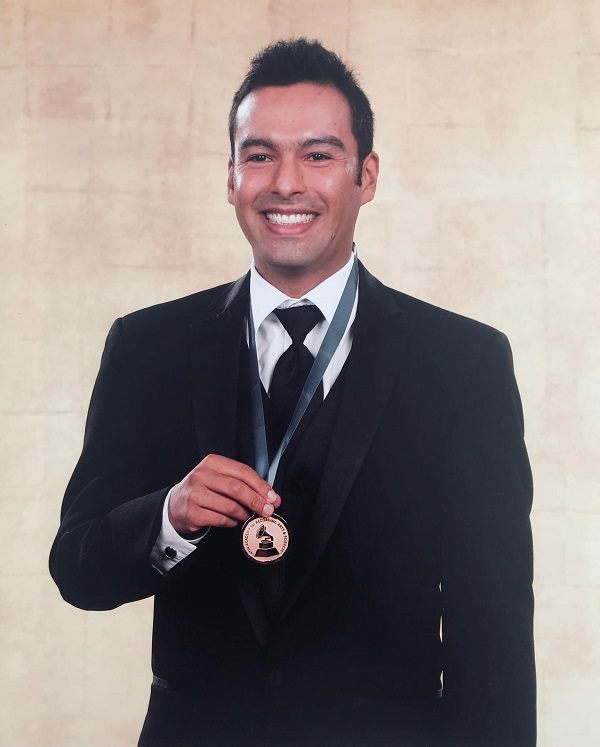
José Miguel Ortegón at the Latin Grammys

What was your first approach to the entertainment world?

I started recording with Guayacán, which is a salsa orchestra from Cali, Colombia. I received a lot of help from maestro Zumaque, who is a musician that does contemporary and classical fusion with Latin American rhythms. This was during my teens.

Then, you ventured into other facets, correct?

That’s correct. I started studying music at the conservatory when I was five years old and was in some rock bands. You know that our culture is divided into two musical styles in Latin America, which are classical and popular music. My first professional recordings came with the first computer we had at home as well as most of my generation. When the first computers came to our homes, the concept of music also changed.

How did you go from playing rock and classical rhythms to boogaloo and urban rhythms? How was that transition?

Cali has always been very linked to pachanga, boogaloo and charanga. Rock comes from blues and boogaloo is more or less part of the same trend, so it’s not uncommon for rockers to want to experiment with those rhythms I mentioned at the beginning. I also had teachers at the conservatory who taught classical music during the day, but played with professional orchestras at night. For me, that transition is inevitable.

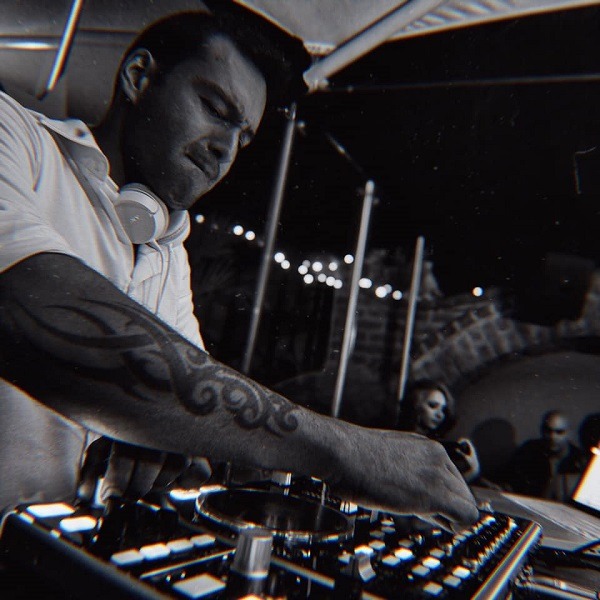
Sr Ortegón doing his job as a DJ

You have created music for series, movies, digital platforms, Disney, Netflix, animated series, etc. Did you think your career would go that far?

Thank you for your words. I make music. I have the same worry since I started in this world, I think I still have a lot to learn and maturing ideas, The truth is I never imagined it. I simply took the opportunity before me in Europe, where I was studying musicology at the Sorbonne. It is true that Latin music is very exotic there because there are not many Latin composers and producers.

At university, I got a chance to make music for a television channel. Subsequently, there was a snowball effect, a colleague who is now working in Hollywood contacted me for one of those jobs and that was my big opportunity. When I got the script, it was a Dominican series, which made me immediately discard salsa and mariachis. I thought about using bachata or something that really belonged to the Dominican Republic.

When you talk about Hollywood, it should be emphasized that there are several generations of Latinos born in the United States of any origin. A Cuban knows that a ranchera is not Cuban but from Mexico. Such a thing happenned a lot in the industry in previous years. The same rhythms and mixes were always used regardless of the Latin country involved in a production like, for example, West Side Story. I love that movie and think it’s excellent, but the music they used doesn’t sound Puerto Rican at all. That’s why I thought I should take this opportunity to respect the rhythms and traditions of each country. I know we all speak Spanish but each country has its own identity, so I respectfully take each rhythm and use it to make it authentic.

Latin music in Hollywood

When you did music for any series or film, were you given parameters to follow or did you have to be free to experiment with your music?

That’s one of the best questions I’ve ever been asked because the vast majority of producers are American and not connected with Latin culture, so salsa and merengue are the same for them. I just tell them to trust me, send me some samples to guide me, we analyze everything and move on. If the director or the editor doesn’t like what I did, we reach an agreement. Nowadays, this process is easier because there is more musical and cultural education on the part of the producers in the United States.

Sr Ortegón at the party in the Jetset Magazine

You were nominated for a Latin Grammy thanks to a mix of boogaloo and urban rhythms that you made. How did you think of it?

I’m 40 years old, so I spent my adolescence at the time when Californian hip hop was in full swing. Cali is one of the most Americanized cities in Colombia, so you were always listening to all those American groups and songs. Mixing all those rhythms with boogaloo has always seemed very interesting to me and I had no idea how to do that until I learned.

Since a mix between hip hop and Latin music is complex to make, a lot of people gsurrended and opted for reggaeton as culture. There are other groups such as Control Machete that have done an excellent job, but I felt they were lacking something. That’s how I started to learn, but it took me a long time because of lack of resources, since I didn’t have the right elements to respect the codes. So, I did a boogaloo song and a hip hop beat to mix them, which made me realize that they are sister rhythms. This work was very popular and even appeared in series and movies.

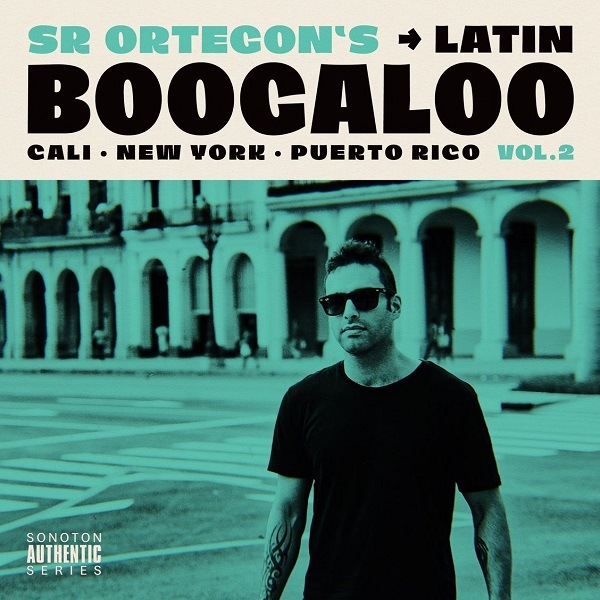
In fact, I heard about you from an email that included your new album entitled Latin Boogaloo Volume 2. I also listened to Volumen 1 and noticed the difference. What is the main difference between one volume and the other?

Volume 1 includes what I called Boogaflow, which is boogaloo with flow. Volume 2 is pure boogaloo. I tell you this because, for example, salsa is a term, but it’s really Afro-Cuban music made by Nuyoricans in New York if we go back to basics. Prior to that New York sound known as salsa, there was that phenomenon called boogaloo, shingaling or Latin soul.

I had to listen to disco to get to those rhythms because nobody teaches you anything about those genres. Unfortunately, those who created those rhythms are already dead or doing other things like Joe Cuba, Jimmy Sabater, the people from Sexta All Stars, Eddie Pamieri, Ray Barreto and many others. That fashion lasted about six or seven years and that was that. Every time I go to create a boogaloo, I have to listen very well because there are no scores or models to follow. Poncho Sanchez is one of the few who brings up the torch of that sound, although he is inclined more to Latin jazz.

I wanted to do a boogaflow, but my editor David Santiago proposed to me that we make two versions, one boogaloo version and the a little more acoustic one. What we were looking for was to please both audiences, the one who wants something urban and the one that wants something classic.

Which of the two volumes was more successful?

I know you have the answer (laughs). Volume 2 was the most successful. Number one has put me in touch with my salsa friends, but I didn’t want to tell them that I was going to make a volume two because boogaloo is not a very common rhythm.

Cover of the album Latin Boogaloo Vol. 2

The Tempo Latino Festival is Back

The major European festival of Latin and Afro-Cuban music will present Los Van Van, Pacific Mambo Orquestra, Interactivo, and Minyo Crusaders (H2)

The benchmark Festival of Latin and Afro-Cuban music in Europe, Tempo Latino, resumes its activities after the forced cessation of its activities for two years due to the Pandemic.

From Thursday, July 28th to Sunday, July 31st, on the main stage Les Arènes, the whole family, heterogeneous public, and inveterate traveler will enjoy the performances of Los Van Van, Pacific Mambo Orquestra, and Interactivo, as well as an exceptional set & exclusive presentation on Saturday, July 30th  at 11 PM of “Con Tumbao All Stars” with the winners of Best Traditional Tropical Album at the Latin Grammy 2021 for their album “Chachachá…Homenaje a lo Tradicional”, Issac Delgado and Alain Pérez, as well as Oscar Hernández, Robby Ameen, Tony Succar, and many more.

Minyo Crusaders rediscovered the songs associated with the working classes.

The festival to be held in Vic-Fezensac, the heart of the Gers de Gascony department (France), will open its doors on Thursday, July 28th, with Tempo Latino Social Club on the stage of its satellite “Geo-rhythmic” Conga with a special performance by the Tokyo band, Minyo Crusaders.

This Cumbia band with a Japanese identity aims to make reversals between the traditional and foreign rhythms. Guitarist Katsumi Tanaka was in charge of bringing together the twelve musicians to perform these magnificent melodies with a fusion of the Caribbean (Reggae, Cumbia, and Cuban Salsa), Africa (Afro-Blues, Afro-Funk, Ethiopian rhythm), and Asia (Thai Pop) after of the Fukushima accident in 2011. The ticket for this show costs €15.80, and the opening is at 6 PM.

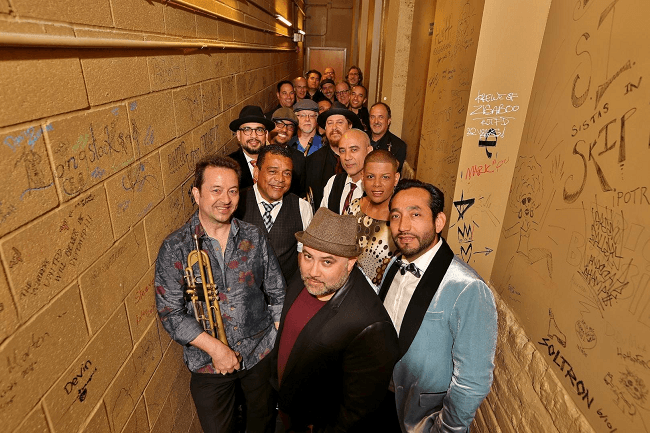
Pacific Mambo Orchestra is the only active Latin Big Band on the West Coast of the United States.

Continue on Friday, July 29th with the concerts of the Pacific Mambo Orchestra and Los Van Van together with the Cuban trumpeter, composer, singer, and leader of the band Havana D’Primera, Alexander Abreu.

The first orchestra to perform at the festival in its twenty-eighth edition at 9 PM will be the Pacific Mambo Orchestra. This North American band, a winner of the Grammy Award in the category “Best Tropical Album” in 2014, is the revival of the Latin sound of the Big Bands of the 40s with the combination of Mambo, Pop, Cha Cha, Timba, and Bolero. Pacific Mambo Orchestra founded 12 years ago by the Mexican pianist Christian Tumalan and the German trumpeter Steffen Kuehn has collaborated with renowned artists such as Carlos Santana, Poncho Sánchez, Pete Escovedo, and Arturo Sandoval.

Currently, this Latin Big Band performs on the West Coast of the United States with elite musicians from the Bay Area, and their repertoire is in English and Spanish. Their third album “The III Side” (2020) fuses the traditions of the Mambo of the 50s with the musicality of the moment. This Latin Big Ban considered one of the best in the United States will also is at the prestigious San Francisco Annual Jazz Festival on Wednesday, June 8th from 7:30 PM to 9 PM. Address: Miner Auditorium, 201 Franklin Street, San Francisco (EEUU).

“Legado” is an album in homage to the legacy left by maestro Samuel Formell.

The second orchestra is to take the stage on Friday at 11 PM and will be Los Van Van with their special guest Alexander Abreu. The emblematic Cuban music orchestra will celebrate its more than 5 decades of history.

Los Van Van known by many as the “Rolling Stones of Salsa” was founded in 1969 by bassist and composer Juan Formell, a legend of Cuban music, who accompanied by José Luis Quintana, known as “Changuito” and César “Pupy ” Pedroso, invented the “Songo”, a Cuban rhythm predecessor of the “Timba” or “Salsa Cubana”, which generated the “Salsa – Son” with a Cuban sound that has made generations dance.

In 2018, they recorded their first record production “Legado” since the physical departure of Juan Formell in 2014. This tribute album has 14 songs with 3 new versions of the international singles Te extraño, Por qué lo haces y Amiga mía.

On the third day of the Festival, Saturday, July 30th, the Latin sound will be awakened by the performances of the Interactivo group and the exclusive presentation of “Con Tumbao All Stars”. On Sunday, July 31st, Tempo Latino will close its doors on the Les Arènes stage with London Afrobeat Collective and Alain Pérez & La Orquesta Bassiste.

Most of the members of Interactive are representatives of currents such as Nueva Trova, son, and Cuban jazz.

The avant-garde collective, Interactivo, is one of the most representative bands of the current Cuban generation and will take to the Tempo Latino stage at 9 PM.

This emerging orchestra of international stages brings together the most brilliant and eclectic composers and producers in Havana. Each member contributes their specialty: Timba, Funk, Jazz, Hip Hop, Rock, Rumba, traditional Cuban music, and Soul for a result of great richness, where individual originality, musical creativity, and avant-garde ideas enrich the group.

London Afrobeat Collective has hypnotic flashes and powerful percussive beats.

Similarly, the addictive London Afrobeat Collective has been offering festive music based on Jazz, Funk, Rock, Dumb, and African Vibes for ten years. Its international DNA made up of nine members from England, Italy, France, Congo, Argentina, and New Zealand with the powerful voice of the Congolese singer Juanita Euka has made its rhythm addictive music with powerful and committed messages. The London-based band will open the night of concerts on Sunday, July 31st at 9 PM.

Alain Perez and the Bassiste Orchestra will offer a mixed show of Salsa, Son, Timba, and Latin Jazz

This musical evening ends with Alain Perez, bassist, singer, arranger, and who composes his orchestra of 13 young musicians on stage to offer a mixed show of contemporary Cuban Salsa, Timba, and Latin Jazz. His talent has given him wonderful experiences with internationally famous orchestras and musicians such as Los Van Van, Irakere, Issac Delgado, Paquito D’Rivera, and Celia Cruz. Always accompanied by his elephant-headed cane, in homage to Cuban musician Benny Moré, Alain has been influenced by flamenco through his work with Cuban artist Paco de Lucía.

The versatile artist born in Havana was twice-nominated for the Latin Grammy Awards in the category of Best Traditional Tropical Music Album with “El alma del Son, tribute to Matamoros” (2015) and “ADN” as Best Salsa Album. (2017).

El Cuento de la Buena Pipa (2020) is his most recent record production, and you can enjoy it on the main stage of the festival at 11 PM.

You can get the tickets for Tempo Latino 2022 on their official site http://www.tempo-latino.com/ for a four-beat tempo. The Tickets for the four nights of concerts are €86.70.

And while you wait for the Tempo Latino Festival (28th edition) you can enjoy its free predecessor event Clutcho at La Grainerie this May 4th. This place is emblematic of the circus and itinerant disciplines that take place with a large space that involves a large open-air square, and a performance hall with a capacity for 230 people through an “interior street” that serves for creative studios and workshops.

Tromboranga Will Visit America And Europe With Their World Tour 2022

France, Norway, the Netherlands, and the United States will be some countries that will dance to the rhythm of Salsa Dura

Músicos: Joaquín Arteaga, Diego Coppinger, Freddy Ramos, Rafael “Madagascar” Arciniegas, Lorenzo “El diablo” Barriendos, Vladimir Peña, Albert Costa, Miguel Moises, Oriol Martínez, Climent Campa.

With the solid and unmistakable sound of the trombone & percussion sections and the strong influence on Salsa from the 60s and 70s, Tromboranga with their Hot Salsa will visit France (Festival Corazón Latino 2022 – Bordeaux), Norway (featuring the trombonist, Jimmy Bosch at Kafe Sync – Oslo), the Netherlands (Summer Breeze Latin Night 2022 – Amsterdam), Spain (Pamplona and Barcelona), the United States (The Great Colombian Festival Miramar – Florida), and Ecuador (Guayaquil ) with its World Tour 2022 from May to September.

The friendly musicians residing in Barcelona (Spain) will offer a series of performances to captivate Latin audiences in Europe and America to celebrate their tenth anniversary on the music scene.

The orchestra will play all their hits including Agua que va caer, Alabanciosa, Humildad, Mi china Colombiana, Ah Caraj, Palo pa’ la campana, Charrupi, Como la marea, Sangre sudor y Salsa, Esclavo de tu apariencia, Que linda que estás, likewise the nine unreleased songs from their album Te voy a contar, released to the Salsa scene in 2019.

Te voy a contar has the participation of the Jazz and Salsa master, the trombonist Jimmy Bosch in the song Te perdono. Oscar Hernández (the Spanish Harlem Orchestra leader and winner of several Grammy awards) arranged the Latin Jazz theme, Sal de la Cueva. In addition to this, Huracán no me tumbas (dedicated to the Island) was recorded in Puerto Rico, and they shared voices with one of their idols from the Fania All-Stars, Ismael Miranda.

The followers of Tromboranga call themselves “Salseros Tromborangueros”.

During the pandemic in 2020, Tromboranga http://www.tromboranga.com/en continued with their new record production Salsa Terapia. Melodies such as El cuero del tambor, Devuélveme mis discos, Pachanguera y El mundo al revés are part of this album that has gone viral in choreographies on social networks in addition to being reproduced as multimedia content by Latin radio stations around the world.

 “Our success is the dedication and love in selecting the songs, most of them are my authorship, I carry out the general production and the concept of each album”, said the Venezuelan musician Joaquín Arteaga (Director of the orchestra and known for his extensive career as a percussionist and Timbales expert).

In 2021, this Salsa Dura orchestra released the single “Baila Africa” ​​sharing with African artists such as Msaki (voice of the promotional theme) while they toured South Africa (2020). The authorship of this salsa melody was in charge of the leader of Tromboranga, Joaquín Arteaga.

Telling a little about their history, the orchestra made up of ten Latin and European musicians released their first studio album in April 2012 titled Salsa Dura, rated among the top ten of that year by DJs, dancers, and specialized bloggers of the genre.

The stellar and Sabrosa Salsa reunion will be from May to September.

In 2013, Tromboranga recorded Al Mal Tiempo Buena Salsa, rewarding them with their first international tour in Europe and Latin America. During that same year (November 2013), they released the Special Edition Vinyl “Solo para Coleccionistas Vol. 1” exclusive for 300 people.

The sum of the rest of their recordings reaches a total of five albums published in successive years: Como La Marea (2014), Sangre, Sudor Y Salsa (2015), Golpe Con Melodía (2015), Tumbando Fronteras (2017), Una Noche En Bangkok (2018).

  • « Go to Previous Page
  • Page 1
  • Interim pages omitted …
  • Page 15
  • Page 16
  • Page 17
  • Page 18
  • Page 19
  • Interim pages omitted …
  • Page 23
  • Go to Next Page »

International Salsa Magazine (ISM) is a monthly publication covering salsa activities around the world and has been publishing since 2007. It is a worldwide network of volunteers coordinated by ISM Magazine. Together, we work to strengthen salsa events around the world.