• Skip to primary navigation
  • Skip to main content

International Salsa Magazine

  • HOME
  • Previous editions
    • 2026
      • ISM / March 2026
      • ISM / February 2026
      • ISM / January 2026
    • 2025
      • ISM / December 2025
      • ISM / November 2025
      • ISM / October 2025
      • ISM / September 2025
      • ISM / August 2025
      • ISM / July 2025
      • ISM / June 2025
      • ISM / May2025
      • ISM / April 2025
      • ISM / March 2025
      • ISM / February 2025
      • ISM / January 2025
    • 2024
      • ISM / December 2024
      • ISM / November 2024
      • ISM / October 2024
      • ISM / September 2024
      • ISM / August 2024
      • ISM / July 2024
      • ISM / June 2024
      • ISM / May 2024
      • ISM / April 2024
      • ISM / March 2024
      • ISM / February 2024
      • ISM / January 2024
    • 2023
      • ISM / December 2023
      • ISM / November 2023
      • ISM / October 2023
      • ISM – September 2023
      • ISM – August 2023
      • ISM July 2023
      • ISM Edition June 2023
      • ISM – May 2023
      • ISM April 2023
      • ISM March 2023
      • ISM February 2023
      • ISM January 2023
    • 2022
      • ISM December 2022
      • ISM November 2022
      • ISM October 2022
      • ISM September 2022
      • ISM August 2022
      • ISM July 2022
      • ISM June 2022
      • ISM May 2022
      • ISM February 2022
      • ISM January 2022
    • 2021
      • ISM December 2021
      • ISM November 2021
      • ISM October – 2021
      • ISM September 2021
      • ISM August 2021
      • ISM July 2021
      • ISM May 2021
      • ISM April 2021
      • ISM June 2021
      • ISM March 2021
      • ISM February 2021
      • ISM January 2021
    • 2020
      • ISM December 2020
      • ISM November 2020
      • ISM October 2020
      • ISM September 2020
      • ISM August 2020
      • ISM July 2020
      • ISM June 2020
      • ISM May 2020
      • ISM April 2020
      • ISM March 2020
      • ISM February 2020
      • ISM January 2020
    • 2019
      • ISM December 2019
      • ISM November 2019
      • ISM October 2019
      • ISM Septembre 2019
      • ISM August 2019
      • ISM July 2019
      • ISM June 2019
  • Spanish
  • Download Salsa App
    • Android
    • Apple

Search Results for: Tango

“An Argentinian with a taste of Cuba,” Rogelio Martínez told Carlos Argentino, the King of La Pachanga

On June 23, 1929, in Buenos Aires, Argentina, Israel Vitenszteim Vurm, better known in the music world as “Carlos Argentino,” was born. He was an excellent Argentinian tropical music singer who was part of the Cuban band Sonora Matancera. He was also known in musical slang as “The King of Pachanga.”

Born in the La Paternal neighborhood of Buenos Aires, his parents were in the textile manufacturing business, and from an early age, he showed an entrepreneurial spirit. Despite belonging to a socially and economically well-off family, he worked as a street vendor, selling newspapers, magazines, and even coffee on trams and at racetracks.

Un argentino con sabor a Cuba, dijo Rogelio Martínez a Carlos Argentino, el Rey de La Pachanga Imagen Discogs
An Argentinian with a Cuban flavor, said Rogelio Martínez to Carlos Argentino, the King of La Pachanga Discogs Image

Ignoring his parents’ wishes for his professional future, he ventured into singing under the pseudonym Carlos Torres. In 1946, at just seventeen years old, he traveled to Brazil with an unknown orchestra. Problems quickly arose, as he had to ask for the intervention of the Argentinian ambassador to return to Buenos Aires, with the intention of studying medicine at Otto Krausse University, as his parents wished.

While there, he completed his mandatory military service, and upon finishing it, he returned to the music scene, definitively abandoning his professional career. He joined the orchestras of Luis Rolero and Raúl Marengo, performing in Peru and Chile. He then traveled to Colombia with Efraín Orozco’s orchestra. Something very curious happened on that trip: there was a Colombian singer named Carlos Torres, and to differentiate himself, he added his patronymic, becoming Carlos Torres Argentino, before artistically consecrating himself as Carlos Argentino.

Carloa Argentino También fue conocido en el argot musical como «El Rey de la Pachanga».

In 1952, he also traveled to Havana, where he worked with the orchestras of Felo Bergaza, Arnoldo Nalli, and Julio Cuevas. He studied singing with the Italian professor Eduardo Bonessi.

In June 1954, he visited Bogotá, and in December, he traveled to Medellín. In February 1955, Sonora Matancera (from Cuba) went on tour in Colombia. They met at the Teatro Colombia in Bogotá. According to Carlos himself, Rogelio Martínez, director of Sonora, asked him if he was from Cuba, and Carlos replied, “I am Argentinian!” Martínez retorted, “Well, you’re an Argentinian with a taste of Cuba; you have to get on the vehicle!” “What vehicle?” Carlos asked. “Ours!” Don Rogelio replied and proposed that he travel to Havana, to which he agreed.

After several months of rehearsal, on August 17, 1955, they recorded their first 78 RPM record. His first single was the bolero-tango “Una canción” (by Aníbal Troilo), and on the other side, the guaracha “Las muchachas caraqueñas” (by Billo Frómeta). Later, he would record other songs such as: “Ave María Lola,” “El solterito,” “Cuartito 22,” “¡Ay, cosita linda!”, “Un poquito de cariño,” “Tu rica boca,” “En el mar,” “Boquita golosa,” “El novio celoso,” “Apambichao,” “Lamento náufrago,” and “La mamá y la hija,” among others; in addition to the boleros: “Alma Vendida,” “No pidas más perdón,” “El amor no existe,” “Cruel indiferencia,” and “Cuando tú seas mía.”

El Rey de la Pachanga

With Sonora Matancera, he traveled throughout Latin America and remained with the group until November 1959. In 1960, he left Cuba and traveled to Mexico. After this, in 1961, he returned to Argentina, where he was received with joy. He settled back in his native neighborhood of La Paternal, in Buenos Aires.

As a distinguished horseman, he became the owner of several thoroughbred horses, which he named after his songs: “Pachangueando,” “La Espumita,” and “El Manotón.” Apart from horse racing, Carlos was a football fan and supported his neighborhood club: Argentinos Juniors (the club where Diego Armando Maradona was born), and Boca Juniors, to whom he dedicated “Pachanga de Boca,” celebrating the title the “Xeneize” team won in 1962, and the album Somos la mitad más uno, celebrating Boca’s Metropolitano championship with Maradona in 1981. He also dedicated songs to other teams, for example, “Equipo de José” (the Racing champions of 1966-67); the one he recorded when Estudiantes de la Plata became world champions in 1968, under the technical direction of Osvaldo Zubeldía; or Chacarita Juniors (Metropolitano champions of 1969), among others.

Throughout his life, he resided – in addition to Cuba – in Colombia, Mexico, and Venezuela, where in 1978 he performed as a singer with the orchestra Los Solistas de Renato Capriles, and participated in their first two LPs, but he always returned to his Argentina.

On a memorable afternoon, July 1, 1989, he reunited with Sonora Matancera in Central Park, New York, to celebrate the group’s 65th anniversary with his old recording companions. On that occasion, he shared the stage with Celia Cruz, Daniel Santos, Vicentico Valdés, Welfo Gutiérrez, Leo Marini, and Nelson Pinedo, among other figures.

Argentino El Rey de la Pachanga con La Sonora Matancera

It was the last time he would be seen in performances, as on June 20, 1991, he died of a myocardial infarction while watching a horse race in Buenos Aires. May he rest in peace and eternal glory!

Also Read: Argentina y sus géneros musicales de origen y los tropicales

By:

Dj. Augusto Felibertt

Los Mejores Salseros del Mundo

Kizomba Conquering the World of Salsa

North America / USA /

These are some of the things I learned about Kizomba when my boss told me to write about it: Its official language is Portuguese; I bet you didn’t know that, either.

See, even when we thought we knew about this music genre, because we hear it at parties, get together or social events; as a Caribbean music, known by its movements that are alike the common Latin rhythms, it actually comes from Angola; a country in Southern Africa, near Namibia; and its official language is Portuguese.

Kizomba Conquering the World of Salsa

That is why the first and most popular Kizomba songs are in Portuguese.

Diogo Cão was that responsible Portuguese explorer to discover Angola and to determine its official language and culture. Who could possibly know that after the colonization era, MUSIC would be that one thing capable of combining cultures and mixing beats taste between humans? Kizomba is a clear example of that. Another fun fact is that its name comes from Kimbudo; which means ‘party’, maybe that’s why it’s so exciting to dance it.

It’s good to know that its characteristic for its slow and sensuous rhythm, came with a mixed touch of African rhythm and Haitian Kompa, until it became the one we know now a day. In the 1990s, when the actual Kizomba got more and more popular, Angolan semba dancers started to adapt their semba steps, according to the tempo and flavour of the Kizomba beats.

Dancers
Dancers

Back in the 60’s, the big parties were referred as: “Kizombadas”; since at that time, Kizomba wasn’t really “Kizomba”. Imagine calling your own parties like that, funning right? Many other dance styles from other continents were also enjoyed, since the rest of Africa received the influence of many other cultures; as a result of African rhythms and European styles.

As Angola did with Portugal. During the years, it has spread ALL AROUND THE WORLD; to countries like: England, France, Spain, Poland, Denmark, Belgium, Sweden, Belarus, Lithuania, Egypt, Switzerland, Serbia, Canada and the United States of America. And now, we hear it in South America, through all these famous artists like: Prince Royce, Romeo Santos and Juan Luis Guerra.

Not always was Kizomba defined, as we know it today. See, through the years, it has been confused with other genres like Cape Verdaen; which turned out to be the first similar rhythm before Kizomba was, what it is today. Many immigrants confused Cape Verdaen rhythm with Kizomba vibes, back in the 80’s. This genre comes from Cape Verde, in Africa; where the official language is Portuguese as well, and their movements are very similar.

Photo 2: Dancers
Photo 2: Dancers

Another interesting fact that I learned about the origin of Kizomba, was its first popular name, “Zouk”. It is good to know that this term represents the origin of Cape Verdaen and Kizomba, because people used to call every type of music by this name. Now with the other name, Kizomba, people can tell them apart. In the history of Kizomba, we will find the popular Brazilian Zouk dance, evolved from a dance called Lambada.

In this following video you could see how to dance Zouk and Lambada https://www.youtube.com/watch?v=BlK5oIjVNfM By HOWCAST

https://www.youtube.com/channel/UCSpV HeDGr9UbREhRca0qwsA

I know what you are thinking; How many dance types come from the same one? That in fact is the magic of Kizomba; it involves so many rhythms and cultures and that’s why it as special and popular, as it is today.

Photo 3: Dancers
Photo 3: Dancers

Lambada, was a dance that took over most night clubs in Brazil; especially, in Rio de Janeiro. In the mid 90’s, Brazilians discovered Zouk from the French Caribbean; which had many similarities with Lambada, because of its Caribbean rhythm influence.

Soon, Lambada started to adapt to Zouk. However; Zouk’s rhythm was slower than the Lambada, so it was necessary to make alterations to the dance, including to its basic steps.

All Zouk professionals then decided to call Lambada style, Brazilian Zouk (Zouk Brasileiro); with the objective to protect their culture and also with the objective, not to interfere with different culture’s interpretations of Zouk.

Ghetto Zouk Dance is one type of Zouk that a couple dances to, very closely with higher dynamics, fun, flow and precision, that follows the ghetto Zouk beat. It combines the basic Kizomba steps and techniques, with faster rhythm in footwork, requiring firm posture and higher level of power, pressure and movement control from both partners.

In the Ghetto Zouk Dance, both partners share the same amount of pressure, tension and impulse which makes, especially the ladies, be more involved in the dance. It also improves the communication between partners and helps them to maintain the flow. Ghetto Zouk Dance uses syncopated rhythm more often to better reflect the beat. In practice, it is demonstrated by faster footwork than the one of Kizomba and higher overall dynamics of the dance.

Unlike very soft movements of Kizomba, Ghetto Zouk Dance applies more energy and extension, while still emphasizing the precision of the movement.

In this link https://www.youtube.com/watch?v=7n9p DcSGwgg you will see how to dance Guetto Zouk step by step. By GHETTO ZOUK DANCE & KIZOMBA PRAGUE https://www.youtube.com/channel/UCA6q QHYwbcfaIQNL23tKk-A

Kaysha dancing
Kaysha dancing

Knowing its steps, in some places of the world, Kizomba is known as African Tango. The body position is very similar to the Argentine Tango, with the upper body leaning forward with head touching at times.

The lower body, particularly the hips, is very fluid using forward, backward and circular movements, in connection with the partner. Like salsa, dancers can break apart and perform ‘solo’ movements.

Everything we learned today about this music genre and its origin leaves us the knowledge that cultures were made to mix up, to blend with others and to spread their believes. Music is that one thing supposed to teach us, how to enjoy life and make dancing as special as it is. The different styles and movements make us feel part of their culture and origin.

Involving all tastes and rhythms, known by its slow, insistent, somewhat harsh, yet sensuous rhythm, as the result of electronic percussion, some of the most popular Kizomba and Zouk artists of all times are:

Kaysha, the Democratic Republic of the Congo (1974 – present):

Kaysha is a French-based musician originally from the Democratic Republic of Congo. His music is a blend of styles such as kizomba, rhumba, zouglou, zouk, zouk love, calypso, R&B, and hip hop. Kaysha is also a successful music producer, having produced songs for some of the bestknown artists on the Afro-Caribbean scene, including Passi, Solaar, Jacob Desvarieux, Soumia, Lynnsha, Elizio, and Ludo.

Kaysha
Kaysha

Elizio, aka Mister ODC (Original Di Cabo Verde):

He is a singer-songwriter, born in Angola in 1979; of Cape Verdean origin. Revealed with the title 10 fois, 100 fois featuring Perle Lama in 2003, Elizio quickly meets his first big solo success with Melodia which leads him to the top of the zouk scene. The artist then connects the tubes and expands his musical universe with more than 70 titles, ranging from general dancefloor with sounds like Bad Man on Kizomba with Angel or Make love on tempo in particular, through the kuduro as Sabi Di Mas.

Elizio - Kizomba
Elizio – Kizomba
  • Anselmo Ralph Andrade Lamb (born 1981 in Luanda, Angola):

Better known as Anselmo Ralph; is a singer of R&B, Soul and Kizomba. In January 2006 he released his first album titled “Love Stories”. That year he was nominated by the Channel O Music Video Awards in the “Best R&B” and “Best Director” categories, and by the MTV Europe Music Awards 2006 in the “Best African Artist” category.

Anselmo Ralph - Kizomba
Anselmo Ralph – Kizomba

In 2012, Coca-Cola announced a promotional campaign featuring Ralph, their first with an Angolan artist. As of January 2013, Ralph was touring the Benguela region of Angola to promote his album “Best of Anselmo Ralph”, which premiered the month before in the #5 position on the Portugal Albums Top 30 chart.

  • Nelson Freitas was born and raised in the Netherlands, with creativity and talent he constantly tries to refresh the world of Zouk music. In 1997 the compilation CD of “MOBASS Presents” was released featuring the track, “Hoje em Dia” (Now a Days), which officially launched Quatro Plus (formerly known as Quatro) in the market. As one of the lead singers of the group, Quatro Plus went on to release three successful albums “4-Voz” (Four Voices) in 1998, “Bem Conche” (Get to Know Us) in 2002 and “Ultima Viagem” (Last Voyage) in 2005.
Nelson Freitas - Kizomba
Nelson Freitas – Kizomba

In almost a decade, Freitas has earned what’s rightfully his as he is of the most admired and respected producers, singers and writers in the Cape Verdean as well as the Zouk music industry. With a blend of Cape Verdean Kriol and English lyrics, a twist of R&B and hip-hop incorporated with Zouk and traditional Cape Verdean music. With all these ingredients Nelson made his solo album called “Magic” In October 2006.The album sold over 25.000 copies worldwide.

  • Don Kikas, born Emílio Camilo de Carvalho, is an Angolan singer from the city of Sumbe in the southern Angolan province of Cuanza Sul. In 1997, Don Kikas released his second album, Pura Sedução which was silver in Portugal. That same year, the album’s Esperança Moribunda song received the “Music of the Year” award granted by the Rádio Nacional de Angola (national radio station). By this time, invitations were extended for Kikas to perform at international level. His third album, Xeque Mate, released in December 1999, produced a totally-renewed Don Kikas as it included songs recorded in three different countries and featured foreign musicians as well.
Don Kibas - Kizomba
Don Kibas – Kizomba
  • Soumia is of Moroccan origin and was born on August 27, 1977 in Saint Mandé in Paris. She made her appearance onto the music scene first in 1998 singing a duet with Talina on the RUBIZOUK compilation album. Since then, she has been featured in numerous compilations including ZOUK R&B VOLUMEs I, II & III; TROPICAL HIT MACHINE and SECTION ZOUK. She released her first album STILL IN LOVE in 2002 and her hits include Mes Sentiments; Trahison; and Avec des si ou Rendez moi.
Soumir - Kizomba
Soumi – Kizomba

Dancing Latin Dance

North America / USA /

Building Community Through Dance: Dancing Latin Dance is available for fundraisers, school functions benefit/awareness events, charities, multicultural celebrations, and special events.

Bailando Latin Dance Company is dedicated to heightening awareness and appreciation for the art of dance through education, outreach programs, and public demonstrations. The company’s motto is ‘Building Community Through Dance.

More than just a dance company

Argentine Tango

Their will be an emphasis on Caminadas (walks) and will master the basic figure 8 step; will also cover ochos (crossing/pivoting figure), basic boleos (to throw, keeping knees together, swivel & turn), basic ganchos (hooks), and giros (a turning step), molinete (windmeel).

1- Dancing Latin Dance

Salsa Combo Classes

Learning follow and lead technique is emphasized along with the ins and outs of the salsa turn patterns, footwork, and shines. They cover cross-body leads, the copa, and combination patterns… body isolation, cuban motion, and footwork/shines will be taught in open and closed-position.

Services

They host instruction, classes, create dance performances, offer cultural presentations, outreach programs, and event promotion. Bailando Latin Dance Company engages in events for community centers, multicultural celebrations, schools, fundraisers, benefits, and other events, and all dance- levels.

Past schools/student organizations that have contracted with BLDC for dance education include:

  • University of WI-Milwaukee
  • Marquette University
  • Concordia University
Dance Academy
Dance Academy

Services include:

Performances/Demonstrations

Book Dancers for your event

These may include: cultural celebrations and festivals, socials, galas, school organizations, work companies, private or public events, corporations, conventions, and much, much more!

  • Cultural Presentations
  • Classes/Workshops/Lessons
  • Group, Semi-Private, and Private Instruction

For booking, you can contact [email protected] and for more information visit the following link http://bailandodance.com

John Erban

Europe/ Suiza / Ginebra

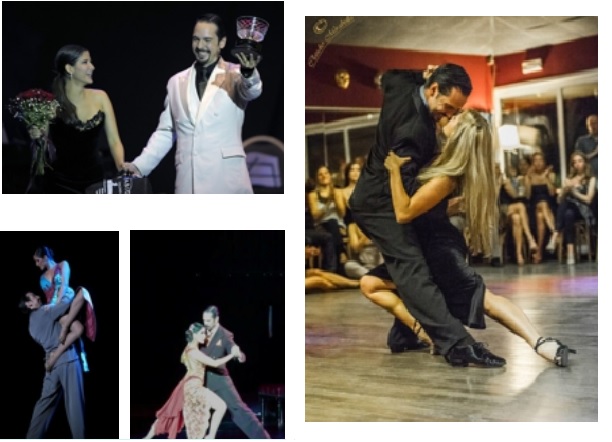
John Erban. The International sensation of the Tango Scene

At International Salsa Magazine, we believe that what makes someone special is their passion and love for what they do and bring to others. This is the case with John Erban, the Venezuelan tango dancer and instructor that we had the pleasure to meet this month.

Photo 1: John Erban - Tango
Photo 1: John Erban – Tango

John Erban is based in Geneva, Switzerland. He is preparing his next European tour in order to give Tango classes, shows, festivals and more. With an interesting beginning, this Venezuelan left an engineering career to follow a passion that was growing inside of him:

Dance. The Colombian influence in his family was very important to him to take that step into dance. His beginning was centered in a more Latin/Caribbean style, starting with salsa and Venezuelan folklore.

Photo 2: John Erban - Tango
Photo 2: John Erban – Tango

After many years of mastering these styles, giving shows and performances, John met the style that changed his life, Tango. Thanks to the Tango Caracas Company, this dancer started a career in the Tango scene and in 2006, after only three months of practicing with his partner in that moment, John went to the worldwide Tango Championship in Argentina and the couple could passed to the semi- final, something remarkable for a Venezuelan contestants couple.

Later, in 2007, they made it to the finals and in 2008 the couple took part again of the contest and won the 3rd place.

Photo 3: John Erban - Tango
Photo 3: John Erban – Tango

After that, many doors opened for John in the Tango scene around the world, making a dance tour in TokyoJapan, and different countries of Asia. This was a learning process for John in so many ways, because he had the opportunity to meet so many different cultures, languages, perspectives and, overall, dances.

He returned to Argentina in 2009, this time with the amazing dancer Clarissa Sanchez as his new dancing partner, but it was just until 2011, the year of victory, where they were tied in the first place with a Colombian couple After this, John’s career just got off the ground, working and dancing a lot in Argentina, having tours in United States and Europe.

Photo 4: John Erban - Tango
Photo 4: John Erban – Tango

Currently, John is working by himself in Switzerland, organizing a big Milonga once a month in Geneva, and being invited to jury, perform, Dj and teach in Festivals and other cultural events around the world. In November begins his next European tour, with confirmed countries as France, Spain, Italy, Switzerland and the U.K.

Some of his awards

  • Representative of Venezuela in the 8th. World Tango Summit in Bariloche, Argentina 2009.
  • Finalist of the 7th World Tango Championship held in Buenos Aires in 2009 in the category of Salon Tango.
  • 3rd place of the 1st World Tango Championship held in Medellín, Colombia in 2011 in the Tango Salon category.
  • 7th place of the 1st World Tango Championship held in Medellín, Colombia in 2011 in the category of Stage Tango.
  • 2nd place of the IX World Tango Championship held in Buenos Aires, Argentina in 2011 in the Tango Salon category.
  • 5th place of the IX World Tango Championship held in Buenos Aires, Argentina in 2011 in the Stage Tango category.
  • BEST FOREIGN COUPLE OF 2011, in the IX World Tango Championship held in Buenos Aires, Argentina in 2011

But having a lifestyle where you have to travel worldwide makes difficult being near to your family and the ones you love and that is a lesson that John has learned after many years of working hard. “When you travel like this, you have to internalize a state of separation, and it has been very hard for me, but I’m still working on that”.

Nevertheless, John is making all to have his son with him, and being close with his family as much as he can. Future goals for John are continue traveling, working and dancing. He is also working for next year in developing his own clothing line, videoclip production and online tango lessons through his new website.

Photo 5: John Erban - Tango
Photo 5: John Erban – Tango
Photo 5: John Erban - Tango
Photo 5: John Erban – Tango

Travel gives him a great opportunity to learn and see all types of languages and cultures. He also wants to create a dance academy and dance company, in order to make festivals, workshops and more.

John talks about Venezuela, its current situation, Europe, the people he’s helping and more, but the most remarkable and beautiful thing is how passionate he is talking about Tango and dance in general. When you talk with him, the desire of learn to dance starts growing, he’s just inspiring.

When we asked him what is the thing that he loves the most about Tango, he says that is the energy that you want to give and show to others, the energy that you want your partner feel, the sensations, the moves…

He knows that Tango is a very strict style with specific rules and it requires a lot of discipline, but he is innovating the style, giving it his signature and personality, and that is what he wants to develop, a new way of Tango style that could captivate anyone.

Finally he gives us tips for beginners in Tango and in dance in general. “Stay humble, always. Ego is an obstacle that every dancer has to defeat. Also you need to have discipline, learning Tango and every dance is like to learn a new language, you have to practice a lot and put all you effort to achieve your goal”. The best advice from a professional.

Photo 6: John Erban - Tango
Photo 6: John Erban – Tango

John Erban is such and unique person, with so much talent and vibrant personality. To know more about him and his work, check his page https://www.facebook.com/Johnerbantango/    www.johnerbantango.com Instagram y Twitter: @johnerbantango Email: [email protected]

Ismael ‘Pat’ Quintana, born in Ponce Puerto Rico, began his musical career in 1961 alongside Eddie Palmieri and La Perfecta

Ismael ‘Pat’ Quintana, born in Ponce, Puerto Rico, began his musical career in 1961 alongside Eddie Palmieri and La Perfecta

smael 'Pat' Quintana, born in Ponce, Puerto Rico, began his musical career in 1961 alongside Eddie Palmieri and La Perfecta
smael ‘Pat’ Quintana, born in Ponce, Puerto Rico, began his musical career in 1961 alongside Eddie Palmieri and La Perfecta

Commemorating one more anniversary of the departure of the Maestro: Ismael Quintana (Ponce, June 3, 1937-Colorado, April 16, 2016) was a Puerto Rican singer and composer of salsa, bolero and other genres of Caribbean music.

He began his musical career in 1961 alongside Eddie Palmieri and La Perfecta, and later continued as a solo singer.

In 1970, he signed with Fania Records and joined the Fania All Stars, in addition to recording more solo albums.

By 2012, his health condition prevented him from continuing to perform and he stopped giving concerts.

In April 2016, he died of a heart attack at his residence in Colorado in the United States at 78 years of age and paid the first tributes.

Quintana was the singer who gave the name salsa to Afro-Caribbean music, after having heard it in Venezuela.

Ismael ‘Pat’ Quintana, born in Ponce, a town rich in culture on the beautiful island of Puerto Rico, moved to New York when he was very young. It was in the South Bronx that he fell in love with Latin music.

Ismael 'Pat' Quintana
Ismael ‘Pat’ Quintana

During these early years, he played percussion with a variety of bands throughout New York City.

He persevered and eventually joined Angel Natel’s orchestra as a teenage bongosero.

During one memorable night in 1959, the band was asked to play a particular number for one of the club’s dancers.

Natel’s singer was not familiar with the song, but Ismael was. He stepped up to the microphone, performed the song and in the process electrified the crowd with his talented voice. That night launched a magnificent career, a career that would eventually position Quintana as one of the most prominent vocalists in Latin music.

In 1961, visionary keyboardist Eddie Palmieri decided to leave the sanctuary of Tito Rodriguez’s eminent orchestra to pursue the dream of forming his own band.

Eddie was present when Quintana auditioned for Orlando Marin’s popular orchestra.

The pianist would eventually track him down and offer him the opportunity to become the lead singer of his new orchestra, La Perfecta.

This proved to be a vital move in Eddie’s quest to become one of the top Latin music bandleaders. Their alliance would last 12 years.

Together, Quintana and Palmieri pushed the boundaries of progressive salsa, creating dissonant improvisations that fused the raw tradition of Afro-Caribbean music (exemplified by the singer’s hardcore sonics) with a relentless desire to experiment (illustrated by Palmieri’s choice of electronic keyboards, use of structures borrowed from other musical formats, as well as meandering solos that had their own idiosyncratic logic).

Quintana inició su carrera musical en 1961 al lado de Eddie Palmieri y La Perfecta

The 1965 album Azúcar Pa’Tí is probably the aesthetic pinnacle of their collaboration. It featured classic salsa anthems such as “Oyelo Que Te Conviene”, included here for your listening pleasure.

Another unforgettable moment was Eddie’s decision to record a double LP set in the Sing Sing penitentiary.

Quintana’s voice sounds appropriately impassioned on that socially significant 1972 concert recording.

By 1973, Quintana had decided to embark on a solo career. He signed a contract with UA Latino Records and recorded two albums of excellent quality.

Quintana En 1970, firma con el sello Fania Records

The second of these two releases gave him the opportunity to sing tangos and ballads, backed by a spectacular orchestra led by South American arrangers Héctor Garrido and Jorge Calandrelli.

Surprisingly, the singer has stated in interviews that he prefers to dance ballads and boleros rather than sing more fast-paced material.

Quintana’s first work for Vaya Records was recorded in 1974, It included the hit “La Blusita Colorá”, which is featured in this collection.

The singer also collaborated with keyboardist and bandleader of La Sonora Ponceña Papo Lucca, as well as Ricardo Marrero.

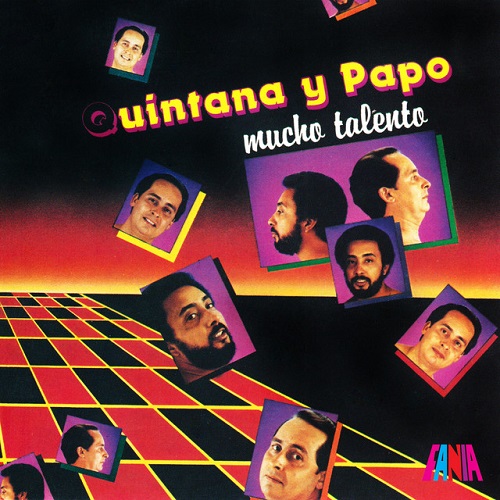
Quintana y Papo Mucho Talento

In 1975, Quintana was invited to join the legendary Fania All-Stars as one of their lead vocalists.

He appeared in the movie Salsa and participated in many of the combo’s historic performances, delivering a blistering version of the self-written “Mi Debilidad” at Yankee Stadium.

When not traveling the world with the All-Stars, Quintana could be found in the recording studio, working on material that appeared on his albums for Vaya Records.

Ismael Quintana’s name appears on many classic albums from the salsa explosion of the 1970s, both as a background singer and as a percussionist.

His phenomenal vocal abilities have obscured the fact that he is one of the most exciting maracas players in the genre.

He is also an innovative composer, having written many of the songs that make up Eddie Palmieri’s seminal albums of that era.

Quintana is also known as one of the nicest guys in the Latin music business.

A true professional who is never late for his concerts and a devoted family man who doesn’t smoke or drink.

Ponce in Puerto Rico has given birth to several legendary Latin singers, from Héctor Lavoé and Cheo Feliciano to Ednita Nazario and Pete ‘El Conde’ Rodríguez. Ismael Quintana is yet another luminary from that region.

This Latin Heritage compilation is a well-deserved tribute to one of salsa’s best. Fania All Stars.

By:

Marino Del Jesus

Historia Salsera

Dj. Augusto Felibertt

Also Read: The Royalty of our Latin Music Pete “El Conde” Rodríguez first singer signed by Fania Records label

  • « Go to Previous Page
  • Page 1
  • Interim pages omitted …
  • Page 4
  • Page 5
  • Page 6
  • Page 7
  • Page 8
  • Interim pages omitted …
  • Page 21
  • Go to Next Page »

International Salsa Magazine (ISM) is a monthly publication about Salsa activities around the world, that has been publishing since 2007. It is a world network of volunteers coordinated by ISM Magazine. We are working to strengthen all the events by working together.