
North America / USA
Not just anybody can be a Dance Center teacher. The instructors are chosen not just for their dancing prowess, but also for their personality and teaching skills. They train continuously to acquire the most efficient teaching methods and the latest dance moves.
Although each of them has specific strengths and specialties, all of the Dance Center teachers are qualified to teach more than a dozen different dance styles, from Salsa to Swing, and from Cha-cha to Argentine Tango.

Teamwork is very important for the Dance Center instructors. They all work with the same teaching system, so when you take a lesson with any of them you will benefit from their collective experience and from the diversity of their personalities.
The instructors come from many different parts of the world and their experience is as diverse as their talent. All of them have extensive dance backgrounds and some of them have experience coaching sports, teaching music and even aerobics.
Lessons are provided in a variety of languages including English, French and Spanish.
Don’t miss everything San Tropez has to offer every week. And for more information about upcoming events, visit http://www.latindance.net
Ladies Styling Choreography Tuesdays – 8pm Hip Hop Choreography Thursday – 7pm Mens Styling Choreo Tuesday – 7pm Salsa – Bachata Choreo every Wednesday -7pm Kizomba Choreography Fridays – 8pm.

There are many Latin genres that have managed to find a place in the USA music scene thanks to the constancy of many of its great exponents, salsa being the genre we talk about the most. However, today we want to change the subject a little bit and analyze what is milonga and how popular it has become in recent years.

The milonga can be defined as a folkloric musical genre coming from the Rio de la Plata region, which is usually performed with a guitar accompaniment in 6/8 time. Usually, it is divided in two modalities that are the milonga campera (the genre in its purest form) and the city milonga (style subsequent to the milonga campera).
Although the musical genre is known for being originally from Argentina, Uruguay and certain parts of Brazil, ”milonga” means ”word” in the Quimbundu language (a language of Angolan origin that corresponds in several expressions with Portuguese). It is important to mention that this is the language used by some tribes from Angola, which was a colony of Portugal, and that many of the slave population of those lands was transported to Brazil, Uruguay and Argentina.
According to information received from some scholars, after the defeat suffered by the Argentine founding father Juan Manuel de Rosas in Caseros at the hands of Entre Rios Governor Justo José de Urquiza, the Brazilian soldiers caught the porteños off guard while singing guajiras in mockery, at the same time that the porteños sang milongas.
In the ears of Brazilians, these songs sounded like gibberish they could not understand. In the end, as a result, the term had such an impact that locals began referring to their own creolized guajiras as milongas.

Milonga is known for its joy, speed and sensuality at the time of being performed by its dancers. Its binary rhythm is of great simplicity, so it is in stark contrast to the four beats of the guitar that gives the melody to the dance and is usually accompanied by lyrics occasionally.
It has always been closely related to paya and tango. In the case of paya, milonga used some of its elements specifically for the dance, while tango uses some details of the rhythm and the melody in milonga for its own dance. Today, the three genres are considered a very important part of the Rio de La Plata music scene and each of them has their own characteristics that distinguish one from another.
Milonga had much to do with the birth of tango, but at the same time, it evolved and maintained its independence. In fact, there is some sort of mix of the two called tango milonga that is almost extinct, although it is known that many musicians wanted to use it to give the rhythm of the tango more strength and sustainability.
As for the places where milonga could be danced, the genre used to be found in neighborhood clubs, dance halls, tearooms and boites. The music used was usually recorded, although the venue owners hired small bands occasionally to change the modality. The popularity of these groups was so great that several of their musicians managed to join highly recognized orchestras at the time.
Couples who went to milonga clubs to dance ballroom tango and outskirts tango. The first only consisted of beat and elegance, while the second had beat, elegance and figure. Among the most famous places to dance milonga that remain active to this today, we can mention El Barracas Central, Unidos en Pompeya, El Sunderland and many others.

Today, milonga has become a genre of big importance for people eager to learn to dance things other than salsa, bachata or merengue. This genre offers them the opportunity to try something completely different thanks to which they can connect with others in ways they would not have imagined due to its peculiar rhythm and overflowing sensuality.
In addition to that, every day there are more and more events also called milongas, which consist of massive dances where couples show their best moves to the rhythm of various genres, such as milonga, tango, and vals criollo. In general, the scheduling of a milonga is divided into blocks of three, four or five dances that are separated by short pieces of light music. Apart from that, each block contains a sort of rhythm that is grouped by orchestra, singer or composer.
These events were very typical in Argentina, but have been gradually spreading throughout various parts of the world, including the United States. Nowadays, it is fairly common to find restaurants, night clubs and academies that offer this kind of entertainment to their attendees such as Alberto’s Night Club (San Francisco), The Tango Room (Los Angeles), Milonga La Paz Tango Club (San Francisco), Tango De Rey (San Diego), Tango La Nacional (New York), Fairmont Tango Club (Philadelphia), Dance Fire Studio (New York), and many more.
Read also: The best marimba band found in Los Angeles
North America / USA / Los Angeles
The Granada LA is the home to a Ballroom, Latin, Salsa & Bachata dance studio with Los Angeles hottest dance instruction with classes a week and private lessons available by appointment. Offering several nights with live entertainment and dancing to show off all you have learned.
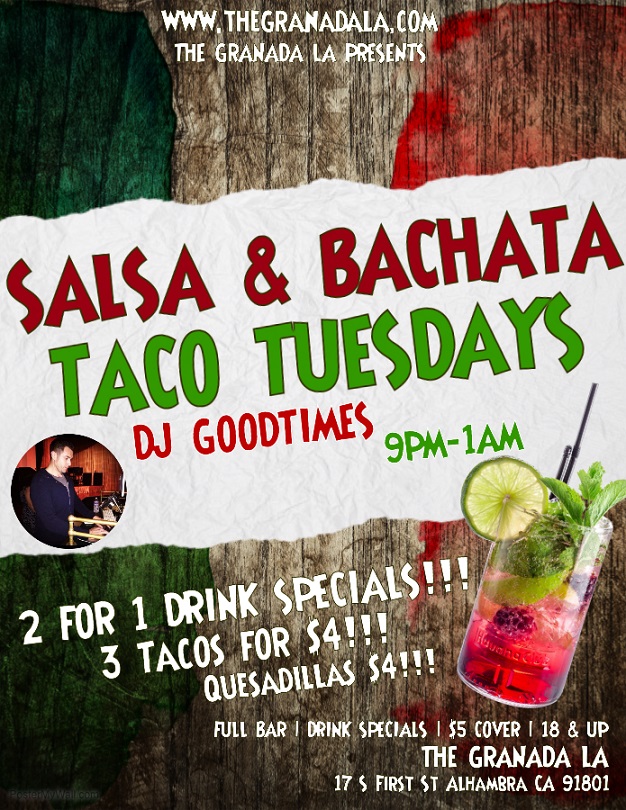
Tuesday is Salsa & bachata Nights, Thursday is Bachata Tropical Nights with 3rd floor Hip Hop/Reggaeton, Friday and Saturday Nights the main dance floor becomes Los Angeles Best Live Salsa Club! Enjoy an extra room on Saturday for bachata and Hip Hop/Top on patio.
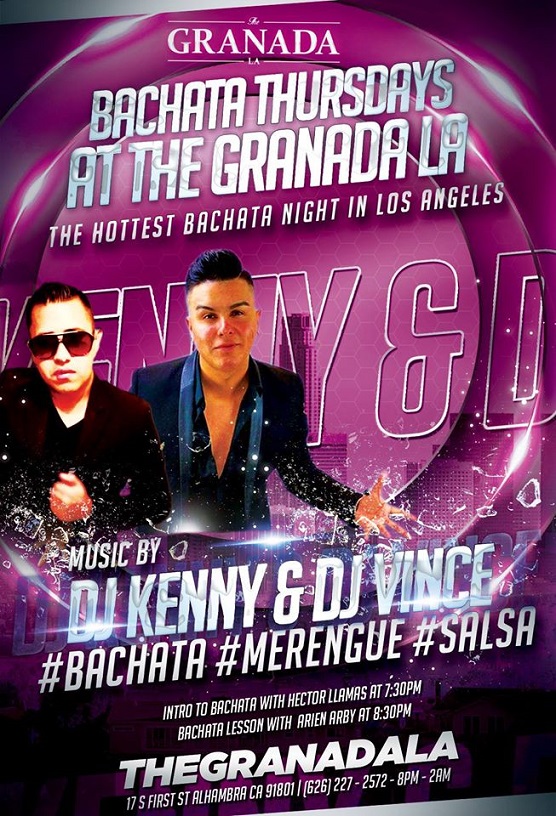
Also the first and third Sunday of the month, live music for the Ballroom Dinner Dance with Two’s Company with all your favorites. Also, offering other special nights once a month on different nights.

Group Classes & Private Dance Lessons go on throughout the building, but it is important to remember that the Granada LA has other activities and groups sharing the space day and night.
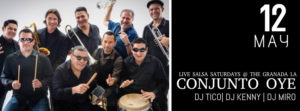
The restaurant is open Thursday thru Sunday for dinner, in addition to being the caterer for rentals. Just as most clubs in Hollywood, enjoy different theme nights, so will the Granada LA.
Friday and Saturday night Salsa dance club, Ballroom Dinner Dance, Thursday night Bachata dance club, Cuban Timba party 2nd sunday of the month, Chicago stepping platinum club 4th sunday of the month, Special Dance performances, Concert nights & special events throughout the week and on weekends.

Teaching and choreographing for shows, events, parties, celebrations and your first dance. The Ballroom Dance Studio is located in Los angeles and specializes in Ballroom, Latin, Swing, Salsa & Tango dance classes and instruction both privately and in groups.
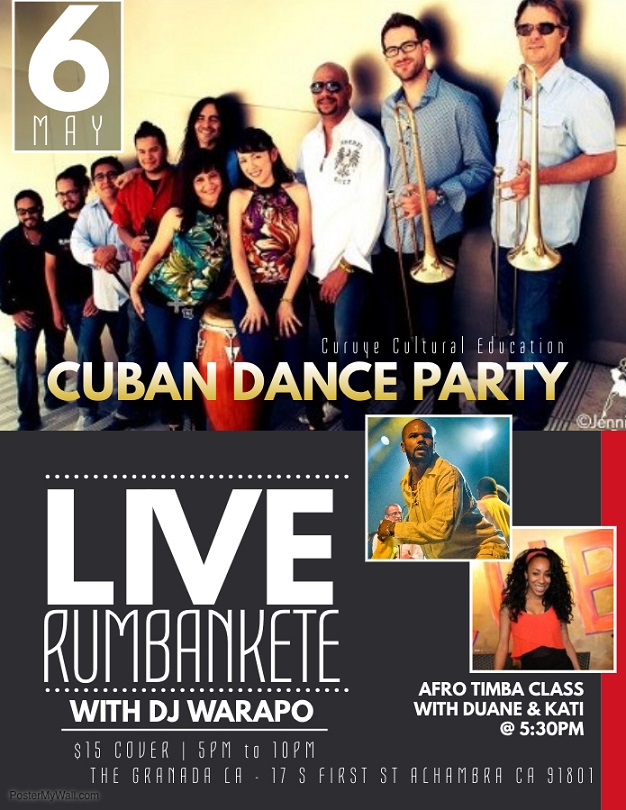
Offering an elegant beautiful Banquet Facility in Los Angeles for your upcoming Wedding Reception, Quinceanera, Birthday Party, Anniversary or a Special Occasion in Alhambra.