





His five albums as a leader, two as co-leader (MOZART’s BLUE FANTASIES and BACH’s SECRET FILES) as well as his work on over a hundred albums, scores for five feature films, three Broadway Musicals and multiple other projects, showcase his wide-ranging area of expertise.
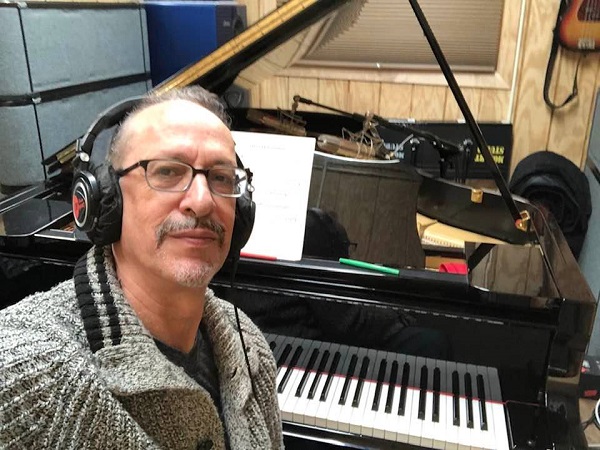
After several nominations as a sideman, two of his five solo CDs were nominated for a GRAMMY Award (REFUGEE, 2008, and SECOND CHANCE, 2010).
He arranged and performed parts of the score of Ang Lee’s OSCAR-nominated movie EAT, DRINK, MAN, WOMAN.
His first professional recording was at age 18 (Mikis Theodorakis’s “Canto General”) while one of the most recent was on legendary rock band CHICAGO’s latest production, the Latin-tinged “EXITOS”.
He has written symphonic orchestrations, performed and recorded by the Russian Philharmonic Orchestra and compositions like ABRE LOS OJOS, CIERRA LOS OJOS, commissioned and premiered by the MUSICA DE CAMARA STRING ORCHESTRA at St Patrick’s Cathedral in April 2011.

As a requested sideman he has toured the world with such greats as Paquito D’Rivera, Ray Barretto, Gato Barbieri, Steve Turre, Don Byron, Tito Puente and was featured pianist with Max Roach’s PROJECT AMERICA at the 92 St Y.
His joy of teaching has made him a requested guest-lecturer and performance teacher in music faculties and academies in several countries of Europe, Japan, North- and South America.
Hector wrote an instructional book on Latin piano commissioned and published by Hal Leonard, the SALSA PIANO BOOK.
Martignon’s abilities as a pianist have always been enriched by his interest in varied musical genres.
He paid for his studies of classical piano and composition at the prestigious Freiburger Musikhochschule in Germany by performing with the best Afro-Cuban and Brazilian bands of Europe, backing stars like Celia Cruz and Ismael Quintana on their European tours, and recording with Tata Güiness and Arturo Sandoval.
At the same time he was attending seminars of contemporary composition with masters like Gyorgi Ligetti, Luigi Nono and Karl Heinz Stockhausen.
He also performed classical music in recitals and concerts in Germany, Italy and his native Colombia, specializing in Chopin, Bach and Debussy.
Living in Brazil for a one-year love affair with that country and its music, Martignon soon became a requested studio musician and worked for star producer Carlinhos Brown.

Since relocating to New York City, Martignon has been one of the most sought-after pianists on the Latin jazz scene.
He’s toured North and South America, Europe, and Asia with the bands of Mongo Santamaría, Gato Barbieri, Steve Turre and Don Byron, who had him record in his latest CD.
He was featured pianist with the bands of Tito Puente, Mario Bauzá, Chico O’Farrill, Paquito D’Rivera, and Max Roach in his “Project America.” Most notably, Martignon was pianist for the late Ray Barretto’s various ensembles.
During his eight-year association with Barretto, his contributions as pianist, arranger, and composer were fundamental in shaping the sound of the now famous New World Spirit Sextet.
One of his last collaborations with Barretto, “My Summertime,” was a favorite nominee for a Grammy award. Martignon’s versatility has also made him extremely active in the film and television industries.
He is composer of the original music of two feature films, one of which, “Septimo Cielo”, won international awards. He also collaborated in the production of many Broadway musicals (“Chronicle of a Death Foretold”, Paul Simon’s “The Capeman”, “Selena Forever”) as conductor, arranger, and co-composer. In the fall of 2003 Hector visited Slovenia and Russia to collaborate with singer-songwriter Vitaly Osmsçko’s first symphonic CD.
The Russian Philharmonic Orchestra recorded in Moscow the orchestrations written by Hector.
As a composer, producer and arranger of TV and radio music his record is no less impressive. In 2001 he landed two spots for HBO Latino, and one for Coca Cola.
HECTOR” S FOREIGN AFFAIR In 1998 Martignon performed with his quartet “Foreign Affair”at the Brooklyn Academy of Music’s famed annual festival “The Next Wave” on a triple bill with Tito Puente’s “Top Percussion” and Don Byron’s “Music for six Musicians”.
This proved to be a turning point for him and his ensemble, which evolved from the strictly acoustic trio sound of the first two CDs to a more eclectic and electric quartet sound.
The new configuration that evolved from that memorable concert started a series of concerts and recordings, with guitarist Mark Whitfield, Cameroonian bassist Richard Bona and Cuban drummer Horacio “Negro” Hernández.
This quartet performed and recorded live during a weeklong stint at New York’s famous Birdland.
The group has also performed on BET television festivals, at jazz clubs in Manhattan, and made various appearances in clubs and open-air festivals in his native Colombia and in Europe.
Martignon’s third solo project, to be released in the fall of 2003, is not only a reflection of the group’s new musical direction but also of his interaction with other world class musicians.
Eddie Gomez, Jeff Watts, Mathew Garrison, John Benitez, Dafnis Prieto, Willard Dyson have all made their unique contribution to this, Martignon’s new sound of Jazz.

Hector Martignon never fails to surprise, challenge and delight us. Stay tuned and get involved in this affair.
Site: Héctor Martignon
Also Read: “El Sol de la Música Latina” el primer premio Grammy para el histórico disco de Salsa Eddie Palmieri
North America / United Stated / New York
It was one of those nights of meeting with friends, those friends with whom you share the same musical preferences among other things, you know, of those gatherings where only you and your friends can spend hours discussing the best songs of Héctor Lavoe or remembering the best hits of the Fania, and in which there is no other way to end the evening than with the deities that brings the good Salsa music from a live band to close the night with a flourish.
And so that was, when with the hours passed we came across one of these charming Latin clubs that fill the streets and every day prevail more in the city of New York, where, of course, they offered Live Salsa. Eureka! If you allow me to say it … It was the perfect place to “Echarnos un Pie” (colloquial term that we usually give in some Latin countries when we refer to dance).
Upon entering, the characteristic sound of the band wrapped up the entire venue, no doubt, captivated us. It was the harmony of an orchestra that played the typical Cuban music: “La Charanga“, which had its maximum exposure in the 20th century. We were all enthralled or if you want to say “delighted”, it was the mixture of wind instruments with percussion instruments but especially with the string instrument that most caught our attention, the Violin.
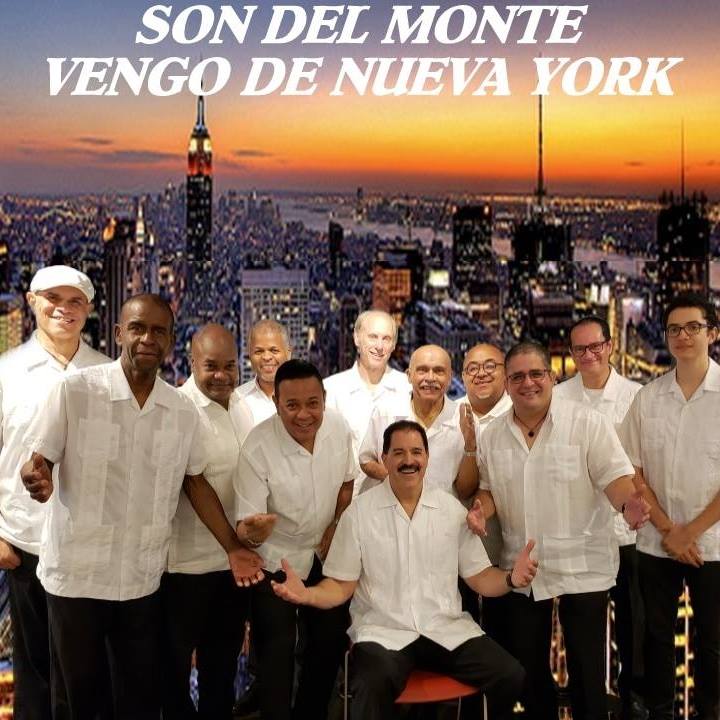
When we asked for the name of the orchestra, they told us: “Son del Monte”. It’s the ideal name for an orchestra of 12 Latin musicians who project their virtuosity before an audience eager for Caribbean Music that bathes the senses and awakens the joy of living.
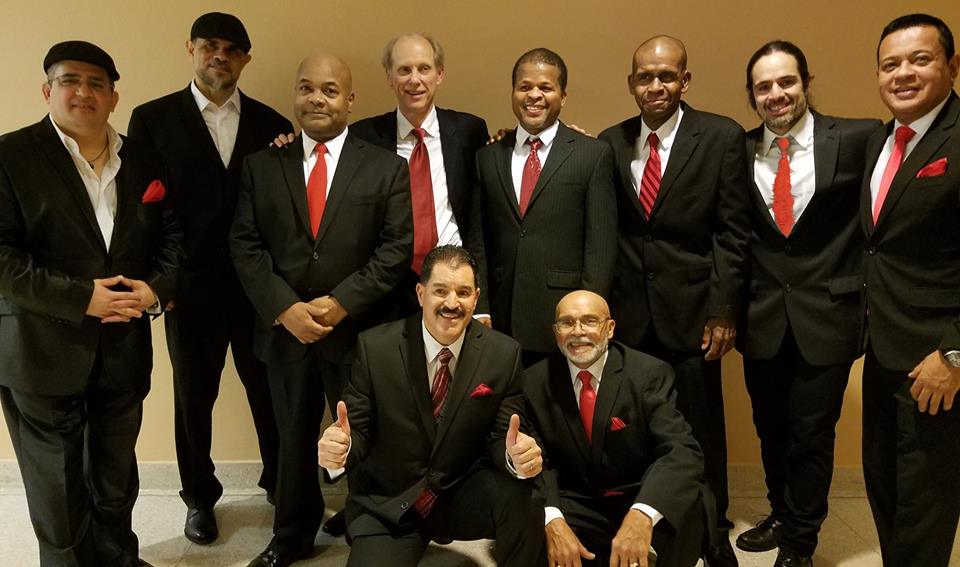
Son Del Monte is a band based in New York City that presents unique tunes from various artists. This orchestra was born from the musical director and timbalero, Manny Rivera whose aspiration was to create a Charanga band with a hard New York sound that paid homage to the orchestras of the 60s, 70s and 80s. “Our music is captivating for the listeners and dancers. Fans from all over the world have come to love Son Del Monte: Una Charanga Con Algo Más and our incredible musical swing”, said Manny Rivera.
This band that combines the typical sound of Cuba with the mixture of flute, violins and trombones with three singers that create a distinctive harmony of three parts, have performed in so popular Salsa venues, such as: Maryland Live Casino, the Baltimore´s Latino Festival, the boardwalk of Coney Island, SOB’s, Empire City Casino in Yonkers, Gonzalez y Gonzalez, La Marqueta, the Latina Hats Society, Industry City, Harlem Mist, among other recognized Salsa venues.
The members of this Charanga orchestra with “Sabor” and electrifying sound are: Mauricio Smith Jr. (Flute), Eric Roberto Salazar and David Rimelis (Violins), Michael Pallas, Juanga Lakunza and Charlie Garcia (Trombones), Eli Rivera (Piano), Bert Castro (Bass), Joe Gonzalez (Conga), Manuel Rivera (Timbales / Musical Director / Leader) and Luis Ayala, Armando Jiménez Sonji and Luis Soto (Singers).
Since the beginning of this year (2019), Son del Monte has been working on their record proposal for the Latin market with unpublished themes, rhythmic and unique sound – contemporary. To date they already have two singles: “Rumba Omelenko” and “Vengo de Nueva York” availables in: CD Baby, Deezer, iTunes, Apple Music, and Spotify. Likewise, the song “Herman” is in the process of recording. So, get ready because this Charanga orchestra promises their CD ended with great compositions for the public later this year.
Undeniable, the acceptance of Son del Monte has been so extensive on the part of New Yorkers and all who are Salsa lovers that they were recently awarded with the TANAE Digital Media Award for Band of the Year 2018, giving recognition to an arduous musical performance, but above all of great cultural value that keeps alive our Latin idiosyncrasy.

Manuel Rivera, have been a professional musician for more than 40 years and now Son Del Monte’s Leader/ Musical Director. His musical career started playing Bongo in a Latin Workshop band which eventually became Orchestra Yambu. Yambu was known for its Latin Jazz style and Disco Hit “Sunny”, his first recording. Subsequently, I joined the original Charanga Orchestra Sublime of New York City, doubling up on Bongo and Timbales. He recorded on Sublime’s first two albums in 1977 and 1979.
In 2001, he rejoined Orchestra Sublime now known as “Sonsublime”. Manuel recorded on Sonsublime’s Gran Reserva and Bailando Con Sonsublime, their latest CDs. He studied various folkloric rhythms, Bata drums and sight reading at the Harbor’s Conservatory of Music in El Barrio in New York City under the guidance of the Master Louie Bauzo.
Manuel Rivera has performed with the Bassist: William Millan, of the original Conjunto Saoco, singers: Henry Fiol, Ray Ramos, and Luis Ayala. Also, he performed with Yerason and the MTG All Stars Orchestra under the direction of Hector Leguillow, Joe Quijano at Lincoln Center and other various artists throughout his musical career.
Next Shows:
Monday, Jult 15TH
Venue: Cunanele Restaurant and Lounge. 1 Route 46 W, Totowa, NJ 07512
Saturday, August 17TH
Venue: La Placita de la Marqueta. North trains between 111th and 112th Streets in East Harlem, “El Barrio” and uptown Manhattan, NY.
For more information, please visit:
Or Follow them for their Social Channel:
However, once he was able to play an instrument, he took a break to dedicate himself to baseball. “It was at the age of 14 that an uncle took me to some Latin percussion lessons and soon after that I started with the trombone.”
On April 23, 1969, in Caracas, Venezuela, Adrian Suarez was born.
Excellent composer, arranger, trombonist, percussionist and researcher.
Bachelor of Arts (UCV-1994), he studied music, trombone and composition at the Escuela Superior José Ángel Lamas.
He also studied Afro-Caribbean percussion and Afro-Venezuelan percussion (1985-1990). He was a researcher and advisor for the foundation of ethnomusicology and folklore, fundef, between 1993 and 1995.

He studied composition at the Cátedra Latinoamericana de Composición Antonio Estévez, with maestro Juan Carlos Núñez from 1994 to 1996. In Germany he obtained a master’s degree in composition.
As a professional, he has collaborated with the Papel Musical Magazine (1992); he has been a researcher and advisor for the Foundation of Ethnomusicology and Folklore (FUNDEF) under the direction of Dr. Isabel Aretz; and he has worked as a documentary advisor for visual arts exhibitions.
He studied composition with Helmut Lachenmann and Marco Stroppa. In 2001 he received his master’s degree in composition from the Staatliche Hochschule für Musik und Darstellende Kunst in Stuttgart, Germany.
Since 1999 he has been a founding member of the international group of composers Aspect, based in Germany, and since 1991 of the Musikós Association in Caracas. He participated in the Latin American Composition Chair Antonio Estévez, under the direction of Juan Carlos Núñez (1994-1996).
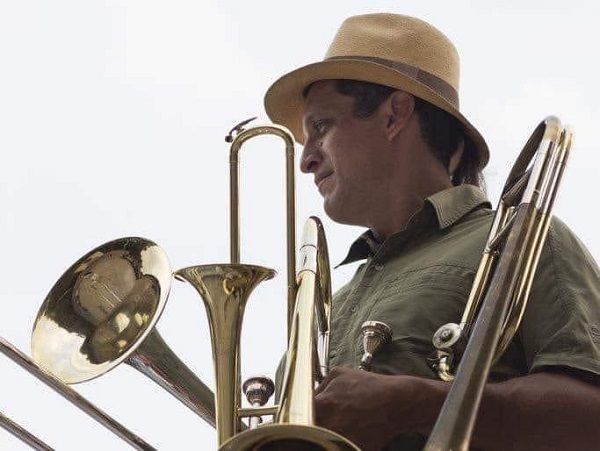
He has worked as author and director of musical-dramaturgical shows in Venezuela, including titles such as: “Lamas siempre” (1995), “Proyecto Música e Hipótesis Aleatorias” (1997), “Atavismos del Sol y de la luna” (2000), “Maithuna” (2009), “Watunna” (2010), “Meñé Ruwa, los dueños del canto” (2011) the first musical theater play in the continent for instrumental ensemble and two shamans and “La salsa es trombón” (2012, 2015, 2017).
He led a band integrated by a group of the best musicians of the salsa scene nationwide: Tuky Torres, on piano; Carlos Rodríguez, bass; Víctor Cardona, on timbal and bongo; Freddy Rivas, congas; Johan Muñoz, trombone; Eliel Rivero, trombone. Special guests included soneros Edgar Dolor Quijada, Reinaldo Torcat, as well as a group of batá drummers.
Creator of the Ensemble Lux Aeterna, dedicated to the interpretation of spiritual and sacred works of all times. He is also founder of the Akoustikos New Music Festival in 2009.
As a trombonist, he has cultivated popular music from all over the continent, with special emphasis on Venezuelan and Caribbean music. His work as a researcher, composer and performer has allowed him to take his work and music to several countries in the Americas, Europe, Africa and Asia.
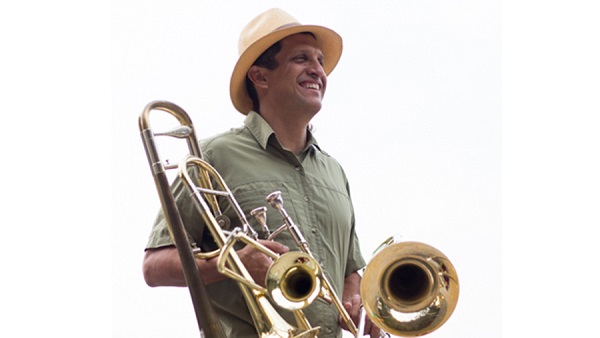
“It won’t be a master class in history,” says Venezuelan musician and composer Adrián Suárez with a chuckle; in reality it is a musical show, with hints of theater and dance, that will show the public the evolution of the trombone, and its relationship with the salsa genre from prehistoric times to contemporary times.
Adrián Suárez brings sacred sounds and turns them into music.
Salsa is trombone, Suárez assures, “It is a beautiful show that is not only educational, but also seeks to inspire the audience through the values and feelings it promotes”.
The artist and researcher’s expectation is that his audience will be completely involved with the sound and ambience: “To completely move the energy, since it is not only music to dance to, it is to sit down and listen to it carefully”.
Víctor Porfirio Baloa Díaz, more commonly known as Porfi Baloa
Omara Portuondo, Ismael Rivera, Jimmy Bosch, and Luisito Carrión celebrate their birthdays this month
October is filled with talent and it’s that in this month a hurricane of brilliant artists of the Salsero genre was born, who have captivated us and have shown their Gift before hundreds of audiences around the world. These Latin Stars have bathed us in SABOR with their lyrics and infected with joy with their melodies. It for that, this month we celebrate their births and dance to the rhythm of the applause towards them. Happy Birthday, Soneros!
Omara was born in La Habana (Cuba). Her first encounter with music was at a very early age. Just as in any other Cuban home, the future singer and her siblings grew up with the songs which her parents, for lack of a gramophone, sang to them. Those melodies, some of which still form part of her repertoire, were young Omara’s informal introduction to the world of music.
She and her sister Haydee sang well-known American group “Los Loquibambla” and their style, a Cubanised version of the Bossa Nova with touches of American jazz, was known as “Feeling”. In their radio debut, Omara was introduced as “Miss Omara Brown, the girlfriend of Feeling”.
“Magia Negra” was her debut record released in 1959. It combined Cuban music with American jazz and included versions of “That Old Black Magic” and “Caravan”, by Duke Ellington. Later she joined one of Cuba’s most important orchestras, La Orchestra Aragón, with which she recorded several albums, such as the one she did with Adalberto Álvarez in 1984 and “Palabras and Desafíos” on which she was accompanied by Chucho Valdés.

However, Omara Portuondo catapulted to her well-earned fame was in the mid-1990s when she collaborated in the recording sessions for Buena Vista Social Club on which she sang “Veinte Años”.
She was the star of the third launching of the Buena Vista Social Club released in 2000 and she toured Europe, traveled to Japan, and performed in the USA and Canada.
Omara went back to the studio to record her second solo album “Flor de Amor” (World Circuit), which was produced by Nick Gold and Alê Siqueira, signals a change in direction in her career: it is an album marked by a more subtle sound and a richness of texture. Portuondo brought in a mixture of Cuban and Brazilian musicians for this album, and it is this factor which influences the particular style of the music.
Omara returned to Europe in 2004 to promote this album, performing at such illustrious venues as the North Sea Jazz Festival, Marble Hill House in London, Olympia in Paris and the Concertgebouw in Amsterdam. “Flor de Amor” was nominated for a Grammy in the Best Traditional Tropical Record category and the 16th edition of the Billboard Latin Music Awards (2005); this album obtained the Tropical Record of the Year award.
Later, Omara released “Gracias”, the record that marks her sixtieth year in the music business and won the Latin Grammy Award for the Best Contemporary Tropical Album. It was a very special night as Omara was there to receive the prize in person and she also presented one of the awards, the first time that a Cuban artist has done this. The album was also later nominated for a Grammy in the Best Tropical Latin Album category.
After touring with the Orquesta Buena Vista Social Club in Europe during 2010, “the girlfriend of Feeling” released the latest recording, Omara & Chucho (Montuno Producciones) in spring 2011. 14 years after their last joint album, they reunite once again to continue unravelling the thread of their first joint project, and show us their talents in the simplest, most unclad manner on a context that enables them to lay emphasis on some of the features that been characteristic of their music at various stages in their careers.
Omara will also tour with the Orquesta Buena Vista Social Club later in Europe and the U.S.
Puerto Rican singer and songwriter contributed to the dissemination of the island’s native rhythms such as the Bomba and Plena, and he was one of the first standard-bearers of the Salsero movement of the decade, the reason for he was called “El Sonero Mayor” and also known for others by the nickname “Maelo”.
In 1952 he was hired as a singer for the Lito Peña’s Orquesta Panamericana with which he became known and reaped his first hits: “La vieja en camisa”, “La sazón de la abuela” and the most popular “El charlatán”, a song in Plena rhythm that was widely heard through the Puerto Rico’s local radio stations.
Two years later he left this group to join the Combo de Cortijo with whom he popularized “El bombón de Elena” by Rafael Cepeda Atiles, and as well as performed on Puerto Rican television in the “El Show del Mediodía”.
At the end of the ‘50s, they were presenting their shows at the prestigious New York club Palladium Ballroom, where they contributed to making popular the tropical rhythms imported from the island with great hits such as “El negro bembón”, “Maquinó Landera”, “Tuntuneco ”, and others.
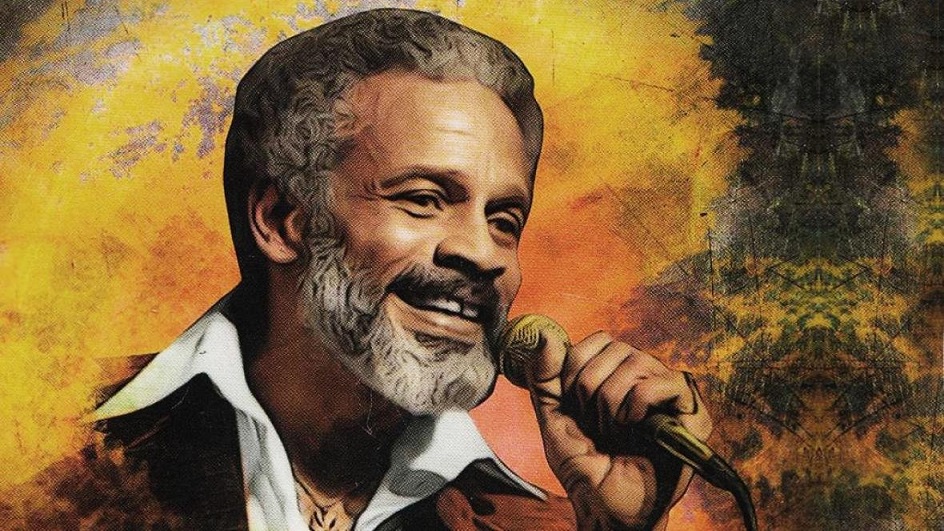
Ismael Rivera’s triumphant career was interrupted in 1962 for paying four years under the laws of Puerto Rico for possession of narcotics. Then, after recovering his freedom, Ismael formed his musical ensemble “Los Cachimbos” and immersed himself in the nascent Salsero movement to which he contributed two classics such as “Dime por qué” y “Mi negrita me espera”.
In the mid-70s “El Sonero Mayor” became the ambassador of Salsa throughout America, working for the record label of the genre Fania, and triumphing with emblematic songs such as “De todas maneras rosas”.
In his facet as a composer, he wrote very notable pieces such as “Besito de Coco” (famous song by Celiz Cruz), “El incomprendido”, “Arrecotín, arrecotán”, “El que no sufre no vive”, y “Mi libertad eres tú among many others.
In his last years, he suffered a throat cancer that caused him to lose his voice and he died as a result of a heart attack. R.I.P MASTER!
Jimmy Bosch was born in 1959 (New Jersey, U.S.). He is a world-renowned Trombonist, composer, singer, and bandleader in the world music genres. He has been performing professionally since age 13. Jimmy’s first two solo CDs, “Soneando Trombón” and “Salsa Dura” established him as the Ambassador of the Salsa Dura movement. He ignited this movement by combining old school quality salsa arrangements with a modern NY aggressive edge and socially conscious lyrics. “El Avión De La Salsa” demonstrates and solidifies his commitment to dancer centered music, while “A Millón” is the title of Jimmy’s 4th solo record released.
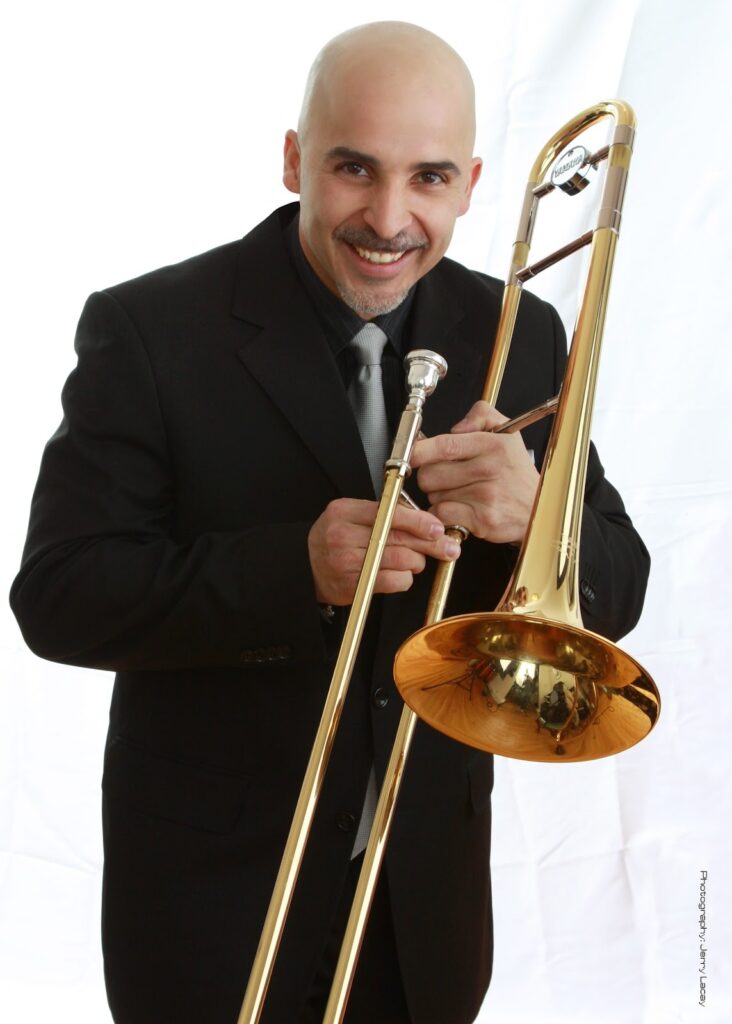
Appearing in over 100 recordings, Bosch “El Trombón Criollo de La Salsa” has garnered at least 10 Grammys and has toured with his orchestra, his sextet or as a solo artist, as well as with: Eddie Palmieri, Ruben Blades, Celia Cruz, Ray Barretto, Willie Colon, Manny Oquendo y Libre, FANIA Allstars, and the list goes on.
Jimmy has been featured throughout the world in major venues and festivals, including; Carnegie Hall, Lincoln Center (NYC), Celebrate Brooklyn (NYC), Montreal Jazz (Canada), Madison Square Garden (NYC), Sydney Opera House (Australia), Barranquijazz (Colombia), El Poliedro and Teresa Careña (Venezuela), and many other important places.
A native of Arecibo in Puerto Rico, Luisito Carrión has been singing since he was 13 years old. He began his career as a Salsa artist with the Orquesta Kafe, Orquesta La Nativa and Grupo Concepto Latino.
In his first performances, he sang along with Celia Cruz, Adalberto Santiago, and Santitos Colón. Later on, he was a member of Salsa Fever together with Julio “Gunda” Merced, were several hits come from: “Renta de Amor” and “Señores ahí va Julián”. Afterward, he joined the Bobby Valentín Orchestra, where he sang songs, such as: “El Señor de las Señoras”, “Ramos de flores”, “El Gigoló”, “Tributo de Cali” and “Como lo hago yo”. In his evolutionary process, Luisito joined the Orquesta Don Perignon where he sang “La Fuga” and later with the Sonora Porceña, where he performed songs, such as “Yaré” and “A Comer Lechón”.
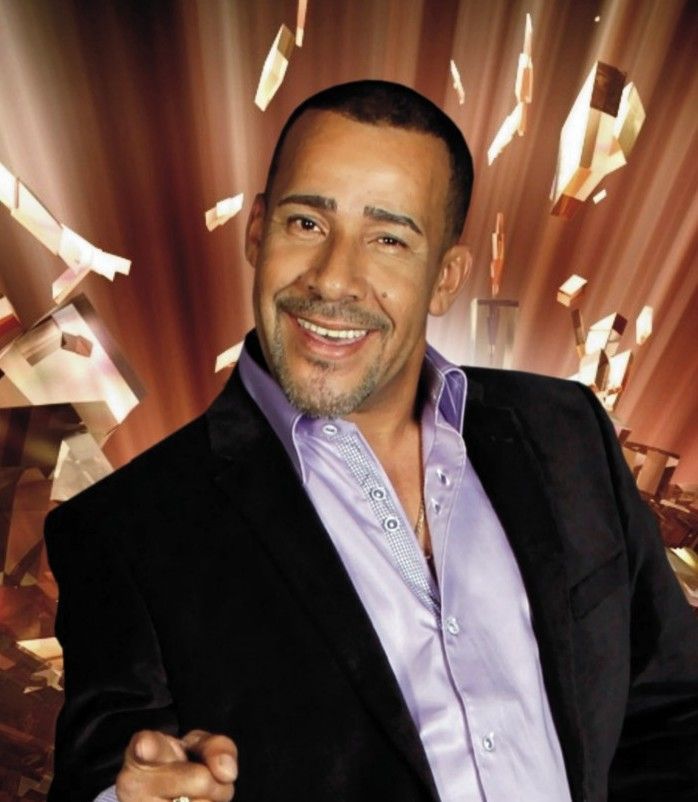
In 1997, he recorded with Roberto Roena y Su Apollo Sound “Mi música 1997”. At the end of the 90s, Carrión began his career as a soloist with the record company MP Records with Julio “Gunda” Mercéd and Rafael Bodo Torres, which led to hits, such as: “Sin tu amor”, “La Chica Más Popular”, “Nadie Como Tú”, “Porque”, “Amiga Mía”, “Muriendo”, “Como Ave Sin Rumbo” and “Para Ser Real”. Nowadays, Luisito Carrión is one of the best Puerto Rico’s Soneros bringing on “Histeriaaaa…” in his fans.