• Skip to primary navigation
  • Skip to main content

International Salsa Magazine

  • HOME
  • Previous editions
    • 2026
      • ISM / May 2026
      • ISM / April 2026
      • ISM / March 2026
      • ISM / February 2026
      • ISM / January 2026
    • 2025
      • ISM / December 2025
      • ISM / November 2025
      • ISM / October 2025
      • ISM / September 2025
      • ISM / August 2025
      • ISM / July 2025
      • ISM / June 2025
      • ISM / May2025
      • ISM / April 2025
      • ISM / March 2025
      • ISM / February 2025
      • ISM / January 2025
    • 2024
      • ISM / December 2024
      • ISM / November 2024
      • ISM / October 2024
      • ISM / September 2024
      • ISM / August 2024
      • ISM / July 2024
      • ISM / June 2024
      • ISM / May 2024
      • ISM / April 2024
      • ISM / March 2024
      • ISM / February 2024
      • ISM / January 2024
    • 2023
      • ISM / December 2023
      • ISM / November 2023
      • ISM / October 2023
      • ISM – September 2023
      • ISM – August 2023
      • ISM July 2023
      • ISM Edition June 2023
      • ISM – May 2023
      • ISM April 2023
      • ISM March 2023
      • ISM February 2023
      • ISM January 2023
    • 2022
      • ISM December 2022
      • ISM November 2022
      • ISM October 2022
      • ISM September 2022
      • ISM August 2022
      • ISM July 2022
      • ISM June 2022
      • ISM May 2022
      • ISM February 2022
      • ISM January 2022
    • 2021
      • ISM December 2021
      • ISM November 2021
      • ISM October – 2021
      • ISM September 2021
      • ISM August 2021
      • ISM July 2021
      • ISM May 2021
      • ISM April 2021
      • ISM June 2021
      • ISM March 2021
      • ISM February 2021
      • ISM January 2021
    • 2020
      • ISM December 2020
      • ISM November 2020
      • ISM October 2020
      • ISM September 2020
      • ISM August 2020
      • ISM July 2020
      • ISM June 2020
      • ISM May 2020
      • ISM April 2020
      • ISM March 2020
      • ISM February 2020
      • ISM January 2020
    • 2019
      • ISM December 2019
      • ISM November 2019
      • ISM October 2019
      • ISM Septembre 2019
      • ISM August 2019
      • ISM July 2019
      • ISM June 2019
    • 2016
      • ISM December 2016
      • ISM November 2016
  • Spanish
  • Download Salsa App
    • Android
    • Apple

Search Results for: Timba

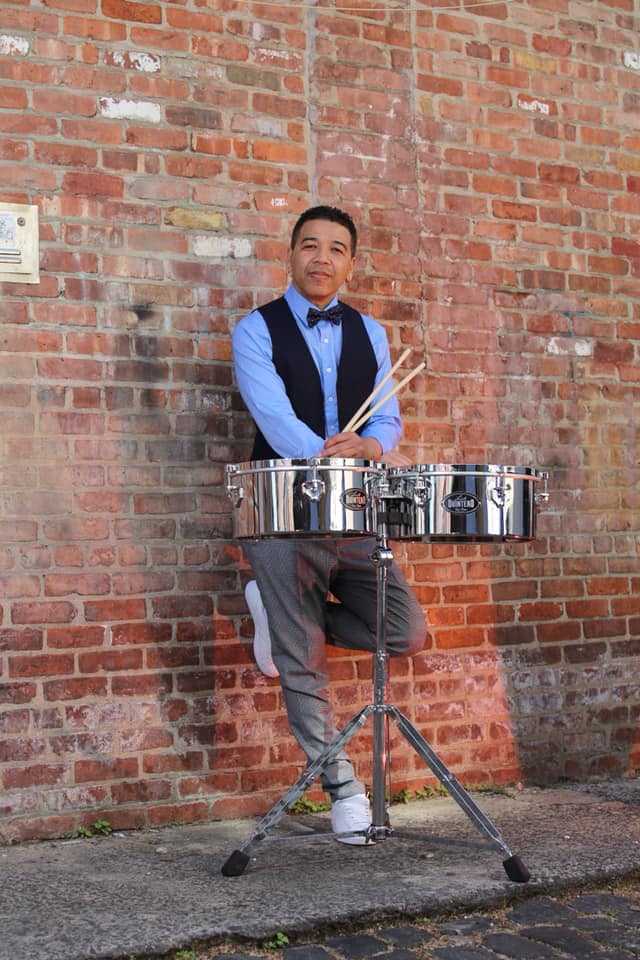
Timbalero Manolito Rodríguez Debuts a Fresh Sound as Musical Director of La Zónica

On Friday, March 27, 2026, Manolito Rodríguez and La Zónica performed at La Respuesta, a unique venue a hall where diverse musical genres blend, creating an atmosphere where a dance concert serves as the artists’ formal introduction to the public. The ensemble has been working together since August 2025, when the new orchestra was formed under the leadership of the virtuoso timbalero.
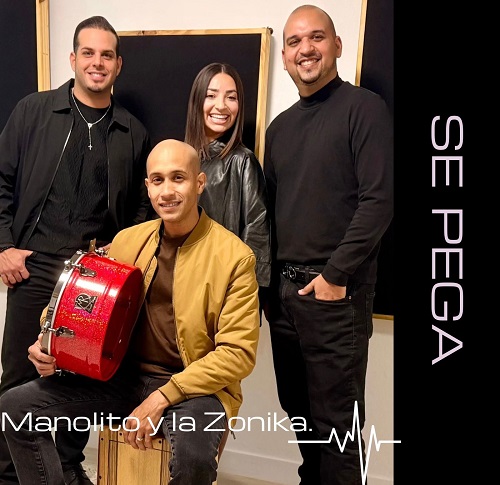
Timbalero Manolito Rodríguez arrives with a renewed energy as musical director of La Zónica

When Manolito began assembling the group, he sought out songs that resonated with him, such as “Gente Luminosa” and “A Mi Medida.” He has also been working with unreleased compositions by Anthony García and Leni Prieto. La Zónica marks a new chapter for the timbalero as the director of his own orchestra. Nevertheless, they continue to perform hits from Manolito’s previous era, now brought to life by the vocal front: Ángel Pomales, Joelis Crespo, and Gabriel Cotto. Manolito has promised to step back from singing to focus entirely on his instrument and musical direction.

The director of La Zónica hopes the dance concert at La Respuesta on March 27 marked a turning point for the band. “It’s an event we’ve been working on with great intensity,” Manolito says with enthusiasm. With energy and conviction, the timbalero adds: “I want to leave a legacy like El Gran Combo de Puerto Rico, like Sonora Ponceña, like Roberto Roena’s Apollo Sound, or Willie Rosario’s band. I want people to say in 25 years, ‘Look, that’s Manolito’s La Zónica.’ It’s a long road, but it’s possible.”

As if that weren’t enough, a new line of Meinl Percussion instruments, inspired by the young Puerto Rican timbalero, is now available.
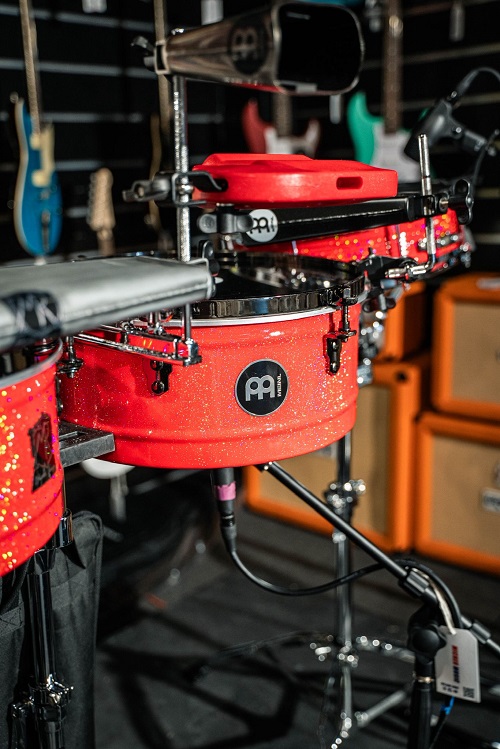
The new line of instruments - from Meinl Percussion - inspired by Manolito
The new line of instruments – from Meinl Percussion – inspired by Manolito

A Prodigy’s Journey

The career of this salsa virtuoso began early. Manolito Rodríguez is a percussionist, musical director, singer, and dancer. While he was still in middle school, piano genius Papo Lucca invited him to record on the 45th-anniversary album, Homenaje a Tres Grandes del Teclado. “At that time, I was just entering the Escuela Libre de Música; I was in ninth grade,” the timbalero recalls. Four years later, upon graduating from the Ernesto Ramos Antonini ELM in San Juan, Manolito earned the timbalero chair with Sonora Ponceña on Papo Lucca’s recommendation. “Don Quique” accepted him, and the young musician remained with the group for four years.

Puerto Rico’s salsa stages watched Manolito Rodríguez grow up, flanked by musical institutions such as Sonora Ponceña, his now-colleague Willie Rosario, and Roberto Roena’s Apollo Sound.

His skill as a percussionist grew by leaps and bounds, and his versatility was tested on multiple fronts. In fact, his vocals were featured with the orchestra Del Sur al Norte, led by the renowned director, arranger, and producer, trumpet master Julito Alvarado. “Julito was the first one who gave me the opportunity to record as a singer,” Manolito acknowledged in an interview.

Manolito Rodríguez and La Zónica performed at La Respuesta, a different venue.

Thanks to his interactions with salsa veterans since childhood, Manolito served as musical director for various youth projects along the way. This included Revolución Juvenil in high school and Manolito y su Trabuco, an orchestra that performed every Wednesday at El Doble Seis in Caguas.

Legacy and Discipline

According to Manolito himself now a music professor—he owes much of his career to the support of his mother and grandmother, who nurtured his musical interests and encouraged him to pursue formal training. Today, the instrumentalist considers himself a “music worker” who approaches his craft with respect and maturity.

His new orchestra, La Zónica, finds him with a different mindset: he wants to concentrate on the timbales and direction. He considers Master Willie Rosario—who treats him as a protégé one of his greatest influences as a timbalero-bandleader. Rodríguez shares that when he read the authorized biography of “Mr. Afinque” (Willie Rosario, El Rey del Ritmo by researcher Robert Téllez) and saw himself mentioned, he was overcome with emotion. “My eyes welled up. I didn’t expect it,” he says. “Since I started taking things seriously, Willie has always mentored me.”

Despite his vast experience, the young musician felt deeply blessed to be chosen to fill in for the leader of “the band that delights” (la banda que deleita) on several occasions, and to perform at the Willie Rosario Centenary concert at the Coliseo de Puerto Rico. “I feel very fortunate because Willie is a very serious person, someone highly respected in the world of salsa with an impeccable career. He is a true role model.”

Following the passing of Roberto Roena, Rodríguez was also entrusted with the legacy of the Apollo Sound—a testament to the confidence and solidity he projects despite his youth. “Wow, yes. It was an honor,” he recalls nostalgically. “Roberto was the first person to give me a big break in Puerto Rico,” referring to his participation in the 1998 Día Nacional de la Zalsa at the Juan Ramón Loubriel Stadium in Bayamón.

The timbalero Manolito Rodríguez

On Sunday, March 22, 2026, Manolito Rodríguez returned to the Día Nacional de la Zalsa as the timbalero and director of La Zónica, a project that debuted last November during Sonora Ponceña’s 70th-anniversary concert. The current lineup includes: Airemyelisse Díaz (bass), Reinaldo Burgos (piano), Savier Díaz (congas), Manolito Rodríguez (timbales/director), Carlos Arroyo (bongo), Víctor “Yuca” Maldonado (baritone sax), Efraín Martínez (tenor sax), Rubén Díaz (trumpet), and Jan Santana (flugelhorn).

Manolito is well aware that “people pay to be entertained,” as he mentioned in a Zoom interview, and he views himself as a craftsman of music. He feels fortunate to be a full-time musician. “That’s what keeps me grounded. I get paid to make music. I am a music worker with great aspirations who trusts his talent and knows he must stay focused.”

Bella Martinez Puerto Rico

Also Read: Sessions from La Loma brings together salsa fans from all over the world in Puerto Rico


Charlie Sierra was a prominent Puerto Rican timbalero, recognized for his long musical career and virtuosity on the instrument

Carlos Manuel Sierra Sánchez, better known in the music world as “Charlie Sierra,” was born on October 10, 1956, in Vega Baja, Puerto Rico.

Charlie Sierra fue un destacado timbalero puertorriqueño

An excellent percussion musician from Barrio Sabana, Charlie Sierra recorded with important figures in music such as Don Mario Ortiz, Andy Montañez, Raphy Leavitt, Marc Anthony, Oscar D’León, Julito Alvarado, and many others. He even recorded the album Bravo by the Fania All-Stars in 1997.

To the worldwide community of salsa fans (salsómanos), he was a member, along with Chago Martínez, Tito De Gracia, Edgardo Morales, and Edwin Clemente, of the Gran Cumbre de Timbaleros (Great Summit of Timbaleros) that emerged in Puerto Rico’s rumbero (Afro-Cuban rhythm/rumba) scene during the penultimate decade of the 20th Century.

Charlie Sierra fue un destacado timbalero puertorriqueño reconocido por su larga trayectoria musical y su virtuosismo en el instrumento

Among these five virtuosos, the majority of the recording sessions in the Puerto Rican market were divided. The others were, practically, second choices for producers.

This fortunate circumstance allowed him to develop an impressive discography as a session musician, which includes the most stellar names in salsa. Likewise, he traveled across a large part of the globe as a member of the backing bands for many of those stars.

Our biographical subject was a child when he began, without a teacher, to learn the bongos and drums which he also played on recordings and on stage and the timbales, leading him to be identified as a fundamentally intuitive musician.

At the age of thirteen, he moved with his family to Bayamón, and it was during his time as a student at the Nuestra Señora del Rosario School that he began to show signs of his talent.

At fourteen, he enrolled in the Ernesto Ramos Antonini Free School of Music (Escuela Libre de Música), where he was a disciple of the Argentine master Samuel Lipchik.

During that time, he also advanced his knowledge of the flute, guitar, and piano, instruments he would never cultivate professionally, as percussion was always his great passion.

Papo Lucca, Charlie Sierra y Cheo Feliciano

However, his time at the Free School of Music was relatively brief (1972-1974). He soon began his professional career, gaining his first experiences with the Orquesta Rica and the Orquesta Tabú.

During this period, he received private lessons from the renowned professor Raúl Berríos Sánchez.

Fully immersed in the music scene, his name began to gain relevance in the salsa world following his tenure with the original Orquesta Mulenze, led by bassist Edwin Morales, during the 1976-1978 period.

At that time, this organization focused its work on providing accompaniment to solo singers affiliated with the genre, both national and foreign, who visited the island. He had the opportunity to travel with several of them: Santos Colón, Celia Cruz, Cheo Feliciano, Chivirico Dávila, Pellín Rodríguez, Yayo El Indio, etc.

From the Orquesta Mulenze, he moved to the lineup of Raphy Leavitt & La Selecta (1978-1979), with whom he had the opportunity to record hits like “La cosquillita,” vocalized by Tony Vega. He later worked with the orchestra led by pianist Tito Valentín, which featured Marvin Santiago as the vocalist.

He then joined trumpeter Mario Ortiz’s orchestra (1982-1984); he collaborated in the founding of the backing bands for the great sonero (Cuban son singer) Carlos «Cano» Estremera (1984) and the equally admired Tony Vega (1988).

In the interim, he worked independently and constantly recorded with other groups and a large number of soloists. He maintained this intense work routine until the present.

In 2009, Charlie Sierra organized his own orchestra, Paso Nivel, with which he recorded the album Ganas de bailar (Paso Nivel, CD-10692).

The album prominently features singer Efraín «Pichi» Gaetán, and included special guests such as Cheo Feliciano, Ismael Miranda, Andy Montañez, and Gilberto Santa Rosa, as well as Primi Cruz, Darvel García, and Héctor Luis «Pichie» Pérez.

Charlie Sierra was a distinguished Puerto Rican salsa timbalero, recognized for his long musical career and his virtuosity on the instrument.

He passed away on October 23, 2024, at the age of 67. Throughout his career, he collaborated with artists of the stature of Andy Montañez, Celia Cruz, Cheo Feliciano, and Bobby Cruz.

Musical Career: He began his career with the Orquesta Mulenze in 1970 and later joined Raphy Leavitt & La Selecta’s band.

Charlie Sierra y Orestes Vilato

Notable Collaborations:

He worked with Andy Montañez for over 25 years, being a key piece in his orchestra. He also collaborated with artists like Celia Cruz, Cheo Feliciano, Gilberto Santa Rosa, Bobby Cruz (on the hit “Sonido Bestial”), Tito Valentín, among others.

Own Orchestra: In 2009, he founded his own orchestra called Paso Nivel, with which he recorded the album “Ganas de bailar” (Desire to Dance).

 Collaborators:

L’Òstia Latin Jazz

Also Read: Orestes Vilato. Cuban multi-percussionist.

Elizabeth and her Timbales

Latinoamerica / Colombia / Cali

Elizabeth

Latin percussionist born in Cali, Colombia. Since she was little she felt passion for music, singing, dancing and playing percussion. At the age of 17, she was invited by her cousin to a rehearsal and since she saw the Timbal she knew she had to undertake ‘the conquest for him’.

Elizabeth and her Timbale

The first orchestra with which he worked was called Tumbadora, made up of women. Three years later she joined the Canela Orchestra, made up of 13 women and internationally recognized. Thanks to the tutelage and trust of percussionists from the most important groups in Colombia, such as Grupo Niche, Orquesta Guayacán, la Identidad and others, she was able to move forward and thus demonstrate that women, with effort, passion and dedication can conquer any instrument of percussion.

Photo by Elizabeth
Photo by Elizabeth

Elizabeth has had the opportunity to travel the world and share the stage with renowned artists such as Gilberto Santarosa, Andy Montañez, la Sonora Ponceña and the Gran Combo de Puerto Rico. With the latter two, he had the opportunity to share Timbal solos at the Bacardi Salsa Congress in Puerto Rico.

Elizabeth
Elizabeth

She recorded on the first album of Grupo Kemade Colombia directed by one of the most important musical producers in Colombia, José Aguirre, former director of Grupo Niche, Son de Cali and Yuri Buenaventura. In the educational field, Elizabeth founded the Percussion Academy in Cali which she directed for four years. In it children and adults received instruction.

Elizabeth at the concert

Elizabeth has been based in Tampa, Florida for four years, where she develops as an independent musician. There he has shared the Timbal with renowned musicians such as Chago Martínez (timbalero and musical director of Víctor Manuelle), La India, Isidro Infante, Ramón Sánchez, Jerry Rivera and Michael Stuart. He is currently part of the Sol Caribe Orchestra.

Photo 2 of Elizabeth
Photo 2 of Elizabeth with her timpani

Elizabeth has always proudly played the Timbale LP ‘Stainless Steel’, model Tito Puente. In her own words “I’m happy with my Timbale! I feel safe, calm and I love its sound”.

Elizabeth practicing with her Timbale
Elizabeth on stage
Elizabeth on stage

Facebook: https://www.facebook.com/pg/elisabethtimbal/posts/?ref=page_internal


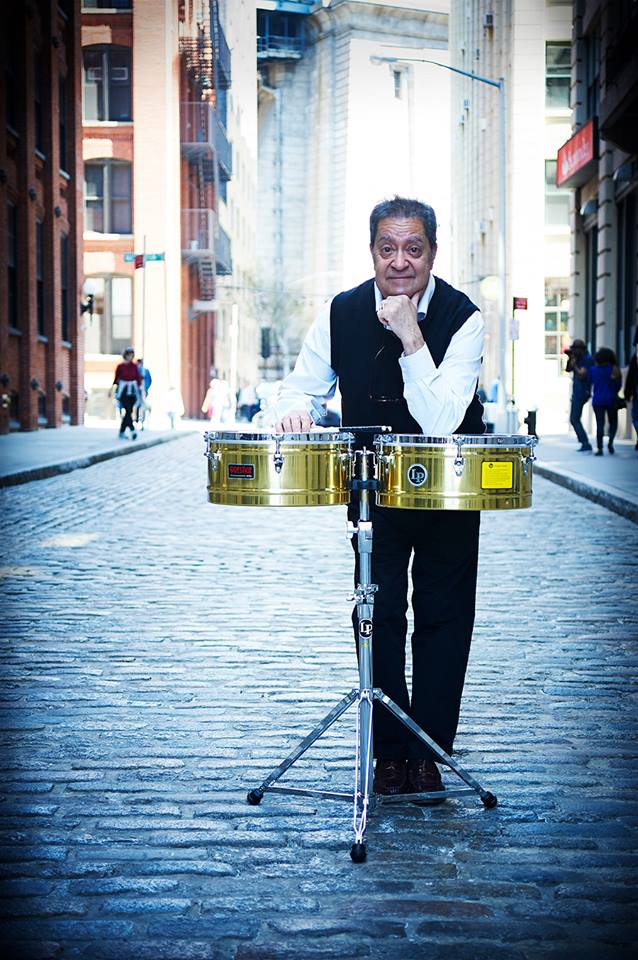
Nicky Marrero one of the best timbaleros of all time.

North America / USA / New York

Nicky Marrero, an Award Winning Master Percussionist, Innovator and Educator.

Nicky Marrero born in the Bronx, in 1950; recorded his first album “El Malo” with Willie Colon in 1967.

Still in High school, he joint Eddie Palmieri, performed and recorded with the Fania All Stars, Dizzy Gillespie, Machito, Ringo Starr amongst so many more.

His unique talent left a mark on sound in style through his creativity and boldness of breaking with tradition and creating his own to this day.

The most recorded, versatile and dynamic Puerto Rican Percussionist of his time.

Nicky Marrero
Nicky Marrero

Exciting News!!
Latin Master Percussionist Nicky Marrero is taking on a few more private students.
How about you?

Do you share the passion and dedication to reach a higher level as a professional, student and or serious hobbyist with one of the best?

So email your details to [email protected] do not  miss out on this unique opportunity to broaden your knowledge and advance your own skill and technique under the guidance of a true, World class Award winning Master of his Craft.

https://www.facebook.com/NickyMarreroOfficialPage

https://www.facebook.com/NickyMarreroOficial/

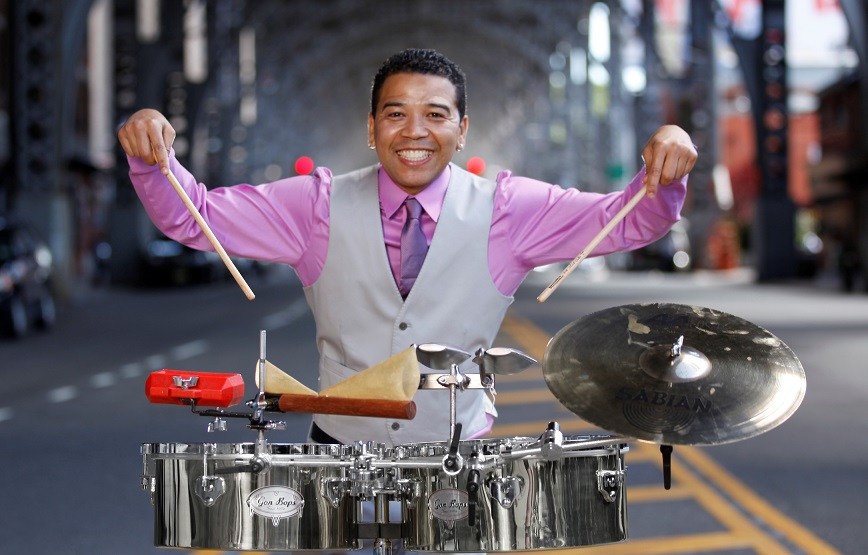
Master Timbalero Luisito Quintero

North America / United States / New Jersey

Master Timbalero Luisito Quintero hails from Caracas, Venezuela.

Where his father, a respected percussionist in his own right, tutored and encouraged his son to become one of music’s best percussionists.

Luisito comes from a long line of outstanding musicians including his uncle, Carlos Nene Quintero and cousin Robert Quintero.

He studied at the respected Orquesta Sinfonica de Venezuela (The Symphonic Orchestra of Venezuela) and his percussion technique soon garnered attention from his colleagues.

Master Timbalero Luisito Quintero
Master Timbalero Luisito Quintero – Photo

Luisito joined the popular music ensembles Grupo Guaco and Oscar D’Leon, where he enjoyed worldwide acclaim.

Luisito Quintero has worked and recorded with many of music’s legends including The Rolling Stones, Vanessa Williams, Paul Simon, Santana, Jack De Johnette, David Sanborn, George Benson, Joe Sample, Bill Cosby, the late Celia Cruz and Tito Puente, Cachao, Eddie Palmieri, Marc Anthony, Gloria Estefan, Richard Bona, Ravi Coltrane, Nathalie Cole, Diana Krall, Giovanni Hidalgo, Toshiko Akiyoshi, Spanish Harlem, Willie Colon and countless others.  One of his recent projects finds him as musical director for Louie Vega and the Elements of Life Band, as well as extensive work with Jack DeJohnette’s Latin Project.  He has also had the privilege to tour and record with the Tony & Grammy award winning Jazz artist, Dee Dee Bridgewater.

Quintero himself has earned more than thirteen Grammy certificate awards for his participation in numerous recordings.

Luisito Quintero has two solo projects under Vega Records/BBE, entitled “Percussion Maddness” and “Percussion Maddness Revisited”.

Timbalero - Luisito Quintero
Master Timbalero Luisito Quintero – Photo

Scheduled for release in the spring of 2013, his upcoming production entitled “3rd Element”, features guest artists Gato Barbieri, Oscar Hernandez, Doug Beavers, Richie Flores, Steve Khan, Reynaldo Jorge and his cousin Roberto Quintero.  Currently, Luisito is the touring & recording percussionist for the legendary jazz pianist Chick Corea and for Spanish Harlem.

  • Page 1
  • Page 2
  • Page 3
  • Interim pages omitted …
  • Page 69
  • Go to Next Page »

International Salsa Magazine (ISM) is a monthly publication about Salsa activities around the world, that has been publishing since 2007. It is a world network of volunteers coordinated by ISM Magazine. We are working to strengthen all the events by working together.