• Skip to primary navigation
  • Skip to main content

International Salsa Magazine

  • HOME
  • Previous editions
    • 2026
      • ISM / May 2026
      • ISM / April 2026
      • ISM / March 2026
      • ISM / February 2026
      • ISM / January 2026
    • 2025
      • ISM / December 2025
      • ISM / November 2025
      • ISM / October 2025
      • ISM / September 2025
      • ISM / August 2025
      • ISM / July 2025
      • ISM / June 2025
      • ISM / May2025
      • ISM / April 2025
      • ISM / March 2025
      • ISM / February 2025
      • ISM / January 2025
    • 2024
      • ISM / December 2024
      • ISM / November 2024
      • ISM / October 2024
      • ISM / September 2024
      • ISM / August 2024
      • ISM / July 2024
      • ISM / June 2024
      • ISM / May 2024
      • ISM / April 2024
      • ISM / March 2024
      • ISM / February 2024
      • ISM / January 2024
    • 2023
      • ISM / December 2023
      • ISM / November 2023
      • ISM / October 2023
      • ISM – September 2023
      • ISM – August 2023
      • ISM July 2023
      • ISM Edition June 2023
      • ISM – May 2023
      • ISM April 2023
      • ISM March 2023
      • ISM February 2023
      • ISM January 2023
    • 2022
      • ISM December 2022
      • ISM November 2022
      • ISM October 2022
      • ISM September 2022
      • ISM August 2022
      • ISM July 2022
      • ISM June 2022
      • ISM May 2022
      • ISM February 2022
      • ISM January 2022
    • 2021
      • ISM December 2021
      • ISM November 2021
      • ISM October – 2021
      • ISM September 2021
      • ISM August 2021
      • ISM July 2021
      • ISM May 2021
      • ISM April 2021
      • ISM June 2021
      • ISM March 2021
      • ISM February 2021
      • ISM January 2021
    • 2020
      • ISM December 2020
      • ISM November 2020
      • ISM October 2020
      • ISM September 2020
      • ISM August 2020
      • ISM July 2020
      • ISM June 2020
      • ISM May 2020
      • ISM April 2020
      • ISM March 2020
      • ISM February 2020
      • ISM January 2020
    • 2019
      • ISM December 2019
      • ISM November 2019
      • ISM October 2019
      • ISM Septembre 2019
      • ISM August 2019
      • ISM July 2019
      • ISM June 2019
    • 2016
      • ISM December 2016
      • ISM November 2016
  • Spanish
  • Download Salsa App
    • Android
    • Apple

Search Results for: Timba

Great conversación with conductor and timbalero Sammy Deleon

How Sammy Deleon’s career began to flourish

There have been uncountable artists who have lifted Latin music around the world, and one of them has been conductor Sammy Deleon. This American of Puerto Rican parents was born in Lorain, Ohio, on August 18, 1961, and grew up in the same county with his 14 brothers. He started his professional career with the Trio Puerto Rico when he was just 13 years old, after which he was already beginning to demonstrate his incredible musical skills. 

While it is true that neither of his parents were musicians, Sammy recalls with affection his mother while she used to sing at home and his father used to play the Puerto Rican cuatro during the Christmas season to celebrate the occasion to the sound of parrandas typical of the Island of Enchantment that were created for the occasion.   

This musician greatly enjoyed the work of Tito Puente, with whom he later developed a great friendship and an excellent working relationship. That happened on one night when the King of Timbales was playing a concert in Lakeview Beach. Deleon made his way to the stage, greeted the timbalero, wanted to talk to him and asked to play with him. After doing some soundtracks and a unique display of talent, Puente accepted to let him play and together they shone on stage by making one of the biggest dreams of Sammy a reality. 

After that, he ended up playing with Puente in his hometown, Orlando, New York and Puerto Rico. After many years, the same would happen with Tito Puente Jr. who would also take into account this musician’s talent for his shows. 

Sammy Deleon with his timbales
Sammy Deleon playing the timbales in one of his concerts

Deleon has shown diverse musical abilities throughout his career, but without a doubt, he has been successful in percussion, more than in any other. Likewise, he has dedicated much of his time and effort to exploring Latin and Afro-Cuban rhythms, resulting in a style that is unlike many other artists of his kind. 

For the last 10 years, he has managed to conduct his own group Sammy Deleon Y Su Orquesta, with which he has had many of his successes in his career so far, one of them the respect and admiration of a vast multicultural audience that is always seeking innovation in the music which they hear. 

During these years, he has managed to capture the attention of many DJs, dancers, and Latin music lovers thanks to his hard work and the enormous energy invested in each of his musical productions. Contigo Y Sin Ti and Baila Que Baila have been a gift to the ear on dance floors crowded with people of all musical tastes and different levels of skills in relation to dance and choreography. 

Everything he learned during his career has also been benefitial to other musicians, as Sammy uses his knowledge to mentor would-be percussionists who want to follow in his footsteps and those of the most acclaimed musicians in history. Unquestionably, a noble task for those who, at a certain point, had the same dreams.   

Sammy Deleon and his people
Sammy Deleon Y Su Orquesta

Interesting and emotional conversation with Sammy Deleon 

A very good morning to all of you. This is Karina Garcia, North American director for International Salsa Magazine. I am very happy today because we have a very special guest. This is none other than Sammy Deleon who is a composer, timbalero, and musician with a long-standing career. How are you, Sammy? How are you feeling today? 

I’m very well, thank you. I’m very well, thank goodness. From here in Cleveland, Ohio.  

All right, Sammy, could you tell me what pushed you to go into music? What inspired you? What did you decide to take this path and why did you chose percussion? 

Well, the one who put the music on was my father. Gumersindo Deleon was the one who started all this. I say he was a frustrated musician because his time was not very good, but slowly, he taught me and my two brothers Puerto Rican jibaro music when I was a little boy. Two years went by and one of my brothers was 15 years old, the other one was 14 and I was 13 when my brother taught us salsa when it was a boom in New York. That is how we started playing percussion on our own, since no one taught us.  

We listened to music every day and from there started singing in church choirs with trios, ensembles, jibaro music and, little by little, we kept going up, up, up. That is when my older brother Roberto, who was a timbalero before I do, saw that I were interested in the timpani than him while he was dedicated to the conga and my other brother Micky was dedicated to the bongo. Then the three of us were rehearsing almost every day and my dad said that we were too loud when playing percussion. Years passed and my brother Roberto moved to Florida, my brother Micky moved to Kansas City and I were alone here.  

I have been playing since I was 13, starting with the Trio Puerto Rico and, later, I started playing with a group called Conjunto Nabori with music by Cheo Feliciano and we were doing it with vibraphones, congas, timbales and so on. From there, we joined an orchestra called Charambo (meaning charanga and mambo) where I stayed for 10 years. Next thing after that, the orchestra was going to break up, another merengue group called Orquesta Marquis was being created when merengue was in full swing in the 90s. After being part of that orchestra for five years, we had a problem with the director, so we fired him and changed the name to Orquesta Impacto Nuevo where I stayed for 10 years. After burning the CD, we went to Florida to promote it and, after that, a few things did happen and I decided to go back to Ohio.  

We created a group under my own name, so it was called Sammy Deleon Y Su Orquesta with which we have worked for almost 25 years now. We have joined many different singers. When we were in the Charambo Orchestra, we performed with Tito Puente, Adalberto Santiago, Chivirico Dávila, Vitín Aviléz, Conde Rodríguez, Luisito Carrión, Tito Rojas, Tony Vegas and many more. We played with Ismael Mirando for over a year and I won several awards in the city as Legend of the year and it was a big thing. I use an orchestra composed of 18 musicians and played mambo created by Tito Puente and Los Mambo Kings.  

Remember that I come from a big family in which we were 14 siblings, 8 sisters and 5 brothers. The oldest was a DJ for many years and the one who brought salsa here in the 70s and 80s. I also had the joy of playing with the Gran Combo de Puerto Rico two years ago because their timbalero got sick, which is why I had the opportunity to play with them a couple of times while he was getting better. We have played in Buffalo, Cincinnati, New York, Los Angeles and many other places. 

Sammy Deleon at the Jazz Fest Cleveland
Sammy Deleon performing at the Jazz Fest Cleveland

All right, Sammy. Everybody knows very well your admiration for Tito Puente before you even became a famous musician. In fact, I remember seeing an interview with you in which you recount an anecdote of how you met and played with him. 

Thank you. You brought up a very cool issue. One time, Tito Puente came here to Cleveland, Ohio, in 1979. There was a big concert in Lorain, where I was born and raised. He played during the day, and at night, we went to watch him at a well-known jazz club. There, a friend of mine offered to give me 20 pesos if I was going to play with him, to which I replied yes. So I went to the stage, made a hand gesture, said give me a break and I do not think he heard me. However, he looked at me and told me to get close to him. When I was up on the stage, he said look at me, listen and don’t touch anything yet. That is when he did something, I did the same and we are continuing to do so. That was the last song on his set. He took me into his dressing room, asked me where I was from. I told him I was from Loraine, Ohio.  

He asked me who taught me to play and I told him I was just self-taught. He said no way!, and can you read music?, to which I answered no, but that I was learning to do it. Then, he told me that I had a great future in front of me and to keep playing the timbales because that is an instrument that requires a lot of strength to be played because it is not like a 4-drum battery. So basically, he told me to move on because I was going to have a good future in front of me. He died several years later, but I played with him a couple of times here in Cleveland, New York, Orlando, and Detroit, Michigan.  

After his death, I met his son, Tito Puente Jr. who came to Cleveland. I conducted an orchestra composed by 17 musicians, he played all of his father’s songs and we had a good time. When he comes in October, I have to provide him with the group again. Playing with Tito Puente was one of the best moments I have ever had. 

You commented in that interview and now that it was memorable for you to play with Tito Puente. Apart from that, what other memorable experience could you mention? 

There is an experience I had in 2016 when I won the jazz salsa and legend award. I was labeled a legend – imagine that, me a legend! Since when am I a legend? That took me by surprise when I got the prize. I am still shocked (crying). I didn’t expect that award because other musicians have had more years of trajectory than me.  

When the lady called me and said me what’s going on, I asked her if she was sure of what she was saying and she answered yes. After hanging up the phone, I sat down and cried because I did not expect this. I had to call my family and explain to them what was going on. The day I got the prize, my whole family was there with me. To this date, it still shocks me because it was a very special day for me. I pray to Him not to cry again because these things enter my heart.   

How does it feel to be on a par with your idols? How does it feel to play with them and to see the road you have taken? 

It has been amazing to accompany artists such as Tito Puente or Tony Vega, who are on another level and I am trying to get there. I’m already old man and coming up on 60 years old, but I still have a way to go and try to pull ahead step by step. I’m going to make it, but it was an honor to play with all those legends. We have opened up for many groups such as La Sonora Ponceña, La Mulencia, Luis Henrique and so on. I will never forget those days and times.   

Sammy Deleon and Bobby Valentin
Sammy Deleon next to Bobby Valentin

I understand that you have been responsible for training young people who wish to become percussionists, is that right? 

Yes, we are working with guys from Ohio to teach them about salsa, percussion, instruments and many other things. There are many who leave, but there are always two or three who stay on. Right now, we’re teaching kids all about salsa, which I love to do because I will not last long around here. 

In what way has teaching contributed to your career? What is the most valuable thing you have learned from your students? 

I learn that you have to be humble in life. When those boys go home and tell their parents that I’m teaching them, many of the family members want to come see what their kids are doing here. So I am working hard to see that they are learning only positive things and using their time well. What if they will be able to make good money and even become professionals about this in the future?

How do you think these young people perceive your music? 

Many young people opt for Reggaeton, which is what is fashionable, but I give thanks that I have achieved that two or three young people stay with me to learn. They want to learn to play the bongo, the conga, the timbales, and other things. I always look for more of them to get them interested in salsa. 

Sammy Deleon playing the timbales and posing before the camera
Sammy Deleon posing before the Camera while playing the timbales

What do you do outside the recording studios and off the stage? 

I love sports. When there is a basketball or football game (my favorite) that I want to see, there is no one to stop me from watching it.   

Do you practice any of them? 

Basketball, but I am too old for that. I used to play a lot, but I don’t do it anymore.   

What advice do you have for young people who want to devote themselves to music in the context of this pandemic? 

The only advice that I can give to someone who wants to learn to play music is to study, learn to read music, and choose an instrument before learning to play others. Many young people want to play many instruments at the same time, but they don’t master one. You have to master an instrument before trying to learn to play others.   


Email: [email protected]  


Facebook: Sammy Deleon 

Home

Ralph Irrizary, a well-known percussionist, is considered one of the most “Swing” timbaleros in the world.

“Music has made me a more complete person, it’s part of who I am, I think I would be a miserable person without music, it’s a tremendous art, a language I feel very comfortable with”.

A well known percussionist, he is considered one of the most Swinging timbaleros in the world, possessing a particular style that has allowed him to leave a distinctive touch in the groups where he has participated, as far as the interpretation of the timbal is concerned.

Born to Puerto Rican parents in New York’s Harlem Latino, Ralph is a self-taught musician who learned the trade by listening to his brother’s records and the music of his idols in nightclubs, where he used to sneak in when he was 16.

His first experiences with professional Latin music took place in Puerto Rico, where he had the opportunity to share the stage with renowned bands such as La Terrífica, El Gran Combo, and La Sonora Ponceña, among others, for three years.

He has a particular style that has allowed him to leave a distinctive touch in the groups where he has participated, as far as the interpretation of the timbal is concerned.
Ralph Irrizary USA / Brooklyn / New York

He then returns to New York where he begins to play with local groups. In 1978 he met the maestro Ray Barretto, with whom he began a fruitful and productive working relationship that would result in five extraordinary record productions.

This particular percussionist considers that music is an important part of his life, so much so that he has stated that “Music has made me a more complete person, it is part of who I am, I think I would be a miserable person without music, it is a tremendous art, a language with which I feel very comfortable”.

Ralph has recorded with important figures of the show, such as: David Byrne, Paul Simon, Harry Belafonte, Earl Klugh, Juan Luis Guerra, Cachao, Celia Cruz and Yomo Toro, although he is mostly recognized for his musical relationship with Ruben Blades and Seis del Solar, a group of which he was part for 13 years, recording and performing internationally.

His musical contributions have also been fundamental. Although he does not consider himself a composer, he has composed for some salsa singers.
Ralph es una estrella del futuro que nunca ha olvidado sus raíces latinas

His musical contributions have also been fundamental. Although he does not consider himself a composer, he has composed for some salsa singers.

He also wrote a rap that he sang on a record by Seis del Solar; the song is entitled “Entrégate”. In addition, in Timbalaye’s first recording, he wrote the lyrics for “Raza Cósmica”. He has also contributed to the group’s arrangements. He even participated in the recording of two Latin jazz albums made by Seis del Solar.

He is currently one of the most sought-after musicians and has continued to work on commercials and soundtracks for film and television.

His charisma allowed him to develop an unexpected career as an actor: he performed in The Mambo Kings playing the role of Pito Fernández.

He has also participated in films and documentaries, Cachao, Como Mi Ritmo No Hay Dos, with Andy García, The Roots of Rhythm with Harry Belafonte and The Life and Times of Rubén Blades.

In 1996 he participated with Tito Puente in the show Master Timbaleros, presented in New York. This historic concert was the culmination of 26 years of dedication, practice and love for music. Puente noted on that occasion:

“Ralph is a star of the future who has never forgotten his Latin roots. His group is a marvel.

Among his most recent projects is a recording at Birdland for a compilation to be released by RCA Records.
This talented percussionist considers that his priority is to make sure that the audience is satisfied with what they have heard.

This valuable percussionist began to feel the need to record something in his own style, taking care of what is his premise in his musical work: “I have always said that one should play with the same quality in front of 10 or 5,000 people.

When the sound is perfect, there is a lot of rapport and you kind of rise six inches off the floor when that happens. I think that’s called swinging with intensity.

Hence his next step was the founding of the group “Timbalaye”, a septet with a strong big band sound.

The group combines contemporary Latin jazz with various tropical rhythms: timba, songo and traditional Afro-Cuban rhythms, bomba, cha cha chá and son montuno.

Their innovative sound has allowed the group to perform weekly in New York. In October 1997, Ralph and company performed with >Batacumbele> in a historic concert at Hostos College.

Among their most recent projects is a recording at the Birdland for a compilation to be released by RCA Records.

Among its members are Oriente López from the Afro-Cuba group, Arturo Ortiz from Rubén Blades and Juan Carlos Salas from the famous Venezuelan group Guaco. Timbalaye is considered the most select band in Latin Jazz.

This talented percussionist considers that his priority is to know that the public will be satisfied with what they have heard: That is my mission, to bring joy to the people.


Home

José Madera Timbal de Machito and his Afro-Cubans, Tito Puente, Mambo Legends Orchestra and Fania Record Co.

The musician, arranger and composer who has yet to find the time to record and write music for some of the most influential bands in existence.

José Madera, Timbal of Machito and his Afro-Cubans, Tito Puente & Fania All-Stars
osé Madera, born on September 30th

One might think that working for Tito Puente’s famous band can keep a percussionist busy enough.

But musician, arranger and composer Jose Madera had found time to record and write music for some of the most influential bands in the world.

Before joining Tito Puente over 35 years ago, Madera played for four years with the famous Machito Orchestra and recorded with many R&B artists (including James Brown, Diana Ross, David Sanborn and Aztec Two – Step).

Jose musical director of Mambo Legends Orchestra

As an arranger for Fania Records, he participated in several commercial hits, and over the years has composed music for Fania All-Stars, Larry Harlow, Johnny Pacheco, Willie Colón and Celia Cruz.

As an arranger for Fania Records, he participated in several commercial hits, and over the years has composed music for Fania All-Stars, Larry Harlow, Johnny Pacheco, Willie Colón and Celia Cruz.
Jose musical director of Mambo Legends Orchestra

Despite having recorded some 75 albums in 20 years, as well as numerous radio jingles and movie soundtracks, Madera still had time for his other career: for 15 years he worked as a teacher and director at a privately funded performing arts high school in New York City.

Jose has written many arrangements for countless commercial Latino artists and has also recorded or worked with many of them.

Some of them include: Larry Harlow, Johnny Pacheco, Chico O’Farill, the Lincoln Center Afro-Cuban Jazz Orchestra, Celia Cruz, Tito Rodriguez, Fania All-Stars, Willie Colon, Joe Farrell, Machito, Graciela, Mario Bauzá, Willie Rosario, Earl Klughand, Eddie Palmieri, to name a few. Jose also worked and recorded with many pop, R&B and jazz artists.

Some of them include Diana Ross, James Brown, Dizzy Gillespie, Paquito D’Rivera, George Benson and Lionel Hampton, among others.

Jose has participated in over 250 recordings. He has worked on several television show soundtracks, including The Simpsons, and several film soundtracks, including The Mambo Kings Play Songs of Love, where he was the musical arranger and conductor for the Tito Puente film segment.

Jose also taught the art of playing Latin percussion instruments at BOYS HARBOR in New York City for 28 years.

Jose has done and continues to do musical clinics around the country at various schools.

He was the musical director of the Latin Giants of Jazz from 2001 to 2009.

Jose continues his musical direction with Mambo Legends Orchestra, a band composed of former members of the Tito Puente Orchestra, which is dedicated to the execution of new and creative Latin and Latin Jazz concepts, as well as some of the music of Machito, Tito Rodriguez and Tito Puente.

He was the musical director of the Latin Giants of Jazz from 2001 to 2009.
José has participated in more than 250 recordings


Jose has personally recreated and re-arranged much of the music that the bands performed during the heyday of the mambo at the Palladium Ballroom in New York City, which many critics consider to be the “Greatest and Most Innovative Era” in the history of Latin music.

Madera’s father, Jose “Pin” Madera, a saxophonist, was one of the original members of the Machito Afrocubans.

The young Jose was influenced by Machito’s drummer (“the best Latin Big Band drummer I’ve ever heard”). He was later influenced by José Mangual and Tito Puente himself.

Madera's father, Jose "Pin" Madera, saxophonist, was one of the original members of the Machito Afrocubans
José Madera was influenced by José Mangual Padre and Tito Puente himself

Home

Phil Robinson Blends Sensitivity and Tradition in His New Single “Allí Me Enamoré”

A Romantic Salsa Gem That Transforms the Bond of Friendship Into an Honest Declaration of Love

Romantic salsa adds a new gem to its repertoire with the release of “Allí Me Enamoré” (“There, I Fell in Love”), the latest single by Phil Robinson.

Phil Robinson une sensibilidad y tradición en su nuevo sencillo “Allí Me Enamoré”

It is a track filled with sensitivity, nostalgia, and emotion that aims to reconnect the audience with the genre’s narrative essence.

Composed by Puerto Rican songwriter Andy Roldán renowned for his ability to translate intimate feelings into deeply human lyrics this song unfolds as a love story that blossoms from the complicity of a sincere friendship into an inevitable confession of the heart.

From its opening verses “Hola amiga, ahora que al fin puedo mirarte a los ojos…” (“Hello my friend, now that I can finally look into your eyes…”) the track draws us into an intimate, almost confessional conversation, where the protagonist opens the pages of his soul to reveal a long-held feeling.

The lyrics journey through memories, silences, glances, and restrained emotions, building a narrative that many listeners will easily identify with: that exact moment when friendship is no longer enough because love has already taken root.

Phil Robinson delivers a warm and honest performance, anchoring every phrase with an emotional weight that highlights the depth of the lyrics. His voice successfully balances tenderness and passion, turning the song into an intimate, almost cinematic experience where every word feels lived in real time.

One of the greatest achievements of “Allí Me Enamoré” is its capacity to bridge the present day without abandoning salsa traditions. The contemporary reference to the everyday act of “opening your profile where I can see you” embeds the song into the emotional language of the digital age, bringing modernity to a classic story of unrequited love.

The chorus “En las páginas de tu alma, amiga, allí me enamoré” (“In the pages of your soul, my friend, there I fell in love”) stands as the poetic centerpiece of the composition: a delicate metaphor that transforms the human soul into an open book, an intimate territory where true love is born. This imagery gives the track its own unique identity, making it a memorable piece within today’s romantic repertoire.

La salsa romántica suma una nueva joya a su repertorio con el lanzamiento de “Allí Me Enamoré”, el más reciente sencillo interpretado por Phil Robinson.

Musically, the single is built upon an elegant melodic foundation, remaining faithful to the core DNA of romantic salsa, with arrangements designed to embrace the lyrics without stealing the spotlight.

The instrumentation subtly accompanies the emotional development of the story, allowing both the vocals and the message to breathe naturally.

With this release, Phil Robinson reaffirms his commitment to a style of salsa that not only invites people to dance but also to feel, remember, and confess. “Allí Me Enamoré” is a song for those who have loved in silence, for those who discovered too late that a friendship concealed a deep love, and for those who still believe in the power of a great story sung with absolute truth.

THE MUSICAL CAREER OF PHIL ROBINSON

Phil Robinson is a sonero, songwriter, performer, and director of his own orchestra. His charisma and his entrepreneurial, creative, and positive attitude allow everyone who speaks with him to enter his world, captivated by his love for music and his passion for learning, evolving, and improving every day. Robinson has loved the arts from a very young age.

Orquesta Yaré was the dream of a young man who, like Phil, wanted to make it big in the world of Latin music. It was founded and directed by Leroy Gutiérrez (conguero, timbalero, and bongosero), featuring original tracks alongside his brothers Johnny (bongosero) and Loui (trumpeter).

At the time, Leroy was a percussionist, but he also taught himself to play the piano. Gutiérrez invited Phil to join the group to turn him into a star. Yaré was a 12-piece orchestra, and all of their music was entirely original.

During a performance at Landis Park in Vineland, New Jersey, Orquesta Yaré backed the legendary Néstor Sánchez and Larry Harlow, the “Judío Maravilloso” (The Marvelous Jew) of the Fania All-Stars, who attended as guest artists. For Phil, it was a dream come true to share the stage with icons he so deeply admired. Years after that historic performance, Robinson reunited with Larry Harlow in Los Angeles and was able to share a photograph of that very first experience together.

As his musical journey evolved, he became the lead vocalist for Henry Mora and the All Star Salsa Orchestra of Los Angeles, while also collaborating with various local bands.

From there, he went on to become the lead voice for Eric Matos and Orquesta La Caliente, as well as Papo Rodríguez y La Sorpresa.

With the latter group, he recorded two original songs composed by Puerto Rican pianist Nelson Montalvo: “Fantasía” and “Mi Regalo,” which were included in the 2005 album titled Oye Salsa Sabor y Clave.

During Phil’s tenure with Papo Rodríguez, the renowned Panamanian singer Camilo Azuquita arrived in the city, and the band transformed into Azuquita y su Melao.

Phil served as his lead vocalist and primary background singer for several years, performing at prestigious venues such as the Hollywood Palladium and sharing the stage with iconic industry figures. Thanks to these valuable collaborations, Robinson fully polished his signature style.

Phil Robinson es sonero, compositor, ejecutante y director de su propia orquesta

Throughout his career, Phil has shared the stage with legends of the stature of Adalberto Santiago, Tony Vega, Herman Olivera, Yolanda Rivera, Meñique, Luigi Texidor, Wichy Camacho, Cuban singer Franco, Willie Chirino, and Celia Cruz, among many others.

After seven years of dedicated work, Phil completed and released his latest musical project titled Entre Dos Mundos (Between Two Worlds), produced by Arturo Solar.

This production features classic compositions from renowned authors such as Armando Manzanero, Ted Koehler, Harold Arlen, Virgilio and Homero Expósito, Enrique Benítez, Vicente Garrido Calderón, and Jesús Alejandro, alongside original tracks penned by Phil himself.

Here at Malanga Radio, we celebrate this premiere as proof that romantic salsa remains alive, evolving with new voices, new pens, and new emotions.

Phil Robinson
Phil Robinson

Allí Me Enamoré” is now available on all digital platforms.

Chechy Rosado

Public Relations

+57 301 685 2655

Barranquilla – Colombia

Also Read: Phil Robinson Sonero, composer and performer bandleader

The Elegant One of Salsa Life and Legacy of Tito Allen, one of the most refined voices in our Latin Music

The world of Afro-Antillean music celebrates the birth of one of the genre’s most distinguished and sophisticated voices Roberto Romero Caballero, universally known in the music scene as Tito Allen.

Born on May 1, 1946, in the iconic neighborhood of Santurce, Puerto Rico, this pillar of salsa has left an indelible mark on the history of Latin music throughout a career spanning over four decades of artistic excellence.

Tito Allen y Adalberto Santiago

The Origin of a Name with Tumbao

The stage name of this renowned sonero holds a curious history split into two parts. The first part, “Tito,” stems from a deeply rooted custom in Puerto Rican slang: the double diminutive. From Roberto, people began calling him “Robertito,” a nickname that over time affectionately evolved into “Tito.”

On the other hand, the surname “Allen” has a much more urban and accidental origin. The singer himself has confessed that during his youth, he saw the word painted as graffiti on a wall. The visual impact and the sound of the name pleased him so much that he decided to adopt it on the spot as his signature trademark for the entertainment world.

The Beginnings of a Multifaceted Star

Tito Allen’s musical journey formally began in 1962, when he was just a 16-year-old teenager. In his early days, the young Roberto showed a strong inclination toward rock and roll, a genre that was causing a frenzy among the youth of the 1960s.

During this formative period, Allen stood out as a bassist and guitarist, forming part of various musical trios that emulated the great bands of the era. These groups even enjoyed successful appearances on Puerto Rico’s Channel 4 television.

Fortunately for lovers of Caribbean rhythms, destiny guided him toward tropical music. His powerful voice, characterized by impeccable tuning and elegant phrasing, quickly made him a highly sought-after singer.

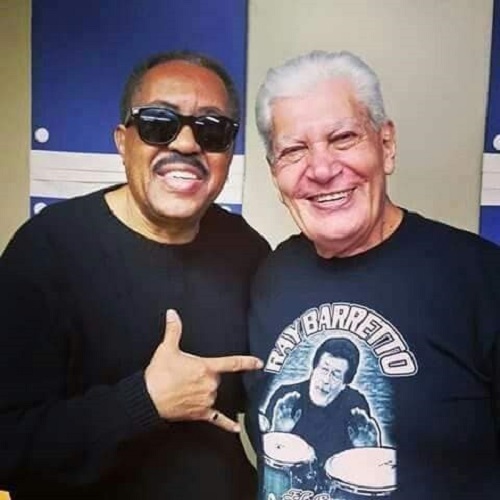
Dj. Augusto Felibertt, Orlando Watussi, Tito Allen y Jesus Torres

Among his major aesthetic influences, Allen has always expressed a deep admiration for Cheo Feliciano, whom he listened to with devotion during Feliciano’s era with the Joe Cuba Sextet. Likewise, he has repeatedly pointed to the Bobby Valentín Orchestra as one of his favorite bands of all time.

Conquering New York and the Big Leagues of Salsa

Determined to take his career international, Tito Allen traveled to New York in 1972. Although he initially tried to join the orchestra of the “King of the Timbal,” Tito Puente, Puente had no vacancies at the time. Far from discouraged, Allen joined forces with the prominent Colombian pianist Eddie Martínez to form a quintet that performed successfully in Big Apple nightclubs.

The true turning point came in May 1973. After a brief return to his native Puerto Rico, Allen went back to New York and, thanks to a recommendation from Eddie Martínez, scored an audition at the famous club El Corso. There, maestro Ray Barretto was looking for a vocalist to replace none other than Adalberto Santiago.

Tito Allen y Billy Crespo

Allen rose to the challenge masterfully, recording the acclaimed album Indestructible (1973), a work that instantly enshrined him in the pantheon of salsa royalty.

A Legendary Journey: Following his successful run with the Ray Barretto Orchestra, Tito Allen fulfilled his dream of working alongside Tito Puente. Later, he joined the ranks of the legendary Típica 73 before launching a solid solo career.

His impeccable reputation also led him to become a fundamental part of the Puerto Rico All Stars, participating in two of their most iconic album productions. Additionally, he collaborated closely with the virtuoso Louie Ramírez, leaving an indelible mark thanks to his versatility.

The Golden Backup Singer of the Latino Neighborhood

Beyond his brilliance as a soloist and bandleader, Tito Allen’s career stands out for his generosity and professionalism in the recording studio.

His trained, melodious voice graced countless productions for artists of the stature of Pupi Legarreta, Ralphy Santi, and Conjunto Clásico, among many other representatives of “the ultimate expression of the Latino neighborhood.” His work as a backup vocalist was essential in defining the sound of New York and Caribbean salsa during the ’70s and ’80s, solidifying his status as a complete artist and a gentleman of music who today, more than ever, deserves the applause of his audience.

Tito Allen y Dj. Augusto Felibert

Also Read: Our friend Tito Allen supports the Salsa Museum

  • « Go to Previous Page
  • Page 1
  • Page 2
  • Page 3
  • Page 4
  • Page 5
  • Interim pages omitted …
  • Page 69
  • Go to Next Page »

International Salsa Magazine (ISM) is a monthly publication about Salsa activities around the world, that has been publishing since 2007. It is a world network of volunteers coordinated by ISM Magazine. We are working to strengthen all the events by working together.