• Skip to primary navigation
  • Skip to main content

International Salsa Magazine

  • HOME
  • Previous editions
    • 2026
      • ISM / May 2026
      • ISM / April 2026
      • ISM / March 2026
      • ISM / February 2026
      • ISM / January 2026
    • 2025
      • ISM / December 2025
      • ISM / November 2025
      • ISM / October 2025
      • ISM / September 2025
      • ISM / August 2025
      • ISM / July 2025
      • ISM / June 2025
      • ISM / May2025
      • ISM / April 2025
      • ISM / March 2025
      • ISM / February 2025
      • ISM / January 2025
    • 2024
      • ISM / December 2024
      • ISM / November 2024
      • ISM / October 2024
      • ISM / September 2024
      • ISM / August 2024
      • ISM / July 2024
      • ISM / June 2024
      • ISM / May 2024
      • ISM / April 2024
      • ISM / March 2024
      • ISM / February 2024
      • ISM / January 2024
    • 2023
      • ISM / December 2023
      • ISM / November 2023
      • ISM / October 2023
      • ISM – September 2023
      • ISM – August 2023
      • ISM July 2023
      • ISM Edition June 2023
      • ISM – May 2023
      • ISM April 2023
      • ISM March 2023
      • ISM February 2023
      • ISM January 2023
    • 2022
      • ISM December 2022
      • ISM November 2022
      • ISM October 2022
      • ISM September 2022
      • ISM August 2022
      • ISM July 2022
      • ISM June 2022
      • ISM May 2022
      • ISM February 2022
      • ISM January 2022
    • 2021
      • ISM December 2021
      • ISM November 2021
      • ISM October – 2021
      • ISM September 2021
      • ISM August 2021
      • ISM July 2021
      • ISM May 2021
      • ISM April 2021
      • ISM June 2021
      • ISM March 2021
      • ISM February 2021
      • ISM January 2021
    • 2020
      • ISM December 2020
      • ISM November 2020
      • ISM October 2020
      • ISM September 2020
      • ISM August 2020
      • ISM July 2020
      • ISM June 2020
      • ISM May 2020
      • ISM April 2020
      • ISM March 2020
      • ISM February 2020
      • ISM January 2020
    • 2019
      • ISM December 2019
      • ISM November 2019
      • ISM October 2019
      • ISM Septembre 2019
      • ISM August 2019
      • ISM July 2019
      • ISM June 2019
    • 2016
      • ISM December 2016
      • ISM November 2016
  • Spanish
  • Download Salsa App
    • Android
    • Apple

Search Results for: Timba

Nicky Marrero is an innovator, timbalero and bongo player, living legend of our Afro-Latin and Caribbean music.

Nicolás Marrero Jr. “Nicky Marrero” was born in the Bronx, New York, on June 17, 1950, to a Puerto Rican father and mother (born in San Germán and Corozal, respectively).

He had formal studies in drums during his adolescence, but more could the sounds of Tito Puente and Willie Bobo, his major influences.
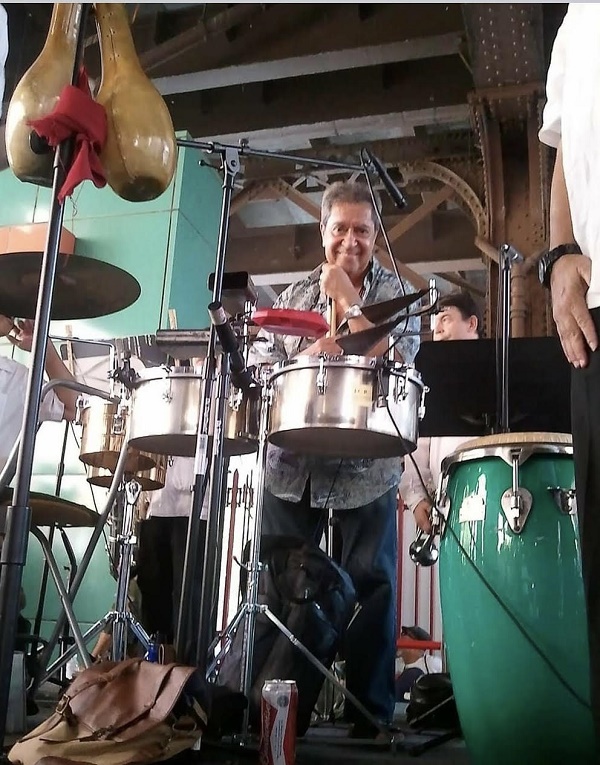
Nicky Marrero is an innovator, timbalero and bongo player, living legend of our Afro-Latin and Caribbean music.

He debuted in music with a high school ensemble called Orquesta Caribe.

However, his first recording session was at the age of 15 with the original band of another teenager born in 1950: Willie Colón.

Curiously, at the time of these sessions, three pillars of the Alegre All-Stars, Charlie Palmieri, Louie Ramirez and Kako, were present in the studio, and young Nicky was invited to participate as a timbalero.

In 1968 he was recruited by Eddie Palmieri, who by then, as a consequence of internal problems, gradually disbanded his original orchestra: La Perfecta.

Nicky Marrero joins the orchestra shortly after recording the album “Champagne,” the album “Justicia” (1969), where, still under the powerful voice of Ismael Quintana, Nicky begins to explore his own sound (listen to his solo in the song “My Spiritual Indian”),

The decade of the 70’s opens for him with three important events: the classic album “Vámonos Pa’l Monte”, his participation with Patato in the album “Portrait Of Jennie” by Dizzy Gillespie and the beginning of his career as a percussion teacher, as a member of the faculty of the East Harlem Music School, the school of Johnny Colón, legendary pianist and one-time pioneer of boogaloo.
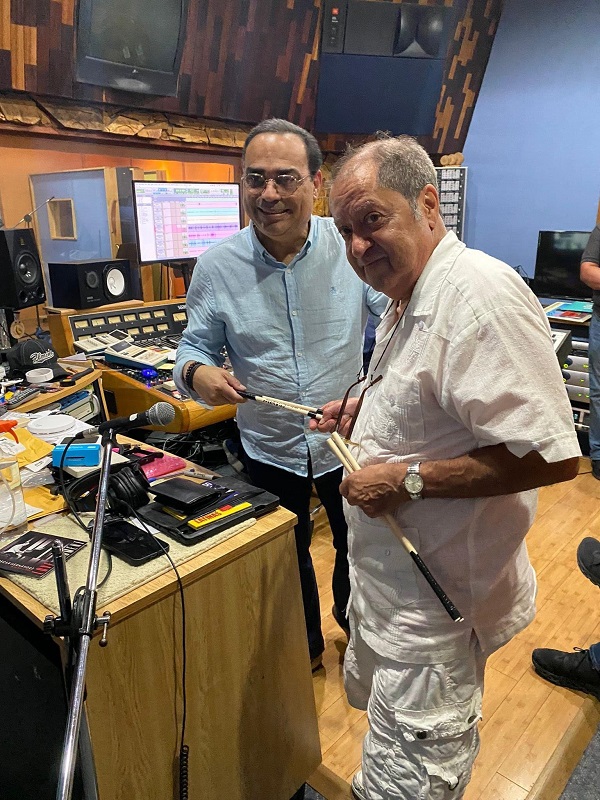
Ggilberto Santa Rosa y Nicky Marrero

At this institution Nicky gives his first lessons to a 13 year old boy named Jimmy Delgado.

In 1972 Nicky is invited to participate in the Afro-American Music Festival. 1975 he joins the troupe of the Wonderful Jew, Larry Harlow, then he is part of the Revelation Orchestra, two years with the Novel Orchestra.

In fact, thanks to his internship with Harlow’s band, Nicky was already part of Fania Records’ staff of musicians, recording as timbalero, bongos player and even drummer (and one of his first assignments for that label as a studio musician was the album “Pa’ Bravo Yo” by Justo Betancourt, produced by Harlow himself in 1972).

In 1973 he was included in the Fania All-Stars, replacing Orestes Vilató.

Marrero received an invitation from Pacheco to make his debut with them at Yankee Stadium in August of that year. Ironically, despite the events that separated Vilató from the stellar orchestra, he remained part of Fania’s studio staff. In fact, Vilató and Marrero crossed paths on countless sessions for various artists on the label between 1973 and 1980, in most cases with Marrero on timbales and Vilató serving as bongos player.

His multiple sessions for Fania (Ismael Miranda, Ismael Quintana, Héctor Lavoe’s first solo album (“La Voz”), Justo Betancourt and others), he also participates in “Sun Of Latin Music,” Eddie Palmieri’s classic par excellence and the first album to win a Grammy in the then debut category of “Best Latin Album.”
Roberto Roena y Nicky Marrero

He is also invited to participate in the first of several rock sessions, this one specifically as an all-around percussionist for the group Electric Flag: “The Band Kept Playing”.

He travels with Fania to the African continent, later Jerry Masucci gets a potentially lucrative contract for the Fania All-Stars with Columbia Records, for recording purposes the orchestra is reduced to a sextet: Pacheco, Barretto, Nicky, Roberto Roena, Bobby Valentin and debuting with the orchestra, Papo Lucca.

This is how Nicky, without being a band leader, not only became a star member of the Fania All-Stars, but also an “exclusive artist” of the Fania label. And as such, he appears on several albums that are not necessarily Latin and travels with Fania to Europe (the first of several subsequent visits) and Japan. Together with Harlow, Vilató on bongo, Eddie “Guagua” Rivera on bass, Frankie Rodríguez on congas, Harry Viggiano on guitar and Pablito Rosario on percussion, he recorded an album of downloads for the Japanese market under the curious group name of Belmonte (“Olé”). [This album is very difficult to obtain.

1977 he joins Tipica’73, an orchestra which he joins shortly after the release of the previous album: “Rumba Caliente,” ironically replacing Vilató once again. The album in question, for which Nicky alternated between his timbales set and the drums proper, is “The Two Sides Of Tipica’73,” the band’s most progressive album.

Nicky introduces drum toms to his rhythm kit (the only drum component Nicky overlooks in his regular timpani set is the hi-hats).

Nicky even recorded his first drum solo on the song “Yo Bailo De Todo” on that album. By this time, production at the Fania label and its subsidiaries was exhausting and the salsa boom in New York was in full swing.

Exhausting tours with the Fania All-Stars, he travels with Tipica’73 to Havana, Cuba, the first time in 20 years of economic blockade and open political friction that a New York Latin orchestra performs in the home of son, Nicky’s visit with La Tipica and Orestes Vilató’s own visit the following year, replacing him with the Fania All-Stars, helped to restore the timbal and bongo to the importance they should never have lost in Cuba.

Nicky Marrero Leyenda Fania

To this day, Nicky remains healthy and active in music.

Also Read: The legendary singer Guadalupe Victoria Yolí Raymond “La Lupe”
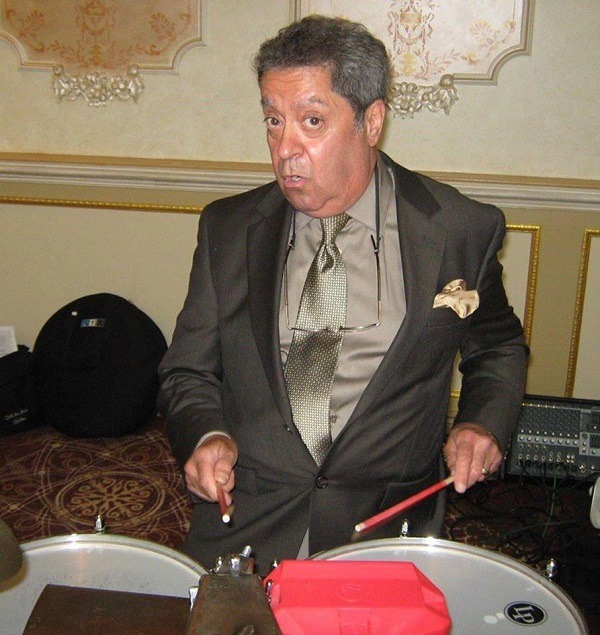
The magic timbales of Nicky Marrero

Today’s character

After a long wait, we have managed to make the talented New York musician Nicholas Marrero, better known as Nicky Marrero, to come to the Spanish Harlem Salsa Museum to share with Johnny Cruz and his friendly staff on February 26th of this year. Therefore, we would like to take this opportunity to talk a little about his brilliant career and the great contributions he has made to Latin music in the United States.

Nicky Marrero playing the timbales

Beginnings

Nicholas Marrero was born in the Bronx, New York, on June 17, 1950 and both his parents are Puerto Rican. This made the boy grow up among maracas, guitars, güiros and other instruments at home. In addition to the roots of his parents and the whole family, young Nicholas showed a talent that made him stand out very quickly and led him to study drums until his interests began to change and he started feeling drawn to the music made by Willie Bobo and ”The King of Timbales” Tito Puente. Both figures were arguably two of his greatest influences and inspirations in the world of music.

According to rumors in certain circles, his first recording was with Willie Colón’s band when he was only 15 years old, but the material was never released because of some alleged problems with the record label involved. The first albums with his participation as timbalero that were made public were ”El Malo” and ”The Hustler” by Willie Colón, both made in 1968. The usic productions were released in LP format in both cases.

Johnny Cruz and Nicky Marrero playing the timbales in 2017

Collaborations with Eddie Palmieri and others  (título 3)

That same year, the growing artist began collaborating with Eddie Palmieri’s orchestra and had an important participation in the album ”Champagne”, which was released through the Tico Records label and whose repertoire includes songs such as ”Cinturita”, ”Palo De Mango” and ”Ay Que Rico”. Marrero contribute his talent to Palmieri’s on 15 more productions over the next 50 years that followed. Many of them were extremely successful and earned him the Latin Grammy Award on several occasions.

Another important step in his career was the replacement of Orestes Vilato as timbalero in the Fania All Stars, with whom he performed all kinds of activities in many countries such as tours, concerts, press releases, among other things. He played in 25 music productions for this important salsa and Caribbean music orchestra during the time that he was a member of the group.

Johnny Cruz and Nicky Marrero again in 2023

Although the artist’s most outstanding collaborations have been with Eddie Palmieri and Fania All Stars, the timbalero has also collaborated with other great names in the world of salsa and Latin music such as Hector Lavoe, Louie Ramirez, Larry Harlow, Alfredo De La Fé, Ismael Miranda, Cheo Feliciano, Joe Quijano, Daniel Santos and many more.

Among the latest works in which Nicky participated is the album ”Full Circle” by Eddie Palmieri for the Ropeadope Records / Uprising Music label. The unmistakable sound of the musician is more than present with his characteristic bongos and timbalitos along with the unforgettable notes from the piano of maestro Palmieri, who has been more than a mentor since the artist started his prolific career.

Read also: Life and career of Ernie Acevedo

        By Johnny Cruz, ISM Correspondents, New York, New York City

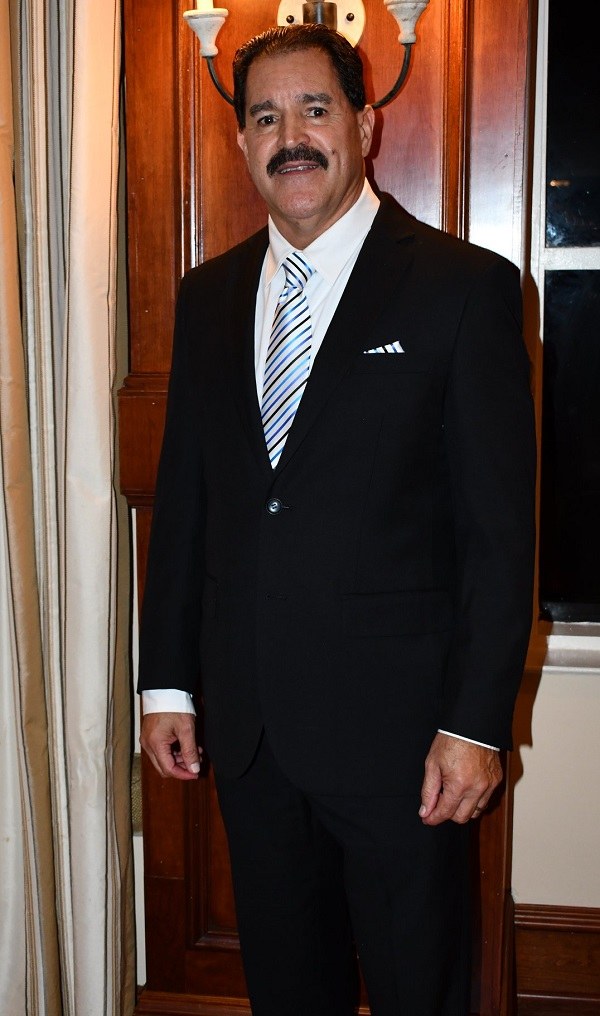
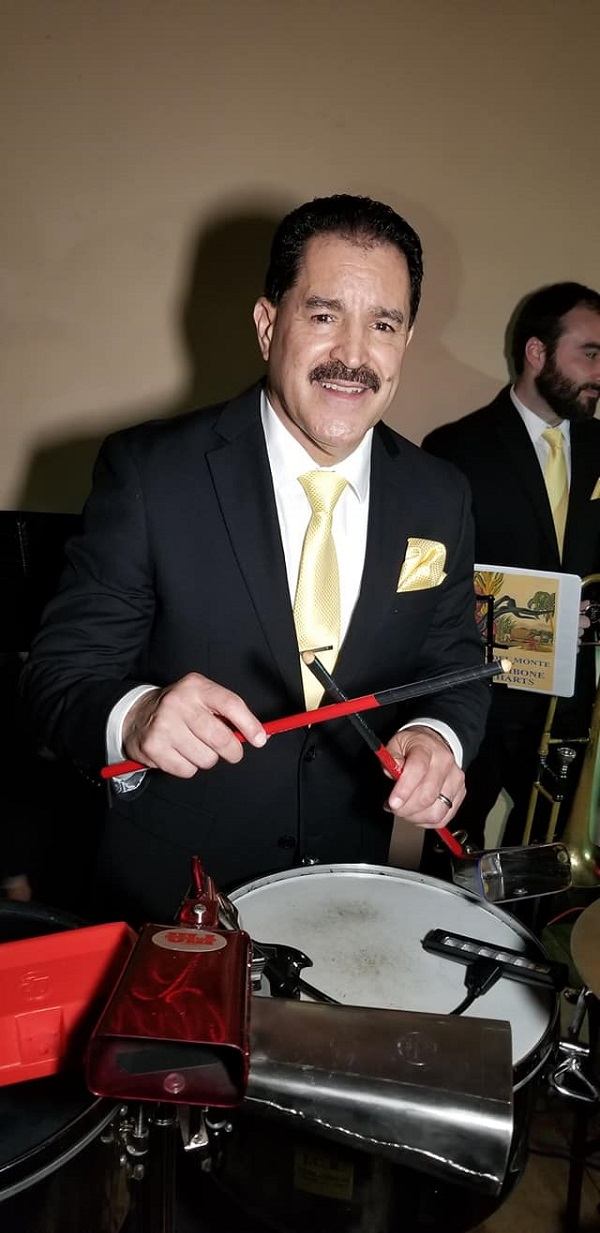
Son Del Monte’s musical director and timbalero Manuel Rivera

Who is ”Manny”

Manuel ”Manny” Rivera is the musical director and timbalero of the Son Del Monte Orchestra. We had the great opportunity to have a friendly conversation with him to know in detail his beginnings, career, groups, role as musical director, among other things.

Manuel ''Manny'' Rivera tells us his interesting story
Manuel ”Manny” Rivera tells us his interesting story

Time in the Yambú Orchestra

After apologizing for his deficits in the Spanish language, he continued by thanking us for the opportunity to tell his story and describe his time in the Yambú Orchestra, which was the first group in which he could start developing his talents in the 70’s. ”what we wanted to do at that time was make a mix between jazz with typical music because the pianist, who was of African descent, was who wrote the music with musical director and bassist Ramón Rodríguez”. It is presumed that the pianist focused a lot on these genres because of his roots, but his colleagues were fine with it.

Although he loved jazz, Manuel began to notice that it was not very danceable for the audience, which is what caused him to become interested in charanga, a genre that was already very famous in New York City in those years. That’s how he decided to immerse himself in this set of rhythms because he liked to see people go to the dance floor and enjoy themselves.

He also liked Yambú’s style a lot, but felt he had to take a more accurate path for what he was feeling at the time.

Manuel Rivera performing on stage

Similarities of Son Del Monte with other jazz big bands and members

I was a bongo player, but I started playing timbales because they are widely used in charanga. What I was looking for was to do a similar thing to what Eddie Palmieri did with La Perfecta, who used trombones and a flute mixed with timbales to achieve a charanga sound” said Rivera on this subject. He also added that ”I also wanted to avoid monotony of charanga so I also started using trombones, violin and a flute. This is what I have baptized as chajunto, a mixture of charanga with the characteristics of an ensemble (conjunto in Spanish) ”.

He also pointed out that New York does not have an orchestra like his because he did not want to do the same thing that all groups of this kind do, but something different and novel. ”Son Del Monte is charanga with something more for the people, not only violin and flutes,” said the artist. ”I have three singers with three different styles and they are Puerto Rican Luis Ayala, Colombian Armando Son Giménez and Puerto Rican-Dominican Luisito Soto Junior,” he added.

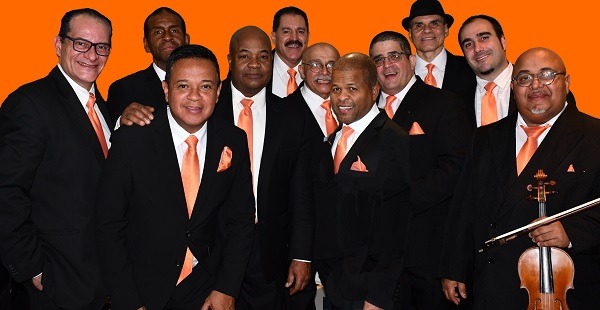
The Son Del Monte Orchestra also features from the talent of flutist Mauricio Smith Junior, violinist Erick Salazar, trombonist Juanga Lakunza, trombonist Charlie García, bassist Bert Castro, conguero Joe González, pianist Andy Colón, among others. This is the group that has stuck by his side for more than six years in spite of the storms and they always perform together.

All members of the Son Del Monte Orchestra

Opinion on the academic training of musicians

Rivera was one of the best students at Harbor’s Conservatory of Music in Manhattan, New York and he thinks that institution had done so mucho good for folk music because of all the talent that graduated there. After studying there, he began to read percussion music and learned to play batá, tumbadora, Colombian rumba, guaguancó, yambú, and so on.

The musician stresses the importance of studying, as this knowledge helps to understand the clave, the moment to start playing an instrument, the chime, the reading of music, discipline and many more. Before this, Manuel played led by the spirit and sensations, but his teachers at the conservatory taught him to have the technical tools necessary for being even more professional.

What is more important, experience or studies?

”Definitely experience. I have seen many great artists learn to read music without going to a conservatory and a great example of that is Roberto Roena, who did not need that learning to be who he was. However, that is something that not everyone can do” said Manuel. I can also mention the case of Tito Rodriguez who was not a musician guided by the lyrics, but he knew very well what he wanted. These are some of the many examples of privileged artists who only needed accumulated experience to achieve wonders with their work”.

However, this does not mean studies are not important, as they can teach things that can be useful later on and under some circumstances.

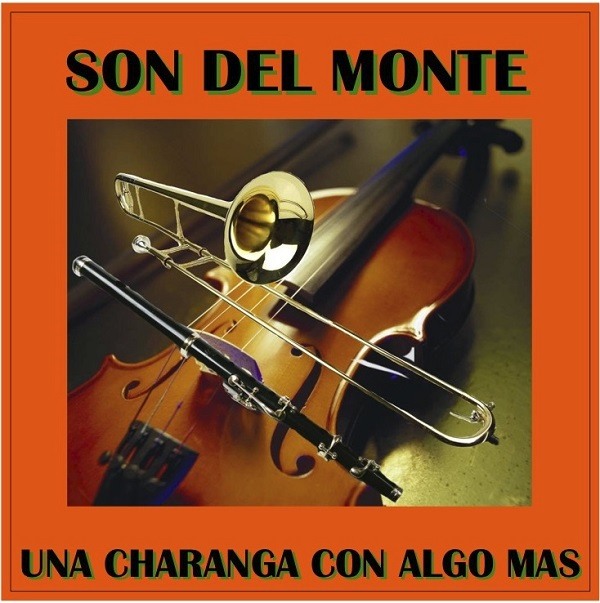
Front cover of the Son Del Monte Orchestra's album ''Una Charanga Con Algo Más''
Front cover of the Son Del Monte Orchestra’s album ”Una Charanga Con Algo Más”

Covid-19

”The pandemic did not let us do anything on stage. The guys went to the studio from time to time or we met virtually, as we do now. It was so sad because there are many venues that have failed to open their doors again. Since the pandemic started, we have not seen as much activity in New York as it used to be before” expressed the artist sadly.

Also of concern to the musical director of the Son Del Monte Orchestra is that this situation has put many musicians out of work, at least in the industry. Active musical groups have very few members in the vast majority of the cases, contrary to his and the orchestra he conducts. He hopes that it will improve with time.

Read also: Founder of the Son Latino de Orlando Orchestra Carlos Rodríguez

The salsa artisan who made the best cowbells and or timbales and bongo bells

The percussion artisan passed away in New York on June 31, 2017, he was the creator of the “JCR” Calixto “Cali” Rivera bells,

Cali was born in Puerto Rico and came to the United States in 1958. He was first an auto mechanic and years later started in instrument making. He was also a percussionist (he excelled for many years performing with Yomo Toro) and his father made guitars.

One of JCR’s peculiarities was that his instruments were not mass-produced but “handmade”, which is why Rivera was recognized as a reputable percussion artisan, standing out especially for the manufacture of bells, which were “the specialty of the house”.

The cowbell is a percussion musical instrument, it has the shape of a bell and is struck with wooden drumsticks. These can be made of copper, steel or other alloys.

Its use in music is very widespread and we can hear it in the folk music of the North Alpine as well as in the academic music and even in the pop and Latin music of our times.

One of the best manufacturers of cowbells is Calixto “Cali” Rivera who for more than 40 years has forged the metal to manufacture in his small workshop in the Bronx (JCR Percussion), about 10 to 12 pieces per week.

Since its creation, his instruments became a vital part of the recordings of both Salsa Dura and Salsa Suave, from the 70’s until the day of his death.

In the Bronx, there is a man who builds instruments for the great Latin percussionists of the world: Tito Puente, Eddie Montalvo, Giovanni Hidalgo, Bobby Sanabria.

He had no signs, no storefronts, no advertising of any kind, but people from all over the world call him for work.

After all, nothing sounds like one of his handmade cowbells.

Calixto “Cali” Rivera’s father was a guitar maker, and his son picked up the tradition of the craft.

But Cali gravitated to drums – he’s a timbale – and made congas, bongos and other percussion instruments.

These days, he specializes in high-quality cowbells of all kinds.

He is in his late 70s, with only his wife for administrative support, yet he cranks out dozens a week.

Jazz Night In America recently visited Rivera in his JCR percussion workshop to discover how, for nearly 40 years, he transformed strong metal into strong bells.

The Cencerro. What It Is, Origin, Types, Characteristics And How To Play It.

The cowbell is a small instrument which belongs to the family of hand percussion instruments, it is used in various styles of music including salsa and rarely in other genres of popular music. The cowbell is similar to the bell historically used by shepherds to keep track of the whereabouts of cows, hence its name.

Origin

Although the cowbell is currently found in musical contexts, its origin comes from the tracking of animals that roamed freely in the countryside. Likewise, to help identify the herd to which these animals belonged, the shepherds placed these campaigns around the animal’s neck.

As the animals moved in different parts, the ringing of the bell could be heard, which made it easier to know their whereabouts. Although the bells were used on various types of animals, they are typically referred to as “cowbells” due to their extensive use on livestock.

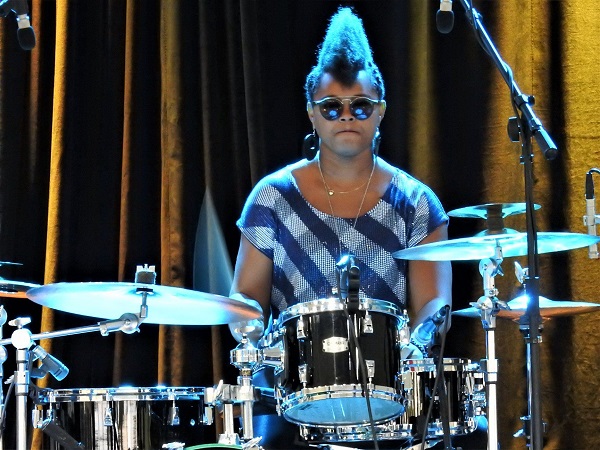
Yissy García Calzadilla, former member of the Anacaona Orchestra, plays drums, timbal and bongo

On May 29, 1987, in Havana, Cuba, Yissy García Calzadilla was born.

With a great musical heritage that comes from her father and inspiration, Bernardo Garcia, who is a drummer of the ICRT Orchestra.

Since she was a child she has been inclined towards percussion and has her father as her first teacher.

At the age of 9 she began her elementary music studies at the “Manuel Saumell” school, later attending the Amadeo Roldan Conservatory where she excelled in the school’s Charanga band and was also a member of the Youth Symphony Orchestra.

As a student of the conservatory in 2004 she traveled to the island of Guadeloupe as part of a cultural exchange between music schools in both countries.

Also in 2005 she was invited as a soloist in the paila (Cuban percussion instrument) to play with the National Symphony Orchestra of Cuba under the direction of the prestigious conductor Zenaida Romeu. In the same year she obtained the Special Prize of the “Fiesta del Tambor” contest.

In 2006 he travels to Barbados to participate with the “Quinteto Chico de la Habana” (a group of outstanding students of the conservatory) in the Barbados Jazz Festival and shares the stage with prestigious jazzmen such as Horacio Hernández (El Negro), Giovanni Hidalgo, Arturo Tappin (saxophonist) and Roy Hargrove (trumpeter), his performance is reviewed by international television stations and for the English newspaper Daily Niticns.

In November of the same year he obtains a Special Performance MECION at the International Festival of Young Jazz Players “JOJAZZ” and plays drums with the Big Band of Canada.

It is in this same year that she graduates in Percussion with excellent grades.

Once graduated, she joined the female orchestra Anacaona with which she made multiple performances on stages all over the country, and also performed on national television and radio, recorded the album “No lo puedo evitar” for the Bis Music label, and has also accompanied the Buena Vista Social Club diva Omara Portuondo.

With a small orchestra format, he recorded in 2008 the song “Parampampán”, for the musical film: “Chico y Rita” by the Spanish filmmaker Fernando Trueba. And also participates in another recording of traditional music with an American singer, both in the Areito studios of the EGREM.

In 2009 she made two important international tours with Anacaona, first in several Canadian cities, among them, performing at the “Art Jazz Festival” in Toronto, and in the Lula Lounge of the same city, the “30th Montreal International Jazz Festival”, alternating with the famous salsa singer “La India” with whom she was also invited to play, During the days of this great festival she participated very actively in various Jan sessions with Canadian musicians and musicians from other countries, in the city of London in the “Sunfest”, the Festival “La Nuit de Africa” in Montreal in its 27th edition and in the cities of Chicoutimi in the Festival “Rhythms of the World” and in the City of Quebec in its festival “Musics of the World” in addition to other venues in some of these cities, monopolizing in all many applause and congratulations for his outstanding performance.

In September 2010 the Aruba Jazz Festival is presented where they have the responsibility to close the festival and also perform with great success with saxophonist David Sanborn with whom they have the honor of downloading to close his performance the first day of the festival, for all this they are welcomed with great success by the public and the press.

He has worked in Cuba with other important jazzmen such as Alexis Bosh and Orlando Cubajazz.

He also performs for a special program on French TV channel 33 about his musical life and appears on a web page of the Spanish magazine “The H”.

He competes again in the JOJAZZ Contest and obtains the 2nd place in interpretation.

He has also recorded the Cuban Television program “A todo jazz” with trumpeter Roberto García and saxophonist Emir Santa Cruz, and with the group “Joven Jazz” led by saxophonist Michel Herrera, with whom he also performs in Havana’s Jazz clubs. He has worked with the outstanding trumpet player Yasser Manzano and his group.

In early 2010 he made the national tour of the singer Cucu Diamantes and also participates in the film that was recorded of the same.

In June 2010 he performed with Anacaona a successful tour of Curacao presenting the show “Viva Cuba”, in order to raise funds for the fight against breast cancer, organized by the Sinte Rose Foundation of that country and also close the 1st International Film Festival of Aruba.

Solo career

Yissy and Bandancha.

In 2012 she decided to embark on her solo career, debuting as composer and leader of the project YISSY & BANDANCHA, a quintet that develops jazz from the fusion with other genres.

She is regularly invited to participate in the most important festivals in Cuba, such as Jazz Plaza, JoJazz, Ellas Crean, Havana World Music Festival, among others.

Along with her project, she develops an intense work of collaboration in record productions and with various artists and recognized groups in the country, as is the case of Interactivo, Alexis Bosch and Telmary Diaz.

In 2014 he participated in Argentina in the festival El sur suena a cubano, along with Kelvis Ochoa, William Vivanco and Yusa, whom he also accompanied on his tour of Japan. He participated in the recording of the album Feeling Marta, by singer Gema Corredera, and accompanied the Buena Vista Social Club diva, Omara Portuondo, on her tour of Mexico.

Since that same year and until now, he is part of the line up of the band Maqueque, led by the renowned Canadian saxophonist Jane Bunnet, with whom he has played in the most important festivals in Canada and USA, in addition to having recorded the album Jane Bunnett and Maqueque, winner of the 2015 Juno Award for Best Jazz Album.

She began 2015 with the recording of her debut album Última noticia, and with a tour with her band YISSY & BANDANCHA through several cities in the USA.

She was included in a documentary for Brazilian TV directed by filmmaker Max Alvim, which aims to collect the most outstanding of the vanguard of Cuban jazz today.

She was part of the concert Women of the World, led by M Alfonso. She participated, together with Brazilian artist Baddi Assad, in the Les Voix Humains festival, held in Havana and organized by the Leo Brouwer Office.

Invited by the prestigious drummer Terri Lyne Carrington, she gave a clinic on Cuban rhythms at Berklee College of Music.

  • « Go to Previous Page
  • Page 1
  • Page 2
  • Page 3
  • Page 4
  • Interim pages omitted …
  • Page 69
  • Go to Next Page »

International Salsa Magazine (ISM) is a monthly publication about Salsa activities around the world, that has been publishing since 2007. It is a world network of volunteers coordinated by ISM Magazine. We are working to strengthen all the events by working together.