• Skip to primary navigation
  • Skip to main content

International Salsa Magazine

  • HOME
  • Previous editions
    • 2026
      • ISM / May 2026
      • ISM / April 2026
      • ISM / March 2026
      • ISM / February 2026
      • ISM / January 2026
    • 2025
      • ISM / December 2025
      • ISM / November 2025
      • ISM / October 2025
      • ISM / September 2025
      • ISM / August 2025
      • ISM / July 2025
      • ISM / June 2025
      • ISM / May2025
      • ISM / April 2025
      • ISM / March 2025
      • ISM / February 2025
      • ISM / January 2025
    • 2024
      • ISM / December 2024
      • ISM / November 2024
      • ISM / October 2024
      • ISM / September 2024
      • ISM / August 2024
      • ISM / July 2024
      • ISM / June 2024
      • ISM / May 2024
      • ISM / April 2024
      • ISM / March 2024
      • ISM / February 2024
      • ISM / January 2024
    • 2023
      • ISM / December 2023
      • ISM / November 2023
      • ISM / October 2023
      • ISM – September 2023
      • ISM – August 2023
      • ISM July 2023
      • ISM Edition June 2023
      • ISM – May 2023
      • ISM April 2023
      • ISM March 2023
      • ISM February 2023
      • ISM January 2023
    • 2022
      • ISM December 2022
      • ISM November 2022
      • ISM October 2022
      • ISM September 2022
      • ISM August 2022
      • ISM July 2022
      • ISM June 2022
      • ISM May 2022
      • ISM February 2022
      • ISM January 2022
    • 2021
      • ISM December 2021
      • ISM November 2021
      • ISM October – 2021
      • ISM September 2021
      • ISM August 2021
      • ISM July 2021
      • ISM May 2021
      • ISM April 2021
      • ISM June 2021
      • ISM March 2021
      • ISM February 2021
      • ISM January 2021
    • 2020
      • ISM December 2020
      • ISM November 2020
      • ISM October 2020
      • ISM September 2020
      • ISM August 2020
      • ISM July 2020
      • ISM June 2020
      • ISM May 2020
      • ISM April 2020
      • ISM March 2020
      • ISM February 2020
      • ISM January 2020
    • 2019
      • ISM December 2019
      • ISM November 2019
      • ISM October 2019
      • ISM Septembre 2019
      • ISM August 2019
      • ISM July 2019
      • ISM June 2019
    • 2016
      • ISM December 2016
      • ISM November 2016
  • Spanish
  • Download Salsa App
    • Android
    • Apple

Search Results for: Timba

The Flavor of Barrio La-33 and the Urban Salsa Revolution

The Birth of Swing in Chilly Bogotá

Bogotá, a city nestled more than 8,600 feet above sea level, cold and prone to drizzle, did not seem in the early 2000s like the most obvious birthplace for one of the 21st century’s most influential salsa orchestras.

El Sabor del Barrio La-33 y la Revolución de la Salsa Urbana

However, in 2001, in the heart of the Teusaquillo neighborhood, La-33 was born. Breaking the stereotype that salsa only flourishes on warm coasts, this band proved that Caribbean flavor (sabor) also runs through the veins of the Colombian capital.

Founded by brothers Sergio and Santiago Mejía (musical director/bassist and keyboardist, respectively), the orchestra took its name from the street where they held their first rehearsals: 33rd Street (Calle 33).

From its inception, the project had a clear identity: to rescue the raw, urban, and gritty sound of 1970s salsa brava, evoking legends like Héctor Lavoe, Willie Colón, and the Fania All-Stars, while injecting it with the attitude, energy of rock, and Bogotá’s gritty street vibe. To finance their first album, the band members saved money earned from their gigs in local bars and nightclubs.

The “La Pantera Mambo” Phenomenon

La-33’s rise to international stardom was no accident, but rather the result of a brilliant recording masterstroke. In 2004, they released their self-titled debut album, La-33. The record included a track that would become their ticket to the world: “La Pantera Mambo.”

This piece a spectacular mambo-rhythm version of Henry Mancini’s cinematic classic, “The Pink Panther Theme” fused jazz, suspense, and a powerhouse horn section.

The song instantly became a radio hit and an essential anthem on dance floors from Cali to Berlin, proving that salsa was not a genre of the past, but a living language capable of reinventing Western pop culture.
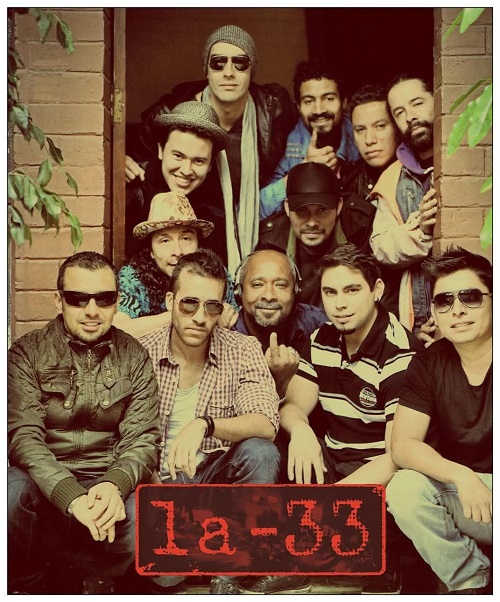
El año 2001, en el corazón del barrio Teusaquillo, nació La-33

Dynamic Evolution and Discography

Unlike the salsa romántica orchestras that dominated the commercial hit charts in the ’90s and 2000s, La-33 bet on an organic sound heavily influenced by mambo, jazz, pasodoble, and ska.Their music dispenses with excessive synthesizers, prioritizing instead the raw power of percussion, the brilliance of the horns, and lyrics that narrate daily life, urban chaos, and bohemian nightlife.

Throughout their career, they have built an impeccable musical catalog across several studio albums:

  • La-33 (2004): The debut album featuring “La Pantera Mambo” and “Qué Rico Boogaloo.”
  • Gózalo (2007): Nominated for a Latin Grammy, it solidified their success with tracks like “Bye-Bye” and “Soledad.”
  • Ten Cuidado (2009): A more mature record exploring fusions with ska and jazz.
  • Tumbando por ahí (2013): A tribute to the band’s street-smart, party-loving spirit.
  • Caliente (2016): Their fifth studio production, released to celebrate fifteen years on the scene.
  • Si tú quieres salsa (2019): A return to their roots with a powerful, mature, and refreshed sound.

Global Ambassadors of Colombian Salsa

What began as a group of friends rehearsing in a Bogotá house transformed into a global phenomenon. La-33 has toured all five continents, performing at prestigious international events such as the Sziget Festival in Budapest, the Cali Fair (Feria de Cali), and various jazz and world music festivals across Europe, Asia, Africa, and the Americas.

Their ability to get audiences who don’t even speak Spanish dancing is a testament to the universal power of their horn section and rhythmic core.
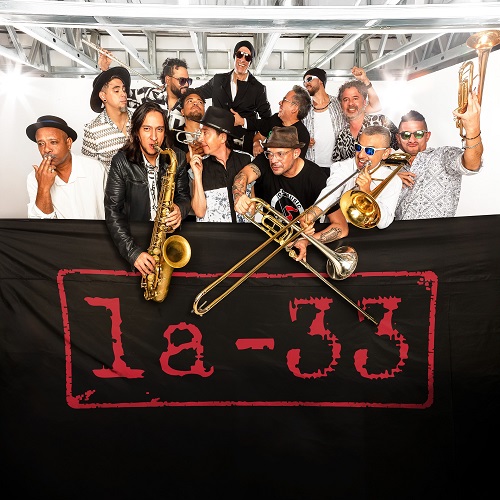
La 33 El nacimiento del swing en la fría Bogotá

Today, La-33 is not just an orchestra; it is an institution of Colombian alternative music. They proved that salsa can be played wearing leather jackets and a punk attitude while maintaining absolute respect for Afro-Latin roots making it clear that to have swing, all you really need is passion.

Band Members

  • Sergio Mejía (Bandleader and electric bass)
  • Santiago Mejía (Keyboards)
  • Guillermo Celis (Vocals)
  • David Cantillo “Malpelo” (Vocals)
  • Edison Velásquez (Vocals and flute)
  • Alejandro Pérez (Congas)
  • Juan David Fernández “Palo” (Timbales)
  • Diego Sánchez (Bongos)
  • Vladimir Romero (Trombone)
  • José Miguel Vega (Trombone)
  • Adalber Gaviria (Saxophone)
  • Roland Nieto (Trumpet)
  • Javier Galavis (Sound engineer)
  • Ray Fuquén (Field producer)

 Also Read: Colombia’s legendary Grupo Niche and its founder Jairo Varela
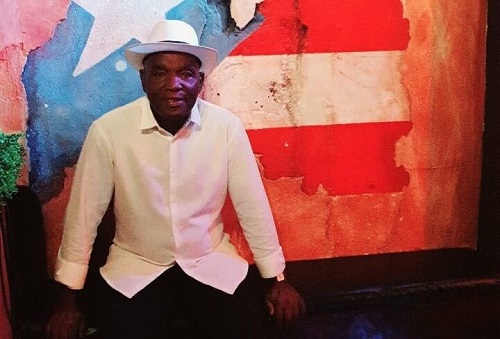
Héctor “Tempo” Alomar: The Scorching Voice and the Rhythm Blessed by “El Cantante de los Cantantes”

The Invaluable Legacy of an Afro-Antillean Percussion and Vocal Giant

Héctor “Tempo” Alomar was born on December 28, 1950, in Parada 19 of Santurce, Puerto Rico. A singer, percussionist, and true pedigree sonero, he became an essential figure in salsa music thanks to his outstanding contributions to world-class bands.

His resume included Orquesta La Conspiración, La Diferente, Conjunto Libre, La Charanga Afrocubana, La Charanga América, Orquesta Broadway, Charanga la Tapa, Casanova y su Montuno, Batacumbele, El Combo de Siempre, Zaperoco, Nacho Sanabria’s Orchestra, Grupo ABC, and, in a career-defining run, Roberto Roena’s Apollo Sound. He also led his own musical ensemble under the name Sexteto La 51, his last recording with the legendary and living legend of Fania All Stars Eddie Montalvo.

Héctor Tempo Alomar la Voz Candente y el Ritmo

The remembered former member of Apollo Sound passed away at the age of 70 in his native Puerto Rico on May 9, 2021, leaving a profound void in the world of music collecting and salsa culture.

A Rhythm That Ran Through His Veins

The son of Doña Isabel Román and Don Luis Alomar, young Héctor showed an innate connection with the clave from a very early age. His mother used to recall that the boy would strike the rhythm with any kitchen utensil he could get his hands on, even breaking several glass cups while trying to draw sound from them with silverware.

He made his first professional recording as a minor, at just 15 years old. It happened when producer Joe Blanco invited him to record percussion with Chacón y sus Batirrítmicos, capturing his talent on tracks like “Ahorita va a llover” and “Mi guajira.”

In 1968, he moved to New York City, and by 1970, he reunited with his great childhood friend, maestro Ángel “Cachete” Maldonado. Maldonado introduced him to the city’s music circles, providing the decisive push for him to develop as a lead singer.

Héctor Tempo Alomar nació el 28 de

Blessed by “El Cantante de los Cantantes”

“Tempo” Alomar joined Orquesta La Conspiración as a timbalero, staying with the band for about three years. Later, thanks to a recommendation from trumpeter and arranger José Febres, bandleader Rafy Val recruited him for La Diferente. This gave him his first opportunity to formally record salsa on the album Fuerza Bruta, produced by Larry Harlow.

During his time with La Conspiración, a legendary anecdote took place at New York’s El Hipocampo club, right after a Fania All-Stars concert. Héctor Lavoe, who was scheduled to sing at the club that night, was running late, and the band couldn’t start. “Cachete” Maldonado assured José Mangual Jr. that “Tempo” knew the repertoire and recommended him to step up to the stage.

Out of deep respect for Lavoe, Alomar hesitated but ultimately took the stage to perform “Juana Peña,” winning the applause of the demanding crowd. Halfway through the second song, “No me llores más,” he spotted Héctor Lavoe walking into the venue, and out of sheer awe, he stopped singing. It was Lavoe himself who, from the audience, gestured for him to keep going.

When the performance ended, “El Cantante de los Cantantes” went up to the stage, congratulated him warmly, and encouraged him to keep pursuing his singing career.

Setting the Big Apple Ablaze

Around 1973, once again recommended by “Cachete” Maldonado, he auditioned for maestro Manny Oquendo, who was looking for a lead vocalist for Conjunto Libre. He was accepted immediately. After six months of intense daily rehearsals, the group chained together memorable hits driven by “Tempo’s” voice, such as “No critiques,” “Tú no me quieres,” “Bamboleate,” and “El Changó de María.”

Tempo Alomar El legado incalculable de un gigante de la percusión y el canto afroantillano

These were five golden years with El Libre, a period during which he also recorded an album with Néstor Torres’ La Charanga Afrocubana.

As the 1980s arrived, he joined Charanga América. His versatility and high demand in the New York scene led him to collaborate and record with stellar figures, including Alfredo de la Fe, Johnny Rodríguez, Víctor Paz, Jorge Dalto, and the Latin Percussion label. He also worked with Orquesta Broadway and Casanova y su Montuno, played congas for Pete “Conde” Rodríguez, and played timbales for maestro Eddie Palmieri.

In 1985, he decided to return to Puerto Rico. On the Isla del Encanto, he contributed his talent to flagship ensembles like Batacumbele, Zaperoco, and Héctor Santos’ El Combo de Siempre, sharing the stage in the latter with Ismael Rivera Jr. (Maelito). Additionally, alongside Felo Barrios, he completed a prestigious one-month US tour with the legendary double bassist Israel López “Cachao.”

The Golden Era with Roberto Roena and Apollo Sound

In 1993, while rehearsing with Grupo ABC (where he worked alongside Nacho Sanabria and Roberto Angleró), the legendary Aníbal Vázquez Roberto Roena’s uncle invited him to participate as a vocalist in a special local television recording with Apollo Sound.

Roberto Roena y Tempo Alomar

Roena was captivated by “Tempo’s” style and cadence, even though the vocalist hadn’t fully memorized the lyrics to some of the songs for that TV show. With his characteristic wit, Roena himself wrote the lyrics on large cue cards beneath the TV cameras and instructed the cameraman to avoid close-ups of Alomar, preventing the audience from noticing he was reading.

That chemistry sparked 16 uninterrupted years of back-to-back hits with Apollo Sound and a close, lifelong friendship between Roena and Alomar.

Together, they immortalized musical gems such as “Dale como es,” “El pueblo pide que toque,” “Atrévete conmigo,” “Sr. Bongó,” “Baila y goza,” “Mi mambo pide campana,” and the international smash hit “Cómo te hago entender”—a track that became a salsa anthem and took them to massive venues across Colombia, Panama, Peru, Venezuela, and all of Europe.

During his fruitful tenure with Apollo Sound, “Tempo” also took an active role in selecting session musicians and backing various artists. One of his most remembered cross-genre collaborations was with urban music icon Tego Calderón on his landmark album El Abayarde, where Alomar joined his voice to sing the classic “Planté bandera.”

Héctor “Tempo” Alomar lives on in the memory of music lovers worldwide as a bastion of syncopation, a street-corner sonero, and a true gentleman of rhythm.

Collaboration:

Historia Salsera

Augusto Felibertt

Also Read: It is indisputable that the most popular orchestra in Puerto Rico and South America during the 1970s was Roberto Roena’s Apollo Sound

Tony Vega Celebrates Half a Century of Romantic Salsa in Puerto Rico

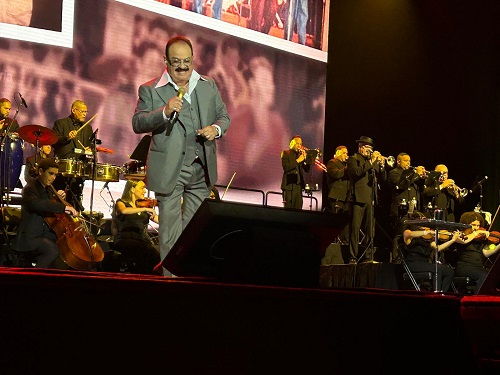
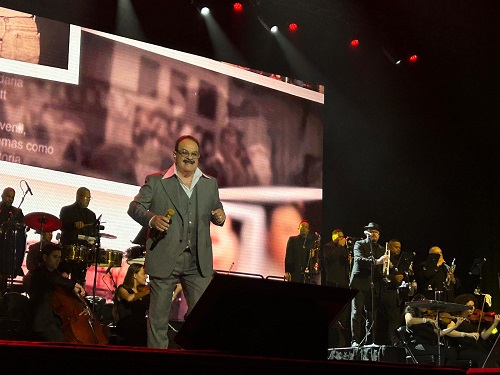
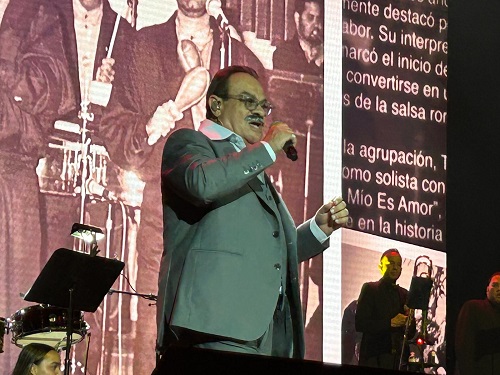
On Saturday, April 25, 2026, the Coca-Cola Music Hall was swept up in the sounds of salsa as Tony Vega took the stage for his concert “49+1: Half a Century of Romantic Salsa.” Thanks to the production of Alexandra Fuentes and a promotional partnership with the radio station Salsoul, the legendary vocalist returned to Puerto Rico for a night filled with music, nostalgia, and profound emotion.

Tony Vega con su director musical, Jota Ruiz Imagenes Jorge Mas

Throughout the celebration, Vega was backed by the musical direction of the virtuous instrumentalist, composer, singer, and independent producer known in the salsa world as Jota Ruiz, of the prestigious Ruiz de Ponce musical dynasty. Jota led an elite ensemble featuring:

  • Savier Díaz (congas), Edwin Clemente (timbales), Jorge Mercado (bongo), Juan Rivera (piano), and Alexis Pérez (bass).
  • José “Pucho” Ruiz (the Ruiz family patriarch) and Víctor Ambert on trumpets.
  • César Ayala and Julio Hernández on trombones.
  • Fernando Muscolo on keyboards.
  • Hugo Maysonet and Alejandro Villegas on backing vocals.
  • A string section composed of Jonelys Ruiz, Sairilis Meléndez, Sinaí González, Sofía Acosta, Orlando Rivera, and César Jacomino, with Luis Rodríguez providing general assistance.
  • Tony Vega recordando su etapa con Eddie Palmieri Tony Vega con su director musical, Jota Ruiz Imagenes Jorge Mas
    Tony Vega recordando su etapa con Eddie Palmieri Tony Vega con su director musical, Jota Ruiz Imagenes Jorge Mas

Tony Vega’s performance made it clear that his storied career has been a cornerstone of salsa history, particularly within the salsa romántica movement. The audience made the Coca-Cola Music Hall in San Juan vibrate, singing at the top of their lungs to the many hits Vega has placed at the top of the charts over the decades.

Tony Vega y la orquesta acompañante Tony Vega con su director musical, Jota Ruiz Imagenes Jorge Mas

The artist of Puerto Rican descent structured his set to detail the various stages of his brilliant career. He opened the night with “Cosquillita,” representing his professional debut alongside Raphy Leavitt. He then playfully performed “Feo pero sabroso,” a nod to his time in the recording studio with Louie Ramírez, followed by “El cuarto” and “Vámonos pa’l monte” as a tribute to his artistic growth under the mentorship of Eddie Palmieri.

Tony Vega y su sección de percusión Tony Vega con su director musical, Jota Ruiz Imagenes Jorge Mas

A deeply significant and nostalgic moment arrived with a medley chronicling his years with Willie Rosario, prompting the crowd to sing even louder to “Busca el ritmo” and “Mi amigo el payaso.”

From there, the vocalist reminisced about the transition to his ongoing solo career. He shared the story of his historic contract with Ralphie Mercado of RMM, which, as Tony recalls, was famously signed on a napkin “without any formalities.” From this era, he highlighted staples such as “Yo me quedo,” “Tu prenda tendida,” “Lo mío es amor,” “Dile,” “Tengo curiosidad,” “Uno mismo,” and “Mi iglesia,” which he performed as a duet with the stellar guest Alex D’ Castro. He continued the marathon of hits with “¿Dónde estás?,” “Deja,” “Esposa,” “Si me miras a los ojos,” “Si yo vuelvo a encontrarla,” “Fui la carnada,” “Ella es,” “Olvídalo ya,” “Carita de sol,” “Haremos el amor,” “Esa mujer,” and “Aparentemente.”

Tony Vega, concierto CCMH Tony Vega con su director musical, Jota Ruiz Imagenes Jorge Mas

The closing theme, “Déjame soñar,” stirred the singer’s patriotic pride and featured a powerful timbal solo by Edwin Clemente, followed by guest appearances from Gerardo Rivas and his son, Gerardo Gabriel Rivas.

Tony Vega, Trombonista César Ayala al fondo Tony Vega con su director musical, Jota Ruiz Imagenes Jorge Mas

Throughout the evening, Tony Vega expressed his gratitude to those instrumental in his success. He showed profound respect for Humberto Ramírez, who is widely credited with laying the foundation for Tony Vega’s signature sound and establishing the musical concept for his orchestra at its inception. Another noteworthy moment occurred during an improvisation in “Déjame soñar,” where he affectionately declared José Alberto “El Canario” an honorary “Boricua.”

As he had anticipated, Tony Vega experienced the concert as a true celebration of all he has achieved in his 50-year career. He emphasized how much it meant to be surrounded by his people, “sharing music with those who have been with me from the start, right where it all began.”

Bella Martinez Puerto Rico

Photography: Jorge Más

Read Also: Bella Martinez, the irreverent Salsa writer

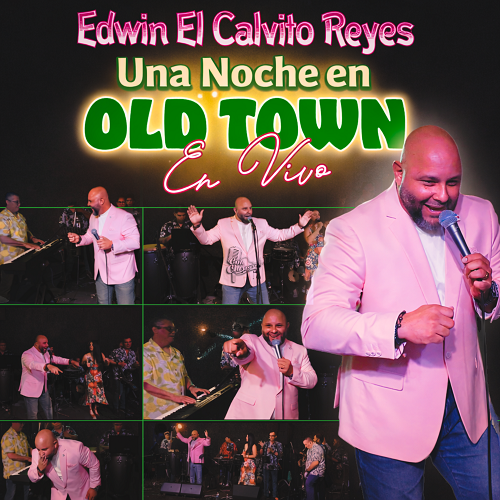
Let’s talk about Una noche en Old Town “en vivo,” while staying true to the musical journey of “El Calvito” Reyes

“Yes, Una noche en Old Town was an event held for about 100 people at a restaurant in the area known as Old Town in Kissimmee, Florida. Old Town is a park that feels like a year-round festival, 365 days a year,” the artist explains. This marks the third musical production from the Puerto Rican singer-songwriter known in the salsa world as “El Calvito,” one of the most fervent champions of the Salsa Nueva movement.

With this release, Edwin puts his salsa and his talent at the service of his followers. His repertoire spans classic salsa, romantic salsa, and what he calls “conscious salsa.”

Edwin “El Calvito” Reyes acknowledges that while everything has already been invented, the key is to stay focused and execute the ideas swirling in his mind. The press release for the new live album, titled Una noche en Old Town, notes: “Remember in the ’90s when many artists (…) recorded live productions? That was a trend that (…) went down in salsa history.”

The Production

The final product is a “live” recording of his orchestra. The production turned what was originally planned as a birthday party at Old Town Park in Kissimmee into a full album. Sound engineer Joseph Díaz captured the session, which was later mixed and mastered by pianist and engineer Víctor Romero. The content was further polished at Harmony Recording Studios in Orlando, Florida.

The album features the collective performance of the musicians who have accompanied the singer for years, including their appearance at the 2025 Día Nacional de la Zalsa in Orlando. The lineup includes:

  • John López: Congas
  • Daniel Ortiz: Timbales
  • Manny Urbina: Bongo
  • Víctor Romero: Piano and Musical Direction
  • Yasmani Roque & Marcos Rivera: Trumpets
  • Bert Laboy: Trombone
  • José Castro Marchán: Baritone Sax
  • Una Noche en Old Town Edwin El Calvito Reyes
    Una Noche en Old Town Edwin El Calvito Reyes
  • The night at Old Town also featured guest appearances by heavyweights such as Kriptony Texeira, Harold Montañez, and José Novoa. Additionally, Richie Nieves, the well-known voice of KQ FM Radio in Orlando, handled the album’s intro.

The Origin

The stage was set specifically at El Cilantrillo restaurant within Old Town. The event celebrated the birthday of Javier Colón, owner of La Feria Salsera and Edwin’s partner for the veteran-focused dance events that Edwin has successfully led in recent years. Javier hired “El Calvito’s” orchestra, the performance was recorded, and from that session, this authentic album was born.

By chance, the date of the party coincided with one of the most important days on the Puerto Rican salsa calendar: the traditional Holy Saturday Dance (Sábado de Gloria). “Many Latinos don’t understand and ask, ‘Are you guys seriously holding a dance on Holy Saturday?’ So, unintentionally, we tapped into that tradition—and it is a tradition in every sense of the word. By trying to keep it alive, we (Puerto Ricans) have shared it with the rest of the Hispanic public.”

According to Edwin, the performance was originally recorded for promotional purposes. However, the artist felt it was such a great capture of the evening’s energy that he consulted his musical director, Víctor Romero, to see what he thought of the idea.

The Release

Coincidence dictated that the album be published and available on digital platforms exactly one year after the recording. The producer admits it was a high-risk project because it was recorded live during an organic event outside of a controlled studio environment. The classic covers Edwin included as tributes to “those who have passed” (arranged as medleys) were his biggest concern, yet they ultimately earned widespread approval.

“El Calvito” Reyes says he doesn’t fear the critics. Driven by passion, he decided to release this 10-track production—eight of which he wrote himself, plus two salsa hit medleys—aiming to win over dancers, listeners, and collectors alike.

Tracklist:

  1. ‘Medley salsa nueva’
  2. ‘Así llamaban al Conde’
  3. ‘Homenaje a los que se nos fueron I y II’
  4. ‘Dime mi Buen Señor’
  5. ‘Tú del sur, yo del norte’
  6. ‘El karma’
  7. ‘Tócame la moña’
  8. ‘Baila cha cha chá’
  9. ‘Solo tiempo pa’ rumba’
  10. ‘Orgulloso de ser latino’

Stream & Connect: The album is available digitally on YouTube Music, Spotify, and Apple Music. Each track has a corresponding video at: https://www.youtube.com/@ElCalvitoReyesOficial/. The orchestra is available for bookings. You can reach the office via phone or WhatsApp at +1-912-980-8476 or by email at [email protected].

For more on the music of Edwin “El Calvito” Reyes, visit: https://solo.to/elcalvitoreyes

Bella Martinez Puerto Rico

Read Also: Edwin “El Calvito” Reyes el Sonero de la Sangre Nueva “Amor de Actualidad”

David Frankel pursued music and created Avenida B Band to reconnect with the memory of his father

After coupling on our schedules, we were able to speak with bandleader and pianist David Frankel, whose story of how he became interested in music and eventually dedicated himself to it is truly fascinating. It also shows that not only Latinos and their descendants can fall in love with these rhythms, but also people outside our culture. This is because David has Russian and Polish heritage, which did not prevent him from falling in love with Latin music so intensely.

David and Ricky playing
David Frankel and Ricky Rosa playing live some years ago

What inspired David to pursue music

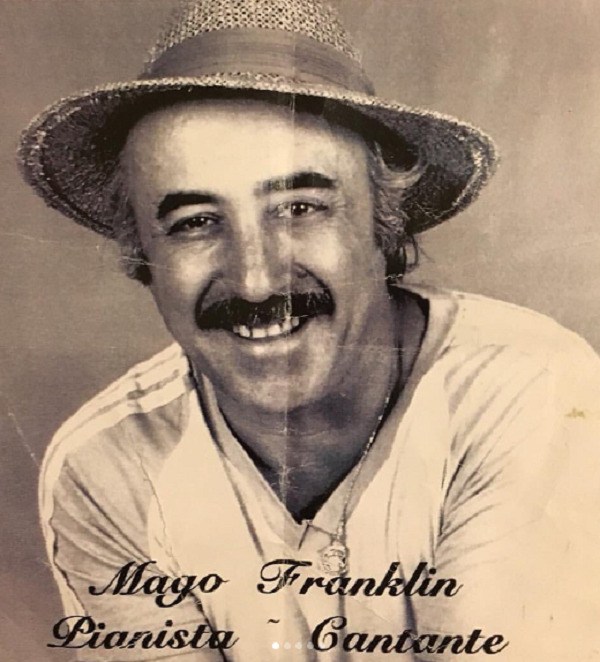
David was born in Lower Manhattan, New York, where there were many Latin families at the time. The neighborhood housed many Puerto Ricans and Dominicans. To this we must add that his father, Daniel “El Mago del Órgano” Franklin, was a musician and moved to that very place where Papote Jiménez, Ismael Miranda, Markolino, Freddy Lugo, Henry Fiol, Luis Ayala, and many others lived. Besides being a neighborhood full of artists, it was much cheaper living there, so he thought it was the ideal place for him.

It is worth noting that Daniel knew how to write music and read scores, but he had never played Latin music before in his life. He began to know it when several musicians he worked with asked for his help to read their scores, which led him to fall in love with Afro-Cuban music and develop an interest in salsa and merengue.

When David was born in 1979, Daniel had already been making music for about 15 years and had earned the nickname “The Organ Wizard” thanks to some band competitions held at a club in the Bronx. From a very young age, the boy watched bands rehearsing on the first floor of his house, so this salsa scene was natural for him. However, David had nothing to do with music until the death of his father in 2003.

David never had any interest in entering the art world, but the void left by Daniel’s death in his life drove him to study music, looking to connect with his father in some way. From there, he began taking piano and percussion classes, but he did not stop there. He also started to go out social dancing in the New York nightclubs and to know a bit more the nightlife of the city. On one occasion, a woman left him alone on the dance floor, and he was so ashamed in that moment that he decided to take classes and learn to dance.

David and the rest of Avenida B
The Avenida B Crew:
Juan Bowers – piano
Alvin Céspedes – bass
Ricky Rosa – congas/coro
Brian Pozo – bongos/coro/stage direction
Jhohan Hernandez – timbales
Demetrios Kehagias – trombone
Dan Lehner – trombone
David Frankel – lead vocals

That was when he realized that all the local bands played almost the same genres and songs, but there was no need for that because there was a world of possibilities in the Latin music he had discovered during his classes. There is a world beyond La Fania, and he learned that thanks to dance schools. All this thinking led him to create his own band with different music, to the old-school style he had always loved. 

His father had always told him salsa is for dancing, and if you are not playing dance music, you are doing it wrong.

Which teachers taught David?

After thanking us for the question, David then proceeded to explain that there was a school in New York called the Harbor Conservatory for the Performing Arts, located at 104th Street and Fifth Avenue in Manhattan. The heads of the education programmes there were Ramón Rodríguez and Louis Bauzó, who were excellent musicians and great people whom he met thanks to his father, who was a piano teacher at that institution. David used to accompany Daniel to the school and met both teachers through him.

Following his father’s death, David returned to that same conservatory to study singing with Ramón, while also studying percussion with Georgie Delgado and piano with Louis. In short, this institution was of vital importance for his career, and the many things he learned there were momentous both personally and professionally. 

As for the dance, he enrolled at the Baila Society school in New York through some friends, but later studied at others such as Santo Rico Dance and Dance On 2.

Jimmy and David
Jimmy Bosch and David Frankel

Avenida B Band

David began his career as a musician by playing boogaloo with a group called Spanglish Fly and a few other small bands. After everything he had studied and learned, already for the year 2011, the idea of creating his own group started percolating in his mind, so he posted an ad online looking for musicians and called some former classmates who might be interested in the proposal. That was how he managed to gather a decent number of people with whom he could finally put the Avenida B project together.

He chose salsa dura as his main genre because it is the kind of music that makes him want to dance, and given his background, this was very important to him.

He is also about to release an album in tribute to his father, which he has named “El Mago,” and it will feature some of his own songs; it is scheduled to be released in July 2026. 

David's father
Daniel ”El Mago del Órgano” Franklin, David’s father

Read also: Puerto Rican bandleader and musician Diana Sosa talks about her many projects in Nashville, Tennessee

  • « Go to Previous Page
  • Page 1
  • Page 2
  • Page 3
  • Page 4
  • Page 5
  • Page 6
  • Interim pages omitted …
  • Page 69
  • Go to Next Page »

International Salsa Magazine (ISM) is a monthly publication about Salsa activities around the world, that has been publishing since 2007. It is a world network of volunteers coordinated by ISM Magazine. We are working to strengthen all the events by working together.