• Skip to primary navigation
  • Skip to main content

International Salsa Magazine

  • HOME
  • Previous editions
    • 2026
      • ISM / May 2026
      • ISM / April 2026
      • ISM / March 2026
      • ISM / February 2026
      • ISM / January 2026
    • 2025
      • ISM / December 2025
      • ISM / November 2025
      • ISM / October 2025
      • ISM / September 2025
      • ISM / August 2025
      • ISM / July 2025
      • ISM / June 2025
      • ISM / May2025
      • ISM / April 2025
      • ISM / March 2025
      • ISM / February 2025
      • ISM / January 2025
    • 2024
      • ISM / December 2024
      • ISM / November 2024
      • ISM / October 2024
      • ISM / September 2024
      • ISM / August 2024
      • ISM / July 2024
      • ISM / June 2024
      • ISM / May 2024
      • ISM / April 2024
      • ISM / March 2024
      • ISM / February 2024
      • ISM / January 2024
    • 2023
      • ISM / December 2023
      • ISM / November 2023
      • ISM / October 2023
      • ISM – September 2023
      • ISM – August 2023
      • ISM July 2023
      • ISM Edition June 2023
      • ISM – May 2023
      • ISM April 2023
      • ISM March 2023
      • ISM February 2023
      • ISM January 2023
    • 2022
      • ISM December 2022
      • ISM November 2022
      • ISM October 2022
      • ISM September 2022
      • ISM August 2022
      • ISM July 2022
      • ISM June 2022
      • ISM May 2022
      • ISM February 2022
      • ISM January 2022
    • 2021
      • ISM December 2021
      • ISM November 2021
      • ISM October – 2021
      • ISM September 2021
      • ISM August 2021
      • ISM July 2021
      • ISM May 2021
      • ISM April 2021
      • ISM June 2021
      • ISM March 2021
      • ISM February 2021
      • ISM January 2021
    • 2020
      • ISM December 2020
      • ISM November 2020
      • ISM October 2020
      • ISM September 2020
      • ISM August 2020
      • ISM July 2020
      • ISM June 2020
      • ISM May 2020
      • ISM April 2020
      • ISM March 2020
      • ISM February 2020
      • ISM January 2020
    • 2019
      • ISM December 2019
      • ISM November 2019
      • ISM October 2019
      • ISM Septembre 2019
      • ISM August 2019
      • ISM July 2019
      • ISM June 2019
    • 2016
      • ISM December 2016
      • ISM November 2016
  • Spanish
  • Download Salsa App
    • Android
    • Apple

Search Results for: Timba

Ray Pérez The Genius and Vanguard of Venezuelan Salsa

The Journey of a Pioneer Between Piano, Vinyl, and Musical “Madness”

Ray Pérez is, indisputably, one of the primary architects of Salsa in Venezuela. Born in Barcelona, Anzoátegui, on April 7, 1937, Ray stands as one of the most disruptive and essential figures in the genre’s history.
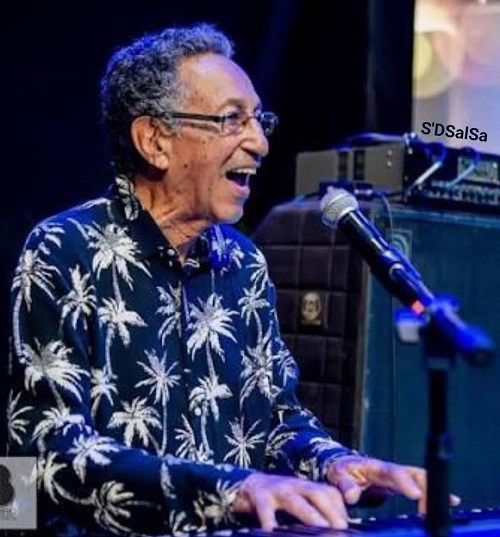
Ray Pérez: The Genius and the Vanguard of Venezuelan Salsa

His nickname, “El Genio” (The Genius), isn’t just hyperbole; he earned it through his multifaceted mastery as a pianist, arranger, and composer. Above all, he was a visionary who possessed the rare ability to capture the raw “sound of the streets.”

Historical Note: While his official records cite 1937, a fire that destroyed original birth registries has led to speculation that his true birth date may be December 25, 1938.

Music was in his DNA. Ray inherited a deep artistic vein from his father a singer, trumpeter, pianist, and musical director. Ray’s journey began at age twelve playing the tuba in the San Juan Bosco youth band under his father’s tutelage.
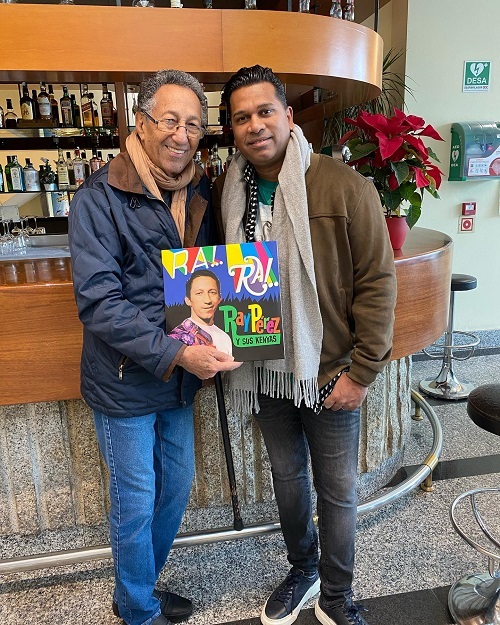
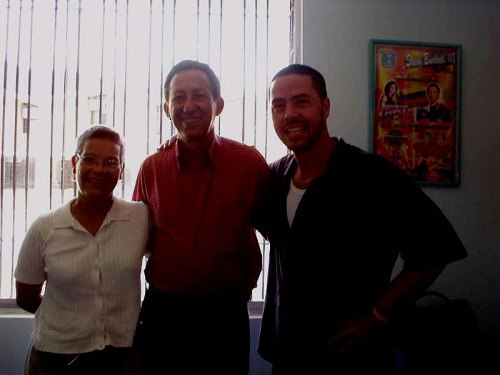
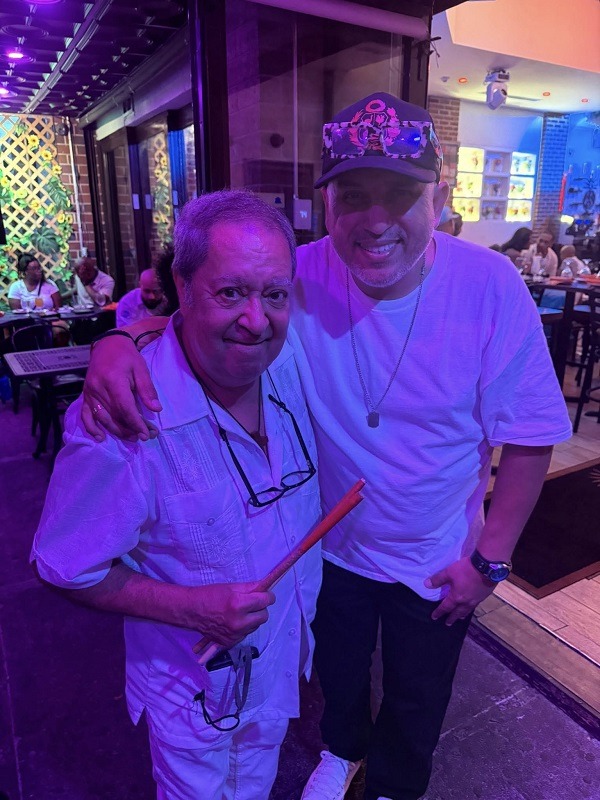
Ray Perez y Dustin Hogg

By seventeen, he had mastered the guitar, the cuatro, and the piano. Following his father’s passing, he balanced work and academics before ultimately deciding to commit his life entirely to his musical passion.

Formative Years and First Steps

Between 1962 and 1965, Ray studied at the Maracaibo Conservatory. His recording debut came via RCA Víctor under the artistic direction of Aldemaro Romero, recording the track “Marcianita” with the Trío Cristal.

After stints with the Trio Hambay and the group Los Bobos del Twist, he officially dove into Caribbean rhythms in 1965 with the creation of Ray Pérez y Su Charanga in the Zulian capital.

The Golden Era: Los Dementes, Los Kenya, and Los Calvos

Throughout his vast career, Ray launched three pivotal projects that secured his place in the Hall of Fame:

  1. Los Dementes (1965): Their debut, Alerta Mundo, Llegaron Los Locos / The Crazy Men (1966), signaled the start of a new era. Under this moniker, he recorded nearly 25 albums for labels like Velvet, Fania, and his own imprint, Pyraphon Records, founded in 1967.
  2. Los Kenya: Alongside the legendary voices of Carlos Yanes “Calavén” and Carlín Rodríguez, Ray innovated the sound by replacing traditional timbales with a full drum set. This project produced iconic albums like Ronda del Guaguancó, Rai Rai, and Nuevo Día.
  3. Los Calvos: A bold experiment, again featuring “Calavén,” which resulted in two essential productions for RCA Víctor: Estos son los Calvos and Los Calvos… y qué Calvos.
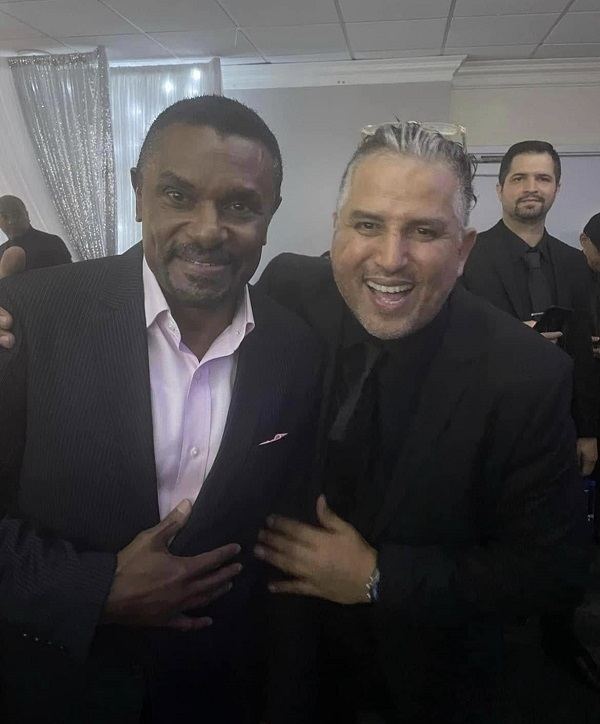
  4. La periodista y crítica musical venezolana Lili Rodríguez, el músico Ray Pérez y Roberto Ernesto Gyemant
    La periodista y crítica musical venezolana Lili Rodríguez, el músico Ray Pérez y Roberto Ernesto Gyemant

The New York Chapters and The Return

In 1969, Ray moved to New York City. There, he played piano for Francisco Ángel Bastar “Kako,” collaborated with Rafael Cortijo and Pedro “Rudy” Calzado’s Charanga, and arranged for the “King of Boogaloo,” Pete Rodríguez, composing hits like “Bossa Triste” and “Dame Felicidad.”

Upon returning to Venezuela in 1971, he founded Ray Pérez y su Orquesta, releasing a string of hits such as Aquí estoy de nuevo, Perucho y el loco Ray, and Yo soy el Rey de la Salsa. In 1974, he struck gold again with Grupo Casabe, recording three albums under the CBS label.
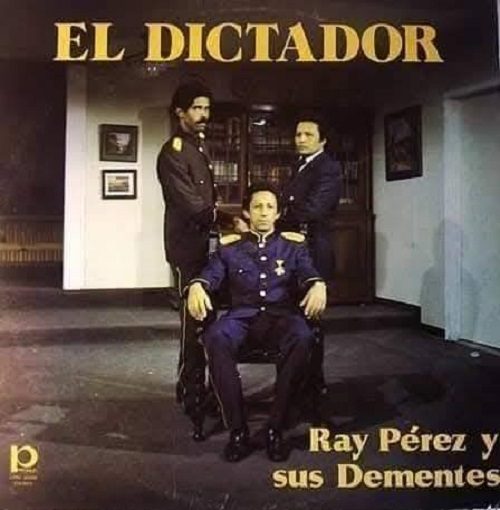
Ray Pérez Y Sus Dementes El Dictador 1981

An Everlasting Legacy

Ray’s prolific career includes collaborations with immortal voices like Perucho Torcat, Nano Grant, Teo Hernández, and Nelson Navas. He has shared the stage with titans such as “El Pavo” Frank Hernández, Alfredo Padilla, Alberto Naranjo, and César Monge.

From his massive repertoire, we remember the anthems of the barrios:

  • “No salgas de tu barrio”
  • “Emae Mae”
  • “Pa’ l 23”
  • “Así mueren los valientes”
  • “Guaguancó en New York”
  • “La montaña”


Colaboración: Fotografías de ©Roberto Ernesto Gyemant
 Read Also: The Conjunto Bailatino “La Resistencia Salsera” again “Antes los ojos del Mundo” and here, “No hay quinto malo”

Ray Rodríguez and The Colao Band promote Latin music in San Antonio, Texas

Ray Rodríguez is a talented professional musician and ex-serviceman with whom we’ve had the great pleasure of talking to about his career and other interesting details of his life in general. This descendant of Puerto Ricans has shown us a little-known side of himself, and we’re more than happy to share it with our dear readers today, May 1, 2026.

Ray posing
Ray Rodríguez posing for the camera

How Ray got his start in Music and who inspired him

Ray came from a family full of musicians, but his father and grandfather dedicated themselves to the craft of building string instruments such as guitars, requintos, and cuatros. His grandfather, besides being a craftsman, was also a very talented musician, so he was in high demand in his town to liven up events of all kinds. Seeing so many musicians testing the quality of the instruments at home all the time, little Ray tried to be around to learn the tones he heard.

Over time, he had his own guitar and carried it with everywhere he went, something that his family always supported, and he is so grateful for that.

Enlistment into the United States Army

Music was always very present in Rey’s life, but he had not yet mastered it very well, and his interest in it had not developed much at all, so he joined the United States Army. However, once there, some of his fellow soldiers were also musicians, and taught him to play other instruments, but it did not end there. It was at this stage that his interest in singing was sparked and he dedicated to this profession after his retirement. That was 26 years ago. 

He came to be there for a total of six years. In the beginning, he joined as an infantryman and later became an artilleryman. He also attended aviation school for about a year, but unfortunately had an accident that fractured his leg in six places, so he was given the option of staying or changing jobs again, and he chose the latter.

It should be noted that he spent much of his service in Germany, and being there, he devoted much of his free time to listening to music that reminded him of his roots and playing it as a hobby.

Ray and The Colao Band
Ray Rodríguez and The Colao Band at the Jazz Festival in Helotes

Why he chose Texas back to the United States

Having been born in Boston, Massachusetts, it struck us that he chose Texas as his new home. On this subject, he told us that his best friend was parked at Lackland Air Force Base in San Antonio and invited Ray to visit him. The artist enjoyed his walk around the city so much that he decided to stay there, so he applied to work at the City of San Antonio Aviation Department and got the position. After completing his retirement procedure, that was how he went directly to San Antonio, where he continues to live to this day. 

As for the musical panorama he found there, what dominated the most at the time was regional Mexican music, so salsa, merengue, and other genres of that type were just beginning to take their place on the local music scene. Fortunately, things have changed since then. During those same years, Ray was invited to a rehearsal with the merengue band Grupo Chocolate to serve as a backup singer, and he spent about six years singing with them, but also became the band’s manager and owner.

Already in the year 2007, the band unfortunately broke up and all the members went their separate ways, which is when Ray finally decided to form his own band, The Ray Colao Band. 

The Colao Band

For a time, Ray was the singer of Tito Puente Jr.’s band, and both he and the timbalero were having lunch at a restaurant and talking about the band Ray wanted to start. Ray explained to him that his project was like a mix of everything and that it was all “colado” (in this context, it means everything is mixed together). In addition, he always snuck into someone else’s stage without being part of the group (”colado’’ in Spanish), so Puente gave him the idea to use that name for his band, and it was.

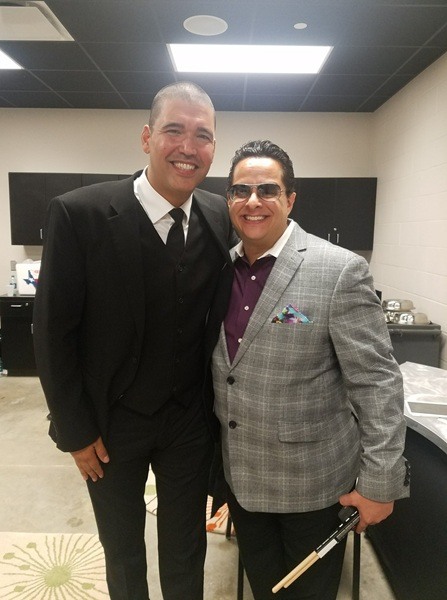
Ray and Tito
Ray Rodríguez and Tito Puente Jr.

As for his accompanying musicians today, we can mention guitarist and singer Jessi García, guitarist, pianist, and bassist Rogelio Romer Hidalgo, singer Gilberto Álvarez, percussionist Georgie Padilla, and the late Jesús Navarrete. These were the members who formed the core of the band, and almost all have been working alongside Ray for about 18 years continuously, except for Gilberto, who spent some time in Puerto Rico but then rejoined them. After them, The Colao Band also welcomed Hainel García and Robert García.

In addition to the band, Ray has also been able to open his own restaurant, Cuba 1918, which he has been running for about four years. He says the project is going very well and that it has become a music and arts venue where he hires various bands to entertain customers during their meal.

Read also: Actress, comedian, and singer Carmen Nydia Velázquez tells us about the best of her career

Rafaelito and his career between Munich and New York

We had a very personable and honest conversation with Rafael Pareja Ibañez, who via WhatsApp has given us a few minutes of his busy schedule to tell us a bit about his fascinating career to date and the group he currently leads, Rafaelito Y Su Tumbao. 

The artist, born in Lima, Peru, has a huge love for music and remains intact to date, so he says it is a pleasure to share the story of how he came to pursue it professionally, no matter how many times he tells it.

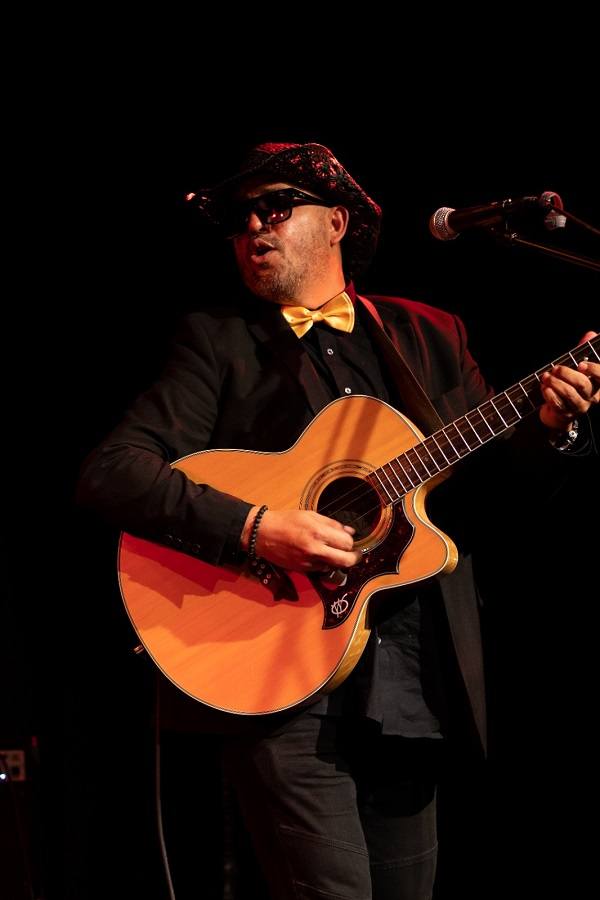
Rafaelito playing
Rafaelito playing the guitar live

Rafael’s beginnings in music

Rafael was first inspired by the artists his parents used to listen to at home, including La Sonora Matancera, Celia Cruz, Tito Puente, and many others. Family social gatherings always featured iconic songs by these stars, so he could not help but be interested in music at the early age of 10.

It all started when his father caught him beating some paint buckets to make it look like he was playing a drum set on the roof of their house, which led him to enroll his child in a music school to take guitar lessons. While it is true that this was the first instrument he learned to play, he also plays the baby bass in salsa and the piano together with all the percussion instruments.

At that time, what the young man played the most was rock and pop because the radio and other media left little room for Latin music. In fact, Rafael formed his first rock band at 16, as this was the genre with which young people identified the most in the 1980s.

Move to Germany

At 20 years of age, Rafael decided to move to Germany, specifically to Munich, where he lived for more than 27 years. It was there that he came into contact with people of other nationalities and had far more access to Latin music, especially Peruvian music, which surprised him greatly. He also got to listen to international stars such as Eddie Palmieri, Miguelito Cuní, and Arsenio Rodríguez.

Rafaelito and Nicky Marrero
American Latin jazz percussionist Nicky Marrero and Rafaelito at Mamajuana Cafe in the Bronx

It was also in Munich where he began to have his first professional experience together with major musical groups from there such as the Sexteto Melaza, where he played alongside musicians from different parts of the world. At a student barbecue, Rafael was hanging out with many Latinos, and they began to sing and play instruments together, leading them to form a group, which they named Melaza. During that time, he dedicated himself to play salsa, guaracha, son, bolero, and cha-cha-cha in a sextet format.

The group featured a guitarist, a bassist, a conga player, a timbalero, a bongo player, and a singer. This sums up his first musical experience in Germany, which lasted about a year and a half. It also helped him draw the attention of other musicians in the city’s music scene, who convinced him to join other projects that were being created.

Another of those projects included a trio of young musicians called Madera Limpia which was founded in 2005, when rap, reggaeton, reggae, and many other genres mixed with Latin rhythms such as changüí or kiribá were super trendy. It turns out that a Romanian couple traveled to Cuba, produced a film called “Paraíso,” and went on a concert tour through Europe and North Asia. Therefore, they needed to hire many musicians, including the members of Madera Limpia, who contacted Rafael through connections and asked him to be their bassist. The Peruvian accepted the offer and toured all those places with these musicians, an experience he talks about with great affection.

Back in Munich, he met Lou Bega, the creator of the hugely popular swing-pop cover of Pérez Prado’s “Mambo No. 5,” which stayed at number one for 36 consecutive weeks in the United States. When his producer wanted to find a band to accompany him, there were very few Latin musicians in the city and Rafael was one of them. Obviously, they called him and his colleagues to work on some demos featuring Bega’s vocals and trumpet samples. After being selected, he became the director of his live band and accompanied him on many concerts in Europe between 2007 and 2008.

El Canario and Rafaelito
José Alberto ”El Canario” and Rafaelito

Rafaelito Y Su Tumbao

Right there in Munich, Rafael finally made up his mind and formed his own musical group, Rafaelito Y Su Tumbao, which currently has branches in Munich, Lima, and New York, where the artist currently resides. Rafael arrived in this city as early as 2020, which is when he got to perform with stars such as Charlie Aponte, Andy Montañez, Jose Alberto “El Canario,” Hildemaro, and many others. When he saw how good the human material was in his new place of residence, he also founded Rafaelito Y Su Tumbao in New York with musicians from there. 

What is striking about his move to New York is that it was motivated by Rafael’s reunion with his childhood sweetheart in Peru, whom he reconnected with in 2019. It turns out that his partner was living in New York, so he jumped on this new opportunity that life offered him and made the romantic decision to cross the Atlantic again and marry her. This radically changed his life both personally and professionally, but he’s glad he did.

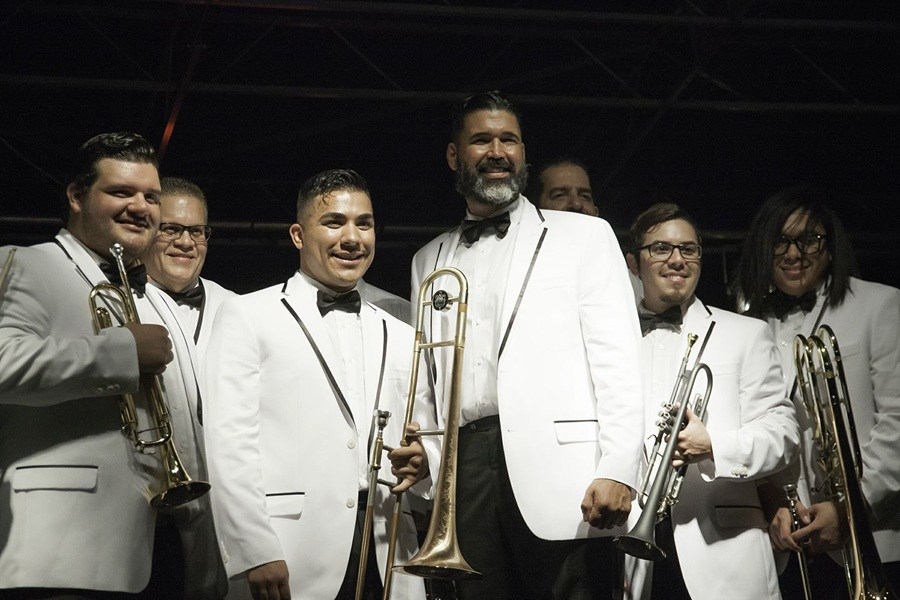
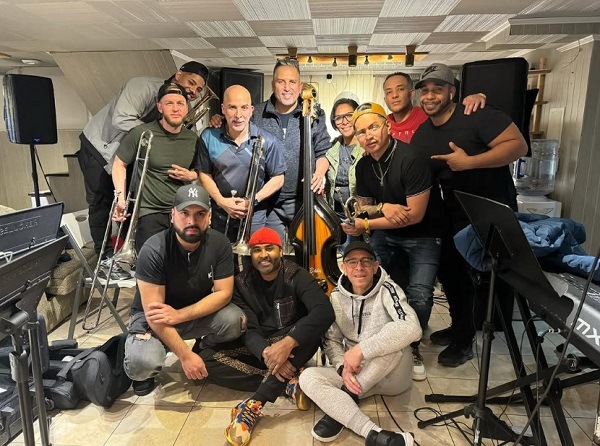
Members of Rafaelito Y Su Tumbao
Members of Rafaelito Y Su Tumbao in New York
Line Up :
Rafael Pareja – Baby Bass
Ray Cabrera – Piano
Andres Garces – Vocal
Karla Olivo Moreno – Vocal
Dennis Hernandez – Trumpet
Christian Gomez – Trumpet
Jimmy Bosch – Trombone
Andre Carpio – Timbal
Hector “ Jereto “ Ferreyra – Congas
Chuito Quintero – Bongo

Read also: Dominican bandleader and musical director Orlando Santana talks about La Makina and his career in general

Puerto Rican bandleader and musician Diana Sosa talks about her many projects in Nashville, Tennessee

We had a wonderful and very nice conversation with Puerto Rican percussionist, timbalera, conga player, and cuatro player Diana Sosa, who kindly told us about all the projects she has in the pipeline. Her husband and bandmate, guitarist and vocalist Chuck Nelson, put us in touch with her so we could learn more about both the project they share and the one she has undertaken on her own.

Then these are the things the talented Puerto Rican shared with us on this warm Sunday before Easter.

Diana Sosa is playing
Diana Sosa is posing for the camera while playing the timbales

How Diana got into the world of music

Diana was born and raised in Puerto Rico, where she began to love music and play, but not professionally yet. She was just experimenting with some traditional instruments of her homeland, such as the Puerto Rican cuatro, which she even studied with a private teacher. 

At the age of 39, she moved to Nashville, Tennessee, where she finally got her first big opportunities in music, and the background she brought for years helped her a lot. It all started with a short rehearsal she was invited to, and from there, she has done nothing but prove what she is really made of. 

Of course, she keeps studying and preparing to improve every day. When she is not learning to play with fellow musicians like John Santos, she is taking online courses to solve any doubts she may have.

Diana’s first opportunity with The Bicho Brothers

The first serious group that gave Diana the opportunity to develop professionally—and with which she keeps to playing to this day is The Bicho Brothers, a classic rock band whose members really appreciated the contribution provided by Diana. For this reason, it is she who brings that Latin flavor, the product of her heritage and years of training in these genres.

Something that really attracted the audience was that she was the only woman in the group and, incidentally, she played the timbales, which was uncommon back then. In addition, she added atypical sounds to certain well-known songs, which was also remarkable.

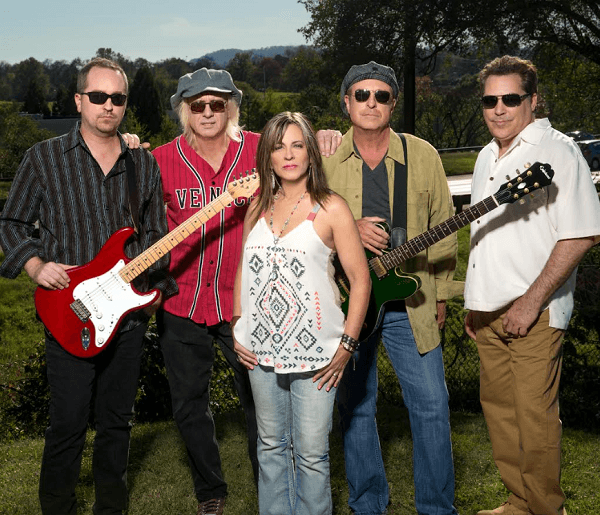
Diana Sosa and the rest of the Bicho Brothers
The Bicho Brothers from left to right: Jeff Krinks (guitar and vocals), Ron Krasinski (drums), Diana Sosa (timbales, congas, percussion, and Puerto Rican cuatro), Chuck Nelson (guitar and vocals), and Kenny Zarider (keyboards and vocals)

Another important personality who encouraged her to follow this route was the great producer Bill Cuomo, who told her she was very good at playing but needed to improve her technique. Twenty years later, it can be said that she took him at his Word seeing all she has achieved since then. From that point on, there have been many other projects and opportunities that make her very happy and keep her fulfilled.

Soul Sacrifice

Soul Sacrifice is a Santana tribute band founded in 1969 that has won a high reputation in Nashville by becoming one of the best tributes to Santana to date. The mix of familiar melodies and infectious rhythms they play at every show transports audiences to the biggest classics of the legendary Latin rock group created by Carlos Santana.

The band also includes some of the same members of The Bicho Brothers, such as the cases of Diana and Chuck due to all the years they have spent playing together, but including Cuban musician John Santos. He plays a fundamental role in making people feel they are listening to the original Santana rather than an imitation, which is why both he and Diana are key to the band’s performance.

Diana Sosa with Diana's Mambo Maniacs
Diana Sosa playing with Diana’s Mambo Maniacs

Diana’s Mambo Maniacs

Diana also has her own project, which she decided to call Diana’s Mambo Manics. This Latin music group was founded in the early summer of 2025 as part of Hispanic Heritage Month. In that time of year, there are always many festivals dedicated to Hispanic and Latin music in the United States and around the world, so Diana and a group of musicians she had been in contact with for some time took the opportunity to play wherever they were able to make themselves known.

Among some of the musicians in the band we can mention John Santos as singer and timbalero, whose presence is essential at every show. The group also includes conga player Josvany Cordero, bassist Isoel Villareal, pianist Kenny Zarider, trumpeter Joe Mercado, and trombonist Huge Lindsay.

The main difference between this band, The Bicho Brothers and Soul Sacrifice is that it plays exclusively Latin music, but of the great artists in the 1950s and 1960s who performed at the Palladium Ballroom, the Copacabana, El Corso, Chez José & 3 and 1, among many others. Diana feels that, to a certain extent, she pays tribute to her parents, who used to go dancing and enjoying these rhythms to some of these places in their youth.

However, not all are covers. She is about to release an original song featuring Puerto Rican cuatro player Prodigio Claudio, but she did not have the details to share with us yet.

Diana and Tito Puente Jr.
Diana Sosa Playing with Tito Puente Jr.

Read also: Bandleader and bongosero Ray Degaldo is here to talk about his life and career

Paoli Mejías A Talent Forged in the Streets and Discipline with a New Sound in Latin Jazz

From legendary sideman to the leader of a limitless musical vanguard.

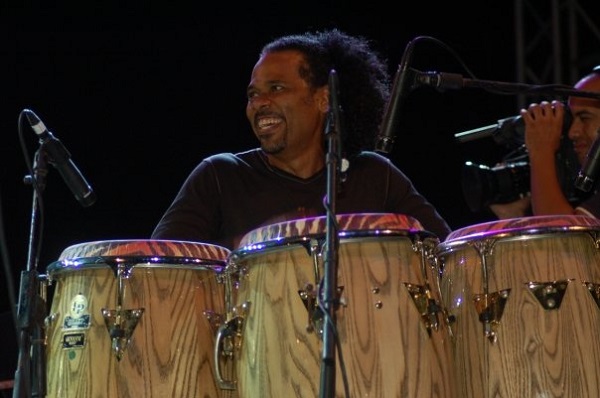
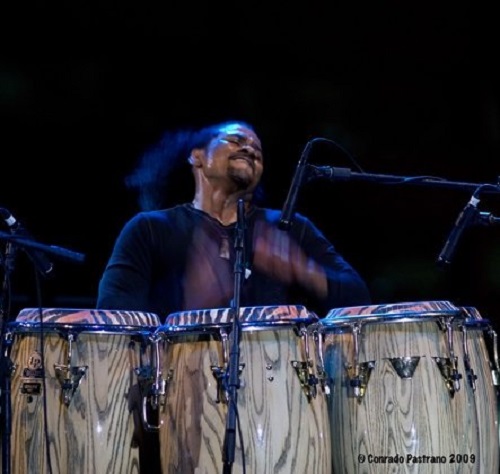
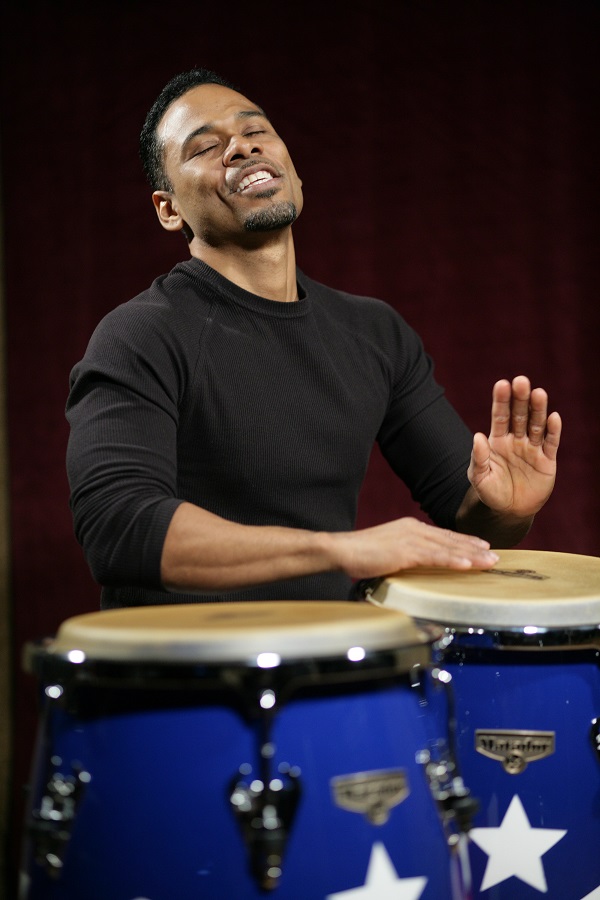
Paoli Mejías is a pivotal figure in the evolution of contemporary percussion, renowned for his seamless fusion of Latin jazz with masterful conga technique.

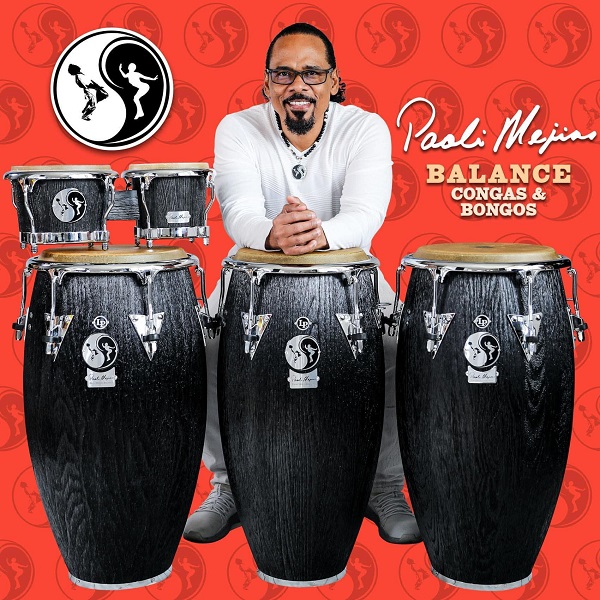
Paoli Mejias: From accompanying legends to leading a musical vanguard without borders

Paoli Mejias: From accompanying legends to leading a musical vanguard without borders

While he is an exceptional multi-percussionist, his command of the congas has established him as one of the most in-demand soloists in the world.

He is distinguished by a melodic style; he doesn’t just keep time he makes the drums “sing,” utilizing precise tuning and astonishing speed.

After touring the globe alongside icons such as Eddie Palmieri, Tito Puente, Seis del Solar, Chick Corea, and Marc Anthony, Mejías has solidified his status as an international benchmark. His vast musical, folkloric, and cultural knowledge positions him today not only as a percussion virtuoso but as a visionary leading his own quintet.

With a career marked by success, Mejías has produced three high-caliber independent albums: Mi Tambor (2004), which received a Latin Grammy nomination, Transcend (2006), and Jazzambia (2008).

Paoli Mejías, a talent forged in the streets and through discipline

Paoli Mejías, a talent forged in the streets and through discipline

These works have placed the Puerto Rican percussionist at the forefront of the genre, earning glowing reviews in the world’s most influential publications, including JazzTimes, DownBeat, Jazziz, and Modern Drummer.

A Talent Forged in the Streets and Discipline

Born in Río Piedras, Puerto Rico, on March 7, 1970, Paoli discovered his calling at the age of twelve. Inspired by the records of Carlos “Patato” Valdés and Ray Barretto, and the innovation of groups like Batacumbele and Irakere, he bought his first conga and began a self-taught journey.

Without formal teachers, he learned the language of percussion by mimicking the sounds emanating from his favorite vinyl records.

Paoli Mejía with Nuevo Sonido en el Jazz Latino

Paoli Mejía with Nuevo Sonido en el Jazz Latino

His true training took place in the effervescent musical atmosphere of San Juan, absorbing the styles of his mentors in street rumbas.

His professional debut came via Rafú Wagner (former vocalist for Bobby Valentín), and while still a teenager, he was already collaborating with renowned local artists such as José Nogueras, Glenn Monroig, and Charlie Sepúlveda.

The Leap to the Global Stage

His impeccable technique and melodic sensitivity quickly made him the preferred sideman for the greats. For over eight years, he was a key member of maestro Eddie Palmieri’s orchestra, recording on historic projects like Masterpiece/Obra Maestra (with Tito Puente), which won a Grammy Award.

Paoli Mejías is a fundamental figure when discussing the evolution of contemporary percussion

His discography now exceeds 20 commercial productions, including the nominated Acuarela de Tambores.

This exposure to world music enriched his creative fire. As Elmer González noted in Latin Beat: “Through Mi Tambor, Paoli achieves a watercolor of rhythms and textures that make this album one of the best Afro-Latin jazz productions released as a leader, and he aspires to continue a career forged on the stages of the world’s most important festivals.”

Beyond the Traditional Genre

Today, Paoli Mejías’ group offers a style that transcends labels. His proposal fuses the “Salsa Gorda” of the big orchestras with Puerto Rican bomba and plena, incorporating nuances of Greek, Flamenco, Indian, and African music. The result is a vibrant experience where the audience ceases to be spectators and becomes participants.

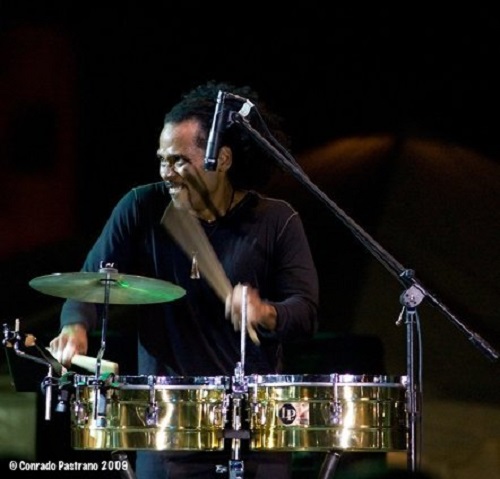
His versatility was cemented at the Heineken Jazz Festival, where critics highlighted his absolute mastery of minor percussion, timbales, bongos, and ethnic instruments like the Nigerian Udu, hailing him as one of the most complete percussionists of our time.

Paoli was there: Eddie Palmieri, Tito Puente, Seis del Solar, Chick Corea and Marc Anthony

Paoli was there: Eddie Palmieri, Tito Puente, Seis del Solar, Chick Corea and Marc Anthony

Beyond his role as a performer, the “Maestro” shares his knowledge by conducting clinics at prestigious institutions such as the University of Washington, the University of New Mexico, and the Puerto Rico Conservatory of Music.

Sponsored by leading brands like Latin Percussion and Sabian, Paoli Mejías continues to elevate the legacy of Latin jazz into exciting new dimensions.

Member of Santana

Paoli Mejías is a world-renowned percussionist who was a member of the band Santana, led by Carlos Santana.

Joining Santana: Paoli joined the group in 2013, taking over the conga chair. His arrival brought an impressive technical energy and rhythmic depth, establishing him as a fundamental piece of the band’s world tours for several years.

Source: Paoli Mejías

Photos: Paoli Mejías Archives / © Martin Cohen

Also Read: Carlos “Patato” Valdés: One of the Greatest Percussionists in Latin Jazz History

  • « Go to Previous Page
  • Page 1
  • Interim pages omitted …
  • Page 3
  • Page 4
  • Page 5
  • Page 6
  • Page 7
  • Interim pages omitted …
  • Page 69
  • Go to Next Page »

International Salsa Magazine (ISM) is a monthly publication about Salsa activities around the world, that has been publishing since 2007. It is a world network of volunteers coordinated by ISM Magazine. We are working to strengthen all the events by working together.