• Skip to primary navigation
  • Skip to main content

International Salsa Magazine

  • HOME
  • Previous editions
    • 2026
      • ISM / May 2026
      • ISM / April 2026
      • ISM / March 2026
      • ISM / February 2026
      • ISM / January 2026
    • 2025
      • ISM / December 2025
      • ISM / November 2025
      • ISM / October 2025
      • ISM / September 2025
      • ISM / August 2025
      • ISM / July 2025
      • ISM / June 2025
      • ISM / May2025
      • ISM / April 2025
      • ISM / March 2025
      • ISM / February 2025
      • ISM / January 2025
    • 2024
      • ISM / December 2024
      • ISM / November 2024
      • ISM / October 2024
      • ISM / September 2024
      • ISM / August 2024
      • ISM / July 2024
      • ISM / June 2024
      • ISM / May 2024
      • ISM / April 2024
      • ISM / March 2024
      • ISM / February 2024
      • ISM / January 2024
    • 2023
      • ISM / December 2023
      • ISM / November 2023
      • ISM / October 2023
      • ISM – September 2023
      • ISM – August 2023
      • ISM July 2023
      • ISM Edition June 2023
      • ISM – May 2023
      • ISM April 2023
      • ISM March 2023
      • ISM February 2023
      • ISM January 2023
    • 2022
      • ISM December 2022
      • ISM November 2022
      • ISM October 2022
      • ISM September 2022
      • ISM August 2022
      • ISM July 2022
      • ISM June 2022
      • ISM May 2022
      • ISM February 2022
      • ISM January 2022
    • 2021
      • ISM December 2021
      • ISM November 2021
      • ISM October – 2021
      • ISM September 2021
      • ISM August 2021
      • ISM July 2021
      • ISM May 2021
      • ISM April 2021
      • ISM June 2021
      • ISM March 2021
      • ISM February 2021
      • ISM January 2021
    • 2020
      • ISM December 2020
      • ISM November 2020
      • ISM October 2020
      • ISM September 2020
      • ISM August 2020
      • ISM July 2020
      • ISM June 2020
      • ISM May 2020
      • ISM April 2020
      • ISM March 2020
      • ISM February 2020
      • ISM January 2020
    • 2019
      • ISM December 2019
      • ISM November 2019
      • ISM October 2019
      • ISM Septembre 2019
      • ISM August 2019
      • ISM July 2019
      • ISM June 2019
    • 2016
      • ISM December 2016
      • ISM November 2016
  • Spanish
  • Download Salsa App
    • Android
    • Apple

Search Results for: Timba

Justo Betancourt Querol Cuban sonero and singer famous for his interpretation of the song “Pa’ bravo yo”

Heir to the solid musical tradition of his family, Justo Betancourt was an incomparable sonero, possessing a unique personal style, He began his career at a very early age in his native Cuba, where he participated with orchestras and bands.
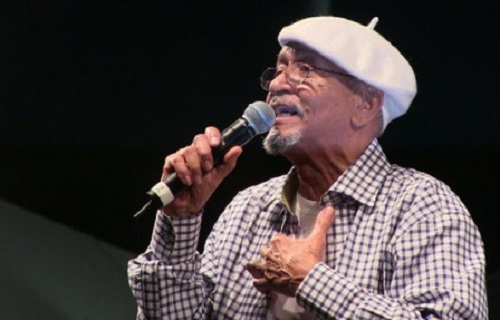
Justo Betancourt Querol Cuban sonero and singer famous for his interpretation of the song Pa' bravo yo.
Justo Betancourt Querol Cuban sonero and singer famous for his interpretation of the song Pa’ bravo yo.

In the 1960s, he arrived in New York, where he launched a new and brilliant stage of his career, singing vocals for the legendary and inveterate group, La Sonora Matancera, which was already established in the city. Betancourt stayed with the group for five years.

In later years, he was a member of the chorus of several groups, including those of Eddie Palmieri and Ray Barretto.

At the end of 1976 Justo settled in Puerto Rico, fleeing the limitations of the New York environment and separating himself from the tours and recordings of Fania All Stars, to enter the modern and freer scene projected by groups such as Sonora Ponceña, Willie Rosario, Bobby Valentín and Roberto Roena, among others, from the island.

With young musicians including vocalists Sammy Gonzalez and Tito Rojas, he created his own orchestra which he called “Borincuba”, a name to reflect the mixture of Puerto Rican and Cuban artists.

In 1976 Johnny Pacheco in his interest to maintain the successful formula of the modernization of the sound of the Sonora Matancera as the typical sound of his group (the Tumbao Añejo), unites the voice of Justo Betancourt with that of his compatriot Celia Cruz, it was the first time that this duo of Cubans in exile was reunited, in the album “Recordando El Ayer” and in which the young pianist Papo Lucca was presented in a big way. Justo’s voice was recorded in the songs “La Equivocada” (a duet with Celia), “Ahora Sí” and “Guíllate”.
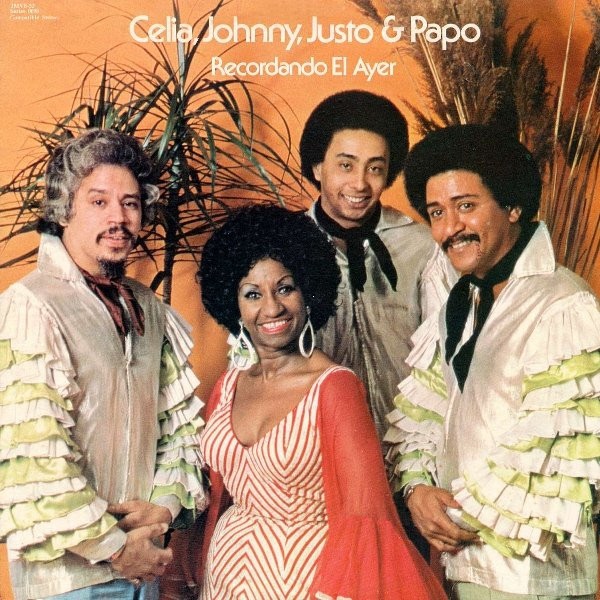
Celia, Johnny, Justo & Papo Recordando El Ayer 1976


That same year 1976, Justo is part of the ten vocalists that the Fania All Stars summons for his first production in a recording studio in the project “Tribute To Tito Rodriguez”, in which he performs the song “Cara De Payaso”, (the other vocalists were Santos Colón, Bobby Cruz, Cheo Feliciano, Héctor Lavoe, Ismael Miranda, Ismael Quintana, Pete “Conde” Rodríguez, Rubén Blades (his first recording with Fania All Stars) and Chivirico Dávila (his only recording with the group).
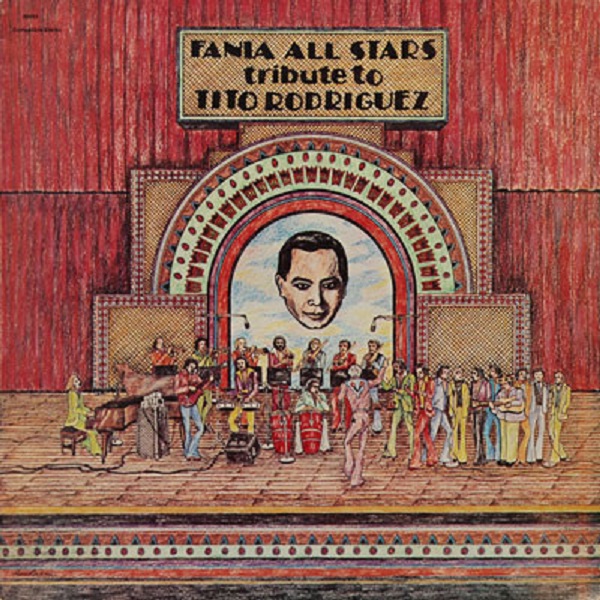
Fania All Stars Tribute To Tito Rodriguez 1976

To complete this productive year, Justo Betancourt joins percussionist Mongo Santamaría as the lead vocalist for the musical work “Ubane”, with the production of Marty Sheller, one of the important experimental albums of the salsa boom, a work that recovers the saxophone for the Salsa and bembé orchestra in the old Cuban Guaracha of the 50’s, and in which a constellation of New York, Cuban, Puerto Rican and Colombian musicians participate.
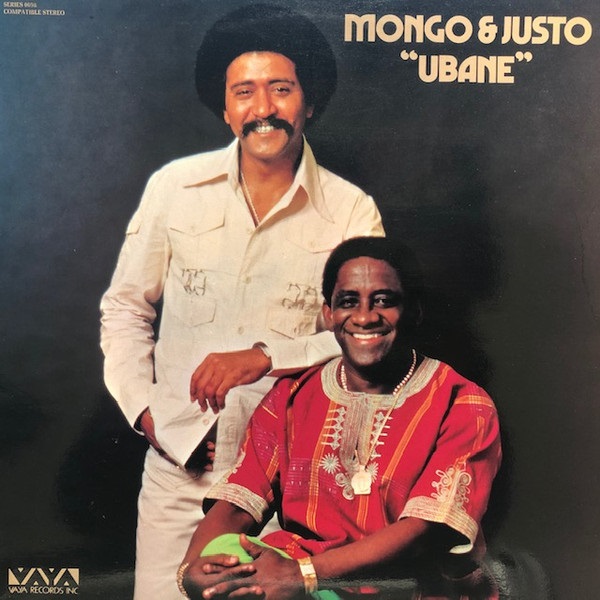
Mongo y Justo Ubane 1976.

However, the album did not succeed in definitely catching on with the public and ended in the most unjust failure.

With his new orchestra, he recorded four albums, of which he recorded as lead singer in only two albums: “Distinto Y Diferente” (1977) which includes the songs: “No Estás En Nada”, “Distinto Y Diferente”, “Soy Profesional” and “Óyela”; and “¡Presencia!” (1978) which includes a tremendous new version of the bolero “Psicología” and the song, composed by Catalino “Tite” Curet Alonso, “Camarón”. Justo was always among the best and remained oblivious to the decadence of the industrial boom of New York Salsa at the end of the decade.
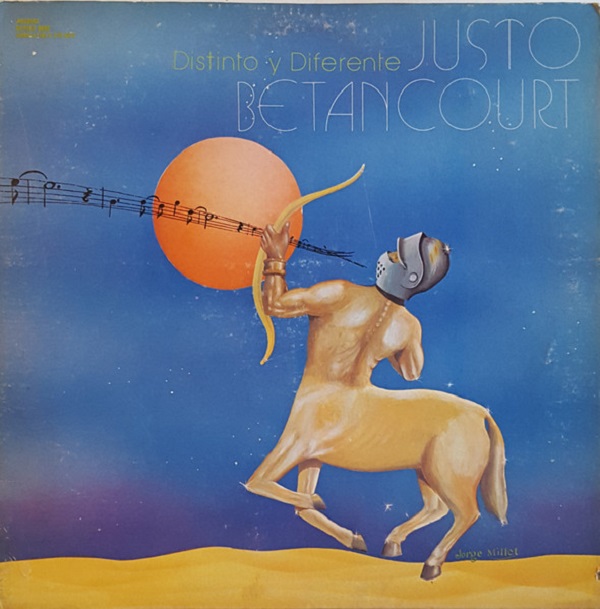
Justo Betancourt Distinto Y Diferente 1977

His secret was to remain bravo by performing authentic Caribbean music without the commercial additives imposed by Salsa.

The young singer who performed in the chorus and Justo’s student in Borincuba, Tito Rojas, became the lead singer in the following album “Con Amor” (1978), which Betancourt conducted and participated in the chorus.

Tito Rojas’ last work before splitting from Borincuba to start his solo career was the album titled only as “Borincuba”, in which Justo also served as musical director and backing vocalist.
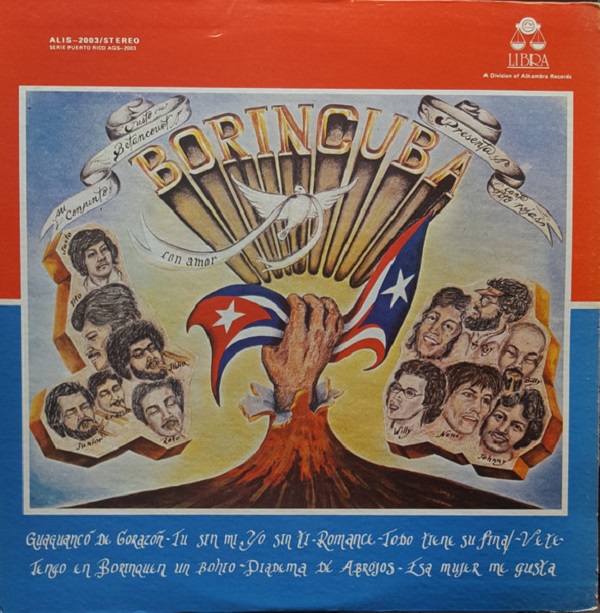
Justo Betancourt Presenta Su Conjunto Borincuba Canta Tito Rojas Con Amor 1978

So in 1979, when Tito inherited the band, he started his solo career changing the name to Tito Rojas y el Conjunto Borincano¸ which had a short existence.

After a series of his own albums, he became the lead vocalist of the Puerto Rican Power Orchestra and appeared on their first two albums (1987 and 1989).

In 1990, Tito Rojas embarked on his solo career with the romantic salsa album “Sensual” which reached first place in the Latin Music Hit Parade in April.

In the following years, Betancourt, residing between New York and San Juan, continued in the inertia of the Fania contracts. In March 1979, when the Fania All Stars were part of the group of musicians who traveled to the island of Cuba to participate in the “Havana Jam Festival”, a musical exchange between the United States and Cuba organized by CBS and held at the Karl Marx Theater in Havana, Justo Betancourt and his compatriot Celia Cruz, for obvious political reasons, could not travel with the group; for this reason Justo decided to leave the All Stars.

Nevertheless, his contract with the Fania company remained in force, and that year he released another album titled “Justo Betancourt” (1979), produced by himself and Louie Ramirez, which included the songs “Yo Sin Ti” and “Qué Más Quieres De Mi”, among others.

In 1981, Betancourt returns to record again with the Sonora Matancera in an album entitled “Sonora Matancera Con Justo Betancourt”, produced by Javier Vásquez and recorded on the Bárbaro label, a subsidiary of Fania and owned by Jerry Masucci. On this album, four guest musicians appear for the first time to record with the Sonora: Pedro “Puchi” Boulong: on trumpet, José Daniel: on the tumbadora, Elpidio Vásquez Jr. (son of the bassist): on second bass, and Mario Hernández: on tres.

From this work the hit “Mala Pata” and a new version of the bolero “Hoy Sé Más” stand out.

In 1982, he recorded his last work on the Fania Records label “Leguleya No” (1982), with his own production company RMQ and with the arrangements and musical direction of Ray Santos and Javier Vásquez.

From 1982 onwards his appearances were variable, he participated in Israel Sardinas’ LP, “Israel, la Verdad” (1984), and participated in Celia Cruz and Tito Puente’s album “Homenaje A Benny Moré Vol. 3” in 1985, in one of the songs: “Tú Solo Tú”.

Except for these participations, he made no recordings between 1983 and 1989.

And so, there were plenty of reasons for Justo Betancourt, despite so many successes, to end up in virtual anonymity and indifference. He gradually withdrew from the world of the studios, although he continued to perform sporadically.

After years of recording silence, he returned in 1990 with his style with the album “Regresar” on his own label RMQ, of which he was the producer, director and did half of the arrangements written by Eric Figueroa.

In 1992 he released the album “El Bravo De Siempre”, for Rafael Viera’s RV Productions label, which featured the participation of Cuban percussion legend Carlos “Patato” Valdes, among other great Puerto Rican musicians.

In 1994 he participated in the project of Puerto Rican producer and musician Frank Ferrer called “Descarga Boricua”, alongside more than 30 experienced local and international musicians such as Ismael Miranda, Jerry Medina, Papo Vázquez, Juancito Torres, Alex Acuna, Mario Rivera, Pedro Guzmán and Ángel “Cachete” Maldonado, among others. There, and in several songs, he resorted to his superb vocal resources as in his good times. In the second work of the Descarga Boricua, edited in 1996, he participated briefly with some soneos in the song “Abrázate a Puerto Rico”, as well as in the third album of the reunion of the virtuous Puerto Rican musicians.

He returned to the recording studios again in 1998 with the CD “Mató” for the El Paso label in Puerto Rico, and from which the song “El Lema Del Guaguancó” stands out in the most vigorous style of Arsenio Rodríguez, composer of the song.

He also made his return as guest singer of the Fania All Stars for the concert of April 29, 2000 in Puerto Rico, a return that he made together with Ismael Miranda and Luigi Texidor to the group.

Justo Betancourt has participated as a backing vocalist in the recordings of many Latin music orchestras and works of renowned artists, such as La Conspiración de Ernie Agosto, Celia Cruz, Johnny Pacheco, Roberto Roena, Willie Colón, Eddie Palmieri, Willie Rosario’s orchestra, Héctor Lavoe, Adalberto Santiago, Kim De Los Santos, Van Lester and the Puerto Rican Power orchestra, among others.

In 2002 he participated for pianist Papo Lucca in the musical project “Festival de Boleros” with the song “En Cada Beso”, along with a constellation of Boricua singers and musicians.

Sources:

Por: Jose Ramon Tremaria

Ecued

Fania Stars

Also Read: Nicky Marrero is an innovator, timbalero and bongo player, living legend of our Afro-Latin and Caribbean music.

Los Van Van and their 50th Anniversary

North America / USA / New York

Los Van Van returns to Lehman Center Performing Arts to celebrate their 50th Anniversary

For this special concert the Cuban legendary orchestra will join with the most popular lead Los Van Van vocalists: Mario “Mayito” Rivera and Pedro Calvo

Date: Saturday, June 1st

Show: 8:00PM

Cost: $50 – $100

Venue: 250 Bedford Park Boulevard West Bronx, New York 10468

Low cost onsite parking available for $5!

Los Van Van in concert

Lehman Center for the Performing Arts presents the return of Grammy-winning dance orchestra, Formell y Los Van Van, who bring direct from Cuba their blend of Afro-Cuban, disco and funk back to Lehman Center to celebrate their 50th Anniversary on Saturday, June 1st at 8PM.

Heralded as Cuba’s greatest dance orchestra known worldwide for their iconic live performances, Formell y Los Van Van features three of the late founder Juan Formell‘s children: Samuel Formell (Leader and Drummer/Timbalero) , Juan-Carlos Formell  (Bassist)  and the family’s youngest daughter, Vanessa Formell (lead vocalist).

BIO: Formell y Los Van Van, nicknamed the “Cuban Music Train,” is regarded as one of the most influential bands in the history of 20th century Cuban popular music. Founded in 1969 by Juan Formell when he was 27 years old, the band pioneered Songo, a hybrid rhythm that blended Cuba’s native folkloric son music with the go-go of the 1970s and has electrified dance floors in Havana for over forty-five years.

The band’s original members were: Juan Formell (bandleader, bass player, and songwriter), Cesar “Pupy” Pedroso (piano, songwriter), and Jose Luis “Changuito” Quintana (drums and timbales). Each one were music conservatory trained from a young age and were fascinated with the soul, go-go and disco music that dominated U.S. radio.

They named their dance band “Los Van Van” (which literally means “they go-go”) after the go-go fad, and pioneered the hybrid of son and go-go music – Songo – which can now be found throughout Latin jazz, pop, and world fusion.

And if the genius of Songo wasn’t enough, they also developed the complex rhythmic style that became known as Timba that was adapted by other bands in the ‘90s. Los Van Van soon became one of the best-known Cuban groups in the world, maintaining a loyal fan base throughout Latin America, Europe and Japan propelled by hits such as: “La Sandunguera,” “Anda, Ven y Muévete,” “Te Traigo” and “Yuya Martinez.”

Pedrito Calvo
Pedrito Calvo

In 1993, Changuito left the band and was replaced by Formell’s son Samuel who also proved to be an outstanding composer as evidenced by the song: “Te Pone La Cabeza Mala”, the title track of one of their best albums.  Although American politics hindered their ability to break into the U.S. market, their popularity in the U.S. grew throughout the ’90s, and the band toured the U.S. for the first time in 1997, including a memorable concert at Lehman Center.

Two years later, Los Van Van was honored with the GRAMMY® Award for Best Salsa Performance for their fifteenth album, Llegó…Van Van — Van Van is Here and in 2013, the Latin Recording Academy awarded Juan Formell with a special Grammy for a Lifetime Achievement of Artistic Excellence.

With over 40 albums to their credit, Formell y Los Van Van’s 2015 album Homenaje A Juan Formell: La Fantasia, was 80% completed at the time of Juan Formell’s death in 2014 and was finished under the direction of his son Samuel with another son, Juan-Carlos Formell.

The album’s release on Reyes Records in December, 2014 was on the 45th anniversary of the band’s founding and it features several of the band’s hit dance tracks refreshed with contemporary arrangements as well as many new songs including the widely popular: “Somos Diferentes”, “Todo se Acabó” and “La Moda”. Sony Music released it worldwide in 2016 and it earned a 2017 Grammy nomination for the Best Tropical Latin Album.

The group’s most recent album “Los Van Van son La Patria” is scheduled to be released on Cuba’s Engrem label later this summer.

Mario Mayito Rivera
Mario Mayito Rivera

BIO: Mario “Mayito” Rivera is nicknamed “El Poeta de La Rumba” for his ability to vocally interpret all forms of Cuban music in both modern and traditional styles with a colorful range that can be powerfully dynamic or tender and soft.

He was born in Pinar del Rio, Cuba, and has degrees from both the Escuela Nacional de Arte and the Instituto Superior de Arte. After college, he joined the band of Cuban singer Albita Rodríguez and played bass in Grupo Moncada.

From 1992 to 2011, Mayito was the characteristic voice and face of the extremely successful Cuban band, Los Van Van. He sang many of the band’s salsa hits, for which he was rewarded with a Latin GRAMMY® and two nominations.

Bio: Pedro “Pedrito” Calvo is a popular Cuban-born vocalist known for his charismatic and unique singing style which often includes clever word play and expressive rhythmic vocal sounds. Pedrito started his professional career singing with his father’s orchestra and years after with several Cuban orchestras including:

La Riviera, La Orquesta de Julio Valdés, and La Ritmo Oriental with hits such as: “Mi Socio Manolo” and “Aquí el que Manda es Mulé”. He was the most famous for his time (1974-2001) with Los Van Van, where he was part of the infamous lead singing trio of Los Van Van along with Mayito Rivera and Roberto Hernández.

Event Details:
www.LEHMANCENTER.org

”Alma Del Barrio” celebrates 50 years of operation

The United States has a great number of Latin music radio programs that always sought to promote the best of Latin talent through their frequencies and one of them is ”Alma Del Barrio” of the well-known radio station KXLU, which is celebrating its 50th anniversary.   

Against all odds, ”Alma Del Barrio” celebrates five decades on the air after all the effort of its hosts and the team involved in such a noble and necessary feat. We say ”against all odds” because it is not common that projects submitted by university students did not used to last long and ended up being replaced by programs of the same style.  

In addition to the above, decades-long programs usually have a single host and comfortable time slots each week. However, ”Alma Del Barrio” was the exception to this rule and, today, continues to prove that limits can be overcome.  

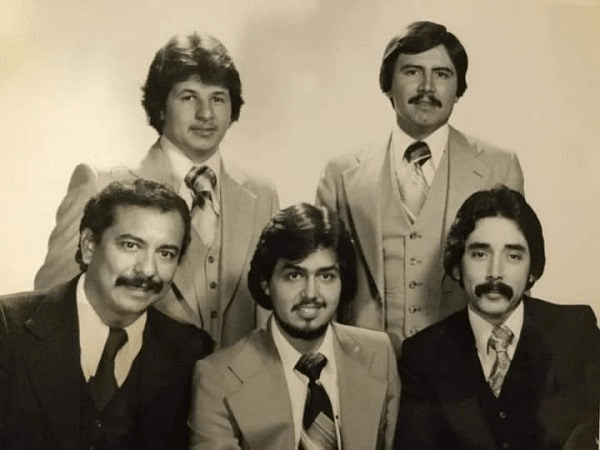
Founders of Alma Del Barrio
Founders of ”Alma Del Barrio” Steve Lopez, Enrique ”Kiki” Soto, Gustavo Aragon, Eddie Lopez, and Hector ”La Voz” Resendez

Beginnings of ”Alma Del Barrio” 

After so long, ”Alma Del Barrio” has remained up to date and continues to keep people’s taste.  

Its main founders were Enrique ”Kiki” Soto and the late Raúl Villa, who at the time were two young students with many ideas and eager to achieve interesting things. The program was aired for the first time in 1973. A few years later, Hector Resendez, a freshman in college, contacted Enrique and Raul in order to write an article about this new radio show, but it would not be long before he joined the main founders in the project they were developing.   

Three years later, in 1976, student at Loyola Marymount University Eddie Lopez joined the program on the third anniversary of ”Alma Del Barrio”, show in which he would spend the next 46 years bringing the best Afro-Cuban music to the audience every Sunday between 2pm and 6pm.  

On a number of occasions, Resendez said that ”Alma Del Barrio” was not created to be hosted by great famous personalities, but by dynamic young people who wanted to be part of a small team that was just starting operations.   

At the beginning, the new hosts only had one hour of broadcast time to show what they were made of, but at the same time, they did their best to get more airtime and have more presenters in the program. They wanted to include a not very popular genre on the station at that time, which was salsa, something totally innovative for the station. 

In those years, salsa was understood as that set of genres coming from Afro-Cuban music and the novice hosts thought it would be a fine attraction to the Latino communities of Los Angeles. That set of genres came from Cuba, Puerto Rico, Panama, Colombia and the Dominican Republic. This is when record labels and music promoters renamed these rhythms as ”salsa” in order to make it easier for programs and hosts to identify the music.  

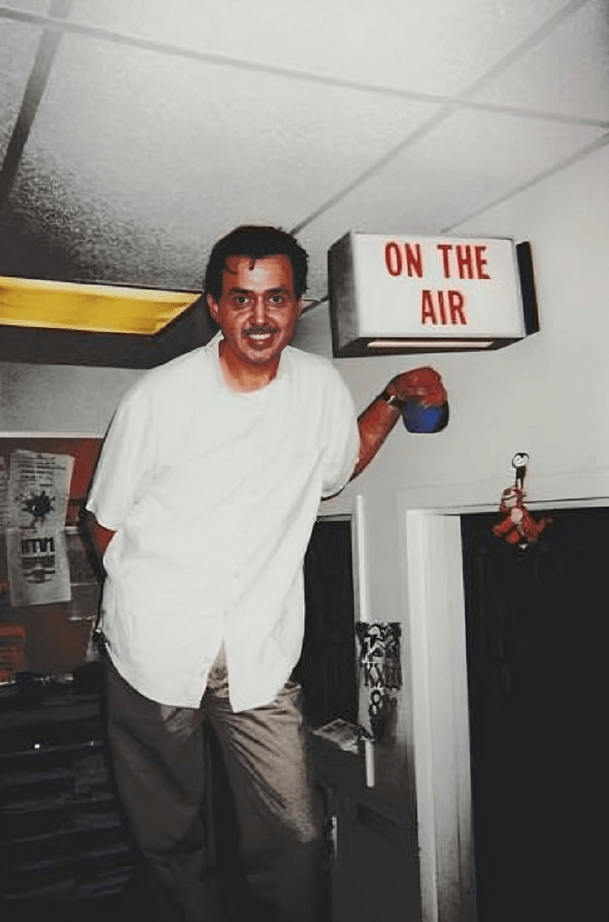
Eddie Lopez in Alma Del Barrio
Eddie Lopez working on the radio station

‘’Alma Del Barrio”’ programming 

The traditional programming of most of the stations consisted of jazz, rock and classical music, but then salsa was incorporated thanks to the increasing popularity that this genre was gaining. 

One thing Resendez said is that one of the most famous rock groups was Santana, so the announcer and the rest of his cabinmates were surprised that the musicians of the band knew so much about Afro-Cuban music in terms of percussion. Let us remember that the popular song ”Oye Como Va” was written by ”El Rey De Los Timbales” Tito Puente a decade and a half before the band recorded it.   

This union of rock and salsa was what gave the hosts the confidence to use trendy Anglo-Saxon genres as a means to promote Latin music.   

On top of that, the guys were clear that jazz fans would be receptive to Latin jazz, since great jazz musicians like Dizzy Gallespie hired Cuban percussionists in their orchestras. If on other stations, this music was successful, ”Alma Del Barrio” was no exception. Fortunately, they were not wrong.   

Logo of Alma Del Barrio
Current logo of ”Alma Del Barrio”

Last years of “Alma Del Barrio’’ 

During the last years of ”Alma Del Barrio”, the program team has made great efforts to join and create links with the community, whether it would be through sponsorships, advertisements, public services, donation campaigns, among other things.   

Through all this community service they offered, they also made their own work known and many listeners began to enjoy this great team’s talent while listening to good music and varied programming. 

The program has also been and is part of great annual and historical festivals such as the Salsa Fest. This day is always reserved for the audience to share with the new and old hosts of ”Alma Del Barrio” and many of the station staff, who always spread their enthusiasm to those present with their good energy.   

”Alma Del Barrio” and its hosts have brought joy to their followers, but there have also been some sad moments. One of them was the death of DJ Eddie Lopez in January 2023, leaving a great void in the station and the hearts of those who faithfully followed his career through the KXLU circuits during the last decades. 

Read also: Singer and manager of Cambalache Pancho Chavez 

North America – June 2019


Singer and manager of Cambalache Pancho Chavez

Peru continues to give much to talk about with regards to salsa and the guest we have this time is clear proof of that. We are talking about the talented singer and backup singer Francisco ”Pancho” Chávez, who has been kind enough to talk to us to reveal unpublished details of his life and career in his native country and, of course, in the United States. 

Pancho, who currently serves as vocalist and manager of the Orchestra Cambalache, has a very long career in the U.S. Latin music scene, to the point that his group has established itself as one of the top salsa bands in the northwestern United States. It is a great honor for us to have an artist of this stature in this January 2024 edition.  

Pancho from Cambalache
Francisco ”Pancho” Chavez, manager and lead singer of Cambalache

Pancho’s Musical beginnings 

Pancho’s first contact with music happened thanks to his mother’s family, many of whom were musicians. Although the young man never go into business in his country, he was able to see how to handle things thanks to his relatives until moving to the United States in 1997. 

One or two years later, someone gave him a double album by El Gran Combo de Puerto Rico that, he says, he played a million times because he really liked it. This material was one of his great inspirations to dedicate himself to salsa as a genre and nobody could change his mind.   

It was in Seattle that he started making music with college friends when he was already living in the United States, implying that he was not yet formally dedicated to music. In fact, Pancho was studying business at the time and was looking for a small musical group with other young college students he met around 1999.   

This group turned out to be Cambalache, which he founded along with Colombian musician Camilo Suarez. This would be the first and only group to which the Peruvian has belonged, so everything he knows about music and the industry was learned with this same project.   

He always stood out for his talent to sing and do vocals, but he also learned to play some instruments such as the congas, timbales, bongos, cowbells, among others. He also learned a bit of sound engineering and can work a little in this area, although he recognizes that he is not yet an expert.   

Pancho and Maelo
Puerto Rican salsa singer Maelo Ruiz and Pancho Chavez

Recruiting talent for Cambalache   

Pancho says that there were not many Latinos at the university back then, so he and Camilo forged a strong friendship and shared many common interests, especially music. 

At the time, both were facing the economic problems typical of a college student and saw music as an opportunity to make a little extra money during their summer vacation. Camilo knew other musicians, so he contacted them and proposed them to join the orchestra they were creating. 

Pancho and Camilo had thought of a group of five or six people, but there were so many interested in joining the orchestra that the first rehearsals included about 13 people. In the end, solely for economic reasons, they only accepted nine members, of which only he remains.   

All these members, including Camilo himself, ended up working with other artists and groups and obtaining new opportunities in the musical field.   

Clasiqueando 

Cambalache’s first album was ”Clasiqueando”, which was released almost 20 years ago. Pancho assures that the acceptance to the material was very nice, even though the details are not so refined and worked.   

The success they had was a surprise for Pancho and the rest of the group, since the scope they expected was local. “We were surprised that people called us from many countries saying they had heard the album and loved it. There were even companies in countries like Japan and Italy that wanted to buy us songs for distribution” Pancho said on the issue. 

It was a great start for everything that came next for the group in the years to come.   

Pancho and Porfi
Pancho Chavez and Venezuelan arranger, producer, and musician Porfi Baloa

Why choose Seattle 

Pancho and his musicians chose Seattle as their base of operations because he and all the members of Cambalache have lived there for many years. That is exactly the city the Peruvian chose to make his living there and he never left it. 

It is also in Seattle where they all have their jobs and occupations outside of music and where they meet to rehearse and deal with all the affairs related to the orchestra. 

In the beginning, it was very hard for them because the Latino audience was not very large when they created the project. However, that has been changing, and today, many Latinos live in the city and maintain their Latino customs, including music.   

Other tasks besides music 

In addition to being the vocalist and manager of the orchestra Cambalache, Pancho is also a business administrator and manages his own event company whose main element is, of course, music. In this company, Pancho and his staff are in charge of hiring artists and bands for private events. Of course, Cambalache is involved in the operation of this project. 

The event center managed by the Peruvian singer has a capacity for 500 people and has its own stage. He rents it to hold events there and has all types of clients waiting.   

They have hired artists such as Gilberto Santa Rosa, Tito Nieves, El Gran Combo de Puerto Rico, Willie González, Conjunto Bahía, Frecuencia Latina, among others. 

Read also: Producer and saxophonist Martin Franco talks about his passion for music 

  • « Go to Previous Page
  • Page 1
  • Interim pages omitted …
  • Page 24
  • Page 25
  • Page 26
  • Page 27
  • Page 28
  • Interim pages omitted …
  • Page 69
  • Go to Next Page »

International Salsa Magazine (ISM) is a monthly publication about Salsa activities around the world, that has been publishing since 2007. It is a world network of volunteers coordinated by ISM Magazine. We are working to strengthen all the events by working together.