• Skip to primary navigation
  • Skip to main content

International Salsa Magazine

  • HOME
  • Previous editions
    • 2026
      • ISM / May 2026
      • ISM / April 2026
      • ISM / March 2026
      • ISM / February 2026
      • ISM / January 2026
    • 2025
      • ISM / December 2025
      • ISM / November 2025
      • ISM / October 2025
      • ISM / September 2025
      • ISM / August 2025
      • ISM / July 2025
      • ISM / June 2025
      • ISM / May2025
      • ISM / April 2025
      • ISM / March 2025
      • ISM / February 2025
      • ISM / January 2025
    • 2024
      • ISM / December 2024
      • ISM / November 2024
      • ISM / October 2024
      • ISM / September 2024
      • ISM / August 2024
      • ISM / July 2024
      • ISM / June 2024
      • ISM / May 2024
      • ISM / April 2024
      • ISM / March 2024
      • ISM / February 2024
      • ISM / January 2024
    • 2023
      • ISM / December 2023
      • ISM / November 2023
      • ISM / October 2023
      • ISM – September 2023
      • ISM – August 2023
      • ISM July 2023
      • ISM Edition June 2023
      • ISM – May 2023
      • ISM April 2023
      • ISM March 2023
      • ISM February 2023
      • ISM January 2023
    • 2022
      • ISM December 2022
      • ISM November 2022
      • ISM October 2022
      • ISM September 2022
      • ISM August 2022
      • ISM July 2022
      • ISM June 2022
      • ISM May 2022
      • ISM February 2022
      • ISM January 2022
    • 2021
      • ISM December 2021
      • ISM November 2021
      • ISM October – 2021
      • ISM September 2021
      • ISM August 2021
      • ISM July 2021
      • ISM May 2021
      • ISM April 2021
      • ISM June 2021
      • ISM March 2021
      • ISM February 2021
      • ISM January 2021
    • 2020
      • ISM December 2020
      • ISM November 2020
      • ISM October 2020
      • ISM September 2020
      • ISM August 2020
      • ISM July 2020
      • ISM June 2020
      • ISM May 2020
      • ISM April 2020
      • ISM March 2020
      • ISM February 2020
      • ISM January 2020
    • 2019
      • ISM December 2019
      • ISM November 2019
      • ISM October 2019
      • ISM Septembre 2019
      • ISM August 2019
      • ISM July 2019
      • ISM June 2019
    • 2016
      • ISM December 2016
      • ISM November 2016
  • Spanish
  • Download Salsa App
    • Android
    • Apple

Search Results for: Timba

Career and interesting facts about Venezuelan singer and musician Omar Ledezma Jr.

Venezuelan singer, percussionist and music teacher Omar Ledezma Jr. has already talked to us in the past and has revealed important details regarding his life and career, but this time, our editor Eduardo Guilarte has been in charge of interviewing him and revealing some unknown details about his different facets professionally and personally.  

Is such a pleasure to have the chance to talk to one of the most talented Latin musicians who currently lives in the San Francisco Bay Area and know so many things that the artist had not previously revealed.   
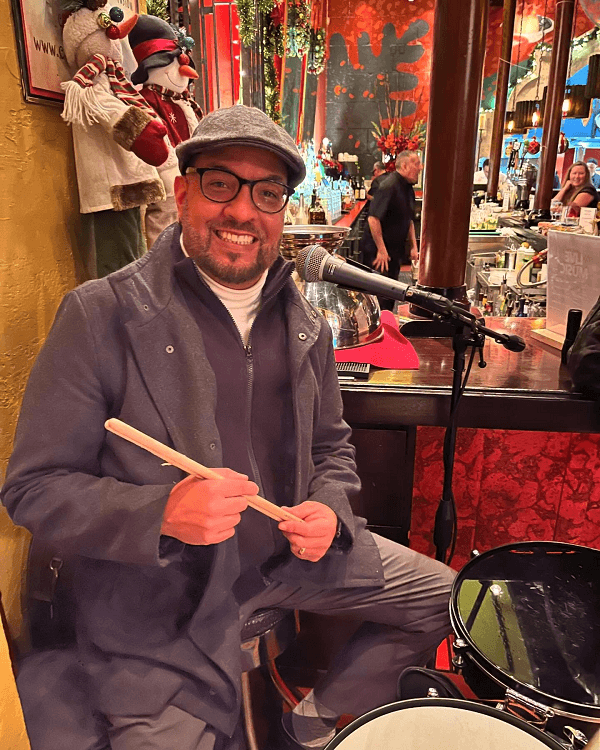
Venezuelan percussionist Omar Ledezma
This is Omar Ledezma Jr., Venezuelan singer, percussionist and music teacher

Omar Ledezma’s beginnings in music and childhood 

Omar Ledezma Jr. was born on February 17, 1972 in Caracas, Venezuela, and was raised in a very close family that gave him a lot of love and care since he was a child. Both the Ledezma and López families were very important in his growth, but it was from the Ledezma’s that he got his musical vein.   

His mother and cousin José Vicente Rodríguez López decided to enroll him in the marching band at the Claret School, where he had his first contact with music by playing the snare drum, an instrument he was first assigned to play. It is also in the band where he started making friends with other teens who were already forming gaitas groups to compete in contests related to this traditional Venezuelan genre.   

When he turned 16, he began to participate in these gaitas inter-school competitions in 1987 and 1988. In 1989, he participated in his first big musical event at the nightclub Mata de Coco. Omar assures that this was the official start of his career in a more professional way. A few years later, going hand-in-hand with his father, he began to take a deeper interest in music as a profession and wanted to experiment with other genres such as Afro-Cuban music and Latin jazz.   

This path led him to join the orchestra La Charanga Clásica led by Mr. Frank Luzón. While playing there, he met several inspiration timbaleros such as Daniel Cádiz (from the Andy Durán Orchestra). 

In parallel with all of the above, Omar was admitted to study in law school at the Santa María University, so he shared his time between his university studies and his professional musical activities. In his spare time outside the university, he played Latin jazz and was formed as a percussionist with his orchestra.   

In 1995, Omar graduated as a lawyer as part of the class ”Honor a Venezuela” ranked in 12th place among his classmates. Although today he is not engage in law at all, he considers that having continued his studies was very important to him as a person because he would have a base on which to stand on in case his plans with music fell through.   

However, the artist never thought about practicing law, since he was very clear that it would be difficult to do so due to the legal situation in Venezuela, so he continued to focus on his great passion, which was music. Besides, after analyzing it, he decided that he did not have a natural talent for that career. 

In parallel, during those years as a law student, he made a trip to Cuba, which he claims changed his life completely. Some friends he made there, when seeing his skills as a musician, told him that he could be studying law, but that his life was and would be music forever.  
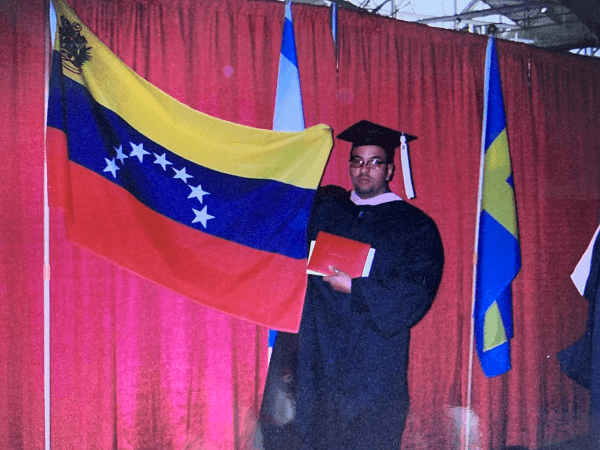
Omar graduating as a lawyer
Omar Ledezma Jr. graduating from Berkee College of Music

The United States and Berklee College of Music 

Just a few years after graduating, specifically in 1998, Omar made the decision to move to the United States looking for new opportunities and describes this trip as an exploring experience because many of his friends, orchestra fellows and acquaintances from the musical environment in general started taking new directions in the mid 90’s. The young man knew he wanted to do the same and chose the city of Boston to settle in at first.   

Although he finally moved to Boston in 1998, already in 1997, his mother gave him the idea of going to the United States with an open ticket so he could decide whether to stay permanently or return. In the end, he opted not to use the return ticket and stayed in Boston to try to enter any music school through a scholarship.   

After checking several options, he chose Berklee College of Music because it was the only college that allowed him to study composition and arranging as hand percussionist, so he auditioned to be admitted and was selected in the fall of 1999. He obtained a 70% scholarship, but he had to work hard to get the remaining 30%. In that sense, Omar assures that the same school helped him to obtain the corresponding permits to work legally in the country and thus be able to pay the percentage that is not covered by the scholarship. 

Omar also told us that it was his friend Gonzalo Grau who helped him do the demo with which he auditioned to enter Berklee and it was a song of his own titled ”Cacao”. Today, he assures that that recording gave him one of the greatest opportunities he has ever had in life, which was to study there. He spent a total of four years studying in that institution and graduated in 2003. 

During his undergraduate studies at Berklee, Omar had the option to study business and intellectual property and his lawyer’s training made it easier for him, but he defines himself as a ”natural born performer” and his life was the stage, so he did not see himself stuck in an office solving cases.   

One of the first jobs Omar had in Los Angeles was replacing the singer from Johnny Polanco’s prestigious orchestra and that one that helped him take that place was Ray Barreto’s flautist, the late Artie Webb. The concert was held at the Mayan.  
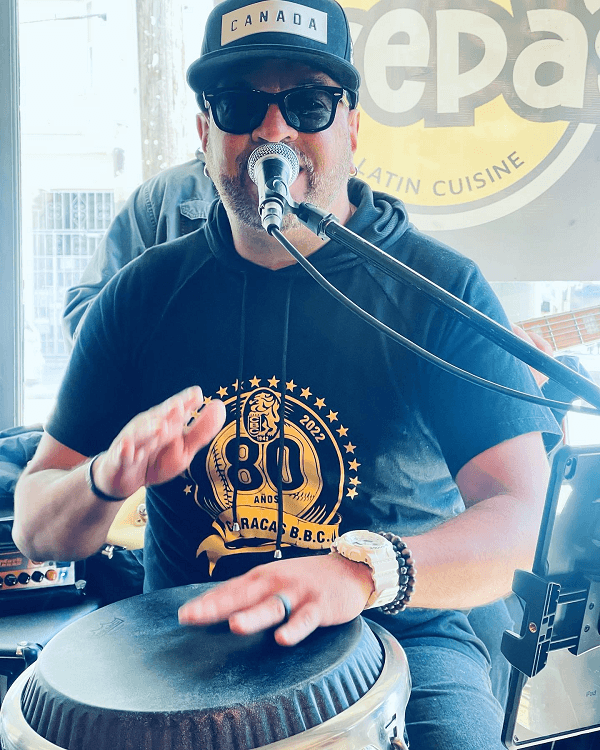
Omar playing the conga
Omar Ledezma Jr. playing the conga in a live performance

Family 

As to the family part, Omar told us that he had married his wife Jennifer Radakovich about seven or eight years ago, but they have no children for the moment. This is because they are still analyzing their opportunities to settle permanently in the state of California, so he assures us that they are still building their future as a couple and as a family. 

Jennifer’s family comes from Serbia and settled in Detroit, Michigan. They had to leave their country, which was then the former Yugoslavia because of the war that went on in the territory at the time. In fact, at a family reunion, his in-laws told him that his wife’s father arrived in the country on the boat anchored in Long Beach, California, The Queen Mary.  

Pacific Mambo Orchestra 

Omar Ledezma started his journey with Pacific Mambo Orquesta practically since its foundation in October 2010, when he started playing at Café Cocomo. Santana’s timbalero Karl Perazzo, who was already included in the lineup of the venue, proposed him to go to this place to play as a percussionist on Monday nights. The problem was that there was no money to pay him for the moment. 

That’s when the directors of Pacific Mambo, Christian Tumalan and Steffen Kuehn, proposed to the owners of Cafe Cocomo to give them some space to have band practice. These Monday meetings ended up being paid rehearsals open to the public in exchange for 10 dollars a night. This lasted some years in which the 20 members of the orchestra were in charge of developing much of the repertoire that has made them famous internationally. 

About this time, Omar said that, on several occasions, he and his orchestra fellows sat down to talk about the continuity of the band owing to the lack of money. The wonderful thing is that everyone always voted in favor of their stay in the group despite the adversities. According to the Venezuelan musician, it was this hunger and desire to succeed that made the orchestra what it is today.   
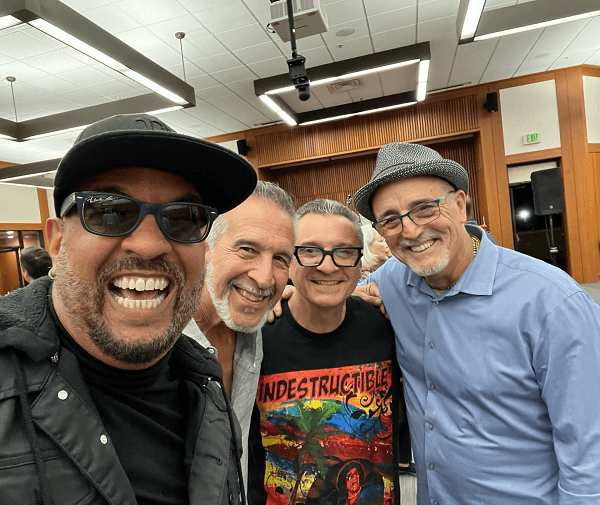
Omar, Eric, Karl, and Edgardo
Omar Ledezma Jr., percussionist Eric Rangel, music producer Karl Perazzo, and bandleader Edgardo Cambon

These efforts worked and Pacific Mambo Orquestra managed to win their first and only Grammy so far in 2014. That year began with the orchestra’s appearance in one of the main banners of the iTunes page for a little over a week, which gave them a lot of popularity at that time and was not common for Latin artists and groups. 

That same year, the group began touring with Tito Puente Jr. in August and were so successful that Omar and five other members of the group decided to begin campaigning for that year’s Grammys via e-mails to all the members of the jury promoting their latest album. Then, on tour, they received the news of their nomination (the second of Omar’s career), but they did not think they would win. 

Much to the surprise of Omar, in January 2014, he received word that Pacific Mambo Orquesta won its first Grammy in the category of Latin Tropical Album of the Year. This event changed the lives of everyone in the group to the extent that large media outlets started looking at them. One of them was world-famous Billboard magazine, which published a piece talking about the band and its talents. 

It is important to stress that, although it was an experience the musician will never forget in his life, he is aware that this is in the past and has to look ahead and focus on his future successes. At this moment, Omar and his companions are focused on making up for time lost during the pandemic and performing all the activities that confinement prevented them from doing. 

Read also: Arranger, composer and pianist Carlos Ordiano 

Pupy Pedroso An Ambassador of Cuban Music in the World

Latin America / Cuba / La Habana

When we talk about the beautiful island of Cuba, it is impossible not to automatically think of its rich and ancient musical culture. We are talking about a small piece of land in the world, of that long Caribbean, but it is full of the most successful musicians of Cuba. the history of Latin rhythms.

It all lies in the Spanish and African influences that came to the Island hundreds of years ago, that race that was created from the strings and the drum, from the white and the black, from singing and dancing.

On this occasion I feel very proud to be able to speak directly with a cultural ambassador, recently appointed by the Latin Institute of Music, the leader of those who are are and one of the founders of the very famous Van Van orchestra, the great Cesar Pupy Pedroso, teacher of teachers, as we have called him for this occasion.

Good morning maestro, thank you in advance for the time you give us to all the readers of the International Salsa Magazzine and the portal www. salsamundi.com.

“Well, here I am very happy to be able to talk a little with you and grateful that you want to talk about this server”

Maestro with 19 years of foundation with Pupy and those who are maestro, tell us how the idea of ​​founding this great orchestra was born after making the whole world dance with the Van Van.

“The idea for the project ‘’Los que Son Son’’ arose from a recording I made (while in Los Van Van) with songs of my authorship performed by an internationally renowned performer. (Omara Portuondo, Rolo Martínez, Xiomara Laugart, Raúl Planas, Caridad Cuervo, Pedro Calvo, Raúl Planas etc…etc..) From that moment on I got the idea of ​​making another album with other performers, with a German publisher, and The album was called César Pedroso y Los que Son.

There came a time when I was on tour with Van Van and the dancers came with the records, so I could sign them, and it was then that the idea came to me of forming an orchestra and leaving Van Van and calling it ‘Los que Son Son’. . ”

Why Pianist?

“In my house when I was born there was already a piano, my father was a pianist, and children always want to be like their parents, and I was not going to be the exception, regardless of the fact that I liked the piano since I was little.”

What theme do you consider the flag of Pupy Pedroso’s new journey? When your orchestra opens

“Themes of the new transit: themes like ”What are the things in life” ””A crazy man with a motorcycle” ”Mommy behave well”, ”They’re calling me” and of course ”Six weeks “”

Pupy Pedroso
Pupy Pedroso

Tell us the story of the musical piece “De la timba a Pogolotti” does it tell us about a change in your life?

“From Timba to Pogolotti: It arises from a piano solo that I did in ”Sandunguera” and Pedrito Calvo identified me, as ”Pupy the sandunguero of Pogolotti” and the neighbors of La Timba (neighborhood where I I was born) they asked my older relatives why they said about Pogolotti, if I was born in La Timba, then I wanted to be okay with the two neighborhoods, when I made ”Los que Son…”

Well, I made that song in honor of the two neighborhoods, because I was born in La Timba, but I grew up in Pogolotti, and all my childhood friends are from Pogolotti, I don’t have friends in La Timba, and I consider that one is from where one is from. upbringing, not where he was born, because all the customs, friendships, first ”girlfriend” were Pogolotti’s.”

Which song is your favorite from Van Van’s golden era?

“If you talk to me about the songs from Van Van’s golden age, there are several, of mine the authorship of Maestro Formell and others of mine, for example of the maestro, there are several, “My doubts” ”Marilu”” The Painful” ”There are women” ”I’m everything” and one of mine: ”Six weeks “Sugar” ”The Negro is cooking” ”It must be over” ”That’s good ”, among many others, we live in a wonderful time”

Since August 2018, he was named Cultural Ambassador by the Latin Music Institute. Do you consider it an achievement or a new commitment?

“I consider both things, an achievement because it is not easy in a country with so much talent and so many performers to take me into account for said recognition, and at the same time a commitment, because I am obliged not to let my musical guard down in any way.” sense.”

Maestro comes from a family of great musicians, his grandfather a director, his father a pianist, both from great Cuban orchestras. Can we say that being a musician in your family comes in your blood? Is it inherited in the genes?

“Yes, sir, I am grateful for having been born in this family where there was so much musical talent, where only music was breathed, my autistic grandfather, director of an orchestra called ”Cuba”, my uncle a percussionist in an orchestra very famous for that ”Arcaño y sus Maravillas” era, and I believe a lot in the musical heritage because I consider myself a product of it.

As a pianist, it is because my fundamental patron was my father, from whom I copied and learned a lot from what I could discreetly practice and as a conductor, because I had the joy of having worked with different directors, Rolando Valdés, Enrrique Pérez, I assisted in substituting for my father and the ones I spent the longest time with, Elio Revé and Juan Formell, I spent 6 years with Revé and 32 with Formell and I learned a lot with both directors, I was lucky.”

To what do you owe your great success as a pianist and conductor?

“I think that to be good at any career, the fundamental thing is that you like it and have the aptitude for it, I think that music does not escape from that rule, because you can like it, but if you don’t have the aptitude, don’t waste your time, and Maybe if you have aptitude and you don’t like it, over time you may like it and fall in love with it, so aptitude is the fundamental thing.”

What is your greatest reference or influence in music?

“My greatest influence is Son, I love Son, rumba, guaguancó, Cuban music and Brazilian music, jazz, but my greatest influence is Son.”

Currently, how do you see timba within the island of Cuba? Minimized by Cubaton or leader of local rhythms?

“I believe that at all times, there have been different musical genres, which have been in the preference of the dancer, in the era of Rock and Roll they danced with Elvis Presly, with Bill Halle and his comets, with Little Richard, but also they danced with Aragón, Benny Moré, Sonora Matancera, among others,…

but today the balance leans more towards these foreign movements, good and bad, and that is happening all over the world, in the dance area, but I do not consider our dance music critical or dead, because there is taste for everything and every time “A convening orchestra performs on an open-air stage, it overflows with audiences, that means we are in battle, and the country that has the most musicians making a living from music is Cuba.”

Tell us about the 2019 projects? New CD? Tours?

“Fundamentally starting the next album, the release of a documentary of a tour we are doing in Cuba and some presentations abroad, to reappear again at the end of the year in Europe, with one of the dance hits from France:

”Having a good time”, I make a parenthesis, clarify that there are countries where our music prevails (El Son, La Timba, La Salsa) like Peru and Colombia, Cuban rhythms are still in fashion, thanks to many musicians and orchestras that make a great job for the dissemination, to the printed media and now the digital wave that quite develops our work, look, you are an example of this, we hope to continue giving our audience reasons to dance.

In August we return to South America, it is the tour we are most looking forward to, the Latin public is one of the best, we think about stopping in August in Colombia, Ecuador and Peru, in the same way we are now planning to organize the calendar, for businessmen or producers who wish to have us in their cities, must contact our direct representatives, talking to them is like talking to Pupy”

What should a producer do to have them in their Latin American projects?

“No compadre, very simple, contact them at these numbers +573022582306 and +51992630351, they are the only ones authorized to market our tour, we want to be in all the cities of Latin America.”

Grateful teacher for your time and for letting us get to know you a little, may the successes continue for what they are.

“Grateful to you, thank you for the dissemination you make of the popular dance music of my island.

It remains to leave you the social media links of such an important orchestra so that you can follow in its footsteps and find out about the development of the successes of this great band, on Facebook:

@pupypedroso and the numbers

+573022582306 and +51992630351.

Luis “Perico” Ortiz: six decades of impeccable musical trajectory

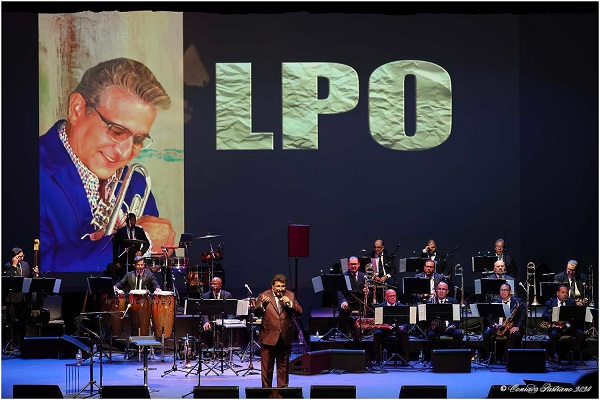
The lobby of the Centro de Bellas Artes in Caguas served as a prelude to the concert, entitled Tocando y contando historias (Playing and telling stories), for which we came to enjoy “Perico” and his guests. Mario Ortiz, Jr. brought together a dozen trumpet players (Luis Figueroa, Richie Segarra, Roby Texeira, Rafael Lebrón, Kevin Ibáñez, Ricardo Marrero, Kenneth Torres, Rubén Días, Ricky Zayas and Simón Rivera) to pay tribute to Luis “Perico” Ortiz by performing his most emblematic solo: ‘Coro Miyare’.

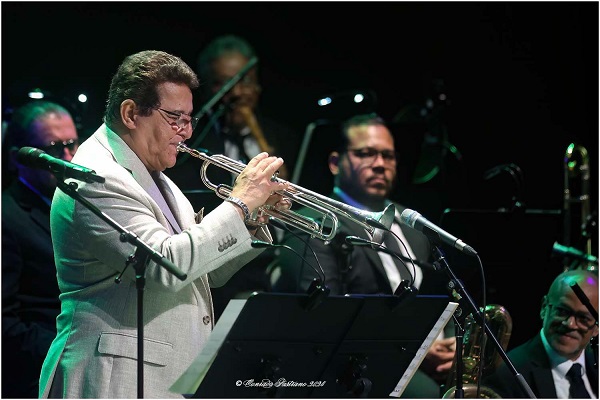
Luis "Perico" Ortiz and his Orchestra
Luis “Perico” Ortiz and his Orchestra

Once in the concert hall, the child trumpeter Daniel Torres (whom Perico predicted would be his successor) and Luis “Perico” Ortiz kicked off the concert with a fun trumpet correspondence. The musicians, turned into actors, shared with us the scene in which we saw Luis “Luisín” Ortiz as a child, playing ‘Quítate de la vía Perico’ with his trumpet; introduction that gave way to the custodian of Ismael Rivera’s legacy (“Moncho” Rivera) to sing the emblematic theme to which “Perico” owes his nickname, while the audience enjoyed images of “Maelo” on a giant screen. The short film defined how “El Sonero Mayor”, personified by “Moncho” told “Luisín”, that from that moment on he would be called “Perico”.

Moncho also interpreted ‘Bilongo’, a song in which Richard Carrasco stood out on the bongo after the saxophones made themselves felt with forcefulness. “Perico” also claimed his turn with the trumpet solo that preceded a resounding “Buenas noches” in the voice of the virtuoso trumpet player.

The orchestra was integrated by: Luis “Perico” Ortiz on musical direction; Yturvides Vilchez, Jan Duclerc and Rolando Alejandro Lora on trumpets; Rafy Torres, Jorge Díaz, Randy A. Román, Mario Alonso Ángel Marulanda on trombones; Roberto Calderón on baritone saxophone, Luis Daniel Valentín Muñiz on tenor saxophone; Antonio Luis Orta and Luis Fernando Hernández on alto saxophones; David Marcano on timbales; Gadwin Vargas Vélez on congas; Richard Carrasco Ayala on bongo; Juan Manuel Rivera Colón on piano; Carlos Luis Martínez Peña on bass; Henry Santiago and David Carrero on backing vocals.

Luis “Perico” Ortiz
Luis “Perico” Ortiz

Then, Henry Santiago received the microphone to sing ‘Tres grandes amigos’. For the song, which refers to Tito Rodríguez, Tito Puente, and Machito; “Perico” introduced “Manolito” Rodríguez and Arianelys Ortiz Cruz, a blind autistic timbalera player.

He was followed by Norberto Vélez, who performed ‘Julián Del Valle’ (1978, Súper salsa) and ‘De patitas’ (1979, Luis “Perico” Ortiz, One of a kind) – songs of great vocal and interpretative difficulty, popularized by the unmistakable voice of Rafael De Jesús – with his usual sympathy. Nor-Bert once again demonstrated his powerful voice, and was matched by the saxophones, whose forcefulness did not diminish the power of Vélez’s voice.

“La India” arrived with her usual energy to interpret ‘Químbara’ and “Manolito” did his part singing ‘La Reina es la rumba’, in company of “La India”, alternating on the soneos.

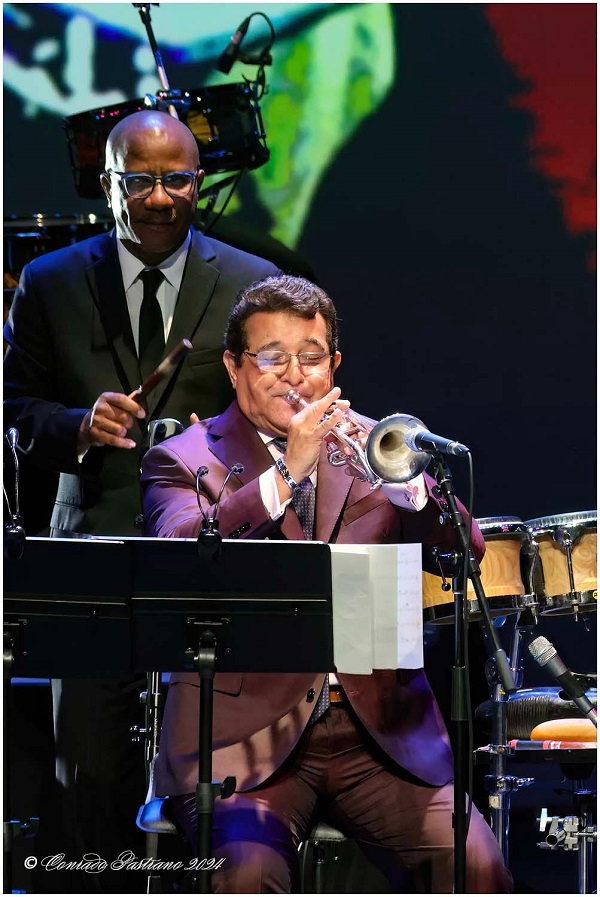
Coro Miyare” made use of Richard Carrasco’s unbeatable performance in the bongo solo with drumsticks -which had been popularized by Roberto Roena-, followed by the crushing solo by “Perico”, the piano solo by Juan Rivera, the conga solo by Gadwin Vargas and the timbales solo by David Marcano.

Richard Carrasco Ayala en el bongó y Luis “Perico” Ortiz

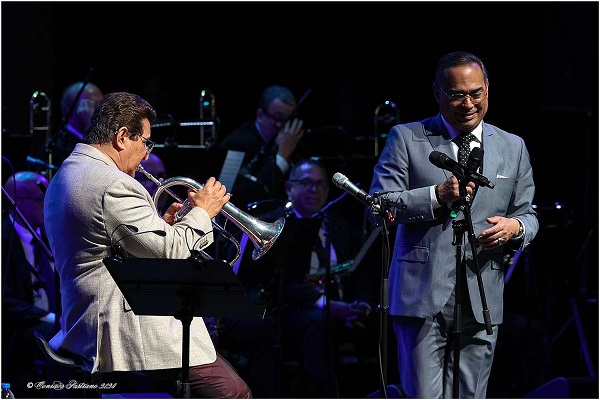
The highlight of the concert was Gilberto Santa Rosa’s brilliant renditions of ‘Atrevida’ and ‘Planté bandera’; recorded and immortalized by Tommy Olivencia’s La Primerísima, to which Santa Rosa briefly belonged.

After the intermission, as a tribute to the “Niño bonito de la salsa”, “Perico” invited Tony Vega to the stage to perform ‘Así se compone un son’ and ‘Borinquen tiene montuno’, the latter adorned with an elaborate trumpet solo by “Perico”.

“Perico” brought Gerardo Rivas to the stage to perform ‘Río abajo va’ (1985, La vida en broma), popularized in the voice of Domingo Quiñones. Gerardo explained that he had accepted the invitation to participate in the concert without knowing which song he was going to sing, in a clear allusion to the vocal difficulty of reaching Domingo’s vocal register. Gadwin Vargas sprinkled the theme with a conga solo with a mozambique beat, very well achieved. Gerardo’s second song, ‘Perico lo tiene’, brought to the stage the cacique of the Rivas dynasty (“Jerry” Rivas, singer of El Gran Combo de Puerto Rico) on the tres and Richie Bastar (bongos player of La Universidad de la Salsa). While Bastar took over on the bongo and the bell, Richard Carrasco took over the güiro. At the end of the intervention, “Jerry” asked for a round of applause for the mulato mayor, Don Rafael Ithier, who was enjoying the concert with all of us who were there.

Then, “Perico” dedicated ‘Perfume de gardenias’ to his mother; a speech that was enjoyed with an instrumental prelude performed by “Perico” and a great vocalization by “El Caballero de la Salsa”.

Next up was Rubén “Panamá” Blades, who received a standing ovation from the audience. This made visibility difficult, although it did not affect our enjoyment of the audio. Blades was in charge of the big hits ‘Plástico’ and ‘Pedro Navaja’ (1978, Siembra). During ‘Pedro Navaja’ Gadwin Vargas replicated the conga sound that Eddie Montalvo immortalized on the recording.

The stage was full when all the guests arrived to perform ‘Como vivo yo’, after Perico announced with a trumpet solo the song that would end the show.

As Luis “Perico” Ortiz said, the vote of love and confidence that we witnessed there will be remembered as an unrepeatable evening, which detailed what has been six decades of impeccable career that the trumpeter, composer, arranger and music producer has achieved.

Luis “Perico” Ortiz y Gilberto SantaRosa
Bella Martinez Puerto Rico 


Also Read: ¡Attack Sergio! Unbreakable: A fun read because of the contradictory content

La Puertorriqueña de Don Perignon presents her new recording work

Demostrando in time

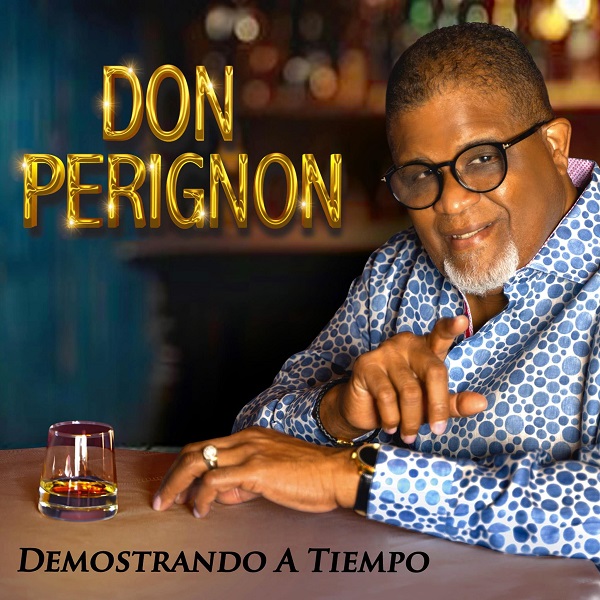
With great enthusiasm, La Puertorriqueña de “Don Perignon” announces the release of its most transcendental recording production, entitled Demostrando a tiempo.

La Puertorriqueña de Don Perignon presents her new recording work

This release is a testament to more than forty-five years dedicated to music by the orchestra’s leader, Pedro Morales Cortijo, known artistically as “Don Perignon”. After overcoming health challenges,

“Don Perignon“, with renewed vigor, turns his attention to what he calls “an unprecedented chapter for the orchestra”.

And what better way to kick off this new phase than with the release of the album? Demostrando a tiempo, a title derived from Moncho Rivera’s composition arranged by Carlos García, adds a historical and significant nuance to the recording.

“Don Perignon” highlights the importance of paying tribute to the pioneers of Puerto Rican popular music, Ismael Rivera and Rafael Cortijo, underlining the crucial influence they had on the musical movement to which their group belongs:

“Moncho represents Ismael Rivera and I represent Rafael Cortijo. They (Cortijo and Rivera) were the ones who created what we do, that’s why we decided to pay tribute to these two greats of our music”.

The album opens with a composition by Sammy Ayala, entitled ‘Dilo tú’, previously recorded by Rafael Cortijo’s Combo. This song, on this occasion, includes an exquisite timbal solo by Perignon.

This, which is La Puertorriqueña’s thirteenth production, rescues two jewels of the prolific composer Catalino “Tite” Curet Alonso.

The first, ‘Aquí estoy con mi son’, was first recorded in 1991 by singer Frankie Hernández under the production of Bobby Valentín. The second, ‘Soy tu ley’, was initially recorded in bolero time by Cheo Feliciano, the so-called “Señor sentimiento”. For this occasion, the skillful musical arrangement -in salsa key- by Ramón Sánchez gives the song a fascinating nuance, by integrating it with the distinctive sonority of the orchestra.

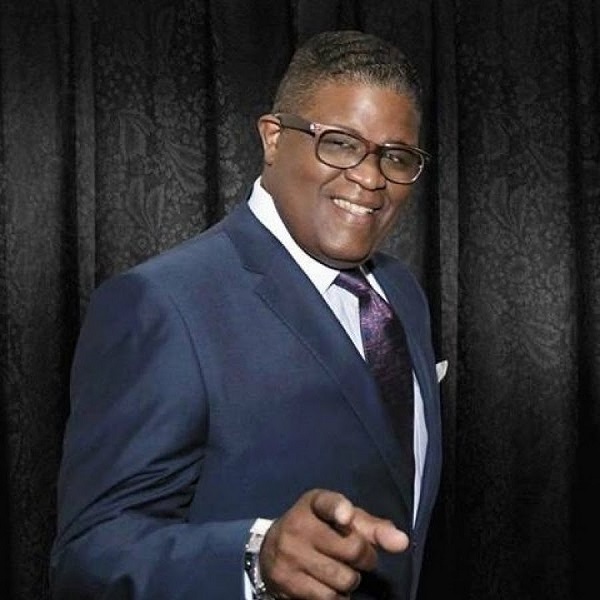
Pedro Luis Morales Cortijo, is the first name of the Puerto Rican timbalero and musical director

It should be noted that ‘Soy tu ley’ was destined to be part of the album Música Maestro (2014), but like fine wines, it waited patiently until it reached its optimum point to be released.

Highlighting the musical diversity, the album includes ‘A quién iré’, a composition by singer-songwriter Héctor Olmo, which at Perignon’s request, seeks to express gratitude to God for all that He has given him, including what the orchestra leader calls “a new opportunity in life”.

“I have my way of thanking God, but not through a message as fine as that,” says the director of La Puertorriqueña, considering that the song written by Olmo came to answer questions about everything he has achieved musically, despite the many obstacles that have come his way. ‘A quién iré’ features the arrangement by Juan C. Cardona, the vocal participation of Alex D’ Castro and the creation of the chorus by “Don Perignon” himself.

Demostrando a tiempo includes the songs: ‘Sácala a bailar’ (composition and vocals by José Karlo Ribot, with a tasty arrangement by Andy Guzmán who incorporates a forceful piano solo); ‘Sin brújula’ (lyrics by Harold Aguirre, musical arrangement by Ramón Sánchez, sung by Joe González); ‘La clave me lleva’, ‘Como si me amaras’ and ‘Afinque, cadencia y sabor’ (title that lists the distinctive adjectives of La Puertorriqueña).

Demostrando a tiempo reflects the dedication and unparalleled talent of “Don Perignon” and La Puertorriqueña.

Through a careful fusion of tradition and innovation showcased in the repertoire, this album represents the invaluable contribution of the orchestra, captivating dancers around the world with its vibrant and distinctive sound.

La Puertorriqueña de “Don Perignon” invites the public to immerse themselves in this unique musical experience and enjoy Demostrando a tiempo, available on digital platforms and select music stores.

La Puertorriqueña de “Don Perignon” invites the public to immerse themselves in this unique musical experience and enjoy Demostrando a tiempo, available on digital platforms and select music stores.

Don’t miss the opportunity to experience the magic of Demostrando on time. Join us on this exciting musical journey.

About Don Perignon:

Pedro Luis Morales Cortijo, is the first name of the Puerto Rican timbalero and musical director known internationally as “Don Perignon,” whose musical career began in 1974.

Don Perignon y la Puetorriqueña

“Don Perignon” comes from a family with a long musical tradition, which includes his cousin, Rafael Cortijo.

After having stood out as musical director for singers Andy Montañez and Lalo Rodríguez, in 1989. “Don Perignon” released his first production La buena vida, which featured the participation of Victor Manuelle. This album was followed by Festival de soneros (1990) and Subiendo (1992).

In his career “Don Perignon” with his orchestra, La Puertorriqueña, has released thirteen recordings, in which figures such as Gilberto Santa Rosa, Víctor Manuelle, Luisito Carrión, Oswaldo Román, Pedro Brull, Josué Rosado, Rico Walker, José Alberto “El Canario” and Hermán Olivera, among others, have collaborated.

Bella Martinez Puerto Rico


Also Read: Déjalo, the latest track by Pedro Conga y su Orquesta Internacional

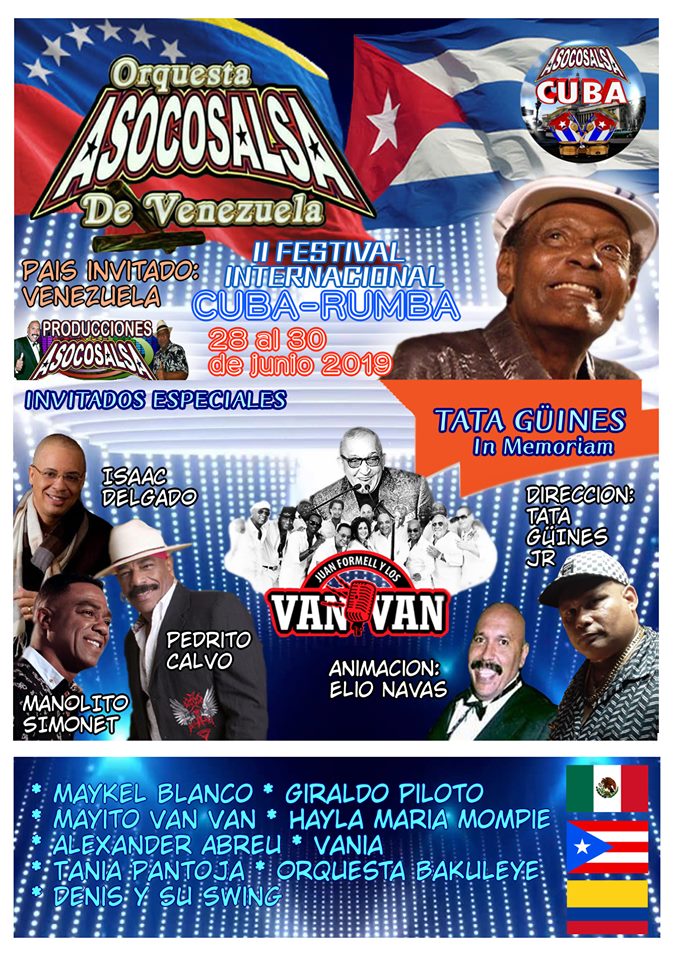
Cubarumba Tataguines in memoriam International Festival in its second edition.

Latin America / Cuba / La Habana

The National Center for Popular Music invites you to participate in the Cubarumba Tataguines in memoriam International Festival in its second edition.

It will be held in Havana from June 28-30, 2019. With the aim of Honoring the memory of Tata güines, Stimulating the artistic creation of rumba groups from the community, encouraging children’s projects based on the folkloric and musical genre, highlight the social value of the rumba as intangible heritage of humanity.

Asocosalsa Cuba
Asocosalsa Cuba

Likewise, to carry out a national and international workshop based on the pedagogical need to strengthen cultural nationality by art students in Cuba on the basis of the figure of tata güines, the fundamental foundation that promoted the proclamation of Rumba as Intangible Heritage of Humanity. . With this goal we urge all young people, students who wish to participate in the Festival through the following themes:

Themes:

  1. Cultural educational practices
  2. Potential value of transformation of the percussive theory of Tata güines.
  3. Main factors that slow down or facilitate the descending of the Rumba genre as a percussion modality.
  4. Ethical and aesthetic values ​​promoted by the practice of percussion
  5. Challenges to perfect percussive techniques
  6. Creation and promotion of Cuban art
  7. Young rumbero, possibility of cultural advancement. Harvested experiences and challenges for the present and immediate future.
  8. Others

The venue will take place at the Turf Night Club

General program:

Press conference

Thursday, June 13, 2019

Venue: El Turf Night Club

Address: F Street between Calzada and Quinta Vedado

Time: 2pm

Participation: Press-Radio-Television-Guests

Duration: 1h

toast to daddy

Place House Museum Tata güines

TIME: 3 PM

Event schedule:

Thursday, June 27

  • 8:00 Opening Gala Avellaneda Hall of the National Theater

Cast Subject to change

  • Tata guines Jr.
  • Makuta Flow
  • Rumbansoc
  • Ronald and his Rumbera explosion
  • Denis and his swing
  • Vania Borges
  • Iannna Wobble

Friday, June 28

Venue: Club Noturno El Turf

  • 9:00 Inaugural Conference
  • 10:00 Recess
  • 10:30 Percussion and dance workshops
  • 12:30 Demonstration group
  • 1:30 Visit Tata Guines House Museum
  • 2:00 Lunch

Cultural

Devil Tun Tun: 4pm to 6pm.

Show Woman in the rumba

Omini Bata-Rumba Morena

  • 6:30 a.m. to 8 p.m. Tataguines/Ochareo Group
  • 10-2am Venue: Club Norturno El Turf Shows with rumba groups

Explosion Rumbera/Rumbavila/Rumbansoc/

Saturday, June 29

Venue: Club Noturno El Turf

  • 9:00 Inaugural Conference
  • 10:00 Recess
  • 10:30 Percussion and dance workshops
  • 12:30 Demonstration group
  • 2:00 Lunch

Cultural

  • 3:00 Clave de Rumba folkloric ensemble / children’s project.
  • 8pm-2am Venue: El Turf Timbalaye Nightclub /Rumberos de Cuba/Rumbansoc/ Tata güines

Sunday, June 30

Venue: El Turf Night Club

  • 9:00 Report of the event. Delivery of Certificates.
  • 10:00 Recess
  • 10:30 Symposium Asocosalsa Cuba
  • 5:00 Cinema Avenue Closing Gala
  • 10:00 Final reception.

Festival Project

Event Organizing Committee:

Víctor Rodríguez García: Executive Director

Arturo Soto Martínez: Chairman of the Event

Suset Núñez Vázquez: CNMP Events Coordinator

Osorio García Rule: CNMP Events Department

Brigitte Oliva: General Producer

Principal Cubarumba
Principal Cubarumba

Company National Center for Popular Music

INTRODUCTION

The Cubarumba 2019 Tata güines in memoriam project is a previous interactive festival that consists of pedagogical, competitive, sociocultural moments that will transfer original Cuban music, through percussion and dance workshops, interaction with the community, as well as shows of this genre, intangible heritage of the humanity, the evident and permanent need to rescue Cuban roots, and the representation of the name Tata güines, a national and international figure. Following this trilogy as a cultural line, the president of the festival Arturo Soto Martínez advocates for this event.

Carrying out research, it is verified that this festival has a high tourist level, which causes a useful strategy to penetrate tourists about our idiosyncrasy and traditions, in addition to giving an unforgettable moment to all those who are present at that moment.

If we observe the social gaze, we realize the motivation of society in general since we encourage in the community a hope of cultural revival, a festival of inclusion in all senses since people of all ages and disabilities participate. Achieving a mutual interaction that achieves as a result an inclusion of this musical genre in daily life and in the tastes of all the people who enjoy it.

It is emphasized that times are changing, however it is important to take actions so that the celebrations of our origin are not forgotten, it is about looking for very frequent actions that work with everyday life, exclusivity, professionalism and good taste that keep this celebration alive. choice for youth not only in our country but around the world

For all the above, the need for this culturally artistic project becomes evident, specifically in these places where a large foreign crowd is concentrated, since it is unaware of Cuban culture. Relying on the battle of ideas that we have daily for the rejection of national identity, this project that settles the roots, that remembers the past, that discloses our present and that above all that is written increases love is evident, permanent and necessary. for Cuban culture.

DEVELOPING

  • Goals:
    • Honor the memory of Tata güines
    • Stimulate the artistic creation of rumba groups from the community
    • Encourage children’s projects based on the folkloric and musical genre.
    • Highlight the social value of the rumba as intangible heritage of humanity

Themes:

  1. Cultural educational practices
  2. Potential value of transformation of the percussive theory of Tata güines.
  3. Main factors that slow down or facilitate the descending of the Rumba genre as a form of percussion.
  4. Ethical and aesthetic values ​​promoted by the practice of percussion
  5. Challenges to perfect percussive techniques
  6. Creation and promotion of Cuban art
  7. Young rumbero, possibility of cultural advancement. Harvested experiences and challenges for the present and immediate future.
  8. Others

PARTICIPATION METHOD

  • Delegates
  • Student
  • Musicians
  • Guests

REGISTRATION FEES: DELEGATES

Foreigners………………50 cuc includes participation in the event, certificate and/or credits.

Cubans …………………….250 cup includes food, participation, certification and/or credits

Cuban students ……………..125 cup includes food, participation, certification and/or credits

PROJECT OBJECTIVES

GENERAL OBJECTIVE

Carry out an international rumba festival based on the artistic value of the figure of tata güines in the world on the basis of the Rumba proclamation as Intangible Heritage of Humanity

Goals:

  • Honor the memory of Tata güines
  • Stimulate the artistic creation of rumba groups from the community
  • Encourage children’s projects based on the folkloric and musical genre.
  • Highlight the social value of the rumba as intangible heritage of humanity
Specific Objectives Actions Indicators Participants Responsible
Honor the memory of Tata güines Hold the Cubarumba Tataguines Festival in memoriam Conciliation Company, Sponsors, Organizing Committee Event Leader
Stimulate the artistic creation of rumba groups from the community Theoretical-practical dance and percussion workshops, presentation of youth groups in event activities Conciliation with Artex, Egrem. Cuban and foreign population Org Committee
Encourage children’s projects based on the folkloric and musical genre.


Activity in the National Folkloric Ensemble of Cuba, headquarters for the socialization of children’s projects Address of Palenque, Production Org Committee Event Leader
Highlight the social value of the rumba as intangible heritage of humanity Activity the woman in the rumba, the longest rumba, the rumba and its youth, the rumba does include you Group Directors Production Event Leader


Tata Guines No 1
Tata Guines No 1

Beneficiary population:

Directly, the population that benefits is Cuban and foreign, since in some way the project is aimed at educating, including, transforming the culture of these times that affects this population.

For this, their full participation is needed, in the first order the attention that is very important, then the interest in dance and percussion and the decline that forms the taste for this musical genre.

Also highlighting the importance of the social inclusion of people with disabilities, we can mention that the festival has the honor of promoting groups with different disabilities. Example of the incursion of culture in Cuba.


  • « Go to Previous Page
  • Page 1
  • Interim pages omitted …
  • Page 23
  • Page 24
  • Page 25
  • Page 26
  • Page 27
  • Interim pages omitted …
  • Page 69
  • Go to Next Page »

International Salsa Magazine (ISM) is a monthly publication about Salsa activities around the world, that has been publishing since 2007. It is a world network of volunteers coordinated by ISM Magazine. We are working to strengthen all the events by working together.