• Skip to primary navigation
  • Skip to main content

International Salsa Magazine

  • HOME
  • Previous editions
    • 2026
      • ISM / May 2026
      • ISM / April 2026
      • ISM / March 2026
      • ISM / February 2026
      • ISM / January 2026
    • 2025
      • ISM / December 2025
      • ISM / November 2025
      • ISM / October 2025
      • ISM / September 2025
      • ISM / August 2025
      • ISM / July 2025
      • ISM / June 2025
      • ISM / May2025
      • ISM / April 2025
      • ISM / March 2025
      • ISM / February 2025
      • ISM / January 2025
    • 2024
      • ISM / December 2024
      • ISM / November 2024
      • ISM / October 2024
      • ISM / September 2024
      • ISM / August 2024
      • ISM / July 2024
      • ISM / June 2024
      • ISM / May 2024
      • ISM / April 2024
      • ISM / March 2024
      • ISM / February 2024
      • ISM / January 2024
    • 2023
      • ISM / December 2023
      • ISM / November 2023
      • ISM / October 2023
      • ISM – September 2023
      • ISM – August 2023
      • ISM July 2023
      • ISM Edition June 2023
      • ISM – May 2023
      • ISM April 2023
      • ISM March 2023
      • ISM February 2023
      • ISM January 2023
    • 2022
      • ISM December 2022
      • ISM November 2022
      • ISM October 2022
      • ISM September 2022
      • ISM August 2022
      • ISM July 2022
      • ISM June 2022
      • ISM May 2022
      • ISM February 2022
      • ISM January 2022
    • 2021
      • ISM December 2021
      • ISM November 2021
      • ISM October – 2021
      • ISM September 2021
      • ISM August 2021
      • ISM July 2021
      • ISM May 2021
      • ISM April 2021
      • ISM June 2021
      • ISM March 2021
      • ISM February 2021
      • ISM January 2021
    • 2020
      • ISM December 2020
      • ISM November 2020
      • ISM October 2020
      • ISM September 2020
      • ISM August 2020
      • ISM July 2020
      • ISM June 2020
      • ISM May 2020
      • ISM April 2020
      • ISM March 2020
      • ISM February 2020
      • ISM January 2020
    • 2019
      • ISM December 2019
      • ISM November 2019
      • ISM October 2019
      • ISM Septembre 2019
      • ISM August 2019
      • ISM July 2019
      • ISM June 2019
    • 2016
      • ISM December 2016
      • ISM November 2016
  • Spanish
  • Download Salsa App
    • Android
    • Apple

Search Results for: Timba

Pablo Padin born in Manhattan, New York

North America / United States / New York 

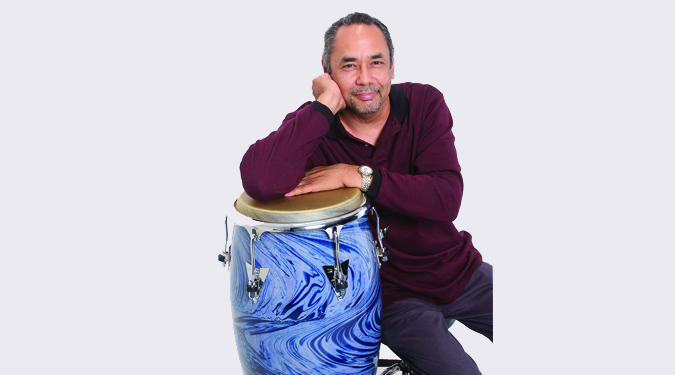
Pablo Padin born in Manhattan, New York. I grew up with a pair of Timbales at home

I was born in Manhattan, New York on December 1, 1969.  My parents Pablo and Haydee Padin moved from Puerto Rico to New York in 1968. My father played Timbales with local salsa groups at the time, so I grew up with a pair of Timbales at home.

My father started teaching me how to play at a very young age.  We moved to LA. , California in 1978 and I started playing drums in the school band and in the community drill teams as well.

I (Pablo Padin) got my first private drum set lesson at the age of 9 at a music school in Hollywood California.

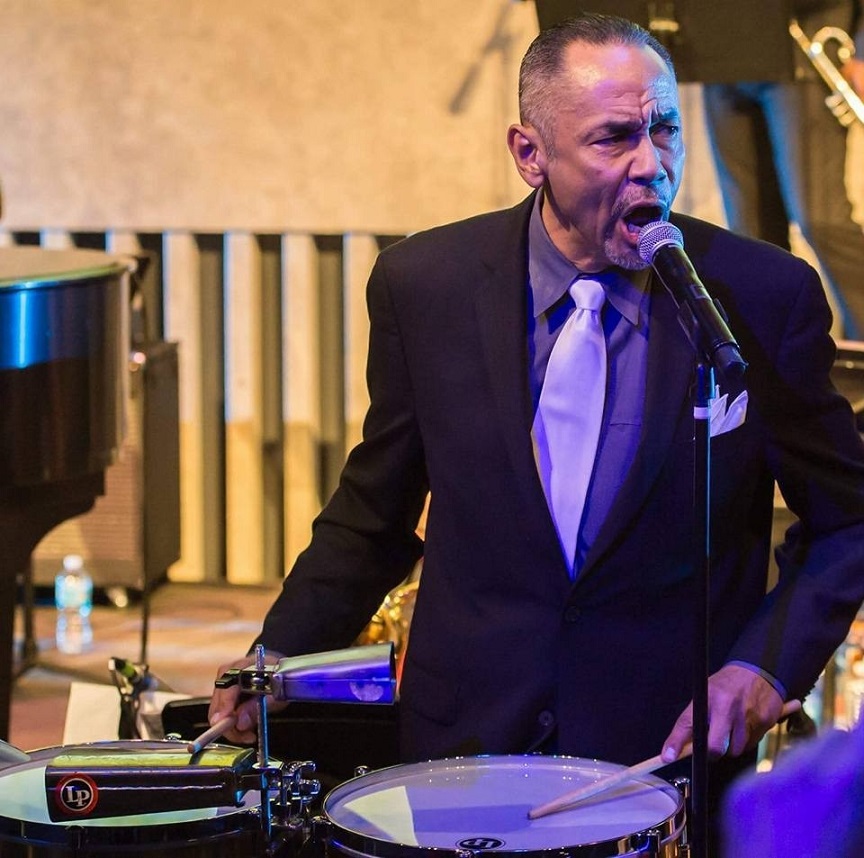
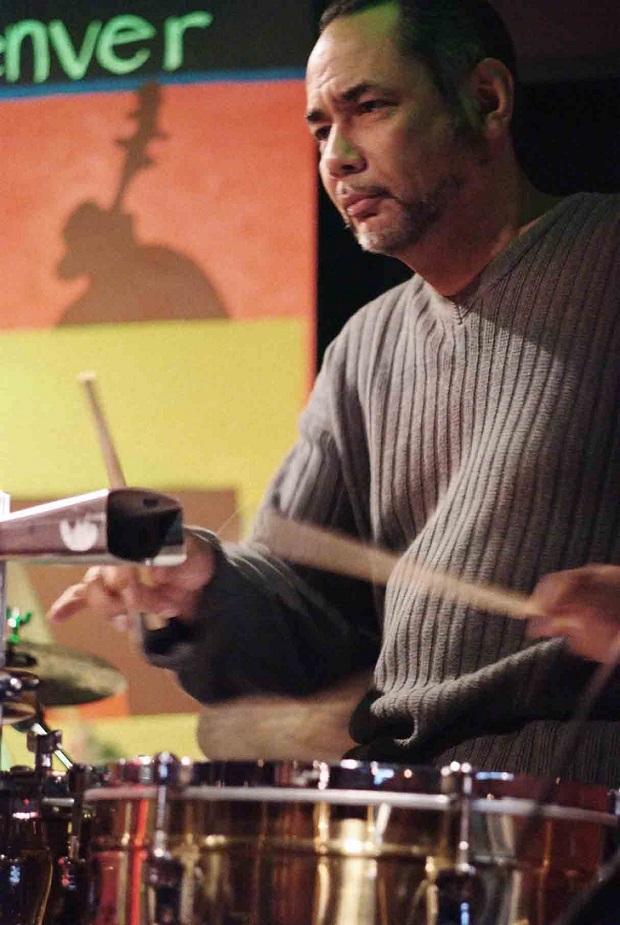
Pablo Padin in concert

At the age of 15, I (Pablo Padin) started playing my first steady gig in a salsa band with my father at a nightclub in Marina Del Rey, California.

In 1989 we moved to Puerto Rico so I started studying music at the Interamerican University in San German, PR. At the university I studied with the musicians that were playing with all the big salsa and merengue groups of that time.

So at that point in time I started playing with famous salsa singers such as Roberto Lugo, Nino Segarra, Hector Tricoche, Domingo Quiñones and Johnny Rivera.

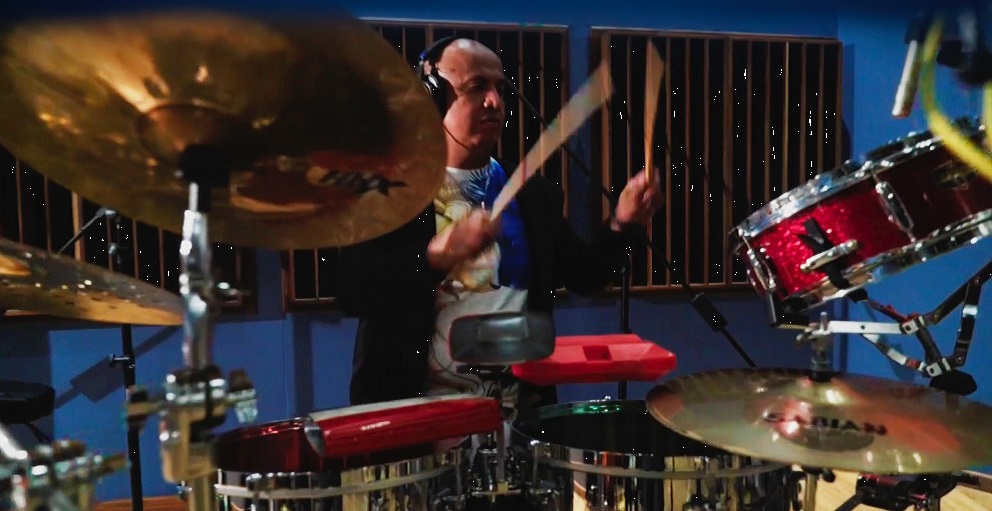
At the same time I started doing studio work as well. In 1996 I got the call to play with Gilberto SantaRosa and did that gig for 15 years. It was with Gilberto that I hooked up with piano player, arranger and producer Jose Lugo.

Jose started using me on all of his studio productions. I have won 6 Latin Grammys and 2 American Grammys on recordings and productions of artists such as: Millie Quezada, Elvis Crespo, Grupo Mania, Gilberto SantaRosa and Tito El Bambino.
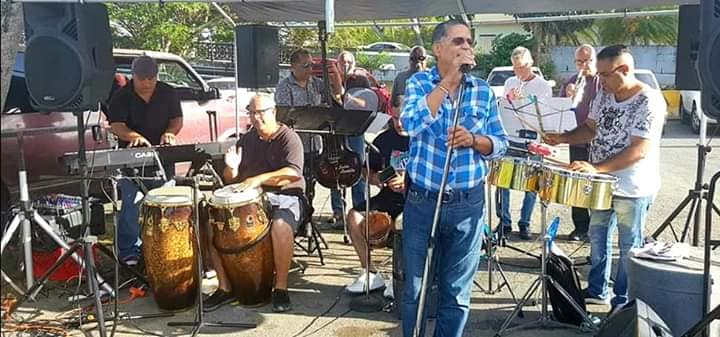
Pablo Padin singing
Pablo Padin singing

At that point in my career I started recording and playing concerts with artist such as Puerto Rican Power, Pedro Brull, Yomo Toro & Willie Colón, Andy Montañez, Ismael Miranda, Tito Nieves, Cheo Feliciano, Rafael De Jesus, Richie Ray & Bobby Cruz, Bobby Valentín, Marvin Santiago, Cano Estremera, Victor Manuelle, Ruben Blades, Ray De La Paz, Jose Alberto ”El Canario” Lalo Rodriguez, Truko Y Zaperoko, DLG, Isaac Delgado, Herman Oliveras, Edwin Colón Zayas and many others.

To this date I’ve been working with Jose Lugo’s Guasabara Combo, in which our first cd was nominated for the Latin Grammy.

We are working on our third cd now that will include two original compositions of mine. I’m super exited, humbled and thankful for all the great experiences that I’ve lived and for the ones that are yet to come, Thank You God!!!!!
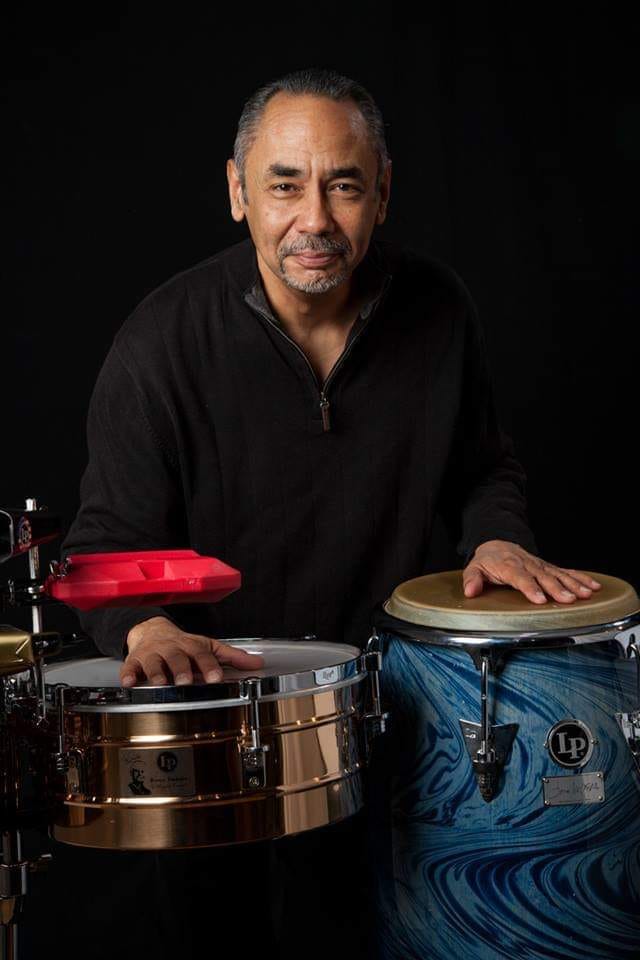
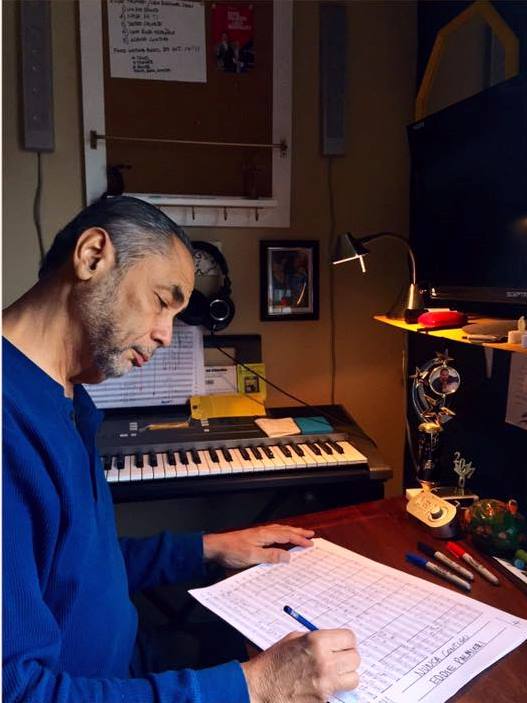
José Madera

North America/ United State / New York 

José Madera, Percussion & Arranger of Machito, Tito Rodriguez and Tito Puente

One would think that a job with the world famous Tito Puente

Band  keep busy a percussionist.

But the musician, arranger and composer José Madera had yet found the time to record and write music for some of the most influential bands in the world.

Prior to joining Tito Puente over 35 years ago, Madera play for four years with the famous Machito Orchestra, and recorded with many artists of R & B (including James Brown, Diana Ross, David Sanborn and Aztec Two – Step).

As an arranger for Fania Records Plant, played in several comerciales successes, and through the years has composed music for the Fania All- Stars, Larry Harlow , Johnny Pacheco , Willie Colón, and Celia Cruz .

Although he has recorded some 75 albums in 20 years, as well as numerous radio jingles and film soundtracks, Madera still had time for his other career for 15 years he had worked as a teacher and conductor in a high school for the performing arts with private funds, in the city of New York.

Jose has written many arrangements for countless commercial Latin artists and has recorded or worked with many of them as well. Some of them include: Larry Harlow, Johnny Pacheco, Chico O’Farill:  The Lincoln Center Afro-Cuban jazz orchestra, Celia Cruz, Tito Rodriguez, Fania All-Stars, Willie Colon, Joe Farrell, Machito, Graciela, Mario Bauza, Willie Rosario, Earl Klughand  Eddie Palmieri, just to name a few.

Jose has also worked and recorded with many pop, R&B and jazz artists.

Some of them include Diana Ross, James Brown, Dizzy Gillespie, Paquito D’Rivera, George Benson and Lionel Hampton among others.

Jose has performed on over 250 recordings. He has worked on several television show soundtracks including “The Simpsons” and several motion picture soundtracks including ”The Mambo Kings Play Songs of Love” where he was the musical arranger and conductor for the Tito Puente segment of the film.

Jose also taught the art of playing Latin percussion instruments at BOYS HARBOR in New York City for 28 years.

Jose has done and continues to do musical clinics around the country at various schools.

¨He was the musical director of the Latin Giants of Jazz from 2001 to 2009¨.

José Madera continues his musical direction with the Mambo Legends Orchestra, a band comprised of former members of the Tito Puente Orchestra, which is dedicated to performing new creative Latin and Latin jazz concepts, as well as some of the music of Machito, Tito Rodriguez and Tito  Puente.

José Madera has personally re-created and re-arranged much of the music that the ban ds performed during the heyday of the Mambo at the Palladium Ballroom in New York City, which is considered by many critics to be the “Greatest and Mostinnovative Era” in the history of Latin music.

Madera’s saxophonist father  Jose “Pin ” Madera, was one of the original members of the Afro -Cuban Orchestra Machito .

Young Joseph was influenced by drummer Machito (The best Latin Big Band drummer I’ve ever heard).

Later I was influenced by José Mangual and the same Tito Puente. The LP Timbale bell (circa 1966) was the first instrument Wood LP , today plays a variety of congas , bongos , guiro and bells LP.

Compared with the instruments that were used years ago , the sounds I get from the LP instruments are very authentic.

As an arranger, it is very gratifying to know that whatever you write will be accompanied by instruments LP, which only improve the quality of interpretation.

In 2008, Madera was entrusted to the Department of Research and Development LP designing the Signature Series José Madera Congas .

José Madera is proud that these drums, bearing his name, present a sound and a visual such outstanding features.

Mura Peringa Orchestra

Europe / France / Strasbourg

Mura Peringa Orchestra, A tribute to Salsa culture, given by 9 crazy musicians of Latin music

Since 2006, the group (Mura Peringa) brings together 9 musicians (20 – 34 years old) united by their passion for Latin music.

Their influences are important musicians and orchestras such as: Sierra Maestra, Mercado Negro, Eddie Palmieri, Oscar D Leon, Maraca Valle, Chaparro y su Orquesta, Orlando Poleo, Fania All stars, Willie Colon and Hector Lavöe.

From the creation of the project, the heart of repertoire focuses on a color Salsa Dura 70’s, embellished with Bolero, Merengue, Chachacha, Son, Cuban Rumba, Timba.  The compositions and rearrangements of Mura Peringa, faithful or transfigured, were able to invite the crowds to dance on the stages of the French grand-est, and during the summer tours in Switzerland and in the south of France.

Mura Peringa’s music, tasty, throbbing, intoxicating, is supported by rich arrangements, and by the solid instrumental and stylistic mastery of her musicians.  The strength of Mura Peringa is her ability to metamorphose. The lead vocals on the front of the stage go from one musician to another, causing so many reversals of point of view.

The staging of the game and the transitions are served by a light creation that finishes training the audience at the rhythm of the clave and syncopations.  Get ready to swing; it will be hard to resist the call of the dance Mura Peringa, a tribute to Salsa culture, given by 9 crazy  musicians of Latin music. 

United in the most vibrant Salsa orchestra of the Great East, songs, brass and percussion invite you to dance to Afro-Caribbean rhythms and music.  Listening to the surprising compositions and rearrangements of Mura Peringa, you will not sit for long.

MusiciansCongas: Paul StengerTimbales: Nicolas SchmidtBass : Theron FuhrmannClavier : Sebastien ValleTrombone : Fabrice ToussaintSaxophone: Adrien LabordeFlute / Percus : Camille EvrardTrompet : Alexandre BrandTrompet: Adrien Arnaud

To enjoy, and to dance

Jorge Bautista

Latin America/ Mexico / Mexico City

Jorge Bautista, Musical director and percussionist of the Irawo Orchestra

Jorge Bautista is a musician from Mexico City, he began his percussion studies at the age of 5 due to family tradition.

Jorge Bautista
Jorge Bautista and his Congas

The timbal, conga and bongo are the first percussion instruments that he studies empirically until at the age of 15 he studies at the autonomous music school for 5 years and then diversifies his knowledge in percussion from various places in Latin America such as : Colombia, Dominican Republic, Cuba, Peru and Brazil among others as well as in Africa.

Accompaniments Sauce

The experienced percussionist musician Jorge Bautista has performed important musical accompaniments with great exponents of our Afro-Caribbean music such as: Jerry Rivera, Maelo Ruiz, Tito Nieves, Willie González, Alfredito de La Fe, Oscar D`León, Larry Harlow, Ismael Miranda. , Ritchie Ray, Bobby Cruz, Roberto Roena, Oscar Hernández, Alberto Barros, Arturo Ortiz, Arturo Ortiz, Jimmy Bosch, Tito Allen, Viti Ruiz, Ray Sepúlveda, Herman Olivera and among others.

Jorge Bautista
Jorge Bautista

Latin Jazz Accompaniments

Among the stars of Latin Jazz, percussionist Jorge Bautista has performed accompaniments, among them we have: Arturo Sandoval, Ed Calle, Waney Bergeròn, Hector Infanzòn, Ola Onabule, Tlaxcatecalt Latin Jazz, Papo Sánchez, Ofunan, Daniel López, Latin Jazz On, Latin Hot Band, Density 6 and among others.

Other accompaniments

The Mexican multi-instrumentalist has also accompanied great music performers such as: Armando, Manzanero, Susana Zabaleta, Emmanuel, Kalimba, Samo, Víctor García, Carlos Cuevas, Alexander Acha, María León, Lisset, Aleks Syntek, Maria del Sol and Raul D’blasio.

Jorge Bautista and his musical instruments

Due to his great versatility, he has been invited to give clinics in different cities of the Mexican Republic as well as in several countries in the United States, Honduras, Colombia and Guatemala.

Currently the musician is sponsored by several major instrument brands worldwide: Gon Bops, Tama, Sabían, Promark, Remo, Rockears, GR, NND Percusión, and Veerkamp.

When it comes to compositions, Luis “Tata” Guerra is widely known internationally

On June 9, 1934, in Guanabacoa, Cuba, Luis “Tata” Guerra was born. Excellent Percussion Master with a Guinness World Record for having accompanied more orchestras live and in recordings.

A virtuoso musician, Luis Tata Guerra, member of a humble and hard-working family, is the last of 4 brothers, born of a musical tradition, his father played guitar, and his older brother Emerio Guerra is a guitarist in Havana.

He studied music and saxophone at the Salesian School of Guanabacoa. He learned to play the tumbadora, and the rhythms of Rumba and Guaguancó in his neighborhood in the 50s.

Luis “Tata” Guerra
Luis “Tata” Guerra

He joined the Almendra Orchestra in 1954, performing in the best nightclubs of the island. He rehearsed with Conjunto Casino and Conjunto Arsenio Rodríguez.

In 1956 he arrived in Colombia with the Cuban Swing Orchestra, he stayed for 4 years working with the groups Sonera del Caribe and the Pepe Reyes Orchestra (Cuban singer). From there he went to Venezuela where he has lived since 1960.

Maestro Guerra has an extensive career as a musician for his activity in different groups such as: Los Melódicos, Víctor Piñero y sus Casiques, Aldemaro Romero, Chucho Sanoja, El Pavo Frank, and accompanying on percussion in Caracas Tito Rodríguez, Miguelito Valdez, Rolando Laserie, Daniel Santos, Olga Guillot, Rubén Blades, Paco de Lucia, including the Timbal King Tito Puente and many Others.

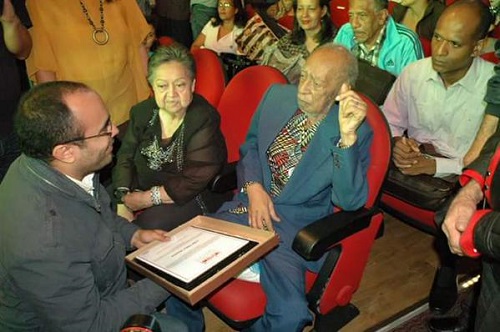
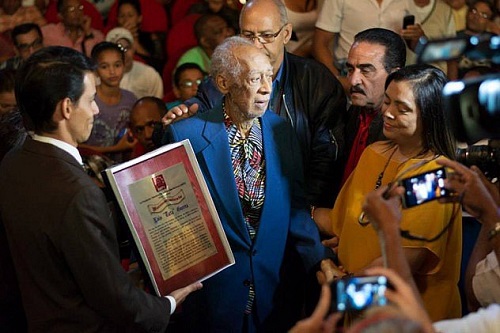
Recognition for Luis "Tata" Guerra
Recognition for Luis “Tata” Guerra

His compositions have been played in the media in Santo Domingo, Spain, Cuba, Puerto Rico, Colombia, Venezuela.

The composition “Son Matamoros” dedicated to this famous Cuban trio, was included in the movie “Salsa” with the participation of Celia Cruz, Tito Puente, Mongo Santamaria, Grupo Niche and other values. He was a member of the VTV Orchestra (channel 8) for 23 years (1965-1991).

Member and Director of the trio Hermanos Rodriguez, in 1994 they traveled to the Canary Islands invited by President Hermoso, and are well known there for the hit “Son Canario” (composition by Guerra himself).

Again in 1999, they returned to the Canary Islands for more than 2 months, in addition to performing at the fabulous The Trump Taj Mahal Casino Resort in Atlantic City, New Jersey.

He presented his program “RAICES CARIBEÑAS” on ANTV.

When it comes to compositions, Luis "Tata" Guerra is widely known internationally.
When it comes to compositions, Luis “Tata” Guerra is widely known internationally.

His fondness for acetate collection was recognized throughout Venezuela. A work with his conjunto became very popular and the voice of “Kiko” Mendive reminded us of the grilles and discómanos of Cali in the 80’s. “Barara Bururu”.

We also remember the time he shared with his compatriot Rafael “Felo” Bacallao Hernandez, who had retired from the Aragon orchestra.

With great regret we recorded on February 24, 2015, the unfortunate news of the death of Tata Guerra, four months shy of his 81st birthday, he had been suffering from an accelerated affection in his respiratory system, remaining hospitalized at the Florida Clinic in the city of Caracas, where in the early morning of that day he left us.

“When I listen to reggetón/ my heart stops/ because my thing is rumba and son”.

Maria Luisa Guerra

Read Also:  Stelio Bosch Cabrujas a remarkable musician, but completely forgotten by the new generations

Source:

Por: Carlos Molano Gómez

Bogotá – Colombia
Derechos Reservados de Autor -primera publicación – 2016
Actualizado 2021.


  • « Go to Previous Page
  • Page 1
  • Interim pages omitted …
  • Page 29
  • Page 30
  • Page 31
  • Page 32
  • Page 33
  • Interim pages omitted …
  • Page 69
  • Go to Next Page »

International Salsa Magazine (ISM) is a monthly publication about Salsa activities around the world, that has been publishing since 2007. It is a world network of volunteers coordinated by ISM Magazine. We are working to strengthen all the events by working together.