• Skip to primary navigation
  • Skip to main content

International Salsa Magazine

  • HOME
  • Previous editions
    • 2026
      • ISM / April 2026
      • ISM / March 2026
      • ISM / February 2026
      • ISM / January 2026
    • 2025
      • ISM / December 2025
      • ISM / November 2025
      • ISM / October 2025
      • ISM / September 2025
      • ISM / August 2025
      • ISM / July 2025
      • ISM / June 2025
      • ISM / May2025
      • ISM / April 2025
      • ISM / March 2025
      • ISM / February 2025
      • ISM / January 2025
    • 2024
      • ISM / December 2024
      • ISM / November 2024
      • ISM / October 2024
      • ISM / September 2024
      • ISM / August 2024
      • ISM / July 2024
      • ISM / June 2024
      • ISM / May 2024
      • ISM / April 2024
      • ISM / March 2024
      • ISM / February 2024
      • ISM / January 2024
    • 2023
      • ISM / December 2023
      • ISM / November 2023
      • ISM / October 2023
      • ISM – September 2023
      • ISM – August 2023
      • ISM July 2023
      • ISM Edition June 2023
      • ISM – May 2023
      • ISM April 2023
      • ISM March 2023
      • ISM February 2023
      • ISM January 2023
    • 2022
      • ISM December 2022
      • ISM November 2022
      • ISM October 2022
      • ISM September 2022
      • ISM August 2022
      • ISM July 2022
      • ISM June 2022
      • ISM May 2022
      • ISM February 2022
      • ISM January 2022
    • 2021
      • ISM December 2021
      • ISM November 2021
      • ISM October – 2021
      • ISM September 2021
      • ISM August 2021
      • ISM July 2021
      • ISM May 2021
      • ISM April 2021
      • ISM June 2021
      • ISM March 2021
      • ISM February 2021
      • ISM January 2021
    • 2020
      • ISM December 2020
      • ISM November 2020
      • ISM October 2020
      • ISM September 2020
      • ISM August 2020
      • ISM July 2020
      • ISM June 2020
      • ISM May 2020
      • ISM April 2020
      • ISM March 2020
      • ISM February 2020
      • ISM January 2020
    • 2019
      • ISM December 2019
      • ISM November 2019
      • ISM October 2019
      • ISM Septembre 2019
      • ISM August 2019
      • ISM July 2019
      • ISM June 2019
  • Spanish
  • Download Salsa App
    • Android
    • Apple

Search Results for: Timbales

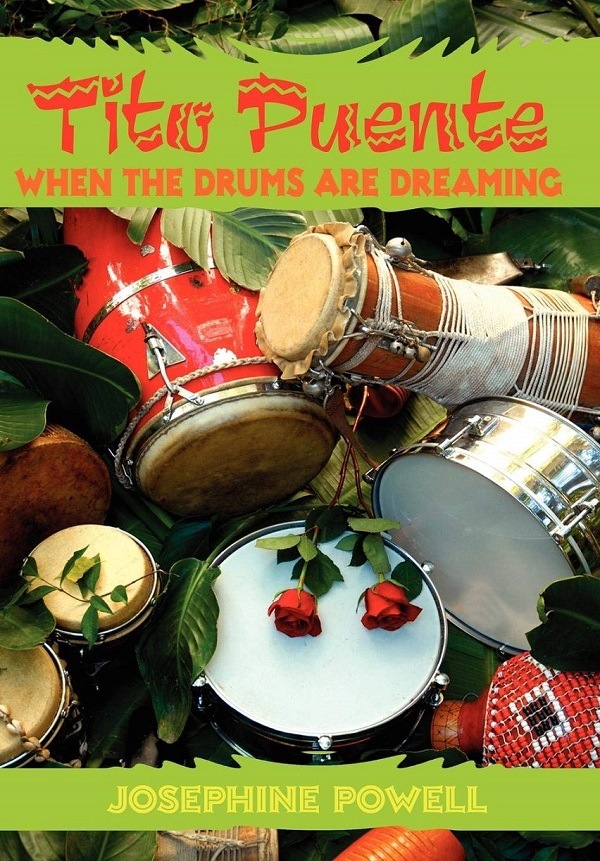
“Tito Puente: When the drums are dreaming” A biography of the King of Latin Percussion by Josephine Powell

North America – USA –CaliTifornia

This month we are sure that you will have time to enjoy an excellent reading at home. So we recommend this book by Josephine Powell. An interesting biography about the legendary Tito Puente, that takes us on a journey through the more than 60 years in which he performed.
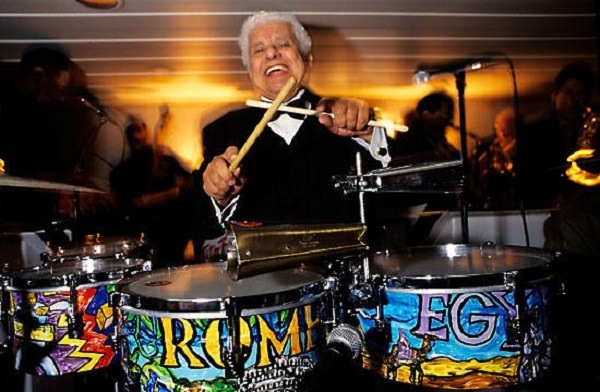
Further the life of Tito Puente, you can know his insight into the Latin music industry. With many anecdotes of his encounters, racial discrimination while touring and how that impacted his relationship with other band members. There are also numerous insights into his personality, his temperament, and the many obstacles he had to overcome to achieve legendary status.

Josephine Powell’s book on Tito Puente and his contributions to Latin music and dance is a treasure trove of people, places, facts and history. Because of the author’s place in the history of Latin dance, she takes the reader with her through that fascinating maze of how artists like Puente changed the exposure and tastes of the American public and the world.

The Latin Ballroom world today reflects how we adore – and then neglect and forgets – the people who made us who we are. She mentioned many fascinating dance-related characters in this story that takes place in New York, Los Angeles, Miami, the Catskills and Havana.

It is also a much-needed history of great nightclubs and ballrooms, which are only dim memories for the young – but in their time, were the breeding grounds of Latin music and dance. Tito Puente’s percussion and passion are finally brought to life in a fascinating book.
To remember Tito Puente’s career as accurately as Josephine Powell has done makes this biography a worthwhile read. Tito Puente the man and Tito Puente the musician are blended into the tempo of the times during which the musical man lived. For young musicians seeking success Josephine Powell’s well-written commentary provides a glimpse of what can lie ahead in one’s career; so do read Powell’s take on Tito Puente’s life and perhaps capture a taste of how you too can climb the charts with a dash of spice in your style.

With over 100 albums, several Grammy nominations, 7 Grammys and posthumously awarded The Grammy Lifetime Achievement Award in 2003, his footprint in the world of music will forever be the standard of excellence that others will look to emulate.

Josephine Powell took on the monumental task of writing about his life, the forward was written by Tito Puente 2 months before he died.

Because of their lifelong friendship of many decades, Josephine was the one person who could create this book. Her talent and passion will pulled this off to perfection. He was a man who brought his music to the world, and put the Mambo on the map.

This book never could have been written without her dedication and perseverance and the personal moments she shares. From the very first chapter, the quality of her writing can be seen as she starts with the moments leading up to his death and continues for 16 more, giving you the history of Latin music from its inception to the music of today. Throughout her many archives of pictures from her private collection, your eyes will wide with wonder.

Josie Powell traces the evolution of Afro-Cuban, Puerto Rican and jazz forms from their generally recognized origins through the end of the twentieth century, focusing on Puente’s interactions with professional allies and constant rivals.

Powell documents musical events as an aficionado of the Latin genres, almost religiously avoiding disclosure of Puente’s family life. Those not yet born during the Big Band decades or Mambo mania can imagine the atmosphere from descriptive passages of Manhattan ballrooms, Havana dance halls, LA nightclubs.

About Tito Puente

Ernesto “Tito” Puente was born in 1923 in Spanish Harlem and grew up with the advent of radio and American swing bands. At 10 years old he aspired to be a dancer, like Fred Astaire. An ankle injury gave him the opportunity to explore his talent as a musician. At fourteen he won the coveted Benny Goodman, Gene Krupa drum contest. Tito became a master percussionist. His instrument was the timbales, a pair of cylindrical drums beat upon with sticks. When he joined the dynamic Machito Orchestra at seventeen he saw a promising future, but the Japanese attack on Pearl Harbor December 7, 1941 took him off to war.

He led a makeshift orchestra delivering lovable American wartime tunes when he was not fighting. He returned home wounded, weary and jobless. Puente’s tale should have been the story of every returning American GI, who went off to war, came home to his sweetheart, attended college, raised a family and settled down in an adorable house. Things were not that way.

After the war his obsession for Cuban music drove him to Havana. He attended secret meetings of Santería, an Afro-Cuban religious cult with its roots steeped in mysticism often referred to as black magic. With the lure of the sacred batá drum he discovered a world of rhythms never heard by a white man’s ear. He found himself inside the beat, and thoroughly possessed. Soon Tito became a devotee of Santería and used those drum patterns and calls, which were the mainstay and backbone of his music. Today this hot hypnotic music is known worldwide as Salsa.

About Josephine Powell

Author Josephine Powell – a music historian, lecturer, and consultant on ballroom music and dancing and Latin American music – was a consultant (music, history, and dance) on the motion pictures Salsa, Havana, and The Mambo Kings, and their soundtracks; The Mambo Kings track received a Grammy Nomination. She also consulted on two Golden Eagle television shows; two television documentaries, one Presidential Inaugural Ball, and two Grammy-winning record albums by her mentor Tito Puente.

In 1990, she obtained a star for her mentor on Hollywood’s Walk of Fame, orchestrated his associated live concert on the Boulevard, and organized a gala event at the Hollywood Roosevelt Hotel, with music industry executives, film producers, and celebrities.

Powell’s dance career took her to the South Pacific, the Philippines, Guam, Hong Kong, Thailand – where she performed for the Royal Family – and Vietnam, where she introduced mambo to the troops in a revue she wrote herself. A Gold Medal ballroom dancer, Powell was Tito Puente’s West coast mambo dance partner, and a cast member of the Broadway show Sketchbook in Las Vegas.

Through touring the country for over a decade with stage and lounge shows, along with work in the recording, television, and movie industries, Powell learned wardrobe design, writing, comedy, and choreography. Appeared at the Tropicana, El Rancho Vegas, Flamingo, and Nevada Club in Las Vegas; The Golden Hotel and Mapes Hotel in Reno; The Wagon Wheel in Lake Tahoe, and The President Hotel in Atlantic City, among others.

After an injury forced her to retire from dance, Powell became a real estate agent in Beverly Hills, where she became actively involved in political work with celebrities and later joined Connie Stevens’s organization Les Girls. Powell’s work and charitable activities afforded many opportunities to work with Hollywood producers, directors, writers, and luminaries.

Powell studied the history of ballroom music and dance, ethnomusicology, journalism, and Spanish at UCLA. A regularly featured musicologist on radio stations KXLU and KPFK, Powell receives many requests for lectures and consultations. She has been a presenter and judge at numerous dance competitions, including the Feather Awards and the U.S. Open National Swing Dance Competition. The Mormon Temple Genealogical Library in Los Angeles has made her its expert lecturer on French Colonial Maritime records. Since 1986, she has conducted ten research and study trips to Havana, where she is a curatorial consultant for El Museo Nacional de la Música Cubana.
With information from: https://josephinepowell.com
You can buy this wonderful book in Amazon: https://www.amazon.com/Tito-Puente-When-Drums-Dreaming/dp/1425981585


Gon Bops

USA / Los Ángeles / California

Gon Bops, Remains one of the oldest and most respected manufacturers of Latin instruments in the world

Gon Bops
Gon-Bops Logo

The Gon Bops legend began in 1954 California when Mexican-American Mariano Bobadilla (born in Guadalajara) – who would go on to become one of the most highly-regarded conga builders in the percussion industry – started designing and building Conga and Bongo drums.

A band instrument repairman and professional trumpet player, Bobadilla launched Gon Bops in his father’s old wooden garage in a downtown Los Angeles neighborhood.

He chose the name Gon Bops because “Gon” was one of the colloquial expressions of the time, as in, “everything is gone, man” – and “Bops” because his friends nicknamed him Bob, which sounded like “Bop” in the Latino dialect.

While Bobadilla’s drums remained true to the classic Cuban shape, he was a genuine innovator in the development of drum hardware. He designed the first teardrop crown with rounded counter hoops, developed to protect players’ hands – a concept that is now universally accepted.

He also gave birth to the first tunable hardware for congas and bongos in the United States. Having witnessed Cuban conga players heating up drums in their kitchens prior to performing, Bobadilla decided there had to be a simpler more reliable method to tension these instruments.

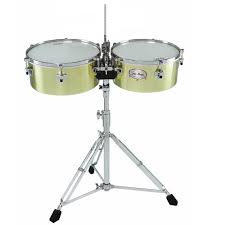
Other innovations from the young company were Taroles (wooden timbales), the first pre-mounted replacement heads for congas, chromatic tuned cowbells and numerous stands, adapters and other hardware.

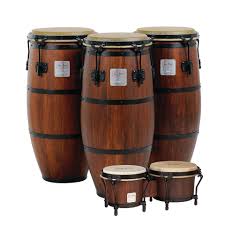
Congas
Congas
Drums
Drums
Bongoes
Bongoes
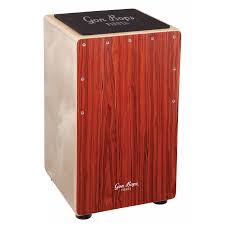
Drums
Drums
Gon Bops instruments

Gon Bops enjoyed great early success. The instruments were highly sought after by the top players of the era – giants like Alex Acuna, Mongo Santamaria, Francisco Aguabella, Armando Peraza, Poncho Sanchez, Jose Hernandez and Rich Barrientos – all of whom contributed invaluable R&D input. Gon Bops quickly became the undisputed leader in Latin percussion instruments and remained so throughout the 1950’s, 60’s and 70’s.

Mariano remained deeply committed to a hands-on role in production and retained complete control of the design and fabrication of all his products. As a result, Gon Bops instruments were mainstays on the biggest stages around the world, including the massive Woodstock festival in 1969.

But the winds of change were sweeping through the American percussion industry. By the time the 1980’s rolled around, all of the major US percussion manufacturers had moved offshore to manufacture their instruments.

Cheap Asian labor costs meant greater profits. But as manufacturing costs decreased, so did quality, and for that reason Bobadilla refused to mover his production outside of the US. As a result, Gon Bops began to struggle financially. Unable to compete against his larger competitors, Bobadilla had no choice but to close the doors of his highly regarded company.Thankfully, that was not to be the end of the Gon Bops brand.

Pandereta
Pandereta

In 2001 Don Lombardi of US drum manufacturer DW bought the company along with all of its patents and trademarks. Lombardi had met Bobadilla in 1978 when he used Gon Bops Timbale shells to build DW brass snare drums, and subsequently had continued to seek R&D advice from Bobadilla.

It was a great fit, and it was no coincidence that the quality of DW drums and hardware continued to grow after the Gon Bops acquisition.

To run his newly acquired Gon Bops brand Lombardi hired the best drum craftsmen in the US. He even bought San Francisco-based Sol Percussion in order to conscript its founder – drum builder Akbar Moghaddam – to the Gon Bops cause.

instrument
instrument

Moghaddam brought along fellow drum craftsman Octavio Ruiz, and Lombardi teamed them up with Alejandro Perez, a drum builder who had worked with Mariano Bobadilla in the original Gon Bops factory.

In 2010 cymbal-maker SABIAN Inc. announced that it had purchased the inventory, intellectual property, patents and manufacturing equipment of Gon Bops from DW.

The deep commitment to innovation that SABIAN applied to its own instruments had inspired founder Robert Zildjian and his son, SABIAN President Andy Zildjian, to a search for like-minded instrument companies available for acquisition. And it was a happy circumstance had Lombardi had begun to seek a buyer for Gon Bops.


“We’re excited to begin this new chapter in SABIAN and Gon Bops history”, notes Andy Zildjian. “Gon Bops instruments are a perfect blend of vintage craftsmanship and innovative thinking. Since its founding in 1954, the company has pioneered several features and improvements that have forever changed Latin instruments.

We are excited about not only expanding distribution, but also continuing to focus on groundbreaking designs that represent clear improvements in meeting the needs of musicians. The pursuit of the best sound is what our craftsmen work for every day. We know the fit is perfect, above all, because sound matters.”

Today, Gon Bops remains one of the oldest and most respected manufacturers of Latin instruments in the world.

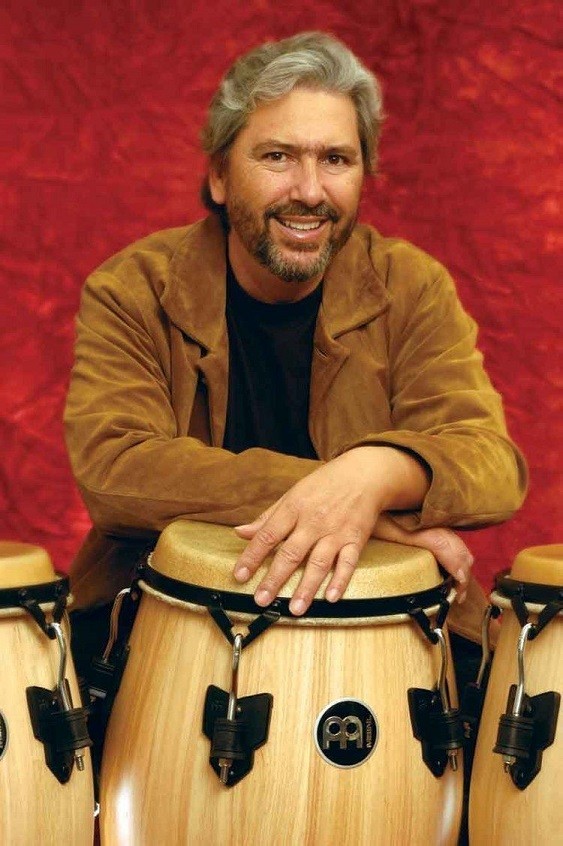
Luis Conte: A great percussionist respected all around the world

Luis Conte is recognized as one of the most respected and prolific percussionists in contemporary music. Famous and respected around the world, this Cuban artist has backed acts such as James Taylor, Madonna, Eric Clapton, Carlos Santana, Phil Collins, Rod Stewart, Shakira, Aretha Franklin, Céline Dion, Selena and hundreds more.

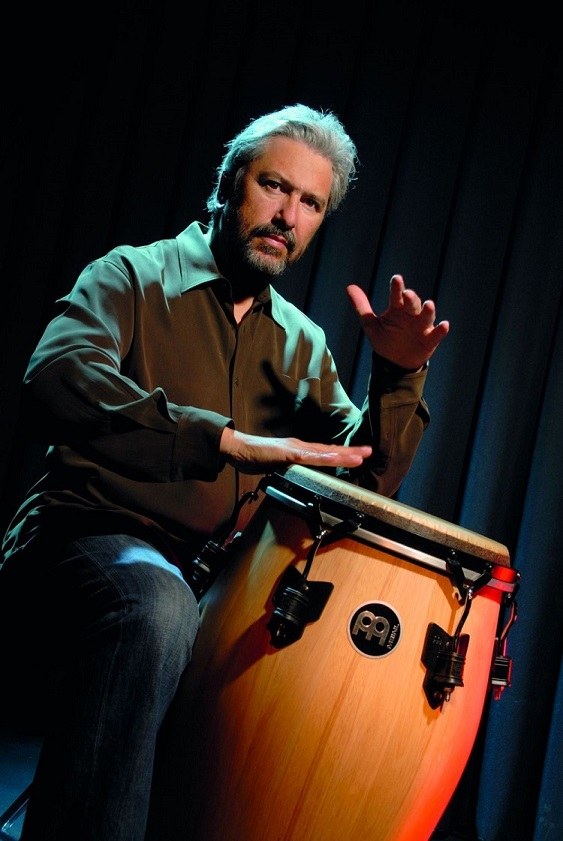
The Grammy winning musician Luis Conte known for flawless technique and an unparalleled ability to seamlessly incorporate Latin percussion and world drumming into popular music. He is a master of percussion instruments such as the cajon, congas, timbales, bongos, clave, cowbell, shakers, maracas, pandeiros, and guiro. In addition to Latin and World rhythms, Luis teaches Hip-Hop, Electronica, Jazz, Reggae and many other styles.

Luis Conte playing the drum

Conte is originally from Santiago de Cuba, where he grew up surrounded by the most authentic traditions of traditional popular music and the strong rhythmic presence of the music from Santiago. Living in Santiago he could see and hear the Santiago conga, the carnivals, the street rumbas. His father took him to events. He also remembers the Santiago trova. There was always music in his house and his father’s troubadour friends played. To all this he attributes a lot of his way of playing and interpreting all forms and styles of music.

Very young he emigrated to Spain and then to the United States, there he settled in Los Angeles. In this city he began his musical career as a guitarist in various rock groups. Later he developed his talent on drums and percussion at Los Angeles City College, he quickly became one of the most respected percussionists internationally.

Conte proved himself versatile musically, at the age of 18 he began to move in the musical circle, and by 1973, he was playing regularly in local clubs. He quickly became a busy studio musician, and throughout the 1970s, he played in the Latin Jazz band Caldera. His first tour was in 1974 with The Hues Corporation, they had a hit titled “Rock the Boat”. From there everything continued, always making new contacts and relationships with musicians and, since then, he has worked with countless artists and recorded on more than 2,000 albums.

Some of Luis’ musical influences :

  1. All the drummers that play in Carnival in Santiago
  2. Tata Guines
  3. Mongo Santa Maria
  4. Papin
  5. Patato Valdez
  6. Armando Peraza
  7. Francisco Aguabella
  8. Airto Moreira

His live performance and touring career took off when he joined Madonna’s touring band in the 1980s. To date, Conte has built an extremely successful career including a run composing and playing in ABC TV’s Dancing with the Stars band, among dozens or hundreds of other tv and film projects.

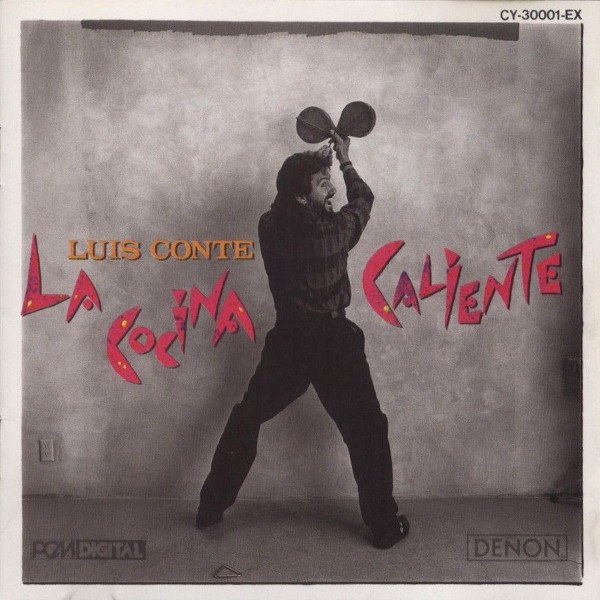
His debut as a bandleader came in 1987, when he released La Cocina Caliente, which included a Latinized version of Chopin’s “Susarasa”. Conte also played percussion on the Pat Metheny Group release ‘We Live Here’, in 1995, on the Pat Metheny ‘From This Place’, in 2020 as well as I Mother Earth’s first two albums Dig (1993) and Scenery and Fish (1996).

Conte has toured as part of James Taylor’s “Band of Legends.” He has also played alongside such famed musicians as Alex Acuña, Jaguares, Larry Klimas, and David Garfield, both as a bandleader and a sideman.

Luis Conte was part of Phil Collins 1997 “Dance into the Light” tour and 2004 “First Farewell Tour”, performing in both of them Afro-Cuban percussion and adding more depth into the concert songs. He also performed during The Phil Collins Big Band tours in 1996 and 1998 and again during the Phil Collins Not Dead Yet tours 2017/2018. In 1999 Conte collaborated in Maná MTV Unplugged project.

The cinema has also had the collaboration of this great artist who has participated in the recording of the soundtracks of well-known titles of contemporary filmography such as Transformers (1 and 2), The Lost City (Andy García), Hankock, Rain Man, Mission: Impossible, The Italian Job, among others.

Photo of Luis Conte on stage

He transmits his knowledge

Knowledge is nothing if it is not shared so that more people can progress and grow music, and Luis Conte knows it. For this reason he began the following initiatives.

Luis Conte has created an extensive repository of world percussion lessons. Students in the percussion course have unlimited access to a collection of guided, high quality percussion lessons and an extensive library of play-along tracks.

In addition, it has its own line of drumsticks and instruments supported by Meinl Percussion and the company of instruments of Zildjian. Has launched its line of congas, drums and shakers that was unveiled at the NAMM Show (2005).

Conte has the Guide to Latin Percussion Vol. I in its 2nd Edition, with the aim to help you become a well-equipped percussionist capable of performing comfortably in the most common musical situations within the Afro-Caribbean/Brazilian spectrum.

Proud to be Cuban

Luis Conte and Phil Collins

Luis Conte has always shown a deep love for his country. He carries his name with pride wherever he goes. In 2009 he had the opportunity to return to Cuba and it was a dream come true.

In an interview he stated: “When I returned to Cuba I realized that it had not been complete, my heart was missing something and that was to be back in Cuba, I am already whole.”

Conte listens and always tries to be aware of what is happening musically in Cuba. Cuba is a source of music.

He eagerly awaits the opportunity to travel to Cuba and be able to play with the great interpreters of the island.

For him, the Cuban is in the field with its royal palms, the sea breeze, the beaches, the mountains of the East, cane, tobacco and rum… the rumba, the changüí, the danzón, the mambo, the son, the tres guitar, the tomb, the bongo and the harpsichord… the maracas and the güiro. Always affirms: “Cuba is Cuba!”

Luis Conte’s Discography

In addition to having participated in countless albums for various artists, many of them worldwide success, Luis Conte has his own discography, among which is:

  • La Cocina Caliente, Denon Records (1988)
  • Black Forest, Luis Conte, Denon Records (1978, Realización 1989)
  • The Road, Luis Conte (1995)
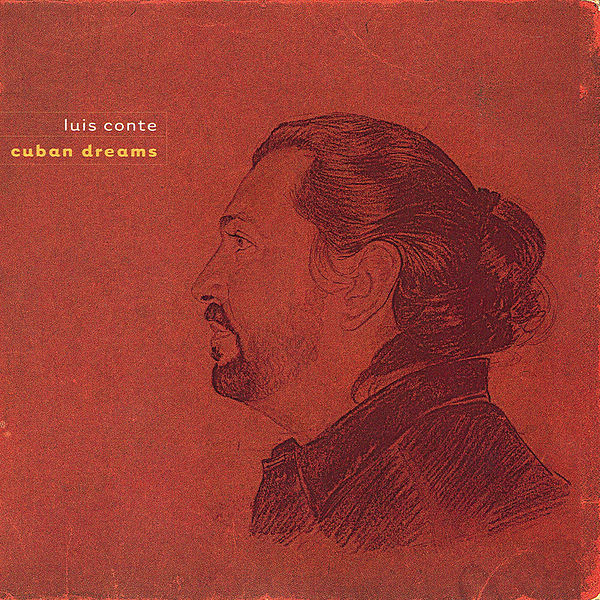
  • Cuban Dreams, Luis Conte, Rounder Records (2000)
  • Dvd Luis Conte Signature Congas, Meinl
  • Dvd Live At Pas, Luis Conte
  • Dvd Studio Percussionist, Luis Conte (2003)
  • Dvd The Latin Jazz Trio, Luis Conte, David Garfield, David Carpenter.
  • A Coat Of Many Colors, Wolds Drummers Ensemble, Summerfold (2006)
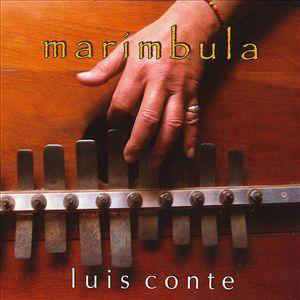
  • Marímbula, Luis Conte, (2007)
  • Dvd The Ultimate Drummers Weekend, 10th Anniversary, Dave Weckl Band (2010)
  • En Casa De Luis, Luis Conte Bmf Jazz (2011)
  • Our World in Song, Wu Man, Luis Conte Y Daniel Ho. Wind Music International (2014)
Luis Conte La Cocina Caliente
Luis Conte Marímbula
Luis Conte Cuban Dreams

Deserved awards

Luis Conte’s genius stems from his ability to integrate the powerful rhythms of his native Cuba with the American necessities of American pop music. His long and varied career has included numerous awards.

“Percussionist of the Year” – Modern Drummer Reader’s Poll (2009, 2010, 2011, 2012)

“Percussionist of the Year” – Drum Magazine (2007, 2008, 2009)

“Studio Percussionist of the Year” – Drum Magazine (2007, 2008, 2009)

Nominated for the 2015 Grammy Awards in the category of “Best Music Album in the World” for Our World in Song, Wind Music International (2014).

From 2018, is the Cultural Ambassador of Instituto Latino de la Música (ILM).

New plans are coming

For this 2020, Conte had a tour scheduled with James Taylor, but the dates have been  postponed and are being rescheduled to 2021, so no one will be left wanting to see his magnificent presentation

” I really don’t know how I got started playing. As far back as my memory will go, I owned a drum. It’s like asking someone how long they’ve been breathing.”

Luis Conte
Luis Conte

La Dimensión Latina is a Venezuelan salsa group founded in 1972 and still going strong today

The original members Oscar D’ León, César Monges “Albóndiga”, José Antonio Rojas “Rojitas” , José Rodríguez “Joseíto”, Elio Pacheco Jesús “Chuito” Narváez (R.I.P). And later Carlos Guerra.

César Monge, trombone player, after graduating from the Escuela de Bandas Militares, was part of the orchestras “La Tropicana de Eldy Tor” and “Los Mundiales” and “Swing Latino”.

Victor Cuica, a saxophone player, knew him from those musical steps.

Oscar León had just bought a car with which he used to be a cab driver, but with a great love for music.

León wanted to create a musical group and gave Cuica the task of recruiting musicians from the Escuela Superior de Música, where Cuica was studying.

La Dimensión Latina es una agrupación de salsa venezolana fundada en 1972 y sigue vigente

That orchestra was called “Oscar y sus estrellas”. César Monge played in that orchestra for a while, until musician Federico Betancourt, director of his group “Federico y su Combo”, hired him.

From there, Monges moved on to the orchestra “Los Dementes” of musician Ray Pérez and later to “Los Satélites” of “Cheché” Mendoza.

While playing with this orchestra, in the Caracas night club La Distinción in the urbanization El Rosal, a disagreement arose between the owner of the orchestra and the owner of the club.

León took advantage of the incident and decided, together with Cuica and Monge, to reestablish his group. Cuica, inspired by the name of the successful American group The 5th Dimension, suggested calling it Dimensión Latina.

La Dimensión Latina es una agrupación de salsa venezolana

Then León took a square and drew the logo with which the group was launched.

It was formally created on March 15, 1972 in a first rehearsal in La Guaira, at the home of the pianist Enrique (Culebra) Iriarte. It was formed by Iriarte on piano, César Monge (Albóndiga) and José Antonio Rojas (Rojitas) on trombones, José (Joseíto) Rodríguez on timbales and bongo, Elio Pacheco on tumbadoras and Oscar León, renamed Oscar D’León on bass and in the role of singer.

They made their debut as Dimensión Latina at the same venue La Distinción. The repertoire was based on songs by Mon Rivera, Eddie Palmieri and Willie Colón.

Several nights the establishment was frequented by Victor Mendoza, singer and musician founder of Trio Venezuela and by then hired as music producer by the Top Hits record label, who had a band called “El Clan de Victor”, which had to produce an album per year. Mendoza motivated the musicians and they did two musical auditions.

José Rodríguez, who had some money saved due to his work as a musician and motorcyclist, arranged for the recording at Estudios Fidelis with a song by Elio Pacheco and another by Oscar León. These tests were not to the liking of the label owner.

This discouraged Enrique Iriarte, who promptly left the group. His place was taken by pianist Jesús “Chuíto” Narváez. Despite the label’s refusals, Víctor Mendoza wanted to record them and decided to include them in his production of “El Clan de Víctor” in 1972.

Dimensión Latina Patrimonio Nacional

The sextet’s first hit was “Pensando en ti”. Mendoza then suggested Oscar León the artistic name of Oscar D’León.

During 1973 they recorded their second album, called “Dimensión Latina” where he gained recognition and participated in important events, such as tours of Curacao and the carnival of Maracaibo, launching their third album “Triunfadores” from which the second hit of the orchestra “Qué Bailen Tós” was released.

In 1974 the bolerista from Caracas Wladimir Lozano joined the orchestra, who had been working in night clubs in Caracas along with the harpist Ramón Hernández.

Wladimir gave the group more interpretative depth, achieving the duo Oscar and Wladimir, which gave birth to important interpretations and commercial successes that earned the band international recognition.

The highlight of Lozano’s entrance was “La Piragua”, a song that reached the top of the radio charts.

By 1975, La Dimensión Latina enjoyed the support of the public, who enjoyed their performances on television and being the image of commercial products.

A new album arrived, “Dimensión Latina ’75”, and with it came their consecration, for some critics the most successful and iconic. It included songs of extraordinary commercial success such as “Taboga”, “Parampampam”, “Mi Adorada”, “Cañonazo”, and a song by Oscar that was included as filler but would become the best-selling single in their history, “Llorarás”.

This album catapulted the orchestra’s career and gave it a place of recognition in the salsa world that, at that time, was almost reserved for the orchestras of the New York salsa boom.

Musician Carlos Guerra joined the orchestra on trombone, increasing the number of trombonists to three.

Subsequent productions included new commercial and interpretative achievements such as “Dolor cobarde”, “El frutero” and “Dormir contigo”. After their presentation in the United States, La Dimensión produced the album “La Dimensión Latina en Nueva York” (1976), which would be the seventh and last album of the orchestra with Oscar D’León, who would leave the group to start a successful solo career.

In the absence of Oscar, La Dimensión Latina calls, at the suggestion of Joseíto Rodríguez, the well-known guarachero and gaitero from Zulia Argenis Carruyo, who had been a member of Super Combo Los Tropicales and Guaco, for the recording of the album “La Dimensión Latina ’77 Internacional” and bassist Gustavo Carmona.

That same year, thinking of continuing to blaze trails abroad, they thought of a voice of international stature, and it was the Puerto Rican musician Roberto Roena who suggested the famous Puerto Rican singer Andy Montañez, lead singer of the Gran Combo de Puerto Rico.

Montañez was tempted by an extraordinary contract. Along with Montañez, the Zulian singer and sonero Rodrigo Mendoza joins the band and for the first time La Dimensión has three voices in its cast.

On November 11, 1977, La Dimensión Latina headlines the “Salsa International” festival at Madison Square Garden in New York, organized by Ralph Mercado and with the presence, among others, of Wilfrido Vargas and Cheo Feliciano.

Andy Montañez remained with the orchestra until 1980, recording eight albums, including hits such as “El Eco de un Tambor” by maestro Tite Curet Alonso, “Linda Minerva” sung as a duet with Argenis Carruyo, “Ave María Lola”, “Por el Camino”, “Mi Bombolaye”, and Puerto Rican contributions such as “Cantante Errante” by composer Johnny Ortiz and “Quisiera Saber”.

Rodrigo Mendoza managed to create hits such as “Fanfarrón”, “Córreme guardia” and “Suena el cuero”.

The orchestra also included Colombian pianist Samuel del Real, percussionists Carlos (Pacusso) Guillén and Luís Machado and the voices of Cheo Valenzuela, Alexis Martínez, Luis Arturo Guaramato and Alex “Mostaza” Vargas.

Cuatro décadas después y unidos por la salsa el Reencuentro del año Oscar D’ León y La Dimensión Latina

Four decades later and united by salsa, the reunion of the year Oscar D’ León and La Dimensión Latina.

Poliedro de Caracas

Only Invershow makes it possible

Venezuela this May 12, 2023 we will live something “HISTORIC”, and you can be present at this iconic reunion.

From seeing them together again to dancing and singing to the rhythm that only they can achieve.

It will be an unprecedented concert, don’t let them tell you about it and buy a ticket to live it YOU.

Será Un concierto sin precedentes, no dejes que te lo cuenten y compra una entrada para vivirlo TÚ

“The important thing is to maintain the style of the orchestra. The singer here has to adapt to the orchestra, not the orchestra to the singer. Whoever comes to sing has to adapt to the repertoire and to our way of doing salsa, which is very peculiar. We have a unique sonority”. 

César Monge, Albóndiga.

Visit: La Dimensión Latina S.R.L

Read also: Freddy de Jesús Ortega Ruiz “Coco & su Sabor Matancero”

Larry Harlow ”El Judío de la Salsa”: innovative and irreverent

A set of innovative ideas


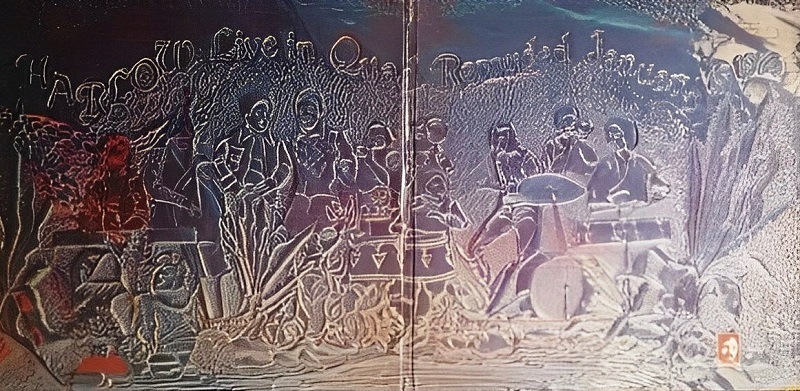
Recorded live on January 16, 1974 at Sing Sing Prison, listeners will immediately discover that the musicians actually came to play from the first note. In a recent conversation, Harlow considers this album to be one of the best of his career and tells how the enthusiasm of the audience positively affected the performance. This was the only Latin album to be recorded in quadraphonic format. The basic concept was similar to today’s surround sound systems, but the way to achieve the four audio channels changed in terms of format.

Harlow took advantage of new technology and recorded the live album live an 8-channel RCA unit and mixed the recording by spinning on a chair surrounded by four speakers. The Fania sound was created by New York musicians who added swing and a distinctive musical sensibility to Cuban son and other Spanish-speaking Caribbean genres. In the process, they twisted the music into something totally new. “Live in Quad” provides an opportunity to hear that musical transformation, as the main part of the music from this concert consists of compositions by Arsenio Rodriguez.

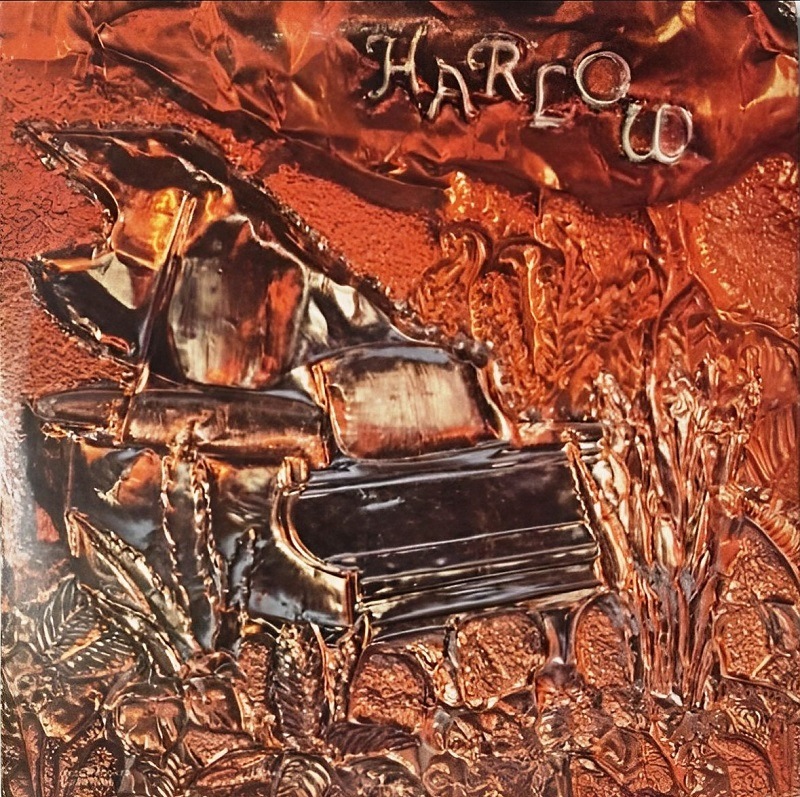
Cover of the album
Cover of the album ”Live In Quad”

In the 1950s, Harlow made several visits to Cuba, where he followed and became friends with Rodriguez. Back in New York, he had the opportunity to play with his idol and eventually dedicated an full album to him. For Harlow, the piano is overdubbed and interacted with a harpsichord, simulating the union of the tres and the piano made by Arsenio. This album sounds as exciting and fresh as it did 32 years ago. “Señor Sereno,” Harlow’s big hit with Ismael Miranda, opens the album. Junior Gonzalez, who debuted with Harlow in Hommy, gives us his own version. On a personal level, this performance is an example of the Fania sound: great orchestral work, swing and energy.

More details about the album

 Inside of the album
Inside of the album ”Live In Quad”

Also from Hommy, the song “Gracia Divina” grows in intensity with Tony Jiménez’s brilliant rhythmic fills over Harlow’s guajeos and the powerful swing of the horn section. Justo Betancourt’s gifted voice stars in the treatment given by Harlow to “Mayari” by Compay Segundo. “Jóvenes Del Muelle” is another Cuban classic, arranged by the great Barry Rogers. The arrangement and playing evoke classic ensembles while still sounding modern. Here we listen to trombone solos and a tasty bass solo by Eddie Guagua Rivera.

To date, Harlow is best known for his version of “The Wallet.” This arrangement by Sam Burtis in a masterclass. Notice the Lilí Martínez’s influence in Harlow’s solo, followed by fine trumpet solos and another violin solo by Lewis Kahn. “Tumba y Bongo” was originally composed for Arsenio’s rhythm section (Kila, Quique and Chocolate). This arrangement by Mark Weinstein highlights an exciting hand-to-hand between Pablo Rosario and Tony Jimenez, who delights the audience when he raises his drum in the middle of the solo.

Back of the album
Back of the album ”Live in Quad”

“Suéltala” provides a framework for Júnior González’s soneos while offering exciting solos by Reynaldo Jorge and Nicky Marrero. “Arsenio”, the theme song of the dramatic album Harlow recorded in tribute to his musical hero, gets the matancero flavor of Justo Betancourt with Tony Jimenez standing out with another great solo. In “Descarga Final,” Harlow unleashes the creativity of the members of his orchestra and the singers exchange soneos in a friendly hand-to-hand. Guagua offers another impressive solo while the percussionists are meant to steal the show.

Credits:

Ralph Castrella – Trumpet

Charlie Miller – Trumpet

Junior Gonzalez – Maracas

Larry Harlow – Piano, Harpsichord

Reynaldo Jorge – Trombone

Pablo “El Indio” Rosario – Bongo, Cowbell

Anthony “Tony” Jimenez – Congas

Nicky Marrero – Timbales

Eddie “Guagua” Rivera – Bass

Lewis Kahn – Trombone, Violin

Lead Singers – Justo Betancourt, Junior Gonzalez

Choir – Adalberto Santiago, Larry Harlow, Ralp Castrella

Master Of Ceremonies – Paco Navarro

Producer – Larry Harlow

Engineer – Bernie Fox

Assistant Engineer – Randall Shepherd

Mixing – Good Vibration Studios, N. Y. C.

Recorded Live – Sing Sing, January 16, 1974.

Arrangements – Louie Cruz (“Señor Sereno,” “Gracia Divina”), Larry Harlow (“Mayari,”, “Descarga Final”), Barry Rogers (“Jóvenes del Muelle”), Sam Burtis (“La Cartera”), Mark Weinstein (“Tumba y Bongo”), Charlie Camilleri (“Suéltala”), Bobby Valentín (“Arsenio”)

Original Album Cover – Gary Mason

Metal Graphic Art From Original Album – Charlie Rosario

Devised used by Harlow
Device used by Harlow to record the album

Señor Sereno
Ismael Miranda

Garcia Divina
Larry Harlow / Jenaro ”Heny’’ Álvarez

Mayarí

Jóvenes Del Muelle
Sabino Peñalver

La Cartera
Arsenio Rodríguez

Tumba Y Bongó
Arsenio Rodríguez

Suéltala
Arsenio Rodríguez

Arsenio
Larry Harlow / Ismael Miranda

Read also: Javier Cabanillas and his Cabanijazz Project

  • « Go to Previous Page
  • Page 1
  • Interim pages omitted …
  • Page 15
  • Page 16
  • Page 17
  • Page 18
  • Page 19
  • Interim pages omitted …
  • Page 28
  • Go to Next Page »

International Salsa Magazine (ISM) is a monthly publication about Salsa activities around the world, that has been publishing since 2007. It is a world network of volunteers coordinated by ISM Magazine. We are working to strengthen all the events by working together.