• Skip to primary navigation
  • Skip to main content

International Salsa Magazine

  • HOME
  • Previous editions
    • 2026
      • ISM / April 2026
      • ISM / March 2026
      • ISM / February 2026
      • ISM / January 2026
    • 2025
      • ISM / December 2025
      • ISM / November 2025
      • ISM / October 2025
      • ISM / September 2025
      • ISM / August 2025
      • ISM / July 2025
      • ISM / June 2025
      • ISM / May2025
      • ISM / April 2025
      • ISM / March 2025
      • ISM / February 2025
      • ISM / January 2025
    • 2024
      • ISM / December 2024
      • ISM / November 2024
      • ISM / October 2024
      • ISM / September 2024
      • ISM / August 2024
      • ISM / July 2024
      • ISM / June 2024
      • ISM / May 2024
      • ISM / April 2024
      • ISM / March 2024
      • ISM / February 2024
      • ISM / January 2024
    • 2023
      • ISM / December 2023
      • ISM / November 2023
      • ISM / October 2023
      • ISM – September 2023
      • ISM – August 2023
      • ISM July 2023
      • ISM Edition June 2023
      • ISM – May 2023
      • ISM April 2023
      • ISM March 2023
      • ISM February 2023
      • ISM January 2023
    • 2022
      • ISM December 2022
      • ISM November 2022
      • ISM October 2022
      • ISM September 2022
      • ISM August 2022
      • ISM July 2022
      • ISM June 2022
      • ISM May 2022
      • ISM February 2022
      • ISM January 2022
    • 2021
      • ISM December 2021
      • ISM November 2021
      • ISM October – 2021
      • ISM September 2021
      • ISM August 2021
      • ISM July 2021
      • ISM May 2021
      • ISM April 2021
      • ISM June 2021
      • ISM March 2021
      • ISM February 2021
      • ISM January 2021
    • 2020
      • ISM December 2020
      • ISM November 2020
      • ISM October 2020
      • ISM September 2020
      • ISM August 2020
      • ISM July 2020
      • ISM June 2020
      • ISM May 2020
      • ISM April 2020
      • ISM March 2020
      • ISM February 2020
      • ISM January 2020
    • 2019
      • ISM December 2019
      • ISM November 2019
      • ISM October 2019
      • ISM Septembre 2019
      • ISM August 2019
      • ISM July 2019
      • ISM June 2019
  • Spanish
  • Download Salsa App
    • Android
    • Apple

Search Results for: Timbales

Christmas songs in salsa format from Puerto Rico to the world

International Salsa Magaine presents by Bella Martinez the Irreverent writer of La Salsa.
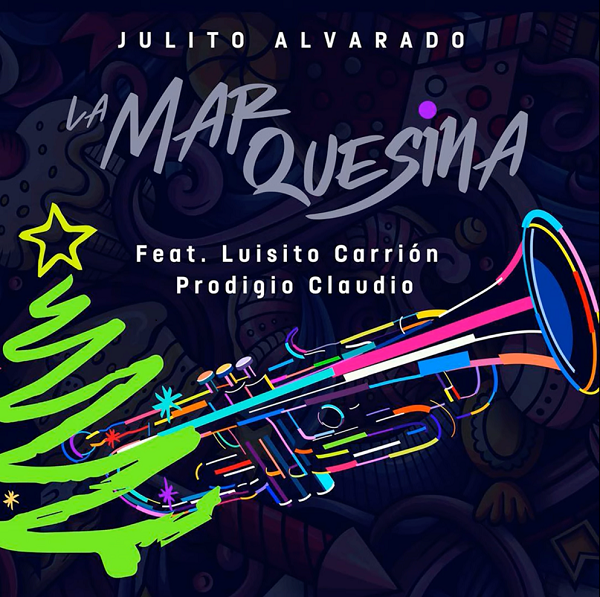
Julito Alvarado compone, arregla, produce “La marquesina”

Julito Alvarado composes, arranges, produces, complements on backing vocals and plays his trumpet on the recently released Christmas single entitled La marquesina.  For this, he invites Luisito Carrión and Prodigio Claudio to be part of the song conceptualized in a traditional septet format.  Before looking at the credits, I thought I heard Henry Santiago in the chorus singing: “Tú pones la marquesina y te traigo lo que te gusta” (You put up the marquee and I’ll bring you what you like) between pregón and pregón.   Indeed, I located his name in the credits.

In the first minute, Julito harmonizes with his characteristic trumpet solo.  At the second minute, we are treated to the Puerto Rican cuatro solo by Prodigio, shortly after Luisito Carrión brings out his commercial announcer’s voice, announcing the solo.

In addition to the above mentioned, the musicians responsible for such sonority are: Jerry Rivas and Julito Alvarado, along with Henry Santiago on backing vocals; Efraín Hernández on bass; Pedro Bermúdez on piano; Omar Hernández on timbales and bongo set; Tommy Lee Ramos on tumbadoras and Neftalí Ortiz on güiro.
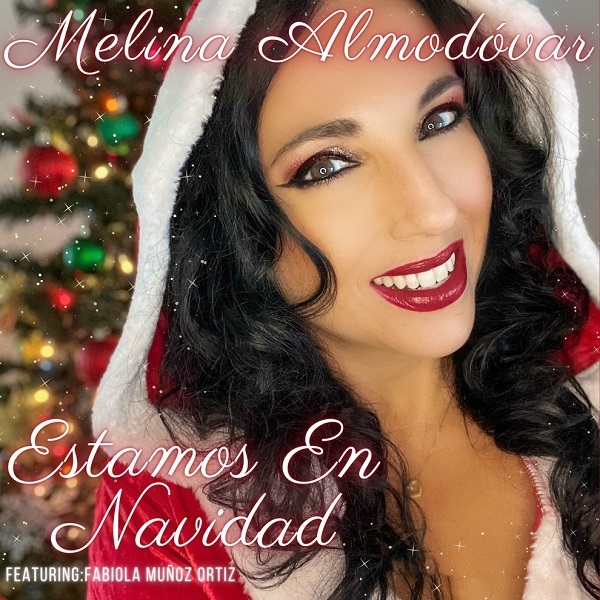
Melina Almodóvar “Estamos en Navidad”

Melina Almodóvar brings us Estamos en Navidad, written by Luigi Flores, who also made the musical arrangement and played the piano.

The song starts in Melina’s voice, announcing that we are in Christmas and that a new year is coming.  “Oh, what an emotion and blessing that we are in Christmas…” she announces the good wishes chanting, between soneos: “have a lot of prosperity and that your dreams come true”.

Before the first minute, Fabiola Muñoz Ortiz’s Puerto Rican cuatro takes center stage.  During the second minute, the guest of honor adds Puerto Rican spice to the longest Christmas in the world with her Puerto Rican cuatro solo, after Melina gives way with a resounding: “Tell Fabiola, how Christmas is heard in Puerto Rico”.

Melina also sings about the coquito, the Christmas menu and everything else that might suggest a Puerto Rican Christmas in full swing.  I love the positive message, whose lyric assures us that the best is yet to come.  It is one of the few contemporary Christmas songs -if not the only one- in that line of positive and motivational inspiration, without being a religious or sacred lyric.  Anyway, the Christmas salsa song is great. It is very tasty.

The musicians responsible for accompanying Melina on this recording are as follows:  Alex Zapata on trombones, Daniel Silva on bass, Caliche Sabogal on all percussion, our beloved musical genius -Luis Aquino- on trumpets. Henry García, Melina Almodóvar and Ángel Vallenilla complement from the choirs.
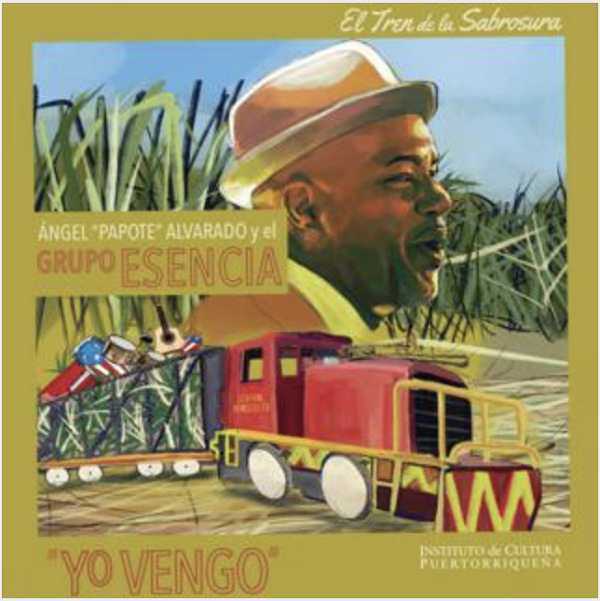
Ángel “Papote” Alvarado y su Grupo Esencia “Yo vengo”

Angel “Papote” Alvarado and his Grupo Esencia bring us the single entitled Yo vengo.  The song takes off and “takes a trip” from the first bars, affirming with forcefulness between trombones and tambourines: “I come from a truly powerful race, very deep roots and unparalleled culture”.  The pen and accordion of Ricky Martinez affirm in the voice of Papote: “My homeland is a jewel and in the world is unique, my people and my flag, are national treasure …” declaring patriotic pride and cultural responsibility, between soneos that embrace the chorus: “I come, I come, I come …”.

Motivating to move forward with the well known “pa’ lante boricua”, an honorable mention is given by saying a musical farewell to the late plenero Tito Matos, shortly before José Eduardo embellishes the theme with his Puerto Rican cuatro, so present during the Christmas season.  This is the song that awakens Puerto Rican patriotism and motivates it to flourish.

Statements like: “how happy I feel with my flag held high” and “Puerto Rico my homeland, the queen of my loves, for its people and my people, the most beautiful of flowers” while listening to the brothers Toñito and Victor Vazquez guapear with their trombones; synchronize our hearts to the rhythm of patriotic pride that only the Puerto Rican Afro-Caribbean essence understands.
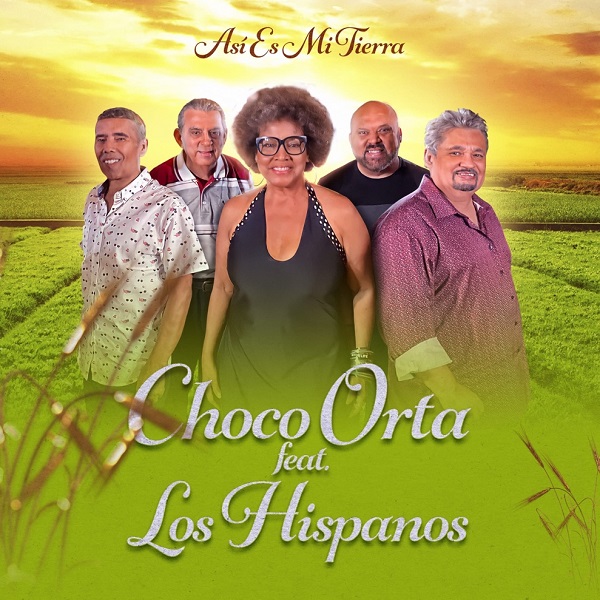
Choco Orta  “Asi es mi Tierra”

In keeping with the Puerto Rican concept of celebrating Christmas as early as September, as soon as the gentle breezes of our tropical Christmas season begin to be felt, Choco Orta released this Christmas classic. From the pen of our own Gloria Gonzalez, Choco Orta produced, directed and released this all-time hit.

It is worth mentioning that this song has already consolidated as a classic, originally popularized by the quartet Los Hispanos. In this way, Choco celebrates with Los Hispanos the 70th anniversary of the longest running quartet in existence, in addition to his 35 years of artistic career.

Choco Orta considers the Los Hispanos quartet “one of the great pearls and treasures of our Puerto Rican soil.  Currently, the members of the Los Hispanos quartet are Wisón Torres, Tato Díaz, Rafy Torres and Nino Segara.

For the production of this single, Choco had the collaboration of Nino Segarra in the arrangement, musical direction and keyboards. Musicians of the stature of Julio Loyola on trumpets; Moisés Cancel on trombones; Hilton Mercado on baritone saxophone; Ceferino Cabán on piano; Alexis Pérez on bass; Manny Trinidad on cuatro and guitar and Javier Tito Álvarez on tumbadoras, bongo and timbales delivered such perfection.
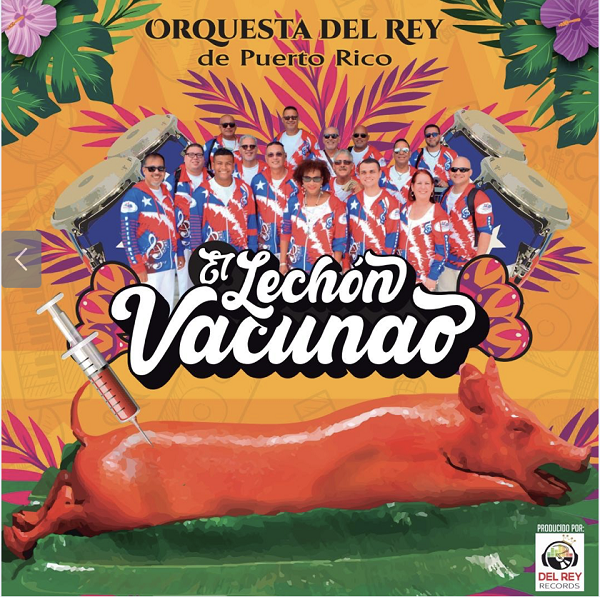
La Orquesta del Rey de Puerto Rico “El lechón vacunao”

The Orquesta del Rey de Puerto Rico brings us El lechón vacunao, from the pen of Miguel García. The composer manages to inject jocularity into the return of the Puerto Rican Christmas celebration with all the trappings of the law, after having been inhibited from celebrating Christmas in person because of COVID-19.

Néstor Ramos Zavala interprets the nice song.  He is accompanied by: Michael Colón and David Irurita on trombones; Harel Orengo, José Claudio and Eduardo Alvelo on trumpets; Juan Ramos on bongo; Gary Rodríguez on tumbadoras; Javier González on timbal; Benjamín Vázquez on bass; Sebastián Alicea on piano; Israel Santana on Puerto Rican cuatro; Cándido Reyes on güiro; Millie Smith, Luis Martínez and Jorge Agosto on backing vocals; Ezequiel Colón is the voice of Don Seco.


By Bella Martinez, ISM Correspondents, San Juan, Puerto Rico

September 22, 2022 marked the 48th anniversary of the Fania All-Stars concert in Zaire, Africa

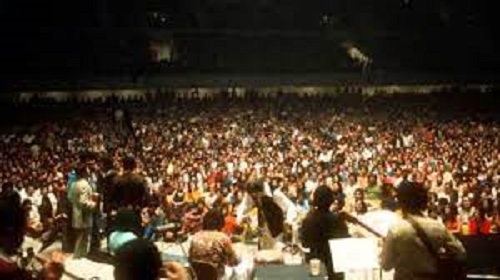
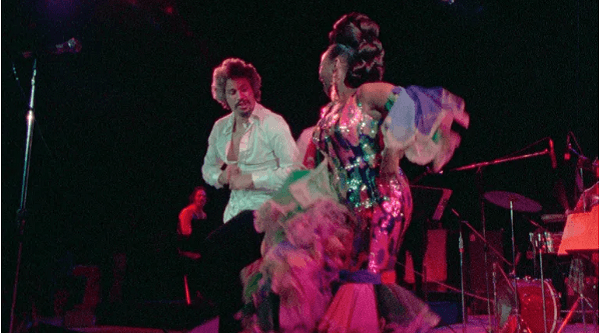
Last Sunday, September 22, 1974 (On a day like today, Fania All-Stars made history by performing for the first time in Africa in front of 80 thousand spectators.

A magical night that included wonderful moments. This is their story.

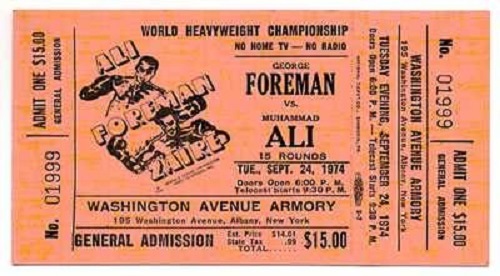
In mid-1974, American boxing promoter Don King organized a fight in Kinshasa, Congo, for Muhammad Ali to regain the crown against the then heavyweight champion of the world, George Foreman, a bout that was called ‘The Rumble in the Jungle’.

Fania All-Stars en Zaire, África

Parallel to the boxing match, musician Hugh Masekela and renowned producer Stewart Levine scheduled a series of concerts at the 20 du Maipara stadium in Kinshasa (Zaire) as part of a 3-day festival (September 22-24, 1974) that would later become one of the most important musical events of the century in Africa, which the organizers called ‘Zaire 74’Unfortunately, an injury suffered by George Foreman while training forced the fight to be postponed for almost six weeks, but the music festival did take place.

La Pelea del Siglo
La Pelea del Siglo

The event was attended by 31 groups (17 local and 14 foreign) and featured artists such as James Brown, BB King, Bill Withers, Manu Dibango, Miriam Makeba, Fania All-Stars, among others.

The Fania musicians who traveled to Africa and performed at the festival were: Johnny Pacheco (flute), Larry Harlow (piano), Bass: Bobby Valentin (bass), Nicky Marrero (timbales), Ray Barretto (congas), Roberto Roena (bongos), Yomo Toro (Cuatro), Pupi Legarreta (Violin) Jorge Santana (Electric Guitar), Victor Paz, Kurt Ranno, Luis ‘Perico’ Ortiz (Trumpets), Lewis Kahn (Violin and Trombone), Ed Byrne (Trombone), and 6 singers: Celia Cruz, Ismael Miranda, Jose ‘Cheo’ Feliciano, Hector Lavoe, Santitos Colon, Ismael ‘Pat’ Quintana (vocals and backing vocals).

Concierto de la Fania All-Stars en Zaire, África

Everything was ready to return to the Big Apple, New York but a major misfortune forced Johnny Pacheco and company to stay.

Although it may seem incredible, musicians and singers had to stay 11 additional days due to a political and social problem in that country, unable to leave the hotel where they were staying. This is how Bobby Valentín tells it in an exclusive interview to Rafael Vega Curry, journalist of elnuevodia.com

“We couldn’t get out. (Jerry) Massucci had to pay an extra $18,000 because we would gather in the rooms to order food and empty the coolers (laughs). There was always someone who said “tomorrow we’ll play in my room”, says the well-known ‘King of Bass‘.

With the concert in Zaire, Fania All Stars had become the first tropical orchestra to set foot on African soil. The show, held at the Statu Hai stadium in Kinshasa, was attended by more than 80 thousand spectators.

Estadio Statu Hai de Kinshasa

It was part of the “Zaire 74” event held from September 22 to 24 of that year, and also featured R&B and Soul artists such as James Brown, Bill Withers and BB King.

In 1974, salsa was at its peak in New York. However, its top representatives were confined within four walls.

Celia y Jhonny en África

Among the musical geniuses were Johnny Pacheco, Ray Barretto and many others who made this orchestra the most important salsa orchestra in its history. Héctor Lavoe could not be missing in that directory.

Important Note:

The Democratic Republic of the Congo, also popularly known as D. R. Congo, Democratic Congo, Congo-Kinshasa or Eastern Congo, and called Zaire between the years 1971 and 1997, is one of the fifty-four countries that make up the African continent. Its capital and most populated city is Kinshasa.

Between October 27, 1971 and May 17, 1997, the African country currently known as the Democratic Republic of the Congo was known as the Republic of Zaire (in French, République du Zaïre).

The name Zaire was given to it during the rule of Mobutu Sese Seko, who ruled it with an iron fist during a long dictatorship, and from whom emanated the political system and the characteristic ideology of the State.

The instability and rebellions that plagued the Congo until 1965 culminated in the seizure of power by Lieutenant General Mobutu Sese Seko, then Commander-in-Chief of the Congolese Army.

Mobutu proclaimed himself president for five years and in 1970 consolidated his power by being elected president without opposition.

In 1971 the new name of the State was adopted, with the official proclamation of the denomination: Republic of Zaire. This name and the new national symbols would remain until 1997, when at the end of the First Congo War Mobutu was overthrown and fled the country.

Upon assuming the presidency of the country the guerrilla leader Laurent-Désiré Kabila proclaimed the Democratic Republic of Congo, recovering its own name.

Sources:

Bobby Valentín

Salserisimo Peru

https://es.wikipedia.org/wiki/Zaire

You can read: Fania All Stars

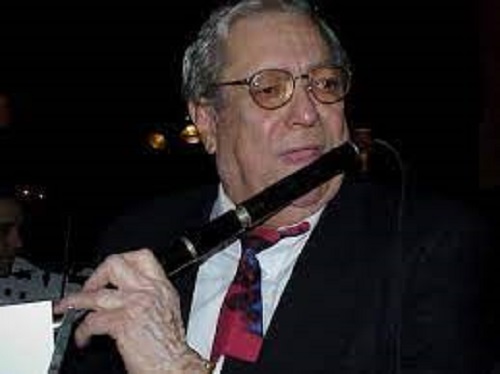
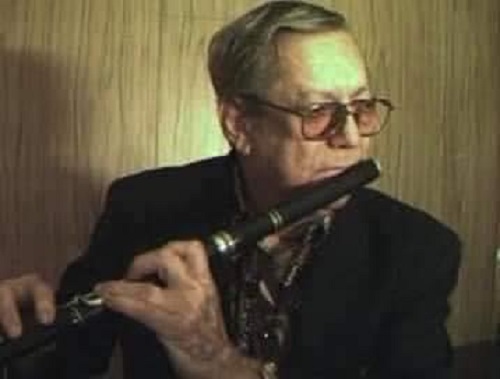
José Fajardo was a virtuoso flutist, composer, orchestra conductor and music producer

José Antonio Fajardo, in the month of November we refer to one of the greatest musicians that the island of Cuba has given in the last century; we are talking about maestro José Antonio Fajardo Ramos: flutist, composer, orchestra conductor and music producer; one of the great promoters of Cuban music represented in the rhythms of bolero, son, guaracha, mambo, chachachá and pachanga.

José Fajardo was born in Guane, province of Pinar del Río in 1919. He began his musical career as a maraquero in his father Alberto Fajardo’s orchestra, later he took up the flute.

From the age of 16 he was part of several groups such as: Joseíto Fernández, Paulina Álvarez, Melodías del 40, La Romance de René Álvarez, the orchestra of maestro Antonio María Romeu, the orchestra of pianist Luis González Valdés: “Neno” González and the orchestra of Antonio Arcaño, known as Arcaño y sus Maravillas.

José Fajardo fue un virtuoso flautista

After his time in these famous groups, in 1949, Fajardo created his own orchestra called Fajardo y sus Estrellas, with musicians such as: Orlando “Cachaito López”, René Fernández on piano, violinists Ignacio Berroa and Félix Reyna, who was also the composer; percussionist Jesús Esquijarrosa on timbales; Carlos Real on tumbadora and Rolando Valdés on güiro; in the vocal part he initially integrated Joseito Valdés.

In the early fifties, with the boom of chachachá in 1951, things improved a lot and the charangas orchestras began to perform in the best cabarets, aristocratic salons and private parties of high society, such as the Montmatre and Tropicana cabarets.

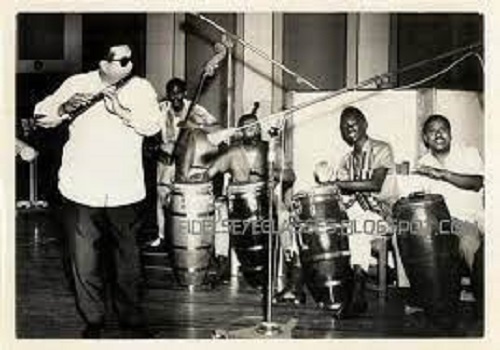
Fajardo became internationally known in the mid 50’s at the head of his orchestra, Fajardo y sus Estrellas, he was the first charanguero to introduce the cymbals to the timbal and the pioneer in the incorporation of the cowbell and the bongo to the charanga, his group was one of the sensations of the golden age of chachacha and pachanga.

After going into exile in the 1960s, he toured Asia, Africa, Europe and Latin America, popularizing an eminently Cuban repertoire.

Maestro José Fajardo has been one of the only musicians who have stood out in different periods of Latin music; initially in Cuba, in the 50’s with the arrival of Chachachá, later in the era of Pachanga and Boogaloo, in the sixties in the United States, and he also came to prominence in the golden era of salsa in the seventies and eighties of the last century.

In the seventies, eighties and later, the flute master recorded with Joe Quijano & His Conjunto Cachana, Tico-Alegre All Stars; Ray Barretto and Adalberto Santiago; Johnny Pacheco, Pupi, Javier Y Su Charanga; Jimmy Sabater, Orlando Contreras, Alfredo Valdés Jr, Fania All Stars, Louie Ramirez, Graciela and Mario Bauza, Israel “Cachao” Lopez, with our great Joe Arroyo in the nineties and with Hector Casanova, Mario Muñoz, Andy Gonzalez, Eddie Montalvo, Manny Oquendo, Alfredo “Chocolate” Armenteros, Carlos “Patato” Valdes, Alfredo Rodriguez and Francisco Aguabella.

After a brilliant musical career spanning more than six decades, Maestro José Antonio Fajardo passed away in New York City on December 11, 2001, leaving an enormous legacy to our culture.

José Fajardo fue un virtuoso flautista, compositor, director de orquesta y productor musical

The great musical contribution of this portentous son of Pinar del Rio, has highlighted him as the highest flute of Cuba and Latin America, a true ambassador of Cuban music and salsa in the world; from our beautiful page ‘Los Mejores Salseros del Mundo’ we want to highlight the enormous artistic career of maestro José Antonio Fajardo Ramos as a tribute to his wonderful musical work.

José Antonio Fajardo,  uno de los más grandes músicos que ha dado la isla de Cuba

José Fajardo Jr.

You can read: Ángel Bonne He was part of Juan Formell’s Los Van Van Orchestra, and collaborated with the impressive Irakere band of maestro Chucho Valdés

Omar Ledezma Jr talks about his experience at the Tempo Latino Festival

His reaction to the scholarship

We are here with Venezuelan percussionist and musician Omar Ledezma Jr. Good afternoon, Mr. Ledezma, how are you? Nice to meet you.

Same to you, Karina. It’s great to be participating again in the activities of International Salsa Magazine, a magazine that I have much appreciation and I’m find of it. Here we are always at your service.

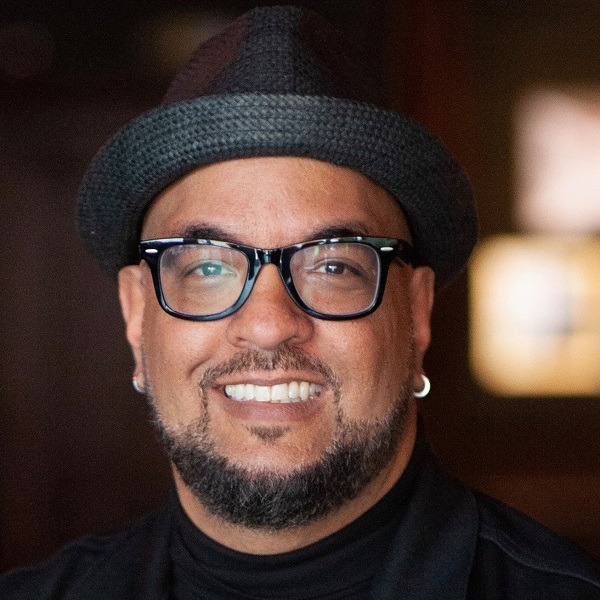
man with glass
Venezuelan Grammy Award–winning singer and percussionist Omar Ledezma Jr

According to your website, you received a scholarship to study at Berkeley College of Music. How did you receive the news that you were selected?

That was interesting because when I arrived in the United States, I applied for the scholarship, so I had to extend my stay here in order to attend the audition in a December. In January, I got a letter that said I passed the audition and awarded the scholarship to study at the school. That was one of the most important news in my life.

So you were in the United States at the time you received the scholarship.

Yes, because there was no way I could have done that in Caracas, where I am from. So, I had the opportunity to travel to Boston to apply for the scholarship. Thank goodness, I had the opportunity to come and everything worked out fine.

Regarding technical and musical issues, what differences between your native country and the United States did you notice?

The first thing I noticed was that there were many opportunities. Really, I can say that I didn’t face the same constraints as in Caracas. When I started playing, I had many opportunities to go abroad to take my art. I already had the experience of having done it in my country with many other artists.

I think It would’ve been no different if I was in Caracas because I would have taken all the opportunities, played with many people and made my career there. However, I was able to go to Boston and took that opportunity. A few months later, I was already playing with school teachers, classmates, graduates and new people I met in a very interesting way. Despite my constraints related to the language, you can establish such interaction with all of them.

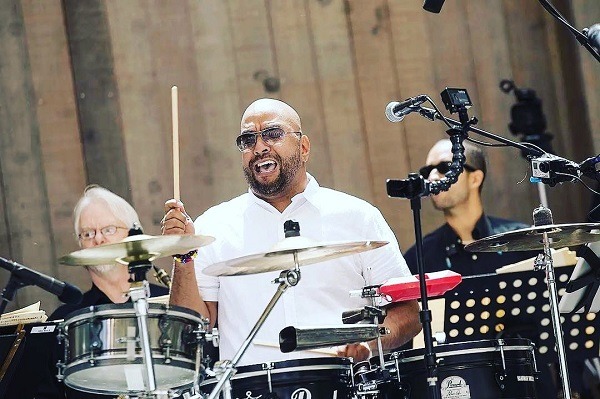
man playing the timbales
Omar Ledezma Jr playing the timbales

We understand that you are teaching at the SF Community Music Center and work hand in hand with other academic institutions, what made you dedicate yourself to teaching and training young talent?

I think it is important to lay the groundwork for the future. The present is lived now and the past provides us with experience, but we should always open the road forward for the future and new generations. I think that legacy for musicians is very important. We have to pass those teachings on to new generations.

Do you feel that the language shut doors on you at the beginning?

Not really. I have always thought that language should not be a limitation to fulfill your dreams. You have to respect the language of the country you are moving to, but without forgetting the mother tongue with which you were born, which is why I am a big supporter of bilingualism. You have to learn English, but without forgetting Spanish. It is a very important tool for young people whose parents were born outside the United States and moved here, but they should not forget their roots.

His experience at the Tempo Latino Festival

You have already told us that you have had the opportunity to tour the world. Could you tell us a little about your experience with Tempo Latino?

It was a very important experience for me and the group that I’m in, Pacific Mambo. It was an incredible experience with a massive attendance and it was surprising that we were able to meet that many people after the pandemic. We were playing in an arena full of people where we were warmly received.

It was very nice to feel the warmth of the live audience again and massively.

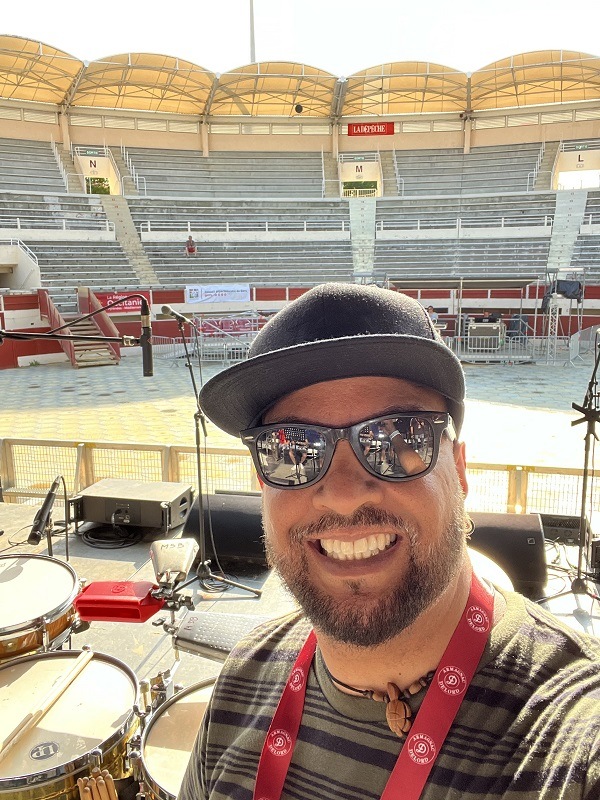
Omar Ledezma Jr in the arena at the Tempo Latino Festival

How was the flight, the arrival, the reception and everything that happened before the show?

It’s interesting because when I lived on the Northeast United States coastline, it was very easy for me to travel to Europe, Latin America, the Caribbean and other parts of the United States. Moving to California makes it more difficult because the trip is longer. It takes me about 11 hours to get to any port in Europe, and then being there, you have to make connection to get somewhere else. In our case, it was a full day of travel, as we arrived through Portugal. It was there that we waited for our connection to get to France. There were many people entering through the port of Lisbon, but there was no problem at all.

Already in France, the welcome the Tempo Latino staff was absolutely incredible. The audience was already waiting for our show. Then, we arrived to the village where the festival takes place and traveled a very beautiful route with spectacular scenery. Despite the fatigue, we fully enjoyed the trip.

When you played in the arena, how many people were there?

It is difficult to count the amount of people people there. I don’t have the exact numbers, but I can tell you that the arena was packed at the time of getting to the stage. We had the responsibility of opening for other well-known groups such as Los Van Van, so the arena was already full of people at the time of performing our show.

How was the audience reception towards you?

The audience reception was very warm and touching. People did not expect the band to have that contact and respect for the public like every time we perform. Many people enjoyed the hits we have had throughout our career such as OverJoyed by Stevie Wonder, Pink Panther Mambo, among other songs. When I did my solo with the timbales and the drums, I achieved a sound very much like We will rock you by Queen and I had to keep playing it because people were singing the song. An amazing thing that had never happened to me in my career.

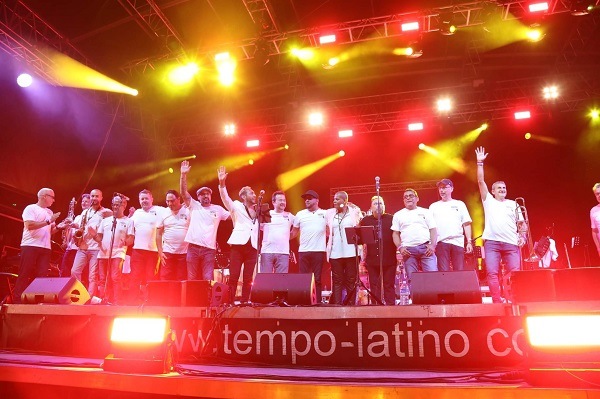
Pacific Mambo performing at the Tempo Latino Festival

I heard that when you left France, you turned out to be infected with Covid-19, could you tell us what it went?

Yes, it came a surprise for me because I had not been infected since I went back to work on the street after the pandemic. I returned to my activities in the schools where I work and started providing shows again, but I had never tested positive for Covid-19 despite having been exposed. In fact, I have traveled to play in many places and even went on vacation to Venezuela, but I never contracted the virus.

When I return from my travel at the Tempo Latino festival, I was feeling a little sick and thought it was the fatigue of travel, but it turned out to be Covid-19. Fortunately, symptoms were very mild and I followed the treatment prescribed by the doctors. It took a little while for the virus to go away, but it all worked out. It was a period of forced vacation, as I had to wait about 20 days for the tests to be all negative.

Are you planning other international tours to Europe or Latin America?

We are negotiating to go to the East Coast and Canada in November. We are also making preparations for another small tour in the fall.

Today, the San Francisco Jazz Organization is going to broadcast our concert for subscribers, which makes us very happy.

What projects do you have on hand?

With regard to the band is concerned, we have talked about the possibility of making a new album and the way we want to do it. We are already looking for the music, the composers and the songs for the pre-production of this new musical work.

Pacific Mambo performing at the Tempo Latino Festival

The interesting story of French percussionist Dominique Patrick Noel

How his career started

All right, so we are here with French percussionist, composer and musician Dominique Patrick Noel. How are you doing, Mr. Noel? A pleasure to have you here.

Well, thank you. First of all, I want to thank you for taking the time to interview me and to greet all those who is going to read it. Thank goodness, I am in good health and it is all good.

Dominique Patrick Noel tells us about his story and beginnings

You are a self-taught musician who started playing by age seven. Did you learn everything by yourself or did you receive some kind of training?

Since I come from a family of musicians such as my father and my two grandfathers, I can say that music has always been a part of my life. I started playing the drums by listening to a lot of jazz and fell in love with this genre. That’s how I started to develop the movements and patterns of jazz and the drums.

In school, I started playing and learned solfège, percussion, drumming, among other things. When I turned 15 years old, I started playing music at a pro level because I have always had the pleasure of learning by watching musicians, who had much more experience. Thank goodness, I had my mind fresh to grasp and remember what I had seen, which helped me a lot to continue developing in percussion, different instruments, rhythms, among other things.

When I started playing Latin music, my first instrument was the bongo. I had a mentor named Alfredo Mujica Jr.,m who knew my dad and learned by playing with him. When it was my turn, he was giving the task of helping me understand the patterns and other things. He told me that the best instrument I could choose to start with was the bongo because it would help me understand a little more about how salsa works and that helped me a lot. He showed me the basic pattern and how to imitate the sounds I heard until they were similar.

After that, I also learned to play the conga, the Dominican tambora, the güira, the batá, the cajon and the timbales.

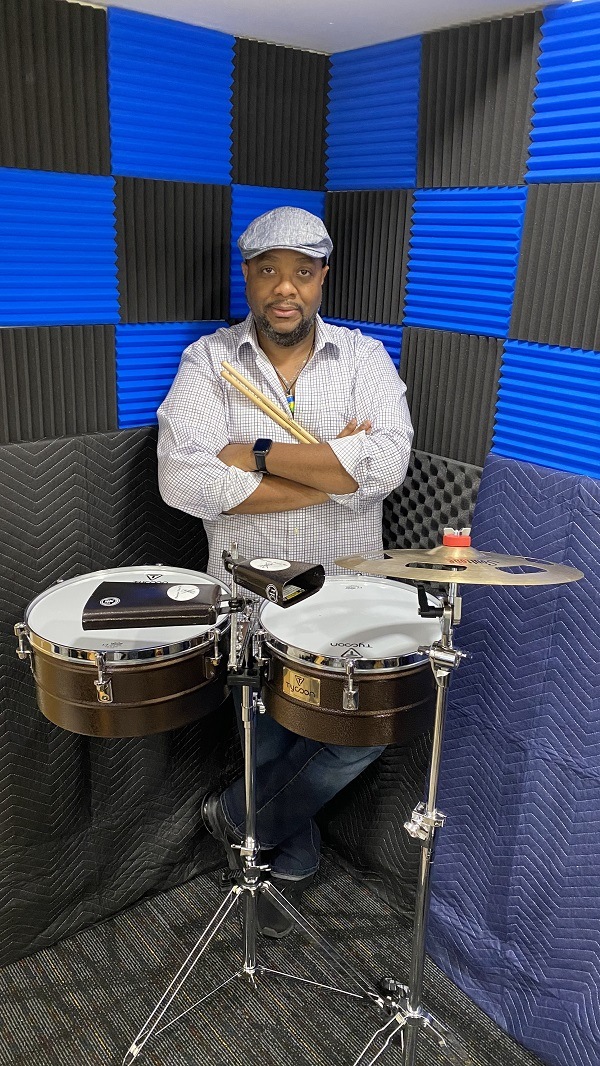
His career started at the age of 15 and his first instrument was the bongo

When you played the bongo for the first time, did you know you wanted to dedicate yourself to the Latin genres permanently?

When I was nine years old, I moved to Martinique and lived there for about four years. There I was fortunate to learn its folklore, its rhythms, its typical instruments and its dances. I also learned to perform all those genres with the drums and tried to absorb all I saw. Concurrently, the zouk era was beginning and I fell in love with the genre since I heard it for the first time.

Sometime later, my dad and I went to the United States to be with my dad, who was living in Washington at the time. It was there where I started to accompany him in several of his activities and shows with his orchestras. Then, I began listening more to salsa, cumbia and merengue, something I liked very much. Then, I told him that I would like to learn what he knew and play with him, to which he replied that it looked good, but that it was a profession that I had to take very seriously. Therefore, he advised me to listen to everything, even if it wasn’t Latin music because all genres nurture the musician in one way or another.

With whom he has worked?

You have worked with Tito Puente Jr, Tito Rojas, Izis La Enfermera de La Salsa, Frankie Vasquez, Lalo Rodriguez, among others. What have you learned from them?

I have had the opportunity to play with maestro Tito Rojas and his musical director, Celso Clemente, gave me some advice. When rehearsing, I approached him to thank him for allowing me to play the bongo with them and ask him for advice for my career, to which he replied that he liked my work very much and that I was very good for someone who was not born in this Latin music environment.

He also advised me that I had to move forward, never play down my goals, accept constructive criticism and always stay humble. I will never forget his words.

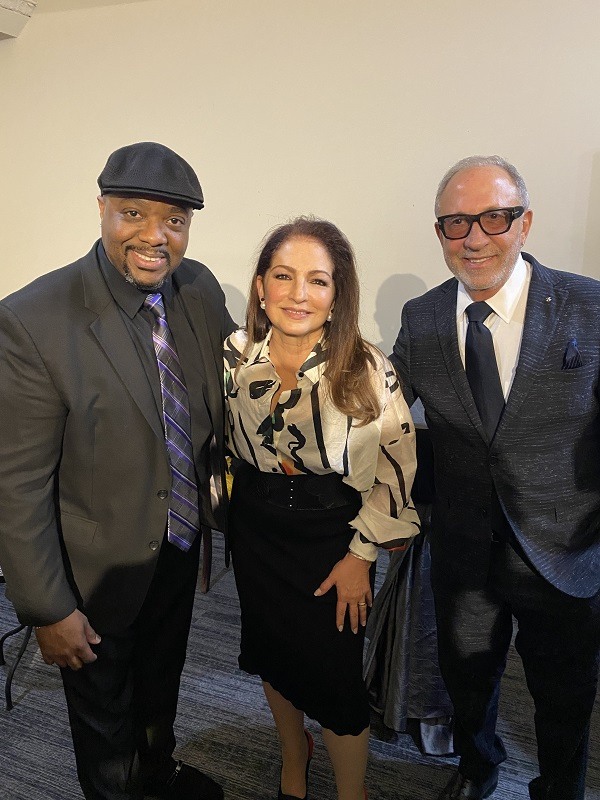
Dominique Patrick Noel next to Gloria Estefan and Emilio Estefan

We know that you are a voting member of the National Academy of Recording Arts and Sciences, which is well known for giving the Grammy Awards. What do you base to vote for a nominated candidate for an award?

There are several processes for artists to be nominated. For us the voters, it is a long process because we have the task of listening to much music and analyzing many details such as recording quality, lyrics, musicality and much more. There are many important elements to consider when choosing the person. I want to get to the point of saying that someone really deserves my vote for this or that category.

Voting takes time. It’s not something that you do in an hour or two, it takes a long time. The day of the awards ceremony, we already know who will the winners. At that point, we can say that all of them have managed to win via an arduous selection process.

Tell us about your song Mi Secreto with D’ William.

The skeleton of the song was my idea and I got together D’ William, to whom I offered to join the song. He wanted to collaborate with me in a merengue song for some time and I sent him the skeleton, which he liked and told me that something could be done with it. When he asked me if I already had the lyrics, I said no, but I wanted to base the song on an experience of mine, so I told him what it was about and the lyrics were written about that fact. Later, we made some additional arrangements and that’s how Mi Secreto was born.

Dominique Patrick Noel next to Bobby Cruz

Read also: Earl Miranda and Ric Feliciano talk about the Latin Rhythm Boys and its history

  • « Go to Previous Page
  • Page 1
  • Interim pages omitted …
  • Page 17
  • Page 18
  • Page 19
  • Page 20
  • Page 21
  • Interim pages omitted …
  • Page 28
  • Go to Next Page »

International Salsa Magazine (ISM) is a monthly publication about Salsa activities around the world, that has been publishing since 2007. It is a world network of volunteers coordinated by ISM Magazine. We are working to strengthen all the events by working together.