• Skip to primary navigation
  • Skip to main content

International Salsa Magazine

  • HOME
  • Previous editions
    • 2026
      • ISM / April 2026
      • ISM / March 2026
      • ISM / February 2026
      • ISM / January 2026
    • 2025
      • ISM / December 2025
      • ISM / November 2025
      • ISM / October 2025
      • ISM / September 2025
      • ISM / August 2025
      • ISM / July 2025
      • ISM / June 2025
      • ISM / May2025
      • ISM / April 2025
      • ISM / March 2025
      • ISM / February 2025
      • ISM / January 2025
    • 2024
      • ISM / December 2024
      • ISM / November 2024
      • ISM / October 2024
      • ISM / September 2024
      • ISM / August 2024
      • ISM / July 2024
      • ISM / June 2024
      • ISM / May 2024
      • ISM / April 2024
      • ISM / March 2024
      • ISM / February 2024
      • ISM / January 2024
    • 2023
      • ISM / December 2023
      • ISM / November 2023
      • ISM / October 2023
      • ISM – September 2023
      • ISM – August 2023
      • ISM July 2023
      • ISM Edition June 2023
      • ISM – May 2023
      • ISM April 2023
      • ISM March 2023
      • ISM February 2023
      • ISM January 2023
    • 2022
      • ISM December 2022
      • ISM November 2022
      • ISM October 2022
      • ISM September 2022
      • ISM August 2022
      • ISM July 2022
      • ISM June 2022
      • ISM May 2022
      • ISM February 2022
      • ISM January 2022
    • 2021
      • ISM December 2021
      • ISM November 2021
      • ISM October – 2021
      • ISM September 2021
      • ISM August 2021
      • ISM July 2021
      • ISM May 2021
      • ISM April 2021
      • ISM June 2021
      • ISM March 2021
      • ISM February 2021
      • ISM January 2021
    • 2020
      • ISM December 2020
      • ISM November 2020
      • ISM October 2020
      • ISM September 2020
      • ISM August 2020
      • ISM July 2020
      • ISM June 2020
      • ISM May 2020
      • ISM April 2020
      • ISM March 2020
      • ISM February 2020
      • ISM January 2020
    • 2019
      • ISM December 2019
      • ISM November 2019
      • ISM October 2019
      • ISM Septembre 2019
      • ISM August 2019
      • ISM July 2019
      • ISM June 2019
  • Spanish
  • Download Salsa App
    • Android
    • Apple

Search Results for: Timbales

Puerto Rican salsa singer Jai Ramos spoke to us of his life and projects

First years and military life

We are talking with Puerto Rican salsa singer Jai Ramos. How are you feeling? Glad to have you here.

I’m feeling fine. Thank you very much for the invitation. I feel blessed to be able to release my songs, but more important is the opportunity I have to be here talking to you and your audience.

person with clave in your hand
During his youth, Jai Ramos listened to ballads and popular music

Why did you choose salsa as your main genre? Was it to do with your environment or your roots?

It had much to do with my roots. When I started to lean towards music, I listened to ballads and various popular music singers that we had in Puerto Rico such as Chuco Avellanet, Lucecita, Lissette, among others. I also listened to other international artists such as Nino Bravo.

However, what made the switch was to go to the movies to see Our Latin Thing with the Fania stars. That’s when I made the change to salsa.

It’s very interesting because most of the artists you mentioned are boleristas or balladers, in other words, it was a huge change.

That’s correct.

You belonged to the United States Army, how did you combine your military career with your musical activities?

Interesting and very valid question. Even though I became interested in music, the places where I wanted to take music lessons would not accept me. After I finished school and became an adult, I joined the military and started to get exposure to different local music groups after arriving in the United States. That’s how I began to develop in my spare time. Admittedly, it was difficult, but where there’s a will, there’s a way.

I’ve talked to several Puerto Rican artists who were also in the U.S. Army at various ranks.

Did you get to coexist with other artists and salseros there? If so, do you think that helped you pursue your career in music?

Absolutely. Ar first, I met a lot of people who had a lot of musical experience in their spare time even though they were serving in the armed forces and they were the ones who provided me with the knowledge needed to improve this balance. With the passage of time, I also got to know people with musical experience who are very famous today such as Angel Santos. He and I served in the armed forces at the same time and retired at about the same time, so he chose composition, while I chose music performance.

I made a career in the army for 22 years of service. During all that time, I met many people and today I have communication with many of them even though we’re now civilians.

Jai Ramos
Jai Ramos shared with many other salsa artists during his time in the army

What Ramos learned from other artists

You got to share and sing along with artists such as Ray Barreto, Celia Cruz, Grupo Niche, Oscar D’ León, Nino Segarra, among many others. What did you learn from each of them?

Good question. They all taught me that they were still human beings and have a duty to the people in spite of being so famous. They were all very humble and that gave me to understand that they are flesh and blood people like us, but that they achieved success because of their talent.

When I was on a military base in Atlanta, I had an enormous exposure to many of them and it was Mr. Enrique Mercado who invited me to be part of his orchestra, which opened up for many great artists such as Celia Cruz, Ray Barreto, Grupo Niche, Eddie Palmieri, Conjunto Libre and the King of timbales Tito Puente. When I met them, I realized that they are devoted to people, prompted me to move forward in this career.

In musical and technical matters, what did these artists teach you?

Discipline and professionalism. Many people think that music is just entertainment, but those working on it see it as their profession. I also perceived the pride of providing entertainment for people, but always with quality. I understood that idea and started to apply this in my life.

Jai Ramos and family
Jai Ramos with all his family

What did you learn not to do?

Some of the musicians who accompanied orchestras had certain habits that I was able to observe and I became convinced that I did not wanted to copy them. Sooner or later, I knew that such habits would eventually affect anyone.

I want to clarify that I did not see these things in any of the artists. That is why they are so professional, since they always behave well, both on and off stage. At the same time, they are humble enough to speak directly to a person like me who approached them to ask questions and get some advice.

What led you to have a solo career after having belonged to several orchestras?

I’ve always loved to be a lead singer, but I wasn’t the only one in the orchestra. However, something I noticed while being part of an orchestra is that I was always subjected to the music projects of our musical director, which stopped me from implementing my own ideas and my own music. That’s why I ventured to pursue a solo career and implement what God has put in my heart and mind.

You had already told me about your most recent release “Seguimos Como El León”, a tribute to Angel Santos Junior. Why did it take you to embark on this project? Why pay tribute to Angel Santos Junior?

Thank you for that question. I want to keep giving credit where credit is due. Angel and I were very close friends and I’m using the past tense because unfortunately he passed away on 15 April 15 this year. When I came here to San Antonio, he was one of the first musicians I met and I shared with him in many performances. As I mentioned before, he and I were in the army at the same time.

One of the things Angel has achieved was to create many successful compositions. When I decide to launch my own project, one of the people that I had in mind to get an original song was Angel. When I called him and asked if he had something available, he told me that he only has one song, which was “Seguimos Como El León”. By that time, I knew he was having health problems, but I had no knowledge that he had already been evicted.
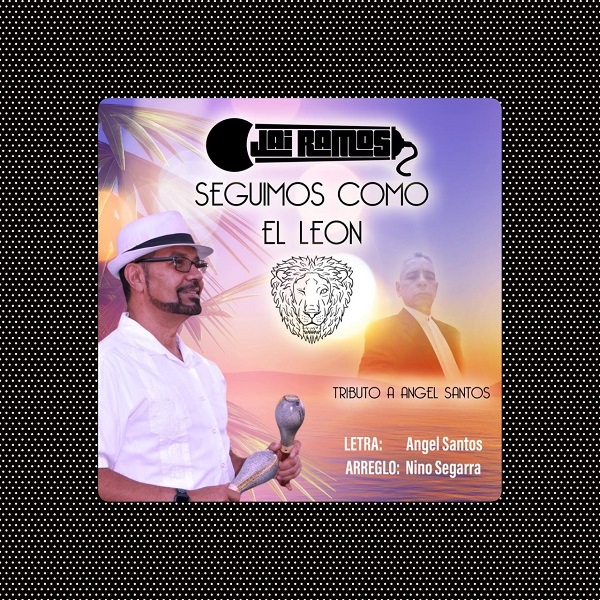
cover jai ramos
Cover of the song “Seguimos Como El León”

When I listened to the lyrics, I didn’t realize that he was giving a message about himself for when he left. Almost all of his compositions had a joking or small-town tone, but this one is a message of overcoming.

By the time we finished the song, maestro Nino Segarra and yours truly agreed to record the project, master it and record it. Then, I shared it with Angel so that he could listen to it and I told him that we gave him credit. Nino Segarra and I thought it was important that everyone who listened to the song always knew that it was one of his compositions.

When we were getting ready to do the release, we learned that he passed away. So, I proceeded to communicate with his family to ask permission from them to use his image and pay tribute to him with that song. They agreed, so I changed the cover and the title of the song to make it look like a posthumous tribute to Angel and thus to perpetuate his name.

What did you learn from Angel Santos artistically and musically?

He was my mentor in this release. I carried out the project, but he mentored me into most of the steps I followed. The biggest lesson I learned from him in the last years was how to be an independent producer and how to implement the ideas I had in mind.

You have songs with titles such as “Seguimos Como El León” and “Lo Que Dios Me Dio”. We can note that these songs are focused on bringing positive messages and about personal growth. Why are these aspects so important to you? Why reflect them in your music?

I am a servant of the Lord. In my spare time, I am a minister at a church. With all the things happening today, I felt in my heart that I had to be part of the solution and bring a positive message in the midst of what is going on.

My musical proposal is based on messages about personal growth with the idea of getting people closer to the Creator.

 

cover jai ramos lo que dios me dio
Cover of the song “Lo Que Dios Me Dio”

You can read: This is Roger Danilo Páiz Pérez from Danilo Y Su Orquesta Universal

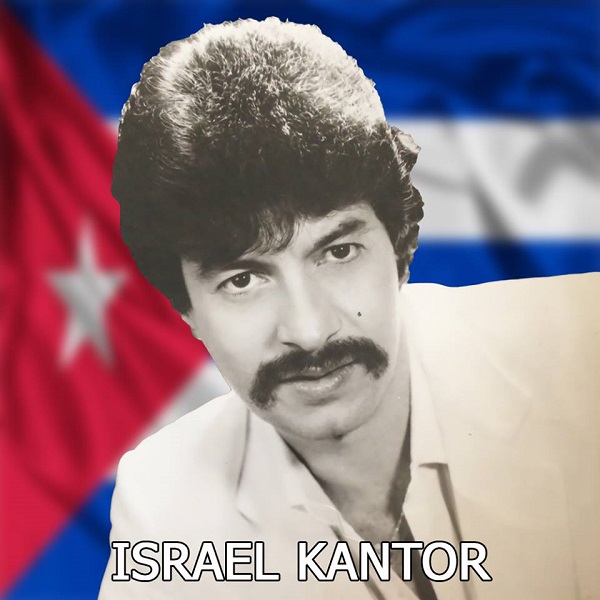
Israel Kantor was an excellent bassist, arranger and composer who achieved great popularity in Cuba for his vocal technique and original “Sonear” style.

His real name was Wilfredo Israel Sardiñas Domínguez. 

He was born on October 16, 1949 in Alturas de Canasí, a town in western Cuba between Havana and Matanzas, and his parents registered him a couple of years later in Bacuranao (birth date October 16, 1954).  A bassist, arranger and composer, he achieved great popularity in Cuba for his technique and original “sonear” style.

Although he was not very well publicized or acclaimed as a sonero, he managed to make a good name for himself in exile.

His mother played the tres and seven of his nine siblings formed a group with guitar, tres and lute; he played both sones and punto guajiro.

They used as bass a box called marímbula, which consisted of a box with four straps to produce the bass sound.  He began to sing with his brothers at the age of eight.

Later he went to Havana to study at the Conservatory of Guanabacoa, where he started playing trova sonera.

israel kantor
HE BECOMES A PROFESSIONAL

Israel Sardiñas improvised on the sonos with astonishing ease, and he is not exactly what you would call an interpreter “by ear”, or empirical. 

In fact, he played the bass before singing, and it was precisely his condition of bassist and arranger that made Meme Solis discover him in 1975 and took him and his group to work in the shows he was then directing in tourist centers on the beaches east of Havana.

“One night, at the dance show they were doing at the Hotel Atlántico, in Santa María del Mar, Israel took the microphone, I think because the group’s singer was not there,” Meme Solís recalls now.  “I saw him and told him: ‘But how well you sing!’ When I put on another show I gave him two numbers, and from then on people began to follow him”.

“I began to study Carlos Embale, Miguelito Cuní, Raúl Planas, Roberto Faz and Beny Moré,” he said, referring to the time when he stopped playing bass to devote himself to singing.  “There is everything that is Cuban music: guaracha, son, rumba. What I did was to listen to them and transfer them to the staff to understand how they moved their voices.

The one I liked the most was Raúl Planas; he was the one who rubateaba the most, the one who broke the syncopation the most.

Cuní had a good timbre, but always in time. Planas had a deeper timbre, and the sonero’s timbre must be metallic”.

That was the beginning of his professional career, which in Cuba would take him to the groups Ireson, Neoson, Los Yakos and Los Reyes 73. In 1979, he joined the Cuban group Los Van Van, founded and directed by bassist and composer Juan Formell (Juan Clímaco Formell Cortina was born on August 2, 1942 in Havana, Cuba).  As vocalist of the famous group, Israel became popular in Cuba for his vocal technique and his “sonear” style, which aroused great interest in the musical media, especially in popular music.  With the Los Van Van Orchestra he participated in the recording of the albums “Juan Formell y Los Van Van” in 1981 and “El Baile Del Buey Cansa’o” in 1982, both in the Egrem label of Cuba.  It was with this group that the artist became known, and left his stamp on the interpretation of the song “Seis Semanas”.

From that time on, he began to make musical arrangements.

After several international tours with Los Van Van he decided to leave them in Mexico in 1983, in search of greater freedom and possibilities for his career.

A month later he was already in Miami after crossing the border.  “I wanted to go to Grupo Afrocuba, but the bureaucracy wouldn’t let me,” he said on one occasion. “Van Van is very good, but Afrocuba came with a very strong force. I also wrote, I made arrangements, I had other ideas, and Afrocuba suited me better, because it was more jazzy”.  In an interview for a news agency years ago, he said: “I had a great school before being with Los Van Van. After traveling a lot with them, I was very anxious to see the world and the third time we were in Mexico, I decided not to return to Cuba”.

SUCCESS IN EXILE

When he arrived in New York in April 1984, he was still Israel Sardiñas, but when Johny Pacheco, the legendary director of the Fania All Stars, took him to an anniversary party of the group at the Cheetah two months later, the late “singer of singers”, Héctor Lavoe, heard him improvising and stopped the orchestra: “I want to baptize him right now as Israel Cantor”, said Lavoe.  The only thing left to do was to change the c for the k, spend two months with Lavoe’s band, and in October create his own, which he called La Verdad.

Thus, in 1984, he released the album “Israel La Verdad” with the production of Larry Harlow, on the Bacán Records, Inc. label. All the numbers were written and composed by Israel Kantor.

As its name indicates, La Verdad was a constellation of excellent musicians: Sonny Bravo on piano, Salvador “Sal” Cuevas on bass, Tony Barrero and Pedro “Pouchi” Boulong on trumpets, Barry Rogers on trombone, Mario Rivera on saxophone, Karen Joseph on flute, Frankie Malabé on congas and Nicolás “Nicky” Marrero on bongo among others.  Justo Betancourt and Adalberto Santiago collaborated on backing vocals, with Justo doing a duet track: “Rumberos De Nueva York”.  Other numbers on the album that deserve attention are: “La Verdad”, “Tu Lindo Pasado”, “María Antonia” and “A Mis Idolos”.

That same year he is invited to sing on the album by Ñico Rojas y su Orquesta entitled “Paso La Vida Pensando: ‘En Tí'”, on the Kanayón Records label, three songs: “Juan Ramón (El Chichón)”, which was popularized by José “Cheo” Feliciano when he was part of Joe Cuba’s group, “Por Encima Del Nivel”, which had the arrangements and piano of Luis Quevedo, in which he performs a superb piano solo, and in “Lo Voy A Matar”, composition by Tony Pabón and arrangements by maestro Kenny Gómez.

In 1986, he is the lead vocalist of the group Salsa Latina in the album “De Aquí . . Pa’ Lante!”, on the Coa Records label, which was produced by Isidro Infante and Israel Kantor himself and in which he composed half of the eight songs that make up the album.  The most outstanding numbers are: “En Honor A La Verdad”, “Se Acabó El Material”, “Saca Aserrín, Mete Madera”, “A La Mitad Del Camino” and “El Palo De China” (Composition by Raúl Marrero).

He temporarily left Miami to try his luck in Puerto Rico, Mexico and Italy until 1996, when he settled permanently in Miami.  He performed on various stages of the music scene: he inaugurated the Mamá Rumba Club in the Mexican capital, made arrangements for the orchestra of the Sábado Gigante program on Channel 23 in Miami, participated in a Cuban Jam Session at the Lincoln Center in New York, among others.

For more than two decades Kantor was the protagonist of important musical projects both in Latin America and Europe.  He recorded eight solo albums and six guest albums with orchestras such as those of Johnny Pacheco and Juan Pablo Torres.  Among his recordings are “Un Señor Kantor” for the BMG record label; a tribute album to Los Van Van for Sony Music and “Llegó La Música Cubana”, an album that took him on tour in Europe.

In 2003 he collaborated in the solo work of arranger and composer Jesús “El Niño” Pérez with Orquesta Sensación (not to be confused with the former group of Cuban Abelardo Barroso) entitled “Cuba y Puerto Rico Son De Un Pájaro Las Dos Alas”, in which Israel Kantor’s voice stands out over those of the other two singers: Danny Rojo and Rogelio Rente, as well as demonstrating his abilities to improvise on the soneo, in the number “Pa’ Puerto Rico” (which Jesus “El Niño” Perez composed for the album, “La Amistad” by Johnny Polanco).

His last great work, in 2003, was a tribute to Benny Moré his permanent artistic inspiration- entitled “To ‘El Bárbaro Del Ritmo'”, a live recording with the Tropicana All Stars orchestra, produced by Regu Records, owned by Recaredo Gutiérrez. 

The orchestra, made up of 22 musicians, mostly Cubans living in Miami, led by Israel Kantor, was nominated for a Latin Grammy Award in the traditional music category in 2004, and two other nominations for an Anglo-American Grammy.

The project, which consisted of a live show, recorded on DVD and seven albums, led them to share the stage with legendary figures such as Paquito D’Rivera, Marco Antonio Muñiz and Generoso “El Tojo” Jiménez, among other glories.

The Tropicana All Stars orchestra was made up of a large number of extraordinary musicians, all of them renowned and of the highest quality: Paquito Echevarría on piano, Cuban musician who has collaborated for a number of important singers such as Gloria Estefan, Rey Ruiz among others; Venezuelan Ramses Colón on bass, a virtuoso musician and desired in any band, Adalberto “Trompetica” Lara on first trumpet, possessor of a very Cuban technique when playing and improvising, he has been a musician of Irakere, Super Cuban All Stars, NG La Banda among others; Kiwzo Fumero on the second trumpet, comes from the conservatory “Alejandro García Caturla” of Cuba, since his beginnings he expressed his great interest in the instrument to which he has dedicated part of his life, he dominates the high notes with mastery for which he has been recognized by great masters of the genre; Lenny Timor on the third trumpet, participated with Los Sobrinos Del Juez for 14 years; Mario Del Monte on fourth trumpet, has been a member of prestigious orchestras such as Roberto Faz, Pacho Alonso, Tito Gómez among others; Alfredo Salvador on baritone sax, has been present in recordings for Celia Cruz, Paquito D’Rivera and Arturo Sandoval; José “Pepe” Vera on tenor sax, his resume includes recordings with the Tropicana Orchestra, Benny Moré, among others, Manuel Valera on alto sax; Juan Carlos Ledón on tenor sax, he has played with Orquestas Cubanas, Roberto Torres, Willy Chirino, Andy Montañéz, among others; Bayron Ramos on trombone, he has been a musician with Albita Rodríguez’s band and Fania All Stars; Braily Ramos on trombone, he has recorded with Gloria Estefan and Miami Sound Machine, Alejandro Sanz and others; Leonardo Timor Sr. on trombone; Leonardo García on timbales, has accompanied Luis Enrique, José Luis Rodríguez “El Puma”, Alexandre Pires, among others; Michael Gerald on percussion; Edwin Bonilla on congas, one of the best percussionists today who needs no further introduction; Juanito Márquez on arrangements, production and musical direction; Germán Piferrer is the musical director and arranger, and as very special guests Juan Pablo Torres, Roberto Torres, Generoso “Tojo” Jiménez, Carlos “Patato” Valdéz, Alfredo “Chocolate” Armenteros and Cándido Camero.

The vocal responsibility fell on Israel Kantor, who was emerging as one of the contemporary Cuban singers with the greatest international projection.  His voice can be heard in the twelve songs that made up the first musical volume: “Santa Isabel De Las Lajas”, “Oh! Vida”, “Maracaibo Oriental”, “Fiebre De Ti”, “Mata Siguaraya”, “Amor Fugaz”, “Bonito y Sabroso”, “Camarera Del Amor”, “Mucho Corazón”, “Yiri Yiri Bon”, “Perdón” and “Francisco Guayabal”, the cover was made by Cuban painter Andrés Puig.

Kantor’s love for his homeland turned his career into a constant homage to Cuban music.

“Over time, one assimilates growing up far from your homeland, not being able to return to stay connected to your roots, but time heals the wounds,” he said a short time ago.

“Inspiration is like a spring,” Kantor said, referring to the improvisations he made as a sonero singer.  “It’s born from the heart; ideas are constantly flowing to you. That’s why a sonero always sings the same song differently.

Cuban music is the continuity of what the singer generates: although the first thing is the vocal conditions, what you have to have is, above all, the clave; knowing how to play with the phrasing so as not to go against the clave”.

Kantor said, “You can train a vocalist to become a sonero, but if his relationship with the genre is not natural, from the heart, he will always end up giving clichés in his inspirations”.

He had no shortage of job offers, even though he was rarely heard on the radio in Miami.  When he was not performing with the Tropicana All Stars, he was performing with his group Havana Son -violin, flute, piano, bass, timbal and conga- in different stages both in the United States and internationally: at the Tropicana Hotel in Las Vegas; the Lincoln Center in New York (in 2003); at the Casa Cuba in Ponce, Puerto Rico, and on tours to the cities of Nicaragua, Lisbon, Oporto and Vigo, in Portugal and Spain, where he shared with other Cuban exiled stars like Willy Chirino and Albita Rodriguez.

Israel Kantor passed away on Saturday, July 1, 2006 at 11:00 p.m. at his residence in southwest Miami, victim of cancer, at the age of 57.  The artist, who had been suffering from liver problems for some time, had already undergone surgery in 2001 for colon cancer.  He is survived by his wife Rosalia Perez, aunts, uncles and cousins.  His body was laid to rest on Wednesday, July 5 at Caballero Rivero Funeral Home, 3344 SW 8th Street, in Miami, and buried the following day at Woodland Park Cemetery, located at 3260 SW 8th Street, in Miami.

“He always worked as if it was the first day,'” recounted his wife Rosalìa as she recalled the artist’s musical enthusiasm.  “He was never satisfied. He had a great hunger to play, to sing and to give people everything he had.”

REACCIONES POR SU MUERTE

 “Israel se hizo en Los Van Van. Tuvo una etapa muy brillante”, señaló Juan Formell, fundador de Los Van Van, ayer desde La Habana a El Nuevo Herald. “Está entre los cantantes más importantes con los que he trabajado. Para nosotros es una pena la pérdida de Israel”.

“Fue una de las voces más representativas de la música cubana de los últimos años”, dijo Adolfo Fernández, amigo personal y publicista de Kantor.  A su juicio, con la muerte del famoso sonero desaparece “una personalidad única y una manera de cantar irrepetible”. “El color de voz de Kantor era único”, destacó.

“Ha muerto uno de los mejores soneros que ha dado Cuba, y uno de los soneros auténticos, de los cuales no quedan muchos. Tenía una voz privilegiada, un ritmo y un sabor muy auténticos”, anotó la cantante Albita Rodríguez tras conocer la noticia de su deceso.

Fuente: herencialatina.com

North America – September 2022

Businessman, producer and broadcaster Jimmy Castro promotes his Ritmo Caribe Promotions Radio

Jimmy Castro and his radio station Ritmo Caribe Promotions Radio

We had the pleasure of interviewing businessman, producer and broadcaster Jimmy Castro, who started his radio show “El Toque Latino” on radio station WTCY 1400 AM from 1998 to 2002 in Harrisburg, Pennsylvania. He then worked as a producer on “The Latin Jazz & Salsa Show” in Richmond, Virginia on station WCLM 1340 AM between the years 2008-2014. He eventually launched his own online Radio station Ritmo Caribe Promotions Radio in 2018 through the link www.ritmocaribepromotionsradio.com. Here, listeners can find salsa, Latin jazz and Afro-Cuban music.

Producer, promoter, and broadcaster Jimmy Castro

Here is our conversation:

You founded Ritmo Caribe Promotions in 1998. What made you found this company and why focus on setting up festivals and concerts?

I started the company as a DJ Record Pool called Caribbean Rhythms Record Pool in 1996 in Harrisburg Pennsylvania. I began meeting many of the artists that I was receiving music from, who began asking me if I would bring them to Harrisburg, Pennsylvania to perform. That’s when I changed the company name to Ritmo Caribe Promotions, and produced many concerts and festivals there featuring artists to include Larry Harlow, Tito Puente, Cano Estremera, Hector Tricoche, Van Lester, Miosotis, Edgar Joel, Yomo Toro, Eddie Palmieri, and more.

Why focus specifically on salsa, Latin jazz and Afro-Cuban music?

I used to promote more genres when I began such as Merengue, Bachata, Reggaeton, and Mexican but as the years went on it began getting more difficult because I was receiving so much music but I had a limited staff to and wouldn’t be able to focus on so many artists. I decided to limit it to the genres I had the most experience in.

Jimmy Castro while leading his old show “El Toque Latino”

I knew that Ritmo Caribe Promotions has co-produced songs by several well-known artists. Let’s talk a bit about your role as producer and record label.

Throughout the years, I have always dreamed of producing a Salsa song with my company. In 2020, I had the opportunity to co-produce my first Salsa song with JA Creations entitled “Mariana” by Colombian Salsa vocalist Jaime Andres featuring Frankie Vazquez “El Sonero del Barrio!” Since then I have co-produced 3 more Salsa tunes, “Nuestro Camino” by Leonardo Garcia featuring country vocalist Cat Beach, Max Rosado, and special guest Nestor Torres, “Mi Motivo” by Leonardo Garcia featuring Grammy nominated Miss YaYa, and “Lo Afortunado Que Soy” by William Mendoza’s Latin Heartbeat Orchestra featuring Cuban vocalist Amauri Menocal. Finally, on August 15, 2022 I will be releasing my first Salsa tune as Executive Producer entitled “Historia de Un Amor” featuring a vocalist from The Netherlands, Julie Huard.

What leads you to launch your own online radio station in 2018?

I started in radio broadcasting in 1997 with my own radio show called “El Toque Latino” on a commercial radio station, WTCY 1400 AM in Harrisburg, Pennsylvania. I was on the air for 5 years. I then moved to Richmond, Virginia where I worked as a producer on The Latin Jazz & Salsa Show on WCLM 1450 AM / WHAP 1340 AM for 8 years. I was also the entertainment producer for 10 years for the annual Latin Jazz & Salsa Festival, with The 15th Annual Latin Jazz & Salsa Festival scheduled this year on August 27th, in which I will be bringing headline artist Herman Olivera.

Finally, in 2018, I no longer was interested in working on everybody else’s radio station, and decided to launch my own 24/7 internet radio station, Ritmo Caribe Promotions Radio, where I am able to program exactly the way I want to. www.ritmocaribepromotionsradio.com.

Jimmy Castro with the “King of Timbales” Tito Puente

You have also produced theatrical plays and film productions. Give us more details about that.

The play I am most proud of was produced by my company Ritmo Caribe Promotions and Yamile Music (Los Angeles) entitled “Melena: A Cultural & Musical Journey into my Afro-Cuban Roots” which was the true story of Afro-Cuban latina percussionist Melena, and her journey from Cuba and becoming one of the best female percussionist in the world. You could check out the play in 3 parts on YouTube by searching for “Melena: A Cultural & Musical Journey into my Afro-Cuban Roots (Part 1, 2, and 3).”

You also receive music in mp3 format from the audience to place on the station. What basis do you have for choosing between the tracks you receive?

I accept music from artists from around the world, again Salsa, Latin Jazz, and Afro-Cuban music, and I listen to all the music I receive and focus on the quality of the production, ensuring I receive mp3/wave along with the album cover image, and last but not least the music has to be GOOD! I also send it to many Salsa dancers who I am connected with to get their opinion on the tune.

What you can say about your show “El Toque Latino”? How has this show changed with the passage of time?

I mentioned “El Toque Latino” in a question above, however, this show is no longer on the air. Now, it is only “Ritmo Caribe Promotions Radio” 24/7 at www.ritmocaribepromotionsradio.com.

Jimmy Castro with Puerto Rican salsa singer Cano Estremera


Home

“Tabaco y sus Metales” the legend of Salsa made in Venezuela

On May 30, 1995, Carlos “Tabaco” Quintana died in Caracas, Venezuela, the city where he was born on September 15, 1943.

Charismatic Timbalero, Sonero and Director of “Sexteto Juventud” and “Tabaco y sus Metales” the legend of Salsa made in Venezuela”

Former member of  “Sexteto Juventud”, founder of the orchestra  “Tabaco y sus Metales”. He was born on September 15, 1943 and began his musical training in the corners of San José.

Youth took him hand in hand with the street salsa brava, the rebellion of Palmieri and Mon Rivera’s trombones and the castinglés sound of Joe Cuba’s sextet.

And it was so long that they began to call him “tabaquito”, a tabaquito who waited for the day to be over to find the musical flavor far from the chore of shoeshine boy and town crier.

He never forgot that he used to go out to 23 de Enero to listen to the rehearsals of a group that was being formed there.

Years went by and rehearsals went by while Tabaquito got to know one by one the members of that group until 1963, when he was twenty years old, his friend Elio Pacheco recommended him to Olinto Medina, the leader of that band.

Olinto was about to rehearse “Guasancó” and the singer was not in tune with him.

Elio’s recommendation took effect and “Tabaco” did its thing, very well. Thus the Sexteto Juventud had a new voice and something more, because Carlos Quintana was able to walk through all the instruments of the group.

He had an almost magical vocal timbre. His voice was astonishingly similar to Ismael Rivera’s and we already know what that meant at a time when Maelo was the obligatory reference from the ranks of Rafael Cortijo’s Combo.

With Quintana the Sexteto Juventud had moments of true glory because although it reflected the influence of Joe Cuba they created a style that continues without copy.

In addition to his vocal art, Tabaco was a good composer, with a good vibe and reciprocity in the town. Every September he would go to play for the prisoners, on the day of Las Mercedes. He felt what a captive felt and that is why he composed “La Cárcel” (Qué malo es estar/ estar entre rejas/ y qué soledad/ qué soledad se siente).

Along with this song he released “Mi Calvario”, a piece that became a classic.

(Quisiera saber/ cuál fue la causa/ de nuestro olvido.And so, between recordings and toques, Tabaco, in the Sexteto Juventud, saw the arrival of José Natividad Martínez, Naty, the flutist and friend. Naty sold the idea of the brass to Quintana and Quintana, buying, suddenly came up with “Tabaco y sus metales” and recorded Pablo Alvarez’s “Una sola bandera” which was a smash hit, “Agua de mayo” and his tribute to the rumberos, “Tuntuneco”.

In May 1984 we published a very rich interview with Tabaco in El Nacional’s Feriado. Almost immediately they called to locate him. He was invited to the Managua 84 festival. It was the first time he left the country by air.

He performed for 30,000 people with Son 14, Amaury Pérez, Pupi Legarreta and Tania Libertad, among others. On his return he told me that the Cubans were astonished because they thought that in Venezuela there was only Oscar D’ León, and that he almost fainted when Daniel Ortega approached him to ask for an autograph, and that he touched the sky when Adalberto Álvarez and Son 14 went up on stage with him to sing “Una sola bandera”.

His dreams: He had two: To record an album as a tribute to Ismael Rivera, and to make another one with boleros. Once in Macuto he sang with Ismael Rivera and for both of them it was a tremendous experience. In Guarenas, the musical and brave, specifically in “Menca de Leoni” was cooking the dream.

With Naty’s help, he began to record Maelo’s on an album that the Sonográfica label did not take care of releasing afterwards. He could not finish it because cancer took him to the hospital where Joe Ruiz was also hospitalized.

That album was vocally completed by Ángel Flores. He, who admired Cheo Feliciano and Tito Rodríguez so much, could not make the bolero album either.

Naty says that in more than one night he managed to get Tabaco out of the hospital to advance the tribute album to Maelo. She knew that Tabaco wanted to do it, and pleased the friend, who also, looking for spiritual relief to his physical pain, went to Los Teques, where he was surprised by death on May 30, 1995.

“Tabaco” Chronology of his musical life 1.943 Carlos Quintana was born on September 15 in the San José neighborhood of Caracas, Venezuela.

1.955 as a child he worked as a shoeshine boy and began to be interested in music.

1.959 in his adolescence he attended the rehearsals of a musical group in the 23 de enero neighborhood of Caracas, because of his skinny body and stature they began to call him Tabaco.

1.962 on May 13 was founded the group called Conjunto Rítmico Juventud, which eventually gave rise to the Sexteto Juventud, composed of Olinto Medina as director and bassist, Elio Pacheco on the Tumbadora, Carlos Croquer on drums, Arturo Lopez singer, Juan Medina on guitar and Isaias on bongo.

1.963 musician Elio Pacheco introduces Olinto Medina leader of the group to his friend Carlos Quintana.

1.967 “Tabaco” joins the group and in a short time he becomes the vocalist of the group in his first recording titled “Guasanco”, a 45 rpm single whose reverse side was titled “Cautivo”, this happened on February 22nd of that year.

SB1 Publications

Besides having a voice similar to that of Ismael Rivera, Carlos Quintana performed well on the bongo and other instruments.

On June 11, 1967, the first album of Sexteto Juventud was released, entitled “Guasanco”, it was recorded for the Velvet label and the name of the album was due to the success of its first single “Guasanco”, other songs on the album were “La Jibarita”, “Bógalo” and “Consejos de mamá”.

The same year 1967, this time on September 24th, their second album is announced: “Mas Guasanco”.

A new production of the sextet is called “A bailar juventud”, which contains the songs “Guasanco número 3”, “Hermanos con salsa”, “Soy el Bravo” and “Guajira Sentimental”.

The Sexteto releases the album “Mala” for the same Velvet label, where the numbers “Capricho antillano”, “La calle 10”, and “El Nuevo Guasanco” were recorded.

Two new records that were pressed for Velvet are: “Sabroso tumbao” and a work with the voices of Carlos Quintana and Oscar Mijares who was nicknamed “El chino” titled “La juventud se impone” for the Velvet label, in which they developed rites such as: Guaguancó, Jala jala, Guajira, Guaracha and Mozambique with hits such as “La cárcel” and “Jala jala Navideño” in the voices of Carlos Quintana and Oscar Mijares.

1.971 a new Sexteto album was released, entitled “La magia del sexteto”, which included songs such as: “Con todas las banderas”, “Sandra Mora” which would later be recorded by Naty y su Orquesta, “Caramelo y Chocolate” and “Virgen de los cuatro vientos”.

Also in this year they recorded an album called “A todo ritmo” in which they included “Caramelo Tumbao”, “De nuevo Borinquen” and “Comand Bógalo”, they were awarded a gold record by the Velvet music label.

1.974 On April 22nd without “Tabaco” in their ranks, Sexteto Juventud recorded an LP that we have to mention for its success at the Salsa level, the album was called “Lo espiritual del Sexteto Juventud” with rhythms like “Guaguanco”, “Guaracha”, “Bolero”, “Danzon” and “Guajira” and we highlight the numbers “Espiritualmente”, “Vestida de Blanco” and the homage to the Boricua land with the theme “A Puerto Rico”.

1.975 following the suggestion of his friend and musician the Venezuelan flutist Natividad Martinez, Carlos Quintana creates his own group “Tabaco” and his Sextet. Their first song was called “Una sola bandera” and was very well received by the public.

Also in 1969 he recorded the spectacular album titled “Agúzate”, for Tico Records, with classic songs such as: “Aguzate”, Amparo Arrebato”, in homage to a dancer from Cali, Colombia, “Vive feliz”, “Guaguancó Raro”; “Traigo de Todo” and the bolero “A mi manera”.

Carlos Quintana recorded the album titled “El Sabor de Tabaco” in the Colors studios in Caracas, the album contains songs such as “Maria lienza”, “Pegao”, “Ofrenda” and Yabirongo”.

1.975 records the albums “Tronco e’ baile Tabaco y su Sexteto” for TH records in which appear the themes “Pobre”, “Mata Ciguaraya” by Benny More and the hit “La Libertad”, in which he makes mention of the greats like Benny More, Celia Cruz and Ismael Rivera, half of the themes of the album are authored by Gabriel Carrasco and the other record production of 1. 975 was called “Tabaco y su Sexteto: Mi pueblo – Mi burrita – Nostalgia”, for the Top Hits label, with the production of Tony Montserrat and which has the themes “El Vals de Papa”, the Tango “Nostalgia” and a very salsa number titled “Ponte en Ritmo”.

1.976 his musical work is titled “Tabaco y su Sexteto” with the arrangements, production and direction of Victor Gutierrez, the record was made in Venezuela by La Discoteca CA. And contains a number of authorship of “Tabaco” entitled “Mi Celda”, and other songs like “Amor amor” and “Prefiero mí son montuno”.

1.978 Carlos Quintana changes the name of his group to “Tabaco y sus Metales” and with that title they record for the Top Hits label in the Intersonido CA studios, the album includes songs like “Tristeza y pena”; “Celda de castigo” and “Sinceridad”; both by Carlos Quintana. The orchestra was formed by Pedro Landaeta on Piano, Hector Pacheco on Bass, Pablo Álvarez on Conga, Carlos Quintana Bongo and Percussion, Gabriel Carrasco on Tres, Trumpets by “Pollo” Fuentes and Luís Arias, Natividad Martínez on Flute, Carlos Quintana Singer and the choirs of Gabriel Carrasco, Dimas Pedroza, Álvaro Serrano, Carlos Quintana and Víctor Gutiérrez.

1.979 Tabaco y sus metales publishes a new album under the title “Ni poco ni demasiado” also for the TH label with a number of the same name and other songs such as the big hit “Arrollando”, a version of the song “Todo de los metales”, a version of the song “Todo de los metales”, and a version of the song “Todo de los metales”. a version of the song “Todo el mundo escucha” by Bienvenido Granda and also a number by Markolino Dimond titled “Maraquero”.

With the production, arrangements and direction of  Victor Gutierrez, the recording was made at Intersonido CA in Caracas.

1.980 the musical work of this year was titled “Advertencia”, this work was made in Puerto Rico under TH license, it is a sample of what at that time “Tabaco” meant in Salsa, in this recording participated musicians like Luís Quevedo in the Piano, Polo Huertas in the Bass, Papo Pepín in the Conga and Yayo el Indio and Carlos Santos in the choirs.

The musical direction and arrangements were in charge of Ray Santos. Among the songs on the album are “Agua de mayo” by Pablo Álvarez, “Que ironía” by Carlos Quintana and “Alegría” by Naty Martínez. Regarding this work, Rafael Rivas, Disc Jockey of Radio Aeropuerto, wrote: “Latin music in Venezuela has had several variants, some aimed at fulfilling a certain time, others evidencing the spirit and reality, the daily life with success; precisely to this current or trend belongs Tabaco.

The commitment to sing what he carries inside, to expose with his natural style the things he feels, even his motivations, leads us to reflect on the figure of Tabaco.

It is he, and no other, in our country, who has dedicated himself to present with passion what he suffers, what he sees, what he truly feels.

Tabaco says, his naturalness allows that balance between what he sings and lives, he seems to conjugate, and perhaps that is the truth, to take for himself, what we have logically lived.

Tabaco’s life is here, and we respect his criteria: without a tenacious diffusion Tabaco has managed to sell, to surpass the best; and there is a reason for it: Tabaco has the strength.

He is interested in singing, in carrying a message, and in his own way he has exposed it with sense, with full authenticity.

Tabaco commented to me one afternoon at the Airport: “Tigre, I believe that the important thing is to define ourselves, to express our reality and denounce at the same time: that is why Rafael believes in you, because you are the message, the truth of our movement”.

Tabaco was referring to the content of the songs; he believes in the possibilities of music, in its magic to undertake behaviors and to present the rage, love and passion of our spirit.

Later Tabaco pointed out to me: “What is indispensable is to sing, the way things are felt, the way the people communicate, that is why I make Salsa”.

And that is why Tabaco has a name, a special public, that has known how to understand him, because he has reached us, with sense and commitment. He is the voice of the people aimed at interpreting their process, their experiences, their daily work. Therein lies the reason for his inspiration, the context of his themes.

When he inspires, he shows his capacity to value, his speech evidences his thoughts, his aspirations, and also his repudiation. He hides nothing and what emotion we feel, when he unloads on the timbales, when his voice rises and blends with the rhythm, telling truths, encouraging the spirit, if I understand the dancer, generating relief to the heart, living the cadences, demonstrating his skills as a sonero. He created his own style, and this has consecrated him.

Now we have the new Tabaco, with more maturity, and the experience of the arranger who at this time has a special prestige: Ray Santos.

Ray’s commitment went beyond what we originally thought; Tabaco was a challenge for Ray; he had Santos in front of a marvel, as he described him, the people turned to the figure of Tabaco, who felt he had the best time to undertake the melody.

Ray prepared the arrangements with a concentration that he had never achieved before, he understood the commitment, and Tabaco knew how to respond to the requirements.

Ray confessed that Tabaco is gifted with possibilities, so his work demanded the maximum. For the first time, Tabaco appears with a superband, with a different orchestration, and it was necessary to do it, the time demanded it, his voice has the right to sound to the four winds, it is time that our best (Tabaco) interprets reaches the Caribbean, with height.

Tigres y tigressa, with this LP we will have special music; its quality, its conception, will lead us to take it into account, not only for our rumbas but to enjoy it all our lives.

The producers knew perfectly well the intention of recording with Ray Santos, they knew that Tabaco would keep to his style, without any change or twist that could deviate his personality as an interpreter; what they were basically looking for was perfection in the orchestration, that magic touch that would allow him greater expressive freedom; that is the reason for recording in Puerto Rico.

The best thing that could have happened to Tabaco this year was to meet Ray Santos, and for us, that unity represents the most audacious and wonderful thing that has been done so far. I believe, despite the express prohibition to advertise cigarettes, that this Tabaco is the purest, most inimitable in its Venezuelan flavor, and most authentic of the Caribbean. What are you waiting for? Light it up now! Tabaco y sus metales 1.981 was his next production for Top Hits records, with arrangements by Jorge Millet and Natividad Martínez, in which the songs “Si la envidia fuera Tiña” by Jorge Millet and Carlos Quintana: “Mi Celda” and “A Millet” were recorded.

In 1982 he recorded an album called “Cosa Linda”. The themes of the album are: “Cosa linda”, “Tremendo guaguancó”, “Fiebre de ti”, “El callo”, “De mi rancho a tu casa”, “El cafetero”, “Camarera de amor”, “Consejo a las mujeres”.

(H3) 1.983 Produces the album “Homenaje a los bravos”, also for TH records, which includes “Baranda” by Justi Barreto, “El Timbalito” by Tito Puente and “La Culebra” by Obdulio Morales.

1.984 in this opportunity the album was called “El Timbalero, Tabaco y sus Metales”, which includes two numbers by Justi Barreto: “Timbalero” and “Barito”, the song “Casamiento” by Rafael “Chivirico” Dávila and a song written by Carlos Quintana: “Contestación a mi calvario”, production, direction and arrangements by Andy Duran.

  1. 988 Tabaco y su grupo futuro, recorded for the Velvet label in which they recorded songs like “El taxista” and “El Temporal”, with arrangements by Félix Suárez and Víctor Santana, the members of the group are Carlos Quintana singer, Fidel Antillano pianist, Jesús Torres on bass, Cruz Armando Quintana on bongo, Alirio Castillo on Timbal, Alberto Vergara on Vibraphone, Victor Santana on tres and guitar, Jorge Ruiz on conga, Tambora and guiro in charge of Jorge Orta and the choirs of Carlos Quintana, Felix Suarez, Victor Santana, and Pablo Alvarez.

On May 30, 1995, the Venezuelan musician, composer and singer Carlos Quintana, known in the salsa world as “Tabaco”, died in the city of Caracas, victim of cancer. His voice died, but his legacy of thirty-two years of artistic life remains for all the followers of his musical work in Venezuela, Colombia, Latin America and the world.

  • « Go to Previous Page
  • Page 1
  • Interim pages omitted …
  • Page 18
  • Page 19
  • Page 20
  • Page 21
  • Page 22
  • Interim pages omitted …
  • Page 28
  • Go to Next Page »

International Salsa Magazine (ISM) is a monthly publication about Salsa activities around the world, that has been publishing since 2007. It is a world network of volunteers coordinated by ISM Magazine. We are working to strengthen all the events by working together.