• Skip to primary navigation
  • Skip to main content

International Salsa Magazine

  • HOME
  • Previous editions
    • 2026
      • ISM / May 2026
      • ISM / April 2026
      • ISM / March 2026
      • ISM / February 2026
      • ISM / January 2026
    • 2025
      • ISM / December 2025
      • ISM / November 2025
      • ISM / October 2025
      • ISM / September 2025
      • ISM / August 2025
      • ISM / July 2025
      • ISM / June 2025
      • ISM / May2025
      • ISM / April 2025
      • ISM / March 2025
      • ISM / February 2025
      • ISM / January 2025
    • 2024
      • ISM / December 2024
      • ISM / November 2024
      • ISM / October 2024
      • ISM / September 2024
      • ISM / August 2024
      • ISM / July 2024
      • ISM / June 2024
      • ISM / May 2024
      • ISM / April 2024
      • ISM / March 2024
      • ISM / February 2024
      • ISM / January 2024
    • 2023
      • ISM / December 2023
      • ISM / November 2023
      • ISM / October 2023
      • ISM – September 2023
      • ISM – August 2023
      • ISM July 2023
      • ISM Edition June 2023
      • ISM – May 2023
      • ISM April 2023
      • ISM March 2023
      • ISM February 2023
      • ISM January 2023
    • 2022
      • ISM December 2022
      • ISM November 2022
      • ISM October 2022
      • ISM September 2022
      • ISM August 2022
      • ISM July 2022
      • ISM June 2022
      • ISM May 2022
      • ISM February 2022
      • ISM January 2022
    • 2021
      • ISM December 2021
      • ISM November 2021
      • ISM October – 2021
      • ISM September 2021
      • ISM August 2021
      • ISM July 2021
      • ISM May 2021
      • ISM April 2021
      • ISM June 2021
      • ISM March 2021
      • ISM February 2021
      • ISM January 2021
    • 2020
      • ISM December 2020
      • ISM November 2020
      • ISM October 2020
      • ISM September 2020
      • ISM August 2020
      • ISM July 2020
      • ISM June 2020
      • ISM May 2020
      • ISM April 2020
      • ISM March 2020
      • ISM February 2020
      • ISM January 2020
    • 2019
      • ISM December 2019
      • ISM November 2019
      • ISM October 2019
      • ISM Septembre 2019
      • ISM August 2019
      • ISM July 2019
      • ISM June 2019
    • 2016
      • ISM December 2016
  • Spanish
  • Download Salsa App
    • Android
    • Apple

Search Results for: Tito+Nieves

Tito Nieves’ concert “50 Años, La Historia” made it clear that ‘Salsa Lives

On Saturday, May 17, 2025, Tito Nieves celebrated half a century of a successful musical career at the Coliseo de Puerto Rico (El Choliseo) with a massive concert titled “50 Años, La Historia,” part of his “Mi Último Tour” (My Last Tour) tour.

Tito Nieves smiles in front of a packed coliseum

Music started powerfully around 9:00 p.m. with “Señora Ley” (Lady Law), followed by “Mañana es Domingo” (Tomorrow is Sunday). This led into a medley of songs Tito popularized before going solo: “El Pregonero” (The Town Crier), “El Piragüero” (The Shaved Ice Vendor), and “Panadero” (Baker), all penned by Ramón Rodríguez. In this first segment, the honoree was joined by Rodríguez and Norberto Vélez, setting the theme for the show, where Nieves was accompanied by various guests.

Tito Nieves bid good evening shortly before asking the audience to record the concert, asserting it would be the first and last time he would perform solo at the Coliseo de Puerto Rico for a historic concert that the singer declared was “sold out.”

The soloist demonstrated the evolution of his career, moving to the next stage of his journey, which included the songs “Quiero Perderme Contigo” (I Want to Get Lost with You) and “El Amor Más Bonito” (The Most Beautiful Love). Before starting “Perdido en la Oscuridad” (Lost in the Darkness), Tito stated that during one of the most difficult stages of his life, he asked José José for permission to record it. “Un Tipo Común” (An Ordinary Guy) preceded Tito’s spoken interlude, during which he requested “a big round of applause for Ismael Miranda ‘the eternal handsome boy,’ who is with us tonight.”

For the next segment, Gilberto Santa Rosa and Gerardo Rivas joined Tito Nieves for the song “Soy” (I Am). Gilberto explained that he and Tito Nieves have been musical brothers for over forty years, shortly before saying, “Tito and I are family,” a phrase that led into the performance of “La Familia” (The Family).

The next stage featured a medley of hits including “Sueño” (Dream) and “Lo Que Son Las Cosas” (What Things Are Like). From this same solo period, “Manías” (Obsessions) and “No Me Queda Más” (I Have Nothing Left) stood out. Tito Nieves’ voice was recorded on several of the few salsa lyrics in English. For the concert, Tito brought to life “I’ll Always Love You,” “Celebration,” and “I Like It Like That,” with which he later bid farewell.

Tito paused during the concert to dedicate the song “Gracias Madrecita” (Thanks, Little Mother) to his late mother, Victoria Nieves.

The next guest, Rey Ruiz, “the salsa heartthrob,” performed “Almohada” (Pillow) with Tito, then sang “Mi Media Mitad” (My Other Half) to a bolero rhythm before transitioning to the same song in its usual salsa tempo, which is how it became popular. The turn of also invited Carlos García brought him to the stage to sing “No Me Vuelvo a Enamorar” (I Won’t Fall in Love Again) as a duet with Tito.

Shortly after, Tito Nieves continued singing his most notable hits, including “Déjame Vivir” (Let Me Live) and “Tuyo” (Yours). When it was José Alberto “El Canario”‘s turn, he sang “Le Gusta Que La Vean” (She Likes to Be Seen) with Tito Nieves and “Baila Que Baila” (Dance, Dance) solo. For this particular performance, dancers and choreographers Flavia Tamara Livolsi and Tito Ortos Gutiérrez were in charge of the dance that connected with the guest’s music, who also performed his characteristic “flute” solo, without a flute.

The super orchestra accompanying El Pavarotti de la Salsa

For the song “Fabricando Fantasías” (Manufacturing Fantasies), Tito Nieves took the stage accompanied by 9 child choristers; both the singer and the choristers were dressed in white. Tito sang alongside a hologram of his deceased son, whose passing preceded the song’s release; for the concert, this led into “Un Amor Así” (A Love Like That) and “Soy Cantante” (I Am a Singer).

Continuing with the idea of being accompanied by his guests, Tito Nieves welcomed Tony Vega to the stage to perform their duet and give voice to “Tú Por Aquí, Yo Por Allá” (You Here, Me There), shortly before Tony performed “Aparentemente” (Apparently). Once Tony’s participation concluded, Tito returned to the stage dressed in blue to perform “Te Amo” (I Love You) and “Más Que Tu Amigo” (More Than Your Friend).

Tito Nieves y Daniela Darcourt

Immediately after, Tito Nieves commented: “In salsa, we’ve had Celia, La Lupe, Graciela, India…”, as he welcomed one of the new salsa promises: Daniela Darcourt. With her, he sang “Si Tú Te Atreves” (If You Dare) shortly before suggesting his “musical daughter” perform the soloist’s new single, titled “La Sinvergüenza” (The Shameless Woman).

The concert’s peak was reached during the performance of “De Mí Enamórate” (Fall in Love with Me) and “Sonámbulo” (Sleepwalker), songs with which the artist demonstrated that the voice that earned him the title of “The Pavarotti of Salsa” remains intact.

Next, Tito and his wife—Janette Figueroa, the self-proclaimed “toxic one”—showcased their influencer skills, leading into a theatrical interlude of their interaction with the public during the COVID-19 lockdown: “Conversa con Tito” (Talk with Tito). For this, the couple was accompanied by the new talents Daniela Darcourt and Christian Alicea. Once the micro-theater segment concluded, the production celebrated the sold-out status by presenting a plaque indicating the exclusive status, after congratulatory greetings to Nieves from Víctor Manuelle, Rubén Blades, and Marco Antonio Solís were projected.

It was at this moment of various congratulations that it was demonstrated that ‘Salsa Lives’in the key of fierce salsa. For this, Christian Alicea joined Tito Nieves’ vocal and stage mastery, contributing with his voice and an energetic conga solo.

At 12:40 a.m. on May 18, the concert hosted by “The Pavarotti of Salsa,” accompanied by his super orchestra, concluded with the same power it began, though in English and to the beat of “I Like It Like That.” For the closing, the dance corps, made up of Tito Ortos, Tamara Livolsi, Christina Reyes, and Yadiel Carrasco, complemented the interpretive energy with which Humberto “Tito” Nieves once again demonstrated the connection he has maintained with the salsa audience, regardless of the language he sings in.

Bella Martinez Puerto Rico

Photographs By: Francisco J. Rivera Rosado Photographs

Also Read: Oscar Rojas Oscar Rojas has 54 years of musical career full of passion, rhythm and flavor


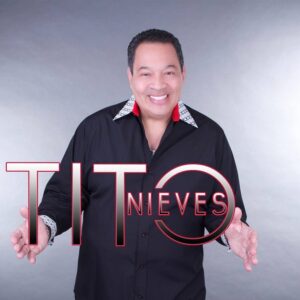
Tito Nieves The Pavarotti of The Salsa

Humberto Nieves, (Río Piedras, Puerto Rico, June 4, 1959), better known as Tito Nieves, is a Puerto Rican salsa singer of American origin, known by the nickname of The Pavarotti Salsa.

Tito Nieves

Tito Nieves

Tito Nieves began his career while participating in Orquesta Cimarrón, a group that originated in New York.

In 1977, he teamed up with singer Héctor Lavoe and his Orchestra and joined the Conjunto Clásico.

In 1979 in New York he recorded the production with the outstanding boricua composer Jhonny Ortiz for the Fania Records label that same year in Puerto Rico under the support of the New Generation label. Tito Nieves recorded with the also boricua percussionist Julio Castro and the Massacre the production of El Pregonero.

Later, Nieves decided to start his solo career in 1987, apart from singing salsa in English.

He is known for his hits such as El Amor Más Bonito, Sonámbulo, and the English-language salsa hit, I Like It Like That.

In 1988 he was presented with the opportunity to record for the RMM label. His first big hit for the company was the song “Sonámbulo”, a composition by Leo Casino, which appears on his first album for RMM, entitled “The Classic” which reached a gold record.

With this album, Tito Nieves definitely imposed his interpretive style, launching himself to conquer international markets, setting the tone for other artists who later form the nucleus of what is known as “The Sound of New York”, championed by RMM.

“Yo quiero cantar”, the second album for RMM in 1989, brought a pleasant surprise. The English-language song “I’ll Always Love You”, taken in the style of salsa, became a hit on English-language radio stations.

Thanks to this and other songs, the album reached the numbers to be credited as a Gold Record. With this production Tito Nieves expanded horizons making the famous “crossover” to the Anglo-Saxon market.

His third production “Déjame vivir” in 1991 reached a platinum record, including the hits “De mí enamórate”, “Te amo”, “Déjame vivir”, “Almohada” and “How To Keep The Music Playing”. His fourth recording was released in June 1993 under the title “Rompecabeza (The Puzzle)”.

Inspired by the success of his songs in English, Tito decided to include two songs in this language “Can You Stop The Rain” and “You Bring Me Joy”.

In 1995 his fifth album, “Un tipo común”, was released, produced in Puerto Rico by Cuto Soto and had arrangements by Ramón Sánchez, Julito Alvarado, Louis García and Cuto himself. The production included the song “No me vuelvo a enamorar” by the Mexican singer-songwriter Juan Gabriel and with arrangements by Sergio George.

Another surprise on the album was Tito’s version of Selena’s classic song “No me queda más”.

Tito Nieves definitely had a strong impact on the Anglo-Saxon market with his sixth production recorded all in English “I Like It Like That”. This song took him to great stages such as the UPN TV show VIBE.

Hits from the album Fabricando Fantasías (2004) include Fabricando Fantasías and Ya No Queda Nada with La India, Nicky Jam, and K-Mil.

In 2005, he released Hoy, Mañana and Siempre which contains the hits Esa Boquita, Si No Fuera Él and Tu Belleza.

In 2007, he released Canciones Clásicas de Marco Antonio Solís, a tribute to Mexican singer-songwriter Marco Antonio Solís

Tito Rojas passes away at 65 years of age

Tito Rojas, The Puerto Rican artist passed away this December 26

The bad news in 2020 does not stop coming, after a hard year full of unfortunate events, a few days before the year ends, Julio César Rojas López, better known as Tito Rojas, died this Saturday, December 26. His death was confirmed by both the authorities of Puerto Rico and the statements of his daughter Jessica Rojas.

According to the testimonies given, the relatives of the salsa singer found his lifeless body on the balcony of his residence in Tejas de Humacao, a municipality of Puerto Rico, subsequently, they called 911 to report his unfortunate death. Although everything seems to indicate that the cause of death was a heart attack, it has not yet been confirmed by the doctors in charge of carrying out the autopsy, however, it is expected that such confirmation will come in the next few days.

The news came as a surprise to everyone, especially because a few days before this horrible news, he offered a virtual show for all his fans, and he seemed to be in good health, so the unfortunate news has caused a great impact.

“El gallo de la salsa”, as he (Tito Rojas) was known internationally, lived 65 years, and his music has inspired many artists of the salsa genre, who have had him as a reference. As expected, great Latin American artists have spoken about it through social media.

Tito Rojas dies
Tito Rojas passes away on december 26.

Artists share their thoughts about the singer’s death

The salsa singer Tony Vega shared a photo of Tito Rojas and accompanied it with the following words: “A colleague, a friend, today we mourn his departure, but we will always carry him in our hearts.” On the other hand, Gilberto Santa Rosa also offered a message full of emotions through his Facebook and Twitter accounts: “I still can’t believe it… my dear Gallo. We will miss you and remember you in each song, in each saying and in each gesture of affection and companionship that you left. Rest in peace, my friend Tito”. Tito Rojas had participated in the new production of his compatriot Gilberto Santa Rosa, specifically in the song “Por la calle del medio”.

Other artists who have also expressed their condolences have been: Don Omar, Bad Bunny, Tito Nieves, Victor Manuelle, among many others; On the other hand, Tito’s have been such an important figure than even other well-known faces outside of the music industry also publicly lamented his death. Pedro Pierluisi and Wanda Vázquez, both governors of Puerto Rico, also share their sadness through their social media accounts.

Social networks continue to be filled with moving messages, as well as memories and anecdotes related to “El gallo de la salsa”, and due to the importance that Tito has had in the industry, this is certainly expected. After a long career full of successes, the interpreter of songs such as “Siempre seré”, “Señora de madrugada”, ” “Ella se hizo deseo” and many others, will be remembered as one of the greatest exponents of the salsa genre, his music to this day continues to inspire both veterans and emerging talents.


Home

Tony Succar Releases “Me Enamoro Mas De Ti” Featuring Jean Rodriguez

Europe / France / Bahrain

Miami, Florida February 20, 2018: Tony Succar announces the release of “Me Enamoro Mas De Ti “ (I Fall More In Love With You) featuring Jean Rodriguez, adding another song to his ever-growing list of new flavors that are defining salsa-infused pop music.

Jean Rodriguez - Unity by Tony Succar - Concert Arenes Fes Tempo Latino
Jean Rodriguez – Unity by Tony Succar – Concert Arenes Fes Tempo Latino

The powerful combination created when these two work together has been a consistent formula for viral success. When Tony Succar and Rodriguez combine their talents, it’s a concoction of tropical goodness that has their fans loving their groove. The single is available now on iTunes, Amazon, and Spotify. And, you can view Tony’s infectious “Me Enamoro Mas De Ti“ music video here.

“Me Enamoro Mas De Ti” is part of a follow-up project to Succar’s UNITY album, The Latin Tribute to Michael Jackson that hit #1 on the Billboard Tropical Album Music Chart, iTunes’ #1 World Latin Chart, and Amazon’s #1 Latin Pop Music Chart.

It was that collaboration of Universal Classics and Universal Music Latin Entertainment that landed Succar a nationally televised primetime PBS special. Inspired by what Succar refers to as the “Unity Sound,” his production of “Me Enamoro Mas De Ti” merges the unmistakable driving elements of Salsa with Pop.

It’s a blend of multi-cultural roots that results in a characteristic, retro sound with a full horn section, Latin rhythms and inspired vocals. This is Succar’s always-fresh approach of cleverly combining pure Salsa with super hip, funky and pop musical elements.

Tony Succar escalated to the top of the charts with Unity, but now it’s clear that Unity was only the foundation of his full vision.

Tony Succar
Tony Succar

“Many people have been asking me what would come after ‘Unity,’ or ‘when is Unity 2 going to be released?’ Fans have also asked when I would release some of my original compositions. The success of Unity really took my career to another level, and from that was born a new sound that I wanted to stick with.”

“So, I decided now is the time to hit the refresh button and surprise people with brand new material. This track is just the beginning. I won’t stop writing new arrangements of the amazing songs of Michael Jackson and other legendary artists I admire, but I love to create, captivate, and innovate new music.”

With that, “Me Enamoro Mas De Ti” is just a taste of what Tony Succar has on the horizon. Make no mistake, Succar is committed to the essence of tropical music that catapulted him to how far he has come. It runs in his veins and he is devoted to creating new sounds without losing the very core of what the great Salsa artists who came before him produced.

Tony Succar’s production of “Me Enamoro Mas De Ti” was co-written with Jorge Luis Piloto. Piloto has written hits for great artists such as Gilberto Santa Rosa, Victor Manuelle, Tito Nieves, Celia Cruz, Christina Aguilera, Olga Tañon, and many others. His prolific career also includes having led Sony’s Latin division and winning ASCAP’s Latin Songwriter of the Year award.

Tony Succar has been traveling a lot and performed at the Tempo Latino Festival Scène des Arènes in Vic-Fezensac, France and was a part of the amazing lineup of featured artists at the Desert Beats Music Festival in Bahrain. Succar and Unity; The Latin Tribute To Michael Jackson, shared the stage with Kool and The Gang and UB40, among others. You can see where Succar is headed next on his calendar.

Me Enamoro más de ti - Tony Succar
Me Enamoro más de ti – Tony Succar

Tony Succar has also collaborated with Latin Percussion (LP) Music to develop a “Tony Succar Signature ‘Unity’ Peruvian Cajon,” available in stores beginning in April. Just another indication of where the Peruvian-born musical talent’s heart lives.

Download “Me Enamoro Mas De Ti” here: http://smarturl.it/MeEnamoroMasDeTi

WEBSITE: http://tonysuccar.com/

Contact: Nurby Lopez – Mixtura Productions 305-771-1014 [email protected]

Video For Single “Me Enamoro Mas De Ti” Click to watch: https://youtu.be/qQkS-1DDcJM

The Latin Ensemble enchants the United States and Spain with its talents

Luis Manuel Rondón is a bandleader and composer with whom we have been able to talk about the most important details of his career in a conversation of a little more than half an hour. Rondón currently leads the group The Latin Ensemble, of which he spoke along with other important issues.

Lead singer Luis Manuel
Director and lead singer of The Latin Ensemble Luis Manuel Rondón

How Luis Manuel got into Music

Luis Manuel began in music as young as 12 years old, which means that he has more than 50 years of artistic career. His first job in the arts was as a percussionist for a Venezuelan gaita group known as Los Monumentales, when he served as a bongo player and bucket drummer. His role as a singer came about by accident, as it was not something he was looking for.

It turns out that the group had a singer nicknamed “El Cabeza” who had an amazing voice, but he had a big and unforgivable flaw. He was a drunk with misconduct who used to disappear and skip rehearsals and the most important performances. Luis Manuel recalls that they had a very important rehearsal in the days prior to a major event that weekend, so the band members tried to contact “El Cabeza” by all possible means, but they could not talk to him.

After several days of no news from him, they decided to test the vocal skills of the members to see who could “save the day” and fill the place of singer. That was when Luis Manuel started singing the famous song “La Grey Zuliana” and convinced his bandmates to make him the replacement. From there, he sang for various groups until, upon coming of age, he managed to join a fully professional group and began to be contacted to perform at dances.

He also played with Expresión Gaitera and Grupo Sancoson, from which Grupo Jarana originated. Many of the members of the latter ended being part of Guaco. The members of Sancoson attended the Liceo Aplicación, where Luis Manuel went to high school alongside the famous bassist Carlos Puche.

Some time later, he joined Grupo Cóctel Y Canela and became the owner of Grupo Cactus, which was very famous at the time. He was also a member of Dalila Show La Orquesta, La Orquesta Sibari, and La Billo Caracas Boys. 

Luis Manuel and Ray
Luis Manuel Rondón and Ray Barretto

Move to the United States

In 1999, Luis Manuel moved to the United States and settled in New Jersey, where he recorded an album which had some success in the New York music scene and won the Association of Latin Entertainment Critics in 2007, also known as the ACE Award. After that, many important things happened in his career, such as signing with Sony Music, which released and distributed his work.

He lived a very good time until the famous economic crisis of 2008, which led many orchestras to lay off some of their staff and hurt him to some extent. However, that did not stop him from continuing to open up new paths to the music, and his persistence led him to collaborate with Oscar D’León, Gilberto Santa Rosa, Tito Nieves, José Alberto “El Canario,” Johnny Pacheco, Ray Barretto, and many others. 

Listening to those artists as a child made him feel completely out of their league, so having collaborated with them was a dream come true for him. 

How He came to start his own project

Until that point in his career, Luis Manuel got great professional and personal satisfaction, but there was something very important missing in his list of successes: having his own project. He gave shape to this idea when he began his relationship with the woman who is his wife today, Gabriela Caraballo, an economist by profession with an entrepreneurial mindset. Some day talking about it, she proposed him to create an organization, which they later named The Latin Ensemble.

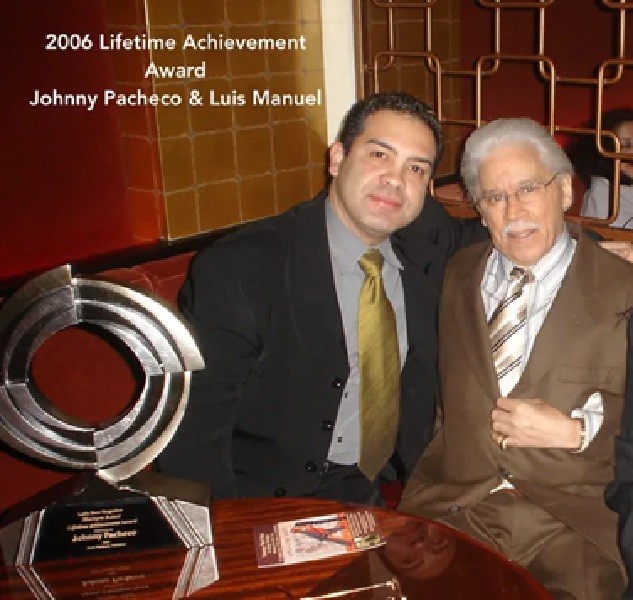
Luis and Johnny
Luis Manuel Rondón and Johnny Pacheco

From that moment on, they began to be hired for private parties and corporate events of all kinds, to the point that they even performed at a Dolce & Gabbana event for the grand opening of one of their stores. They also performed for Donald Trump at Mar-a-Lago and put on big shows at important people and places.

He has also received important awards, such as the Estrella Music Award at the James L. Knight Center in Miami, alongside the likes of José José and Grupo Niche. He also received the Ángeles de Amor Award, which honors individuals who contribute to supporting Latinos in the United States.

We must also mention the Latino Magazine Award, which he won in 2019 and 2022.

Time in Spain

For about six years now, Luis Manuel and the group have also been based in Spain. It all began when they were hired to perform at the Carnival of Tenerife in October 2019, so he, his wife, and their young daughter traveled first and rented an Airbnb. They had a contract to perform at the party of the Candlemas’s Virgin, but the point is that the event was scheduled for March 2020, when the COVID-19 pandemic had already started.

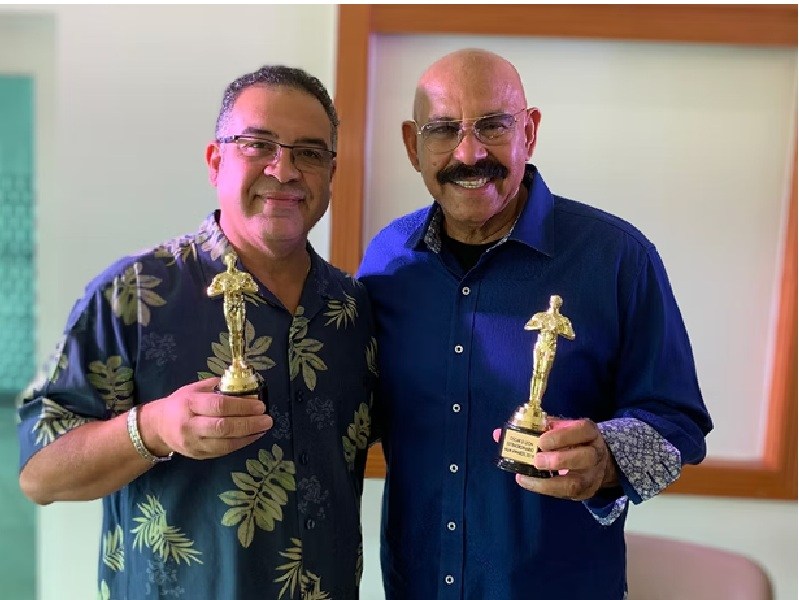
Luis and Oscar
Luis Manuel Rondón and Oscar D’ León

Because they could not leave, Luis Manuel and his family rented an apartment where they had to stay until early 2021, which is when restrictive sanitary measures were finally relaxed and they could leave Tenerife. Fortunately, this was not a waste of time for them, as they saw the potential of what they could accomplish in Spain, so they moved to Madrid and tried their luck there. 

Throughout this time in Europe, Luis Manuel and his group have performed throughout Spain, Portugal, France, and most recently in Belgium. In Belgium, The Latin Ensemble was hired to perform at a royalty party, and the group has done such a fantastic job that they will perform at another event for the same family, making it clear how talented the members are and how hard they have worked to make a name for themselves in the industry.

Unfortunately, because it is a royal family, they were not allowed to take pictures or record videos, but it is still a great event in the career of Luis Manuel and his bandmates.

Read also: John and Liz reveal details of the 16th annual SF Salsa Festival

  • Page 1
  • Page 2
  • Page 3
  • Interim pages omitted …
  • Page 18
  • Go to Next Page »

International Salsa Magazine (ISM) is a monthly publication about Salsa activities around the world, that has been publishing since 2007. It is a world network of volunteers coordinated by ISM Magazine. We are working to strengthen all the events by working together.