• Skip to primary navigation
  • Skip to main content

International Salsa Magazine

  • HOME
  • Previous editions
    • 2026
      • ISM / October 2026
      • ISM / September 2026
      • ISM / August 2026
      • ISM / July 2026
      • ISM / June 2026
      • ISM / May 2026
      • ISM / April 2026
      • ISM / March 2026
      • ISM / February 2026
      • ISM / January 2026
    • 2025
      • ISM / December 2025
      • ISM / November 2025
      • ISM / October 2025
      • ISM / September 2025
      • ISM / August 2025
      • ISM / July 2025
      • ISM / June 2025
      • ISM / May2025
      • ISM / April 2025
      • ISM / March 2025
      • ISM / February 2025
      • ISM / January 2025
    • 2024
      • ISM / December 2024
      • ISM / November 2024
      • ISM / October 2024
      • ISM / September 2024
      • ISM / August 2024
      • ISM / July 2024
      • ISM / June 2024
      • ISM / May 2024
      • ISM / April 2024
      • ISM / March 2024
      • ISM / February 2024
      • ISM / January 2024
    • 2023
      • ISM / December 2023
      • ISM / November 2023
      • ISM / October 2023
      • ISM – September 2023
      • ISM – August 2023
      • ISM July 2023
      • ISM Edition June 2023
      • ISM – May 2023
      • ISM April 2023
      • ISM March 2023
      • ISM February 2023
      • ISM January 2023
    • 2022
      • ISM December 2022
      • ISM November 2022
      • ISM October 2022
      • ISM September 2022
      • ISM August 2022
      • ISM July 2022
      • ISM June 2022
      • ISM May 2022
      • ISM February 2022
      • ISM January 2022
    • 2021
      • ISM December 2021
      • ISM November 2021
      • ISM October – 2021
      • ISM September 2021
      • ISM August 2021
      • ISM July 2021
      • ISM May 2021
      • ISM April 2021
      • ISM June 2021
      • ISM March 2021
      • ISM February 2021
      • ISM January 2021
    • 2020
      • ISM December 2020
      • ISM November 2020
      • ISM October 2020
      • ISM September 2020
      • ISM August 2020
      • ISM July 2020
      • ISM June 2020
      • ISM May 2020
      • ISM April 2020
      • ISM March 2020
      • ISM February 2020
      • ISM January 2020
    • 2019
      • ISM December 2019
      • ISM November 2019
      • ISM October 2019
      • ISM Septembre 2019
      • ISM August 2019
      • ISM July 2019
      • ISM June 2019
      • ISM May 2019
      • ISM April 2019
      • ISM March 2019
      • ISM February 2019
      • ISM January 2019
    • 2018
      • ISM December 2018
      • ISM November 2018
      • ISM October 2018
      • ISM September 2018
      • ISM August 2018
      • ISM July 2018
      • ISM June 2018
      • ISM May 2018
      • ISM April 2018
      • ISM March 2018
      • ISM February 2018
      • ISM January 2018
    • 2017
      • ISM December 2017
      • ISM November 2017
      • ISM October 2017
      • ISM September 2017
      • ISM August 2017
      • ISM July 2017
      • ISM June 2017
      • ISM May 2017
      • ISM April 2017
      • ISM March 2017
      • ISM February 2017
      • ISM January 2017
    • 2016
      • ISM December 2016
      • ISM November 2016
      • ISM October 2016
      • ISM September 2016
      • ISM August 2016
      • ISM July 2016
  • Spanish
  • Download Salsa App
    • Android
    • Apple

Search Results for: Van+Van

La Bodeguita del Medio Costa Rica

Latinoamerica / Costa Rica

La Bodeguita del Medio Costa Rica Photo with Eduardo Guilarte

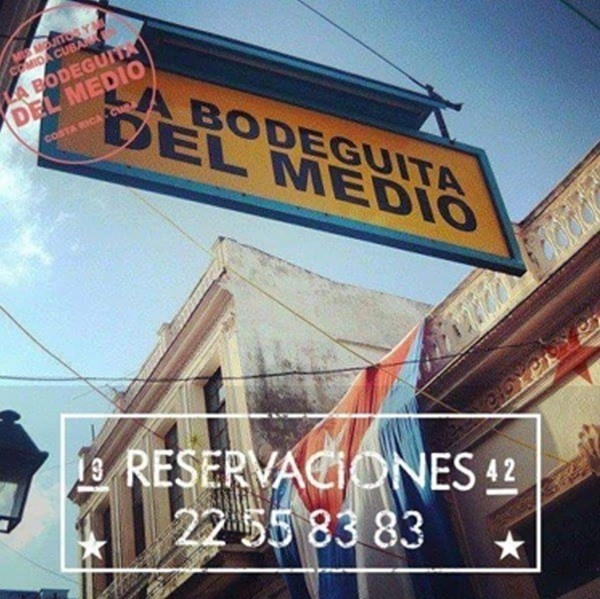
One of the most renowned and famous establishments is “La Bodeguita del Medio” in Havana, Cuba. And in San José, Costa Rica, there’s a branch that offers great live music and excellent mojitos. This is because this Cuban restaurant is the most famous in the world for being the creator of the authentic Mojito.

“La Bodeguita del Medio” was officially named at the Martínez house on April 26, 1950. It’s worth noting that the original Bodeguita del Medio is located at Empedrado 207, in Old Havana, just 40 meters from the Havana Cathedral.
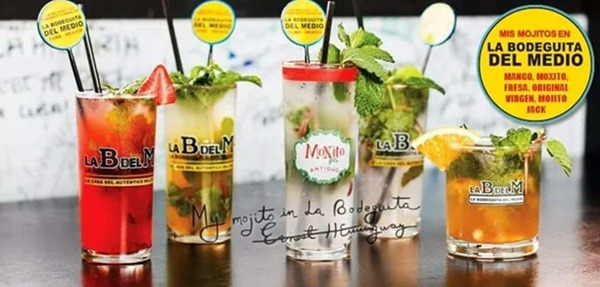
La Bodeguita del Medio Costa Rica - Drinks
La Bodeguita del Medio Costa Rica – Drinks

This restaurant provides excellent quality Cuban food, and there’s never an entrance fee. Opening hours are from 12 noon until midnight, depending on the number of customers at that time. One of the groups that plays at this venue is “Grupo Chocolate los hijos del Son,” who perform live, playing original music and traditional Cuban songs for all audiences daily, from Monday to Saturday, starting at 8 pm. This group has been playing at the Bodeguita since the restaurant opened.

This restaurant is also known as an ideal place to enjoy excellent afternoons and evenings full of flavor, with live music and an unbeatable Cuban atmosphere—in short, a very cheerful atmosphere with a true Latin flavor. Our Editor-in-Chief, Mr. Eduardo Guilarte, visited and enjoyed the quality of both the service and the company.
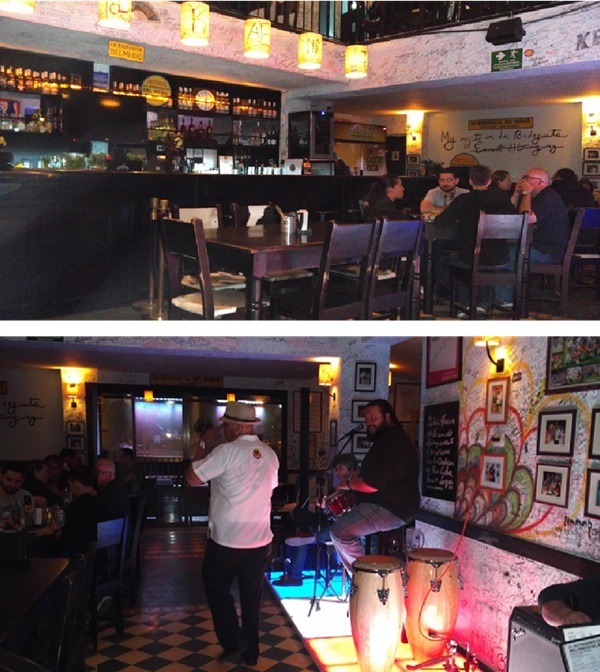

La Bodeguita del Medio Costa Rica - Photo 1
La Bodeguita del Medio Costa Rica – Photo 1
La Bodeguita del Medio Costa Rica - Photo 2
La Bodeguita del Medio Costa Rica – Photo 2

For more information, please contact:

  • Phone: +506 2255 8383
  • Location: 200 meters south of BCR Paseo Colón, San José, Costa Rica
  • Email: [email protected]
  • Facebook: LaBodeguitadelMedioCostaRica https://www.facebook.com/LaBodeguitadelMedioCostaRica/
  • Instagram: labodeguitadelmediocr
La Bodeguita del Medio Costa Rica

Club Lite: Salsa on Thutsday with Salsa Social

Europe / Netherlands / Amsterdam

“Club Lite is an oasis of freedom in Amsterdam: Freedom. To be who you are without pretense. To meet warm, welcoming people of all ages, from all walks of life. Come and feel the difference of what a true down-to-earth dance club can be like.” These are the words of many dancers in Amsterdam who assure Club Lite is one of the best dance clubs in Europe.

Photo 1: Club Lite
Photo 1: Club Lite

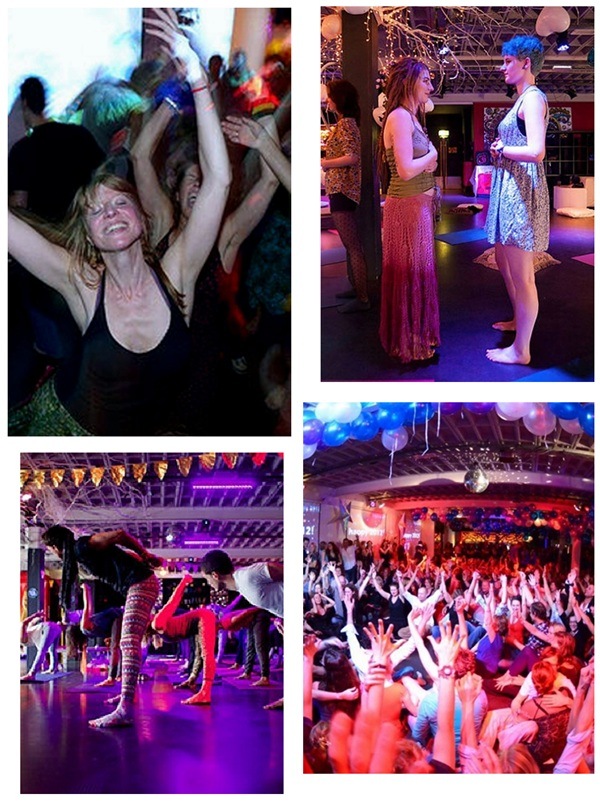
Club Lite is a very special venue in Amsterdam. The standard idea of a nightclub has been re- invented to create something fresh and vibrant, unlike anywhere else in Amsterdam or The Netherlands. People come here not just to dance, but to nourish their soul.

To explore a wide variety of music & dance experiences throughout the week and weekend. And especially, the freedom to dance barefoot!

Photo 2: Club Lite
Photo 2: Club Lite

On the agenda you will find a wide variety of music and experiences that range from tantric dance to techno to yoga. The DJ’s, the people, the music and the barefoot freedom all join together to make this a dance sanctuary right on the Jan van Galenstraat! A pearl among the pebbles, Club Lite needs to be experienced to believe that yes, it is actually real. Open nearly every day and on every weekend, we are here to indulge you in the dance.

Photo 3: Club Lite
Photo 3: Club Lite

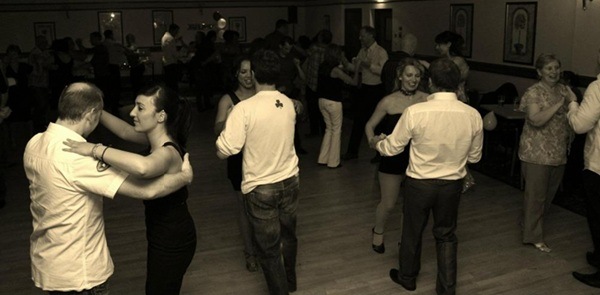
On Thursdays, Lite becomes Latin with Extremos, the salsa dance school. For over 15 years Extremos has been teaching Salsa and other Latin dances to the people of Amsterdam. They regularly start new courses for all levels, so whether you are an absolute beginners or advanced dancer, the school always has a salsa course that fits you. Join the Free Try- Out salsa classes that they organize almost every month.

Just outside of the center, this is a cool social party one of the best in town. The Master Class begins at 11pm and then the party starts, many students stay so there are definitely good dancers around!

Photo 4: Club Lite
Photo 4: Club Lite

Nu Salsa The dynamic duo of dance in Belfast

Europe / Ireland / Belfast

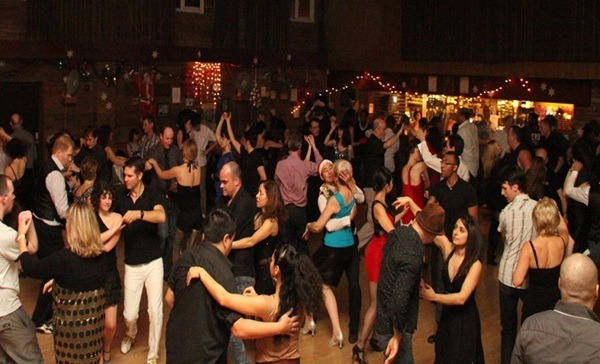
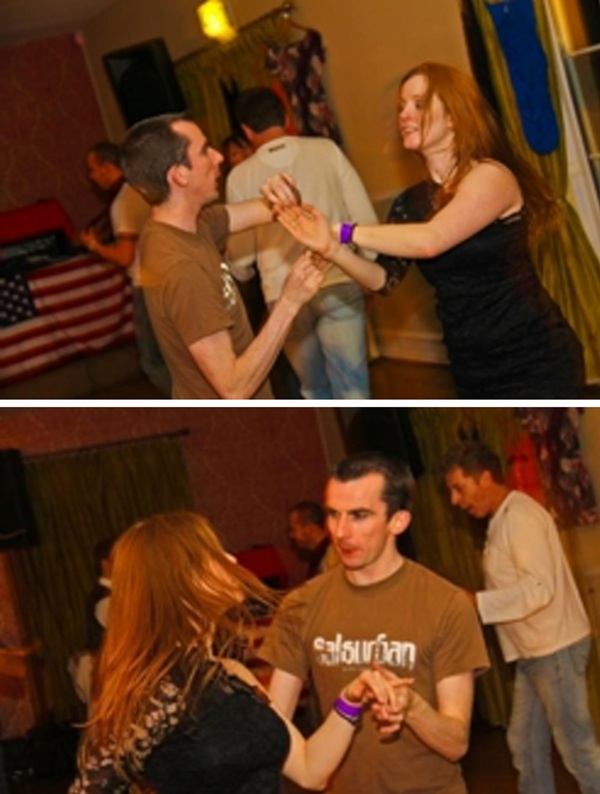
Nu Salsa is a new concept of dance classes. They are taught by David Hynes and Suzanne Coates, which are the best duo of salsa in Ireland. Both have been dancing salsa for a long time and are well established as the top teaching couple in the Belfast salsa scene. They will be teaching at the Scottish Salsa Congress in Edinburgh and Irish Salsa School in Maynooth plus a lot of other events.

Nu Salsa - Learn Salsa
Nu Salsa – Learn Salsa

Nu Salsa are always known to do things their own way, even if that means doing things differently from everyone else, but the proof of this approach shows in the good dancers that come through our classes. They have been taught by some of the best teachers in the world and it is our mission to pass on that teaching to our own students in Belfast and around Ireland.

Every two Fridays they teach salsa in different locations (night clubs, academies, congresses).

Suzanne Coates & Davis Hynes - Dancing
Suzanne Coates & Davis Hynes – Dancing

David and Suzanne have taught previously at Irish Salsa School, the Cork Salsa Bonanza and Donegal Dance Asylum, along with many guest teaching slots throughout the country. Our aim is to pass on our knowledge of salsa to our students in Belfast and help them fall in love with salsa as much as we enjoy it. If you would like to talk to us about our classes, teaching style or anything related to salsa dancing, please get in touch as we would love to chat.

Suzanne Coates

Suzanne is widely regarded as the top female salsa dancer and teacher in Belfast. She has been teaching with Nu Salsa for several years and also runs ladies styling and technique classes under the Salsa Style brand in Belfast.

Suzanne Coates
Suzanne Coates

David Hynes

David has been dancing for many years and has been teaching as Nu Salsa since 2004. During this time, he has learned from a lot of the top teachers in the UK and recently has spent a long time in London studying under Gil and Shelley of Pexava Dance.

Suzanne Coates & Davis Hynes

Friday Night Salsa Classes Belfast

They’re running classes every second Friday until the end of the year. See below for the current schedule. They will have 2 levels of class each night, one for Improver dancers and one for Intermediate/Advanced.

Classes will run from 7-8.30pm and then 30 mins of social dancing so you can practice what you have learned and we can give some individual help if you have any questions.

Suzanne Coates & Davis Hynes Selfie

Lessons will be held on the following dates:

  • Fri 6th Nov – Guest teachers K4 Kizomba Konnexions
  • Fri 20th Nov – classes as normal
  • Fri 4th Dec – special Christmas classes
Suzanne Coates & Davis Hynes - Dance Lessons
Suzanne Coates & Davis Hynes – Dance Lessons

How Artificial Intelligence changed the music biz forever

Since very recently, there has been a tool that gives machines and systems the ability to mimic many of the things humans do, such as writing texts, drawing, analyzing data, recognizing information, making decisions, among many others. Of course, we are talking about Artificial Intelligence. 

One of the areas in which artificial intelligence has definitely impacted is music, reaching the point where it may even compose entire songs, write lyrics, and generate voices so realistic that they could easily be confused with those of humans. Because of the impact this set of technologies has had on the art world, we cannot stop talking about such an important issue that, whether we like it or not, has significantly changed and will continue to change the music landscape significantly.

Imagen created by Artificial Intelligence
This is an image about AI in music created by AI

AI and Music

Even when this could cause discomfort, it is not a secret for anyone that every day there are more facilities for those who make music without having the necessary knowledge to produce something of high quality in many cases, so they ride on all possible resources to make their job easier and simpler. 

Artificial intelligence makes producing, composing, mixing, and mastering much less complex processes, and in many cases, human intervention is not necessary. Artists and all kinds of music professionals now have a much wider range of possibilities with which they can cross boundaries technology did not allow before. For this reason, it is imperative that they are trained as best as possible in these tools so they can get the most out of them, but trying to keep the human touch that every artistic product needs.

Benefits of using Artificial Intelligence in music

As we have made quite clear, artificial intelligence offers numerous advantages to all those who learn to use it, but what would be some of them?

  • Less chance of making mistakes: by limiting to the minimum human intervention, the chances of making a mistake that could harm the final result is very slim, delivering greater levels of confidence throughout any process.
  • Speed and efficiency in the processes: anyone who has had the opportunity to compose or knows someone who does understands that it can be a rather slow and arduous process, but artificial intelligence can make things easier beyond imagination. Something that usually lasts days or even weeks can suddenly happen in seconds, making this technology a huge draw for any music creator.
  • Greater creative possibilities: Because AI offers the ability to mix up styles and genres that an artist would not consider by himself, opening up a wide range of creative possibilities and helping to create unique and experimental songs.
  • Highest adaptability: another of the virtues of AI is the ability to create lyrics, adjust them, and adapt them to existing melodies. 
AI has some disadvantages
AI offers many advantages, but also some disadvantages artists take into account

Challenges facing artists with artificial intelligence

So as we mentioned some of the virtues of AI, it is needed to be honest and admit that it can bring some problems when not used correctly. For an artist, there are certain things that can be harmful if he does not have the right training and a clear idea of what he/she wants to achieve:

  • Little originality: this is one of the aspects that most concerns those who criticize excessive use of AI in music, since this technology is based on pre-existing data. While it is true that AI can generate new things, its production only comes from previously made content. 
  • Low emotional depth: one of the main criticisms against AI in the realm of artistic creation is the lack of emotional depth it sometimes offers. Music has been understood as one of the most emotional and human expressions an artist can convey, but unfortunately AI is occasionally unable to replicate it with the same intensity. These platforms cannot always grasp this emotional component, which is so necessary to create music with the level of authenticity and depth required to touch the hearts of audiences.
  • Concerns about job security of musicians: due the legal gray areas over which AI still navigates, there are many worries about job security of artists. Because this technology is capable of reproducing vocals and compositions that may well compete with those of humans, this could mean that the livelihoods of many workers of the music industry could be seriously affected. 

Copyright law in relation to Artificial Intelligence

One of the most common doubts regarding AI is how the matter of copyright is handled, especially in the music industry, where there have been more than one scandal involving this topic. According to Intellectual Property Law, any copyrightable work should be completely original and created by a natural person. Could we say that an AI-powered song is original? Well, let’s see.

Given that originality has no clear definition in the law, the courts and the legal literature have set up the term, which results in the objective approach and the subjective approach.

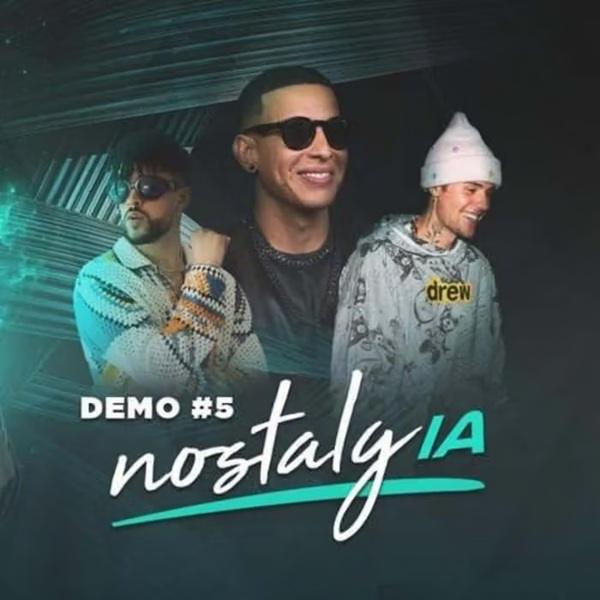
Cover created by AI
Cover of NostalgIA with the voices of Daddy Yankee, Bad Bunny, and Justin Bieber. The song was made by the artist prototype Flow GPT

The subjective approach holds that a work is original if it is a true reflection of its author’s personality, while the objective approach makes references to creating something that did not exist before. The predominant approach in most countries that have enacted appropriate legislation on this matter is the subjective one, making it difficult for works created using AI to be protected by law. However, companies that provide this technology generally point out that the rights to the material created by their AI belong to them.

In view of the above, the law is very clear that the author must be a natural person, making it impossible for a work created with AI to be legally protected. It is for the same reason that, even if the objective approach predominates at some point, it would still be very difficult to protect this material.

What can we conclude from all this?

It is clear that Artificial Intelligence is here to stay and change the music industry forever, so struggling against it and its use is absolutely useless. For this reason, it is important to see it as an ally in improving what was done and not as an enemy to fight. 

Although these platforms may have some disadvantages that have already been mentioned, proper training of artists can lower the chances of falling in the lack of human sensitivity and help integrate them into their work as effectively as possible, since AI is a reality with no turning back.

Read also: David Frankel pursued music and created Avenida B Band to reconnect with the memory of his father

Antonio Adolfo: The Indelible Master of Brazilian Music

From Classical Cradle to the Jazz and Bossa Nova Revolution

That musical heritage is essential to understanding the greatness of Antonio Adolfo.

Being born into a home where the violin from the Rio de Janeiro Municipal Theater orchestra was part of the daily landscape shaped his sensibility from the cradle.

Although he grew up surrounded by the classical discipline of his father, his destiny lay within the keys, jazz, and the revolution of Brazilian popular music (MPB).

De la Cuna Clásica a la Revolución del Jazz y la Bossa Nova

The son of a classical violinist, Antonio Adolfo was born in the bohemian neighborhood of Santa Teresa, Rio de Janeiro, under the sign of Aquarius in 1947. At the young age of 16, the young pianist was already part of the exclusive bossa nova club brewing in the famous Beco das Garrafas alley, leading ensembles that stood at the forefront of the scene, such as Conjunto Cinco and the Samba Trio 3-D.

Shortly after, he participated in the iconic musical Pobre menina rica by Carlos Lyra and Vinicius de Moraes, beginning to make a name for himself in the industry.

Starting in 1967, by forming a creative partnership with lyricist Tibério Gaspar, Adolfo became one of the great catalysts of modern melody in Brazil, composing massive hits like “Sá Marina” and “Juliana.”

Antonio Adolfo El Maestro Imborrable de la Música Brasileña

At the same time, leading the group Brazuca, he established an electronic pop tone that was highly sophisticated for its time (with tracks like “Teletema” and “Ana Cristina”), culminating in the blistering musical highway of “BR-3″—a song that sparked great controversy and shook the core of the era’s music festivals.

A Pioneering Spirit and International Acclaim

After playing as a member of the backing band for the legendary Elis Regina on two European tours, and refining his technique in Paris with the renowned classical maestro Nadia Boulanger—in addition to studying in Brazil under masters Guerra-Peixe and Esther Scliar Antonio Adolfo was ready to take another giant leap.

In 1977, in an act of bravery and pioneering spirit, he released the album Feito em Casa (Homemade) under his own record label, Artezanal.

This was the opening kickoff for a liberating movement: the independent record industry in Brazil, triggering the rise of artistic dynamics that diverged from traditional market rules. Under this self-managed system, Adolfo recorded both original material (including children’s music that promoted free play) and foundational revisions of pianeiro classics, transforming the works of Ernesto Nazareth and Chiquinha Gonzaga for the contemporary piano.

This versatility proved that, as a performer and creator, Adolfo had achieved a rare distinction: mastering contemporary language from a place of timelessness.

Since 1985, the maestro has focused much of his energy on his music school, the Centro Musical Antonio Adolfo, while also participating in international events as an educator, without ever setting aside his stage career.

His profound work with the music of Chiquinha Gonzaga and jazz has earned him prestigious awards and nominations. Furthermore, he is the author of seven textbooks on Brazilian music published by Lumiar, a video lesson, and two books published abroad. For eight years, he proudly served as the Latin American representative for the IAJE (International Association for Jazz Education).

In recent years, Antonio Adolfo has returned to the stage more frequently, performing either in a solo piano format or with a group. From one of his performances at a U.S. university alongside his daughter, singer Carol Saboya, came an acclaimed live album released both in Brazil and abroad: Antonio Adolfo & Carol Saboya Ao Vivo / Live. This success has been followed by recording productions highly praised by international critics, such as Here and There / Aquí y Allá.

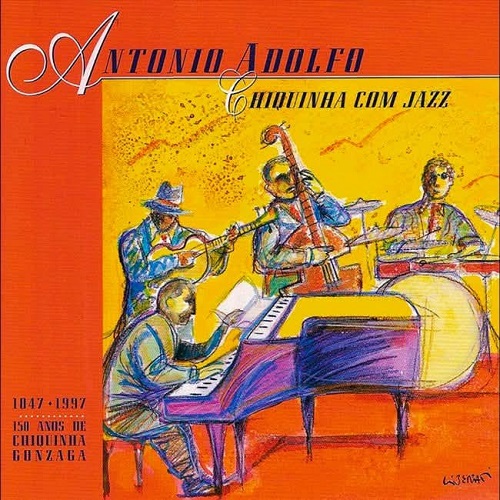
Chiquinha Com Jazz (1997)

Discographic Gem: “Chiquinha Com Jazz” (1997)

A perfect example of his genius for fusing Brazilian roots with the freedom of jazz is his 1997 album dedicated to the pioneer Chiquinha Gonzaga.

Tracklist:

Atraente

Cordão Carnavalesco

Lua Branca

Angu

Gaúcho (Corta-Jaca)

O Forrobodó

Corte Na Roça

Satan

Ismênia

Faceiro

O Abre Alas

          Personnel:

Antonio Adolfo: Piano and musical arrangements

Gabriel Vivas: Double bass

Ivan Conti: Drums

Claudio Spiewak: Acoustic guitar

Contributor:

L’Òstia Latin Jazz

Dj. Augusto Felibertt

Also Read: Carlos “Nene” Quintero comes from a family of musical prodigies

  • « Go to Previous Page
  • Page 1
  • Interim pages omitted …
  • Page 16
  • Page 17
  • Page 18
  • Page 19
  • Page 20
  • Interim pages omitted …
  • Page 150
  • Go to Next Page »

International Salsa Magazine (ISM) is a monthly publication covering salsa activities around the world and has been publishing since 2007. It is a worldwide network of volunteers coordinated by ISM Magazine. Together, we work to strengthen salsa events around the world.