• Skip to primary navigation
  • Skip to main content

International Salsa Magazine

  • HOME
  • Previous editions
    • 2026
      • ISM / October 2026
      • ISM / September 2026
      • ISM / August 2026
      • ISM / July 2026
      • ISM / June 2026
      • ISM / May 2026
      • ISM / April 2026
      • ISM / March 2026
      • ISM / February 2026
      • ISM / January 2026
    • 2025
      • ISM / December 2025
      • ISM / November 2025
      • ISM / October 2025
      • ISM / September 2025
      • ISM / August 2025
      • ISM / July 2025
      • ISM / June 2025
      • ISM / May2025
      • ISM / April 2025
      • ISM / March 2025
      • ISM / February 2025
      • ISM / January 2025
    • 2024
      • ISM / December 2024
      • ISM / November 2024
      • ISM / October 2024
      • ISM / September 2024
      • ISM / August 2024
      • ISM / July 2024
      • ISM / June 2024
      • ISM / May 2024
      • ISM / April 2024
      • ISM / March 2024
      • ISM / February 2024
      • ISM / January 2024
    • 2023
      • ISM / December 2023
      • ISM / November 2023
      • ISM / October 2023
      • ISM – September 2023
      • ISM – August 2023
      • ISM July 2023
      • ISM Edition June 2023
      • ISM – May 2023
      • ISM April 2023
      • ISM March 2023
      • ISM February 2023
      • ISM January 2023
    • 2022
      • ISM December 2022
      • ISM November 2022
      • ISM October 2022
      • ISM September 2022
      • ISM August 2022
      • ISM July 2022
      • ISM June 2022
      • ISM May 2022
      • ISM February 2022
      • ISM January 2022
    • 2021
      • ISM December 2021
      • ISM November 2021
      • ISM October – 2021
      • ISM September 2021
      • ISM August 2021
      • ISM July 2021
      • ISM May 2021
      • ISM April 2021
      • ISM June 2021
      • ISM March 2021
      • ISM February 2021
      • ISM January 2021
    • 2020
      • ISM December 2020
      • ISM November 2020
      • ISM October 2020
      • ISM September 2020
      • ISM August 2020
      • ISM July 2020
      • ISM June 2020
      • ISM May 2020
      • ISM April 2020
      • ISM March 2020
      • ISM February 2020
      • ISM January 2020
    • 2019
      • ISM December 2019
      • ISM November 2019
      • ISM October 2019
      • ISM Septembre 2019
      • ISM August 2019
      • ISM July 2019
      • ISM June 2019
      • ISM May 2019
      • ISM April 2019
      • ISM March 2019
      • ISM February 2019
      • ISM January 2019
    • 2018
      • ISM December 2018
      • ISM November 2018
      • ISM October 2018
      • ISM September 2018
      • ISM August 2018
      • ISM July 2018
      • ISM June 2018
      • ISM May 2018
      • ISM April 2018
      • ISM March 2018
      • ISM February 2018
      • ISM January 2018
    • 2017
      • ISM December 2017
      • ISM November 2017
      • ISM October 2017
      • ISM September 2017
      • ISM August 2017
      • ISM July 2017
      • ISM June 2017
      • ISM May 2017
      • ISM April 2017
      • ISM March 2017
      • ISM February 2017
      • ISM January 2017
    • 2016
      • ISM December 2016
      • ISM November 2016
      • ISM October 2016
      • ISM September 2016
      • ISM August 2016
      • ISM July 2016
  • Spanish
  • Download Salsa App
    • Android
    • Apple

Search Results for: Van+Van

The composer and singer Carlos Xavier reveals unpublished details of his career

The composer and singer with Nicaraguan roots Carlos Xavier is a very good friend of the house due to his collaboration with the Editor of International Salsa Magazine Eduardo Guilarte and we are extremely pleased to have invited him to this edition and to know him in a more personal way. The artist born in San Francisco talked to us about his musical career, his facet as a composer, his great inspirations, among other relevant topics.

Carlos Xavier is a friend
Composer and singer Carlos Xavier is a great friend of the house

Carlos’ beginnings in music

From a very young age, Carlos was already in close contact with music thanks to his father and older brother, since they always sang, played the radio or listened to records they bought. At home, he listened to all kinds of music in both English and Spanish, but it was not until he was 16 years old that he became really interested in singing in a more serious way. He was not accompanied by a teacher to tell him exactly what to do, so he had to start practicing alone and be guided by what he saw in professional singers like Christian Castro, Luis Miguel and Marc Anthony when it was his turn.

As for his musical debut, in 1999, Carlos ventured to look for an orchestra to sing with once he felt ready to prove his vocal skills on stage in front of a crowd. Then, he found Orquesta Caché, which had just been created and was looking for a singer, a post for which he was finally selected and made his first performance with the group that same year. This concert took place at the well known Café Cocomo and, since then, the artist has not stopped. 

Interest in Latin music

Although Carlos states that he likes English music and has recorded several songs in English, he also clarifies that his focus is and always has been Latin music. He has worked on other people’s projects in which English is the base, but whenever he releases something of his, he always tries to base it on Latin or salsa music and always in Spanish. It’s a matter of preference.

This is partially thanks to his parents, who always made sure that their children had as much contact as possible with their Nicaraguan roots through the rest of his family, music, food and Nicaraguan culture in general.

In addition, most of his family also went to live in the United States, so he always spent time with them, which helped Carlos to know much more about Nicaragua and the way of life in that country. They always instilled in him the pride of being Latino and he still keeps that feeling intact. 

Carlos Xavier singing
Carlos Xavier singing live

Solo debut

Although Carlos spent many, many years playing with orchestras, he says that becoming a soloist at some point was always his greatest goal. That moment came in 2010 when the singer released his first single as a soloist called ‘’Mientes’’, which was the piece that gave him the confidence to know he could have a solo career and write his own music. 

When we wanted to know the biggest challenges faced by him, he replied that he never thought of his solo career that way, but that he was working for a purpose, drawing inspiration from his greatest idols who had already achieved what he wanted. He simply saw his goal as something he had to achieve at some point, not as a challenge that would make the path more difficult for him. 

Vive Todo Ahora

‘’Vive Todo Ahora’’ was the representation of the dream of Carlos, who always wanted to be able to release an album of the same quality as those of Marc Anthony, La India, and Frankie Negrón. The fact that it was his first album did not mean that the singer was going to let his first album reveal his inexperience in this field, so he hit the deck and contacted producer Efrain Davila. At that time, Davila was working with Victor Manuelle, Marc Anthony and Carlos Vives, so Carlos decided to send him a message and show him his song ‘’Mientes’’ to cover it in salsa. 

The producer responded enthusiastically that he liked the song and accepted the proposal, leading ‘’Mientes’’ to be released as a single in 2014 and the rest of the album was made and released in the same way. Fortunately, Carlos succeeded in including some of Marc Anthony’s musicians such as bassist Ruben Rodriguez, percussionist Luisito Quintero, backing vocalist Guianko Gomez, among others.
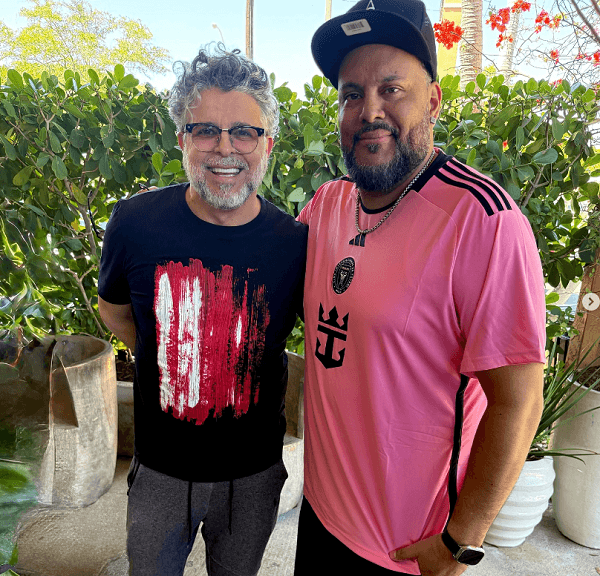
Carlos Xavier and Luis Enrique
Luis Enrique and Carlos Xavier posing for the camera

His facet as a composer

Another facet that has been of vital importance to Carlos’ growth as an artist has been composition and, of course, he has his own creative process, although it is not extremely complex. He simply sits down at the piano and looks for the most beautiful melody he can think of, but it is a creation that is born from the inside of him.

n the year 2000, together with the Orquesta Caché, he had the opportunity to record a cover in Peru, but he told the members of the group that he wanted to write that song in his own hand and they agreed. That is when he created ‘‘Marchate’’ and it was the material they recorded in the aforementioned country.

Even then Carlos showed that he wanted to be original and follow his own ideas, which he finally achieved thanks to his perseverance.

Clubs where he currently plays

As mentioned above, Carlos worked closely with Eduardo Guilarte at Charley’s LG Club in Los Gatos, California for some time a few years ago. Of that time, Carlos recalls that Guilarte was one of the few people who truly praised him for his talent on stage, which he appreciated today. He mentioned that he always offered him nice words and advice regarding the way the industry works, so he has the best memories of his collaboration with the editor of International Salsa Magazine.

For the time being, he keeps playing at other clubs such as Building 43, Vino Godfather Winery, The Dawn Club, among others.

Carlos and Viviana
Carlos Xavier during an interview with Viviana Paez and Brian Lozado on Univision

Read also: Eduardo Ron and his Fondo Blanco Band liven up great events in Miami
Steps Dance Studio Inc.

North America / Canada /  Toronto

Steps Dance Studio

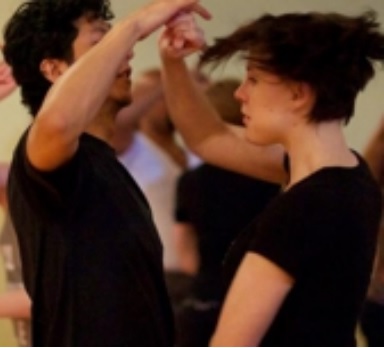
Steps offers a complete curriculum of Salsa, Bachata, Hustle and Latin Dance for all skill levels. Working from a comprehensive dance syllabus designed by Jennifer Aucoin and refined by 20 years of Salsa teaching experience, their professionally trained instructors are patient, dedicated and passionate about their craft. Want you to leave your class and the dancefloor feeling great. The program is designed to allow students to begin anytime! Start any week, even absolute beginners. And come as often as your schedule allows. Steps Dance Studio has classes every night and on weekends, and most levels are offered twice a week or more.

Dancers teachers - Steps Dance Studio Inc.
Dancers teachers – Steps Dance Studio Inc.

Located just a few minutes walk from Bloor & Wellesley subway stations. 819 Yonge St. 3rd floor. Toronto, ON M4W 2G9 SE corner of Yonge St. & Davenport, north of Bloor St.

Meet Jennifer Aucoin, Founder, Executive Director and Instructor.

A full-time salsa instructor, choreographer and event organizer. She is co-artistic director for Steps Dance Company & co-founder of the Women’s Salsa Retreat. As a trained adjudicator, Jennifer has judged competitions in Puerto Rico, Ecuador, New York, Las Vegas, Orlando, Miami, Detroit, Ottawa, Montreal and Toronto. She has also represented Canada on the judging panel for the World Salsa Championships televised on ESPN.

Jennifer Aucoin
Jennifer Aucoin

She is on the judging panel for the prestigious Global Salsa Championships at the World Salsa Summit. Jennifer was also the first instructor in Canada to be certified to teach Latin Hustle by the IHDA. Jennifer is the founder and organizer of the annual Canada Salsa & Bachata Congress, an international salsa festival that takes place in Toronto every October.

This 4-day extravaganza, now in its thirteenth year, is the largest salsa event in Canada and features nightly performances by over 60 dance companies from all over the world and daily salsa workshops given by worldrenowned instructors. The Canadian Salsa Championships, part of the Canada Salsa & Bachata Congress weekend, is the largest and most widely recognized Salsa & Bachata competition in Canada.

Classes offered in Steps Dance Studio

Salsa

  • Salsa Level 1: No previous dance (or salsa) experience required. Start this class at any time. Each class starts with an explanation and review of the basic Salsa step and the timing and rhythm of Salsa music, followed by a new beginner level turn.
  • Salsa Level 2: Geared to those who are comfortable with the basic Salsa step, basic right and left turns and Cross Body Lead. Build on Level 1 material and learn new turns and combinations, add footwork (i.e. Salsa shines) and reinforce your timing and partnering skills. Learn proper posture, frame, weight transfer and connection.
  • Salsa Level 3: Cross body lead patterns, traveling turns, back breaks, checks and different hand hold variations will be linked into fun turn pattern combinations. Start developing a flow of motion between the moves that will make you feel good and look good on the dancefloor.
  • Salsa Level 4: This course will focus on high intermediate level turns and turn pattern combinations, how to maintain balance and connection with your partner while incorporating directional changes & intricate moves, improving musicality, how to remember shines and turn patterns and use them in different combinations, tips on how to be a better leader and follower, adding styling to your dancing – in short, how to be a more complete dancer!
  • Salsa Level 5: This course focuses on taking your dancing to the next level. Advanced level turn patterns, technique and skill development. Execute double spins, multiple turns and variations, intricate choreography, advanced level syncopations and sexy styling. Adapt and combine your moves to suit the level of your partner.

Bachata

  • Bachata Level 1: Bachata is a seductive and flirtatious dance that originated in the Dominican Republic and is played in all Salsa nightclubs. Learn the basic Bachata footwork and how to lead and follow some fun and simple Bachata turns and turn pattern combinations.
  • Bachata Level 2: Learn new turns and turn pattern combinations while focusing on the correct connection, tension and movement of Bachata dancing. Learn body isolation exercises and drills to help make this dance look smooth and sexy.
  • Bachata Level 3: Learn more intricate and complex Bachata turn pattern combinations. Learn how to execute syncopated Dominican style footwork. Learn body isolation exercises and drills to help you to incorporate the sensuous Bachata body movement needed to make this dance look effortless.
  • Bachata Level 4: Learn more intricate and sexy Bachata turn patterns. Add syncopated Dominican style footwork into your partner dancing. Learn how to incorporate the sensuous Bachata body movement needed to make this dance look effortless. Refine your leading & following technique in order to build a connection with each dance partner. And much more… For more information about schedules, classes, lessons, workshops and contacts, visit
Flyer Hustle Foundations

https://www.stepsdance studio.com/

Asia / June 2025

Apocalypse Now 2025Guia Fu 2025Calibrated maracasBill Martinez

Karina Bernales present

May 2025

FESTIVALS

Turkey circle flag
TURKEY
Vivafest Bodrum 2025

Vivafest Bodrum

May 07 / 14 2025

La Blanche Island Bodrum
Meşelik, Milas, Pina Yarimadasi
Bodrum, Turkey 48450

From € 100

Directory of Asian nightclubs

Hong Kong `circular flag

HONG KONG

Graffiti LKFGraffiti LKF
G/F, 17-18 Lan Kwai Fong, Central
Central, Hong Kong
Solar LKFSOLAR LKF
Central 2nd Floor, Ho Lee Commercial Building, 38-44 D’Aguilqr Street, Lang Kwai Fong Central
HKI Hong Kong
Sole Mio RestaurantSole Mio
Upper Ground Floor, 51 Elgin Street, Soho
Central Hong Kong, Hong Kong

ISRAEL

Havana Music Club
Havana Music Club
Yigal Alon St 126
Tel Aviv-Yafo, Israel
+972 3-562-3456

Japan circular flag
JAPAN

Egoland
Egoland Bar Akihabara
Chiyoda City, Kanda Sakumacho, 4 7-3 2F
Tokyo, Japan
Bar MirageBar Mirage
5F VORT Roppongi Briller, 3-14-14 Roppongi, Minato-ku
Tokyo 106-0032, Japan
+03-5860-6946
FiestaFiesta Latin Spot Bar
3F, 1 Chome-14-6 Kabukicho, Shinjuku City
Tokyo 160-0021, Japan
+81 90-1086-2878
El Cafe Latino TokyoEl Cafe Latino

3 Chome-15-24 Roppongi, Minato City
Tokyo 106-0032, Japan
+81 3-3402-8989

Latin Club Leon
Latin Club Leon
5-17-6 B1 Shinjuku, Shinjuku-ku
Tokyo 160-0022, Japan

La Tropi Azabu
La Tropi Azabu
3F Roppongi Azelea Bldf. 1-3-6 Nishi-Azabu, Minato-ku
Tokyo1060031, Japan

Thailand circular flag
THAILAND

bAFROS lOUNGE
Bafros
Sugar Club Complex Sukhumvit Soi 11
Bangkok 10110, Thailand
+66 63 039 8700

Havana Social Cocktail Bar
Havana Social
1/1 Sukhumvit Rd. Soi 11
Bangkok, Thailand
+66 2 821 6111

Vietnam circle flag
VIETNAM
Apocalypse Now Vietnam
Apocalypse Now Sai Gon
2F Thi Sach
Ho Chi Minh City, Vietnam 70000
+84 799 741 261


La Habanera Vietnam
La Habanera
Basement 81 xuân diệu Tay Ho
Hanoi 100000, Vietnam
+84 35 320 7220

La Pachanga Saigon
La Pachanga Club Saigon
3rd Floor, 39A Co Bac Street, Cau Ong Lanh Ward, District 1
Ho Chi Minh City 700000, Vietnam
+84 93 855 79 21

North America / June 2025

Thumbnail Tito Planas from Orquesta AfinkeThumbnail April ConnellaThumbnail Carlos XavierThumbnail Sofia Grace Doellefeld

PBS

Thumbnail about the salsa museum

Las Maracas promo

Martinez attorney

Directory of North American nightclubs

Canada flag
CANADA

Ontario, Canada
ONTARIO

Canada, Vancouver
VANCOUVER

United States flag
UNITED STATES
California US circular flag

CALIFORNIA

Florida circle flag
FLORIDA
Illinois circle flag

ILLINOIS

Michigan Circle flag

MICHIGAN

NJ circle flag

NEW JERSEY

New York Cicle flaga

NEW YORK

Ohio State
OHIO

Pennsylvania Circle Flag
PENNSYLVANIA

tEXAS CIRCULAR FLAG
TEXAS

Virginia Cirular Flag
VIRGINIA

Washington DC circle flag
WASHINGTON DC


Tito Planas talked to us about his Orquesta Afinke and its members

If there is something that we have seen in recent times is that Los Angeles, New York and Miami are not the only places Latin music has had great boom due to the huge number of Latinos in those areas, as our culture has permeated many other places in the United States. A great example of that is the Orquesta Afinke, based in the state of Connecticut, and its director Herminio ‘‘Tito’’ Planas, with whom we were able to talk about his career and band.

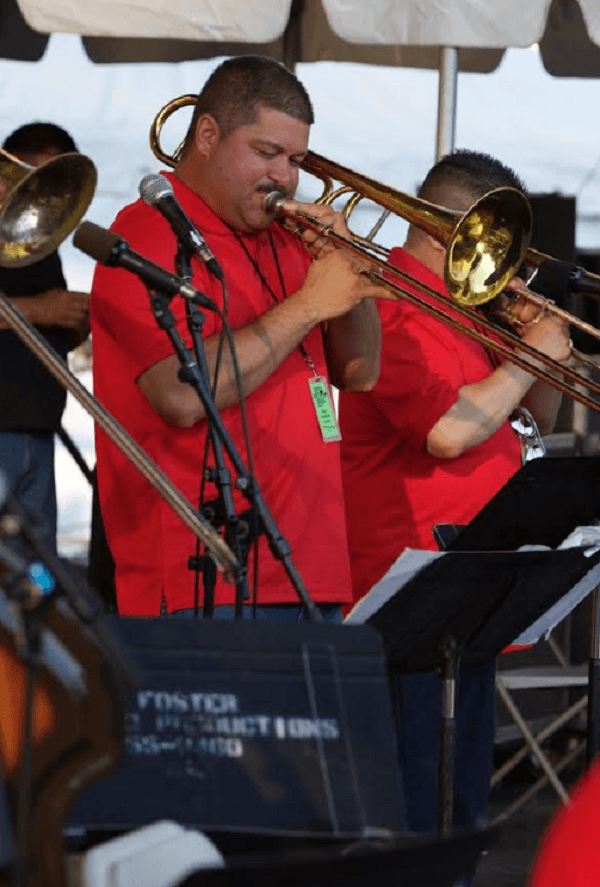
Tito playing the trombone
Orquesta Afinke director Tito Planas playing the trombone live

How Tito fell in love with music

Tito was born in Puerto Rico and raised in the town of Ponce, the home of great luminaries of salsa such as Hector Lavoe, Pete ‘’El Conde’’ Rodriguez, Papo Luca, Jose ‘‘Cheo’’ Feliciano, Ismael Quintana, Yolanda Rivera, among many others. He even attended school with Keila Lucca, the daughter of one of the Luccas of La Sonora Ponceña, and is still in contact with her through social networks.

He studied at the Free School of Music in Ponce where he sang in a children’s choir and they traveled around the town to delight a variety of audiences with his voice. Building on the success of this program run by the school, there were many children from third through eighth grades who began taking lessons of solfeggio or any instrument they wanted. 

In Tito’s case, he moved with his parents to the United States at age 13 in the eighth grade of the secondary education. His father had lost his job in Puerto Rico and the economic situation of the family was very precarious, so he made the decision to go first to find work and, in so doing, taking his children and his wife to live there.

In college, he started getting involved with salsa and had Jerry Perez as a trombone teacher, who taught him in this instrument for several years and offered him to form an orchestra together. They eventually did and toured with it in various parts of the United States.

Tito moved to the United States
Tito Planas moved to the United States at age 13, but never left his Latino heritage behind

Professional start

After being played the trombone for some time, many other musicians saw him and offered him to play with them in their orchestras. Many of these job opportunities came from New York, which was very close to him, which benefited him greatly because the clubs in that city closed much later, so they could play even till five in the morning. He combined all these activities with university and his private lessons in order to further improve his musical skills.

Orquesta Afinke

After the foundation of the orchestra, Tito and his musicians accompanied many great artists such as Hector Tricoche, El Grupo Guayacán, Viti Ruíz, Van Lester, Frankie Vázquez and many others.

Thanks to all these shows they were doing with other groups, Sammy Diaz, co-director of the orchestra, and Tito decided it was time to create a much more formal project that grouped together all the original members of the band. What brought them closer together was the fact that both Tito and Sammy had teenage children, whom they included in the group to keep them playing and in constant contact with music.

Tito and the rest of the group
From left to right: Junior Travieso, Victor Planas, Jerry Perez, Daniel Planas, Tito Planas, Samuel Diaz Jr., Samuel Diaz III, Louis Carrasquillo, and Rafael Rosado

Today, Tito’s youngest son is 18 years old and is about to enter the University of Connecticut to study music in order to follow the same path as his father, with whom he has been working in the orchestra since he was about 11 years old singing backup and playing the saxophone.

They started with about three scores with which they managed to put on a show for as long as half an hour. Today, 16 years later, they have more than 80 scores and about 12 original songs, of which one was recently released and another is being recorded at the time of writing this article. 

On the other hand, the core of the orchestra has been the same since its foundation and includes pianist Rafael Rosado, bassist Victor Planas, bongo player Sammy Diaz Jr. (co-director of the orchestra Sammy Diaz’s son), timbalero Sammy Tercero (another son of Sammy Diaz), conguero Luis Carrasquillo, singer Junior Travieso, singer Raquel Ramirez, Peruvian singer Jano Arroyo, trombonist Jerry Perez (the teacher who taught Tito to play the trombone) and Daniel Planas (Tito’s son).

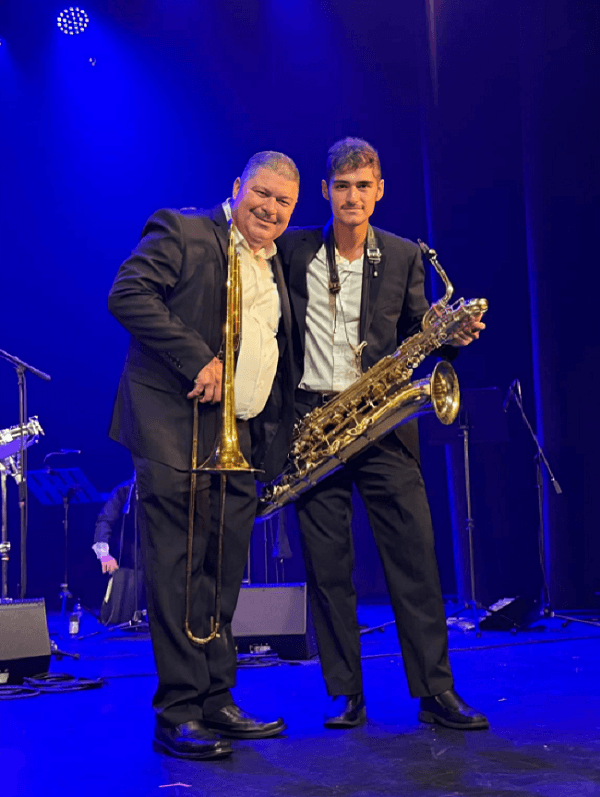
Tito and his son
Tito Planas with his younger son Daniel Planas

Read also: Eduardo Ron and his Fondo Blanco Band liven up great events in Miami

  • « Go to Previous Page
  • Page 1
  • Interim pages omitted …
  • Page 40
  • Page 41
  • Page 42
  • Page 43
  • Page 44
  • Interim pages omitted …
  • Page 150
  • Go to Next Page »

International Salsa Magazine (ISM) is a monthly publication covering salsa activities around the world and has been publishing since 2007. It is a worldwide network of volunteers coordinated by ISM Magazine. Together, we work to strengthen salsa events around the world.