• Skip to primary navigation
  • Skip to main content

International Salsa Magazine

  • HOME
  • Previous editions
    • 2026
      • ISM / April 2026
      • ISM / March 2026
      • ISM / February 2026
      • ISM / January 2026
    • 2025
      • ISM / December 2025
      • ISM / November 2025
      • ISM / October 2025
      • ISM / September 2025
      • ISM / August 2025
      • ISM / July 2025
      • ISM / June 2025
      • ISM / May2025
      • ISM / April 2025
      • ISM / March 2025
      • ISM / February 2025
      • ISM / January 2025
    • 2024
      • ISM / December 2024
      • ISM / November 2024
      • ISM / October 2024
      • ISM / September 2024
      • ISM / August 2024
      • ISM / July 2024
      • ISM / June 2024
      • ISM / May 2024
      • ISM / April 2024
      • ISM / March 2024
      • ISM / February 2024
      • ISM / January 2024
    • 2023
      • ISM / December 2023
      • ISM / November 2023
      • ISM / October 2023
      • ISM – September 2023
      • ISM – August 2023
      • ISM July 2023
      • ISM Edition June 2023
      • ISM – May 2023
      • ISM April 2023
      • ISM March 2023
      • ISM February 2023
      • ISM January 2023
    • 2022
      • ISM December 2022
      • ISM November 2022
      • ISM October 2022
      • ISM September 2022
      • ISM August 2022
      • ISM July 2022
      • ISM June 2022
      • ISM May 2022
      • ISM February 2022
      • ISM January 2022
    • 2021
      • ISM December 2021
      • ISM November 2021
      • ISM October – 2021
      • ISM September 2021
      • ISM August 2021
      • ISM July 2021
      • ISM May 2021
      • ISM April 2021
      • ISM June 2021
      • ISM March 2021
      • ISM February 2021
      • ISM January 2021
    • 2020
      • ISM December 2020
      • ISM November 2020
      • ISM October 2020
      • ISM September 2020
      • ISM August 2020
      • ISM July 2020
      • ISM June 2020
      • ISM May 2020
      • ISM April 2020
      • ISM March 2020
      • ISM February 2020
      • ISM January 2020
    • 2019
      • ISM December 2019
      • ISM November 2019
      • ISM October 2019
      • ISM Septembre 2019
      • ISM August 2019
      • ISM July 2019
      • ISM June 2019
    • 2016
      • ISM December 2016
  • Spanish
  • Download Salsa App
    • Android
    • Apple

Search Results for: World Salsa

Where To Go Dancing Salsa In Madrid?

We will tell you about five Salsa clubs to enjoy this summer in the Spanish capital

Discover the essence of nightlife in Madrid city with five incredible clubs to dance Salsa until dawn. We suggest that you plan your next dance date so that you can practice your Salsa skills and enjoy this social trend that is invading this summer.

Azúcar Salsa Disco

Azúcar is open on Fridays, Saturdays, and the eve of holidays from 11 PM to 6 AM

This Salsa and Bachata room is one of the most recognized and popular in Madrid. This place offers from Thursday to Saturday the most current Salsa hard on the American continent. Its doors open from 11 PM and in the first hour, the entrance for the ladies is free. Ticket prices range from €12 to €16, and parking is free for the first two hours. Classes run over these three days from 10 PM to 11 PM cost €9 and include a drink and entry to the social session. On Fridays and Saturdays, they close at 6 AM, while on Thursdays they close at 5:30 AM. Azúcar Salsa Disco https://azucarsalsadisco.com/ is located at Calle Atocha 107, 28012, Madrid, Spain.

The Host Club

The Host Club has an excellent lights set

It is one of the leading clubs on the Latin scene in the city of Madrid. It has excellent light and sound equipment, and has a capacity for 550 people. During the week they bring varied proposals with attractive sessions in the various Latin musical styles of the moment: Salsa, Bachata, Salsa Hip-Hop, Merengue, Kizomba, Afro-rumba, Tango, or Street Dance. So, get ready to dance with a wide Afro-Caribbean musical repertoire at The Host Club http://www.thehostclub.es/ .They are open from Tuesday to Saturday, and you can find it at Calle Ferraz nº 38, 28008, Madrid, Spain.

Sala Templo

Sala Templo has close and familiar attention

It is a space that offers joy, culture, and close attention. In each dance sesión, they have teachers and dancers who liven up the room and also help new clients to enter the world of Salsa, Bachata, Merengue, Cha Cha Cha, and Kizomba. Its Bailamos training program for students and teachers is directed by Fredy Bedoya and has dance professionals in constant updating, mirrors, and teaching material. Salsa (9 PM) and Bachata (8 PM) classes are one hour long, and the established days are Monday and Tuesday. Salsa Templo https://www.salatemplo.com/ is located at Bravo Murillo 52, 28003, Madrid, Spain.

Pincel

In Pincel you can also learn Ballroom Dance

It’s a club to dance Salsa and Bachata on Fridays and Saturdays. On Fridays, it is Bachata Night with an irresistible workshop with Ruth and Pablo (Dancers) at 11 PM and is followed by the social Bachata with Dj Chino in the booth. On Saturdays, it gets involved in a Salsa atmosphere from 11 PM with the Salsa class taught by Ivan and Sheila, then the social with DJ Pituelve in the booth. Pincel http://www.discotecapincel.es/ is located at Calle Doctor Raso, nº 1 (Húmera), 28223, Pozuelo de Alarcón, Spain.

Zeus

Zeus holds contests and travel raffles for the best salseros of the season

It is one of the most recommended rooms in the south of Madrid to go out and dance Cuban Salsa, Bachata, and Kizomba. Here, you can find authentic professional dancers of these Caribbean rhythms on 200 meters of the dance floor. Zeus has its dance school, and together with the MDD academy, they teach Salsa and Bachata classes from Monday to Thursday for all levels, and you can try the first class for free. The Zeus room https://www.facebook.com/zeusmostoles is located at Calle Bécquer, nº3, Móstoles, 28932.

This is Josean Rivera and his incredible talent in salsa and other genres

How it all started

Today we are going to talk with Puerto Rican composer and vocalist José Manuel Rivera Rivera, better known as Josean Rivera (https://www.facebook.com/unsoneroparaelpueblo). Pleasure to meet you, Mr. Rivera, how are you doing? It is lovely to have you here.

Thank you so much for the invitation. Thank heaven I’m fine and I hope you’re too.

This is Josean Rivera, Puerto Rican composer and vocalist

Your name is José Manuel Rivera Rivera, but you are known artistically as Josean Rivera. Where does this name come from?

That’s a nickname my parents called me since very early childhood. I don’t know where it came from because my name is José Manuel. Instead, Josean is almost always used for people named José Antonio or José Ángel, but I’ve always been called that and ot still is (chuckles).

And you are still called that way to this day.

Yes, to this day. This is so.

I understand that you knew your calling as a vocalist when you were 15 years old. How did this happen?

More or less. I became interested in music long before that, but I liked percussion instruments such as the conga or the timpani. Through some friends, I met Miguel El Pollo Torres from El Gran Combo de Puerto Rico and used to go to the patron saint festivities. When I saw the dynamic Charlie, Papo and Jerry had when singing with El Gran Combo, I said I like that, let’s see what can be done.

In one of your most recent songs, you paid tribute to Raphy Leavitt. What did this pianist and La Selecta represent for the rest of your career?

A very important stage because it was my first participation in a renowned orchestra. I had many experiences and learned a lot from him, Sammy, Carlitos and the rest of the membership. They were like a family.

I understand that you were in medical school and, later, in the army. How did you combine these activities with your role as an artist?

I started studying medicine and then I understood it wasn’t my thing, so I joined the army. Everywhere I went, I always found local orchestras playing traditional salsa or covers. Also, working in the U.S. Army is not like that of other countries where soldiers are not allowed to go out and spend locked up. In our case, it was a normal job like any other, so we were able to engange in other activities with no problem.

However, when we had to travel to other places, we had to get some time off of work, take a vacation and stuff like that.

Raphy Leavitt and La Selecta were very important for his carrer

Music and the army

Many of your Puerto Rican-born colleagues also followed the military path when they go to the United States. Did you find any of your colleagues in the army? If so, did that help you or influence you in any way?

By sharing some time and being part of many shows with people from the armed forces or international singers who were going to perform where we were, I was able to sing with them and do the chorus for them. I think that helped me a lot.

I read that it was in the year 2016 when you decided to found your own orchestra. What led you to that? What made you then become a soloist?

What happened is that I belonged to the orchestra of Raphy Marrero, so I recorded two albums with him. The thing is that I was moved from one base to another, which made it very difficult for me to meet with the orchestra and do my activities with them, so I decided to try something by myself and see how it went.

Do you feel that you have achieved your goals or still have a long way to go?

We have achieved a great deal. As a soloist, I have made four musical productions and am working on the fifth one. We have already selected the songs and the arrangements, so we are going to start recording very soon.

The dream of every artist is to be able to play on stage and, owing to the whole issue of Covid and quarantine, all the activity decreased, but little by little things are getting back to normal.

You have experienced everything from classical to modern salsa, which is the style you enjoy singing best?

Since I grew up with El Gran Combo, La Sonora Ponceña, Willie Rosario and Bobby Valentín, of course that kind of salsa is my strongest point. I grew up in that environment where salsa is a little braver, but you have to sing anything because you have to try to please everyone.

Josean Rivera loves salsa brava, but sing anything

With what other musical genres have you experimented or would you like to experiment?

In the different orchestras in which I was, I got to sing merengue, bolero, cha cha chá and things like that. I can sing anything. In fact, I’ve come to sing some boleros in my albums as a soloist.

Which of these genres attrack most people?

Merengue and bachata are very popular.

What did you do during the pandemic?

We decided to make a new abum and used all that confinement time to select the songs for the album.

Have you returned to the stage?

I’ve already toured two or three times. I went to Washington, Seattle, Florida, among others. God Lord willing, we’re going to go to Colombia, Peru, Panama, and Mexico. We’re promoting the latest album Esto No Es Secreto.

What advice would you give to young artists who want to devote themselves to these genres?

My advice to those who want to start an artistic career is to dare to do so. The means to get ahead are there. You have to be active, let people get to know you and make promotions in different countries because that is how your music will reach the world. You have to keep moving forward and never giving up.

The biggest problem that these young artists will have to go through, based on your understanding.

I think the biggest problem is that there are no record labels anymore. One of the biggest obstacles is the budget for an album, whether it is a complete production or just one single at a time. It costs money.

Since there are no record labels to support you financially, it’s hard for the newer artists to record their albums.

Josean Rivera singing on stage

Salsa in Israel

Europe / Israel / Tel AvivSalsa in Israel

Salsa in Israel. This ancient land is as exciting as the many stories it tells. It is the land of Abraham father to Isaac and his half brother Ishmael the patriarchs of the Arabs and the Jewish people. Patriarchs born of Sarah and Hagar. It is the land of Jesus and his many stories. It is the land where all three groups claim Jerusalem as holy.

For the Jewish it is because of King David, King Salomon, the two temples, the tomb of King David and the Western Wall. The Muslims regard it as the place from where the prophet Mohammed ascended to heaven in the birthplace of Christ, the via dolorosa and the cruciction. Each group has a “gate”. Why even the hamburger chain McDonalds seems to have gotten their “golden arcs” from one of the gates.

At 71 years of age, Israel is one of the youngest countries in the world. Needless to say the country is deeply divided, with serious challenges facing its leaders. A majority is required to govern effectively. While 80 % is said to be secular (non-religious ethnic) and 16% ultra-orthodox, the ultra-orthodox control the swing vote. To be Jewish you must be born of a Jewish mother, or converting. Around 500,000 Latinos are Jewish citizens.

This is around 5% in a country of 8.5 million people. The population is very diverse. Listening to people talk, at times I felt that I was in Russia. The migration from the former USSR comprised for over a million immigrants. The Roman Empire could not afford rebellion in Judea as it was the crossroads between Europe, Africa, Asia and the Middle East. Massada is the conformation of the determination to be a free people.

Ultra orthodox 16%

As a new nation the argument that tradition, culture and religion had to be nurtured and recaptured was presented by the ultra-orthodox. As its fi­rst Prime Minister it is said that David Ben-Gurion gave some 50 persons a waiver from obligatory military service. Much to the displeasure of many seculars, the ultra-orthodox have since grown in numbers and receive government assistance so that they are free to do nothing else than to study. However with the control of their swing vote, the ultra-orthodox continue to be exempt from obligations. After fi­nishing mandatory school, all citizens must render military service, two years for the women and three years for the men.

ISRAEL ARCHITECT

Although the official capital is Jerusalem, the modern city is TelAviv, followed by its Port City of Haifa. The Tel Aviv nightlife goes way beyond 2 a.m. The city is very modern, and everything seems to work right on schedule.

The architecture speaks of free growing ideas

ISRAEL FOOD


Diverse migration is accompanied with the cuisine of the immigrants. As a result, Tel Aviv boasts of a wonderful variety of cuisine.

The women walk the streets in the wee hours of the night without a care, which speaks of the public safety. Tel Aviv was voted “friendliest gay city in the world.” It is said that the annual gay pride parade was attended by more than 250,000.

250,000 people attend the LGBT community friendly parade

When visiting Bethlehem, the church of the Nativity, West Wall, and tomb of King David, you have to enter into Palestinian controlled territory. Our Israeli tour guide explained that they had entered into an agreement of cooperation with the Palestinian tour guides

Palestinian tour guides

An Israeli bus took us to the border and we then transferred to a Palestinian tour bus. The Palestinian tour guide took over and gave us our tour, a visit to their gift shop and then returned us to the border where the Israeli bus and guide were awaiting for us.

Man dressed in black dancing with woman in white top

For those of you who are always looking for a place to go dance Salsa, our recommendations are two places only, Salsa Carlos and Havana Club.

Havana Club caters to those new salsa dancers with a large main fl­oor and three or four side rooms for specialties like Bachata, Cumbia, etc. For those of you looking to find a more Latino place, then “El Propio” is Salsa Carlos.

What got you going in Salsa? Carlos says that he grew up hearing Salsa in Cali. It runs in his blood and his heroes were El Gran Combo, Los Hermanos Lebron and Beny More. Even the bell in grammar school to signal recess, played in Salsa. In Israel some Colombian friends asked him to organize a Salsa event and it was successful. To his knowledge, he is the first person to introduce Salsa in Israel. Since then Carlos has been organizing events in Tel Aviv at places like the “Old Port”. Apart from special events, he holds every Friday night at 11:30 pm, Salsa Carlos at Carlbach 3, Tel Aviv. He is accompanied by DJ Manuel.

Jesús Algarín is a Puerto Rican bassist who, at the age of 25, landed in the salsa scene


A graduate of Berklee College of Music, with his college degree in hand, the young bassist returned home to make his homeland in salsa time.

Jesús Algarín is a Puerto Rican bassist who, at the age of 25, landed in the salsa scene to make music his life project.  The young musician already walks with a firm step accompanied by the forceful interpretation of his bass, leading his own orchestra with confidence.

From the time he was born, according to what his parents told him, they used to party, so it was not surprising that at the age of 8 he was already the one who was the one who was livening up the parrandas while playing the Puerto Rican cuatro.  Algarín, who was born and raised in the heart of Puerto Rico (Caguas), candidly tells us that as a child, he discovered through our very own parrandera tradition, that music -which he refers to as a wonderful art- had a healing and restorative power.

Well advised by the adults in his family, he recounts that his uncle explained to him early in his life that if he failed to ignite his audience at the Choliseo during a parranda, it would become more difficult for him. Once he understood the advice, he applied it to himself.  Today he concludes that it is necessary to dominate every stage, from a marquee to a public square, and to take it one step at a time.

Through Puerto Rican folk music, studying and interpreting the seis, the aguinaldo, the bomba, and the plena, he was entering into what without planning it became his life project.  Later, playing the Puerto Rican cuatro purely by ear, he was able to enter the “magical” world of music, as he himself describes it.

Already in the sixth grade of elementary school, he began his formal apprenticeship at the Escuela Libre de Música de Caguas.  Before that time, he played the cuatro but did not read music.  Once he learned to read music, he decided to continue growing musically in his instrument.

Six years later, in grade 12, about to finish high school, he took part in the camps that Berklee College of Music brings to Puerto Rico every year. He auditioned for the Puerto Rican cuatro.  However, at the time, he did not achieve his goal of positioning himself. Determined not to give up, the following year he returned to the Berklee camp but changed tactics. He showed up to the workshops with a bass because he understood that the cuatro was not a good fit.  When he filled out the registration form for the workshops, he reported that his bass playing was at the advanced level, even though he knew it wasn’t true.  This adolescent idea, which added a good deal of pressure and stress to his musical performance, helped him get into the ensembles he aspired to qualify for. Today he admits that at that time, which today seems far away, he could not handle the bass because, as an instrument, it was still unknown to him.

In any case, Algarín qualified because, as we know, you have to take your chances with life.  The rest is history. 

With the bass as his main instrument, Algarín got Berklee to give him a scholarship and after four years in Boston, Massachusetts he graduated with a degree in Music Business. In other words, he spent four years making music while learning to see music as a business.

The young bass player confesses that he had not planned to be a musician nor had he thought he would make a living from music.  He did not see music as a possibility, since although it was always an integral part of his life, music was a hobby or a way to serve God in the church.  And that’s what he limited himself to until he came to Berklee’s summer workshops.  Before that, he saw himself as a lawyer and when it was his turn to enter college, he initially enrolled at Ana G. Mendez University.  There he attempted to complete a bachelor’s degree in accounting. However, from the very first accounting class he knew that accounting was not for him.

Algarín capitalized on what he learned, and has been able to stick to music as a way of life; from a more realistic and less idealistic perspective. Of course, all without losing the artistic focus of musical interpretation.  Along with his musical training, he has been preparing himself in legal issues, maintaining business awareness, focusing on the protection of music and copyrights.  He has also been responsible for making other musicians aware of the importance of registering their music with the Library of Congress and thus making the most of their work.  There is no doubt that Algarín knows his worth as a musician and from his space he has decided to serve and guide his counterparts to protect their work.

Before entering the studio to record his project, Algarín had recorded with Manolito Rodríguez.  During his student years in Boston, he was a musician in the Eric German Orchestra, the orchestra that accompanies visiting solo singers in the New England area.

Today, his main instrument is the bass, double bass, baby base or electric bass.

The bassist, a native of Caguas and graduate of Berklee College of Music, class of 2020, returned to Puerto Rico to lead his own musical project.

Two years after Algarín’s return home, the orchestra is already promoting its first production entitled “Dímelo Algarín”, which is part of his project “Jesús Algarín”. The format of the base orchestra of the project is as follows: winds (trumpet, trombone and baritone saxophone), bass, piano, conga, timbal, bongo and bell; backing singers and choirs. This, his first production, contains 5 songs, with contemporary themes in its lyrics. This lyric, however, embraces the nostalgic sonority of the sextet, complementing some of the songs with the Cuban tres. The bassist leader of his project arranged and composed these 5 unreleased tracks, which are merged in a production for which Jesús Algarín is also responsible.

The production is available in digital format on all platforms. The promotional cut is Sigue tu camino performed by Ricardo Colón, who also sings in the Willie Rosario Orchestra. The other four tracks included in the production are:  Playita, Cadencia y sabor and La calle se prendió; performed by vocalist José Luis De Jesús and Caribeña, in the voice of Marisabel Vázquez Varela.

The recording studio musicians who participated in the production are from the Caribbean.  Puerto Ricans, Cubans and Venezuelans merge in a salsa embrace; as is to be expected.

Vocals: José Luis De Jesús, Ricardo Colón and Marisabel Vázquez Varela.

Backing vocals: Jorge Yadiel Santos, Carlos García, Ricardo Colón, José Luis De Jesús, Manolo Ruiz and Carloscar Cepero.

Bass: Jesús Algarín

Piano: Aníbal Cruz and Juan Rivera

Tres: Renesito Avich

Percussion: Miguel Martínez

Trumpets: Luis Arnaldo Ramos, Angel Segarra y Nicolás Benítez

Trombone: Johan Escalante y Carloscar Cepero

Baritone saxophone: Efraín Martínez

Cuatro: Jesús Algarín.

As the son of documentary filmmaker Juan Félix Algarín, Jesús considers himself blessed to have been mentored by a father with first-hand knowledge.  His father always instructed him to be aware of music as a business in the entertainment world. Jesus knows his worth and has kept himself informed as to the costs of production and is clear as to the rates of his work.  He identifies himself as a Puerto Rican and Caribbean musician. He is in every sense of the word, a music worker.

As it is, we are still in salsa.  Yes, salsa lives! The effort, discipline and talent -in that order- of this young bandleader attest to that. Congratulations, and may you continue to “catch the ride”.

For bookings, Ángel Ilarraza: 787-347-4662 or e-mail: [email protected]


By Bella Martinez, ISM Correspondents, San Juan, Puerto Rico


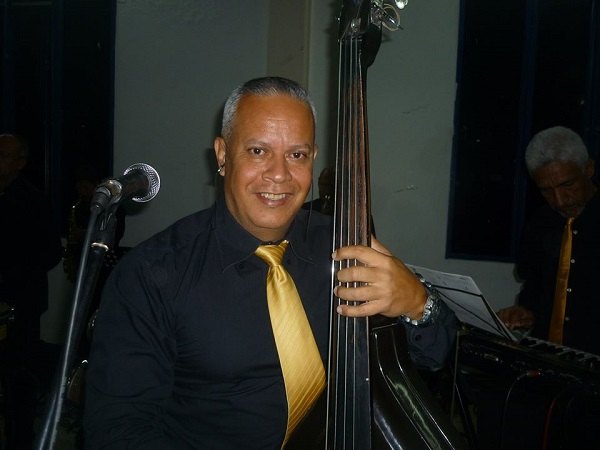
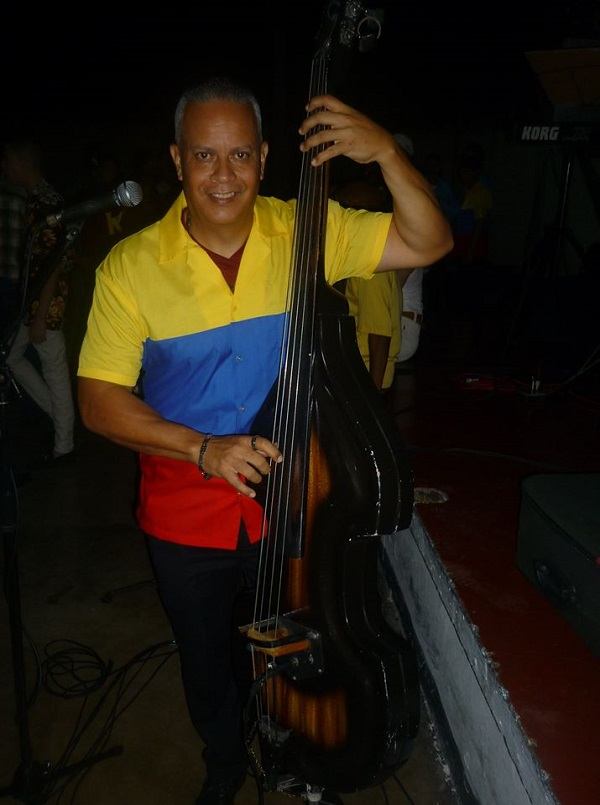
José Mosquera from Barquisimeto for the World “The bodybuilder and elegant”


Barquisimeto, is well known as the musical capital of Venezuela and in this opportunity we will make special mention to the musician José Jesús Mosquera Cañizales, born in our city in the Antonio María Pineda Hospital, on May 23, 1969, son of Rafael Mosquera and Juana Cañizales, married to Yolanda García and from this union were born their children Yolanda José and Luis José.

Mosquera was always inclined to music since he was a child, participating in the musical activities of his school “Ciudad Bolivar”, located on Carrera 13 and 48th Street, in Barquisimeto, singing and playing the cuatro in a self-taught way and with the help of his father who taught him to improve his playing.

At the age of 8 he studied at Pablo Canela’s academy, at the age of 10 he learned to play guitar, also with the support of his father and his cousin Carlos Romero.

At the age of 11 he participates in the musical groups of the Christian church, standing out as a guitarist, drummer and timbalero. When he turned 15, he became interested in playing the bass guitar and during his high school studies at the Ezequiel Bujanda Combined Cycle, he met Jesús Rincón, also a musician, and joined the ranks of the “Obeligaitas” bagpipe group, where he began his career as a bass player.

When he turned 18 years old, he was part of the staff of the group “Tecnogaitas” of the Tecnológico Antonio José de Sucre and simultaneously he was bassist of the band “La Salle”. Afterwards, he is recommended to Alí Rojas and auditions to be the bassist of the “Sonora de Alí”, where he remains for 3 years.

Alí Rojas gave him the responsibility of being the bassist of the dance orchestra “Sensación”, where he remained for 15 years. In 1992, he began working as a music instructor for the Fundación del Niño until 1996.

Mosquera, besides being an excellent bass player, plays string instruments such as the cuatro, guitar and requinto

In 1993, Mosquera turned to romantic music and created the duet “Génesis” with his friend and compadre Carlos Enrique Prince, performing in nightclubs and private parties. In 1997, he joined the Poliboys Orchestra of the General Command of the Lara State Police as a bass player, where he currently works. In 2004 he began his musical studies at the Vicente Emilio Sojo Conservatory and graduated as an academic musician in 2009 with excellent grades. José has performed on regional television stations demonstrating his qualities in various prestigious programs and in 2016, he won 3rd place in the Police Voice Festival.

Mosquera, at what date do you become interested in salsa as a musical genre?, Professor Carlos in 2007 I start playing the baby bass and in 2011 I join the K’dencia Latina Orchestra of Carlos Sanchez and also had the privilege of accompanying Benjamin Rausseo “El Conde del Guácharo”, performing with his band and with K’dencia Latina, accompanied the late Willy Rodriguez, and vocalists of national and international renown: Hildemaro, Pibo Márquez, Charlie Guzmán, Alejandro Mayora, Mariana “La Sonera de Venezuela” and the official doubles in Venezuela of Rubén Blades (Jhony Heredia) and Celia Cruz (Ibrahíma Rondón).

Mosquera finally told us that musical excellence is achieved through perseverance and dedication.

Finally we wish the best of success on behalf of International Salsa Magazine, to the excellent musician José Mosquera “The bodybuilder and elegant bass”.

See you next time and let’s keep on salsaing!

José Mosquera “The bodybuilder and elegant”.


By Carlos Colmenares, ISM Correspondents, Barquisimeto, Venezuela

  • « Go to Previous Page
  • Page 1
  • Interim pages omitted …
  • Page 25
  • Page 26
  • Page 27
  • Page 28
  • Page 29
  • Interim pages omitted …
  • Page 189
  • Go to Next Page »

International Salsa Magazine (ISM) is a monthly publication about Salsa activities around the world, that has been publishing since 2007. It is a world network of volunteers coordinated by ISM Magazine. We are working to strengthen all the events by working together.