• Skip to primary navigation
  • Skip to main content

International Salsa Magazine

  • HOME
  • Previous editions
    • 2026
      • ISM / April 2026
      • ISM / March 2026
      • ISM / February 2026
      • ISM / January 2026
    • 2025
      • ISM / December 2025
      • ISM / November 2025
      • ISM / October 2025
      • ISM / September 2025
      • ISM / August 2025
      • ISM / July 2025
      • ISM / June 2025
      • ISM / May2025
      • ISM / April 2025
      • ISM / March 2025
      • ISM / February 2025
      • ISM / January 2025
    • 2024
      • ISM / December 2024
      • ISM / November 2024
      • ISM / October 2024
      • ISM / September 2024
      • ISM / August 2024
      • ISM / July 2024
      • ISM / June 2024
      • ISM / May 2024
      • ISM / April 2024
      • ISM / March 2024
      • ISM / February 2024
      • ISM / January 2024
    • 2023
      • ISM / December 2023
      • ISM / November 2023
      • ISM / October 2023
      • ISM – September 2023
      • ISM – August 2023
      • ISM July 2023
      • ISM Edition June 2023
      • ISM – May 2023
      • ISM April 2023
      • ISM March 2023
      • ISM February 2023
      • ISM January 2023
    • 2022
      • ISM December 2022
      • ISM November 2022
      • ISM October 2022
      • ISM September 2022
      • ISM August 2022
      • ISM July 2022
      • ISM June 2022
      • ISM May 2022
      • ISM February 2022
      • ISM January 2022
    • 2021
      • ISM December 2021
      • ISM November 2021
      • ISM October – 2021
      • ISM September 2021
      • ISM August 2021
      • ISM July 2021
      • ISM May 2021
      • ISM April 2021
      • ISM June 2021
      • ISM March 2021
      • ISM February 2021
      • ISM January 2021
    • 2020
      • ISM December 2020
      • ISM November 2020
      • ISM October 2020
      • ISM September 2020
      • ISM August 2020
      • ISM July 2020
      • ISM June 2020
      • ISM May 2020
      • ISM April 2020
      • ISM March 2020
      • ISM February 2020
      • ISM January 2020
    • 2019
      • ISM December 2019
      • ISM November 2019
      • ISM October 2019
      • ISM Septembre 2019
      • ISM August 2019
      • ISM July 2019
      • ISM June 2019
    • 2016
      • ISM December 2016
  • Spanish
  • Download Salsa App
    • Android
    • Apple

Search Results for: World Salsa

The Bolivian charango with Spanish roots

There are many instruments that have greatly contributed to make Latin music and its great exponents known worldwide, but unfortunately they are not very popular and the general public is unable to identify them. Such is the case of the charango, which we will talk about in this opportunity.   

The charango can be defined as a stringed instrument that is part of the lute family and has its origin in the South American Andean region. It is believed that it began to gain popularity during the Viceroyalty of Peru. It has approximately five pairs of strings, but there are some models that have a greater or lesser number of strings.   

Here is more information and interesting facts about the charango and its history.   

Federico playing the charango
Peruvian charanguista Federico Tarazona playing the charango

How the charango is created in the first place    

Although it was not possible to determine exactly when the charango began to be played, it was found that it existed from the 17th century and was inspired by the Canarian timple (a stringed instrument from the Canary Islands that has five strings).   

The Canarian timple was always very present in the so-called ”Spanish charangas”, which were a type of parades or comparsas that took place in the street. This is the origin of the name ”charango” with which it would be called from now on.   

How the charango began to become popular   

Previously, it was an instrument used exclusively by the more rural classes of the time and was closely related to the indigenous population. However, since the 1950s, this situation began to change and the charango started to be heard in more urban areas, which led residents of such places to participate in concerts and folkloric activities for all audiences.   

the one responsible for this was Bolivian-born musician and luthier Mauro Núñez, who in 1944 began to use the charango to disseminate folk music and peduce new charango models in order to popularize it even more. This led many other musicians to find their own musical styles with the instrument, which brought the charango to concert halls and theaters all over Bolivia.   

A few years later, the charango arrived in Ecuador, but in the 1960s, it reached Argentina and some European countries. During those same years, several artists from Bolivia, Peru and Argentina began to tour the world and, as a result, ended up taking the charango to the rest of Europe, the United States and Japan.    

In 1973, Bolivian charanguista and composer William Ernesto Centellas took the initiative to create la Sociedad Boliviana de Charango with the support of charanguista Abdón Caméo and singer-songwriter Ernesto Cavour Aramayo. This society organizes the Congreso Nacional de Charango and the Encuentro Internacional de Charanguistas every two years.   

Nowadays, everyone accepts the idea that the home city of the charango is the city of Potosí and, due to the way its later diffusion went, the town of Aiquile was very important for the instrument to the point that today it is known as the ”Capital of the Charango”.  

A Youtuber playing the charango
A Youtuber teaching how to play a charango

How is the charango and how is it played? 

The charango is shaped like the guitar, although it tends to be slightly smaller. Likewise, its sound box has a smaller size and the neck is much shorter. Among the most common sizes, we can mention 50cm, 60cm and 75cm. Generally, it has five pairs of strings, but there are some Peruvian models that may have four strings, two at eaither end and a double string in the middle. 

The way in which the charango is tuned varies depending on the area and the musician’s preferences, but the most common tuning is natural temple. Just like the guitar, the charango also has the third-order strings octaved between them.   

As for the way the charango should be played, the techniques most used by the charanguistas are the rasgueos, the repiques and the tremolo. In talking about the most popular rhythms, we cannot fail to mention the Huayno, the Carnaval, the Cuenca, among others.    

Playing the charango can be quite a challenge for beginning musicians, but with enough effort and dedication, incredible results can be achieved even for the most inexperienced. 

Read also: Yes, I speak the ancient African Lucumi toungue: The second language of salsa 

Rumberos del Callejón bring their new hit “Me Tienes Loco” Ft. Gilberto Santa Rosa

Northeast – Middle Atlantic – New York

Rumberos del Callejón New Single “Me Tienes Loco” Ft. Gilberto Santa Rosa is already here!!!

Rumberos del Callejón brings to the Salsero musical market their new promotional single “Me Tienes Loco” with the special guest, Gilberto Santa Rosa “El Caballero de la Salsa”. This third track of the album “Celebrando” presents contemporary salsa with a fresh and avant-garde touch.

Rumberos del Callejón New Single “Me Tienes Loco”

The musical arrangements of “Me Tienes Loco” were in charge of Alberto Crespo, while Carlitos Padrón was responsible for the musical production. This third single of nine in total of “Celebrando” Volume 1 was recorded between Caracas – Venezuela and the capital of the World, New York.


In this CD, celebrating the anniversary for the 10 years of the orchestra you can listen the interpretation of the most famous artists of the Salsa genre, such as: the Puerto Ricans Tito Nieves, Gilberto Santa Rosa, and Maelo Ruíz, Domingo Quiñones, and for Venezuela there are the singers: Luis Fernando Borjas, Rodrigo Mendoza, Wilmer Lozano, Angel Vallenilla, Veruzca Verdú, Gonzalo Díaz and Memo Arroyave.

Rumberos del Callejón

“Celebrando” Volumen 1 is available on all digital platforms.


Release Date: June 28th, 2018


Credits:
Javier Vásquez Lyric
Alberto Crespo Arrangements
Gilberto Santa Rosa Lead Vocal
Alberto Crespo Piano
José Tabares Bass
Carlitos Padrón Congas, Bongos & Timbales
Larry Flint Minor Percussion
William Rada Trumpets
Pedro Moya Trombone
José Fariña Baritone
Rodrigo Mendoza, Wilmer Lozano, Leo Gruber, Ángel Vallenilla Chorus
Rumberos del Callejón 10th anniversary

Vídeo: https://youtu.be/Ewcil67kjyQ

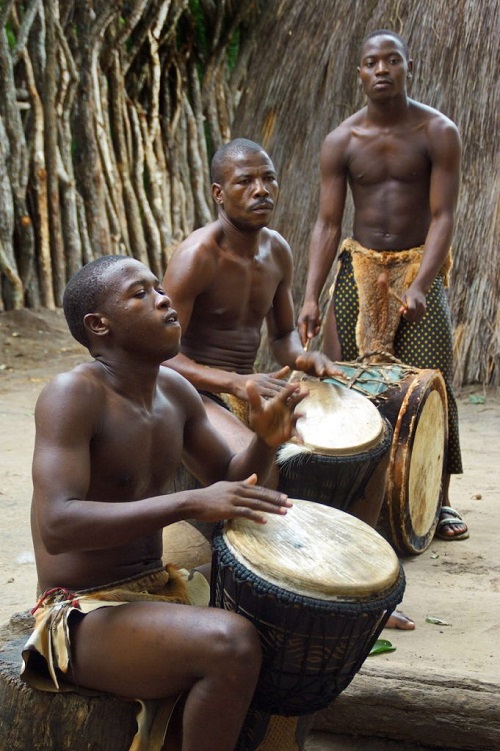
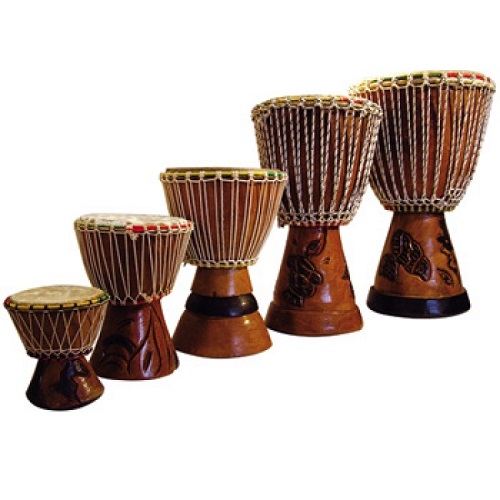
The Djembe is a percussion instrument belonging to the family of membranophone instruments

It originated in the ancient Mandinga Empire, approximately between the towns of Bamako (Mali) and Kankan (Guinea), from where it later migrated to Senegal, Ivory Coast and Burkina Faso, forming an integral part of the music and traditions of the area.

Africans playing Djembe

It is believed that this migration was due to the Numu, who were (and still are) blacksmiths [[professionals considered guardians of certain powers.

They were in charge of making the Komo masks, performing circumcision and ablation of adolescents to mark their passage to adulthood, as well as sculpting and playing the yembes.

As a result of differences in shape, wood density, internal engravings and skin, there is a wide range of tones that can be emitted by the yembe.

Striking the skin near the center produces lower notes, striking it near the edge.

It is struck with the fingers together and stretched, but without leaving them glued to the drumhead, so that the sound comes out.

On the other hand, to produce the highest pitched sound, the slap is used.

The palm of the hand is slightly curved and the membrane is hit with the fingertips.

It is estimated that the djembe was invented approximately 3000 years ago by the African Maninka tribe, who used it as a ceremonial instrument.

The Djembe originated in the former Mandinga Empire, approximately between the towns of Bamako (Mali) and Kankan (Guinea).

The word yembé comes from the Bambara language and means together in peace.

Membranophones are musical instruments that produce sound through the vibration of a taut membrane or drumhead.

The membranes can be made of animal skin or synthetic material and the instruments can be mounted on wooden cylinders, ceramic vessels or gourds.

Membranophones can be played by percussion or rubbing and can have one or two membranes, closed or open bottoms.

Some examples of membranophones are:

– Bombo: A direct hit membranophone whose sound is extracted by striking it with a wooden striker.

– Snare: A membranophone instrument

– Drum: A percussion instrument with a resonance box, which is usually cylindrical, and a membrane called a drumhead that covers the opening of the box.

– Zambomba: A friction drum.

– Cuica: A friction drum

– Juque: A Costa Rican instrument that is a friction drum

– Mirlitón: A blown membranophone instrument.

Membranophone Africa This percussion instrument is of African origin, but its antecedents are Asian (Japan and China) places where it is widely spread and is known with the names “Kelontonga” and also known as “Den-Den Daiko”.

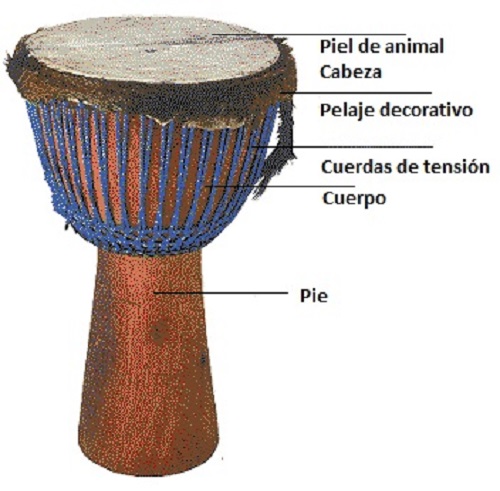
Djembe parts
Djembe parts

Membranophones. The membranophones produce the sound by means of the vibration of a tensed membrane. The vibration of this membrane can be provoked by hitting it, rubbing it or by voice (humming).

The castanets or “palillos” are a percussion instrument created by the Phoenicians three thousand years ago.

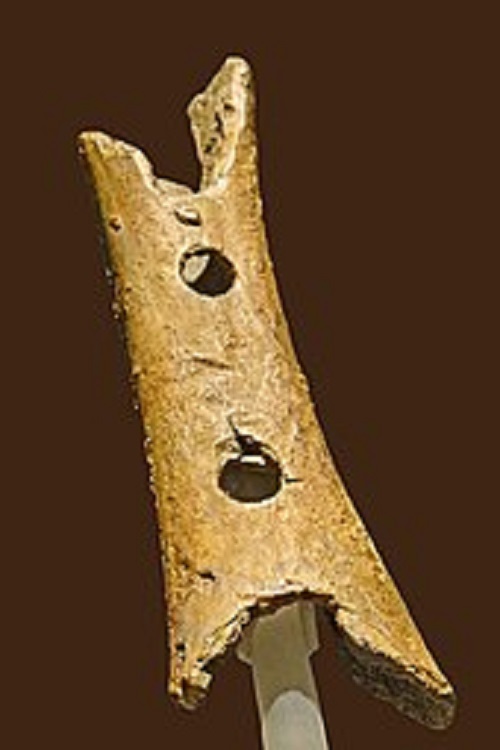
The oldest instrument is the flute, invented by Homo habilis in the Paleolithic and made of bird bone and mammoth ivory, this instrument is about 42 000 years old.

The oldest instrument is the flute, invented by Homo habilis in the Paleolithic period and made of bird bone and mammoth ivory, this instrument is about 42 000 years old.dor de 42 000 años
The oldest instrument is the flute, invented by Homo habilis in the Paleolithic period and made of bird bone and mammoth ivory, this instrument is about 42 000 years old.

The Divje Babe flute is the oldest instrument in the world and is currently in the National Museum of Slovenia.

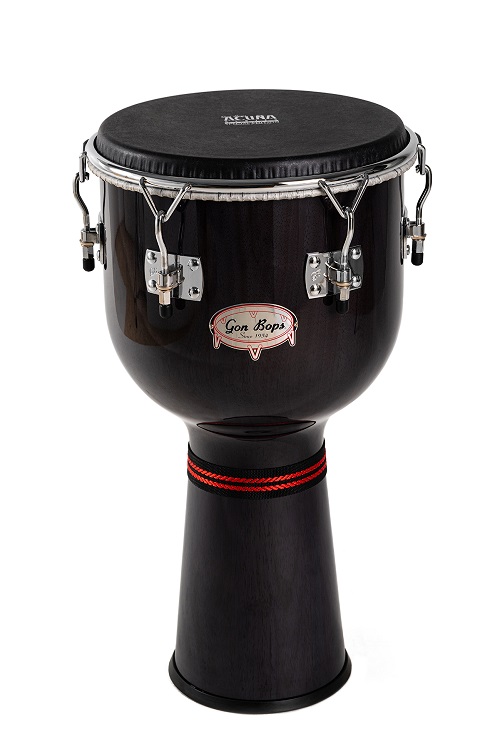
Alex Acuna Special Edition Djembe.

The combination of Asian Oak shell, Remo Skyndeep Natural head and premium Gon Bops hardware produces massive bass and impressive volume on Alex Acuna’s Signature 14″ Djembe.

Alex Acuna Special Edition Djembe

Source: Gon Bops

Also Read: Orestes Vilató es una de las figuras más influyentes en el mundo de la percusión Latina

The son montuno was born in the area of Santiago de Cuba

It was constituted by a mixture, in perfect harmony, of the African sonorous roots with the metric and the style of versification of Spanish origin. Although it presents a rhythmic base similar to the son, they do not have a common origin.

This rhythm is a product of the same phenomenon of transculturation that other genres of the Cuban traditional music have undergone by the hybridization of cultures.

Uncertainties about the origin of son montuno

According to Fuentes Matons himself, he is only a compiler of the verses and the authors were the sisters Micaela and Teodora Ginés, who wrote the lyrics in Santiago de Cuba around 1560.

The son montuno was born in the area of Santiago de Cuba

But this story does not have sufficient evidence, and may be the result of the author’s modesty, the oldest son montuno that is collected is that of Ma’Teodora, from 1893.

Many authors assure that the real author is Fuentes Matons, in an attempt to validate the musical roots of the Island. What is certain is that the expansion of this rhythm from the 18th century in Cuba was very fast.

In addition, due to the migration of Caribbean people to Cuba, the mixture with sonorities coming from Haiti, Santo Domingo and Puerto Rico became more and more frequent Haiti, Santo Domingo and Puerto Rico.

Evolution and popularity of son montuno in the 20th century.

From the 19th century onwards, migration from East to West was significant.

This was due to the wars of independence that had taken place in the eastern part of the island.

This migration brought as a consequence that the rhythm also expanded and mixed with the rhythms that already existed in the West.

In the western provinces, mainly in Havana and Matanzas, there was the concept of a band composed of six or seven members, which favored the new genre.

Arsenio Rodríguez (1911-1970), known as “el ciego maravilloso” (the wonderful blind man), was one of the great musicians who brought this sonority to the forefront.

Among his most popular works are “Papa upa”, “Mami, me gustó”, “La vida es sueño”, “La yuca de Catalina”, among many others.

The lyrics are characterized by the picaresque jocularity, the simplicity of the message, the easy to memorize refrains and the exchange with the public in occasional interpretations.

The orchestra, on the other hand, does perform complex improvisations and virtuoso musical combinations. Arsenio Rodríguez popularized the rhythm worldwide, opening a space for traditional Cuban music in the 1950s.

Arsenio Rodríguez (1911-1970), known as “el ciego maravilloso”, was one of the great musicians who brought this sonority to the forefront.

Legacy of Son montuno

The legacy of this Cuban rhythm is present in genres such as Latin salsa, mambo, Latin jazz, timba and chachachá. Some outstanding musicians kept its rhythmic base and incorporated their own melodic creations.

Among these are: Benny Moré, Pío Leyva, Roberto Faz, among many others.

The primitive instruments of the Cuban son are the Cuban tres, the bongo, the maracas, the claves and the marimbula.

The Cuban tres is a kind of guitar with three pairs of strings. The bongo constantly improvises. The maracas and claves accompany the guitar and the bongo.

The marimbula was used as a bass in the traditional Cuban son.

Later, other instruments such as the guitar, double bass, trumpet and timbales were added.

What kind of instruments did the African slaves bring to Cuba?

Among the typical instruments we find the chekeré, the güiro and the batá drums. The chekeré in Cuba is also known as ágbe.

The basic instrumental ensemble is made up of a series of string instruments (jarana, requinto or son guitar, leona) and percussion instruments (pandero, quijada de burro, marimbol, tarima for zapateado), to which other instruments have been added in recent experiments (violin, double bass, cajón, etc.).

What is the national instrument of Cuba?

The Cuban BongóThis small double drum is considered by many to be the most characteristic instrument of Cuba
The Cuban Bongó
This small double drum is considered by many to be the most characteristic instrument of Cuba

The Cuban bongo

This small double drum is by many considered the most characteristic instrument of Cuba.

It is easy to identify the bongo at first glance as it has been used and popularized in countless celebrations until it has become an indispensable instrument.

Also Read: Israel “Cachao” López Sobrado en fama y respeto en los años setenta se dedicó a mantener la tradición a nivel supremo

ISM / August 2024

ISM August 2024-Left ISM Aufust-2024-Right
SalsaApp-L SalsaApp-R
NA August 2024
LA August 2024
Europe August 2024
Africa August 2024
Asia August 2024
Oceania August 2024
La Noche Cubana August 2024
Ivan Villasmil 8-2024

“We are the Latin music world network”

Do you enjoy Latin music? Would you like to get more involved in this genre and share your passion for Salsa, Bachata, Kizomba, Merengue and more. Why not joint our Global Team of volunteers as a correspondent?
You can ask for more details with no obligation and we’ll be happy to talk to you about the benefits that come with the role

  • « Go to Previous Page
  • Page 1
  • Interim pages omitted …
  • Page 89
  • Page 90
  • Page 91
  • Page 92
  • Page 93
  • Interim pages omitted …
  • Page 189
  • Go to Next Page »

International Salsa Magazine (ISM) is a monthly publication about Salsa activities around the world, that has been publishing since 2007. It is a world network of volunteers coordinated by ISM Magazine. We are working to strengthen all the events by working together.