
Search Results for: club
North America / March 2024
UNITED STATESDIRECTORY OF NIGHTCLUBS |

||

| CALIFORNIA | FLORIDA | ILLINOIS |
| MICHIGAN | NEW JERSEY | NEW YORK |
| OHIO | PENNSYLVANIA | TEXAS |
| VIRGINIA | WASHINGTON | |
Gabriel from the band Changüí Majadero talks about traditional Cuban Music
Latin America is the birthplace of so many different musical genres that a lot of us could never even know them all. Although salsa is our main focus, there are many Latin genres that also deserve our full attention and, in this writing, we are going to talk about one of them: the changüí. That is why we interviewed one of its main exponents: Gabriel García, leader and founder of the band Changüí Majadero.

Gabriel’s beginnings in music
Gabriel started relating a little of his history with music. Something interesting to say about this artist is that his beginnings in music did not take place as a child like many others, but when he was about 19 years old.
Before being a musician, Gabriel was an amateur boxer since he was a child and, thanks to his dedication, he went on to win Gold Gloves and was part of sport organizations in his native Mexico. The sport was the center of his life until a school friend of his lent him a guitar and taught him how to play along some chords. This was the beginning of his interest in music.
Apart from this, he learned that his grandmother was an opera singer in her youth, which increased his desire to start experimenting with music and focused entirely on it, to the point that he applied the same discipline as with boxing at the time.
Gabriel then decided it was time to be academically trained in what would become his new passion, so he took a degree in jazz and a subsequent master’s degree in Afro-Latin music. This is interesting because he did not grow up with these genres and had not heard them before, so studying them was something new for the artist. And of course, he did not know changüí either.

The Cuban Tres
Let us remember that Gabriel was a guitarist and jazz player and his initial training was based on this, but that changed as he got to know Cuban rhythms and salsa itself. Something that caught his attention is that salsa hardly ever uses the guitar, until one day he heard a son montuno record with something very similar to a guitar, but it was not one. It was a Cuban tres.
When he realized that the tres was the root of all this type of music, he set himself to learning to play it and bought one. To help himself, he began listening to artists and groups such as Buena Vista Social Club and the famous tres player Pancho Amat, who was the one Gabriel became interested in the Cuban tres for.
Then, a friend told him that, if he wanted to know the roots of this instrument, he had to study changüí. The problem was that, at that time, there was very little information about this genre, so it became much more difficult for him to learn about it. The only thing he had was a record by the most famous changüí group, whose name was Changüí Majadero.
There was so little Gabriel could know about changüí that he met Cubans born and raised outside Guantánamo who did not know it, since it came from very rural areas. For the same reason, changüí was unable to reach the big cities like Havana, where most foreign tourists went.
Given that there was only little information available on changüí, Gabriel chose to do part of his master’s degree in Guantánamo and that is when he finally got to know this genre for real. He also had the opportunity to make friends with changüí teachers, who helped him a lot to understand it, including the founder of the group Changüí Guantánamo.

Changüí Majadero
After returning to Los Angeles with all the information he collected in Guantánamo, he began recording videos for YouTube playing the original changüí and its typical instruments. Alfredo Ortiz, a very popular salsa percussionist in Los Angeles and member of the orchestra Son Mayor, saw these videos and immediately contacted Gabriel to invite him to play with his group. Subsequently, they all decided to form a new group based on this not so well known genre.
Gabriel explains that he and the other members decided to call the group ChangüÍ Majadero because it was relegated to being heard only by poor farmers in Cuba, so the wealthy people from the big cities referred to ChangüÍ in a derogatory sense as ”música majadera” (music for uneducated and poor people).
The guantanameros who played changüÍ started using the word ”majadero” in their lyrics, but to refer to how proud they were about their roots and this genre. This fact made Gabriel and the other musicians choose to use ”changüí majadero” as the name for their group.
Fortunately, this situation has changed over time thanks to those who have been interested in making changüí known to the rest of Cuba and the world. After many years of work, it has become much more popular and well respected compared to other times, but it is still not enough. In the words of Gabriel, it is necessary to pursue efforts to make this traditional and folkloric genre more relevant every day.
Read also: Berklee Online: The Best Option for Learning Music Online
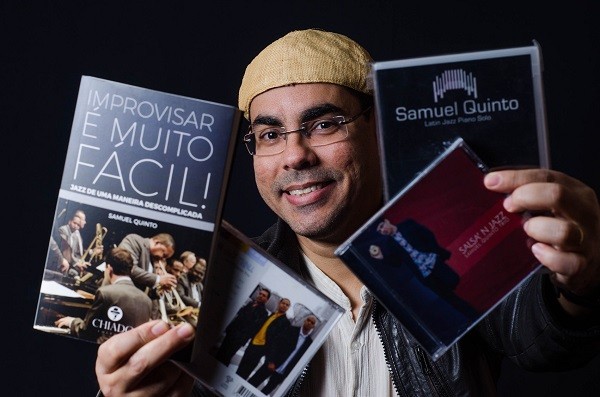
Samuel Quinto Feitosa is a Brazilian virtuoso jazz and classical pianist
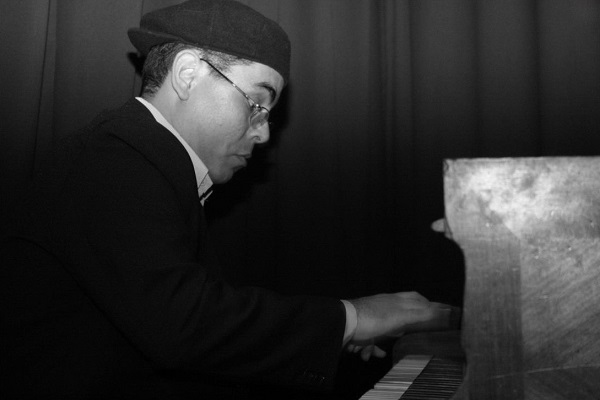
Samuel Quinto Feitosa, FRSA (born September 5, 1973) is a Brazilian jazz, pop, gospel and classical pianist, as well as music producer, composer, arranger, educator and writer living in Portugal since 2004.
Quinto grew up in Salvador, where he developed his art mainly with the piano. Samuel Quinto was born in Belém, Pará, but grew up in Salvador, Bahia.

Since the age of seven, he developed his musical talent by virtue of the contact with the piano through the gospel, accompanied by the Baptist Church that he studied during his childhood with his family in Salvador.
Then Samuel took the first steps on the piano in the family home, always without accompanying teachers, and developed his piano skills learning also, as self-taught, harmony, reading and writing music and orchestration, musical composition, arrangements for the church choir, which begins to play as a pianist at the age of 12 years. In Europe.
Samuel Quinto released his first CD “Latin Jazz Thrill” in 2007, in Portugal, with trio formation (Bass, Piano and Drums), which formed the core of his repertoire in various festivals and concerts during the years 2007 and 2008 in Portugal.
During his 2008 tour he performed in cities such as Hamburg, Berlin, Cologne, Heilbronn, Liège and Limoges; in addition to a special concert held in Salvador in collaboration with the Catholic University of Salvador in June 2008. His compositions are used at the University of Porto (ESMAE) in the Jazz degree, as study material in the training of Jazz students.
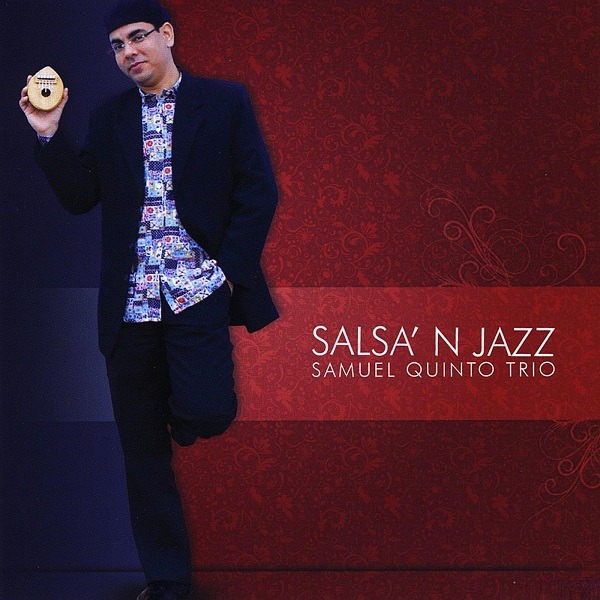
The second CD entitled “Salsa ‘n Jazz”, containing eight original compositions by Samuel Quinto, and the standard Stella by Starlight, is released in June 2009 with a concert in the city of Porto, and the concomitant launch of his new tour.

Even more extensive, which passed through Belgium, Germany, Portugal, Spain, France, Luxembourg, Netherlands and England. In this second work, Samuel was accompanied by another Brazilian, classically trained, Marcos Borges on bass and Manuel Santiesteban, Cuban, graduated in drums in Havana, Cuba.
He founded the first Latin Jazz course at the North Jazz School, Porto – first professional Jazz school accredited in Portugal and one in the Iberian Peninsula to have the Professional Jazz Instrumentalist course until then.
Besides being invited to be the artistic director of one of the most traditional Portuguese jazz clubs, Si bemol.
Samuel has also been invited to conduct workshops in the field of Jazz, Latin Jazz Composition and Arranging both in Brazil and Europe. But his musical talent is not only to jazz, after having been a pianist of the corps de ballet, he began to develop the scholar side of his music.
Inspired by great composers such as Beethoven, Mozart, Bach, Tchaikovsky, Brahms and others, he began compositions to accompany ballet in performances, as well as for orchestra and choir. _ (allaboutjazz)
There is something about Brazilian-born pianist Samuel Quinto that strikes a vibrant chord in the inner ear. Perhaps it has to do with his wonderful grasp of the joy that abounds in the Brazilian northeast.
His sense of “joy”. Perhaps it also has to do with his mature approach, his wonderful use of dynamics, his expression and his innate ability to allow the tonal center of his music to shine.
He has an exquisite ear and his hands are independently controlled by his mind, which separates melody and harmony when necessary.
Quinto, as a result, makes his fingers tingle on the keys, rumble and guffaw and cry with chords from which he wrings laughter and sadness and pure joy.
In Salsa’ N Jazz he plays with a primal hypnotic rhythm that calls to the roots of his music, which reach all the way to deepest Africa, through the folk corners of Brazil and Spain, which means the Mediterranean nooks and crannies of the Middle East, India and Europe.

The result is a discotheque where these cultures converge in a point of ignition that warms the blood of the soul. His playing is muscular and intuitive and smacks of an artist who likes to invent on the fly, to constantly evolve.
The starting point of Quinto’s playing is also a deeply symbiotic relationship with forro music in all its vibrant splendor-baiao, xote and arrasta-pe-all elegantly captured and sparkling as his fingers touch ebony and ivory.
The most joyous and memorable display of this is her rendition of Victor Young’s “Stella by Starlight,” which gets a rousing liner treatment and reaches its climax as the song’s choruses unfold.
It is worth mentioning that on this song – as on the others on this album – Brazilian bassist Marcos Borges and Cuban drummer Manuel Santiesteban shine with their wonderful interplay.
Samuel Quinto is also an accomplished composer and demonstrates maturity and a sense of adventure with the rhythmic variety he presents here in a rumba, “Quinto’s Rhumba” which, by the way, is played in a deliciously choppy style reminiscent of Thelonious Monk.
“Jaci” is an exciting, danceable song that crosses Cuban rhythms with a touch of Brazil.
“Bolero To Preta,” an affectionate semblance of the pianist’s mother, suggests that the pianist has a lot of inner clave.
“Ficou No Meio” is simply a marvelous forro that becomes dizzying as Quinto, Borges and Santiesteban gloriously rumba in harmony and rhythm.
Santiesteban gloriously ruminate the harmony and rhythm.
“Voo Da Andorinha” is a chorinho that, quite simply, reveals Quinto’s “Alma de Nordeste”. And “Isabel (Para Voce)” is a beautiful ballad that shimmers and shines as its emotive tonal colors begin to unfold.
“Salsa’ N Jazz” is an emblematic song that captures everything unforgettable about this album: a pianist with the ability to dazzle in silence while the right hand flies exotically and the left constantly invents harmony and rhythm.
Here is a very promising pianist, who brings with him his rich Brazilian tradition and, indeed, all of Latin America, a new and exciting musical landscape. _
Raul D’Gama Rose
Samuel Quinto Trio – Salsa’N Jazz (2009).
Musicians:
Samuel Quinto (Piano)
Marcos Borges (Bass)
Manuel Santiesteban (Drums)
Information provided (September 16, 2023)
Samuel Quinto Feitosa (Neuroscientist and Musician)
Omara Portuondo announces world tour
Latin America / Cuba / La Habana
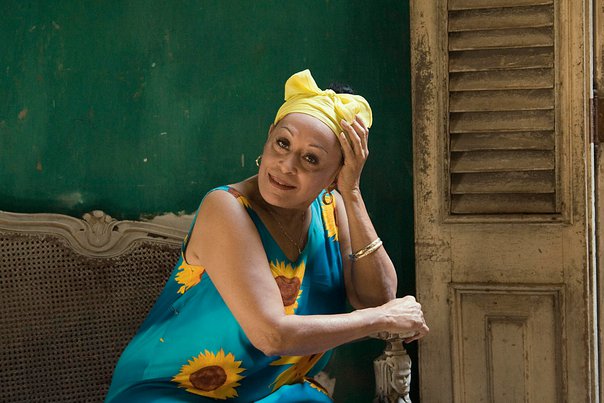
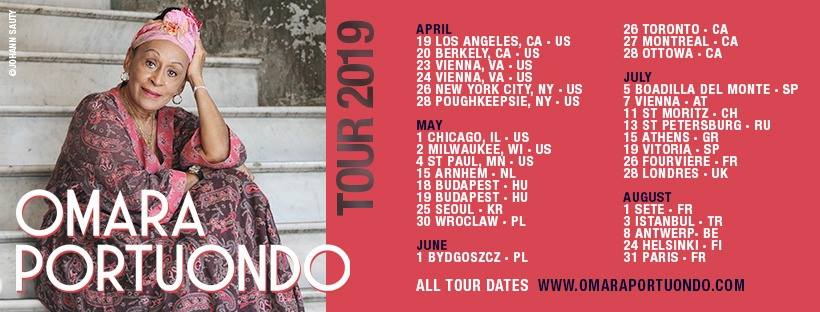
Cuban singer Omara Portuondo will embark on a world tour in April that will take her to places in the United States and Europe in a first stage, the artist announced at a press conference.

“Omara es Cuba” gives its name to the tour that will start on the 19th at the Regent Theater in the city of Los Angeles, and has concerts scheduled in New York, Chicago, Holland, Hungary, Singapore, South Korea, Canada and France . Among other countries, in some of which it will be presented for the last time.

For the month of November, the Bride of Feeling, as the artist is also known, has planned performances in South America on stages in Argentina, Chile and Uruguay.
The tour, which will last until 2020, will close this year with a great concert on the island.
For the occasion, the Cuban diva will be accompanied by talented musicians: pianist Roberto Fonseca, Andrés Coayo (percussion), Ruly Herrera on drums and bassist Yandy Martínez.

Fonseca stated that it is an honor to share the stage with Portuondo, whom she considers a universal singer who has gone through all styles but always maintaining her Cuban identity.
The repertoire of the tour will include classics performed by the artist throughout his career, including some from his time at the Buena Vista Social Club, an “all-star” project of which Portuondo was the main voice since its creation in 1997.

The 88-year-old artist is one of the most successful and beloved Cuban singers in Cuba, her discography includes thirty titles and she has recorded with the most notable Cuban and foreign artists.
Awarded the National Music Award (2006), she was also awarded a Latin Grammy for Best Contemporary Tropical Album in 2009 for her album “Gracias”.