









| Karina Bernales present |
June 2025 |
FESTIVALS |
|
|
 |
Croatian Summer Salsa FestivalJun 09 / 16 2025 Resort Villas Rubin |
|
|
 |
FusionKizz Festival Vol2Jun 20 / 22 2025 Tropica Dance Studio |
|
|
 |
Festival Corazon LatinoJun 27 / 28 2025 Rocher de Palmer |
 |
Agen Kizomba CongressJun 06 / 09 2025 Mairie Espace Culturel François Mitterrand |
|
 |
Wanted Bachata Kizomba
|
|
|
|
 |
KizombaInvasionJun 06 / 09 2025 Tanzschule Piet & Müller |
|
|
 |
Barcelona Temptation FestivalJun 18 / 23 2025 Hotel Evenia Olympic Park |
Directory of European nightclubs |
||
|
|
||
|
|
||
|
|
||
|
|
|
|
|
|
|
|
|
|
|
|
|
|
||
|
|
|
 Adenauerallee 3 20097 Hamburg, Germany |
|
|
|
|
|
|
||
|
|
||
|
|
||
|
|
||
|
|
||
|
|
|
|
|
|
|
|
|
|
|
|
 Av. del Vallès, 117 08223 Terrassa, Barcelona, Spain |
 C/ Olvido 15 28026 Madrid, Spain |
 Carrer del Perill 10 08012 Barcelona, Spain |
|
|
||
|
|
||
|
|
|
|
|
|
|
|
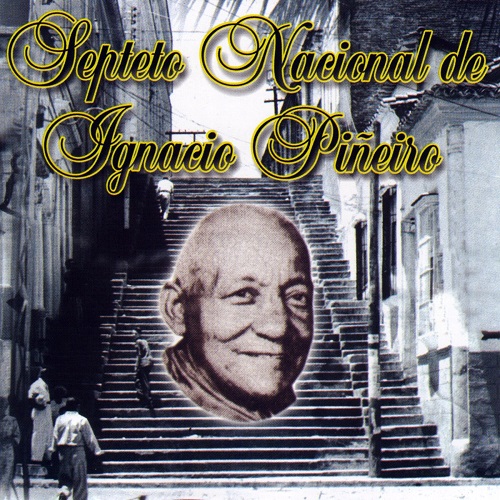
Pioneers of son, a rhythmic blend of African and Cuban music that evolved into salsa, mambo and Latin jazz, the group was the first son band to incorporate the trumpet as the main instrument.
Since Piñero’s death in 1968, after 41 years at the helm of the band, the Septeto Nacional De Ignacio Piñero has been led by a series of leaders.
Guitarist and composer Rafael Ortiz, who took over after Piñero’s death, bequeathed the position to vocalist Carlos Embale in 1982.

Ignacio Piñero was one of the Pioneers of Son Cubano
In 1906 he already knew and had assimilated the different toques of the African cabildos that existed in the neighborhood of Pueblo Nuevo, which he later incorporated into some of his creations.
He began his artistic career with the group claves and guaguancó El Timbre de Oro, later he directed Los Roncos de Pueblo Nuevo, in which he developed as a decimist and director, at the same time he took his first steps as a composer.
From this stage are: Cuando tú, tu desengaño veas, Dónde estabas anoche, El Edén de Los Roncos, Mañana te espero, niña. Later he joined the group Renacimiento de Pueblo Nuevo.
To the folkloric values that Piñeiro cultivated in these groups, he contributed a wider melodic-harmonic development and a greater depth and poetic flight.
In 1926 he was one of the founders, together with María Teresa Vera, of the Sexteto Occidente, with which he made his first tour to the United States in order to record an album with this group.
In 1927 he founded the Sexteto Nacional, formed by Ignacio Piñeiro, director and double bass; Alberto Villalón, guitar; Francisco González Solares, tres; Abelardo Barroso, lead vocals; Juan de la Cruz, tenor; Bienvenido León, baritone and maracas, and José Manuel Carrera Incharte (El Chino), bongo; that same year trumpeter Lázaro Herrera joined the group. With this septet he traveled to New York, where he recorded his first works.

They performed at the Sans-Souci cabaret (1930); in 1931 they performed at the Lavín and CMCG radio stations; in 1932, at the Dos Hermanos Hotel, he premiered Buey viejo; that same year the American composer George Gershwin came to Havana, at the CMCJ radio station he listened to Piñeiro’s son Échale salsita, from which he later used the theme played on the trumpet in his Cuban Overture.
In 1933 he performed at the Fair-Exhibition A Century of Progress, held in Chicago, United States.
In 1934 Piñeiro retired from the septet, which from 1935 was directed by trumpeter Lázaro Herrera. In 1954, Piñeiro reappeared as leader of the septet, with which he appeared on the television program Música de Ayer y de Hoy.
As a composer, Ignacio Piñeiro broke, although he took elements from the form of the oriental son, in which its creators used the quatrain and the tenth; an example of this break is his son Buey viejo, from 1932:
Carretero no maltrates a ese pobre buey tan viejo, que ya doblbla la cabeza por el peso de los tarros, y por senda de guijarros va tirando la carreta, y nunca llega a la meta, término de su dolor.
Piñeiro was one of those synthesis cases that managed to capture, develop and express the full richness of the son.
The structural modifications, the cadence, the rhythm and the use of refined melodies and lyrics, achieved by this creator and interpreted by the Septeto Nacional, make it possible to say that the work of this singular artist, although he did not mark the boundaries of son (which corresponded to the Sexteto Habanero), he did turn it into a son that today we can call classic, which became a model for its further development.
According to Miriam Villa: “If we analyze the organization of the literary text, we observe in his work the formal use of metrically heterogeneous links subjected to rhythm, characterized by the presence of accented and unaccented elements within the system of units that are repeated at intervals between them.
Piñeiro must not have been concerned about the meter in the text as a pattern, since through the rhythm of the composition he achieves the contrast relations, making the change of meter express a change in the thematic movement, either from intermittences or accentuations or sometimes both, which give it different semantic nuances and alternations of tensions and distensions.
And elsewhere Villa states: “Another aspect that in relation to the literary text is reflected in Piñeiro’s creative work is that of the thematic contents; these are shown from a diversification with greater scope in relation to his contemporaries.
His work can be divided into multiple themes among which are love, homeland, philosophical reflection, politics, the bucolic, the infantile, expressed in a variety of forms: satirical, apologetic, humorous and with greater depth than in the sonorous production that preceded him and even with which he shared.
Ignacio Piñeiro Septeto Nacional

El Son de Altura (1998)
Tracks:
By:
Also Read: From Cuba El Septeto Son de Nipe vienen Abriendo Caminos

Commemorating one more anniversary of the departure of the Maestro: Ismael Quintana (Ponce, June 3, 1937-Colorado, April 16, 2016) was a Puerto Rican singer and composer of salsa, bolero and other genres of Caribbean music.
He began his musical career in 1961 alongside Eddie Palmieri and La Perfecta, and later continued as a solo singer.
In 1970, he signed with Fania Records and joined the Fania All Stars, in addition to recording more solo albums.
By 2012, his health condition prevented him from continuing to perform and he stopped giving concerts.
In April 2016, he died of a heart attack at his residence in Colorado in the United States at 78 years of age and paid the first tributes.
Quintana was the singer who gave the name salsa to Afro-Caribbean music, after having heard it in Venezuela.

During these early years, he played percussion with a variety of bands throughout New York City.
He persevered and eventually joined Angel Natel’s orchestra as a teenage bongosero.
During one memorable night in 1959, the band was asked to play a particular number for one of the club’s dancers.
Natel’s singer was not familiar with the song, but Ismael was. He stepped up to the microphone, performed the song and in the process electrified the crowd with his talented voice. That night launched a magnificent career, a career that would eventually position Quintana as one of the most prominent vocalists in Latin music.
Eddie was present when Quintana auditioned for Orlando Marin’s popular orchestra.
The pianist would eventually track him down and offer him the opportunity to become the lead singer of his new orchestra, La Perfecta.
This proved to be a vital move in Eddie’s quest to become one of the top Latin music bandleaders. Their alliance would last 12 years.

The 1965 album Azúcar Pa’Tí is probably the aesthetic pinnacle of their collaboration. It featured classic salsa anthems such as “Oyelo Que Te Conviene”, included here for your listening pleasure.
Another unforgettable moment was Eddie’s decision to record a double LP set in the Sing Sing penitentiary.
Quintana’s voice sounds appropriately impassioned on that socially significant 1972 concert recording.

The second of these two releases gave him the opportunity to sing tangos and ballads, backed by a spectacular orchestra led by South American arrangers Héctor Garrido and Jorge Calandrelli.
Surprisingly, the singer has stated in interviews that he prefers to dance ballads and boleros rather than sing more fast-paced material.
Quintana’s first work for Vaya Records was recorded in 1974, It included the hit “La Blusita Colorá”, which is featured in this collection.
The singer also collaborated with keyboardist and bandleader of La Sonora Ponceña Papo Lucca, as well as Ricardo Marrero.

He appeared in the movie Salsa and participated in many of the combo’s historic performances, delivering a blistering version of the self-written “Mi Debilidad” at Yankee Stadium.
When not traveling the world with the All-Stars, Quintana could be found in the recording studio, working on material that appeared on his albums for Vaya Records.
Ismael Quintana’s name appears on many classic albums from the salsa explosion of the 1970s, both as a background singer and as a percussionist.
His phenomenal vocal abilities have obscured the fact that he is one of the most exciting maracas players in the genre.
He is also an innovative composer, having written many of the songs that make up Eddie Palmieri’s seminal albums of that era.
Quintana is also known as one of the nicest guys in the Latin music business.
A true professional who is never late for his concerts and a devoted family man who doesn’t smoke or drink.
Ponce in Puerto Rico has given birth to several legendary Latin singers, from Héctor Lavoé and Cheo Feliciano to Ednita Nazario and Pete ‘El Conde’ Rodríguez. Ismael Quintana is yet another luminary from that region.
This Latin Heritage compilation is a well-deserved tribute to one of salsa’s best. Fania All Stars.
By:
Also Read: The Royalty of our Latin Music Pete “El Conde” Rodríguez first singer signed by Fania Records label
The San Francisco Salsa Festival is one of the most important Latin music events in The Bay Area and California in general, so we could not miss it. Eduardo Guilarte, senior editor of International Salsa Magazine attended on our behalf to witness firsthand everything that happened over the three days of the festival, as in previous years.
To learn a little more about the most important facts related to the festival, Elizabeth Rojas and John Narvaez have made room in their busy schedule to talk with us and relate some elements and details of this fifteenth edition, which we are infinitely grateful.

Liz tells us that the organization of this edition started last year immediately following the previous festival to avoid wasting time and handle contingencies as soon as possible. Whenever they complete an edition, they immediately start to organize the next one, since all the details to keep in mind are too many to leave them for another time.
Liz and John always have to confirm orchestras and artists in advance, but they have a very efficient team of friends and partners to help them with everything related to the event. For this reason, every year it has become easier to make the preparations faster and more efficiently.
As for the novelties of this edition compared to other years, it could be shown that there was much more influx of people wanting to enjoy the activities offered. In addition to that, the dancers made sure that the program included more guests for classes, dance workshops on Friday, shows and competitions, which in turn helped to attract more interested public.
Another innovative detail was the invitation to local teachers in order to attract their students and people from their academies in general.

Adding to all this, Liz and John sought to take much more into account the bachata dancers and artists in order to offer a little more variety in terms of musical genres and not just salsa.
No matter how majestic an event can be, there are always facts that can tarnish a little the satisfaction of organizers with all that has been achieved. This not so pleasant situation was the regrettable absence of the orchestra La Máxima 79, which was unable to travel to the United States at the last minute because of visa related issues.
John described how the days went by and the visas for the members of the group were not issued, to the point that the immigration department had not even conducted the first interviews. Because of this, they began to consider the possibility that La Máxima might not perform their show as planned.
However, this didn’t stop them from having a card up their sleeve, so replacing La Máxima 79, they hired the amazingly talented Ray de La Paz, whose concert was amazing and delighted the audience with his fabulous show. They had to do much more publicity in the last few days due to the unforeseen change, but fortunately, it was all worth it.
They met Ray de La Paz in Hong Kong in 2004 during one of his shows where they were dancers on stage with him. Although they did not know him at the time, they really liked how he sang, so they called him up for the festival. They proposed to him to participate through Javier Cabanillas, another musician hired for the festival, who was a friend of his and kindly provided them with his contact information to invite him.

When we wanted to know how the organization deals with last-minute inconveniences, Liz commented that they already had a plan B for such an eventuality. The main organizer of the event, Angie Seminario, and John had already talked about what to do in a situation of this kind. Likewise, they did not wait for the last moment to replace the missing orchestra, but acted quickly and worked on an alternative in parallel. At this point, John highlighted the importance of cultivating good connections and relationships with many musicians, so that they can count on them in emergencies.
Despite everything, they do not give up and will do whatever it takes to bring La Máxima to the festival next year. They are already working on this issue with the company’s lawyer.
Together with last-minute absences, another problem which Liz and John face when organizing the festival is the hotel booking process for the time planned. Booking for the selected days and times of the festival and the multiple activities to be developed can turn to a headache, even more so than the organization of the workshops and concerts.
Also, the economic and time requirements can be very complex depending on what an event needs. The fines imposed by the government on venues that exceed the time limits with their events are well known, so planning failures should be avoided at all costs.
John also added that it is always very complicated to deal with people and the selection process of the best staff to work with is not always easy. ”We always look for people who are equal or better than us. We make sure to surround ourselves with people who are even smarter and more capable than us so that they can see what we can’t” said the dancer and entrepreneur.

When compared this latest edition with the first one, John says that both he and Liz are extremely proud of what has been achieved so far. The artist assures that for him it is a great honor to be able to have Liz by his side, then thanks her for accompanying him and making the festival and the rest of the things they have achieved possible.
Meanwhile, Liz fully agrees with her partner and also said she feels very proud of what they have accomplished all these years. Since we have seen other artists doing big dance events, John and I set out to achieve the same thing someday and we are very proud to have been able to make it possible” said the dancer ending her speech.

Read also: Kiki Valera and his talented and special family’s great legacy