• Skip to primary navigation
  • Skip to main content

International Salsa Magazine

  • HOME
  • Previous editions
    • 2026
      • ISM / May 2026
      • ISM / April 2026
      • ISM / March 2026
      • ISM / February 2026
      • ISM / January 2026
    • 2025
      • ISM / December 2025
      • ISM / November 2025
      • ISM / October 2025
      • ISM / September 2025
      • ISM / August 2025
      • ISM / July 2025
      • ISM / June 2025
      • ISM / May2025
      • ISM / April 2025
      • ISM / March 2025
      • ISM / February 2025
      • ISM / January 2025
    • 2024
      • ISM / December 2024
      • ISM / November 2024
      • ISM / October 2024
      • ISM / September 2024
      • ISM / August 2024
      • ISM / July 2024
      • ISM / June 2024
      • ISM / May 2024
      • ISM / April 2024
      • ISM / March 2024
      • ISM / February 2024
      • ISM / January 2024
    • 2023
      • ISM / December 2023
      • ISM / November 2023
      • ISM / October 2023
      • ISM – September 2023
      • ISM – August 2023
      • ISM July 2023
      • ISM Edition June 2023
      • ISM – May 2023
      • ISM April 2023
      • ISM March 2023
      • ISM February 2023
      • ISM January 2023
    • 2022
      • ISM December 2022
      • ISM November 2022
      • ISM October 2022
      • ISM September 2022
      • ISM August 2022
      • ISM July 2022
      • ISM June 2022
      • ISM May 2022
      • ISM February 2022
      • ISM January 2022
    • 2021
      • ISM December 2021
      • ISM November 2021
      • ISM October – 2021
      • ISM September 2021
      • ISM August 2021
      • ISM July 2021
      • ISM May 2021
      • ISM April 2021
      • ISM June 2021
      • ISM March 2021
      • ISM February 2021
      • ISM January 2021
    • 2020
      • ISM December 2020
      • ISM November 2020
      • ISM October 2020
      • ISM September 2020
      • ISM August 2020
      • ISM July 2020
      • ISM June 2020
      • ISM May 2020
      • ISM April 2020
      • ISM March 2020
      • ISM February 2020
      • ISM January 2020
    • 2019
      • ISM December 2019
      • ISM November 2019
      • ISM October 2019
      • ISM Septembre 2019
      • ISM August 2019
      • ISM July 2019
      • ISM June 2019
    • 2016
      • ISM December 2016
  • Spanish
  • Download Salsa App
    • Android
    • Apple

Search Results for: live music

A walk through the history of Latin music in the United States

Latin music has been of great in­fluence for singers in training and, without a doubt, marked the lives of its pioneers. Some born in Spanish-speaking countries and others with descent from these lands have not been able to put aside the ­flavor that has been inherited to them. There are those who affirm that these tropical and Caribbean rhythms are carried in the veins and it is very difficult to get rid of these roots.

The arrival of Latinos in the United States also implied the arrival of their customs and culture. Latin music is considered to be a large number of genres, including: salsa, merengue, bachata, bolero, bossa nova, reggaeton, rumba, ranchera, cumbia, tango, among others.

Photo of Latinamerican Festival at Nagoya in Golden Week

Latinamerican Festival at Nagoya in Golden Week

How did Latin music begin to enter the United States?

Latin American music has in­fluenced American music, starting from jazz to country music. Many bands added congas, percussion, or maracas to their instruments as they were drawn to the result these elements brought.

Starting in 1940, the music of Latin America, which still did not have a specific term, covered a greater number of audiences in the United States; international radio networks broadcast different themes of the time. In addition, they featured different Mexican bolero musicians such as Alfredo Antonini, Néstor Mesta Chayres, Eva Garza and Juan Arvizu. In the 1940s the US also heard the “Calypso” with great acceptance.

It was not until the 1950s that the term “Latin music” became popular, seeking to establish a difference between Afro-American and Afro-Latin American rhythms. Some artists marked this musical fusion to a greater extent, making the best of Latin music known on American soil. During the 1950s, music brought to the north from the island of Cuba, such as mambo, cha-cha, and rumba, was very popular. As well as the famous Mexican songs: rancheras and mariachis.

Some Latino artists who marked the history of Latin music in the United States Tito Puente was an American percussionist with Dominican origins remembered for his participation in worldwide jazz, Cuban music and salsa. In 1950 he helped promote the genre of mambo and cha-cha. His album “Dance Manía” was considered the most famous by the artist, it was one of the most heard among the Latino community in the US The album also set a precedent by being recorded in Spanish, generally, Latin albums were in English or with instrumental songs. It was Tito Puente who broke with this tradition.

At the beginning of the 20th century, tango touched American soil. Then, in the 70s, the Argentine Astor Piazzolla gave something to talk about by demonstrating his passion for the genre and revolutionizing what was known until that moment. Piazzolla was born in Mar de Plata but lived in New York from a very young age. It definitely changed the way of looking at music that was long marginalized, it was considered the music of the working class. The singer made mixtures between tango, jazz and contemporary classical music. His songs were a great success and were famous in bars of the time.

It was not until the late 1960s and early 1970s that the term “salsa” began to become known. Afro-Caribbean musicians mixed Cuban dance with infl­uences from jazz, Caribbean music, and American rhythms. Although in previous decades it had already had its beginnings, it was in the streets of New York where it was consolidated as a commercial success.

Photo by Celia Cruz and Tito Puente

Celia Cruz and Tito Puente – Latin music

Salsa launched artists who are now legends to stardom, such as: Celia Cruz, Willie Colón, Héctor Lavoe, Rubén Blades, Johnny Pacheco, among others.

Between the 1970s and 1990s, Dominican immigrants to the United States continued, especially to New York City, and promoted genres such as merengue and bachata. Juan Luis Guerra was one of the great exponents of both styles.

In the 90s, Selena mixed the Texan aesthetic with pop, giving her the title of the highest representative of the genre.

Entering the 2000s

In this decade, Latin rhythms continued to set the trend. Singers like Rubén Blades returned with songs that promised to be hits in the country.

At the end of 1999 Marc Anthony surprised his followers with an album of the same name. Although he was already known in the salsa genre, he decided to try other styles. With the intention of reaching the Anglo market, he is encouraged to sing in English. “I Need To Know” is a cha-cha song that quickly became popular in the United States. For eleven weeks it remained in the top North American positions, ranking in the Top 10 on the Billboard. The Spanish version won the Grammy for the best Latin song of the year 2000.

Marc Anthony was one of the artists who marked this decade in the US That same year a compilation of his best salsa songs went on sale, which he called: “Desde el principio”. With these successes to his credit within this country, he set out to make an important tour of the United States. Canada and Central America. Madison Square Garden in New York was over­flowing with fans who wanted to hear this American singer but who positioned himself as the leader of a Latin genre.

Photo by Marc Anthony

Marc Anthony

The opening of “I Need To Know” appeared in the Nissan Versa commercial in the United States and in 2009 it also featured in an American Dad chapter, an American television series; thus giving greater projection to this genre throughout the North American territory.

During this decade, salsa and Latin music in general ended up positioning themselves in the United States.

In 2002 Blades launched his album “Mundo”, becoming one of the most popular in the United States. In fact, it won a Grammy. The album contained a mix of various rhythms and instruments. The artist wanted to create a fusion of cultures and musicians from different countries. “Estampa” was a subject with great acceptance as it evoked the Afro-Cuban infl­uence in New York music.

By the year 2000, there were already music channels and with them the projection of emerging talents who in many cases did not speak the English language. The dynamics of these channels focused on the public, who chose which songs and videos were to be played, giving the opportunity to many young, little-known artists. They were also considered a springboard for the singers of the season and the Latin movement in general.

A movement that is here to stay

Latin music had come to continue making history and it was time to give it greater merit within the American spectacle.

Today, Latin singers, songwriters, and bands are innumerable. Latin music continues to gain space in the United States and more and more artists are achieving success within its borders. In addition, the endless awards that enhance their work in the industry.
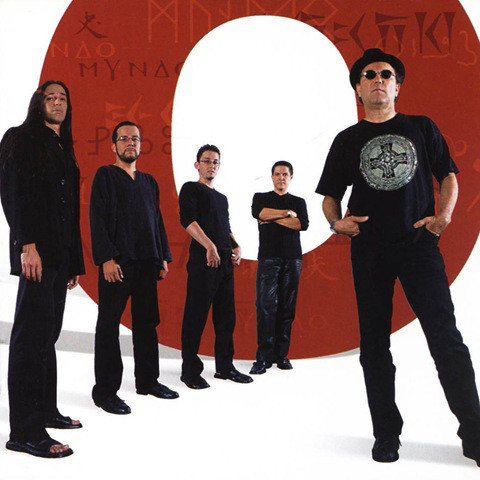
Ruben Blades - Mundo

Ruben Blades – Mundo

The consumption of these musical rhythms has increased throughout the American territory. Latinos and followers of this genre have gained space over the years; they can enjoy nightspots, live music, festivals, concerts and much more. Long live Latin America and its people! Long live the United States and the countries that have opened their doors to Latin music


Women in music: Carmen Laboy tells of a full life, without regrets

Talking with Puerto Rican saxophonist Carmen Laboy is so pleasurable that it becomes a therapeutic experience for the listener as she leads the musical journey that has become her working life.

The enthusiasm with which she talks about her work is contagious. With that effervescence that characterizes her, for thirty years she balanced her work as a teacher with artistic contracts that led her to perform on countless stages. As an educator, until her retirement in 2012, she headed the Music Department at Columbus High School in New York.  As a musician she remains active and current, accompanying when hired and conducting when it is her turn

Talking with Puerto Rican saxophonist Carmen Laboy is a pleasure
Talking with Puerto Rican saxophonist Carmen Laboy is a pleasure.

She began her story by holding up a book of photographs while laughing out loud at the images that show a life surrounded by music greats at countless concerts.

Neither at the age of nine when she began taking private piano lessons, nor at the age of twelve when she auditioned for a place at the Escuela Libre de Música in her native Ponce, did she imagine that thanks to music she would travel the world accompanied by her inseparable baritone saxophone. Today she reflects and reports a full life, with no regrets.

Graduated from the Interamerican University of San Germán with a Bachelor’s degree in Music Education and Performance, she obtained her Master’s degree in Music Education and Orchestration from Herbert H. Lehman College in the Bronx, New York; but not before having been awarded a scholarship as an outstanding student by the Vienna International Music Center in Austria.

The woman in music Carmen Laboy gives an account of a full life, with no regrets.

The saxophonist Pete Miranda also connected her to the New York music scene when orchestras on Puerto Rican soil denied her a place because she was a woman, forcing her to leave the island that taught her to love the music she continues to treasure and share with the world.

She decided not to comment on this unfortunate rumor. She preferred to thank that from then on she has not ceased to make music with large format orchestras (big band), delivering Latin music. Colleagues such as Tito Puente, José Madera, Eddie Montalvo, Jimmy Delgado, José Alberto “El Canario” and Frankie Morales have allowed the maestro to play her instrument while accompanying them or when she assumes the musical direction, as the case may be.

Puerto Rican saxophonist Carmen Laboy

The rejection to which she was subjected, which at first glance seems to have been a stroke of luck, did not divert her from her goal. On the contrary, she found in it the strength to blow in other lands. More than five decades of musical work at the helm of her baritone saxophone with the orchestras of Tito Puente, Machito, Ray Santos, Joe Cuba, Frankie Morales, Tito Rodríguez, Jr., The Big 3 Palladium Orchestra, Kit McClue Big Band and Harbor Conservatory Latin Band; as well as having accompanied Choco Orta, Paquito Guzman, Andy Montañez and Cano Estremera -among others- attest that her priority has always been to remain active in the music scene; this while wearing the same uniform as her male counterparts, be it a tuxedo or a tie. Among musicians, Carmen Laboy lets the music do the talking, far from worrying about her gender.

Bella Martínez Writer, Researcher in Afro-Caribbean music.


Bella Martínez
Writer, Researcher in Afro-Caribbean music.


Romantic duos in Latin music

The month of love is coming, and nothing better than accompanying those moments with good music. Latin music has always been loaded with romance, passion, heartbreak, and despite that each of the listeners feels identified with the lyrics, and moves to their rhythms. Added to the great artists, both the active ones and those who have already left, there have been songs that raise the level due to the union of two of those singers. In this article we tell you about the most romantic duos in Latin music.

These are the most romantic duos in Latin music

Marc Anthony and La India – Vivir Lo Nuestro

One of the most popular salsa songs at the start of the new millennium. This work launched both singers to stardom. To this day it is a song that many couples definitely identify with, with lyrics like:

“En una noche cerrada

Voy a detener el tiempo

Para soñar a tu lado

Que nuestro amor es eterno”

The eternal love between both parties, the desire to shout to the world how much you love your other part, and that there is no obstacle to stop them, is the message they want to give.

“En un mundo sin razas

Sin colores, ni lamentos

Sin nadie que se oponga

En que tu y yo nos amemos”

Despite the resounding success of the song, and the boost it gave to both their careers, they are currently not on good terms, which shows that although the song is loved by its fans, and speaks of a love without barriers, external factors can end a relationship, be it friendship or professional. So it doesn’t look like we’ll be getting a fresh, live version of this romantic classic anytime soon.

Maná and Rubén Blades – Sábanas Frías

This is a combination that few expected back in 2002, but Blades has never hidden his desire to collaborate with many artists. On this occasion it was the Mexican Rock group Maná, who had the great opportunity not only to mix the talent of the group with the great Panamanian artist, but also the fusion of two genres, rock and salsa so characteristic of Rubén. 

The song talks about how lonely a person in love feels, without their other half living under the same roof. So as the track progresses, he invites his love to live together, to take care of each other forever, and share everything.

“Y te cuidaré por siempre y donde quiera

Te amaré como uno quiere a su bandera

Yo te quiero compartir todo, todo mi amor

Te comparto mi cuarto, mi cama, mis besos

y todo, todo amor”

This is one of the emblematic songs of Maná Revolución de Amor album, released in 2002. As its name indicates, it is totally dedicated to love, that’s where Sábanas Frías came from, but nobody expected the collaboration with Rubén Blades to bring that tropical sound so typical of Panama.

Eddy Herrera and Liz – A Dormir Juntitos

Merengue is another genre that does not escape love, and one of its hymns is A Dormir Juntitos by the Dominican singer Eddy Herrera, who invited the Venezuelan Liz, known for having been part of Los Melódicos, so that both of them could mix their talents in this song.

If you take a look at the lyrics, it’s not completely a love song, but more about heartbreak, since it talks about a couple who are separated, and although they still love each other, they can’t sleep together again. 

“Y yo te veo

A través de la ventana cuando te vas

Y llorando me dan ganas de decirte, quédate

Por qué estamos durmiendo solos

Si nos seguimos queriendo

Si nos seguimos amando

No dejamos de lado el orgullo y volvemos”

Víctor Manuelle and Oscarcito (Yakozuki) – Si Tú Me Besas

Puerto Rican singer Víctor Manuelle is well known for the romantic lyrics that make up his songs. For 2011 he worked with the Venezuelan producer Oscar Hernandez, better known as Oscarcito or with his new name Yakozuki. This is how Si Tú Me Besas was born, a song that was originally covered in 3 versions for the album Busco Un Pueblo, so you can enjoy the song in salsa, pop and ballad.

“Bésame despacio

Y no se te ocurra dejar libre

Ningún beso ni ningún espacio

Con ese cuerpazo

Dame el privilegio de viajar hacia el espacio”

The lyrics talk about the experience of kissing your partner, and everything that this awakens in both parties. It not only talks about the feelings that arise from a kiss but also that you can forget the world through it. There is a fourth version of this song, although it follows the salsa genre, it is sung by both Víctor and Oscar, which got more followers in many countries.

This is just a small glimpse of all the great duos that Latin music has given us over the years. Without counting all those who will come, since the new generations show more and more talent.

Wálter Rebatta from Peru is one of the most outstanding figures of Latin music

We are honored to present in this new delivery, one of the most outstanding figures of Latin music, representing the brother country of Peru; who has put very high the name of the musicians born in Inca lands to the world.

With you, directly from France, we have as a special guest Wálter Antonio Rebatta Hinostroza, a brand new and spectacular percussionist, who was born on September 14, 1973, in Bella Vista, Callao, Peru, being artistically known as “El Chato”.

Welcome Wálter to Salsa Escrita “La Columna Salsera de Barquisimeto, Venezuela”.

Wálter Rebatta desde Perú es una de las figuras más resaltantes de la música latinaWálter Rebatta desde Perú es una de las figuras

It is an immense pleasure to have you as a special guest in International Salsa Magazine through www.SalsaGoogle.com.

Thank you very much to you, my friend, Professor Carlos, for the invitation to your well read and recognized column and I take this opportunity to give a sincere greeting to all Venezuelans who are like my brothers.

How did you start in music? Well, teacher in my neighborhood called Ventanilla, in Peru, I grew up and since I was a child I breathed musical air, where at the age of 6 years old I was already playing “El Cajon”, traditional Peruvian Creole instrument, under the tutelage of my older brother Kike Rebatta, who took me later to learn other percussion instruments and prepare me with music theory, and then enter the music school of the renowned teacher Edelmi Chavez, and thus enter to form ranks in the most recognized orchestras in my country, such as: La Iniciativa, Orquesta la Grande, Banana Latin Jazz, among others. Wálter, which international orchestras and artists have you accompanied? I have accompanied and worked with “Los Hermanos Colón” from Puerto Rico and among many groups, I have had the honor of being on stage with my Venezuelan brothers, Hildemaro “El Sonero del Amor”, with whom I have a great friendship, as well as with the master timbalero Alfredo Villamizar, from whom I have learned a lot and from whom I must thank through his column Salsa Escrita.

Wálter Rebatta Multi-Percusionista Peruano

“Chato”, you are currently based in the French city of Grenoble and we would like to know how is the salsa movement, especially in Europe. In fact, professor, in 1995, I came to Europe with the “Orquesta Salsa Perú” and I met Mr. Rodolfo Guerra, with whom a great friendship was born and I became part of the “Orquesta Sincopa Latina”, directed by him, being present in his productions: Salsa que te pasa, Demasiado corazón, Mi bachata, Puerto Rico, Todo, Escándalo, Mi silencio, Mi toque, Habla conmigo and Azafata.

Wálter, I have heard that you have accompanied great salsa artists in their presentations, tell me who? I have had the honor of accompanying the late Tito Gómez, Willie González, Luisito Carrión and the great Venezuelan sonero Orlando José Castillo “Watussi”. Also, let me tell you professor, that I have worked in the Italian television Media Set, in the very popular program “Notte Vola”, also in 2002, I participated in the Tour of the Queen of Salsa, Celia Cruz, along with the orchestra of the prestigious world famous violinist Alfredo de La Fe.

Likewise, my friend Carlos, in 2004, I performed in numerous events with Latin jazz groups, among them “El Royal Cuba”, of the Cuban musician and singer Eduardo Céspedes.

In 2007, I participated in the prestigious and famous San Remo festival with the singer Daniele Silvestri, with whom I have recorded in his productions.

Wálter Antonio Rebatta Hinostroza

In 2009, I participated in the Italian tour “Terromotati Dil Abruzzo”, conducted by the famous singer Laura Pausini and later that same year I participated again in a tour in the United States for charity with Pausini again.

Excellent Wálter, and what can you tell us about the orchestra you are currently working with and what are your future projects? Professor Carlos, at present I am an official musician of the renowned orchestra “Mercadonegro” and in relation to my projects, is to form my own group and perhaps venture into the bachata, but without leaving aside the salsa, since living in Europe I have met many bachateros.

And something very important, my friend Colmenárez, I am also working on the project of my Venezuelan compadre, the musician Edwin Sanz, whom I would like you to interview at some point.

Very good Wálter, congratulations for your trajectory, what are your contacts in the digital platforms? My Facebook is: Wálter Antonio Rebatta Hinostroza and my whatsapp: +41 77 5122633.

Wálter Rebatta
Wálter Rebatta

Finally, we want to wish you the best on behalf of Salsa Escrita “La Columna Salsera de Barquisimeto” and that you continue to raise the name of Peru in all the stages of the world.

Thank you a thousand times, Professor Carlos Colmenárez, for taking me into account and thus making my career known and giving my greetings, thanks and respect to all the salseros of the world through International Salsa Magazine, www.SalsaGoogle.com and long live salsa, Peru and Venezuela, united forever.

Known artistically as Mahel, Singer, composer, percussionist and professional model

You can read: Walter Rebatta

”Salsa Con Sabor’’ and its contribution to salsa music

Platfoms to promote salsa

Just as we always promote the artists and musicians who keep alive salsa and Latin genres, we also think it is important to highlight the work of communicators who have taken the task of continuing to spread the traditional Latin music through the resources that technology has made available to us. Such is the case of Charlie Perez and the web page ”Salsa Con Sabor”, which he has been running for several years.

We talked to this talented young man, who has illustrated very well how his work has been throughout these years with the management of ”Salsa Con Sabor”, interesting anecdotes and what he earned from all this process.

Charlie Pérez, administrator of ''Salsa Con Sabor''
Charlie Pérez, administrator of ”Salsa Con Sabor”

Conversation with Charlie Perez from ”Salsa Con Todo”

Salsa Con Sabor was born in 2010. I was always a salsa enthusiast and it runs in the family because my father has always loved tropical music, salsa, guaguancó, son montuno, bolero, among others. I became curious about these topics while naving in the social networks, so I created a Facebook page whose aim was to be a music space to share with salsa fans around the world. By this means, we began to share music, artist biographies, salsa history, salsa ephemeris and many more” were the words spoken by Charlie when asked how this project came about.

He also told us that the page was gaining a popularity that he and his team decided to shape this idea through the creation of a website, a YouTube channel and accounts in the rest of social media. All this led several independent artists to send their musical works to ”Salsa Con Sabor” to be shared and diffused.

Important to note that all members of this great team are professionals nothing linked to the world of music. They are simply people who enjoy Latin genres and want them to stay alive over time.

Charlie Pérez and his wife Wilendy Rosario

What do you see in an artist before spreading his or her music?

I like to support all artists, but I don’t deny that I focus a lot on the quality of the work presented. I always check certain aspects such as the cover art, the image and how music was worked, showing whether or not an album will be worth it. We always give the opportunity to all artists to send us their work, but they must have a standard quality” said Charlie on the subject related to unknown artists sending him their albums.

Successes to date

Perez has told us that he feels incredibly grateful for all the doors ”Salsa Con Sabor” has opened for him. He has met many important people in the industry and artists with whom he has developed good friendships, something he really values.

This space has also allowed him to expand to other fields. In the case of Charlie, he is a marketer and always had the desire to start his own business, which added to his knowledge of the music industry and marketing, led him to create his own advertising agency called Tumba Media Productions. The company is dedicated to dissemination activities such as press releases, graphic design, among other things.

Another thing that has been very important for the future career of this young man has been song writing. Composing his own material has earned him contact with great artists such as Venezuelan singer Néstor Pacheco, who motivated him to make music and with whom he has a clase friendship. They even wrote some songs together such as ”Sabor y Guaguancó” and ”Mamá Inés”.

Logo of the website
Logo of the website

The best experiences with the website

Regarding this point, Charlie replied that his reviews have received many positive messages from the public and many artists. He and his collaborators are very glad that so many people keep an eye on their content and that their platform let them know abut new music in terms of salsa, guaguancó, bolero, son montuno and other associated genres.

We are great popuizers of new music that nobody knows about due to the amount of content you can find, which makes us very happy and be satisfied with our work” says Charlie.

Activity during the pandemic

From the pandemic, we started working on interviews a lot more than before and had to focus on making video content. Video editing tools were very important for us at this stage, since it wasn’t just about doing interviews, but also about downloading them and doing all the corresponding editing to show them to the public in the most professional way possible” says the administrator of ”Salsa Con Sabor” about his experience with the pandemic.

He also told us that there were many artists he interviewed with whom he thought would never connect, which was made possible thanks to the tools that technology offers us today. In that sense, his wife Wilendy Rosario was very important in this entire process, as she was in charge of making contacts and conducting many of these interviews in that frame of time. She is described by her husband as a fundamental part of this project thanks to her communication style and charisma.

Read also: Broadcaster and host of Con Sabor Y Amor Latino Tatiana Mezarina

  • « Go to Previous Page
  • Page 1
  • Interim pages omitted …
  • Page 17
  • Page 18
  • Page 19
  • Page 20
  • Page 21
  • Interim pages omitted …
  • Page 149
  • Go to Next Page »

International Salsa Magazine (ISM) is a monthly publication about Salsa activities around the world, that has been publishing since 2007. It is a world network of volunteers coordinated by ISM Magazine. We are working to strengthen all the events by working together.