• Skip to primary navigation
  • Skip to main content

International Salsa Magazine

  • HOME
  • Previous editions
    • 2026
      • ISM / May 2026
      • ISM / April 2026
      • ISM / March 2026
      • ISM / February 2026
      • ISM / January 2026
    • 2025
      • ISM / December 2025
      • ISM / November 2025
      • ISM / October 2025
      • ISM / September 2025
      • ISM / August 2025
      • ISM / July 2025
      • ISM / June 2025
      • ISM / May2025
      • ISM / April 2025
      • ISM / March 2025
      • ISM / February 2025
      • ISM / January 2025
    • 2024
      • ISM / December 2024
      • ISM / November 2024
      • ISM / October 2024
      • ISM / September 2024
      • ISM / August 2024
      • ISM / July 2024
      • ISM / June 2024
      • ISM / May 2024
      • ISM / April 2024
      • ISM / March 2024
      • ISM / February 2024
      • ISM / January 2024
    • 2023
      • ISM / December 2023
      • ISM / November 2023
      • ISM / October 2023
      • ISM – September 2023
      • ISM – August 2023
      • ISM July 2023
      • ISM Edition June 2023
      • ISM – May 2023
      • ISM April 2023
      • ISM March 2023
      • ISM February 2023
      • ISM January 2023
    • 2022
      • ISM December 2022
      • ISM November 2022
      • ISM October 2022
      • ISM September 2022
      • ISM August 2022
      • ISM July 2022
      • ISM June 2022
      • ISM May 2022
      • ISM February 2022
      • ISM January 2022
    • 2021
      • ISM December 2021
      • ISM November 2021
      • ISM October – 2021
      • ISM September 2021
      • ISM August 2021
      • ISM July 2021
      • ISM May 2021
      • ISM April 2021
      • ISM June 2021
      • ISM March 2021
      • ISM February 2021
      • ISM January 2021
    • 2020
      • ISM December 2020
      • ISM November 2020
      • ISM October 2020
      • ISM September 2020
      • ISM August 2020
      • ISM July 2020
      • ISM June 2020
      • ISM May 2020
      • ISM April 2020
      • ISM March 2020
      • ISM February 2020
      • ISM January 2020
    • 2019
      • ISM December 2019
      • ISM November 2019
      • ISM October 2019
      • ISM Septembre 2019
      • ISM August 2019
      • ISM July 2019
      • ISM June 2019
    • 2016
      • ISM December 2016
  • Spanish
  • Download Salsa App
    • Android
    • Apple

Search Results for: live music

Brisa Tropical con Taino

North America / USA / Oklahoma

Brisa Tropical con Taino. The Oklahoma´s Salsero program in Spanish

For almost 30 years, the state of Oklahoma has among its ranks of entertainment, “Brisa Tropical con Taino”, the first spanish radio show with Salsero sound, made especially for the Latin community in the country.

Its creator, founder, host and producer is the Puerto Rican Lino “Taino” Roldán Torres, a Disabled Vietnam and Persian Gulf wars Veteran, salsa lover, who together with his wife Carmen decided to undertake this project for the Latin market unattended for so many years.
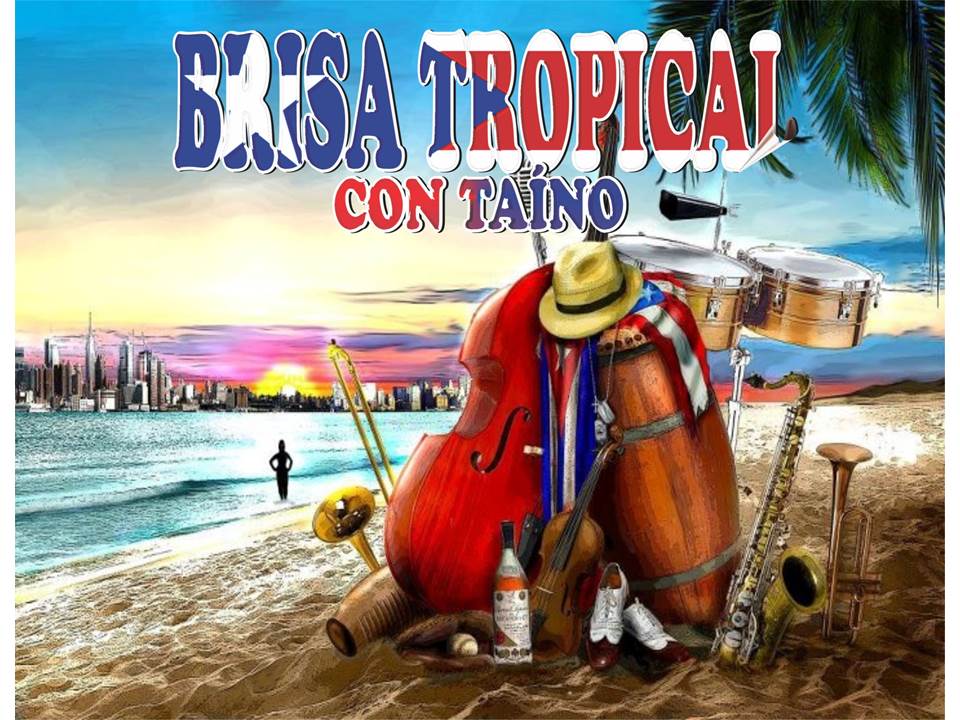
Brisa Tropical with Taino

This pioneering program began its transmission for the first time in 1992, through the Amplitude Modulation (AM) dial. At first, this format had three hours of broadcast of only Tropical Music in its programming, novelty that made him a creditor of a preferential site in Frequency Modulation (FM) in 1995, with a duration of one hour in addition to the one established at the beginning in the AM circuit.

This way, Brisa Tropical con Taino had a total of four hours of continuous Latin music with advertising spaces, musical information and artists´ biographies, these transmissions lasted 18 uninterrupted years in that radio space.
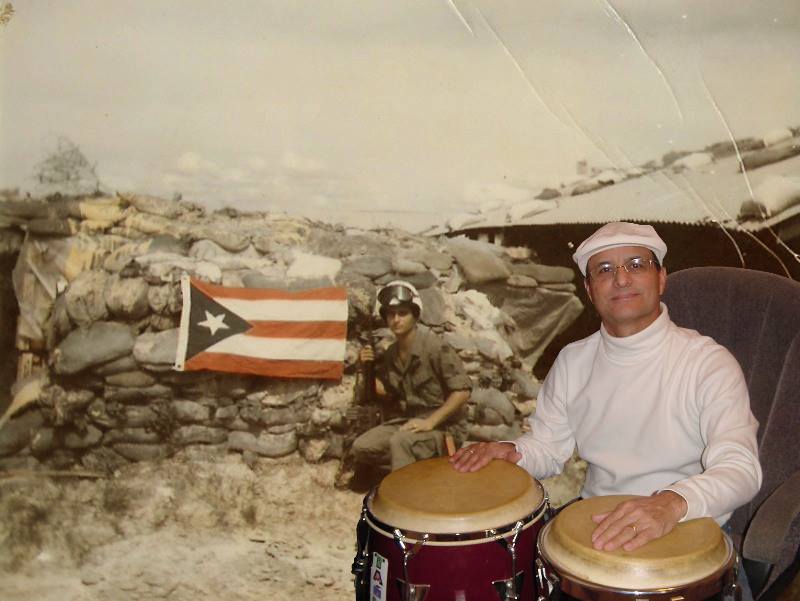
Nam - Brisa Tropical con Taino
Nam – Brisa Tropical con Taino

“AN ANNOUNCER SHOULD FOCUS ON THE MUSIC AND LEAVE ASIDE ANY OTHER SUBJECTS THAT ARE NOT APPROPRIATE.”

Lino started with the idea of a Latin program for Latinos at a Local Radio Station when he arrived in Oklahoma after his work in the military in the early 90’s, at the same time, this retired military man with 23 years of service also worked as a DJ in two European countries: Italy and Germany. “… When I arrived to Oklahoma, I noticed the absence of a radio station in Spanish of tropical rhythms, such as Salsa, Merengue, Etc.

Taino in the studio
Taino in the studio

I went to several radio stations, but they were not interested in having a program in Spanish. I went to the commercial establishments of the city and told them about my idea that would bring them a market that was unexplored (the Hispanic market). The merchants and other commercial institutions immediately told me that they would give me their support. I presented the idea to an AM station, and they accepted it. (My goal was FM, but this opened the doors)”, Taino told us.

Currently, Brisa Tropical con Taino is developed only by network 2.0 since 2015, going from a Radio Program to a Digital Salsera Station with 24 hours programming each day with live interruptions between 10AM and 3PM, using that is commonly known as “Voice Track” for the rest of the time.

With this change, this interactive Web Station based in the city of Jenks, south of Tulsa in Oklahoma, has managed to obtain a loyal and numerous audience in Europe, the Caribbean, all of Latin America, the United States, and especially in remote areas such as: Iraq and Afghanistan, where the station fulfills a gratifying mission, as they carry greetings from the hundreds of soldiers deployed in those war zones to their relatives in the U.S. and Puerto Rico.

The also sociologist, Lino Roldan, along with his wife and great collaborating friends, are responsible for producing the varied programming for all Salseras generations all week, as well as to bring information capsules about Health, Consumer, Home Security, Maintenance of automobiles, etc., always with the firm purpose of bringing entertainment and, at the same time, education for the listening public.

Taino
Taino

“… LA SALSA LLEGÓ PARA QUEDARSE Y ES MUNDIAL”

This non-profit digital broadcaster is committed to the community, sponsoring Salsa events (without cost) such as: cruises and artist presentations, as well as helping to promote several activities of various organizations. In the same way, they are always present and united with the community in cases of emergencies such as natural disasters caused by the past hurricanes Mitch (1998) and María (2017), collaborating with the collection of food for the victims.

Lino “Taino” Roldán, as a good Salsa lover, hopes to continue praising this tropical music for many years, transmitting through his digital station different interpreters’ songs from all over the world, and to continue with this important work and pasion, Lino and Carmen need to raise $1000 in the account opened in “Go Fund Me” for maintenance expenses and music royalties that they promote. Would you like to help them?

Carmen and Lino Roldán - Brisa Tropical with Taino
Carmen and Lino Roldán – Brisa Tropical with Taino

“… AT MY AGE, PROJECTS AND GOALS ARE DONE EVERY DAY. I FEEL HAPPY WITH WHAT I DO”. Lino Roldán

For more information, please visit www.brisatropical.com or download the app for Smartphone Radio La Brisa Tropical.


The great ‘Soneros Summit’ in Barranquijazz – Courtesy of Radio Nacional de Colombia

Latin America / Colombia / Barranquilla

Courtesy of Radio Nacional de Colombia of the Barranquijazz  2018 for International Salsa Magazine.

This is how the great ‘Cumbre de Soneros’ was lived in Barranquijazz this 15th of Sep-2018.

In a special gala that included the participation for the first time of the Antonio Arnedo Quintet, a determining musician in the languages ​​of Colombian jazz, in which he magnificently managed to introduce the public on a journey through the traditional sounds of the different regions of Colombia under that concept that has come to be known as World Jazz, the atmosphere was warming up for the enjoyment of one of the most vibrant nights of Barranquijazz 2018.

Photo of The great Soneros Summit in Barranquijazz

The first of the protagonists of the summit to go on stage was Hermán Olivera, the so-called ‘Sonero of the 21st century’, who demonstrated that he is indeed “the bridge between yesterday and today”, as he says in one of his proclamations in ‘ The heir to flavor’, a piece included on his solo album ‘La voz del Caribe’, a nickname given to him some time ago by Eddie Palmieri, the leader of the orchestra in which Herman has been a member for more than 20 years.

Then it was Ray de la Paz’s turn, who raised the level of the public’s enthusiasm after performing the greatest hits of his career, achieved together with the late arranger and conductor Louie Ramírez. The New Yorker exhibited his powerful voice with the pieces: ‘Everything collapsed’, ‘Only you and I’, ‘Liar’, ‘Let’s go from here’ and ‘Being in love’.

Later, the ‘Pretty Boy’ Ismael Miranda was present. In his greeting to the public he mentioned: “We saw that they did some brutal Olympics and the world found out”, referring to the Central American and Caribbean Games recently held in the arena.

Photo of the artists at the great Soneros Summit in Barranquijazz

Miranda performed ‘Caretas’, ‘The corners are’ and ‘Don’t tell me it’s too late’. For the closing, Ismael Miranda called Ray de la Paz and Hermán Olivera to the stage, and together they inspired their best soneos, wasting their talent on the song ‘Abran Paso’.

With this show of the highest level, Barranquijazz closed its cycle of galas.

By: Robert Tellez.

More information:

https://www.radionacional.co/noticia/musica/asi-se-vivio-la-gran-cumbre-de-soneros-barranquijazz

Papo Lucca. The Giant of the South

Latin America / Puerto Rico

Papo Lucca born in Ponce, Puerto Rico on April 2, 1946, Enrique ‘Papo’ Lucca began playing the piano at age 11 with his father’s orchestra. Initially, La Ponceña played versions of tropical hits of the moment by bands like Cortijo y su Combo and La Sonora Matancera.

Papo Lucca. The Giant of the South

In the late 1960s, Papo became the orchestra’s musical director, beginning a profound transformation that would eventually establish la Ponceña as one of the most progressive groups in the history of Afro-Caribbean music. Papo’s orchestrations were bold, experimenting with elements of jazz, rock, and Brazilian music. Representing the authentic spirit of Puerto Rican salsa, his piano solos were velvety, displaying elegance, restraint, and infinite swing.

During the mid-’70s, La Ponceña began to enjoy unprecedented success with critics and the public. The band recorded for the Inca label, which eventually became part of the Fania empire. Papo was invited to arrange and play on sessions for the company’s biggest artists, including Johnny Pacheco, Celia Cruz and Cheo Feliciano. He also recorded and toured with the Fania All Stars.

This compilation pays tribute to the art of Papo Lucca through 14 classic songs recorded between 1967 and 1981. Although Lucca has recorded as a solo artist and also collaborated with a multitude of salsa stars, it is his work with La Ponceña that best expresses the clarity of his vision.

The music we make has to make people happy, as well as make them dance. That’s what it’s all about, says Lucca from her home in Puerto Rico. When the public can dance, no matter how complicated the music is. The first theme that this genre had was to divulge the things that happened in the different communities, as if it were a newspaper.

Our journey begins with two fiery songs from the beginnings of La Ponceña: “Hachero Pa’Un Palo” and “Fuego En El 23” are versions of songs by Cuban Arsenio Rodríguez. La Ponceña always had a soft spot for Puerto Rican folklore, but she also found inspiration in the golden age of Cuban music.

La Sonora Ponceña
La Sonora Ponceña

The precise moment in which La Ponceña becomes a mature orchestra in total control of its aesthetics can be found in the six songs from the Musical Conquest/Conquista Musical and El Gigante Del Sur albums. Launched on the market in 1976 and 1977 respectively, they represent the pinnacle of the salsa movement.

These songs combine a musical skill that approaches virtuosity with deep lyrics and a generous sense of humor. “Ñáñara Caí” is a hilarious narrative of pure magical realism, describing a world where everything is turned upside down (my favorite phrase: I saw a cow/Hit with Pacheco). Also included in Musical Conquest, “El Pío Pío” achieves the perfect cross between Afro-Cuban rhythm and contagious pop. This hit is a mandatory part of all La Ponceña concerts.

The opening theme of the El Gigante Del Sur album, “Boranda” seems to offer a salsa version of progressive rock. Its lyrics contain an important sociopolitical message, and the sophistication of its arrangement is a slap in the face for all those who believe that this music is only for dancing. “Soy Tan Feliz” combines bolero climates with an electric piano solo that recalls the psychedelic sound of jazz-rock from the ’70s. “Noche Como Boca ‘E Lobo” creates a tasty collision between salsa fever and Brazilian rhythms.

Lucca was not alone in his mission to reinvent the rules of Puerto Rican dance music. It was also benefited by the prowess of some of the best instrumentalists on the island. Furthermore, his instinct for choosing singers was always irreproachable.

Some of the vocalists of la Ponceña that appear here are Tito Gómez, who would later find fame with the Grupo Niche de Colombia; the inimitable Luigi Texidor, who gave a sense of placidity to all the songs he performed; and Yolanda Rivera, who added variety to the band’s sound with her unique timbre.

One of Rivera’s happiest moments is included here: Coming from 1980’s Unchained Force, Johnny Ortiz’s “Borinquen” is a soulful anthem to Puerto Rico, blessed with a sinuous melody and subtle instrumental arrangement–one of Rivera’s happiest moments. transcendental within the Ponceña canon.

The golden days of salsa are a distant memory in the new millennium, but Papo Lucca hasn’t stopped shining. Perhaps precisely because he continues to record new music, he refuses to idealize the past when I ask him what his favorite album with “La Ponceña.”

The last one, the most recent, he explained in his characteristically introverted tone. All the albums are very important in the career of the orchestra. They all fulfilled their mission at the time, which was to reaffirm the previous one. That’s the way to maintain a pool after 50 years.

Papo Lucca
Papo Lucca

The teacher was a little more direct when I asked him about his favorite concert of all time.

It was my first concert with the Fania All Stars at Madison Square Garden, back in 1974, he said. All the stars of the Fania were still alive. A few years later we played in front of 47,000 people in Cali. My knees always shake before I go on stage, but this time they shook a little more.

Edwin Ortiz Y La Mafia Del Guaguancó is present in ISM

As all our readers already know, this section is always looking for the best Latin talents to give them the exposure they deserve and today is the case of New York producer and musician Edwin Ortiz, who was kind enough to share a bit of his story with us.   

Edwin is an artist who was born in the East Harlem section of New York, where he began his musical career with the full works and spent most of his life, but left that city with his pregnant wife to raise their son in a different environment. It was there that they moved to Washington DC, where the musician has continued to live and pursued his career to this day. 

Below, we will provide more info about the artist’s career during these moments and how he managed to become the great bandleader and musician he his today.   

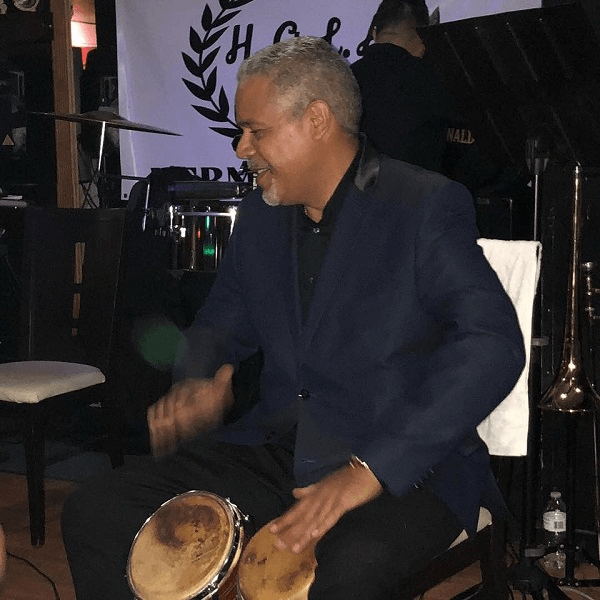
bongo player Edwin Ortiz
Bandleader and bongo player Edwin Ortiz kindly talked to us about his interesting career

Edwin’s music education   

Just as other great musicians, Edwin studied at the prestigious Johnny Colon Music School, the institution in which he learned a lot of what he knows today. His first lessons are focused to teaching how to play the flute alongside Mario Rivera, which can be said to be the first contact the young man had with music. However, it was not this instrument that would capture his attention, but the bongo. 

His brother Edgar Ortiz was an acclaimed bongocero in the Orquesta Las Siete Potencias and the Tito Puente Orchestra, so Edwin already had a lot to learn from. However, it was with acclaimed percussionist Manny Oquendo with whom he turned professional and decided to dedicate himself fully to the bongo as his main instrument, to the point that it is the only one he still plays today.   

Outside of his work as a musician, Edwin is in charge of everything about the management of his most recent orchestra Edwin Ortiz Y la Mafia del Guaguancó.   

Edwin Ortiz Y La Mafia del Guaguancó   

Before even thinking about founding his own orchestra, Edwin was involved in a number groups of different genres throughout the Washington DC Metro area, whose main genre was cumbia at the time. In that sense, the artist wanted a change in his style and to do something different from what he was playing at the time, although he knew it was ging to be hard.    

His big break came when the director of the band he was in at the time was going to move to the state of Florida, so he left Edwin in charge of the group in order to make the changes he believed were pertinent. That is when he took the opportunity to introduce salsa, a genre he had always been passionate about, in the metropolitan area with the resources he had on hand at the time. He invested in some 25 salsa arrangements and released a new version of the classic ”Olga Y Margara”, which was the first of many hits to come for his career. 

Edwin toca el bongó
Edwin playing the bongó live

Later, when he was finally creating an orchestra of his own, he took pains to find the best musicians possible, many of whom were recommended by friends and seen playing by Edwin himself. However, he would soon realize that the best musicians were not necessarily the best pieces he required for his band, which made him change his approach a bit when choosing the team that would accompany him in his project.   

At first, the project was called Orquesta La Romana, but it was not long before Edwin decided to call it ‘‘Edwin Ortiz y La Mafia del Guaguancó’’. This change was due to the fact that Bobby Quesada, a musician whom Edwin greatly admired, had an orchestra with the same name, but it had already disbanded by that time. He always liked the name ”La Mafia del Guaguancó” so he gave it to his own group. He knew how risky this move was and the displeasure of some of its members with the change, but fortunately it was worth it.   

Today, the musicians of the orchestra are affectionately known as ”the mafiosos” in the Washington DC Metro area, so this has become part of the band’s identity.    

Diferente A Las Demás 

One of their most recent musical works is entitled ”Diferente A Las Demás” and it is a tribute to women that was released in March, the month dedicated to them.    

With respect to this song, Edwin was telling us that he and his partner and the lead singer of the band Vivian Mojica had the opportunity to meet the talented musician Héctor Luis Pagán, who kindly invited them to his home and shared with them part of his repertoire, including the song ”Diferente A Las Demás”. Edwin loved it since the first time he heard it and Pagan gave it to him with pleasure. That is how the orchestra got down to work and recorded their own version of the song. 

Edwin y Vivian
La Mafia del Guaguancó vocalist Vivian and Edwin Ortiz

The first thing the bandleader did was look for the right arranger for it, who was Ramón Sánchez, and the producer he had always wanted to work with, Isidro Infante, whom Edwin has known for more than 30 years. 

Then came the recording, mixing and remastering. In the end, the chosen date was 1 March of this year as a tribute to International Women’s Day, achieving a result that made everyone in the orchestra very happy. 

Read also: Vocalist of La Moderna Tradición Eduardo Herrera and his fascinating story 

Puerto Rican singer Irma Kaché speaks exclusively to us

Irma Kaché is a talented singer born in Ponce, Puerto Rico, who has a very interesting story behind her, so we have set about communicating with her to talk about the most important facts of her life and career.   

Irma Ortiz, the artist’s real name, shows us that it is possible to achieve a lot with little whenever there is the will and desire to get what we want. What she tells us below proves it.   

Irma was born in Ponce
Talented singer Irma Kaché was born in Ponce, Puerto Rico

How Irma first became interested in music   

In her native Puerto Rico, music was always in Irma’s home since she was very young, as her mother was a singer in a radio station and won talent shows, but all that changed when she got married and had children, since it was not seemly for a wife participate in such activities.   

However, she and her siblings inherited the taste for music from their mother and she always instilled in them everything related to it. This is how the children began to play and sing the songs they listened to at home, many of which belonged to Los Condes, Los Panchos and other trios from that time.   

Although Irma’s mother was proud that her children played music as one of their main hobbies, she did not think they would follow it professionally. Irma’s older brothers already have their own orchestras and one of them calls himself Julio Kaché. That is where she took the name of Irma Kaché. 

While it is true that music had a very important place in her life, Irma finished high school and studied social work at the Pontifical Catholic University of Puerto Rico, so she did not practice her great passion at that time. She only limited herself to imitate her favorite artists of the time such as Yolandita Monjes, Ednita Nazario, Sophy, among others. 

Upon graduation, she moved to New York with the hope of singing professionally, but she became a single mother and found it difficult to have evening performances with a small child. In addition to that, her son presented certain language problems and had to attend therapy constantly. She only had her older sister’s support, who is also a singer by profession.    

On top of that, breaking into salsa as a woman was very complicated in a world dominated by men.    

Irma’s beginnings were not easy
Irma’s beginnings in music were not easy, but her talent and effort led her to be the artist she is today

Irma’s transit in music   

Just as Irma met ”dream merchants” who caused her to lose time and money with empty promises that went nowhere, she also met people who supported her and contributed a lot to her career as the composer and singer Miguel Angel Piñeiro, who is a very prominent figure in the salsa scene. 

Piñeiro discovered her on the local TV show Diamante Show, contacted her and they became good friends for a while. At that time, she was working with a record company, but things were not going as she wanted, so she let her new friend guide her in many aspects of her career. Piñeiro accompanied her to the studio, rehearsed with her, introduced her to important people in the industry and many other things that helped her become the singer she is today. 

Among those people she met thanks to Piñeiro, we can mention arranger Harry Rios, who was the one who made each and every one of the arrangements for her new album and played a pivotal role in its final result. 

In addition to this, he made a small monetary investment in Tumbao Media Productions, which is a marketing and PR agency, which has been highly beneficial for his career and the chance to become known to a wider audience. In addition to this, the work she has done in her own social networks to create her own community around her music.   

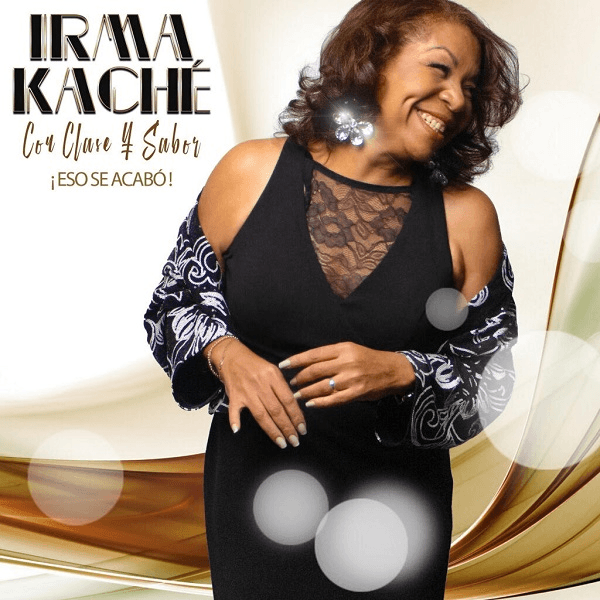
Con Clase Y Sabor
Cover of the album ”Con Clase Y Sabor”

Orquesta Salsa Libre NY 

Irma has been part of the Orquesta Salsa Libre NY since 2008 without uninterrupted, although the group has been through hard times such as the pandemic, which caused the loss of its most important members. This led Miguel, director of this orchestra, to seek new musicians to replace the previous ones. 

The pandemic had also prevented them from performing live for a very long time and Irma was anxious to return to sing in front of an audience, so she talked to Miguel to remedy the situation and be back to the stage as soon as possible. This is how Miguel, who was also Irma’s producer, contacted the Sound of Brazil (SOBs) nightclub to study the possibility of performing a small concert there. So, Miguel and Irma accepted the venue’s proposal and got to work.   

In fact, the Puerto Rican singer and her orchestra performed a wonderful show at SOBs with renowned producer and vocalist Javier Luis, who was already experienced in singing in that place and many others of its kind, so most of the responsibility fell on his shoulders. He was the one who made the arrangements for the show and sent her copies of the emails so that she could see how the organization of a show like theirs was handled.   

In the end, the performance was a success and Irma learned a lot from this experience, which would help her to replicate the right steps on other occasions. In addition, that night opened many doors for both of them. 

Read also: The road to success for Venezuelan harpist and cultural entrepreneur Ángel Tolosa 

  • « Go to Previous Page
  • Page 1
  • Interim pages omitted …
  • Page 72
  • Page 73
  • Page 74
  • Page 75
  • Page 76
  • Interim pages omitted …
  • Page 149
  • Go to Next Page »

International Salsa Magazine (ISM) is a monthly publication about Salsa activities around the world, that has been publishing since 2007. It is a world network of volunteers coordinated by ISM Magazine. We are working to strengthen all the events by working together.