








Peru continues to give much to talk about with regards to salsa and the guest we have this time is clear proof of that. We are talking about the talented singer and backup singer Francisco ”Pancho” Chávez, who has been kind enough to talk to us to reveal unpublished details of his life and career in his native country and, of course, in the United States.
Pancho, who currently serves as vocalist and manager of the Orchestra Cambalache, has a very long career in the U.S. Latin music scene, to the point that his group has established itself as one of the top salsa bands in the northwestern United States. It is a great honor for us to have an artist of this stature in this January 2024 edition.

Pancho’s first contact with music happened thanks to his mother’s family, many of whom were musicians. Although the young man never go into business in his country, he was able to see how to handle things thanks to his relatives until moving to the United States in 1997.
One or two years later, someone gave him a double album by El Gran Combo de Puerto Rico that, he says, he played a million times because he really liked it. This material was one of his great inspirations to dedicate himself to salsa as a genre and nobody could change his mind.
It was in Seattle that he started making music with college friends when he was already living in the United States, implying that he was not yet formally dedicated to music. In fact, Pancho was studying business at the time and was looking for a small musical group with other young college students he met around 1999.
This group turned out to be Cambalache, which he founded along with Colombian musician Camilo Suarez. This would be the first and only group to which the Peruvian has belonged, so everything he knows about music and the industry was learned with this same project.
He always stood out for his talent to sing and do vocals, but he also learned to play some instruments such as the congas, timbales, bongos, cowbells, among others. He also learned a bit of sound engineering and can work a little in this area, although he recognizes that he is not yet an expert.

Pancho says that there were not many Latinos at the university back then, so he and Camilo forged a strong friendship and shared many common interests, especially music.
At the time, both were facing the economic problems typical of a college student and saw music as an opportunity to make a little extra money during their summer vacation. Camilo knew other musicians, so he contacted them and proposed them to join the orchestra they were creating.
Pancho and Camilo had thought of a group of five or six people, but there were so many interested in joining the orchestra that the first rehearsals included about 13 people. In the end, solely for economic reasons, they only accepted nine members, of which only he remains.
All these members, including Camilo himself, ended up working with other artists and groups and obtaining new opportunities in the musical field.
Cambalache’s first album was ”Clasiqueando”, which was released almost 20 years ago. Pancho assures that the acceptance to the material was very nice, even though the details are not so refined and worked.
The success they had was a surprise for Pancho and the rest of the group, since the scope they expected was local. “We were surprised that people called us from many countries saying they had heard the album and loved it. There were even companies in countries like Japan and Italy that wanted to buy us songs for distribution” Pancho said on the issue.
It was a great start for everything that came next for the group in the years to come.
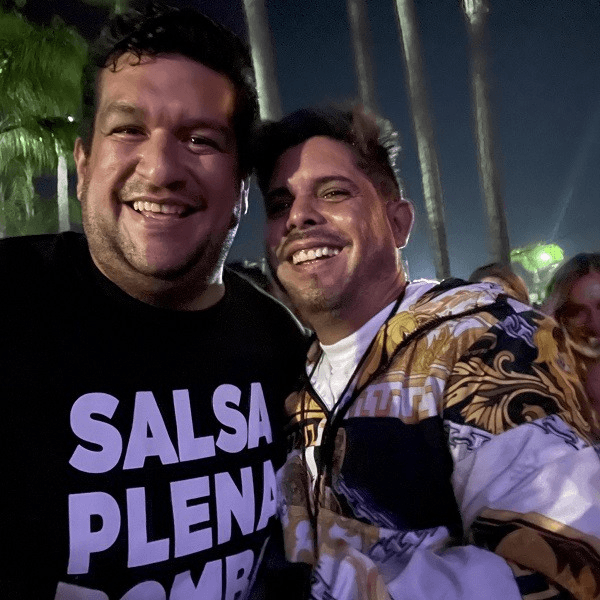
Pancho and his musicians chose Seattle as their base of operations because he and all the members of Cambalache have lived there for many years. That is exactly the city the Peruvian chose to make his living there and he never left it.
It is also in Seattle where they all have their jobs and occupations outside of music and where they meet to rehearse and deal with all the affairs related to the orchestra.
In the beginning, it was very hard for them because the Latino audience was not very large when they created the project. However, that has been changing, and today, many Latinos live in the city and maintain their Latino customs, including music.
In addition to being the vocalist and manager of the orchestra Cambalache, Pancho is also a business administrator and manages his own event company whose main element is, of course, music. In this company, Pancho and his staff are in charge of hiring artists and bands for private events. Of course, Cambalache is involved in the operation of this project.
The event center managed by the Peruvian singer has a capacity for 500 people and has its own stage. He rents it to hold events there and has all types of clients waiting.
They have hired artists such as Gilberto Santa Rosa, Tito Nieves, El Gran Combo de Puerto Rico, Willie González, Conjunto Bahía, Frecuencia Latina, among others.
Read also: Producer and saxophonist Martin Franco talks about his passion for music






| DIRECTORY OF NIGHTCLUBS | ||
|
|
|
|
|
|
|
|
|
|
|
|
|
|
|
|
|
|
|
|
|
|
|
|
Like every month, we are going to dedicate this edition to a very special name in the Latin music scene and it is about the extraordinary percussionist and conguero Poncho Sanchez, who has given us the honor of donating some of his congas and the suit he wore during the Grammy Awards to the Spaha Salsa Gallery Museum.
In gratitude to such a generous act, we want to dedicate the following lines to his brilliant career and everything he has contributed to Latin music with his work and talent.
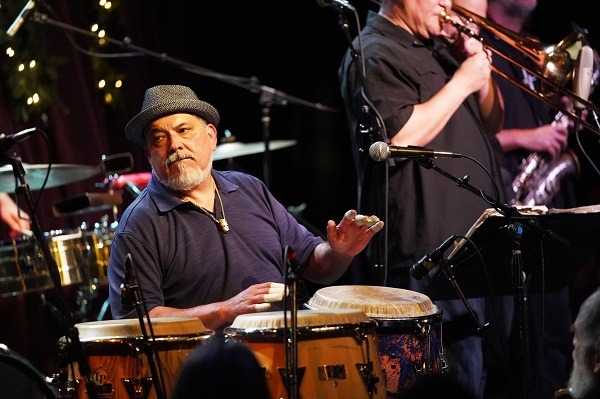
Pablo Sanchez, better known as Poncho Sanchez, is currently a percussionist and salsa singer who leads a renowned Latin jazz and Cuban music band. He became such a talented artist after a long journey in the difficult and competitive music industry.
Poncho is the son of two Mexicans from different cities who had eleven children, the musician being the youngest of them all. From a very young age, he developed an intense love for music, which led him to learn to play instruments on his own.
Although Poncho was born in Laredo, Texas, he spent all his childhood in Los Angeles with his family. In that place, he began to have a lot of contact with American jazz, Latin jazz and soul. During his adolescent years, his musical tastes were dominated by artists such as Mongo Santamaría, James Brown, John Coltraine, Miles Davis, among many others.
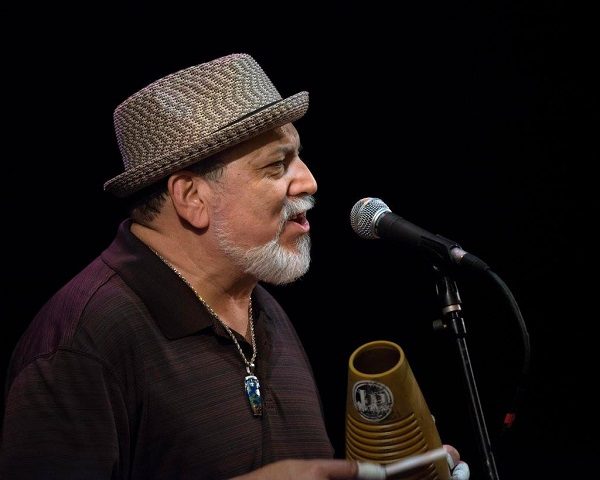
When he decided he wanted to take music up professionally, he began to teach himself to play the congas, guitar, drums, timbales and flute. This is how he was preparing for what was to come in his professional life later on.
When he reached adulthood in his twenties, he was playing in various dance clubs for a while, until finally he got Cal Tjader and his group to notice his talent and invite him to join them.
Today, Poncho is very grateful to Cal and said that he learned a lot from him during the time he was in the group. In fact, he even recalled in an interview that he gave him some lessons just as he was a teacher and Poncho was a student. This, in order to be on par with his bandmates and be able to put on a good show to the public.
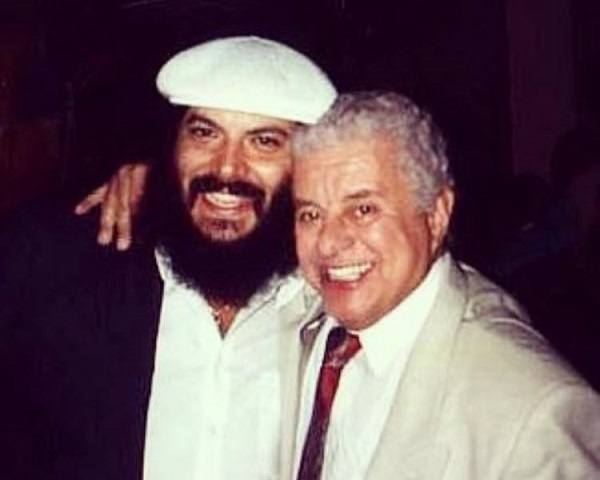
In 1980, Poncho finally managed to form his own group with which he began to carry out certain projects, although he had not completely departed from Cal’s band. In fact, the conguero worked with the musical director till the end of his days in 1982.
Just a few months later, he signed with the Concord Records label to release his first official solo album, which he titled ”Sonando”, marking the beginning of a partnership that remains intact to this day. So far, Poncho has some two dozen recordings with Concord.
Following decades of starting his career, Poncho saw his dreams become a reality when he won a Grammy for ”Best Latin Album” in 1999 thanks to the Latin soul album he had recorded at the time. That’s when the artist finally felt that everything he had worked for in the previous years had paid off.
As for his latest album called ”Trane’s Delight”, Poncho seeks to pay homage to the artists who have inspired him and helped him develop his own art, as he considers that these personalities have been a fundamental basis for his growth as a music professional.


Nesmary is a young student of social communication at the Bolivarian University of Venezuela, Announcer of the Ritmo Sabor y Salsa program.
From an early age she felt attracted to the salsa genre and at 3 years old she sang Pedro Simon (dumb things) of the Colón orchestra when she turned 7 she already danced songs by Oscar D’ León and the Latin Dimension.
With 12 Years she fell in love with the radio by being a very active listener of all the radios of the town making herself known by almost all the announcers earning the heart and affection for being the number 1 listener of different programs.
Being in the first year of basic education he had the experience of airing an educational program on the community radio Urquia 97.5FM being this radio the first to open its doors to him.

After 3 years she is taken into account for a new project as co-producer “El baúl de los recuerdos” on the community radio of Carrizal 91.5FM with the physically disappeared Jhonny Tovar, who with his great support was able to highlight the talent of this young woman, said project had a duration of 2 years.
The opportunities remained present and is called by the director of a commercial radio Carlos Daniel Piñango man who fully trusts this young prospect of broadcasting and is included as a second voice in the El Hormiguero RV program where he was nourished every day more when working with The announcer Mario García is a long-distance man who so far is a reference on Altomirandina radio.
When life began to smile at her a hard blow after the death of her second child made that young woman passionate about the voiceover lose the desire to live “I remember that by that moment I felt the desire to die, depression and pain led me to a bad emotional and physical state.
Thanks to our heavenly father who gave me strength to get up” The best way not to be overcome by pain was a radio booth starting as an audio operator in different live programs, in addition to motivating himself to create a project of the salsa genre called Salsa and Control project that lasted 4 years and was interrupted by situations beyond his will.

For 1 year and a half has been airing a proposal that is giving something to talk about Ritmo Sabor y Salsa is Nesmary Gómez’s project on Radio PLENITUD 90.9FM Monday Wednesday and Friday between 2:00 – 4:00pm from where this year 2023.
Has been sharing in exclusive interviews with great exponents of the genre such as Mauricio Silva, Viti Ruiz, Pedro Arroyo, Edgar Joel, Lus “Perico” Ortiz, Gus Colón, Fernando Cancel, Antonio Cartagena, among many other artists.
Who appreciate the existence of this program that gives the audience the opportunity to know their musical trajectory in chronological order.
“I am one of the few people who think and feel that artists must be honored in life, let’s not wait for them to leave this earthly plane to pay tribute and place their songs, let’s give him that great satisfaction that You can enjoy it in life” said space recently premiered the segment “La Clave de la Salsa”.
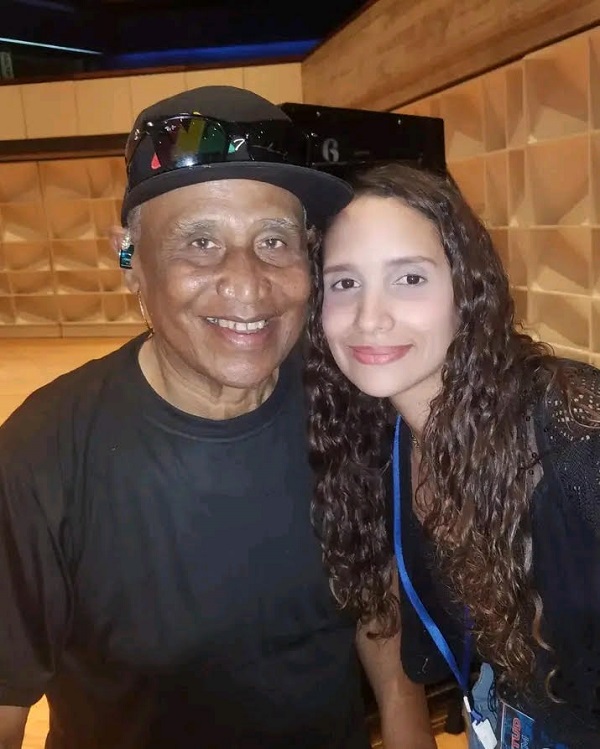
Nesmary recently received his speech certificate at the Elac of Santa Rosa University. Being one of the few female voices in Los Teques and all the Altos Mirandinos that has the perfect formula to brighten your afternoons in the company of a great audio operator known as Carlos “Lolo” Marrero the duo that is delighting you and dictating catedra quoting those words of the renowned singer Roberto Lugo “If you want to listen to a tasty salsa tune in to Ritmo Sabor y Salsa there is no hay más na”.
Also Read: Lizna Tovar winner in the category Voice Over of the year 2022 in Canary Islands Tenerife