• Skip to primary navigation
  • Skip to main content

International Salsa Magazine

  • HOME
  • Previous editions
    • 2026
      • ISM / August 2026
      • ISM / July 2026
      • ISM / June 2026
      • ISM / May 2026
      • ISM / April 2026
      • ISM / March 2026
      • ISM / February 2026
      • ISM / January 2026
    • 2025
      • ISM / December 2025
      • ISM / November 2025
      • ISM / October 2025
      • ISM / September 2025
      • ISM / August 2025
      • ISM / July 2025
      • ISM / June 2025
      • ISM / May2025
      • ISM / April 2025
      • ISM / March 2025
      • ISM / February 2025
      • ISM / January 2025
    • 2024
      • ISM / December 2024
      • ISM / November 2024
      • ISM / October 2024
      • ISM / September 2024
      • ISM / August 2024
      • ISM / July 2024
      • ISM / June 2024
      • ISM / May 2024
      • ISM / April 2024
      • ISM / March 2024
      • ISM / February 2024
      • ISM / January 2024
    • 2023
      • ISM / December 2023
      • ISM / November 2023
      • ISM / October 2023
      • ISM – September 2023
      • ISM – August 2023
      • ISM July 2023
      • ISM Edition June 2023
      • ISM – May 2023
      • ISM April 2023
      • ISM March 2023
      • ISM February 2023
      • ISM January 2023
    • 2022
      • ISM December 2022
      • ISM November 2022
      • ISM October 2022
      • ISM September 2022
      • ISM August 2022
      • ISM July 2022
      • ISM June 2022
      • ISM May 2022
      • ISM February 2022
      • ISM January 2022
    • 2021
      • ISM December 2021
      • ISM November 2021
      • ISM October – 2021
      • ISM September 2021
      • ISM August 2021
      • ISM July 2021
      • ISM May 2021
      • ISM April 2021
      • ISM June 2021
      • ISM March 2021
      • ISM February 2021
      • ISM January 2021
    • 2020
      • ISM December 2020
      • ISM November 2020
      • ISM October 2020
      • ISM September 2020
      • ISM August 2020
      • ISM July 2020
      • ISM June 2020
      • ISM May 2020
      • ISM April 2020
      • ISM March 2020
      • ISM February 2020
      • ISM January 2020
    • 2019
      • ISM December 2019
      • ISM November 2019
      • ISM October 2019
      • ISM Septembre 2019
      • ISM August 2019
      • ISM July 2019
      • ISM June 2019
      • ISM May 2019
      • ISM April 2019
      • ISM March 2019
      • ISM February 2019
      • ISM January 2019
    • 2018
      • ISM December 2018
      • ISM November 2018
      • ISM October 2018
      • ISM September 2018
      • ISM August 2018
      • ISM July 2018
      • ISM June 2018
      • ISM May 2018
      • ISM April 2018
      • ISM March 2018
      • ISM February 2018
      • ISM January 2018
    • 2017
      • ISM December 2017
      • ISM November 2017
      • ISM October 2017
      • ISM September 2017
      • ISM August 2017
      • ISM July 2017
      • ISM June 2017
      • ISM May 2017
      • ISM April 2017
      • ISM March 2017
      • ISM February 2017
      • ISM January 2017
    • 2016
      • ISM December 2016
      • ISM November 2016
      • ISM October 2016
      • ISM September 2016
  • Spanish
  • Download Salsa App
    • Android
    • Apple

Search Results for: music

Puerto Rican singer Héctor Luis Pagán greets us and supports us

We have received a very warm greeting from our great friend, Puerto Rican singer-songwriter Héctor Luis Pagán, who has thanked us for our continued support for his prolific musical career and gave us a biography in which we can read some of the most important facts of his time in the music industry. Below are some of the most significant highlights of his career.

Hector creating music
Héctor Luis Pagán creating music in his studio (1)

How and when Héctor began his music career

Héctor’s first contact with music was when he was just a seven-year-old boy who, before he could even read or write effectively, had already composed his first song, which is strong evidence the gifts that would later define his adulthood. A few years later, that same song would be recorded by its creator, being part of Héctor’s first experience as a singer in New York City.

From that very day, the artist has composed approximately 500 songs, and many of them have been recorded by other renowned prestigious artists, which led Héctor to be considered as a prolific and talented composer whom the biggest names turned to for guaranteed future hits.

Career as a Vocalist

As for his career as a vocalist, Héctor has also made great achievements worthy of mention. Thanks to his vocal skills, he performed on large international stages, which is how he caught the attention of none other than Ray Castro, owner and musical director of Conjunto Clásico. 

Héctor posing
Héctor Luis Pagán posing for the camera (1)

Seeing what he was made of, Castro invited him to join the legendary group as lead vocalist, a position he retained for over 17 years. During those years, he toured extensively across many countries where he shared the stage with some of salsa glories, such as Victor Manuelle, Willie Colón, El Gran Combo de Puerto Rico, and many more.

At that stage, the artist also recorded the lead vocals for the album ”Si Ella Estuviera”, which included one of his most important compositions, “Esa Tarde.” The inclusion of one of his own songs on the album was an important thing for his career, as the group typically performed only songs by its founder, Ramón Rodríguez. This recognition of his talent was extremely important for his career and prepared him for what would come next.

Song by Héctor
Cover of the song Naci Pa’ Esto by Héctor Luis Pagán and Eduardo Padua (1)

Héctor’s Career Today

Today, Héctor’s evolution as an independent artist has not stopped, which has allowed him to explore his creativity in a way that he never could before. Just by the year 2025, he released his first solo album, titled “A Mi Estilo,” showing how delighted he was with his independence. This new project is composed entirely of original material written by him.

At this time, he is developing a major project he called “12 Capítulos,” which is designed to last all year around with a new track released each month. In addition to fully exploring his role as a composer, the project features a series of guest artists and musicians who embellish the work done.

After an impressive decades-long career and an extremely extensive catalog of songs he wrote, Héctor Luis Pagán continues to contribute to the evolution of salsa and to honor his Latin roots.

Johnny Cruz ISM

Read also: ‘‘El Griego Rumbero’’ visited the Salsa Museum and donated some objects
Luis Enrique’s “Hoy y Siempre” Tour Lands at the Choliseo

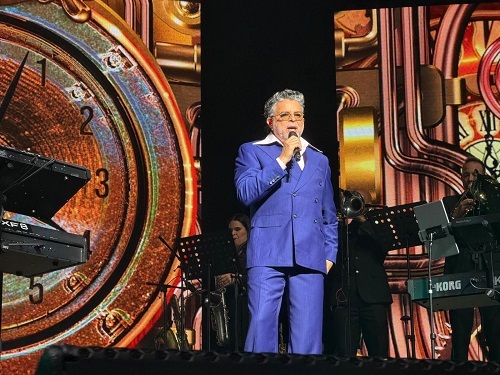
On Saturday, May 2, 2026, Luis Enrique brought his “Hoy y Siempre” concert to the Coliseo de Puerto Rico. Produced by TM Entertainment in a promotional partnership with radio station Z-93, the salsa vocalist returned to Puerto Rico to revisit his rise to stardom in the very place his musical journey began.

During the celebration, Luis Enrique had the brilliant musical direction of maestro Ceferino Cabán

Throughout the celebration, Luis Enrique was backed by the brilliant musical direction of Maestro Ceferino Cabán, whom he introduced as his “comrade of many battles.”

The “Prince of Salsa” spent the night acknowledging that, while Nicaraguan by birth, he came into his own musically on the Isla del Encanto. From the moment he took the stage, Luis Enrique basked in the crowd’s affection as they sang along at the top of their lungs to the hits he has cultivated since the start of his career.

A Journey Through the Hits

The opening set featured an energetic, beaming artist performing tracks like “Lo que fui, soy y seré,” “Mi mundo,” and “Dando y dando.” Shortly after, he moved into “Tú no le amas, le temes,” “Lo que pasó entre tú y yo,” and “Amiga.”

Luis Enrique
On Saturday, May 2, 2026, Luis Enrique presented his concert “Hoy y siempre” at the Coliseo de Puerto Rico.

Later, the atmosphere shifted to a patriotic tribute honoring both his Nicaraguan roots and his deep “Boricua” sentiment for the land that embraced him at the start of his career. This segment included:

  • “Autobiografía”
  • “Añoranza”
  • “Borikén” (a duet with Hermes Croatto)
  • “Amanecer borincano” — a moment where Luis Enrique once again adopted Puerto Rico as his second homeland.
  • “El amor es algo más”

The traditional instruments of Puerto Rican folk music—which continue to evolve across the island’s interior—took center stage during what will be remembered as a historic night for salsa. The cuatro was masterfully played by Christian Nieves, while the güiro de marimbo was handled by Jorge Yadiel Santos, who also provided backing vocals.

New Beginnings and Grand Finales

The soloist then transitioned into his more romantic repertoire with timeless favorites like “¿Quién eres tú?” (a duet with Norberto Vélez), “¿Cómo volver a ser feliz?” and “La mañana.” He also treated the audience to a premiere of an upcoming track titled “Nombre y apellido.” Luis Enrique noted that this new song was arranged and produced by the Puerto Rican producer, composer, and pianist Marcos Sánchez.

The prince of salsa celebrated the night by acknowledging that, although Nicaraguan by birth

The show reached its peak with “Así es la vida” and a medley featuring “Desesperado,” “Solo,” and “Compréndelo.” These were followed by “Sonríe” (a duet with David Rivera) and “Date un chance,” tracks that paved the way for a high-energy finale.

The performance proved that Luis Enrique remains in peak vocal and physical form. The multi-instrumentalist bid farewell to the island that saw him “born” as a salsa star with “San Juan sin ti” and his global smash “Yo no sé mañana.”

Bella Martinez Puerto Rico

 Read Also: Tony Vega Celebrates Half a Century of Romantic Salsa in Puerto Rico

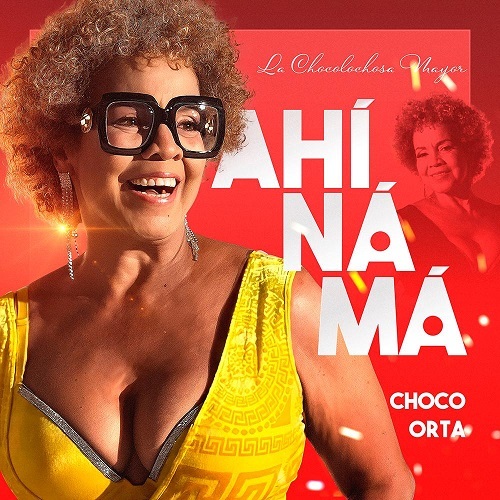
“Choco Orta” Celebrates with New Single ‘Ahí na má’

The Puerto Rican sonera, percussionist, and producer “Choco Orta” is riding high with the release of her latest single.

“Choco Orta” de celebración con su nuevo sencillo ‘Ahí na má’

With this rendition of ‘Ahí na má’ penned by Cuban composer Zenón Abdón Suárez and arranged by Venezuelan pianist David Silva—“Choco” reaffirms her artistic identity, her interpretive power, and her enduring place in contemporary salsa.

In Puerto Rico, fans still fondly remember the triumphant concert celebrating the multi-talented artist’s three decades in salsa, held on April 6, 2019, at the Santurce Fine Arts Center (Centro de Bellas Artes). Throughout her impeccable career, the dancer and theater professor has earned numerous prestigious accolades.

In this latest recording, “Choco Orta” delivers a performance deeply rooted in the essence of salsa. The track has a storied history, previously recorded by legends such as Ismael Rivera with Cortijo y Su Combo, Frankie Vázquez with Los Soneros del Barrio, and Rico Walker with La Puertorriqueña, among others. According to the press release accompanying the release: “’Ahí na má’ captures the authentic language of the barrio, where the soneo becomes a narrative and a genuine connection with the audience.”

La sonera, percusionista y productora puertorriqueña, “Choco Orta”

This release was crafted specifically with the dancer in mind. The vocal tracking for the single took place at Willie González’s studio, under the expert engineering of Ceferino Cabán, while mixing and mastering were handled by José Guerrero at JosMastering in Venezuela. The cover art is the work of International Disseny.

Since her early days in Santurce, the seasoned soloist has carved out her own space in a historically male-dominated industry by focusing on her craft and growth. In an interview with Tele Once, “Choco” highlighted how her environment—steeped in a powerful salsa tradition—was instrumental in shaping her musical identity.

“Choco” dice reafirmar su identidad artística

“Choco Orta” stands as an exceptional example of the importance of soneo and improvisation as vital tools for communication and maintaining high-octane energy on stage.

Bella Martinez Puerto Rico

Read Also: Choco Orta, The Queen of Flavor

Tony Vega Celebrates Half a Century of Romantic Salsa in Puerto Rico

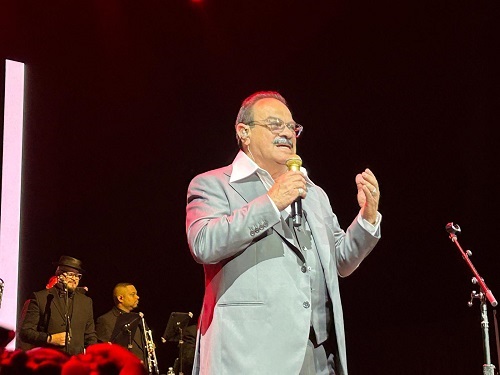
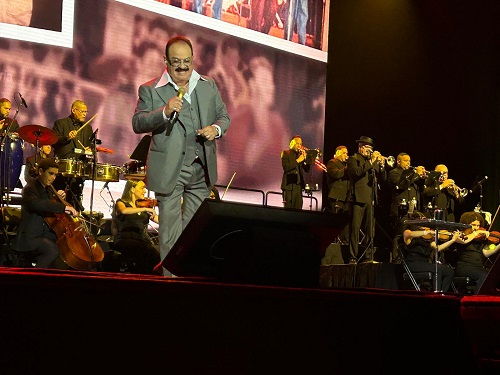
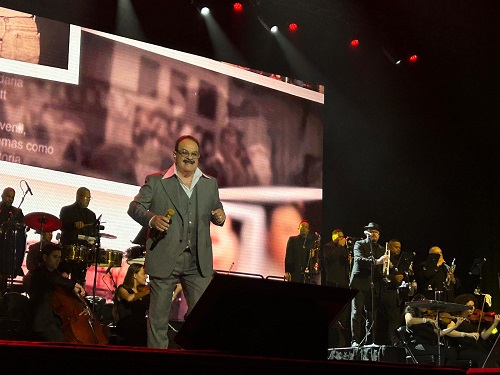
On Saturday, April 25, 2026, the Coca-Cola Music Hall was swept up in the sounds of salsa as Tony Vega took the stage for his concert “49+1: Half a Century of Romantic Salsa.” Thanks to the production of Alexandra Fuentes and a promotional partnership with the radio station Salsoul, the legendary vocalist returned to Puerto Rico for a night filled with music, nostalgia, and profound emotion.

Tony Vega con su director musical, Jota Ruiz Imagenes Jorge Mas

Throughout the celebration, Vega was backed by the musical direction of the virtuous instrumentalist, composer, singer, and independent producer known in the salsa world as Jota Ruiz, of the prestigious Ruiz de Ponce musical dynasty. Jota led an elite ensemble featuring:

  • Savier Díaz (congas), Edwin Clemente (timbales), Jorge Mercado (bongo), Juan Rivera (piano), and Alexis Pérez (bass).
  • José “Pucho” Ruiz (the Ruiz family patriarch) and Víctor Ambert on trumpets.
  • César Ayala and Julio Hernández on trombones.
  • Fernando Muscolo on keyboards.
  • Hugo Maysonet and Alejandro Villegas on backing vocals.
  • A string section composed of Jonelys Ruiz, Sairilis Meléndez, Sinaí González, Sofía Acosta, Orlando Rivera, and César Jacomino, with Luis Rodríguez providing general assistance.
  • Tony Vega recordando su etapa con Eddie Palmieri Tony Vega con su director musical, Jota Ruiz Imagenes Jorge Mas
    Tony Vega recordando su etapa con Eddie Palmieri Tony Vega con su director musical, Jota Ruiz Imagenes Jorge Mas

Tony Vega’s performance made it clear that his storied career has been a cornerstone of salsa history, particularly within the salsa romántica movement. The audience made the Coca-Cola Music Hall in San Juan vibrate, singing at the top of their lungs to the many hits Vega has placed at the top of the charts over the decades.

Tony Vega y la orquesta acompañante Tony Vega con su director musical, Jota Ruiz Imagenes Jorge Mas

The artist of Puerto Rican descent structured his set to detail the various stages of his brilliant career. He opened the night with “Cosquillita,” representing his professional debut alongside Raphy Leavitt. He then playfully performed “Feo pero sabroso,” a nod to his time in the recording studio with Louie Ramírez, followed by “El cuarto” and “Vámonos pa’l monte” as a tribute to his artistic growth under the mentorship of Eddie Palmieri.

Tony Vega y su sección de percusión Tony Vega con su director musical, Jota Ruiz Imagenes Jorge Mas

A deeply significant and nostalgic moment arrived with a medley chronicling his years with Willie Rosario, prompting the crowd to sing even louder to “Busca el ritmo” and “Mi amigo el payaso.”

From there, the vocalist reminisced about the transition to his ongoing solo career. He shared the story of his historic contract with Ralphie Mercado of RMM, which, as Tony recalls, was famously signed on a napkin “without any formalities.” From this era, he highlighted staples such as “Yo me quedo,” “Tu prenda tendida,” “Lo mío es amor,” “Dile,” “Tengo curiosidad,” “Uno mismo,” and “Mi iglesia,” which he performed as a duet with the stellar guest Alex D’ Castro. He continued the marathon of hits with “¿Dónde estás?,” “Deja,” “Esposa,” “Si me miras a los ojos,” “Si yo vuelvo a encontrarla,” “Fui la carnada,” “Ella es,” “Olvídalo ya,” “Carita de sol,” “Haremos el amor,” “Esa mujer,” and “Aparentemente.”

Tony Vega, concierto CCMH Tony Vega con su director musical, Jota Ruiz Imagenes Jorge Mas

The closing theme, “Déjame soñar,” stirred the singer’s patriotic pride and featured a powerful timbal solo by Edwin Clemente, followed by guest appearances from Gerardo Rivas and his son, Gerardo Gabriel Rivas.

Tony Vega, Trombonista César Ayala al fondo Tony Vega con su director musical, Jota Ruiz Imagenes Jorge Mas

Throughout the evening, Tony Vega expressed his gratitude to those instrumental in his success. He showed profound respect for Humberto Ramírez, who is widely credited with laying the foundation for Tony Vega’s signature sound and establishing the musical concept for his orchestra at its inception. Another noteworthy moment occurred during an improvisation in “Déjame soñar,” where he affectionately declared José Alberto “El Canario” an honorary “Boricua.”

As he had anticipated, Tony Vega experienced the concert as a true celebration of all he has achieved in his 50-year career. He emphasized how much it meant to be surrounded by his people, “sharing music with those who have been with me from the start, right where it all began.”

Bella Martinez Puerto Rico

Photography: Jorge Más

Read Also: Bella Martinez, the irreverent Salsa writer

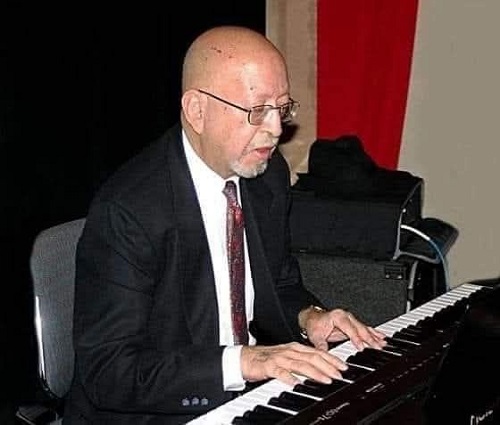
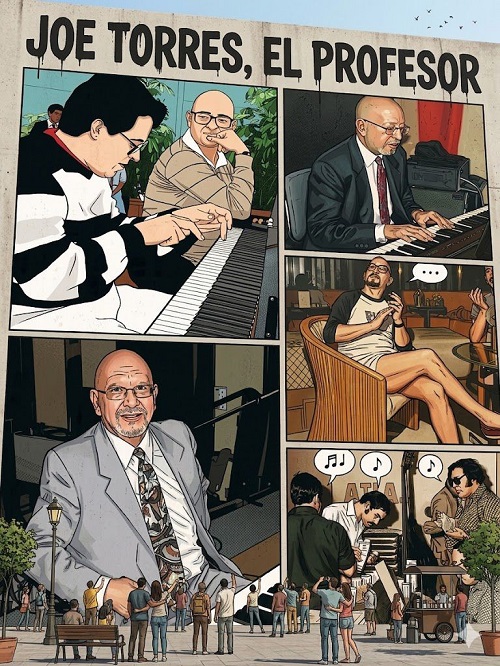
The Piano That Schooled the World the Eternal Legacy of “Professor” Joe Torres

The history of salsa is not only written by the voices of its idols or the thunder of its brass; it is written, fundamentally, on the black and white keys of those who knew how to sustain the pulse of an era.

On April 13, 2020, in the quiet of a Bronx hospital, the “backbone” of Salsa Dura passed away at the age of 76: José Manuel Torres, known universally as “Professor Joe.”

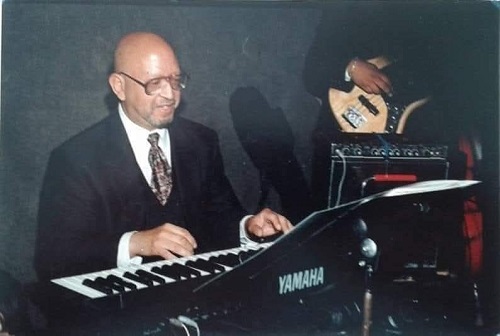
Jose Manuel Torres Professor Joe Torres passed away on this day, April 13, 2020, in the Bronx, New York City, at the age of 76

Born in Manhattan on November 29, 1943, a son of the Puerto Rican diaspora from Guayama and Ponce, Torres embodied the pure essence of the Nuyorican.

Raised on Fox Street, his destiny was sealed in the hallways of P.S. 52 an elementary school that would eventually become the academic sanctuary of Latin music in the South Bronx.

Excellence as the Standard: From Neighborhood Sound to Musical Glory

His nickname, “The Professor,” was no mere poetic license. In a musical ecosystem where many relied on intuition, Joe possessed an almost mathematical skill: sight-reading.

Un pianista maravilloso, que no se parece a nadie

His technical precision allowed him to navigate elegantly between formal discipline and “street” flavor (sabor).

After debuting in the 1960s with the “King of the Bass,” Bobby Valentín, on seminal albums like Bad Breath, his career took a definitive turn when he joined the orchestra of a young, rebellious Willie Colón.

Replacing the virtuoso Mark Dimond, Torres didn’t just fill a void; he defined an aesthetic. For a quarter-century, he was the harmonic architect behind the two greatest giants of the genre: Willie Colón and Héctor Lavoe.

“As the pianist for the band, Professor Joe Torres was excellent,” Colón would recall years later.

It is his piano that resonates in the urban chronicles of Cosa Nuestra; the piano that provides the festive nostalgia in both volumes of Asalto Navideño a cornerstone of Puerto Rican identity and the piano that sustains the rhythmic tension in classics like The Big Break (La Gran Fuga) and Lo Mato.

There was no Fania milestone where Joe did not leave his mark, from the social lyricism of Siembra and Maestra Vida with Rubén Blades, to the raw power of Lavoe’s solo career.

Joe acompañó a Willie Colón y Héctor Lavoe en gran parte de sus grabaciones

Humility in the Shadows: The Man and the Legend

Despite participating in more than thirty productions that are now considered world cultural heritage, Joe Torres never felt the urge to claim the spotlight of a frontman.

As his colleague José Mangual Jr. noted, his humility was as vast as his talent. He preferred the rigor of the studio and the camaraderie of the stage, balancing his musical genius with his work as a computer technician a duality that spoke to his sharp intelligence and adaptability.

El Piano que Dictó Cátedra el Legado Eterno del “Profesor Joe” Torres

His legacy was celebrated in the year 2000 during the historic reunion concert of the “P.S. 52 Alums,” immortalized in the documentary From Mambo to Hip Hop. There, surrounded by titans like Ray Barretto and Manny Oquendo, Joe remained the same: a man with a kind smile and a sharp mind who, according to Blades, represented the true “gentlemanliness” of salsa.

Today, years after his passing, the void at the piano bench remains felt. The “Professor” didn’t just teach people how to read music; he taught that true greatness does not require noise.

His music lives on in every descarga, reminding us that as long as there is a piano playing in the Bronx, the echo of José Manuel Torres will never stop schooling the world.

Also Read: International Salsa Magazine presents essential trivia and facts about Héctor Lavoe.


  • « Go to Previous Page
  • Page 1
  • Interim pages omitted …
  • Page 57
  • Page 58
  • Page 59
  • Page 60
  • Page 61
  • Interim pages omitted …
  • Page 316
  • Go to Next Page »

International Salsa Magazine (ISM) is a monthly publication covering salsa activities around the world and has been publishing since 2007. It is a worldwide network of volunteers coordinated by ISM Magazine. Together, we work to strengthen salsa events around the world.