• Skip to primary navigation
  • Skip to main content

International Salsa Magazine

  • HOME
  • Previous editions
    • 2026
      • ISM / August 2026
      • ISM / July 2026
      • ISM / June 2026
      • ISM / May 2026
      • ISM / April 2026
      • ISM / March 2026
      • ISM / February 2026
      • ISM / January 2026
    • 2025
      • ISM / December 2025
      • ISM / November 2025
      • ISM / October 2025
      • ISM / September 2025
      • ISM / August 2025
      • ISM / July 2025
      • ISM / June 2025
      • ISM / May2025
      • ISM / April 2025
      • ISM / March 2025
      • ISM / February 2025
      • ISM / January 2025
    • 2024
      • ISM / December 2024
      • ISM / November 2024
      • ISM / October 2024
      • ISM / September 2024
      • ISM / August 2024
      • ISM / July 2024
      • ISM / June 2024
      • ISM / May 2024
      • ISM / April 2024
      • ISM / March 2024
      • ISM / February 2024
      • ISM / January 2024
    • 2023
      • ISM / December 2023
      • ISM / November 2023
      • ISM / October 2023
      • ISM – September 2023
      • ISM – August 2023
      • ISM July 2023
      • ISM Edition June 2023
      • ISM – May 2023
      • ISM April 2023
      • ISM March 2023
      • ISM February 2023
      • ISM January 2023
    • 2022
      • ISM December 2022
      • ISM November 2022
      • ISM October 2022
      • ISM September 2022
      • ISM August 2022
      • ISM July 2022
      • ISM June 2022
      • ISM May 2022
      • ISM February 2022
      • ISM January 2022
    • 2021
      • ISM December 2021
      • ISM November 2021
      • ISM October – 2021
      • ISM September 2021
      • ISM August 2021
      • ISM July 2021
      • ISM May 2021
      • ISM April 2021
      • ISM June 2021
      • ISM March 2021
      • ISM February 2021
      • ISM January 2021
    • 2020
      • ISM December 2020
      • ISM November 2020
      • ISM October 2020
      • ISM September 2020
      • ISM August 2020
      • ISM July 2020
      • ISM June 2020
      • ISM May 2020
      • ISM April 2020
      • ISM March 2020
      • ISM February 2020
      • ISM January 2020
    • 2019
      • ISM December 2019
      • ISM November 2019
      • ISM October 2019
      • ISM Septembre 2019
      • ISM August 2019
      • ISM July 2019
      • ISM June 2019
      • ISM May 2019
      • ISM April 2019
      • ISM March 2019
      • ISM February 2019
      • ISM January 2019
    • 2018
      • ISM December 2018
      • ISM November 2018
      • ISM October 2018
      • ISM September 2018
      • ISM August 2018
      • ISM July 2018
      • ISM June 2018
      • ISM May 2018
      • ISM April 2018
      • ISM March 2018
      • ISM February 2018
      • ISM January 2018
    • 2017
      • ISM December 2017
      • ISM November 2017
      • ISM October 2017
      • ISM September 2017
      • ISM August 2017
      • ISM July 2017
      • ISM June 2017
      • ISM May 2017
      • ISM April 2017
      • ISM March 2017
      • ISM February 2017
      • ISM January 2017
    • 2016
      • ISM December 2016
      • ISM November 2016
      • ISM October 2016
      • ISM September 2016
  • Spanish
  • Download Salsa App
    • Android
    • Apple

Search Results for: music

Andrés Cepeda & Mike Bahia Artists in November of HTV

North America / USA/ Miami

Andrés Cepeda & Mike Bahia

With a history of over 15 years, Colombian singer- songwriter Andrés Cepeda and Mike Bahia, representative of the urban genre, exclusively relate their experiences with each of their productions and the musical genres for which they have traveled.

Andrés Cepeda

Andrés Cepeda
Andrés Cepeda

The Colombian singer Andrés Cepeda, has been one of the most renowned artists of Latin American music scene. This Latin Grammy winner has been wowing his audience with his successes year after year since he began his career. The Colombian began his single career in 1999 releasing a first album: “Sé morir” disc in just one month received platinum status, framing in nearby rhythms like pop, bolero and the ballad.

In 2001 he released his second production, “El Carpintero”, for which he received double platinum.

In 2002 he published “Para amarte mejor”. This production was the first of that kind in Colombia. In 2005 he presented his work “To better love”. This album received platinum disc for sales in Colombia.

1- Andrés Cepeda
1- Andrés Cepeda

In 2007 he released a remake of “Para Amarte Mejor” in which two new songs he composed with master Jorge Luis Piloto included: “Pronóstico” and “Si fueras mi enemigo” songs that gave him international recognition and won him Latin Grammy nomination for Best Male Pop Album … “Día tras día” became after its launch in 2009, one of the most successful albums of his career, receiving gold and platinum discs.

This gave rein to that was nominated this year in three of the most important categories of the Latin Grammy Awards: Song of the Year, Album of the Year and Best Male Pop Vocal Album.

2- Andrés Cepeda
2- Andrés Cepeda

In 2012 Andrés Cepeda presented to the public his seventh album “Lo major que hay en mi vida.” Cepeda received four nominations for this album by The Latin Recording Academy, taking for the first time Latin Grammy in the category “Best Traditional Pop Vocal Album”.

He was joined for this award three prizes that gave the Nuestra Tierra 2013 Awards in the categories Best Album of the Year, Best New Artist and Best Pop Performance. Additionally, he received double platinum. In 2015 he released his latest production, “Mil Ciudades” album that featured the participation of leading industry figures.

Andrés Cepeda flyers

Mike Bahia

Mike Bahia
Mike Bahia

Meanwhile, in the second installment of HTV En La Mira of the month arrives on Thursday, November 17 the reggaetonero, Mike Bahia, one of the great musical promises of the moment.

1- Mike Bahia
1- Mike Bahia

Bahía had already begun his career by participating in the reality show “La Voz Colombia” (second edition), where he was a pupil of Fanny Lu. Then he debuted as a soloist in 2014 with the single ‘Buscándote’, a song produced by Montana The Producer (who worked for J Alvarez and Chris G), Juan Jhail (who collaborated on projects Kevin Roldan and alkylated) and Ronny Watts (alkylated and Hernán Saraza).

2- Mike Bahia
2- Mike Bahia

Later in his still brief career, Mike Bahía launched four singles: “Estar Contigo” (2014), ‘Buscándote (remix)’, ‘Tarde’ and ‘La Muñeca’ (all 2015). The latter will integrate the first album of Mike, which will be called ‘Soy Yo’. Mike himself wrote ‘La Muñeca’ in collaboration with Juan Jahil and Juan Gálvez, alkylated vocalist.

3- Mike Bahia
3- Mike Bahia

4- Mike Bahia
4- Mike Bahia

For his part, the director Nuno Gomez, who worked with alkylated in several videos, directed the clip in various locations in Venezuela. So you know, do not miss these two artists and enjoy their confessions in HTV because HTV it gets good!
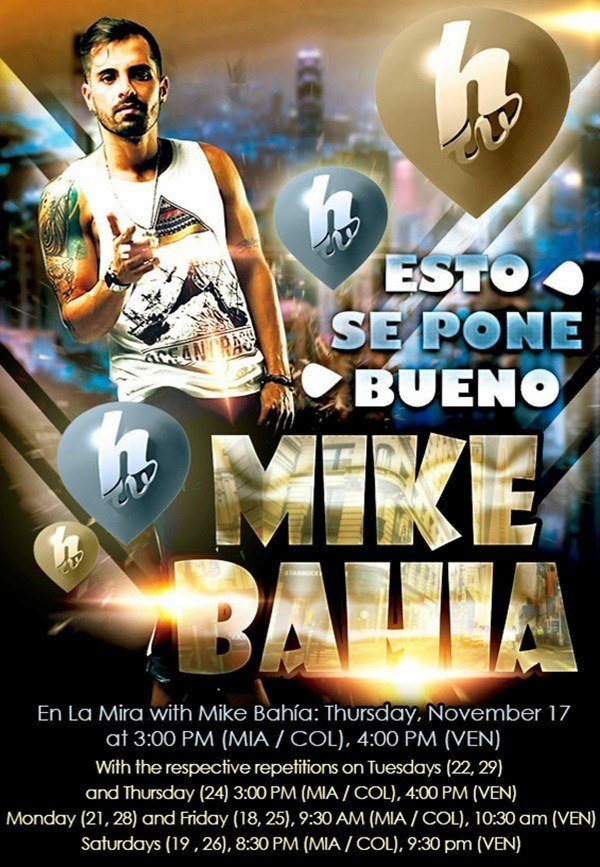
Mike Bahia flyers
Mike Bahia flyers

Ismael Miranda

North America / USA / New York

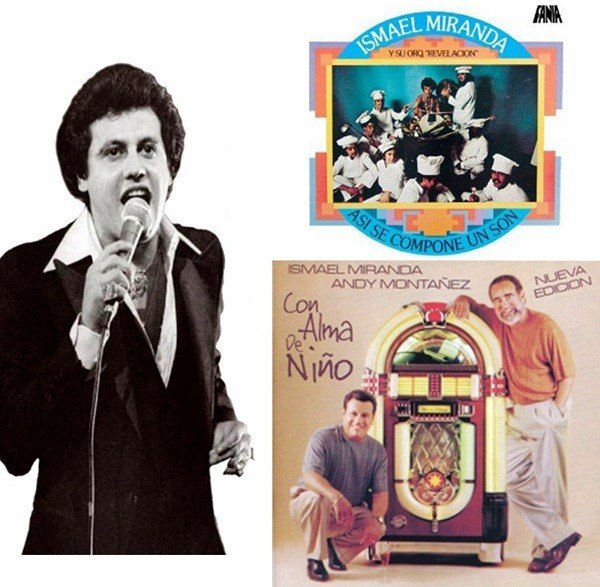
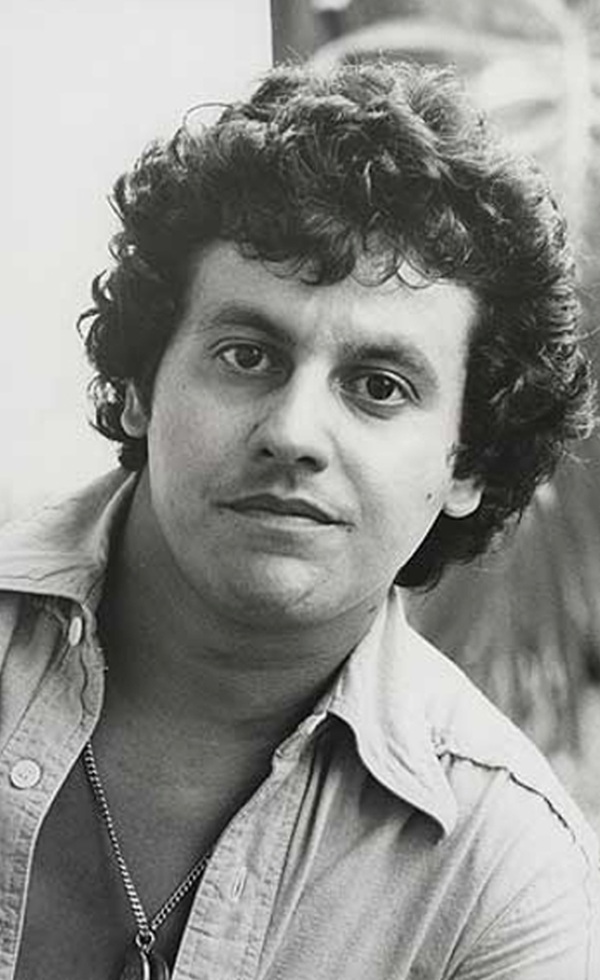
Ismael Miranda was born in the village of Aguada, Puerto Rico, on 20 February 1950. At an early age he moved to New York, where he began his passion for music. In 16, he recorded his first hit song “Rumbón melon” with Joey Pastrana. Then, he became part of the Orchestra Harlow in 1967, with which he achieved success of the song “Abran Paso”.

Ismael Miranda
Ismael Miranda

Ismael Miranda - Photo
Ismael Miranda – Photo

Ismael dabbled solo in 1972, with a new production called “Opportunity”. He also formed his own band called “The Revelation” and recorded another CD called “Así se compone un son”. In addition to having other notable songs, the title track was a resounding success in Latin America, the United States and Europe. The next year saw the light the album In Fa Menor, appearing again the song of the same title, “In Fa Menor”, among other successes.

Miranda continued producing hits, with songs such as “Borinquen tiene Montuno”, “La Cama Vacía”, “La Copa Rota”, “Como Mi Pueblo” y “Las Cuarentas; all were widely broadcast radio media. His compositions also achieved success with pieces like “Señor Sereno”, “Abren Paso”, “Lupe, Lupe” and “Pa ‘Bravo Yo” song made famous by the Cuban salsero, Justo Betancourt.

Ismael Miranda - Collash
Ismael Miranda – Collash

In 1974, the founders of the Fania, Jerry Masucci and Johnny Pacheco, asked Ishmael to form part of the Fania All Stars, where he was dubbed “El Niño Bonito de la Salsa” by being the youngest of all members. In the 80’s, he found success with the Fania, such as “No me digan que es muy tarde” and “Galera tres.”

Also, Ismael created his own label, under which he recorded several productions, including “Por el buen camino”, of which the theme “Careta” was a hit in 1985, plus two holiday productions. The early stage salsa enjoyed its best, and the debut of Miranda with his own band, Orquesta Revelation, could not be timelier.

Ismael Miranda - Photo 1
Ismael Miranda – Photo 1

For 2000, Ismael recorded several productions under the direction of Gilberto Santa Rosa, titled “Vengo con todo”, “Tequila and ron” (which was nominated for a Grammy in 2003), and “Special Edition”. At 2005, reached #1 on the Billboard chart, with the theme “Se fue y me dejó” with Andy Montanez and Cheka, produced by Sergio George. In 2007, he recorded his first Christian production called “Buscando el Camino” in which the theme “Como el Águila” achieved great success. In 2008, he launched the production called “De regreso al son”. For 2011, Ismael recorded his second Christian production “Aferrado a ti”, which issues “Francotirador” and “Sabes que te amo” were big hits.

Ismael Miranda - Photo 2
Ismael Miranda – Photo 2

In 2014, after a successful tour to mark its 45th anniversary in the Salsa, Ismael met with Victor Manuelle, to whom he delegated the production of his latest album “Son 45”. This production is very modern, but retains the classical influence of salsa, and has proven to have the support of the whole public salsero. From his first days on the market, this new album, started climbing positions in the lists of the prestigious music magazine Billboard, with the theme that gives the name to the album “Son 45”.

Ismael Miranda - Photo 3
Ismael Miranda – Photo 3

Entered 2015, The Pretty Boy of Salsa positioned in the first place with the same subject, under the category “Air Play” magazine, the second member of the Fania All-Star to reach the #1 position for the second time, place before conquered only by the Guarachera del Mundo, Celia Cruz. Ismael made history again when launching his second promotional theme of this production, “Bajo, piano and bongo” again ranked at #1 on the Billboard charts in the same category, becoming the most #1’s has reached among members of Fania. As if that were not enough, this production has also been nominated for a Latin Grammy in the category “Best Salsa Album”.

Ismael Miranda - Photo 4
Ismael Miranda – Photo 4

During the course of his great career, Miranda has recorded more than 20 albums and has performed with notable artists such as Nicky Marrero, Hector “Bomberito” Zarzuela, Reinaldo Jorge, Ismael Quintana, Willie Colon, Ray Barreto and Luis ‘Perico’ Ortiz.

Ismael Miranda - Flyers
Ismael Miranda – Flyers

Subrosa

North America / USA / New York
Subrosa - Photo 1
Subrosa – Photo 1

Greetings to our loyal readers. This time we bring you an excellent nightclub that is well worth visiting. It is located in the city of New York and is open daily at the following times: Monday – Friday from 18:00 to 23:00 and Saturday-Sunday: 18:00-03:00

Subrosa besides having a magnificent location, its recreational areas are unsurpassed. It has an eclectic listening room dedicated to raising awareness of the music, art and culture. Also has live music every night with the best Latin and international artists and similarly has an intimate atmosphere for musicians and fans alike.

Subrosa - Photo 2
Subrosa – Photo 2

The main features of this nightclub are:

Subrosa besides having a magnificent location, its recreational areas are unsurpassed. It has an eclectic listening room dedicated to raising awareness of the music, art and culture. Also has live music every night with the best Latin and international artists and similarly has an intimate atmosphere for musicians and fans alike.

Subrosa - Photo 3
Subrosa – Photo 3

Capacity to accommodate 150 people. Special creative cocktails with names of different cities in South America and Europe that will give you an extra sensory journey of flavors. The decor is industrial and modern. Magnify state of the art sound and lighting.

So you know if you’re in New York City and do not know where to go dancing Latin music, decide by Subrosa. You will not regret!

And finally, a varied food service. They Have an extensive dinner menu from the popular Bocata Beefsteak (Sirloin Steak Sandwich, Swiss Cheese, Charred Onions, Tomato, Spicy May) with a Salad of Palm (Salad, Carrots, Hearts of Palm, Avocado, Corn with Lemon Dressing) to one delicious Dessert (Chocolate Mousse Flan or Spanish)

Subrosa - Photo 4
Subrosa – Photo 4
  • Address: 63 Gansevoort Street, New York, NY 10014
  • Social Menu: subrosanyc.com
  • Twitter e Instagram: @SubrosaNYC
  • Facebook: Subrosa

The Flavor of Barrio La-33 and the Urban Salsa Revolution

The Birth of Swing in Chilly Bogotá

Bogotá, a city nestled more than 8,600 feet above sea level, cold and prone to drizzle, did not seem in the early 2000s like the most obvious birthplace for one of the 21st century’s most influential salsa orchestras.

El Sabor del Barrio La-33 y la Revolución de la Salsa Urbana

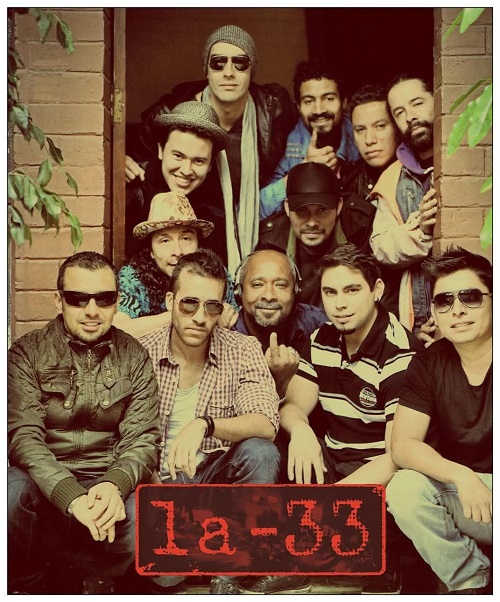
However, in 2001, in the heart of the Teusaquillo neighborhood, La-33 was born. Breaking the stereotype that salsa only flourishes on warm coasts, this band proved that Caribbean flavor (sabor) also runs through the veins of the Colombian capital.

Founded by brothers Sergio and Santiago Mejía (musical director/bassist and keyboardist, respectively), the orchestra took its name from the street where they held their first rehearsals: 33rd Street (Calle 33).

From its inception, the project had a clear identity: to rescue the raw, urban, and gritty sound of 1970s salsa brava, evoking legends like Héctor Lavoe, Willie Colón, and the Fania All-Stars, while injecting it with the attitude, energy of rock, and Bogotá’s gritty street vibe. To finance their first album, the band members saved money earned from their gigs in local bars and nightclubs.

The “La Pantera Mambo” Phenomenon

La-33’s rise to international stardom was no accident, but rather the result of a brilliant recording masterstroke. In 2004, they released their self-titled debut album, La-33. The record included a track that would become their ticket to the world: “La Pantera Mambo.”

This piece a spectacular mambo-rhythm version of Henry Mancini’s cinematic classic, “The Pink Panther Theme” fused jazz, suspense, and a powerhouse horn section.

The song instantly became a radio hit and an essential anthem on dance floors from Cali to Berlin, proving that salsa was not a genre of the past, but a living language capable of reinventing Western pop culture.

El año 2001, en el corazón del barrio Teusaquillo, nació La-33

Dynamic Evolution and Discography

Unlike the salsa romántica orchestras that dominated the commercial hit charts in the ’90s and 2000s, La-33 bet on an organic sound heavily influenced by mambo, jazz, pasodoble, and ska.Their music dispenses with excessive synthesizers, prioritizing instead the raw power of percussion, the brilliance of the horns, and lyrics that narrate daily life, urban chaos, and bohemian nightlife.

Throughout their career, they have built an impeccable musical catalog across several studio albums:

  • La-33 (2004): The debut album featuring “La Pantera Mambo” and “Qué Rico Boogaloo.”
  • Gózalo (2007): Nominated for a Latin Grammy, it solidified their success with tracks like “Bye-Bye” and “Soledad.”
  • Ten Cuidado (2009): A more mature record exploring fusions with ska and jazz.
  • Tumbando por ahí (2013): A tribute to the band’s street-smart, party-loving spirit.
  • Caliente (2016): Their fifth studio production, released to celebrate fifteen years on the scene.
  • Si tú quieres salsa (2019): A return to their roots with a powerful, mature, and refreshed sound.

Global Ambassadors of Colombian Salsa

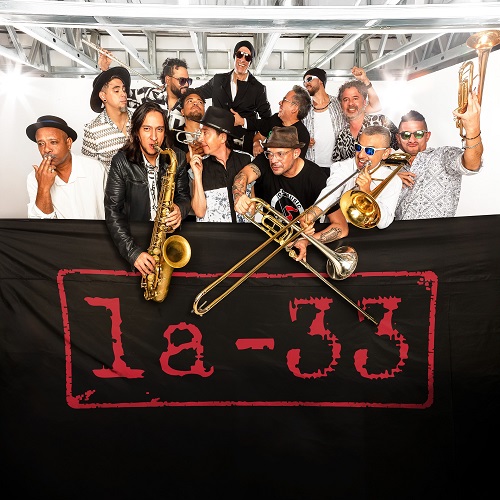
What began as a group of friends rehearsing in a Bogotá house transformed into a global phenomenon. La-33 has toured all five continents, performing at prestigious international events such as the Sziget Festival in Budapest, the Cali Fair (Feria de Cali), and various jazz and world music festivals across Europe, Asia, Africa, and the Americas.

Their ability to get audiences who don’t even speak Spanish dancing is a testament to the universal power of their horn section and rhythmic core.

La 33 El nacimiento del swing en la fría Bogotá

Today, La-33 is not just an orchestra; it is an institution of Colombian alternative music. They proved that salsa can be played wearing leather jackets and a punk attitude while maintaining absolute respect for Afro-Latin roots making it clear that to have swing, all you really need is passion.

Band Members

  • Sergio Mejía (Bandleader and electric bass)
  • Santiago Mejía (Keyboards)
  • Guillermo Celis (Vocals)
  • David Cantillo “Malpelo” (Vocals)
  • Edison Velásquez (Vocals and flute)
  • Alejandro Pérez (Congas)
  • Juan David Fernández “Palo” (Timbales)
  • Diego Sánchez (Bongos)
  • Vladimir Romero (Trombone)
  • José Miguel Vega (Trombone)
  • Adalber Gaviria (Saxophone)
  • Roland Nieto (Trumpet)
  • Javier Galavis (Sound engineer)
  • Ray Fuquén (Field producer)

 Also Read: Colombia’s legendary Grupo Niche and its founder Jairo Varela

Héctor “Tempo” Alomar: The Scorching Voice and the Rhythm Blessed by “El Cantante de los Cantantes”

The Invaluable Legacy of an Afro-Antillean Percussion and Vocal Giant

Héctor “Tempo” Alomar was born on December 28, 1950, in Parada 19 of Santurce, Puerto Rico. A singer, percussionist, and true pedigree sonero, he became an essential figure in salsa music thanks to his outstanding contributions to world-class bands.

His resume included Orquesta La Conspiración, La Diferente, Conjunto Libre, La Charanga Afrocubana, La Charanga América, Orquesta Broadway, Charanga la Tapa, Casanova y su Montuno, Batacumbele, El Combo de Siempre, Zaperoco, Nacho Sanabria’s Orchestra, Grupo ABC, and, in a career-defining run, Roberto Roena’s Apollo Sound. He also led his own musical ensemble under the name Sexteto La 51, his last recording with the legendary and living legend of Fania All Stars Eddie Montalvo.

Héctor Tempo Alomar la Voz Candente y el Ritmo

The remembered former member of Apollo Sound passed away at the age of 70 in his native Puerto Rico on May 9, 2021, leaving a profound void in the world of music collecting and salsa culture.

A Rhythm That Ran Through His Veins

The son of Doña Isabel Román and Don Luis Alomar, young Héctor showed an innate connection with the clave from a very early age. His mother used to recall that the boy would strike the rhythm with any kitchen utensil he could get his hands on, even breaking several glass cups while trying to draw sound from them with silverware.

He made his first professional recording as a minor, at just 15 years old. It happened when producer Joe Blanco invited him to record percussion with Chacón y sus Batirrítmicos, capturing his talent on tracks like “Ahorita va a llover” and “Mi guajira.”

In 1968, he moved to New York City, and by 1970, he reunited with his great childhood friend, maestro Ángel “Cachete” Maldonado. Maldonado introduced him to the city’s music circles, providing the decisive push for him to develop as a lead singer.

Héctor Tempo Alomar nació el 28 de

Blessed by “El Cantante de los Cantantes”

“Tempo” Alomar joined Orquesta La Conspiración as a timbalero, staying with the band for about three years. Later, thanks to a recommendation from trumpeter and arranger José Febres, bandleader Rafy Val recruited him for La Diferente. This gave him his first opportunity to formally record salsa on the album Fuerza Bruta, produced by Larry Harlow.

During his time with La Conspiración, a legendary anecdote took place at New York’s El Hipocampo club, right after a Fania All-Stars concert. Héctor Lavoe, who was scheduled to sing at the club that night, was running late, and the band couldn’t start. “Cachete” Maldonado assured José Mangual Jr. that “Tempo” knew the repertoire and recommended him to step up to the stage.

Out of deep respect for Lavoe, Alomar hesitated but ultimately took the stage to perform “Juana Peña,” winning the applause of the demanding crowd. Halfway through the second song, “No me llores más,” he spotted Héctor Lavoe walking into the venue, and out of sheer awe, he stopped singing. It was Lavoe himself who, from the audience, gestured for him to keep going.

When the performance ended, “El Cantante de los Cantantes” went up to the stage, congratulated him warmly, and encouraged him to keep pursuing his singing career.

Setting the Big Apple Ablaze

Around 1973, once again recommended by “Cachete” Maldonado, he auditioned for maestro Manny Oquendo, who was looking for a lead vocalist for Conjunto Libre. He was accepted immediately. After six months of intense daily rehearsals, the group chained together memorable hits driven by “Tempo’s” voice, such as “No critiques,” “Tú no me quieres,” “Bamboleate,” and “El Changó de María.”

Tempo Alomar El legado incalculable de un gigante de la percusión y el canto afroantillano

These were five golden years with El Libre, a period during which he also recorded an album with Néstor Torres’ La Charanga Afrocubana.

As the 1980s arrived, he joined Charanga América. His versatility and high demand in the New York scene led him to collaborate and record with stellar figures, including Alfredo de la Fe, Johnny Rodríguez, Víctor Paz, Jorge Dalto, and the Latin Percussion label. He also worked with Orquesta Broadway and Casanova y su Montuno, played congas for Pete “Conde” Rodríguez, and played timbales for maestro Eddie Palmieri.

In 1985, he decided to return to Puerto Rico. On the Isla del Encanto, he contributed his talent to flagship ensembles like Batacumbele, Zaperoco, and Héctor Santos’ El Combo de Siempre, sharing the stage in the latter with Ismael Rivera Jr. (Maelito). Additionally, alongside Felo Barrios, he completed a prestigious one-month US tour with the legendary double bassist Israel López “Cachao.”

The Golden Era with Roberto Roena and Apollo Sound

In 1993, while rehearsing with Grupo ABC (where he worked alongside Nacho Sanabria and Roberto Angleró), the legendary Aníbal Vázquez Roberto Roena’s uncle invited him to participate as a vocalist in a special local television recording with Apollo Sound.

Roberto Roena y Tempo Alomar

Roena was captivated by “Tempo’s” style and cadence, even though the vocalist hadn’t fully memorized the lyrics to some of the songs for that TV show. With his characteristic wit, Roena himself wrote the lyrics on large cue cards beneath the TV cameras and instructed the cameraman to avoid close-ups of Alomar, preventing the audience from noticing he was reading.

That chemistry sparked 16 uninterrupted years of back-to-back hits with Apollo Sound and a close, lifelong friendship between Roena and Alomar.

Together, they immortalized musical gems such as “Dale como es,” “El pueblo pide que toque,” “Atrévete conmigo,” “Sr. Bongó,” “Baila y goza,” “Mi mambo pide campana,” and the international smash hit “Cómo te hago entender”—a track that became a salsa anthem and took them to massive venues across Colombia, Panama, Peru, Venezuela, and all of Europe.

During his fruitful tenure with Apollo Sound, “Tempo” also took an active role in selecting session musicians and backing various artists. One of his most remembered cross-genre collaborations was with urban music icon Tego Calderón on his landmark album El Abayarde, where Alomar joined his voice to sing the classic “Planté bandera.”

Héctor “Tempo” Alomar lives on in the memory of music lovers worldwide as a bastion of syncopation, a street-corner sonero, and a true gentleman of rhythm.

Collaboration:

Historia Salsera

Augusto Felibertt

Also Read: It is indisputable that the most popular orchestra in Puerto Rico and South America during the 1970s was Roberto Roena’s Apollo Sound

  • « Go to Previous Page
  • Page 1
  • Interim pages omitted …
  • Page 55
  • Page 56
  • Page 57
  • Page 58
  • Page 59
  • Interim pages omitted …
  • Page 316
  • Go to Next Page »

International Salsa Magazine (ISM) is a monthly publication covering salsa activities around the world and has been publishing since 2007. It is a worldwide network of volunteers coordinated by ISM Magazine. Together, we work to strengthen salsa events around the world.