• Skip to primary navigation
  • Skip to main content

International Salsa Magazine

  • HOME
  • Previous editions
    • 2026
      • ISM / April 2026
      • ISM / March 2026
      • ISM / February 2026
      • ISM / January 2026
    • 2025
      • ISM / December 2025
      • ISM / November 2025
      • ISM / October 2025
      • ISM / September 2025
      • ISM / August 2025
      • ISM / July 2025
      • ISM / June 2025
      • ISM / May2025
      • ISM / April 2025
      • ISM / March 2025
      • ISM / February 2025
      • ISM / January 2025
    • 2024
      • ISM / December 2024
      • ISM / November 2024
      • ISM / October 2024
      • ISM / September 2024
      • ISM / August 2024
      • ISM / July 2024
      • ISM / June 2024
      • ISM / May 2024
      • ISM / April 2024
      • ISM / March 2024
      • ISM / February 2024
      • ISM / January 2024
    • 2023
      • ISM / December 2023
      • ISM / November 2023
      • ISM / October 2023
      • ISM – September 2023
      • ISM – August 2023
      • ISM July 2023
      • ISM Edition June 2023
      • ISM – May 2023
      • ISM April 2023
      • ISM March 2023
      • ISM February 2023
      • ISM January 2023
    • 2022
      • ISM December 2022
      • ISM November 2022
      • ISM October 2022
      • ISM September 2022
      • ISM August 2022
      • ISM July 2022
      • ISM June 2022
      • ISM May 2022
      • ISM February 2022
      • ISM January 2022
    • 2021
      • ISM December 2021
      • ISM November 2021
      • ISM October – 2021
      • ISM September 2021
      • ISM August 2021
      • ISM July 2021
      • ISM May 2021
      • ISM April 2021
      • ISM June 2021
      • ISM March 2021
      • ISM February 2021
      • ISM January 2021
    • 2020
      • ISM December 2020
      • ISM November 2020
      • ISM October 2020
      • ISM September 2020
      • ISM August 2020
      • ISM July 2020
      • ISM June 2020
      • ISM May 2020
      • ISM April 2020
      • ISM March 2020
      • ISM February 2020
      • ISM January 2020
    • 2019
      • ISM December 2019
      • ISM November 2019
      • ISM October 2019
      • ISM Septembre 2019
      • ISM August 2019
      • ISM July 2019
      • ISM June 2019
  • Spanish
  • Download Salsa App
    • Android
    • Apple

Search Results for: rhythm

Dave Valentín is considered one of the most important Latin jazz flautists in history, thanks to his technique and rhythm

Valentín: The Master of the Flute in Latin Jazz.

Dave Valentín is considered one of the most important flutists in the history of Latin jazz, thanks to his technique, rhythm, and vast musical knowledge.
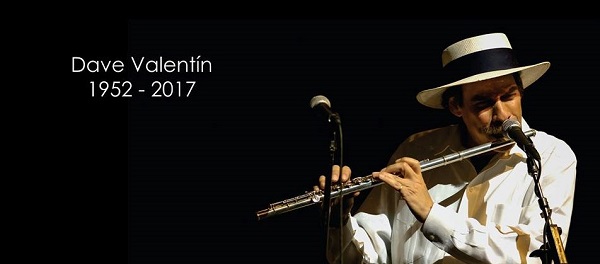
Dave Valentín is considered one of the most important Latin jazz flutists in history, thanks to his technique and rhythm

Born in the Bronx, New York, on April 29, 1952, to Puerto Rican parents from Mayagüez, Valentín grew up in a home filled with music. From the sounds of Tito Rodríguez and Tito Puente to Machito, the musical culture that surrounded him as a child was a major influence. Although he loved the bongos and congas, he joined a Latin group as a timbalero during his teenage years. He played in the “cuchifrito” circuit and in working-class dance halls in New York.

Dave Valentín’s life largely reflects the story of the children of Puerto Rican immigrants in New York who forged their own destiny through hard work, dedication, talent, and family support. In fact, the musician, composer, and arranger himself liked to say that “each person creates their own reality.”

A Legacy-Filled Career

  • GRP Records Pioneer: Valentín was the first artist to sign with the influential GRP record label, which allowed him to consolidate his career and spread jazz fusion and Latin jazz to a wider audience. He recorded 16 albums with the label, including titles like Legends, The Hawk, Land of the Third Eye, Pied Piper, In Love’s Time, Flute Juice, Kalahari, and Red Sun, among others. These works combine the intensity of Latin cadences with influences from pop, R&B, Brazilian music, and smooth jazz. For the musician, being signed by this multinational company represented “the opportunity of a lifetime.”
  • Notable Collaborations: Throughout his career, he worked with major figures in jazz and Latin music such as Tito Puente, Manny Oquendo, Cano Estremera, Eddie Palmieri, Ricardo Marrero, Dave Grusin, and Patti Austin.
  • Awards and Recognitions:
    • He earned a Grammy nomination in 1985.
    • He won a Grammy Award in 2003 for his work on the album Caribbean Jazz Project, alongside vibraphonist Dave Samuels.
    • He was chosen as the top jazz flutist by readers of Jazziz magazine for seven consecutive years.

Come Fly with Me (2006)
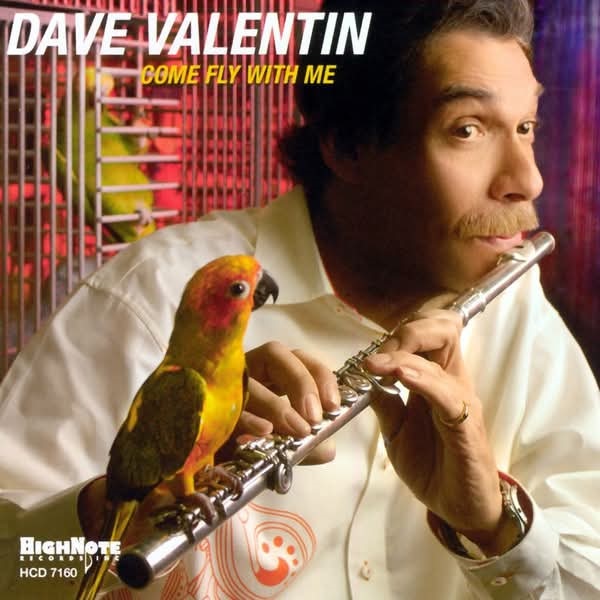
Dave Valentin - Come Fly With Me
Dave Valentin – Come Fly With Me

Dave Valentín always moved in the realm of fusion. His incorporation of smooth jazz elements, Latin influences, and the sensitivity of modern jazz made him a difficult artist to pigeonhole. Come Fly with Me is one of his most notable albums, as it focuses on a direct approach to Latin jazz. The majority of the songs are Afro-Cuban with a New York flair, without including funk or samba rhythms.

Driven by a formidable rhythm section that includes Robert Ameen on drums, Milton Cardona and Richie Flores on percussion, Luques Curtis on bass, and his friend Bill O’Connell on piano, the album overflows with power and elegance. Trombonist and arranger Papo Vázquez also participates on several tracks. The group’s rhythm is profound and the solos are filled with inspiration. Despite some less successful moments, Valentín’s innate sense of taste and melody shines brightly.

Album Credits

Musicians:

  • Dave Valentín (Flute)
  • Bill O’Connell (Piano)
  • Luques Curtis (Acoustic Bass)
  • Papo Vázquez (Trombone)
  • Chris Barretto (Tenor Sax #1)
  • Robert Ameen (Drums)
  • Milton Cardona (Percussion)
  • Richie Flores (Percussion)

Tracks:

  • Come Fly with Me
  • Twinkle Toes
  • Enciendido
  • Mind Games
  • If You Could See Me Now
  • Easy Street
  • Tu Pañuelo
  • House of the Sun
  • Song for My Brothers

Sadly, Dave Valentín suffered a stroke in 2012 that forced him to step away from music. He passed away in 2017. Despite his passing, his musical legacy remains a fundamental reference for flutists and lovers of Latin jazz.
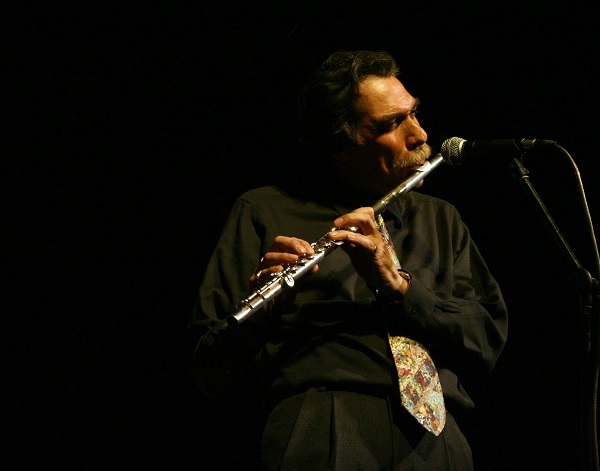
Valentín El maestro de la flauta en el jazz latino

By:

L’Òstia Latin Jazz

Rafael Vega Curry for the National Foundation for Popular Culture

Dj. Augusto Felibertt

Also Read: Pamir Guánchez, brilliant Venezuelan singer, flutist, saxophonist and arranger.
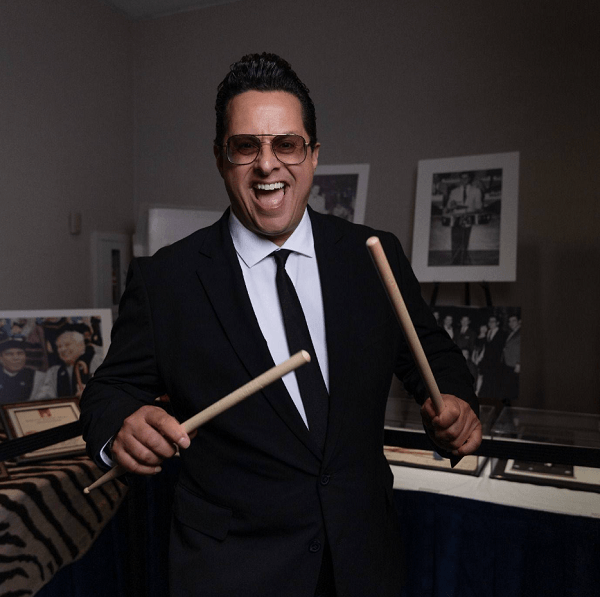
Tito Puente Jr.: perpetuating a legacy with its own rhythm

In International Salsa Magazine, we cannot contain our joy for the conversation we had with the son of one of the greatest legends of Latin music, who is now writing his own story of grandeur thanks to the education he has received practically since birth. This is none other than New York producer, composer, and percussionist Tito Puente Jr., who shared about 40 minutes of his time to answer some questions exclusively for Augusto Felibertt and yours truly, Karina Garcia. 

Tito puente jr. smiling
Producer, composer, and timbalero Tito Puente Jr. smiling for the camera

The burden of Tito Puente’s iconic legacy

Having a successful father is a great blessing, but sometimes, it can become a veritable martyrdom for a son who wants to follow his path, as comparisons between them will always be inevitable. Being able to share with Tito Puente Jr., son of the legendary King Of Timbales Tito Puente, gives us the opportunity to get his perspective on this interesting and important subject. 

Fortunately, the artist does not see this legacy as a burden, but quite the opposite. Although he admits that his father is one of the greatest masters and ambassadors Latin music and our culture in general have ever had, and that it is not easy to fill his shoes, he proudly bears his father’s surname and promotes his music.

Moreover, he sees the surname “Puente,” as well as the Spanish word implies, as a union among several generations because many young people this day do not know Tito Puente, Celia Cruz, and many other exponents of that salsa’s golden era. Tito Jr. wants to be part of that “bridge” between generations so that people of all ages can learn about these prodigies, including, of course, his father.

Childhood with Tito Puente as his father

Regarding his childhood and adolescence, Tito emphasized that he always saw his father play all types of instruments such as timbales, marimba, saxophone, percussion, and many others, which inspired him and made him want to imitate him from the beginning. Today, his career is largely influenced by everything he saw at home, and he plays his father’s arrangements and compositions, which are divided between a total of 186 albums. 

Everything learned within his family has taken him so far professionally, to the point that he now has seven Latin Grammys and 14 nominations, all thanks to the legacy he carries. 

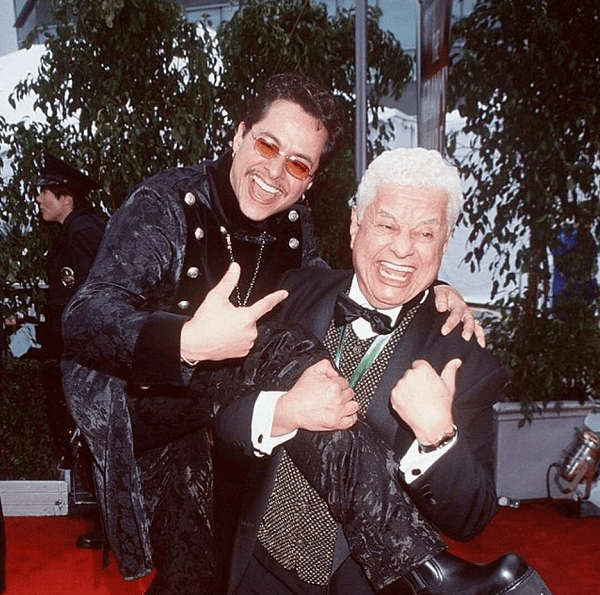
Tito Puente and Tito Puente Jr.
Tito Puente Jr. and his father Tito Puente on the 1998 Grammy Awards red carpet

The Puente family today

On the more personal side, Tito is the youngest of his brothers, among whom he is the only one who works on music as a profession. To some extent, this has made him take upon his shoulders Tito Puente’s legacy through his own art.

The musician currently resides in southern Florida, specifically in Miami, although he works with orchestras from different cities and countries. He is married and has two children who are Miranda, 18, and Tito Puente Jr. Jr., 17. Miranda studies marine biology at university, while her younger brother is in high school but travels constantly with his father and enjoys composing and playing the guitar.

He also told us a little about his wife, who loves salsa but is not in music. On the other hand, he spoke lovingly of “the boss,” his mother Margarita Puente, who is currently in charge of royalties, record labels, publicity, and the documentary on Tito Puente’s life.

He also has two siblings: Audrey Puente, 55, who is a television meteorologist, and Rony Puente, 77, who is also a musician like his father and younger brother. 

Other musical influences besides that of his father

In addition to salsa, mambo, and guaguancó, Tito really enjoys English rock and several bands such as Metallica, Slayer, Iron Maiden, Black Sabbath, and others into this style. These tastes of his have led him to the idea of, at some point, blending heavy metal with mambo to see which result he gets.

As well as he can really enjoy the music of Bon Jovi and Ozzy Osbourne, he is also fascinated by El Gran Combo de Puerto Rico, which he finds to be a very interesting mixture of genres that he would like to experiment with someday. 

He also said laughing that his father did not share his musical tastes and that the only rock band he liked was Santana, and that was because they did their own version of the hit “Oye Cómo Va” in psychedelic rock and Latin rock. 

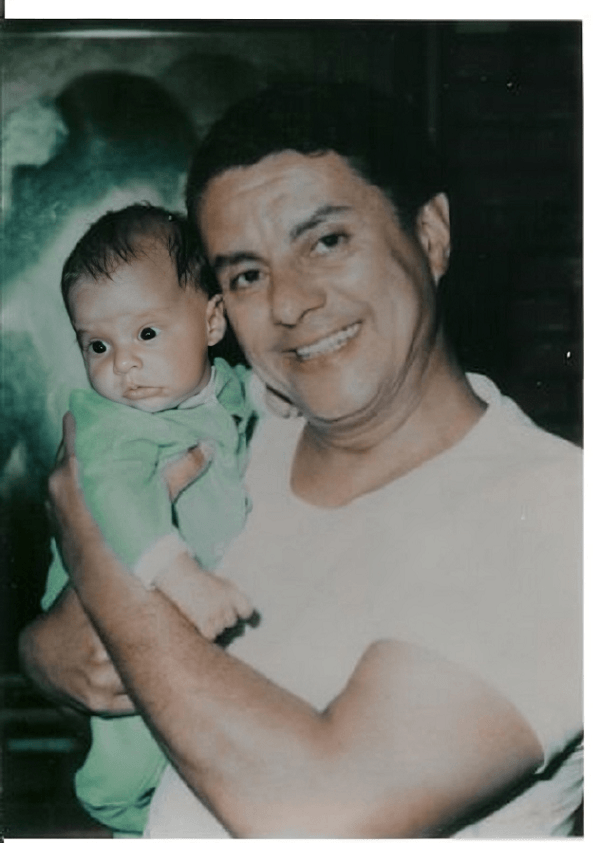
Tito Puente holding his son
Tito Puente carrying his son Tito Puente Jr.

Current singers

Today, Tito works with various singers, including Aymee Nuviola, Lucrecia, Yolanda Duque, and his great friend, “La Princesa de La Salsa” La India. His father worked with great vocalists such as Tony Vega, Michael Stuart, Oscar D’León, José Alberto “El Canario,” Miguel Ángel Barcasnegras Díaz “Meñique,” and many more. 

Tito’s latest album, “The King And I,” also features other big voices such as Domingo Quiñones, Frankie Negrón, José Alberto “El Canario,” Tony Vega, Sheila E., Pete Escovedo, and many other salsa superstars of today and yesterday. 

The timbalero has worked with many figures who also worked with his father in the past, so it is clear that they see him and respect him as the continuation of his musical legacy.

Tito’s views on academic training in music

On the important issue of academic training in music, Tito pointed out that there are not enough educational programs aimed at teaching Afro-Cuban music in schools and universities, which in his view needs to change as soon as possible.

In fact, he noted the importance of promoting programs in educational institutions around the world so that their students learn much more than just symphonic music and become more rounded professionals. Although he recognizes the importance of knowing Beethoven and Tchaikovsky, he also believes that aspiring musicians should know about Eddie Palmieri, Charlie Palmieri, Larry Harlow, Pupi Campo, and other artists in this style. 

The artist believes that the above mentioned artists and many others related to jazz and salsa are part of a very important era of music in the world, which is why he believes that teachers must take them into account during their classes. For him, it is a mission to promote both his father’s music and that of other exponents of his kind in the academic field.

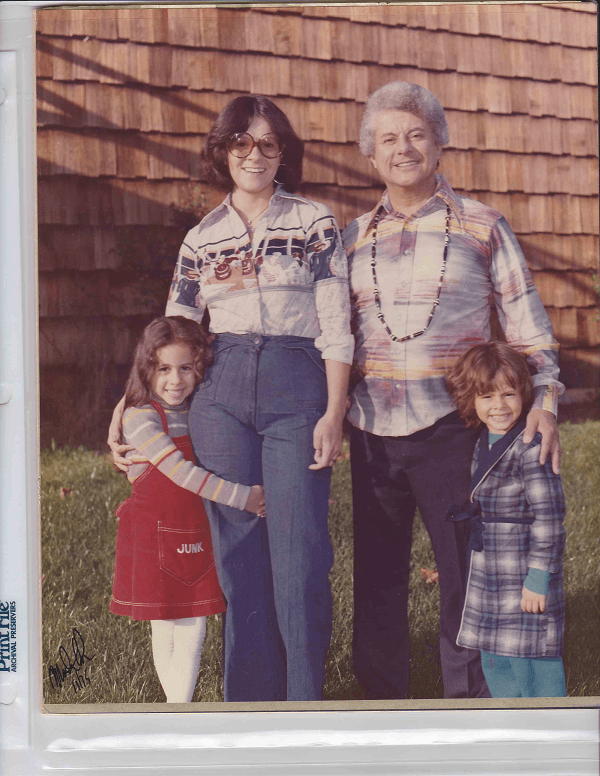
Tito Jr. and his family
Audrey, Margarita, Tito, and Tito Jr.

Upcoming tours

For our research, we could notice that Tito has several performances and tours scheduled for the rest of the year, more specifically for November. In this regard, he told us that in the first week of September, he went to play his father’s music on his weekly show Mambo Mondays, which is held to delight dancers eager to keep enjoying Tito Puente’s music.

About international tours, he plans to go to Germany in February next year and Spain next summer. He is also close to release a documentary in 2026 and a new album with the Los Angeles Symphony Orchestra, which has 77 musicians and instruments such as violins, violas, harps, bagpipes, flutes, French horns, among others.

Tito Puente Jr. and his son
Tito Puente III and his father Tito Puente Jr.

Final comment

We still cannot believe we had this great conversation with the talented Tito Puente Jr. and it has been a great pleasure to share this time with him. Those who wish to contact him can do so through his social media channels, which are as follows:


Facebook: https://www.facebook.com/TitoPuenteJr/

Instagram: https://www.instagram.com/titopuentejr/

X: https://twitter.com/titopuentejr

Tik Tok: https://www.tiktok.com/tag/titopuentejr 

Spotify: https://open.spotify.com/intl-es/artist/2ROkqvVDXj5JgmN6z2uFrM

Read also: Venezuela violinist and former musician in El Sistema Ali Bello has many interesting things to say

Bogotá Dances To The Rhythm Of Son Salome

Latin America / Colombia / Bogota

Son Salome, a name governed by the main genre of Cuban popular music, Son, and the memory of the great Poet/Writer Lou Andreas-Salomé, is defined as a Bar with a dance floor, also defined as a large disco, open to lovers dance, connoisseurs of good Latin music as well as for those who wish to attend to enjoy the right environment for a night of guaranteed enjoyment, with first class attention offers visitors a high level of security, highly trained staff , which seeks to provide a space for enjoyment.

Photo 1: Dances To The Rhythm Of Son Salome

During my visit I was able to enjoy the best options in services, cocktails, drinks and first-class drinks, the reference given by the famous Chepe, owner and personality of the city’s salsa world, was to enjoy the specialty, the Cuban Mojito, a house cocktail that will take you to visit the Island of Cuba without getting up from your seat.

This great bar offers us a varied itinerary during the weekends, starting with Cuban music on Thursdays where you could coincide with large groups, on Fridays with the best DJs in the country closing on Saturdays and Sundays with great salsa, Cuban and even beautiful folklore of the country, singers or musicians of the first gala will make your stay a night class moment.

Photo 2: Dances To The Rhythm Of Son Salome

With 34 years of foundation, Son Salome offers a well-distributed place, with a large space to dance or enjoy a good group, a first-class toilet and, above all, an open space to spend a beautiful evening. We can only recommend you to visit Son Salome located in the center, a few meters from the main means of transport in the city, the Transmilenio at its Aguas station, exactly on Calle 19 # 4-20, in a sector called to be the future of Bogotá, due to the number of constructions that are currently under development, opens continuously from Thursday to Sunday from 6:00 pm, you can learn a lot about this beautiful place through the social networks:

Facebook, Instragam and Google through Son Salome, the Latin reference number 1 in the city.

Photo 3: Dances To The Rhythm Of Son Salome

For more information contact them through:

  • Facebook: https://www.facebook.com/sonsalome / https://www.facebook.com/pages/SonSalom%C3%A9-Caribe/1396835567299952
  • Phones: +57 2432506 / +57 3005707722

Oscar Rojas Oscar Rojas has 54 years of musical career full of passion, rhythm and flavor

Oscarcito Rojas and his unmistakable lump.

In Venezuela, during the years 53-54, there were cold and humid nights in the home of the Rojas Mendoza Family, located in a high area of ​​the Pastora of beautiful Caracas, there the furniture that was outside would wake up damp, particularly a child’s chair with a colonial design, which had the back and seat made of cattle leather, which when heated by the heat of the sun became warm like the leather of a coastal drum.

That is when the restless child Oscar, barely 7 years old, discovered the sounds produced by that cured leather and began that love relationship with percussion without realizing that this would be his life; his livelihood; his passion; his everything.

Oscar Rojas has 54 years of musical career full of passion, rhythm and flavor

He also devised a pair of congas with two milk cans of different sizes, and thus achieve different sounds in his new instrument.

By the 70s, being a talented young man and wanting to earn his own living, Oscar bought a motorcycle to work as a messenger. Unfortunately, he had an accident on it, which led to his resignation from the company. With the money he generated from the liquidation, he bought a drum kit that belonged to the illustrious Pavo Frank. This is how his foray into rock began.

Later, due to the fractures he suffered in the motorcycle accident, he could not continue playing drums, but he got involved in percussion without a drumstick, which is to say, by hand, and he started playing congas.

Óscar Eduardo Rojas Mendoza is one of the most beloved and respected conga players in the country. He is the third of five siblings (Jaime; Yolanda; Óscar; Freddy and Leibia), son of Óscar Benito Rojas (musician and cabinetmaker) and Cira de los Santos Mendoza (dressmaker).

Loved by all his family, especially by his sons Gabriel ☦️ Osduare☦️ and Enrique; and his granddaughters Gabriela and Daniela.

Familia Rojas Mendoza: Liebia, Freddy, Oscar, Yolanda y Jaime

Born in Caracas on October 18, 1946, he began his musical career in 1970 with Ramón Hernández, continuing with a trail of figures such as: Pablo Schneider, Vytas Brenner, Victor Cuica, Oscar Maggi, Soledad Bravo, Lilia Vera, Frank Hernández (El pavo Frank), Oscar D’Leon, Chuchito Sanoja, Professor Juan Carlos Núñez, Alfredo Naranjo.

He has participated in the best Jazz festivals in the world and in the country such as the Memphis in May International Festival (Tennessee), Varadero International Festival (Cuba), V International Festival of Montreal (Canada), Festival D’te de Québec (Canada), 10 International Festival of Montreal (Canada), Mar de Plata Jazz Festival (Argentina), Curacao International Festival where he was invited by the great saxophonist Paquito D’ Rivera, in the Venezuela Jazz Festival, in the 4 Caracas Jazz Festivals, in the Jazz Festival in El Hatillo editions IV, V and VII, and in festivals in the interior of the country.

He was an active founder of salsa groups such as Oscar D’Leon, where he participated in the recording of the first 3 albums, the group Caribe Libre, Gerardo Lugo’s Incorregibles, Alfredo Naranjo’s El Guajeo, Nano Grant’s Ensemble ll, Pavo Frank and his Orchestra. He was also part of the jazz groups Oscar Maggi (Macoya), Pedrito López, Otmaro Ruiz and Víctor Cuica.

Oscar Rojas y Djane Shina Rojas

Among the national and foreign artists he has accompanied are: Trino Mora, Chucho Avellanes, Mirtha Pérez, Estelita del Llano, María Rivas, Nancy Ramos, Nancy Toro, Cheo Feliciano, Ted Cordón, Paquito de Rivera, Eddie Sansson, Aldemaro Romero, Chuchito Sanoja, Jimmy Bosch, the Venezuelan Symphony Orchestra, the Municipal Symphony Orchestra of Caracas, among others. He was the founder of the La Calle Group and the Ensemble de la Calle, ReNueve (rock group), Negros and Aparte.

He currently works as a percussionist for Maigualida and his Ensemble. He also rehearses every Wednesday at Juan Sebastián Bar “El Templo del Jazz y La Salsa” with the new Ensamble de la Calle.

He has been in a musical career for 54 years, full of passion, rhythm and flavor.

Oscarcito Rojas y su mazacote inconfundible

Research Sources: 

Djane. Shina Rojas

Jaime Rojas

Lutier: Freddy Rojas

Also Read: Djane Shina Rojas a Passion Turned into Reality

Tribute to Johnny “Dandy” Rodríguez Jr. His first recording was professionally with Tito Puente in 1964 and was titled “Exciting Rhythm of Tito Puente”

Johnny “Dandy” Rodriguez, (September 11, 1945, United States August 17, 2024) son of Johnny Rodriguez Sr. who was nicknamed “La Vaca”, remembered percussionist who was part of the orchestras of Tito Puente and Tito Rodriguez, among others; as we can deduce, music for Johnny Rodriguez is something clearly hereditary given that as a child he attended his father’s rehearsals and his mother was a dancer.

Johnny Dandy Rodriguez Foto By Miguel Martillo

To get an idea of ​​the musical family, let’s say that Johnny Rodriguez Sr. also took part in performances and recordings with musicians and singers of the stature of: Alfredito Levy, Joe Quijano, Jose Curbelo, Lou Perez Louie Ramirez, Machito, Miguelito Valdes, Noro Morales, Orlando Marin, Pete Terrace, Pupi Campo and Xavier Cugat.

The father’s enormous musical background was emulated in a great way with ample merits by the son.

Dandy Rodriguez grew up in Spanish Harlem in Manhattan, his home was very musical and when he was in high school he learned the details of percussion represented by the bongos, congas, timbales and drums. Influenced by his father he became interested in music and so in 1962 he joined the band of maestro Tito Puente.

His first professional recording was with Tito Puente and was titled Excitante Ritmo De Tito Puente; after this first album with Puente, “Dandy” Rodriguez began to deepen his musical studies listening and learning from leading musicians such as: José Mangual Senior bongosero from Machito, Rogelio “Yeyito” Iglesias bongosero from Cachao and Vitin Palacio bongosero from Johnny Segui.

He worked with the King of Timbales for more than three decades, initially in the sixties, more specifically from 1962 to 1972, then he rejoined Tito Puente’s band at the end of the seventies and was part of it practically until the death of the famous King of Timbales.

In the extensive career of our Johnny Rodriguez in music we must mention his internship with Joe Cuba’s orchestra, with whom “Dandy” Rodriguez himself says he participated in seven or eight albums since the mid-sixties; the first of them titled Joe Cuba Sextette – Comin’ At Yous; without forgetting to mention that in those albums the name of Johnny Rodriguez Jr. does not appear in the credits due to issues related to contracts with record companies.

His stay with Puente was not a limitation for him to be part of other musical groups, so he also worked for several years with another great of Latin music, the remembered Tito Rodríguez. He was also part of the band of the famous conguero Ray Barreto, replacing Tony Fuentes, and was one of the founders of the famous Típica 73 in 1972 and even took part in a couple of albums with Machito.

In the seventies, during the Salsa Boom, “Dandy” Rodriguez left his mark on recordings with: Jose “Cheo” Feliciano, Charlie Palmieri, Roberto Torres, Willie Rosario, Ismael Quintana, Celia Cruz & Johnny Pacheco, Louie Ramirez, Richie Ray & Bobby Cruz, Fania All Stars, Alfredo De La Fe, Conjunto Clásico, Henry Fiol and Tito Allen.

As we mentioned before, John Rodriguez returned to the band of maestro Tito Puente in 1978 and was part of the band until Ernesto Antonio Puente’s death in 2000 at the age of 77; he participated in this cycle in at least twenty musical works apart from a large number of concerts and performances on tours in different countries around the world.

During those two decades with Tito Puente he also worked with other musicians, singers and groups such as: Miguel Quintana, Roberto Torres, Charlie Rodriguez, Tito Allen, Alfredo De La Fe, Azuquita Y Su Melao, Charlie Palmieri, Celia Cruz & Johnny Pacheco, Paquito D’ Rivera, Raulin, The Bronx Horns and Angelo Vaillant.

Luisito Quintero, Johnny Rodriguez y George Delgado

During the first two decades of the new century, the musical work of maestro Johnny Rodriguez continued and his musical mark has remained in other publications with The Latin-Jazz Coalition, Frankie Morales, Eddie Palmieri, Gilberto Santa Rosa, George Delgado, Victor Manuelle, Rick Arroyo, Orestes Vilato, Mitch Frohman, Cita Rodriguez, Doug Beaver, Adalberto Santiago and Jeremy Bosch.

Also, special mention must be made of the participation of maestro Johnny Rodriguez with a group called The Latin Giants Of Jazz, in the best style of the classic Big Bands made up of great teachers, including some of the former members of maestro Tito Puente’s band; with this group they have published four albums; this project gave rise to another band called The Mambo Legends, who recorded the album entitled: Watch Out! Be careful!

John Rodriguez is without a doubt one of the most prolific percussionists in the world of Latin music called Salsa. The nickname “Dandy” dates back to his childhood when the car he was driven in was bought at a store or shop called “Dandy” and people said look how cute “Dandy” is and from there he stuck with that nickname. In music he is better known as Johnny instead of John.

In (the year 2022) the experienced Johnny Rodriguez had three or four groups with which he is playing, including Dandy Rodriguez and his Dream Team, while teaching percussion classes online.

He is one of the true legends of Latin music, not to mention that his talent has also been reflected in recordings for other musical genres such as: Electronic, Folk Rock, Folk, World & Country, Funk / Soul, Heavy Metal, Jazz, Stage & Screen, Jazz-Funk, Merengue and Pop.

Johnny Rodriguez y George Delgado

In his very extensive artistic career, maestro Johnny Rodríguez was part of historic and iconic recordings of our musical culture, some of these albums have been worthy of awards such as the Grammy Award, among which are:

Tribute to Beny Moré – Year 1978

On Broadway – Year 1983

El Rey: Tito Puente & His Latin Ensemble – Year 1984

Mambo Diablo – Year 1985

Goza Mi Timbal – Year 1990

Mambo Birdland – Year 1999

Masterpiece / Obra Maestra Tito Puente & Eddie Palmieri – Year 2000.

“In 2008, Johny entrusted LP’s Research and Development Department with the design of the John “Dandy” Rodriguez Jr. Legends Series bongos. John is proud that these drums, which bear his name, feature such outstanding sound and visual characteristics.”

Johnny Rodriguez’ “Dream Team”

Also Read: Jerry Ferrao says in salsa key: “My life is a drum”

Collaboration: Marino de Jesus (1588) from Salsa History from the Dominican Republic

  • « Go to Previous Page
  • Page 1
  • Page 2
  • Page 3
  • Page 4
  • Interim pages omitted …
  • Page 129
  • Go to Next Page »

International Salsa Magazine (ISM) is a monthly publication about Salsa activities around the world, that has been publishing since 2007. It is a world network of volunteers coordinated by ISM Magazine. We are working to strengthen all the events by working together.