• Skip to primary navigation
  • Skip to main content

International Salsa Magazine

  • HOME
  • Previous editions
    • 2026
      • ISM / April 2026
      • ISM / March 2026
      • ISM / February 2026
      • ISM / January 2026
    • 2025
      • ISM / December 2025
      • ISM / November 2025
      • ISM / October 2025
      • ISM / September 2025
      • ISM / August 2025
      • ISM / July 2025
      • ISM / June 2025
      • ISM / May2025
      • ISM / April 2025
      • ISM / March 2025
      • ISM / February 2025
      • ISM / January 2025
    • 2024
      • ISM / December 2024
      • ISM / November 2024
      • ISM / October 2024
      • ISM / September 2024
      • ISM / August 2024
      • ISM / July 2024
      • ISM / June 2024
      • ISM / May 2024
      • ISM / April 2024
      • ISM / March 2024
      • ISM / February 2024
      • ISM / January 2024
    • 2023
      • ISM / December 2023
      • ISM / November 2023
      • ISM / October 2023
      • ISM – September 2023
      • ISM – August 2023
      • ISM July 2023
      • ISM Edition June 2023
      • ISM – May 2023
      • ISM April 2023
      • ISM March 2023
      • ISM February 2023
      • ISM January 2023
    • 2022
      • ISM December 2022
      • ISM November 2022
      • ISM October 2022
      • ISM September 2022
      • ISM August 2022
      • ISM July 2022
      • ISM June 2022
      • ISM May 2022
      • ISM February 2022
      • ISM January 2022
    • 2021
      • ISM December 2021
      • ISM November 2021
      • ISM October – 2021
      • ISM September 2021
      • ISM August 2021
      • ISM July 2021
      • ISM May 2021
      • ISM April 2021
      • ISM June 2021
      • ISM March 2021
      • ISM February 2021
      • ISM January 2021
    • 2020
      • ISM December 2020
      • ISM November 2020
      • ISM October 2020
      • ISM September 2020
      • ISM August 2020
      • ISM July 2020
      • ISM June 2020
      • ISM May 2020
      • ISM April 2020
      • ISM March 2020
      • ISM February 2020
      • ISM January 2020
    • 2019
      • ISM December 2019
      • ISM November 2019
      • ISM October 2019
      • ISM Septembre 2019
      • ISM August 2019
      • ISM July 2019
      • ISM June 2019
  • Spanish
  • Download Salsa App
    • Android
    • Apple

Search Results for: rhythm

Learn to dance to the rhythm of Son Rumbero

Latin America / Colombia / Bogota

The Son Rumbero academy dresses up with the grand opening of its offices in Bogotá in Colombia and Santiago in Chile.

Photo of dancers by Son Rumberos

They offer dance classes based on 3 profiles, for the youngest and adolescents of the “Kids” house, the fitness line and Latin dances, join the dance trend, give your body health and distraction, it’s been 15 years of experience and consolidation, they have been one of the distinguished schools of Salsa in Venezuela, now, they dedicate hard work in giving improvements and innovations to the dance of the capitals of Colombia and Chile.
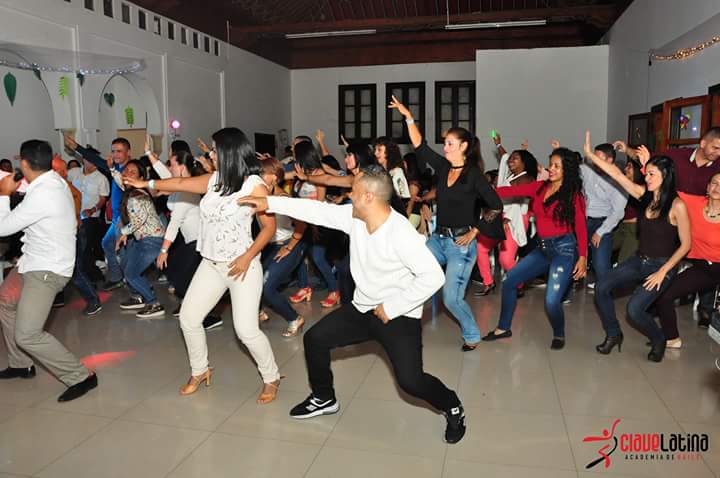
Son Rumbero social
Son Rumbero social

In Bogotá they will begin to offer salsa tourism, if as you hear it, you could have 5 days of tourism in Bogotá under an innovative and very formal proposal. This tourist proposal begins with more than 24 hours of formal classes in the disciplines of Afro-Cuban music, learn rumba, cha cha, son, salsa, mambo and many more, together with the tourist tour of the city, closing every night in local and spaces destined for enjoyment, dance all night without stopping with the dancers taxis assigned for this great experience. To learn more about this great proposal, be sure to visit www.sonrumbero.com in our SALSERO TOURISM section soon to be published.
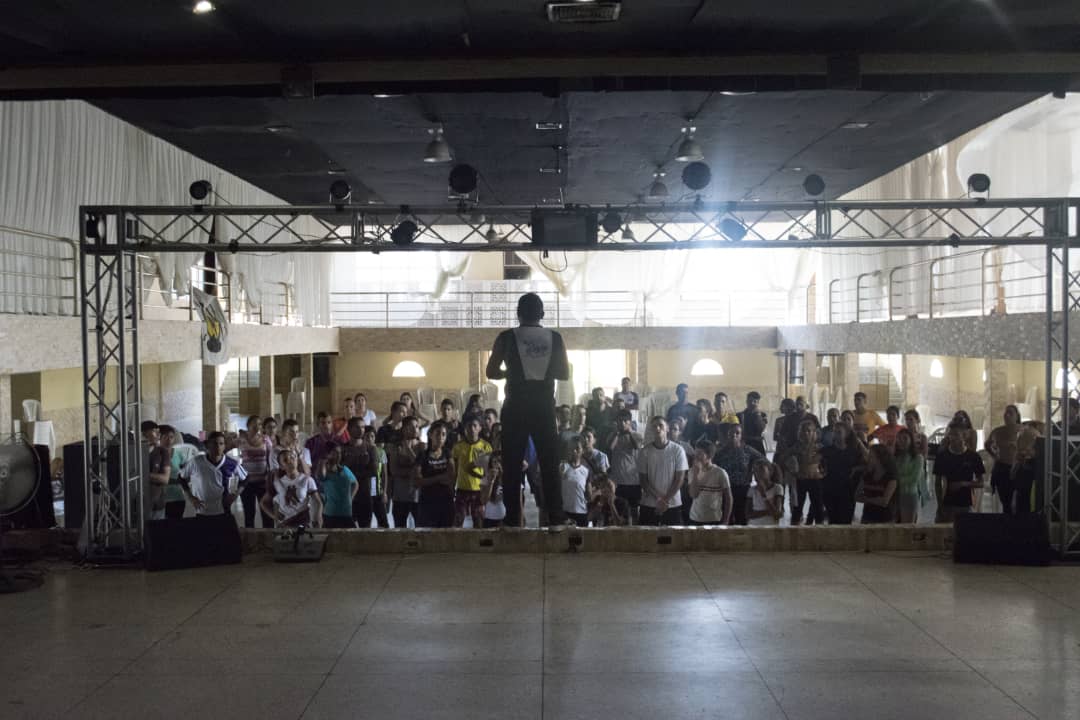
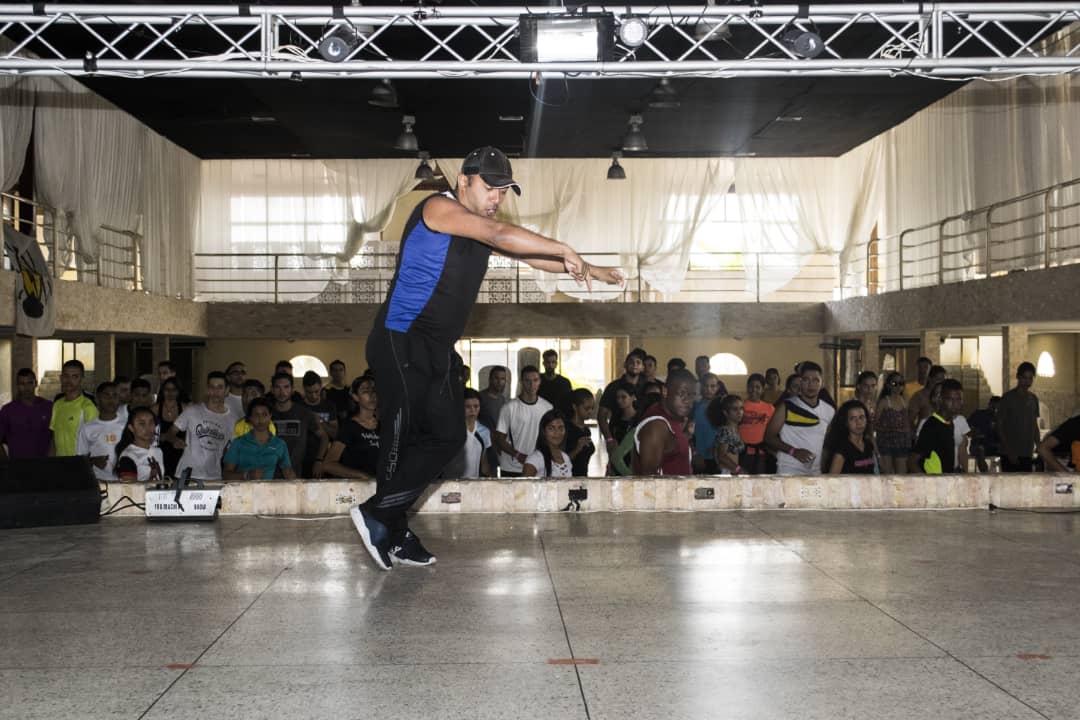
Jose Perez teaching in Son Rumberos
Photo of Jose Perez teaching in Son Rumberos

Everything is in the hands of lovers of good music and dance, do not forget to give yourself the opportunity to do a different tourism, full of experiences that you hardly get in the world, study, dance and get to know the best tourist sites. Follow the social networks of the academy by @sonrumbero on Instagram, Facebook and twitter.

Son Rumbero Logo
Son Rumbero Logo

Patrón Latin Rhythms manager talks about the band and its plans

Patrón Latin Rhythms is one of those many bands from the San Francisco Bay Area that continue to demonstrate the taste the inhabitants of the area and its surroundings have for Latin music and other rhythms stemming from it. For this reason, we decided to talk to Vanessa Ojeda, the band manager, to know more in depth her work and everything that has to do with the group.   

Vanessa, manager of Patrón
This is Vanessa Ojeda, manager of Patrón Latin Latin Rhythms

Vanessa’s beginnings in music   

Vanessa told us that music has always been present in her life, as she remembers, from an early age in San Leandro, California. Her father was responsible for managing musical groups, so he taught his daughter all he knew about the administrative and business part.   

In fact, the young woman recalls that, since she was five years old, she already saw her father playing his trade and explaining some things about it. As she got older, she gained more responsibilities and learned more about the internal functioning of a group. She started answering e-mails, drawing up contracts, making reservations, among other things.   

When her father sadly passed away about three years ago, Vanessa had to learn to do the rest of the things on her own, so she greatly appreciates the prior learning she experienced before the time came.    

Today, she is in charge of all the band’s contacts, social networks, publicity, promotion, musician fees, hotel bookings, travel, among other tasks.   

Beginnings of Patrón Latin Rhythms   

Vanessa explained that it was her father who initially selected the musicians and talent that made up the band. He began by looking for the congueros, whom he took home to determine who was the best choice for the group. He also had some friends who were dedicated to music and he knew they would do a great role if they joined his project, so he contacted them to make the proposal. 

Later, the first musicians selected to be part of the group created their own orchestra, which led Vanessa’s father to look for new musicians and a different name to the proposal that he had in mind and search for the right talent for it. This is how Patrón Latin Rhythms was born. 

Vanessa comments that her father was a lover of the musical work by Poncho Sanchez, Tito Puente, Santana, among other artists of this style, so he was looking for musicians who could emulate those sounds and ways of playing. He also wanted the new members of the new 10-piece band to understand what he wanted at that time, which was the salsa of the time. 

As for the name of the band, Vanessa and her father wanted something attractive and playful for the audience, so after thinking about many things, they decided that ”patrón” was a memorable term and that made them think of something or someone ”strong” and ”with character”, just as they wanted the band’s music to be.   

Patrón plays Latin and American music
Patrón Latin Rhythms is capable of playing both Latin and American music without any problem

Musical background of the musicians 

Another thing Vanessa’s father was very careful with was knowing very well the background of each of the musicians he selected and, of course, ensuring that they came from reputable bands. ”My father knew many of the musicians before forming the group, so he knew they would do an excellent job if he gave them the chance. In fact, some of them are still with me despite my father’s death and the time elapsed,” said Vanessa.   

The permanence of most of the old team is considered by Vanessa as a sign that Patrón Latin Rhythms is much more than just a job for its members. It is also like a family that they take care of and strive to make it better every day.    

This was achieved thanks to the training provided by her father, who always made sure that Vanessa knew all the details related to the band’s operation so that she would be able to take care of it and its members after his passing. One of the most important things he taught her is that she should always treat others as she would like to be treated, which she has very much in mind to this day.   

Genres played by Patrón Latin Rhythms   

Regarding the genres played by the group, Vanessa said that they have tried to incorporate a lot of salsa into their repertoire recently. Her father was a big fan of Latin rock, which occupied a privileged place in the band’s work, but when Vanessa took the reins of the project, she began incorporating a little more salsa and diversify the rhythms played by Patrón Latin Rhythms. To this we must add that she likes R&B a lot, so it was also taken into account to be part of the group’s repertoire.    

It is precisely this blend of genres that the group always seeks to achieve is what guarantees them a mixed audience in which all nationalities and tastes converge. Something that stands out from the group’s musicians is that many of them have their own salsa repertoire due to the experience they bring from other orchestras, which helps them attract audiences of different generations.   

In addition to that, Latin and American public tend to enjoy Patrón Latin Rhythms’ music depending on the genre being played at any given time.   

 Patrón playing live
Patrón Latin Rhythms playing live

How Patrón Latin Rhythms handles arrangements on the covers 

At the time of creating a cover of a well-known song, the musicians of the group take into account the characteristics of the audience they are going to entertain that day, and one of them is the crowd size. If the audience is big, they know they should play faster songs, but if the group of attendees is smaller, then they start with something softer and calmer.   

However, in all their performances, they try to vary all genres so that their shows do not become monotonous and the audience does not get bored. In fact, their repertoire has included from songs by Marc Anthony or Santana to others by Bruno Mars or the group Chicago, which shows how diverse a Patrón Latin Rhythms concert can be.    

On this subject, we can say that each musician is a fundamental part of the orchestra, as each one plays a role in each song they are going to play because not everyone can play everything. In fact, Vanessa tells an anecdote in which one of the musicians quit and it was difficult for the rest of the them to play the chords and the percussion part of certain songs he played. For the same reason, each member and instrument is of vital importance in the band and it is not always easy to cover some of them. 

Read also: Eric Maldonado from La Paris All-Stars’ work behind the scenes 

Medusa Pop Band delights its fans with a pretty interesting mix of rhythms

Medusa Pop Band is a group based in the city of Calgary, Canada, that is mainly focused on the Spanish language and Latin rhythms of the 80s and 90s, so it has some very particular characteristics that distinguish it from other bands that can be found in the aforementioned country.  

As we found everything about the Medusa Pop Band very interesting, we contacted its manager to talk to some of its members and know a little more about the band. This is how we have managed to have a wonderful conversation with Lorena Galindo, Eduardo Infante and Willy García, who talked a bit about their beginnings, styles and future projects.   

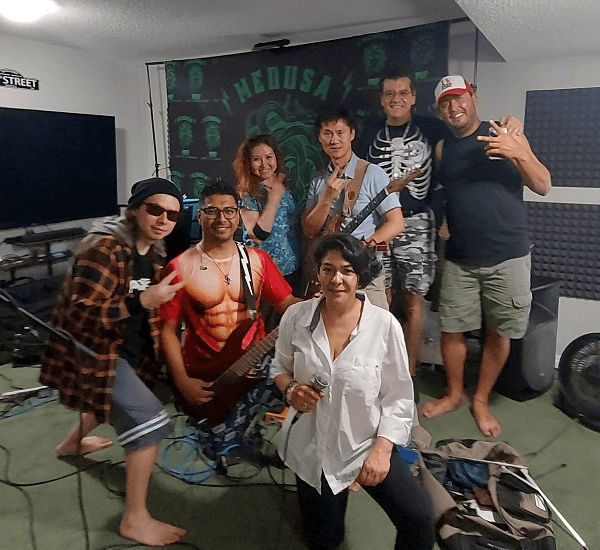
Medusa’s members
Medusa Pop Band from right to left: bass player Eduardo Infante, drummer Cristian Gonzalez, keyboardist Lee Que Long, lead singer Lorena Galindo, guitarist Kalvin Ma, and percussionist Willy Garcia

Musical backgrounds of the current members of Medusa Pop Band 

As is the case with most bands like this, its members have already been part of other groups until they met and came together to do completely new things. This is how Lorena, vocalist and founding member of the group, who has been working with versatile music for more than 40 years, explains that she had the idea to create this project just two years ago. She even worked with the famous actress and singer Lucero and belongs to the musicians’ union in Mexico City.   

In Eduardo’s case, he has more than 25 years of experience in rock in his home country Mexico, until he decided to move to Canada to try his luck. That was when he met Lorena and was invited to join Medusa Pop Band as the lead bass player.   

On the other hand, Willy has five years of experience in music, so he would be the one who has the least time in this world, which does not diminish the importance of the role he plays. He was in a group called De Cajón, but when receiving the proposal of Medusa Pop Band, he decided that this was what he was looking for and accepted to be the percussionist and be in charge of ”embellishing” the songs, as he himself describes it. 

How Medusa Pop Band was created 

Eduardo heavily emphasizes that the one who started the whole project and put together the team is Lorena, and subsequently, the rest of the team joined his idea. In his case, he saw an advertisement on the internet saying that a group was looking for new members and he was postulated to be part of Medusa. He mentions that what attracted him to this proposal was the style of pop handled by the group and the possibility of playing the bass, which he loved being able to do since he had always played the guitar and it represented a challenge for him. 

Willy commented that he lived very near to Lorena’s home and they already had a friendship for a long time. When he found out that Lorena was also a musician, he was invited to rehearse with the rest of the band and loved the kind of music he listened to and professionalism of the musicians there, so he stayed with them.  

With regard to the name of the band, Lorena explains that she had always wanted to do something with the famous figure from Greek mythology Medusa, in addition there was a nightclub called 

Medusa in Mexico City the singer liked a lot, so it all added up to being the name chosen for her band. In the end, the word ‘‘pop” was added because of the main genre on which the group bases its discography. 

Medusa Pop Band performing
Medusa Pop Band performing live in Calgary, Canada

Why choose Canada to establish Medusa Pop Band? 

‘‘We have chosen Canada to establish the band basically because we all live here and it was in this country that we all met. There was no way for Medusa Pop Band to be born in any other country but this one” said Lorena about the reasons why to establish the band in this country.  

On this, Willy added that the diversity of nationalities in the group has been a great advantage for them in Calgary, as that has allowed each member to bring their own essence to the music they are doing. ‘‘It’s very important for us to have more diversity in the rhythms we choose to make more people happy and please a wider audience. I think Canada is an excellent country for that” said the percussionist. 

Receptivity of the Canadian public towards Medusa Pop Band’s Spanish-language music  

Eduardo has said that the reception from the Canadian public towards them has been warm and has come from less to more. In fact, he commented that the amount of assistants to their shows has been growing exponentially and every day the band are gaining more and more fans at the local level.  

”Currently, we only have music in Spanish because we are focused on the Latin American and Spanish-speaking community, but we also have a musical amalgam of different countries and cultures, which makes Medusa Pop Band even more magical. We are always looking to please all types of audiences” Eduardo continued explaining. 

Lorena also added that she and her bandmates have found that many Canadians love Spanish, to the point that they have learned that many fans have started taking Spanish classes to understand their lyrics, which makes them extremely happy and motivates them to keep creating more and better music.   


Medusa Pop Band rehearsing
Medusa Pop Band rehearsing for a show

Challenges Medusa Pop Band has had to face 

Eduardo took the floor again to affirm that one of the biggest challenges facing the band has been finding Spanish-speaking musicians because there are not many in Calgary and the vast majority of them already have their own projects and bands, so getting the necessary elements for the group has not been an easy task. 

To these words, Willy adds that the hardest thing to find are singers who speak Spanish, so he is glad Lorena handles that part. Faced with these challenges, he ended up by saying that the support of their families has been fundamental in order to move forward, and like any other band, its members spend many hours rehearsing each day of the week. That is why the understanding of their partners and children has made it much easier for them to follow this difficult path to the success they have achieved. 

Nationalities in Medusa Pop Band 

One of the most interesting things about Medusa Pop Band is that its members come from very diverse countries like Mexico, Peru, Colombia, Vietnam and China. This makes the group have elements with a variety of musical cultures so diverse that it could complicate the picture when agreeing to work on their music. 

What Willy has to say about this is that the Latin musicians have a certain ”feeling” to play the music, while the Asians have a completely different one, so guitarist Kalvin Ma and keyboardist Lee Que Long have gone the extra mile to engage with the rest of the team and play their instruments as is required. 

In this regard, Lorena stressed that both Calvin and Lee have done a great job all these years and their contribution to the group has been immeasurable, since they also propose techniques and add different sounds to those already known. 

What has made things difficult for the aforementioned musicians is the language, as they do not speak Spanish and the rest of the band can only communicate with them in English, but that is no impediment to fulfill their role to the fullest. 

Lorena from Medusa Pop Band
Lorena Galindo is the founder and lead singer of Medusa Pop Band

What makes them call themselves an eighties and nineties band? 

Once again, Lorena took the floor to explain that the group describes itself as an eighties and nineties band because many fans of their work who are contemporaries with them, but that does not stop them from playing music of all kinds and all eras, either from the 80s or this same year. What they seek is to make different arrangements so that their covers sound different than their original versions. 

It can be said that the age group that most often follows them goes from 18 to 50 years old, giving Medusa Pop Band a huge range of action. Additionally, the word ”pop” is too general and gives them the possibility to choose from a large range of genres and rhythms that captivate an ever wider audience. 

Read also: Venezuelan businesswoman Joanna Torres is an example to follow 

Meet Pablo Emmanuel Lemos and his classes at the School of Caribbean Rhythms “PA’ que lo Gozes”

Latinoamerica / Argentina / Punta Alta

On this occasion we had the opportunity to meet the dancer and teacher of the School of Caribbean Rhythms “PA’ que lo Gozes” Pablo Emmanuel Lemos. He tells us about the course of his career, profession, tastes and goals.

Unlike many dancers who started when they were little, at the age of 23 he (Pablo Emmanuel Lemos) began to dance different Latin rhythms and with the support of his classmates and teachers, he decided to do a Caribbean Rhythms teacher training at SAOCO. Later he began to teach at the academy where he began his apprenticeship, without imagining what his job would be today.

He mentions that he is passionate about teaching, sharing and giving his Salsa and Bachata classes in his work space and that at the moment he does not have his own academy; however, he gives his classes in Punta Alta, Argentina:

  • Monday and Wednesday at 8:15 p.m. at Humberto 1159 (Guapas Factory Gym) in Bahía Blanca.
  • Tuesday and Thursday at 8:00 p.m. in Spain 843 (Dance Pulse).

In general, competitions and/or recreational activities are held for those who wish to share these dynamic and joyful rhythms.

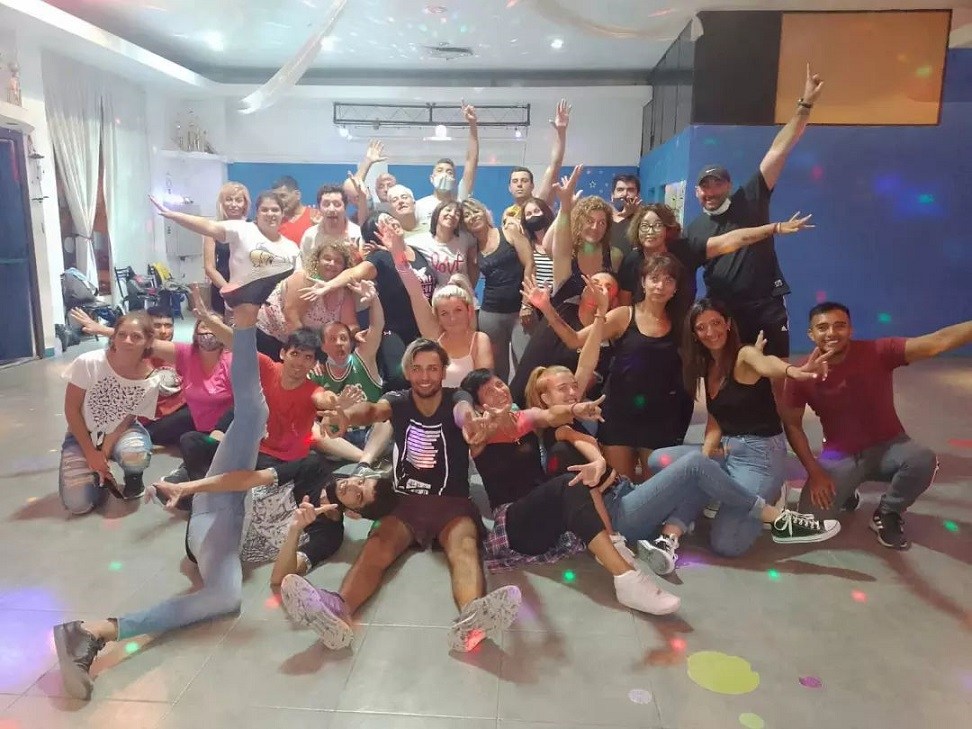
Pablo Emmanuel Lemos and his students

In one of our questions, to know what is necessary to learn to dance like a professional, he answers us:

“Knowledge is not what makes the dancer, but the desire, motivation and decision to learn from their peers and/or partners”.

For new Latinos, he tells them to “dare to dance… whatever the impulse that leads you to want to do it, without brakes, fear, or doubts…. Dancing is a wonderful art that has made a resounding change in my life. That is why I invite you all to dance and try this healthy discipline”

If you want to know more about his classes:

  • Facebook: @PabloEmmanuelLemos o @AleA.Abello
  • Teléfono: +54 2932554866 / +54 2915265613

Maelo y su Klan want to bring tropical rhythms to the whole world

Maelo y su Klan is the latest project, and one of the dreams, of the producer with more than twenty years of experience, Johnny Ysmael Salaverria Dicurú. The popular “Maelo” as his dearest friends call him, continues his career by working and pouring his heart into this project. With them the first genre fusion between Son and Kizomba is known. In the following lines we will talk about Maelo and his most beloved project.

Who is Maelo?

Johnny Ysmael Salaverria Dicurú was born in San Juan parish, in Caracas, capital city of Venezuela, where he spent his childhood surrounded by the joy of the Caribbean “soneros and salseros”. He was a child when he first expressed his interest in one of the most popular tropical Caribbean rhythms, salsa. Part of his influences came from his uncle, Héctor Bruno Dicurú.

Ysmael D´La O, is his artistic name on stage and producing, but his closest friends call him “El Tiburón de la Salsa”. He left with $80, and a luggage full of dreams, to look out for adventures abroad. His destiny was Tenerife, where he quickly earned the love and respect of the natives, and was embraced as an adopted son.

Maelo as a producer has worked with renowned soloists and groups, from all over the world. To name a few: Nicky Jam, El Binomio de Oro, Tito Rojas, Oscar D’León, Porfi Baloa, Tony Vega, La Dimensión Latina, Ray Sepúlveda, Guayacán, El Grupo Niche. As a promoter and producer of events, one of his greatest achievements was El Gran Combo De Puerto Rico who celebrated their 50th anniversary, and visited Europe hand in hand with him.

We can call Maelo, the cultural ambassador of Caribbean rhythms, making more than 30 countries listen and enjoy them. He was the first Latin American to have 100 continuous virtual conversations during the pandemic, a time when creativity was the escape of many artists.

Among his awards and recognitions is being nominated as International Producer of the Year in 2020, Producer and Promoter of the Virtual Euro Festival in the 20/21 edition. But soon more will come, since Maelo’s talent is infinite.

Defining Maelo and his Klan

The band stands out in danceable rhythms such as: Son, Charanga, Guaguancó, Salsa, Tropical, Latin Jazz and a lot of fusion with an original sound, which is inspired by African rhythms. Of course, with the influences of great masters of the old tropical school. In this way, a combination is created that generates a modern sound, worthy of the new generation. But what most characterizes this Klan is the creation of the fusion of the genres between Son and Kizomba.

The works of Maelo y su Klan have the collaboration of the renowned arranger and director of Billo’s Caracas Boys, the Venezuelan Julio Cesar Estrada. Also by Paquito Barón, ex-member of the Orquesta Bronco of Venezuela, in the musical production.

The Klan has all the merits and the support of the Anglo-Saxon and Asian public. One of his productions entitled ¡Cultura viva! Fusion is positioned as the new sound in Afro-Caribbean music. Maelo not only puts his talent for the band, but also puts all his knowledge of the tropical rhythms of Latin America, as well as its movements through Europe and Asia. Let’s hope that the journey of Maelo y su Klan will be a very long one, full of great successes, so that they can continue to please the public that loves these tropical rhythms.

  • « Go to Previous Page
  • Page 1
  • Page 2
  • Page 3
  • Page 4
  • Page 5
  • Interim pages omitted …
  • Page 129
  • Go to Next Page »

International Salsa Magazine (ISM) is a monthly publication about Salsa activities around the world, that has been publishing since 2007. It is a world network of volunteers coordinated by ISM Magazine. We are working to strengthen all the events by working together.