• Skip to primary navigation
  • Skip to main content

International Salsa Magazine

  • HOME
  • Previous editions
    • 2026
      • ISM / April 2026
      • ISM / March 2026
      • ISM / February 2026
      • ISM / January 2026
    • 2025
      • ISM / December 2025
      • ISM / November 2025
      • ISM / October 2025
      • ISM / September 2025
      • ISM / August 2025
      • ISM / July 2025
      • ISM / June 2025
      • ISM / May2025
      • ISM / April 2025
      • ISM / March 2025
      • ISM / February 2025
      • ISM / January 2025
    • 2024
      • ISM / December 2024
      • ISM / November 2024
      • ISM / October 2024
      • ISM / September 2024
      • ISM / August 2024
      • ISM / July 2024
      • ISM / June 2024
      • ISM / May 2024
      • ISM / April 2024
      • ISM / March 2024
      • ISM / February 2024
      • ISM / January 2024
    • 2023
      • ISM / December 2023
      • ISM / November 2023
      • ISM / October 2023
      • ISM – September 2023
      • ISM – August 2023
      • ISM July 2023
      • ISM Edition June 2023
      • ISM – May 2023
      • ISM April 2023
      • ISM March 2023
      • ISM February 2023
      • ISM January 2023
    • 2022
      • ISM December 2022
      • ISM November 2022
      • ISM October 2022
      • ISM September 2022
      • ISM August 2022
      • ISM July 2022
      • ISM June 2022
      • ISM May 2022
      • ISM February 2022
      • ISM January 2022
    • 2021
      • ISM December 2021
      • ISM November 2021
      • ISM October – 2021
      • ISM September 2021
      • ISM August 2021
      • ISM July 2021
      • ISM May 2021
      • ISM April 2021
      • ISM June 2021
      • ISM March 2021
      • ISM February 2021
      • ISM January 2021
    • 2020
      • ISM December 2020
      • ISM November 2020
      • ISM October 2020
      • ISM September 2020
      • ISM August 2020
      • ISM July 2020
      • ISM June 2020
      • ISM May 2020
      • ISM April 2020
      • ISM March 2020
      • ISM February 2020
      • ISM January 2020
    • 2019
      • ISM December 2019
      • ISM November 2019
      • ISM October 2019
      • ISM Septembre 2019
      • ISM August 2019
      • ISM July 2019
      • ISM June 2019
  • Spanish
  • Download Salsa App
    • Android
    • Apple

Search Results for: rhythm

The rise of Latin rhythms in Madrid

Latin music has been gaining popularity for the last decade so you can notice many Latin rhythms in Madrid, and it seems that it will never stop. The reason behind this success is simple: the dance steps seem to be very easy, although they aren’t but everyone can stand up to dance. Throughout the city you can see people dancing salsa, bachata and rumba on street corners, in restaurants or at various events that take place throughout the city.

Some of the most popular styles of Latin American music include salsa, bachata, cumbia, and cha-cha-cha. But there are many more that are enjoyed by the inhabitants of the city. There are two great aspects that have achieved this love that the people of Madrid have for Latin rhythms, the great Latin parties in the best nightclubs, and learning to dance in the best academies in the city. Learn a little about both in this article.

Best Latin parties in clubs

For all the inhabitants of Madrid, there are several venues dedicated exclusively to Latin music, so it cannot be denied that the best Latin parties in Spain exist in the capital nights. Check the following list:

New One Madrid

This place located in Pueblo Nuevo offers all kinds of Latin parties full of good rhythms. Bachata, salsa or rumba One Madrid manages to please everyone in the audience, and not only with the music, the setting and even the drinks with food have their Latin touch.

Parche Disco Bar

Despite the fact that its space is not that big, it is one of the best places in the city to enjoy a Latin party, have an intimate place for friends and meet new people, as well as taste liquors brought directly from Latin America, at reasonable prices.

Azúcar Salsa Disco

Azúcar is one of the most danceable clubs in Madrid, located right in the center of the city. His forte is dancing but you can also enjoy excellent drinks to the rhythm of live music. It is more than certain that you will return to this club.

Faces Latina

With an excellent location near the Castellana and the Santiago Bernabéu, Faces Latina offers the best Latin rhythms so that Madrid continues to discover these danceable rhythms. With a pleasant atmosphere and quality service, Faces is what you need.

Latin Dance Schools in Madrid

Latin parties are very cool, but the rise of Latin rhythms in Madrid has been so great that people no longer just want to spend a night full of music, but this passion now translates to learning the dances professionally. It is not about wanting to be a professional dancer but about learning the best moves to be the king of the dance floor. Get to know in this list the best Latin Dance schools.

Salsabachata

The most unique dance school in Madrid, since its method is extremely interesting. First of all, it must be said that they play a lot of Latin rhythms and in different groups: for soon-to-be-married couples, for girls or boys, as a couple, zumba and even pole dance. But its catch is that you only pay for each class taken, plus the schedule is set by the student. It is very flexible in that aspect, and even the first class each student seeks is free.

They also offer bonus-style plans, with a number of specific classes where Salsabachata is in charge of reminding you of the classes you have pending. Another of its great characteristics is that you can go completely alone, and there they look for a partner for you, added to the fact that the group does not stop you, you level up without waiting for the others with whom you take the classes. Find more information on their website.

Studio11

For its part, Studio11 is the opposite, with classes for couples of any Latin rhythm where they are proud to say that they have the best dance professionals, for all classes. This school offers an exclusive environment with well-planned schedules.

They do not believe in “bonuses” but to achieve quality it is necessary to do our part and comply with what has been agreed. There is individualized monitoring but the classes are in pairs. They assure that in 8 weeks you can learn from 0 any Latin rhythm. At the same time, they specify that their classes last an hour and a half in order to offer the best attention. Find more about their classes on their website.

The rise of Latin rhythms in Madrid is becoming more and more established, but there is still much more to offer in this incredible city in Spain. Do not miss the other notes of International Salsa Magazine so that you know the best events in Europe.

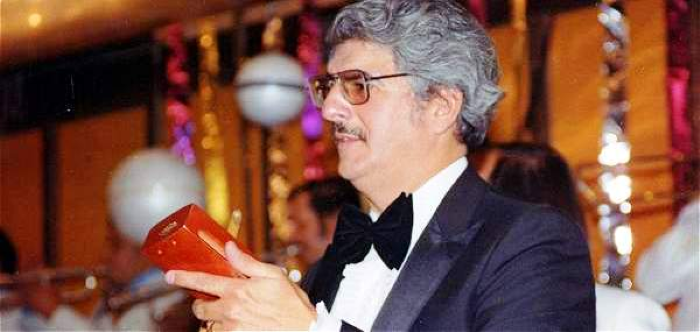
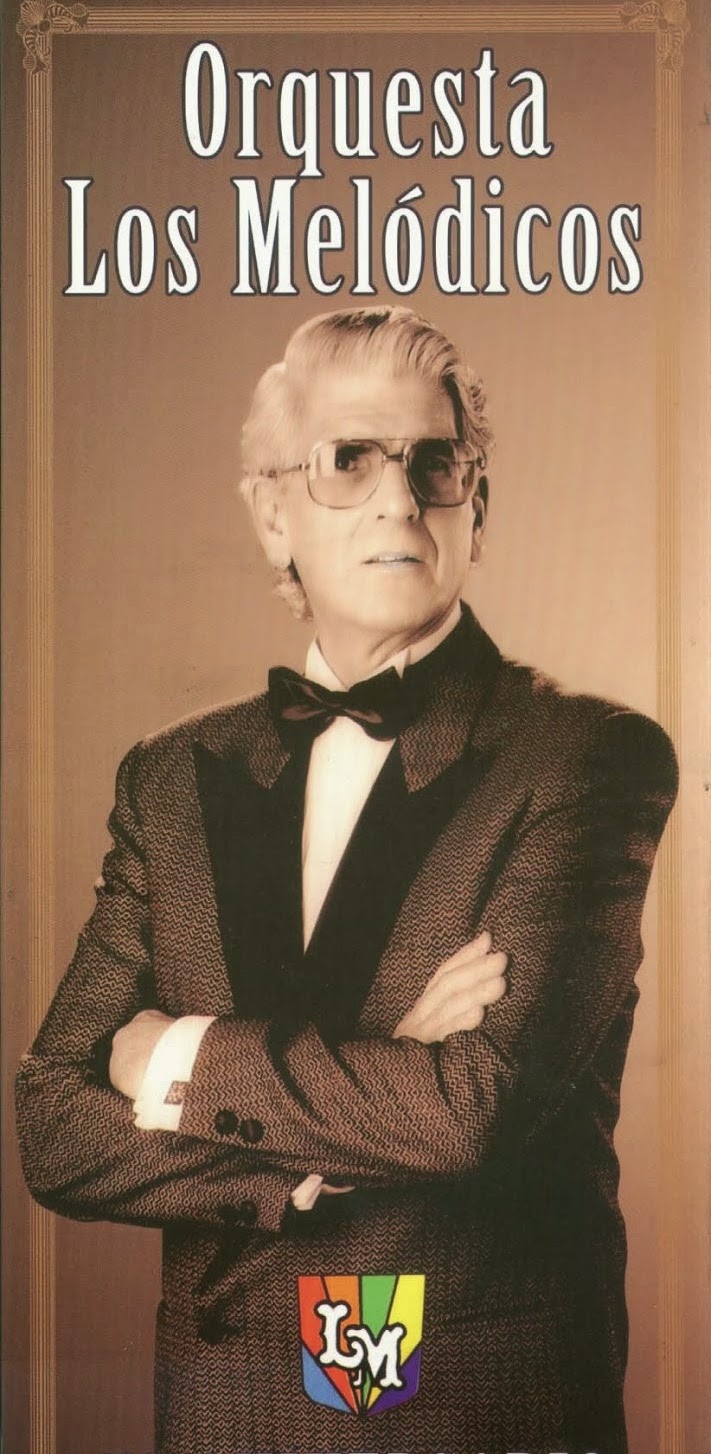
Renato Capriles, the man who imposed the rhythm with “Los Melodicos”

Dance bands have always added flavor and rhythm to parties in the Caribbean, but one of the greatest was born in Venezuela at the hands of Renato Capriles, “Los Melodicos”. An entrepreneur with an interesting vision of music, who knew how to adapt to what the public wanted, throughout the decades that accompanied his great project. In the following lines, we will tell you about his life and what he thought of his experiences.

Early years of Renato Capriles

Contrary to what many believe Renato was not born in Caracas, but in a small town called San Esteban located in Puerto Cabello, Carabobo state on December 28, 1931. In his own words:

“It was a town where only six or seven families lived. The rest of the inhabitants were people who served in those houses. San Esteban is about an hour from Puerto Cabello and it is still a very beautiful area.”

His arrival in Caracas is due to the death of his father, at that time his older brother, Miguel Ángel, decided to move the family to the capital and develop the businesses for which the Capriles family would later be well known in Venezuela. In addition, that is why it is known that he was born into a wealthy family, so business is something that he carried in his blood. They were also a large family, Renato being the 13th sibling of 14, which is why he always considered it his lucky number.

Arriving in Caracas, they settled in La Pastora, where the Capriles spent their childhood and adolescence. Renato himself even commented that he traveled those streets with a velocipede that was given to him for his birthday. During his adolescence he began to be closer to the dance bands of the time, although music always accompanied him, showing an innate ear since he was a child. But it was as a teenager that he went to parties in the main  square and listened to the radio:

“Already a little older – 16, 17 or 18 years old – the programs I listened to were “A Gozar Muchachos”, Billo’s program, of course, and the program that Luís Alfonso Larraín had. Those were the two great orchestras…”

At that time he also began his professional stage, first as an office boy at Inex S.A., owned by the German businessman Gustavo Zingg. Thanks to his friendliness and knowing how to treat people, he met Zingg and his children, who, seeing his hard work, promoted him to store salesman and then itinerant salesman aboard a Land Rover, with which he toured much of the Venezuelan territory selling everything, including power plants.

Then he decided to follow his family’s vein and set up his own business in Valencia, a clothing store that he bought from his brother-in-law who was a travel agent for two clothing factories. However, this only lasted 2 years, this being the only business that Renato failed. His mother asked his brother Miguel Ángel to take him to the company, known at that time as Cadena Capriles, which little by little became a publishing conglomerate.

Renato came to the organization and formed the company’s Public Relations department from scratch, something he was always very proud of and that he kept reminding in every interview. In fact, that vein of public relations is what led him to achieve that impressive success with “Los Melodicos”:

“I think I was born with that. I always make the comment that more than a musician I feel like a born relationist. All my life I have done it and I have applied it…”

The Birth of “Los Melodicos”

Although it may seem like a joke due to the supposed enmity between the two, it was Billo Frómeta’s orchestra that prompted Renato to form “Los Melodicos”. The young Capriles spent his adolescence listening to Billo’s Caracas Boys on his radio program “A Gozar Muchachos”, he also listened to other orchestras that competed with Billo’s for the popularity of Venezuelans and neighboring countries.

In addition to that, Renato Capriles was always linked in one way or another to music, not only did he have rhythm and an innate ear, but also his businessman’s mind led him to give his own orchestra a different organization. In fact, at the time that the Capriles family lived in La Castellana, he and his younger brother Juan Felipe had a small band of 5 musicians. Therefore, Renato already had experience in the formation of bands and orchestras.

In 1958 Renato finally decided to follow his most longed-for dream of having his own orchestra and taking advantage of the problem of the veto given to maestro Billo, Renato looked for him to help him with the composition and arrangements. As he commented in the interview he gave to Alfredo Churión D. and his space “Aquí están todavía”:

“There is a bit of fantasy about the creation of my orchestra. I was a big fan of Billo and always wanted to have an orchestra that sounded like his. I’ve always said it!… (Billo) he had opened a business in Sabana Grande which he baptized El Rincón de Billo in where he played the piano for the large number of friends who visited him there. And there I introduced myself to him one day with Tere, my first wife, to give an outlet for the concern I had had since I was a boy, which was to have an orchestra.

And my words were: ‘Billo, the reason for my visit is not to come and hear you play the piano or have drinks at the bar, but rather to propose that you make arrangements for an orchestra that I’m going to found and I’ll give you 50% of profits’… All in all, after seven months my orchestra appeared with its arrangements. He could not appear anywhere with them because no musician could get close to Billo at that time under penalty of being banned for life too.”

“Los Melodicos” made their debut in a television program that was sponsored by Cadena Capriles, it was called Su Revista Musical. Renato was the producer of the show and there the animator Henry Altuve made his debut, who had only worked on the radio until that moment. The orchestra’s first LP came with arrangements and a composition by Billo. So it had its sound but at the same time it didn’t:

“He arranged very lively with a very commercial sound, but it didn’t sound like him. On my orchestra’s first LP, although it’s his arrangement, it’s not his sound.”

Another important thing to highlight was the way of working and how Renato organized the orchestra, along with his innovative system of paying the musicians:

“I created a form of payment for musicians that did not exist at the time and that caught Billo’s attention when he reappeared with his orchestra in 1960. I invented the rates for musicians and I can prove it to you because I have the contracts saved. A first high earned eight hundred bolivars a month and a good second tenor earned six hundred. It was the first orchestra that earned salaries. It wasn’t like Billo’s where each musician earned a percentage. I created the orchestra as a company. They had, and still have, Social Security, Savings Bank, interest-free loans, etc.”

Renato’s golden age with “Los Melodicos”

The “Los Melodicos” orchestra has been faithful to the motto that has accompanied it throughout its extensive musical career: “The orchestra that imposes rhythm in Venezuela”. They began with the singers Víctor Piñero “Rey del Merecumbé” and Germán Vergara, but they were innovative by having a woman in the ranks of an orchestra for the first time: Emilita Dago.

Since then, singers and musicians like Rafa Pérez, Manolo Monterrey called the “Ciclón Antillano”, Niro Keller, Cherry Navarro, Cheo García, Roberto Antonio and Miguel Moly have passed through its ranks over the decades; while among the girls were Norma López, Diveana, Floriana and Liz.

What differentiated “Los Melodicos” from other orchestras in those decades was the innovation that Renato put into it. One of those great examples is presenting varied rhythms outside of the Latin dance rhythm. They came to play the twist with the singer Teresita Martí, which brought them great problems since it was considered “… a vulgar and ordinary rhythm.” They also came to play songs with touches of rock, but their most significant sound is techno with songs like “Papachongo” and “Que Rico”, where Diveana managed to capture more than one heart.

During all the years that Renato was in charge of the orchestra, there were many rumors of romantic love affairs with his singers, to which he himself replied:

“17 female figures have passed through my orchestra and I have had romantic relationships with 7 of them. Some are stormy and others very beautiful. People think that I’ve gotten involved with all of them, but that’s not the case. Raise fame and go to sleep.”

Renato’s rhythm went off before his time

Renato Capriles left us on the morning of July 8, 2014, he had already been hospitalized for days in a clinic in Caracas, all due to pneumonia. Currently, the direction of the orchestra is led by Iliana Capriles, daughter of Renato, who has been working hard for 11 years to continue contributing to the success of the orchestra as director. But all her life she has been in one way or another linked to the orchestra, and like a good Capriles she has gone through all the positions of the company that her father founded.

“For 30 years I have been part of the musical organization Renato Capriles, I have been the right hand of my father, his producer, promoter, sales, among others, until 2014 when I had to assume it, and it has been an enormous responsibility, and here we are paying tribute, honor to whom honor is due, and maintaining the legacy of great importance in Latin music”.

“Los Melodicos” are a key part of the musical history of Venezuela, with more than 100 productions under their authorship, and it cannot be forgotten that their professional enmity with Billo’s Caracas Boys is what kept the panorama of dance bands interesting. As they have always shown, they keep up to date with new trends and social networks are no exception, so you can find them everywhere like @orquesta_losmelodicos or La Orquesta Los Melodicos, because now they are “the orchestra that imposes the rhythm” in the digital world.

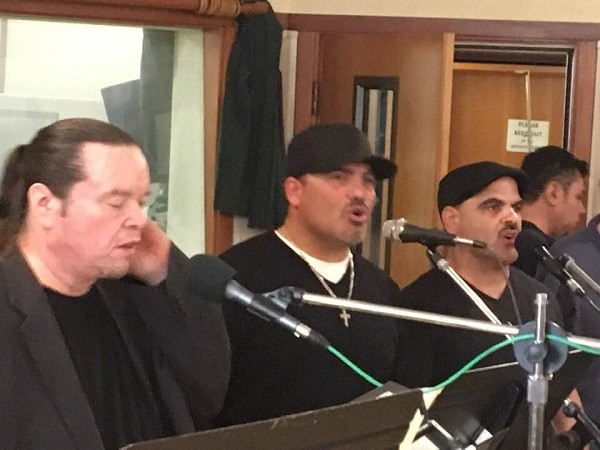
Earl Miranda and Ric Feliciano talk about the Latin Rhythm Boys and its history

Here we have Miranda and Feliciano

Good afternoon, we have here Earl Miranda, musical director of the Latin Rhythm Boys, and Ric Feliciano, writer and arranger for the group. Nice to meet you guys. It’s a pleasure to have you here.

Hi, Karina. It’s great to see you. We’re doing great.

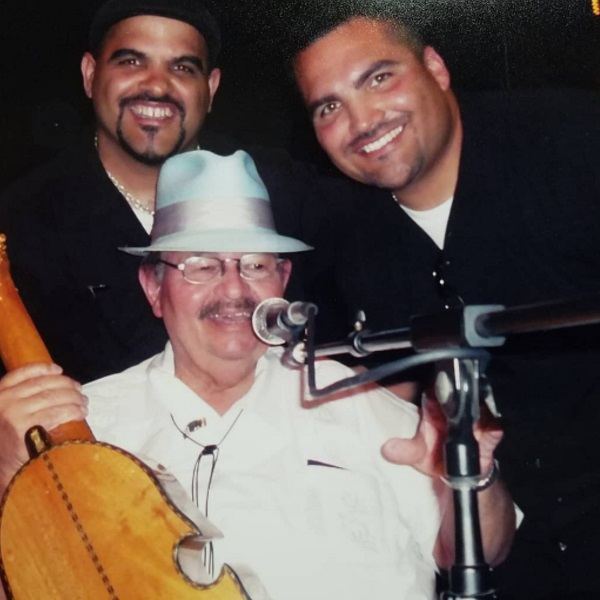
Earl Miranda, Henry Miranda, and Yomo Toro

Okay, wonderful. This project began with your father, Mr. Miranda, who was at the head of the group. What did you and your brother Henry learn the most from your father? How did you develop a love for music?

This all started when we were just kids. We had a lot of family celebrations like Christmas and my father’s band always came and play until three or four o’clock in the morning. My mother made food. Music was always very important to all of us from the beginning. When my father died in 1969, my brother started playing for some bands and I started working as a DJ until it got to the point where we got together and decided to start this whole project together.

Around 2003 or 2004, we contacted our cousin Ric Feliciano to ask him to join us. We started to develop a new salsa style. Ric came with the salsa flavor, while we had the jíbaro flavor, so we brought those two things together to start making music.

Mr. Feliciano, do you have anything to add?

Yes, I am a Boricua from New York, that is to say, a Nuyorican as people say here. Back in the 80’s and 90’s, I grew up listening to the music of Hector Lavoe, Mon Miranda, Willie Colón, among others. I am a trombonist and also like trombanga, which is the music of Mon Rivera and Willie Colón which involves placing trombones at the front of the group so that the sounds are very heavy. That is the style of the Latin Rhythm Boys, which seeks to look to the future, but honoring the stars of yesterday. Since we have three or four trombones and a very particular singing style, many people say we sound like La Fania, including Hector Lavoe’s timbalero, who tells us that our style reminds him a lot of the 70’s and 80’s.

When I listen to your music, it sounds a lot like old school salsa. Why choose that specific style?

For me, that style represents the story of which we come from. My family and his father come from Puerto Rico and moved to Hawaii. In 1963, my father made his life in the United States, California, but he actually started his band in 1957, which was called Junior Miranda and The Latin Rhythm Boys. Then, my brother called it The Latin Rhythm Boys Orchestra.

We have added certain elements to make our music more modern, but many of the arrangements are typical of old school salsa.

Earl Miranda, Henry Miranda and other members of the band

How Earl, Henry, and Ric work together

Mr. Miranda, you are the musical director of the Latin Rhythm Boys and your brother Henry is the music producer. How do you work together?

(Mr. Feliciano answers the question) Well, I’m the arranger, so what we do is Earl and I write all our lyrics together. My family comes from a long line of jíbaros, but we also love salsa. That’s why we are what we are today.

(Earl Miranda’s answer) We are a great team because I have a lot of ideas and Ric applies them in a phenomenal way. Things work out even better than when I thought of them.

We’ve been invited to awards shows and films to make soundtracks in Hollywood. We’ve done some jingles for certain Hollywood and Netflix films.

Mr. Miranda, you said in an interview that jibaro is more like heart and soul, what did you feel when you listened to jibaro music as a child? Why is jibaro music so important to you?

This taste for jibaro music started when I was a child. This reminds me of when I was with my family, my uncles, my aunts, my cousins and other members. It is in my soul. However, we knew we had to evolve into something more relevant. That’s how we created the group and decided to mix new with old. We look to the future, but honor the past.

There are many family members in the orchestra. Would you say this is a family project?

I would say that myself, Henry, Ric and Ricky Castillo are part of the same family. Certainly, there are many members of the family, but many things change over time and members get older, so they withdraw from group. There are also many members who are not family, but they become family and become very necessary for the band.

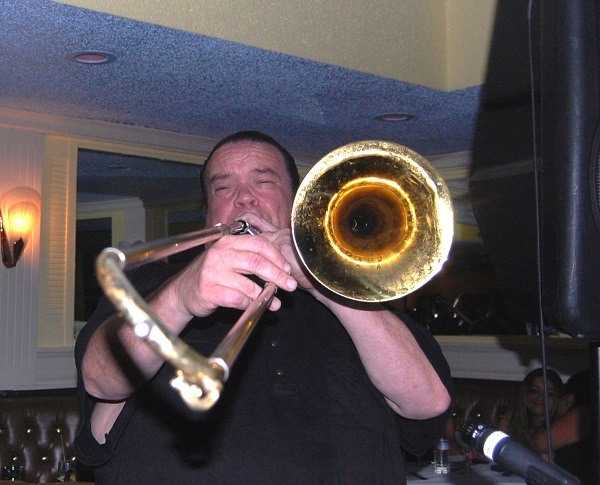
Ric Feliciano playing the trombone

This question is for Mr. Feliciano. I understand that you joined the orchestra in 2003. How did you join the Latin Rhythm Boys?

I came to California in the 90’s and was part of a few bands here, but I was looking for something that might take me back to my roots. That’s when I heard about the Latin Rhythm Boys (laughs) and decided it was a project I could work on. It brought me get back to my family roots, but we also achieved a new sound.

Music is very important to the family. You have always listened to Jíbara and Puerto Rican music. Would you say that education and training is important for musicians?

Yes and no. Musical training is important on the one hand, but on the other hand I think that music just flows. For example, I’m not very good at reading music, but it’s here in my heart. I could perceive it, even if I don’t have a lot of training around it. I think that’s part of the beauty of it all. Well, Ric is a teacher, so he can offer you another view on this subject.

(This is Mr. Ric Feliciano) Indeed, I am a teacher and I’ve been teaching music for over 30 years, but I must tell you something. Education is not enough to be a good musician because there is a connection that cannot be taught through a class. I’ve had many students who do everything right in technical terms, but they don’t have the necessary flavor. Not everybody has that. I think there needs to be a balance between feeling, flavor and education.

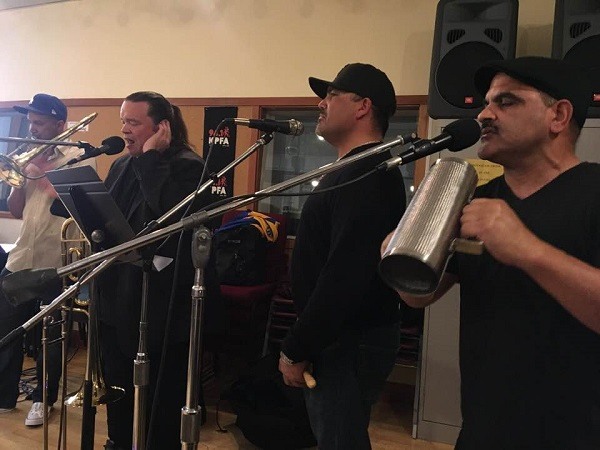
Ric, Earl, and Henry singing and playing

Do you have to be Latino to have that flavor?

We have some guys in the band who aren’t Latino, but they get the swing. We can work with anyone regardless of their ancestry, as we’ve had Americans and Europeans who have everything we’re looking for. We give them the sounds and they have no choice but to imitate them (laughs).

Do you consider it more important to make original music than to do covers?

Absolutely. If you have the talent and vision in your head, everything flows. I think if a person has a song in his/her head, he/she is going to want to translate into reality that idea and play it for an audience to see its reaction. If the reaction is good, you think you’ve done something right.

(This is Mr. Feliciano) What we usually do is to play our own songs at 90 per cent and covers at 10 per cent to please the audience. In fact, many people ask us for certain songs that they think they’re not ours, when, in reality, they are our hits from many years ago.

Ric, Earl, and Henry performing

Live The Salsero Rhythm In Asia

Thailand and Hong Kong are the two countries on the Asian continent that begin January with the sound of Salsa

couple dancing to Ritmo Salsero in Asia in Samui
Thailand and Hong Kong are the first two countries to start January to the Salsa rhythm

2022 starts in Asia to the Salsero rhythm with Dance Classes and a Festival. Thailand (located in Southeast Asia) is the first country to hold a Latin music festival after two years of cessation of social events due to the pandemic. Also, Hong Kong does its part, announcing the new season of Salsa Classes from the first week of this month. So don’t wait any longer and keep reading to find out the details of each event related to Latin music.

Koh Samui Latin Festival (4th Sensual Edition)

Couple dressed in colorful clothing dancing at Koh Samui Latin Festival
Koh Samui Latin Festival starts on January 13th from 9 AM

Koh Samui is the third largest island in Thailand. It has beautiful beaches and is located on the southern coast of the country. In this main island destination, the Koh Samui Latin Festival will take place in its fourth sensual edition at the Resort & Hotel Fair House Beach.

This one-of-a-kind festival with Latin morning beach parties (Four days), nightly training camps, workshops (from 10 AM to 5 PM), social dances, and themed shows (starting at 11 PM) with professional DJs will begin on Thursday, January 13th from 9 AM and will end on Sunday, January 16th at 4 PM.

The dance floor for the entire festival is 2,700 square feet. The large living room is equipped with air conditioning, a light system, and a quality sound system.

The beach parties at sunset will also take place at the Fair House Beach Resort & Hotel between 5 PM and 8 PM specifically at the “Sea Paint Beach Bar” near the beach with DJs playing the international hits of Salsa, Bachata, and Kizomba hits in the chill-out style.

The price for the four days of the festival is $ 75 (Full Pass) and includes an official festival t-shirt, access to all workshops (excluding training camps), entry to the three theme and beach parties, the Jack & Jill, and the shows.

The event venue, Fair House Beach Resort & Hotel is located on a hillside right next to Koh Samui’s Chaweng Noi Beach. Within the vicinity of the hotel, you will find a wide range of shops, numerous restaurants, cafes, bars, and other entertainment places.

Venue: Fair House Beach Resort & Hotel. Koh samui 124-124 / 1-2 Moo 3 Tambon Bophut, Amphur Koh Samui Suratthani 84320, Thailand

Salsa After Work

Couple dancing salsa with masks
End your workday dancing Salsa in the company of Dance With Style on Mondays and Wednesdays at Rula Live and Fire ‘N’

For eight years (2014) the Rula Live bar has delivered its premises to Salsa every Monday from 8 PM with free Salsa classes at all levels with Dance With Style. This Monday, January 3rd at 8:30 PM is the start of Afro-Caribbean dance lessons from beginners to advanced dancers. Then, the dance floor is open between 9 PM and 1:30 AM. Rula Live is at 58-62 D’aguilar Street, Lan Kwai Fong, Central, Hong Kong on the ground floor.

You can access this Latin event wearing masks throughout the party and hand sanitizers are available in different areas of the establishment. The dress code is elegant, so T-shirts, shorts, sportswear, and flip-flops are prohibited. Admission is also free but you must consume at least two drinks to enjoy the free Salsa classes.

  • You Can Also Read The Interview With Nora Suzuki

Dance With Style is a Hong Kong dance, events, and entertainment company that stands out from its competitors by offering high-quality Salsa, Bachata, and Salsa Cubana instruction for all ages.

This company also brings Latin Vibes Salsa / Bachata Party every Wednesday at Bar / Restaurant Fire ‘N’ located at Shop #2, ground floor, cosmos building, 8 – 11, Lan Kwai Fong, Central, Hong Kong.

Admission is free and you have the right to a Bachata class at no cost. DJ Javed will mainly play Salsa Romántica with a mix of Bachata, Merengue, and other Latin rhythms from 8:30 PM to 1:30 AM.

Every Wednesday night after work you will enjoy a lot of Latin music in a relaxed and friendly atmosphere, and if you are hungry you can enjoy its Thai menu. You must wear a mask at all times (except when eating / drinking) and sanitize your hands regularly. The dress code is elegant and lessons start on January 5th.

Say Goodbye To 2021 To Latin Rhythm In Austria

Get ready to enjoy yourself in the company of the Latino Mio dance school in Salzburg on the last night of the year

Couple dancing Salsa at the Latino Mío event in Salzburg, Austria
Start the countdown to the New Year at La Noche Latina 2021

Say goodbye to New Year’s Eve to the Latin rhythm in the country of Mozart together with the Latino Mio cultural and dance association, and create an unforgettable memory in Salzburg, the fourth most populated city in Austria.

Latino Mio is a dance school that teaches courses and workshops on Salsa, Bachata, Cha Cha & Tango, and they also organize many dance events throughout the year.

This academy brings you the most anticipated event of 2021, La Noche Latina, on Friday, December 31st at the cozy Italian restaurant with traditional Naples cuisine, Ristorante Pizzeria Jamme Ja.

The doors will open from seven at night with DJ Jhonny mixing the biggest hits of Salsa, Bachata, Kizomba, and Urban Music.

Easily forget your daily life with this lilting music and let yourself be seduced by the Latin American temperament.

Venue: Saalachstraße 74, 5020 Salzburg, Austria

And the next year it will be much better! The Latino Mio dance school is already in the preparations for the Latino Festival 2022 in the district of St. Veit im Pongau, Salzburg.

This event will feature live Salsa bands, samba shows, capoeira, traditional Latin American dances, workshops, animation, and much more in a family atmosphere.

The instructors will be led by Jhonny, founder of the cultural and dance association “Latino Mío” with 15 years of experience in the instruction of Salsa, Bachata, and Kizomba. Also, will be Dany “El Tango”, who is characterized by being a passionate teacher. Dany will help you develop your style with improvisation and spontaneity from the beginning.

They are joined by Claudia and Oscar. The first is an excellent dancer who will warmly and cheerfully teach you the dance steps, just as she will give you helpful advice on getting suitable footwear. While Oscar, will educate you and help you tune your ear to keep the rhythm of the movement.

It is worth noting that Oscar is a graduate of the Esnaola Music Conservatory of Buenos Aires (Argentina) and sings in various orchestras touring concerts in Europe and Argentina.

Date: Saturday, August 20th, 2022

Hour: 7:00 PM

Academy Address: Gstättengasse 16 5020 Salzburg, Austria

  • You Can Also Read: Walk This Route Of Latin Events In Switzerland Before 2022

These Data May Interest You At This Moment Of The Year:

View of the Mirabell Palace with the background of the cathedral and the Fortress in Salzburg, Austria
Mirabell Palace in Salzburg, Austria
  • Salzburg is one of the most beautiful and charming cities in Central Europe. Its Historic Center was declared a World Heritage Site by UNESCO in 1996, which attracted a greater number of international tourists a year.
  • One of the most visited places in this Austrian city is the Mirabell Palace. This magnificent seat was built in 1606 by Prince-Archbishop Wolf Dietrich. Its wonderful view of the cathedral and the imperious castle together with the perfectly manicured rose gardens makes it an extremely photogenic place. Access to the Mirabell Palace is free but a large part of its spaces are closed to the general public.
  • In Salzburg, you will also come across the “Mozart Birthplace” museum located on one of the main avenues. Here you will find the piano with which Mozart made his compositions, scores, and other personal belongings. The cost of entry does not exceed 10 euros.
  • And the place that most attracts visitors to Austria daily is the Hohensalzburg Fortress. It is located on a small hill in the heart of Salzburg. It was built in 1077 and has only received modifications dating back to 1500. The curious thing about this castle is that it never was taken by its enemies, and today it is one of the most preserved fortresses in Europe.
  • « Go to Previous Page
  • Page 1
  • Page 2
  • Page 3
  • Page 4
  • Page 5
  • Page 6
  • Interim pages omitted …
  • Page 129
  • Go to Next Page »

International Salsa Magazine (ISM) is a monthly publication about Salsa activities around the world, that has been publishing since 2007. It is a world network of volunteers coordinated by ISM Magazine. We are working to strengthen all the events by working together.