• Skip to primary navigation
  • Skip to main content

International Salsa Magazine

  • HOME
  • Previous editions
    • 2026
      • ISM / April 2026
      • ISM / March 2026
      • ISM / February 2026
      • ISM / January 2026
    • 2025
      • ISM / December 2025
      • ISM / November 2025
      • ISM / October 2025
      • ISM / September 2025
      • ISM / August 2025
      • ISM / July 2025
      • ISM / June 2025
      • ISM / May2025
      • ISM / April 2025
      • ISM / March 2025
      • ISM / February 2025
      • ISM / January 2025
    • 2024
      • ISM / December 2024
      • ISM / November 2024
      • ISM / October 2024
      • ISM / September 2024
      • ISM / August 2024
      • ISM / July 2024
      • ISM / June 2024
      • ISM / May 2024
      • ISM / April 2024
      • ISM / March 2024
      • ISM / February 2024
      • ISM / January 2024
    • 2023
      • ISM / December 2023
      • ISM / November 2023
      • ISM / October 2023
      • ISM – September 2023
      • ISM – August 2023
      • ISM July 2023
      • ISM Edition June 2023
      • ISM – May 2023
      • ISM April 2023
      • ISM March 2023
      • ISM February 2023
      • ISM January 2023
    • 2022
      • ISM December 2022
      • ISM November 2022
      • ISM October 2022
      • ISM September 2022
      • ISM August 2022
      • ISM July 2022
      • ISM June 2022
      • ISM May 2022
      • ISM February 2022
      • ISM January 2022
    • 2021
      • ISM December 2021
      • ISM November 2021
      • ISM October – 2021
      • ISM September 2021
      • ISM August 2021
      • ISM July 2021
      • ISM May 2021
      • ISM April 2021
      • ISM June 2021
      • ISM March 2021
      • ISM February 2021
      • ISM January 2021
    • 2020
      • ISM December 2020
      • ISM November 2020
      • ISM October 2020
      • ISM September 2020
      • ISM August 2020
      • ISM July 2020
      • ISM June 2020
      • ISM May 2020
      • ISM April 2020
      • ISM March 2020
      • ISM February 2020
      • ISM January 2020
    • 2019
      • ISM December 2019
      • ISM November 2019
      • ISM October 2019
      • ISM Septembre 2019
      • ISM August 2019
      • ISM July 2019
      • ISM June 2019
  • Spanish
  • Download Salsa App
    • Android
    • Apple

Search Results for: rhythm

Why Is Rhythm & Vibes Dance Popular In London?

Dsantos Dance UK now Rhythm & Vibes Dance

Couple dancing
Rhythm & Vibes Dance Company received a donation from the Arts Council England for #CultureRecoveryFund

The majority of Europeans agree that social dancing is the most popular nightlife activity in London. In addition to that, if you bet on enjoying the astonishing movements of Afro-Latin rhythms, the connection between unknown people who have the same desire to learn dance, you keep in shape without realizing it and release endorphins that increase the state of well-being, then the joy and the passion are greater. Rhythm & Vibes Dance has this key to triumph with fun included, making this Latin and African dance academy the most popular for six years in this cosmopolitan city of the 21st century.This school recognized by the Arts Council of England in 2020 for its contribution to culture, each week (before the global pandemic) was like a festival with more than 4000 people participating in the events each year led by national and international professional instructors with years of experience that made the dance lessons unmatched.

Rhythm & Vibes Dance, formerly known as Dsantos Dance UK, is developing a program of Salsa, Bachata, Kizomba, and Semba that will be safe and entertaining for everyone, to respect the rules of social distancing due to the Covid 19 Pandemic. This program of activities will be being announced on its website SOON.

LATIN DANCE CLASSES AND PARTY IN RV DANCE

English woman dancing with afroamerican man
After the fun dance lessons, the Salsa and Bachata party begins

Rhythm & Vibes Dance Company (RV Dance) was established in 2015 by director and dancer Richard Voogt. “We strive to create a festive atmosphere at each event, celebrating great music and culture in the way we know it best … Through fun yet professional classes, we create a space that brings together an eclectic mix of people to speak and socialize easily. Whether people come simply to try something new or want to build a career in dance, we welcome everyone with the same passion and enthusiasm”. Richard Said.

At RV Dance they raise the profile of social dance by promoting health, development, community unity, and cultural awareness that go beyond the joys of dance.

With their professionally designed study plan, anyone will be saying goodbye to those “two left feet” in a short time. Salsa classes are open to people of all ages and abilities at three levels (beginners, intermediate, and advanced). Each lesson lasts one hour and immediately afterward the Latin party will begin, where you can enjoy practicing your new steps with good music.

Young couple dancing
In individual classes, you will get the full benefit of focus and attention

But now, how do you identify at what level you can start? It is easy in this academy. Students in Level 1 (The most important and fun level) are beginners or those who have taken lessons for six months or less, which means they have attended less than 30 Salsa classes. At this level every week, they will work on the fundamental steps of this rhythm and the basic concepts of dance, in addition to complementing each week 10 additional, well-known, and fun movements as a couple. Also, the instructor will keep you alert weekly by making you dance freestyle with what you have learned.

Level 2 is for those who have danced for more than six consecutive months. At this level, the Salsa teachers will challenge you to put your movements of the genre in combinations; besides, they will present you with ten complex combos of work in a couple. Here, a lot of fun awaits you and you can last on this journey to the depth of Salsa for up to a year and a half approximately.

Finally, for the more advanced students is Level 3, for the lady and gentleman, who have mastered the techniques of Salsa and have taken one or more classes of this rhythm a week for more than two years. This level presents the most defiant combinations of this Afro-Caribbean genre, as well as the finer points of style and body movement.

Additionally, at RV Dance you can also have private, professional, and fun Salsa, Bachata, Cha Cha, Merengue, Kizomba, Semba, Kuduro & Afrohouse classes. Each lesson style provides the time and space necessary for the nationally and internationally recognized teacher to focus on the main aspects of dance technique, skill, or understanding in which a person wishes to excel.

@Latinasson, the online radio of Latin music and rhythms

It was one of the means of communication from the 20th century for people to stay informed anywhere or music to be aired whether at work, in places to dance, outside or at home. Latinasson was the first radio station in 1920 nwith its regular commercials and entertainment broadcasting, initially to England and France as the first countries to broadcast it along the English Channel.

The Radio industry in Venezuela:

Did you know that Venezuelan music is characterized by mixing Spanish, indigenous and African elements? Since the colonization of Latin America, there has been a mixture of these races, customs and cultures emerged, which derived in the emergence of various Latin rhythms both in Venezuela and in Latin America as a result of the mestizo people.

From May 23, 1926, the first Venezuelan radio station called AYRE started airing in Caracas and its first speaker was Alberto Mûller who made the first live radio broadcast; the radio was also supported by José Vicente Gómez, who was the son of President Juan Vicente Gómez; the radio was based on the reading of news from the Caracas newspapers, humor and music that could be live or on records; this radio show lasted 2 years until it closed down for political reasons. But this did not stop the opening of other radio stations from 1930 with the YVIBC station, which would become into Radio Caracas Radio 5 years later.

And as the years pass by, technology advances where televisions and other equipment appeared, endangering radio stations; even today there is strong competition in this area since up to the present time, people pull everything off the internet so radio stations had to adapt to this new technology, so instead of depending on a transmitted frequency in a certain sector, they are transmitted oover the internet either on a social network or their own web page, making information more live more often at an international level for all their followers.

One of the Caracas radio stations at which you can listen to a great variety of Latin music (especially “Salsa” and “Son”), information about artists at national and international level and upcoming events, we have the radio station @ Latinasson, (Latinas Son Ipradiodigital).

Which is transmited from 4 to 6 pm hour from Caracas, Venezuela, every Friday, with the participation of the broadcasters @ frankcroquers and @ hectovaloe2.

Latinas Son Radio
Latinas Son – Roberto Roena – flyers

On Friday, January 22, 2021, they will have an interview and, later, they will delight you with salsa music. In the second hour, they will be celebrating the Maestro Roberto Roena’s 80th birthday, who was born on January 16, 1940, in Mayagüez, Puerto Rico; he is bongo player, salsa dancer, and orchestal director, with his most listened songs: “El Traqueteo”, “Cui Cui”, “Aquellos que Dicen”, “Traicion”, “Sing a Simple Song”, “Roena Medley Dos..”, “Ponte Duro”, “Como te Hago Enetender”, “Avisale a mi Contrario”, “Guaguanco del Adios”, and others.

Don’t miss it and listen to this Latin radio station. Currently, you can listen to the station when connecting through the following options:

Google Chrome search:  www.iptvdigital.com/radio

Firefox Search: www.iptvdigital.com/

Phones (Smarphones) : iptvdigital.com/radio

Direct Access Transmission: https://zeno.fm/ip-radio/

Génesis of Salsa, its essence, characteristics, rhythm, history and expansión

Salsa and more Salsa

SALSA is the commercial term used since the late 1960s to define a Hispanic music genere, resulting from the synthesis of Cuban son and other Caribbean music genres with jazz and other American rhythms. Salsa has varieties from Puerto Rico, Venezuela, the Dominican Republic, Colombia and other Latin American countries.

From this synthesis, Afro-Cuban and Latin jazz was also born, which has influences from other countries as well. Salsa was developed by musicians of Caribbean origin (Cuban and Puerto Rican) in the Greater Caribbean and New York City. Salsa encompasses various styles such as salsa dura, salsa romantica and timba.

Genesis and expansion of salsa: chronology of themes

ESSENCE

Cuban director Machito said that salsa was what he had played for forty years (between 1930 and 1970 approximately) before the musical genre was named. On the other hand, the New York musician of Puerto Rican descent, Tito Puente, denied the existence of salsa as a genre in itself, affirming that “what they call salsa is what I’ve played for many, many years: it’s called mambo, guaracha, chachachá, guaguancó, everything is Cuban music.

The musician Eduardo Morales defines salsa as “a new turn of the traditional rhythms to the sound of Cuban music and the cultural voice of a new generation,” “a representation of Cuban and Hispanic identity in New York.

New York Salsa

It is also argued that the cut in cultural exchange between Puerto Ricans and the United States
New York Salsa

Nevertheless, some authors point out as a fundamental element in the emergence of salsa the role of Puerto Rican musicians and their culture, both on the island of Puerto Rico and in its New York diaspora. In that sense, the specific weight of Puerto Ricans in New York is pointed out, who, although a minority, were
Numerically far superior to any Latin American settlement.

It is also argued that the cut-off in cultural exchange between Puerto Ricans and the United States in New York’s Latin music scene.

MUSICAL CHARACTERISTICS
Rhythm: Uses the clave de son, the rhythmic pattern of the Cuban son, as a base

MUSICAL CHARACTERISTICS

Musical Instruments

The sauce has the following characteristics:

  • Rhythm: It uses as a base the clave de son, the rhythmic pattern of the Cuban son, which can be 2-3 or Melody:
  • In many cases, the melodies used in salsa correspond to those traditionally used in the son montunoa although it can also be assimilated to other genres of Cuban and traditional Caribbean music, including melodies of Latin American popular music.
  • Harmony: It corresponds to that used in Western music.
  • Instrumentation: It uses Cuban percussion instruments popularized since the 1920s such as pailaso timbales, bongo, Cuban güiro, cowbell, two maracas and conga.

Arsenio Rodríguez was the first musician to incorporate the conga or tambo into dance orchestras.

The percussion, the instrumentation is completed with piano, double bass (in many cases electric bass), trumpets, saxophone, trombones, flute and violin.

Puerto Rican Salsa
Puerto Rican Salsa

Puerto Rican Salsa

The influence of Afro-Cuban jazz is determined by the arrangement, although it is not an essential condition in salsa.

RHYTHM

Clave de son the most representative rhythmic cell of salsa is called “clave de son” which is traditionally interpreted by the claves.

Salsa dancers and musicians group the pattern into two parts:
1. A) A part of 3 clave touches where an intermediate counter rhythm is presented.
2. B) A part of 2 keystrokes of clave 2 without a counter rhythm.

The numbers represent the blacks, the plus sign [+] represents the hit of the claves, and the dot [.] represents each quaver.
“son key 3-2”
1 . 2 . 3 . 4 . 1 . 2 . 3 . 4 .
+ . . + . . + . . . + . + . . .
“son key 2-3”
1 . 2 . 3 . 4 . 1 . 2 . 3 . 4 .
. . + . + . . . + . . + . . + .

Rumba key
There is another similar rhythmic pattern that is rarely used in salsa, and comes from the Cuban rumba complex. This pattern presents 2 counter-rhythms in one of its parts.
“rumba clave 3-2”
1 . 2 . 3 . 4 . 1 . 2 . 3 . 4 .
+ . . + . . . + . . + . + . . .
“clave e rumba 2-3”
1 . 2 . 3 . 4 . 1 . 2 . 3 . 4 .
. . + . + . . . + . . + . . . +

Son Key (3-2)
The clave is not always played directly, but forms the basis of other percussion instruments, as well as the song and accompaniment, which use it as a common rhythm for their own phrases. For example, this is the common rhythm of the bell with harpsichord 2-3:
. . + . + . . . + . . + . . . + clef 2-3
+ . * . + . * * + . * * + . * * Bell coincides with the 2 of key
The plus sign [+] represents a severe blow of the bell.
The asterisk [*] represents a sharp blow of the bell.

Salsa Cubana
In 1933, Cuban musician Ignacio Piñeiro first used a related term, in a Cuban son entitled “Échale salsita.

THE TERM SALSA
In 1933, Cuban musician Ignacio Piñeiro first used a related term, in a Cuban son entitled “Échale salsita”.

In the mid-1940s, Cuban Cheo Marquetti emigrated to Mexico.

Back in Cuba, influenced by spicy food sauces, he gave that name to his group Conjunto Los Salseros, with whom he recorded a couple of albums for the Panart and Egrem labels. In 1957 he traveled to Caracas-Venezuela for several concerts in that city and it was in Venezuela where the word “salsa” began to be broadcast on the radio to the music made by Cuban soneros inside and outside the island, designating them as “salseros”.

Music author Sue Steward states that the word was originally used in music as a “cry of appreciation for a particular spice or a quick solo,” coming to describe a specific genre of music from the mid-1970s “when a group of “Latin” (Latin American) musicians from New York began examining the arrangements of the great popular classical bands from the mambo era of the 1940s and 1950s.

She mentions that the first person who used the term “salsa” to refer to this musical genre in 1968 was a Venezuelan radio disc jockey named Phidias Danilo Escalona, who was broadcasting a morning radio program called La hora de la salsa (The Salsa Hour) in which Latin music produced in New York was broadcast as a response to the bombardment of rock music in those days (the Beatlemania).

The Time for Salsa According to this version, Phidias Danilo Escalona

Salsa time
Venezuelan radio disc jockey named Phidias Danilo Escalona

What do you play?
What we do, we do with flavor, it’s like ketchup, which gives flavor to food.
What is this ketchup?
Well, that’s a sauce that is used in the United States to flavor the hamburger.Ah…! So what you guys play is sauce? Well, ladies and gentlemen, let’s now listen to the salsa of Ricardo Ray and Bobby Cruz.

Bobby Cruz called Pancho Cristal to baptize with the term “salsa” the new LP that was being launched to the market, Los Durísimos (1968). This version is supported by salsa singers such as Rubén Blades, Tite Curet Alonso and others.
It was lunchtime, time for the dressing, the flavor, and of course, the Cuban son, the guaguancó, the guaracha and the montuno.

Ed Morales also mentions the word as being used to encourage a band to increase the tempo and “put the dancers on top” to welcome a musical moment, [and] express a type of cultural nationalism, proclaiming the warmth and flavor of Latino culture.

He also mentions Johnny Pacheco, who made an album called Salsa na’ má, which Morales translated as “you just need a little bit of salsa or seasoning.

The word salsa to designate music made by “Latinos” in the United States, began to be used on the streets of New York in the late 1960s and early 1970s.

By this time, Latin pop was not a major force in the music heard in the United States as it lost ground to doo wop, R&B and rock and roll.

The emergence of salsa opened a new chapter of Latin music in American popular music where the Fania All-Stars orchestra, directed by Dominican Johnny Pacheco who along with the late lawyer Jerry Masucci founded the important salsa label Fania Records.

HISTORY AND EXPANSION

During the 1930s, 1940s and 1950s, Afro-Cuban music was widely consumed by sectors of “Latino” (‘Latin American’) origin in New York City. Cubans in New York, Puerto Ricans, and other musicians from other countries, based their music largely on elements of Afro-Cuban origin.

According to some musicians and historians, [who?] salsa is a trade name given to all Cuban music in the 1970s. Salsa expanded in the late 1970s and during the 1980s and 1990s.

New instruments, new methods and musical forms (such as songs from Brazil) were adapted to salsa, and new styles appeared like the love songs of romantic salsa.

Meanwhile salsa became an important part of the music scene in Cuba, Puerto Rico, Colombia, Dominican Republic, Venezuela, Panama and as far away as Japan. With the arrival of the 21st century, salsa has become one of the most important forms of popular music in the world.

Origins and instrumentation:
The integration of the tumbadoras and bongo in the groups that played son montuno was a fundamental element in the instrumentation of dance orchestras.

In the late 1920s, the son sextets and septets, which used bongo, reached a remarkable popularity in Cuba
Bongo and Tumbadoras

In the late 1920’s, the son sextets and septets, which used bongo, reached a remarkable popularity in Cuba. In 1928, Gerardo Machado, with the intention of reducing the influence of African elements in Cuban music, prohibited the use of bongo, congas and carnival groups, which caused the charangas orchestras with the use of timbales) to increase their popularity.

Bongo was reintroduced into Cuban popular music in the late 1930s.
Around 1940, Rafael Ortiz’s Conjunto Llave introduced the tumbadoras or congas into an orchestra, instruments that were previously only used in Afro-Cuban folk music.

Arsenio Rodríguez popularized the use of congas by integrating them into his ensemble, introducing the son montuno on a commercial level.

In the 1940’s, Mario Bauza, director and arranger of Machito’s “Los Afro-Cubans” orchestra, added trombones to the son montuno and the guaracha. These innovations influenced musicians such as José Curbelo, Benny More, Bebo Valdés. In the album Tanga (1943), Bauza fused elements of Afro-Cuban music with jazz.

The influence of Afro-Cuban jazz and the mambo developed by Pérez Prado in 1948 led to the introduction of the saxophone in the son montuno and guaracha orchestras. In 1955, Enrique Jorrín added trumpets to the charanga orchestras, which until then only used violin and flute.

By the 1950s, Cuban dance music, i.e., the son montuno, mambo, rumba, and chachachá, became very popular in the United States and Europe.
In New York City, the “Cuban sound” of the bands was based on the contributions of Cuban, Puerto Rican, and Dominican musicians. As an example, we can mention Machito, Tito Rodríguez, Johnny Pacheco, Tito Puente or even figures like the Catalan director Xavier Cugat.

On the other hand, and outside the New York circle, groups such as the Orquesta Aragón, the Sonora Matancera and Dámaso Pérez Prado y su mambo achieved an important projection at an international level.
The mambo was influenced by Afro-Cuban jazz and son. The great bands of this genre kept alive the popularity of the long tradition of jazz within Latin music, while the original masters of jazz limited themselves to the exclusive spaces of the bebop era.

The Latin music played in New York since 1960 was led by musicians like Ray Barretto and Eddie Palmieri, who were strongly influenced by imported Cuban rhythms such as the pachanga and the chachachá. After the missile crisis in 1962, Cuban-American contact declined dramatically.

In 1969 Juan Formell introduced the electric bass into Cuba’s sonero ensembles.
The Puerto Rican cuatro was introduced by Yomo Toro in Willie Colón’s orchestra in 1971 and the electric piano in the 1970s by Larry Harlow.

In the 1970s, Puerto Rican influence increased in the field of Latin music in New York and the “Nuyoricans” became a fundamental reference.

The word salsa to designate the music made by “Latinos” in the United States, began to be used on the streets of New York at the end of the sixties and beginning of the seventies.

By this time, Latin pop was not a major force in the music heard in the United States, having lost ground to doo wop, R&B and rock and roll. In that context, the emergence of salsa opened a new chapter in Latin music, especially in the United States.

The Fania record label
Fania All Stars
The Fania record label
Fania All Stars

The history of salsa, in which a large number of musicians participated, can be traced to some extent in the history of some important record companies.

In the seventies, Fiesta Récord, Manhattan Recording Company, and especially Fania Records, launched a great number of “salseros” from New York, performing tours and concerts all over the world.

Fania Records was founded in March 1964 by lawyer and businessman Jerry Masucci and Dominican flutist and bandleader Johnny Pacheco.

Fania began with Larry Harlow and the production of El Malo by Willie Colón and Héctor Lavoe in 1967.
Fania Records gave the genre its definitive backing by recording and distributing the albums of the great majority of salsa stars of the 1970s.

Within this company, the Fania All Stars were formed, an orchestra that brought together a large number of musicians and salsa singers such as: Ray Barretto, Willie Colón, Johnny Pacheco, Rubén Blades, Héctor Lavoe, Ismael Miranda, Cheo Feliciano, Bobby Cruz, and guest artists such as Tito Puente, Celia Cruz, and Eddie Palmieri.

The Fania All Stars instrumental ensemble represented the new tours of Caribbean music in the 1970s. In addition to the piano and bass, the presence of percussion instruments such as timba, tumba and bongo were used extensively by Puerto Rican and New York orchestras since the 1940s.

The wind instrument section was made up of three trumpets and three trombones, a rather strange endowment in the Caribbean musical tradition that would shape the particular sound of Salsa to this day.

The absence of the saxophone was remarkable, since at that time it belonged to musical concepts of the past and to the magnificence of the Big Band. The substitution of the saxophone for the trombone made it possible to differentiate, to some extent, the sound of salsa from the traditional Cuban sound.

Finally, the presence of the Puerto Rican Cuatro played by the musician Yomo Toro, who joined the group to bring the guitar from the rural Caribbean to the urban music scene (both the Cuban Tres and the Puerto Rican Cuatro), stands out.

The Puerto Rican Cuatro acquired the status of soloist and flagship instrument in the Fania All Stars while establishing the instrumental and sound differences with Cuban music.

Salsa and more Salsa is the commercial term used since the late 1960s
Genesis of Salsa
Genesis and expansion of salsa: chronology of themes

In 1969, El Gran Combo de Puerto Rico recorded “Falsaria”. This song, initially a bolero, was interpreted as salsa.

Also Willie Colón’s orchestra with Héctor Lavoe as vocalist, recorded “Che che cole” and other important songs.
In 1965 Joe Cuba Sextet, with the singer Cheo Feliciano, recorded the song “El pito (I’ll never go back to Georgia)” and the same year the duo composed by Richie Ray and Bobby Cruz recorded the song “Comején”.

In 1971, Eddie Palmieri recorded the song “Vámonos pa’l monte” and Cheo Feliciano, as a soloist, recorded “Anacaona”.

In 1972 Fruko y sus Tesos, in Colombia, recorded “A la memoria del muerto”.
In 1973 Raphy Leavitt with La Selecta Orchestra recorded “Jíbaro soy”. At the same time, in Peru the song “Llegó la banda” by Enrique Lynch and his band was recorded, the same one that would be popularized by Hector Lavoe a year later.

In 1974 Celia Cruz and Johnny Pacheco recorded “Quimbara” and the salsa version of the Peruvian song “Toro Mata”, and Ismael Rivera did the same with “El nazareno”.
On the other hand, the Fania All Star festival held in Zaire that same year was an outstanding event in the diffusion of salsa.

In 1975, Venezuela’s Dimensión Latina, with Oscar de León as vocalist, recorded “Llorarás”, Fruko y sus Tesos recorded “El preso”, and El Gran Combo from Puerto Rico, “Un verano en Nueva York”. Héctor Lavoe began his career as a soloist with the song “Periódico de ayer”.

In 1978 La Sonora Matancera recorded “Mala mujer”. Likewise, the duo formed by Willie Colón and Rubén Blades published the album Siembra, which contained emblematic salsa songs such as “Pedro Navaja” and “Plástico”.
In 1980 Henry Fiol released his songs “Oriente” and “La juma de ayer”.

From New York, salsa expanded first in Latin America (especially in countries like Cuba, Colombia, Panama, Dominican Republic, Venezuela and obviously Puerto Rico.
In the eighties it reached an important diffusion in Europe and Japan.

Miami became a kind of “second metropolis” for Cuban music, given the specific weight of the large number of Cuban immigrants.

The Cuban community became an important reference in the life of the city of Miami, contrary to what happened in New York, where the Puerto Rican influence prevailed.

Salsa after the seventies

Eighties
During the eighties the sauce expanded to Europe and Japan. In this country the Orquesta de la Luz was born, which became popular in Latin America.

At the end of this decade the so-called “salsa romántica” emerged, a style that became popular in New York, characterized by slow melodies and romantic lyrics, that is, a concept similar to the lyrics of the ballad but with a salsa rhythm.

This new manifestation of salsa was soon assimilated by Puerto Rican artists such as Frankie Ruiz, Eddie Santiago, Paquito Guzmán, Marc Anthony, Willie González, Cano Estremera; Cubans such as Dan Den, Rey Ruiz, Issac Delgado, and even Nicaraguans such as Luis Enrique.

Colombian Salsa
Colombian Salsa

In Colombia

Colombian Salsa

Salsa in Colombia, in the 1970s, was linked to groups like Fruko y sus Tesos through the company Discos Fuentes de Colombia and the group The Latin Brothers.

In 1988, the record company Discos Musart published the series of LP Salsa Colección Estelar, which caused an increase in popularity and led it to compete with cumbia.

In the eighties groups like Los Titanes, Grupo Niche, Orquesta Guayacán, Joe Arroyo appeared. Also in the eighties, the Cuban Roberto Torres and the Colombian Humberto Corredor developed in Miami the concept of charanga-vallenata.

Venezuelan Salsa
En ese tenor, se puede hablar de artistas como Canelita Medina, Federico y su Combo Latino, Los Dementes o el grupo del músico Carlos Emilio Landaeta, conocido como “Pan con queso” del Sonero Clásico del Caribe

Venezuelan Salsa

From the end of the 1940s and the beginning of the 1950s, the “tropical dance music” orchestras such as Alfonso Larrain’s (1947), La Sonora Caracas (1948) or maestro Billo Frómeta’s, Billo’s Caracas Boys (1951) or Los Melódicos (1958), combined in their repertoires cumbias, merengues and other Antillean rhythms with Cuban genres.

This determined the emergence of a movement that later influenced Venezuelan salsa.
In this sense, we can talk about artists such as Canelita Medina, Federico y su Combo Latino, Los Dementes or the group of the musician Carlos Emilio Landaeta, known as “Pan con queso” of the Caribbean Classic Sonero.

The salsa in Venezuela counted with groups like the Sonora Maracaibo, the Grupo Mango or Dimensión Latina, from where figures like Oscar D’León came out.

Also musicians like Nelson Pueblo added influences of llanera music to native salsa.
From 1990 to the present.
Salsa registered regular growth between the 1970s and 2000 and is now popular in many Latin American countries and some areas of the U.S. market.

Among the singers and groups that stood out in the nineties we find figures such as Rey Ruiz, Luis Enrique, Jerry Rivera, Dan Den, Marc Anthony, La InRosa, Víctor Manuelle, Michael Stuart, Celia Cruz, Maelo Ruizdia, La Sonora Matancera, DLG, Gilberto Santa .

The most recent innovations in this genre include mixing rap or reggaeton with salsa dura.
Salsa is one of the genres of “Latin” music that has influenced the music of West Africa.

An example of this influence is the group Sonero Africando in which New York musicians work with African singers such as Salif Keita and Ismael Lo.

The irruption of sensuality
From the eighties onwards, salsa orchestras began to move away from loud sounds and “descargas” to a more cadenced and melodic sound, accompanied by lyrics with abundant references to love and sexual relations as the main and, in some cases, exclusive reason.

This music was called “erotic salsa” and had as maximum exponents Eddie Santiago, Frankie Ruiz, Rey Ruiz, Willie González and Luis Enrique.

The categorization of erotic salsa resulted in the name of the previous genre as “salsa dura”, which suffered a decline in production and popularity at the same time that the new genre was consolidated. It is worth noting that in these opinions and texts about salsa there are any number of singers who are still active with it today and there are an infinite number of recordings made by them or orchestras that were not made known and that is where the work of the music lover or DJs comes in, IN DIFFERENT PARTS OF LATIN AMERICA.

Home

David Frankel pursued music and created Avenida B Band to reconnect with the memory of his father

After coupling on our schedules, we were able to speak with bandleader and pianist David Frankel, whose story of how he became interested in music and eventually dedicated himself to it is truly fascinating. It also shows that not only Latinos and their descendants can fall in love with these rhythms, but also people outside our culture. This is because David has Russian and Polish heritage, which did not prevent him from falling in love with Latin music so intensely.

David and Ricky playing
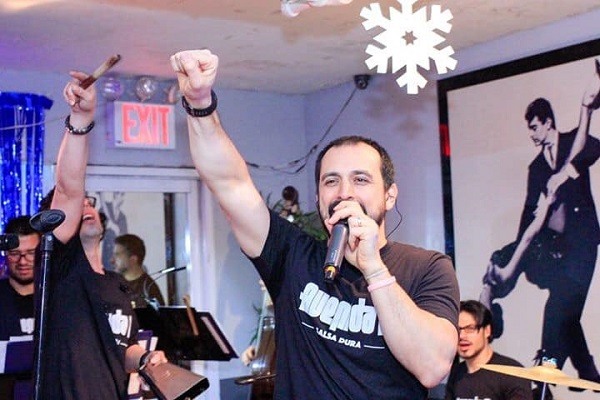
David Frankel and Ricky Rosa playing live some years ago

What inspired David to pursue music

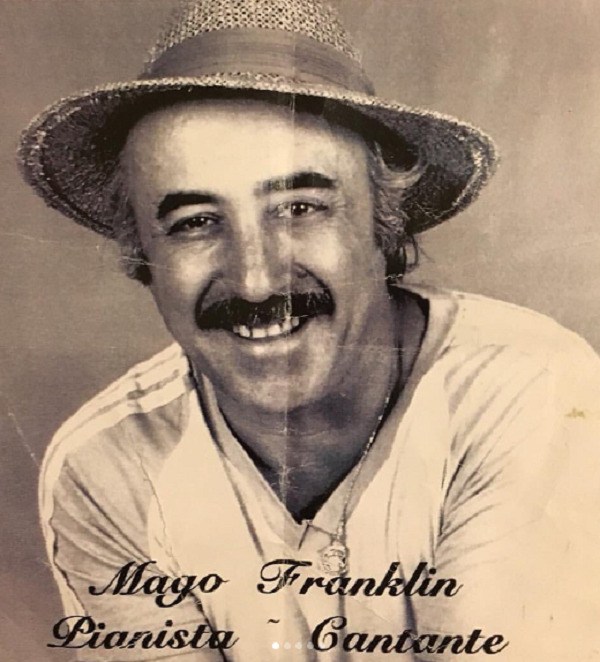
David was born in Lower Manhattan, New York, where there were many Latin families at the time. The neighborhood housed many Puerto Ricans and Dominicans. To this we must add that his father, Daniel “El Mago del Órgano” Franklin, was a musician and moved to that very place where Papote Jiménez, Ismael Miranda, Markolino, Freddy Lugo, Henry Fiol, Luis Ayala, and many others lived. Besides being a neighborhood full of artists, it was much cheaper living there, so he thought it was the ideal place for him.

It is worth noting that Daniel knew how to write music and read scores, but he had never played Latin music before in his life. He began to know it when several musicians he worked with asked for his help to read their scores, which led him to fall in love with Afro-Cuban music and develop an interest in salsa and merengue.

When David was born in 1979, Daniel had already been making music for about 15 years and had earned the nickname “The Organ Wizard” thanks to some band competitions held at a club in the Bronx. From a very young age, the boy watched bands rehearsing on the first floor of his house, so this salsa scene was natural for him. However, David had nothing to do with music until the death of his father in 2003.

David never had any interest in entering the art world, but the void left by Daniel’s death in his life drove him to study music, looking to connect with his father in some way. From there, he began taking piano and percussion classes, but he did not stop there. He also started to go out social dancing in the New York nightclubs and to know a bit more the nightlife of the city. On one occasion, a woman left him alone on the dance floor, and he was so ashamed in that moment that he decided to take classes and learn to dance.

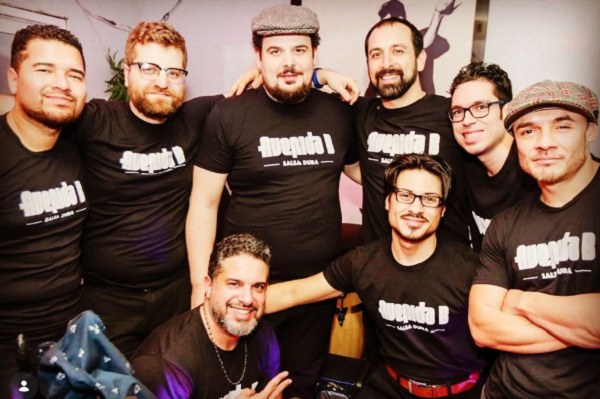
David and the rest of Avenida B
The Avenida B Crew:
Juan Bowers – piano
Alvin Céspedes – bass
Ricky Rosa – congas/coro
Brian Pozo – bongos/coro/stage direction
Jhohan Hernandez – timbales
Demetrios Kehagias – trombone
Dan Lehner – trombone
David Frankel – lead vocals

That was when he realized that all the local bands played almost the same genres and songs, but there was no need for that because there was a world of possibilities in the Latin music he had discovered during his classes. There is a world beyond La Fania, and he learned that thanks to dance schools. All this thinking led him to create his own band with different music, to the old-school style he had always loved. 

His father had always told him salsa is for dancing, and if you are not playing dance music, you are doing it wrong.

Which teachers taught David?

After thanking us for the question, David then proceeded to explain that there was a school in New York called the Harbor Conservatory for the Performing Arts, located at 104th Street and Fifth Avenue in Manhattan. The heads of the education programmes there were Ramón Rodríguez and Louis Bauzó, who were excellent musicians and great people whom he met thanks to his father, who was a piano teacher at that institution. David used to accompany Daniel to the school and met both teachers through him.

Following his father’s death, David returned to that same conservatory to study singing with Ramón, while also studying percussion with Georgie Delgado and piano with Louis. In short, this institution was of vital importance for his career, and the many things he learned there were momentous both personally and professionally. 

As for the dance, he enrolled at the Baila Society school in New York through some friends, but later studied at others such as Santo Rico Dance and Dance On 2.

Jimmy and David
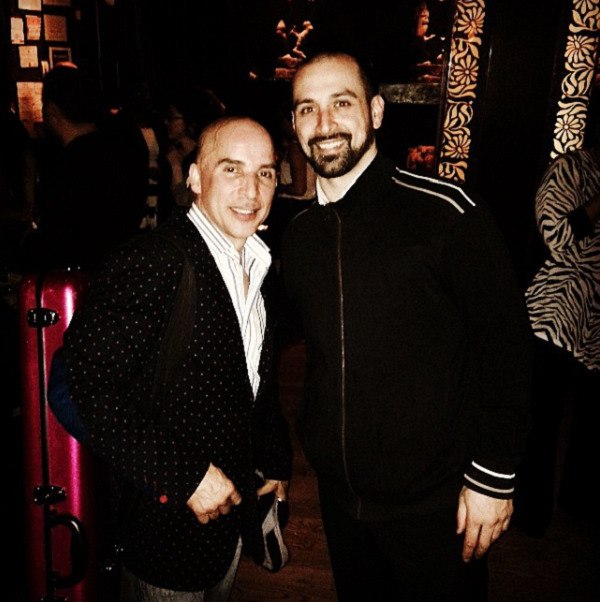
Jimmy Bosch and David Frankel

Avenida B Band

David began his career as a musician by playing boogaloo with a group called Spanglish Fly and a few other small bands. After everything he had studied and learned, already for the year 2011, the idea of creating his own group started percolating in his mind, so he posted an ad online looking for musicians and called some former classmates who might be interested in the proposal. That was how he managed to gather a decent number of people with whom he could finally put the Avenida B project together.

He chose salsa dura as his main genre because it is the kind of music that makes him want to dance, and given his background, this was very important to him.

He is also about to release an album in tribute to his father, which he has named “El Mago,” and it will feature some of his own songs; it is scheduled to be released in July 2026. 

David's father
Daniel ”El Mago del Órgano” Franklin, David’s father

Read also: Puerto Rican bandleader and musician Diana Sosa talks about her many projects in Nashville, Tennessee

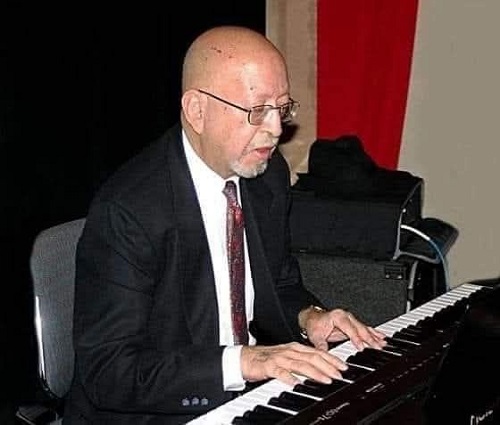
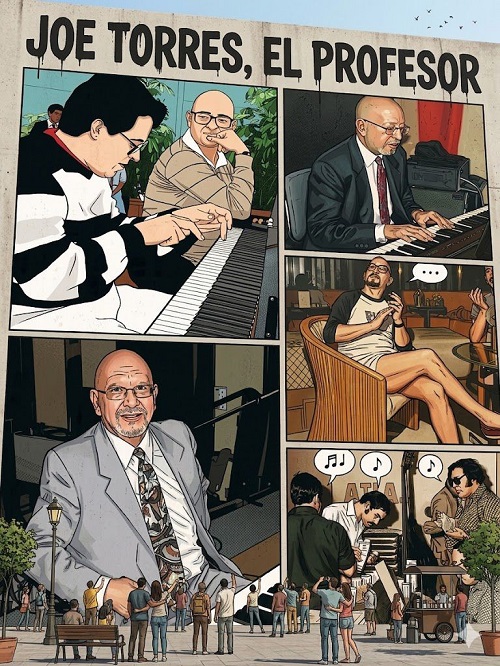
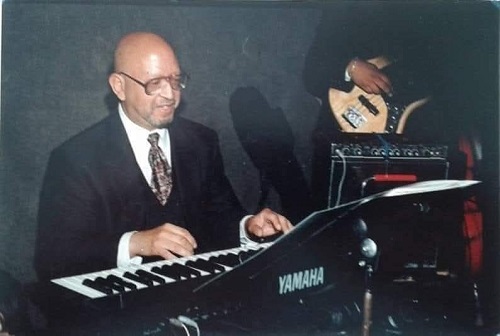
The Piano That Schooled the World the Eternal Legacy of “Professor” Joe Torres

The history of salsa is not only written by the voices of its idols or the thunder of its brass; it is written, fundamentally, on the black and white keys of those who knew how to sustain the pulse of an era.

On April 13, 2020, in the quiet of a Bronx hospital, the “backbone” of Salsa Dura passed away at the age of 76: José Manuel Torres, known universally as “Professor Joe.”

Jose Manuel Torres Professor Joe Torres passed away on this day, April 13, 2020, in the Bronx, New York City, at the age of 76

Born in Manhattan on November 29, 1943, a son of the Puerto Rican diaspora from Guayama and Ponce, Torres embodied the pure essence of the Nuyorican.

Raised on Fox Street, his destiny was sealed in the hallways of P.S. 52 an elementary school that would eventually become the academic sanctuary of Latin music in the South Bronx.

Excellence as the Standard: From Neighborhood Sound to Musical Glory

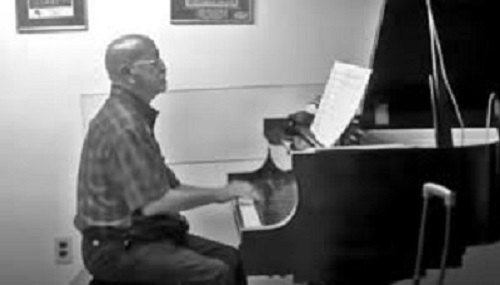
His nickname, “The Professor,” was no mere poetic license. In a musical ecosystem where many relied on intuition, Joe possessed an almost mathematical skill: sight-reading.

Un pianista maravilloso, que no se parece a nadie

His technical precision allowed him to navigate elegantly between formal discipline and “street” flavor (sabor).

After debuting in the 1960s with the “King of the Bass,” Bobby Valentín, on seminal albums like Bad Breath, his career took a definitive turn when he joined the orchestra of a young, rebellious Willie Colón.

Replacing the virtuoso Mark Dimond, Torres didn’t just fill a void; he defined an aesthetic. For a quarter-century, he was the harmonic architect behind the two greatest giants of the genre: Willie Colón and Héctor Lavoe.

“As the pianist for the band, Professor Joe Torres was excellent,” Colón would recall years later.

It is his piano that resonates in the urban chronicles of Cosa Nuestra; the piano that provides the festive nostalgia in both volumes of Asalto Navideño a cornerstone of Puerto Rican identity and the piano that sustains the rhythmic tension in classics like The Big Break (La Gran Fuga) and Lo Mato.

There was no Fania milestone where Joe did not leave his mark, from the social lyricism of Siembra and Maestra Vida with Rubén Blades, to the raw power of Lavoe’s solo career.

Joe acompañó a Willie Colón y Héctor Lavoe en gran parte de sus grabaciones

Humility in the Shadows: The Man and the Legend

Despite participating in more than thirty productions that are now considered world cultural heritage, Joe Torres never felt the urge to claim the spotlight of a frontman.

As his colleague José Mangual Jr. noted, his humility was as vast as his talent. He preferred the rigor of the studio and the camaraderie of the stage, balancing his musical genius with his work as a computer technician a duality that spoke to his sharp intelligence and adaptability.

El Piano que Dictó Cátedra el Legado Eterno del “Profesor Joe” Torres

His legacy was celebrated in the year 2000 during the historic reunion concert of the “P.S. 52 Alums,” immortalized in the documentary From Mambo to Hip Hop. There, surrounded by titans like Ray Barretto and Manny Oquendo, Joe remained the same: a man with a kind smile and a sharp mind who, according to Blades, represented the true “gentlemanliness” of salsa.

Today, years after his passing, the void at the piano bench remains felt. The “Professor” didn’t just teach people how to read music; he taught that true greatness does not require noise.

His music lives on in every descarga, reminding us that as long as there is a piano playing in the Bronx, the echo of José Manuel Torres will never stop schooling the world.

Also Read: International Salsa Magazine presents essential trivia and facts about Héctor Lavoe.


  • « Go to Previous Page
  • Page 1
  • Interim pages omitted …
  • Page 3
  • Page 4
  • Page 5
  • Page 6
  • Page 7
  • Interim pages omitted …
  • Page 129
  • Go to Next Page »

International Salsa Magazine (ISM) is a monthly publication about Salsa activities around the world, that has been publishing since 2007. It is a world network of volunteers coordinated by ISM Magazine. We are working to strengthen all the events by working together.