• Skip to primary navigation
  • Skip to main content

International Salsa Magazine

  • HOME
  • Previous editions
    • 2026
      • ISM / March 2026
      • ISM / February 2026
      • ISM / January 2026
    • 2025
      • ISM / December 2025
      • ISM / November 2025
      • ISM / October 2025
      • ISM / September 2025
      • ISM / August 2025
      • ISM / July 2025
      • ISM / June 2025
      • ISM / May2025
      • ISM / April 2025
      • ISM / March 2025
      • ISM / February 2025
      • ISM / January 2025
    • 2024
      • ISM / December 2024
      • ISM / November 2024
      • ISM / October 2024
      • ISM / September 2024
      • ISM / August 2024
      • ISM / July 2024
      • ISM / June 2024
      • ISM / May 2024
      • ISM / April 2024
      • ISM / March 2024
      • ISM / February 2024
      • ISM / January 2024
    • 2023
      • ISM / December 2023
      • ISM / November 2023
      • ISM / October 2023
      • ISM – September 2023
      • ISM – August 2023
      • ISM July 2023
      • ISM Edition June 2023
      • ISM – May 2023
      • ISM April 2023
      • ISM March 2023
      • ISM February 2023
      • ISM January 2023
    • 2022
      • ISM December 2022
      • ISM November 2022
      • ISM October 2022
      • ISM September 2022
      • ISM August 2022
      • ISM July 2022
      • ISM June 2022
      • ISM May 2022
      • ISM February 2022
      • ISM January 2022
    • 2021
      • ISM December 2021
      • ISM November 2021
      • ISM October – 2021
      • ISM September 2021
      • ISM August 2021
      • ISM July 2021
      • ISM May 2021
      • ISM April 2021
      • ISM June 2021
      • ISM March 2021
      • ISM February 2021
      • ISM January 2021
    • 2020
      • ISM December 2020
      • ISM November 2020
      • ISM October 2020
      • ISM September 2020
      • ISM August 2020
      • ISM July 2020
      • ISM June 2020
      • ISM May 2020
      • ISM April 2020
      • ISM March 2020
      • ISM February 2020
      • ISM January 2020
    • 2019
      • ISM December 2019
      • ISM November 2019
      • ISM October 2019
      • ISM Septembre 2019
      • ISM August 2019
      • ISM July 2019
      • ISM June 2019
  • Spanish
  • Download Salsa App
    • Android
    • Apple

Search Results for: salsa in venezuela

Charlie Pérez and his “Salsa Con Sabor” Ft Nestor Pacheco

North America / Dominican Republic / Santo Domingo

Did you know that the Venezuelan percussionist, composer and producer Néstor Pacheco joined forces and collaborated with the salsa producer, marketer, promoter and diffuser Charlie Pérez, who is currently the director of the page salsaconsabor.net, a platform for the diffusion of salsa already be informative, videos, tropical music and entertainment.
Charlie Pérez
Charlie Pérez

On this occasion, the new song by Charlie Pérez was launched on the page salsaconsabor.net, who called it “Salsa Con Sabor”. This cut is for the enjoyment of the dancers and you can find it available on all digital platforms.
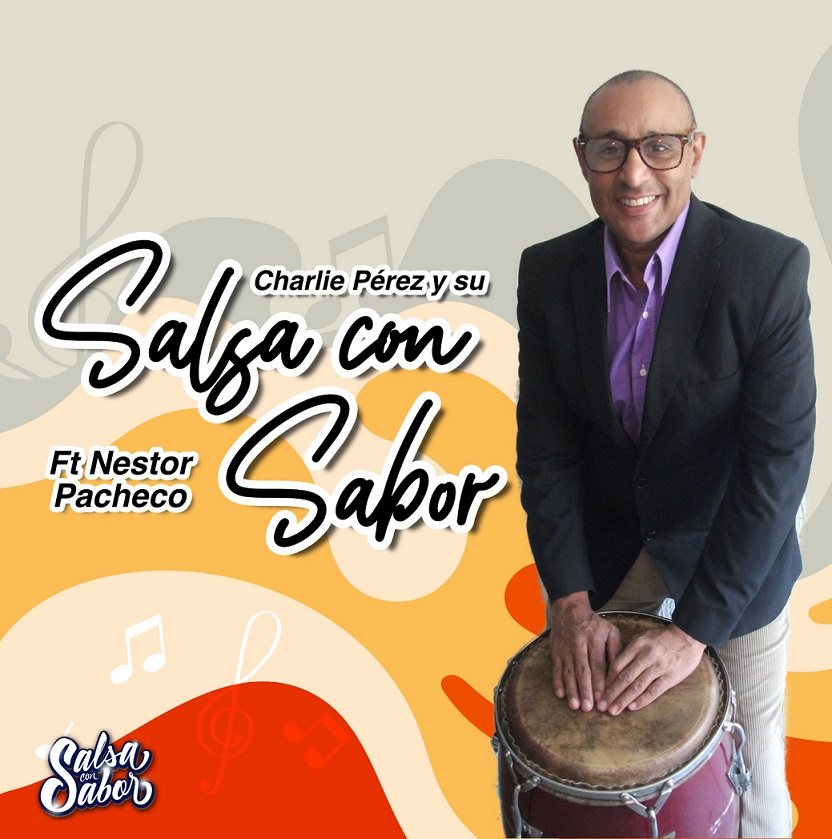
Charlie Pérez and the "Salsa con Sabor"
Charlie Pérez and the “Salsa con Sabor”

“Salsa Con Sabor” is a theme that emerged with the collaboration of:

  • Musical Production and Direction: Néstor Pacheco
  • Co-Production: Charlie Pérez
  • Arrangement and Piano: Eric Urdaneta
  • Bass: Elio Torres
  • Trumpet: Andrés Romero
  • Trombone: Israel Rebolledo
  • Choirs: Alonso Dagua, Josué Hernández & Néstor Pacheco
  • Voice and Lyrics: Néstor Pacheco
  • Mastering and Mixing: Arturo Rey
  • Recording at Keysthar Studios, Venezuela

Graphic design and edition: Kelvin Pérez

  • Contact: 18297123137
  • Email: [email protected]

Co-Production, Executive Production, Marketing and Public Relations: Charlie Pérez and Wilendy Rosario

  • [email protected]
  • [email protected]
  • Telephone: 18299653863

For more information:

Correo: [email protected]

Twitter: https://twitter.com/SalsaconSabor_

WebSite: https://salsaconsabor.net/

Facebook: https://www.facebook.com/salsaconsaborr/

Instagram: https://www.instagram.com/salsaconsabor_/

YouTube: https://www.youtube.com/channel/UCVusywkzJbH8soalxDfK0qA/featured

We continue working to enhance Salsa

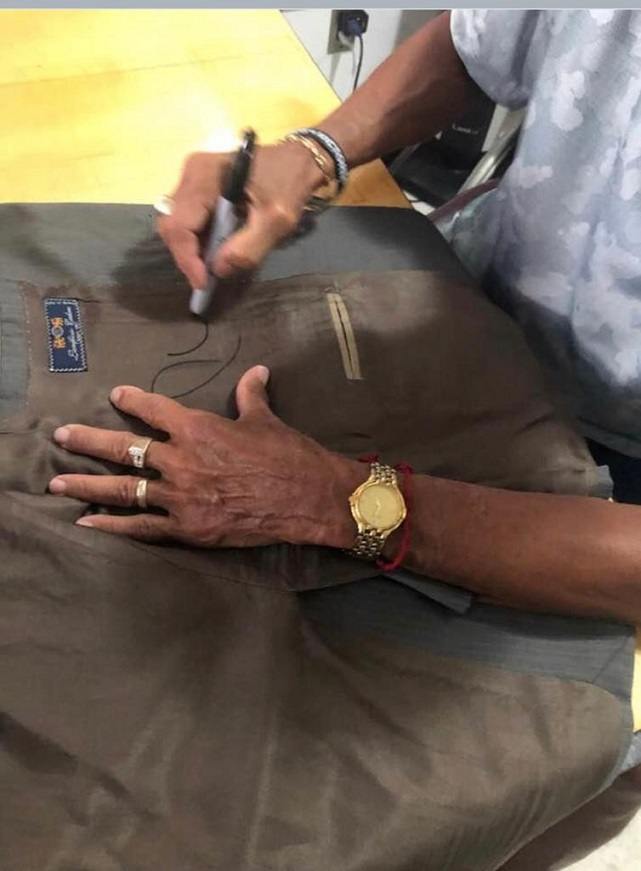
This month I want to continue sharing good news for everyone in NY and in the Salsa world. On this occasion, Oscar Hernández and Spanish Harlem Orquesta join Spaha Salsa Gallery Museum. Oscar has donated an incredible piece that we will be exhibiting immediately.

Four times Grammy Award Winner, Oscar Hernández, has long been considered one of the most gifted and prominent pianist / arrangers on the contemporary Latin, Latin-jazz and salsa music scene. He has achieved legendary status for his prolific career spanning now over 40 years.

Hernández is the leader of the world renowned Spanish Harlem Orchestra. Won the Grammy for their second CD release, “Across 110th Street” and winning yet another Grammy with their 4th CD “Viva La Tradition” and won their 3rd Grammy with “Anniversary” in 2019. Oscar was the music producer as well as pianist / arranger on all CD’s.

Since the band’s inception in the year 2001, SHO has garnered numerous awards and world acclaim as one of the finest exponents of Salsa and Latin / Jazz music. Spanish Harlem Orchestra is generally considered one of the best Salsa & Latin Jazz Orchestras today and one of the finest music ensembles in the world.

The Bronx native has produced such artists as Ruben Blades, Paul Simon, Willie Colón “Carabali”, Daniel Ponce, Rafael Dejesus, Eddie Torres, Phil Hernandez, Steve Kroon, Juan Luis Guerra, etc.

In addition to being Rubén Blades pianist, arranger and musical director, Oscar Hernández has enjoyed a prolific musical career recording and performing with such world renown artists as Latin music king Tito Puente, Queen of Salsa Music Celia Cruz, Latin Pop Star Julio Iglesias, Juan Luis Guerra, Ray Barreto, Earl Klugh, Dave Valentin, Johnny Pacheco, Ismael Miranda, Pete “Conde” Rodríquez, Oscar De’ Leon, Luis “Perico” Ortiz, “Libre” “Grupo Folkorico Experimental “, Willie Colón, Kirsty MacColl, etc. Oscar’s musical exploits include working as Musical Director / Conductor, arranging and producing the music for “The Capeman,” pop-rock icon Paul Simon’s Broadway musical.

Oscar is also the music producer of “The Capeman” cast recording. Oscar was Musical Director / Arranger for the hit shows “Quén Mató a Hector Lavoe” and “La Lupe” at the 47th Street Theater. He was also, Music Supervisor / Arranger for the show “Four Guys named Jose & Una Mujer named María” Oscar also has released 2 CD’s as a solo artist, Oscar Hernández & Alma Libre, titled “The Art of Latin Jazz” and “Love The Moment ”on Origin Records. It is a true honor to have the donation of an incomparable musician like him in our museum. Thanks, Oscar!

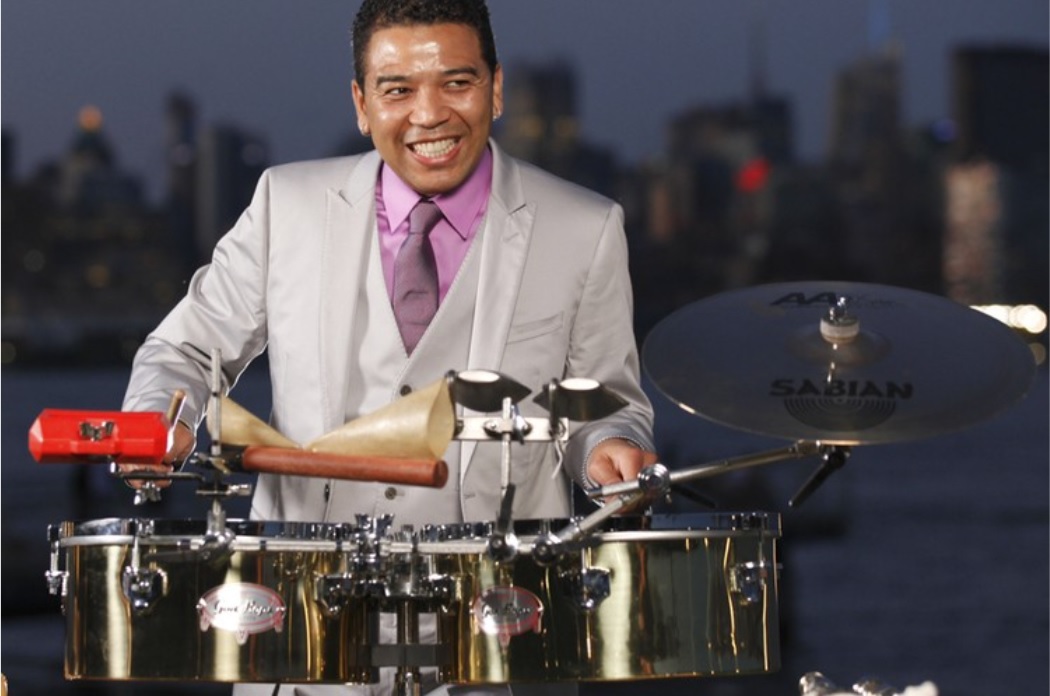
Another of the great figures of the Spanish Salsa Harlem Orchestra is Luisito Quintero, the timbalero from Venezuela. Luisito Quintero was born in Caracas, Venezuela where he had his first contact with music. Cultural influences of Afro-Venezuelan rhythms were always present at home. His father, a highly respected percussionist, taught and encouraged Luisito to play the timpani in his teens.

Luisito Quintero
Luisito Quintero

Quintero continued to refine his playing level with the Venezuela Symphony Orchestra, where his technique for playing the timpani soon caught the attention of his colleagues. Subsequently, he joined the popular music groups Guaco and the Trabuco Venezolano and traveled with Oscar D ‘León with whom he achievedan important international projection. The live performances, recordings and projects in which he has participated are countless.

He has made his mark as a percussionist with figures such as Tito Puente, Eddie Palmieri, Marc Anthony, Gloria Estefan, Richard Bona, Jack Dejonette, Willie Colón, George Benson, Natalie Cole, Herbie Hancock, Nuyorican Soul, Masters at Work, and of course, The Spanish Harlem Orchestra. Luisito is part of the group Elements of life, with whom he has toured for the last years.

The band has shared stages with major artists in the market such as Robert Plant, Lauryn Hill and Alicia Keys, performing at festivals such as Montreux Jazz Festival in Switzerland, North Sea Jazz Festival in Holland, Roskilde in Denmark, Blue Note in Japan, Jazz Cafe in London, England and the legendary New Morning Cafe in Paris, France. Without a doubt, an impressive and worth mentioning career.

And if we are talking about incredible careers in this edition, I can’t stop talking about Adalberto Santiago and the new projects of the 60th anniversary with great artists of the genre. This his time I can tell you about Cuco Peña’s string arrangements, the participation of Nelson Jaimes and, of course, the help of my friend Freddy Miranda. At 83 years old, he is still in the rumba. There is less and less to show the world this historical piece for the world of salsa.

Johnny Cruz and Adalberto Santiago - Salsa
Johnny Cruz and Adalberto Santiago – Salsa

I also want to remember Raphy Leavitt, on the fifth anniversary of her death on August 5. In 1970 Leavitt organized an orchestra that should have a different sound and style. He wanted to select the repertoire of songs of the orchestra with a particular, positive, social and even philosophical message; and founded “La Selecta”. Since its inception, La Selecta has featured Coamo-born Sammy Marrero as one of its singers.

Marrero, who has always been strongly influenced by the music of the Puerto Rican jíbaro, had an opportunity to teach his dramatic singing style in his first hits as the almost hymn “Jíbaro Soy”, a very patriotic and unusual Puerto Rican song, “Payaso”, and “The Good Shepherd”. However, it is in the band’s signature song, “La Cuna Blanca,” that Marrero’s voice is for the most part associated.

Raphy Leavitt
Raphy Leavitt

In 1978, Leavitt discovered a young singer named Tony Vega, who became a legend among salsa singers on his own merit. Raphy Leavitt and La Selecta were responsible for the introduction of salsa in many countries. In the 1980s, Leavitt became an independent producer and produced two albums for Bobby Valentine.

In the 1990s, he established his record recording company, R.L. Records. The company’s first production was the album titled “Provocame,” which became a hit in Puerto Rico, the United States, and South America.

In 1978, Leavitt discovered a young singer named Tony Vega, who became a legend among salsa singers on his own merit. Raphy Leavitt and La Selecta were responsible for the introduction of salsa in many countries. Raphy passed away in Miami as a result of an operation of the hip prosthesis that had been installed due to an accident in 1972, and that he had become infected. Leavitt passed away in his sleep. Raphy will always be endorsers of the Salsa Museum with the clown suit of its 25th anniversary.

I also want to thank the constant and significant support for the Museum, from my friend Sully Díaz, who as endorser of the museum, is always working to promote and make our work reach more people. Sully was born in New York, the daughter of Sephardic parents from Puerto Rico. She began her career as a model, and at the age of 17 she began acting in Spanish soap operas, making herself a well-known figure on television in Puerto Rico.

In 1983 she became popular throughout Latin America with the role of Coralito, in the telenovela of the same name. From that moment on, Sully was known as “the queen of Puerto Rican soap operas.” In the early 1990s, Sully moved to Hollywood and appeared on various television shows as a guest star and worked on a few movies.

Johnny Cruz and Sully Diaz

In the mid-1990s, Sully joined four other Latina women (Dyana Ortelli, Marilyn, Ludo Vika, and Lydia Nicole) in a comedy group called “The Hot & Spicey Mamitas”. They sold out at several Los Angeles comedy clubs. They recorded a CD live called simply The Hot & Spicey Mamitas.

In 2002 Sully appeared in the play La Lupe: My Life, My Destiny, in which she played the Cuban singer La Lupe. Shortly after the execution of this work, Sully made her own production of La Reina, La Lupe. This work toured all of Puerto Rico and was a great success in Florida. That same year, she starred in the Puerto Rican thriller “Cuéntame tu pena”, in which she plays Isadora, a radio host who receives a call from a woman who is killed while on the air.

In 2004 Sully toured with Gilberto Santa Rosa in a play called “The True Story of Pedro Navaja.” In 2009 Sully appeared in the movie Princess Protection Program as Reina Sofía, along with Selena Gómez and Demi Lovato.

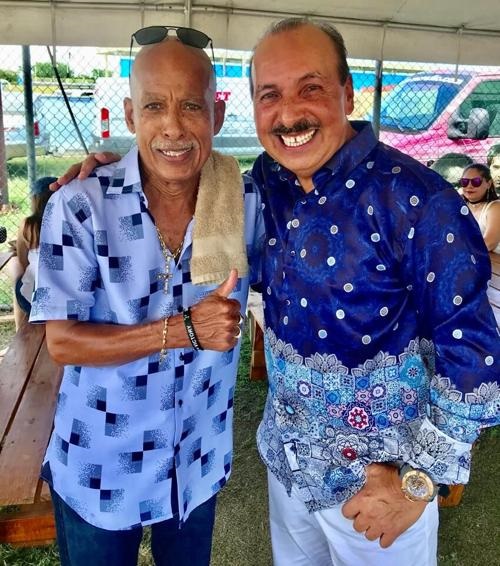
Papo Rosario and Isidro Infante - Photo
Papo Rosario and Isidro Infante

Recently, Papo Rosario released his new single “Gracias” produced by arranger and musician Isidro Infante. Rosario appreciates being alive and being able to walk after being bedridden as a result of a car accident. Papo Rosario is a world-class artist who has put the name of Puerto Rico on high. Rosario, who retired in 2019 from the group considered the “University of Salsa”, El Gran combo de Puerto Rico, after having an accident and presenting health problems, affirms that he already feels ready to resume his musical career with the Launch of his first solo production by producer Isidro Infante. I wish you success in this new beginning.

The invitation to tune in to the new Fm / Internet radio station on Live365.com: Salsagallery continues. Great music, artist interviews and much more.

Oscar Hernandez
Oscar Hernandez

At the Spanish Harlem Salsa Gallery Museum we are happy to affirm that New York City is preparing to resume its activities little by little. We hope to have more news soon and that we can return to normal soon.

By Johnny Cruz, ISM Correspondent, New York, New York City

Because even from home You can compete with Venezuela es Latina

Latin America / Venezuela / Caracas 

Venezuela es Latina prepared a preview of its 2020 edition to be enjoyed online, relying on social networks, anyone who wishes can be part of the competition or the spectator public.

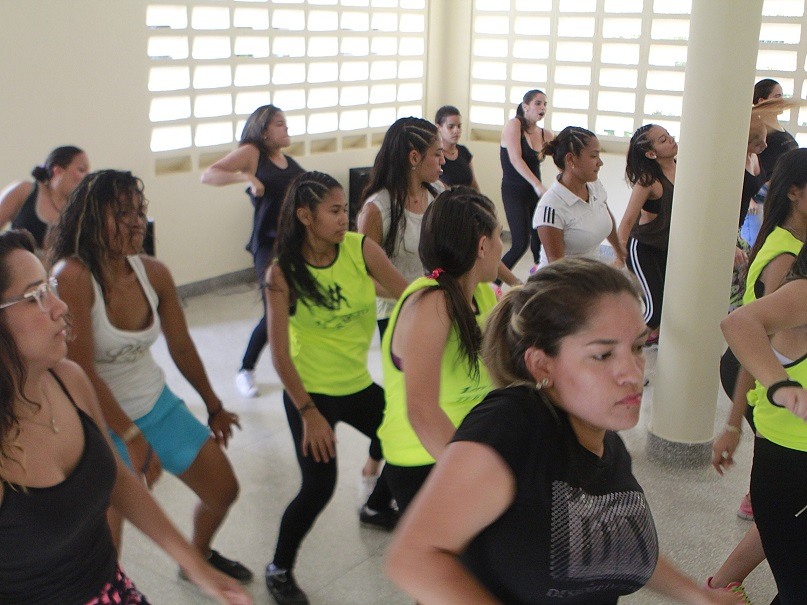
Participant from Venezuela es Latina

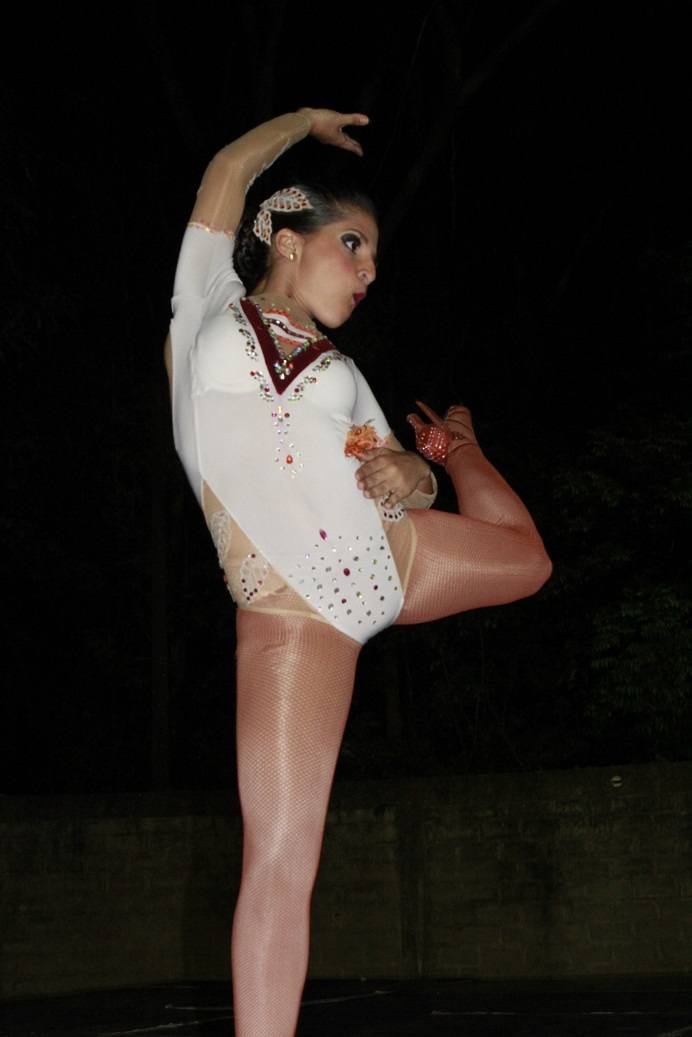
Since 2007, Venezuela is Latina was born as a competitive event that sought to innovate and open a new path to dance competitions in Venezuela, hence since its birth, the event managed to capture the eyes of many by presenting new ideas, from the divisions of the competitors in categories to the emergence of a show in conjunction with the best dancers and academies in the country.

Viewers of Venezuela es Latina 2020

From its first delivery in August 2007 and until the last in a row in 2017, this event usually achieves hundreds of people at great moments, a custom that is maintained for this new edition. It reaches its 12th day, after a stop of two years in its annual run, for this 2020 they have prepared a comeback show, supported by the slogan, a tradition returns and we want to see you dance, this great event seeks to renew the systems a little of competitions that are constantly taking place in beautiful Venezuela, from changes in some categories to innovations in others, we must be prepared for everything that this great event could show us.

Social in Venezuela es Latina 2020

For now, they have advanced a mouth opener with an On Line competition through the famous Instagram social network, highlighted by the hashtag #CompiteEnCasa, this idea seeks to open a competition channel for all beginner dancers who can post a video from their homes demonstrating their freestyle skills to win additional prize money from other surprise dance surprises, all supported by great sponsors.

Dancer of Venezuela es Latina

To be part of this competition, those interested must search for all the information contained in their account on Instagram @vzlaeslatina, in addition to reviewing the price of the prize daily at @enviostenerife, the official sponsor, and join this initiative to stay home but take advantage of the time to compete. .

Be sure to follow in the footsteps of this great initiative and be part of the qualifying jury.


By Jose Perez, ISM Correspondent, Caracas, Venezuela

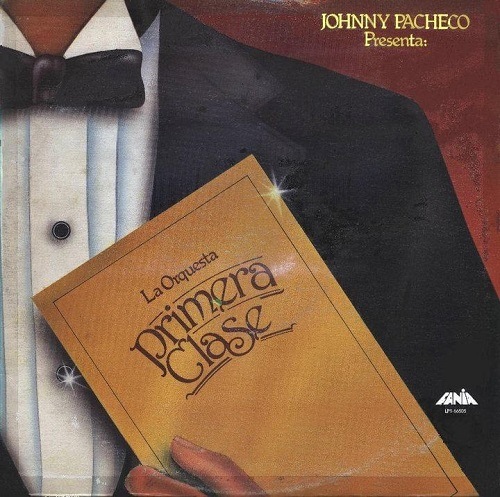
Johnny Pacheco, presents “Orquesta Primera Clase” from Maracay-Venezuela

The title of this album speaks for itself; the hand of the transcendental Dominican musician is introduced in this album.

El Zorro de Plata Pacheco appears as executive producer of the album, although we do not discard that he also participated in part of the musical production, due to the way the orchestra was structured and the style in which the arrangements were given; it is something that we can hardly notice when listening to the album, it is evident the great similarity to “Pacheco y su Tumbao”; four excellent trumpets with sonorous arrangements.

Johnny Pacheco, presents "Orquesta Primera Clase" of Maracay-Venezuela
Johnny Pacheco, presents “Orquesta Primera Clase” of Maracay-Venezuela

The predominance of Teo Hernandez (R.I.P)’s vocal style and register in the nasal coros, fits perfectly with the “Tumbao Añejo” that we have always been accustomed to from maestro Johnny Pacheco (R.I.P).

Although the album was backed by the Fania label and is loaded with a cheerful and swinging flavor, we think that it went somewhat unnoticed by the music-loving public.

The reasons could be several, we must remember that in those times in the 80’s the merengue rhythm was beginning to penetrate with a lot of strength.

Johnny Pacheco, presenta la Orquesta Primera Clase

Although we could also add the little interest that the public of the capital (Caracas) had for the groups of the regions or interior of the country, and although it seems ironic to say it.
Another possible reason could be linked to the inclusion of only unpublished songs (it is well known that in those times, they supported copies more than creativity); these are only conjectures of this server, however, they do not escape the reality of that time.

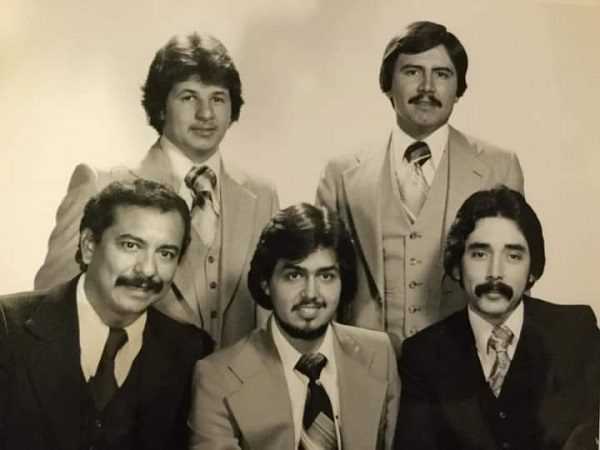
Teo Hernández (R.I.P)

As for the musical themes, we have already pointed out that all of them are original and very well compensated with their arrangement; In particular there are two songs that I like very much, one of them is “Negro Nací”, written and sung by Orlando Sanoja, is a very happy song dedicated to our black race of the danceable in his music, “Si negro nací nací nací, blanco no puedo ser”, The other song of my predilection is “El Sabio”, composition and lyrics by Jorge Compres and vocalized by Teo Hernández, with great diction, good phrasing and those tasty choruses that accompany him.

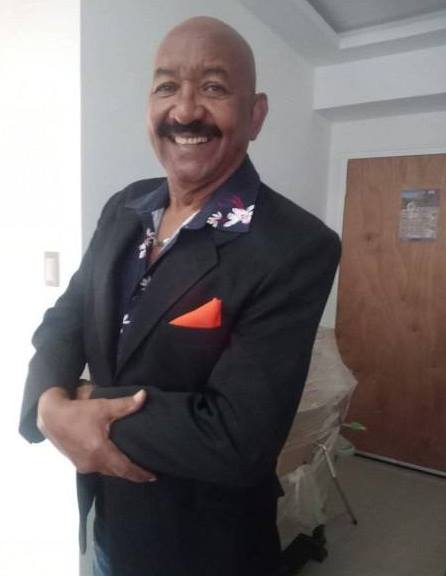
Orlando Sanoja
Orlando Sanoja

It is worth mentioning that the excellent La Orquesta Primera Clase is still in force with a musical staff of the new generation maintaining its original sound with its lead vocalist Orlando Sanoja.

It is another good Venezuelan album that you should have in your personal CD library.
Johnny Pacheco presents “La Orquesta Primera Clase” (1982) Fania LPS-66506

SIDE A

1.- NEGRO NACÍ (Orlado Sanoja) Sings: Orlando Sanoja/ Arrangements: Nicomedes López
2.- ME SIENTO MUY FELIZ (Al mMaro Ríos) Sings: Orlando Sanoja/Arrangements: Bolívar Javier
EL ANIMAL (Jorge Compres) Sings: Teo Hernández/Arrangements: Jorge Compres
4.- TODO TIENE SU FINAL (Bolívar Javier) Sings: Teo Hernández/Arrangements: Bolívar Javier
5.- LLEVAME CONTIGO (Almaro Ríos) Sings: Teo Hernández/Arrangements: Bolívar Javier

SIDE B

1.- EL SABIO (Jorge Compres) Sings: Teo Hernández/Arrangements: Jorge Compres
2.- A MARACAY (Orlando Sanoja) Sings: Orlando Sanoja/Arrangements: Jorge Compres
3.- EXTRANJERA (Phorto Jacquez) Sings: Teo Hernández/Arrangements: Jorge Compres
4.- VIVA MI GUAGUANCO (Jorge Compres) Sings: Teo Hernández/Arrangements: Gilberto Riera
AY QUE HUMANIDAD (Orlando Sanoja) Sings: Orlando Sanoja/Arrangements: Jorge Compres

Personnel:

Pastor Rodríguez (1st Trumpet)
Henry Kamba (2nd Trumpet)
Gustavo Nieves (3rd Trumpet)
William Fermín (4th Trumpet)
Armin Kail (Piano)
Carlos Fagúndez (Bass)
Harold Josef (Congas)
Edgar Aponte (Timbal)
Félix Benítez (Bongo)
Teo Hernández/Orlando Sanoja (Singers)
Bolívar Javier/ Nicomedes López/ Jorge Compres/ Gilberto Riera (Arrangements)
Teo Hernández/Orlando Sanoja/Edgar Aponte (Chorus)
Johnny Pacheco (Executive Producer)
Carlos Guerrero (Recording Technician)
Luis Arismendi (General Recording Supervision)
Recorded at Fidelis Studios
Alejandro Pérez (Art and Design)

Two radio programs of the salsa movement in California

Introduction

After the entire journey, the cultural salsa movement in the state of California is well established, which includes a good number of media outlets that focus on this and other Latin music genres. In this article, we are going to talk a little about two very important radio shows in Los Angeles, which play a very important role in the spread of salsa and its greatest exponents today.

They are the radio shows ”Alma Del Barrio” and ”Canto Tropical”, whose work has provided an immense contribution to the world of music and gained a huge audience both in Los Angeles and in the rest of the world.

Five of the six Alma Del Barrio DJs Steve Lopez, founder Enrique Kiki Soto, Gustavo Aragon, Eddie Lopez, and Hector La Voz Resendez

Alma Del Barrio

In the autumn of 1973, what would become one of the most important Latin radio shows in Los Angeles started to go on the air, which is known as ”Alma Del Barrio” to this day and its main founders were Enrique Soto and Raul Villa, who were still university students at the time. What Raul and Enrique were looking for with this show was to educate the audience musically speaking and ensure that listeners to learn much more about their favorite artists.

A key part of this show is to interview the greatest exponents of the salsa genre and some of these have been Celia Cruz, Chucho Valdes, Manny Oquendo, Tito Puente, Roberto Roena and many more. Thanks to these conversations, fans of these artists have managed to learn more about their favorite artists and their future projects.

From the day of its founding, the show has been broadcast through the radio waves of KXLU, which is one of the largest radio stations in Los Angeles and offers all kinds of variety and musical genres in its programming.

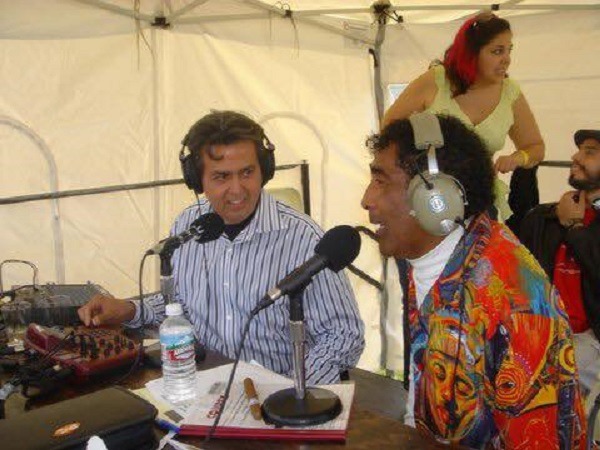
Host Eddie López and Venezuelan Latin music bandleader Rudy Regalado

Canto Tropical

”Canto Tropical” is a radio show created with the firm intention of serving as a bridge to unite generations, cultures and countries that appear to not have anything to do with each other. The main musical genres on which the programming is based are salsa, Latin jazz, merengue, Afro-Cuban rhythms, among others. The music comes from all over the world, but most of the material comes from South and Central America and the Caribbean.

In addition to being always aware of the latest Latin music, hosts Kathy Diaz and Hector Resendez always make sure to get the best interviews with the most famous local and foreign artists so that their fans can get to know them better both personally and professionally. Likewise, listeners have the possibility to participate in contests and sweeptakes to win free tickets to concerts and events that are of their interest.

One of the requirements to be met by the show is to always invite local artists and singers to help them promote their music, new albums and concerts. In this way, the audience is aware of what local talent is currently doing. In fact, there are many figures who are still thankful for the exposure given the program, thanks to which they have achieved the popularity they were seeking.

Another detail that cannot be overlooked is that several social and community organizations have publicly thanked the show for its voluntary work and its hosts Kathy and Hector, who have even written for major publications such as Hispanic, Bilboard Magazine CASHBOX, among others.

Alma Del Barrio's logo
Alma Del Barrio’s logo

Read also: Son Del Monte’s musical director and timbalero Manuel Rivera

  • « Go to Previous Page
  • Page 1
  • Interim pages omitted …
  • Page 10
  • Page 11
  • Page 12
  • Page 13
  • Page 14
  • Interim pages omitted …
  • Page 94
  • Go to Next Page »

International Salsa Magazine (ISM) is a monthly publication about Salsa activities around the world, that has been publishing since 2007. It is a world network of volunteers coordinated by ISM Magazine. We are working to strengthen all the events by working together.