• Skip to primary navigation
  • Skip to main content

International Salsa Magazine

  • HOME
  • Previous editions
    • 2026
      • ISM / June 2026
      • ISM / May 2026
      • ISM / April 2026
      • ISM / March 2026
      • ISM / February 2026
      • ISM / January 2026
    • 2025
      • ISM / December 2025
      • ISM / November 2025
      • ISM / October 2025
      • ISM / September 2025
      • ISM / August 2025
      • ISM / July 2025
      • ISM / June 2025
      • ISM / May2025
      • ISM / April 2025
      • ISM / March 2025
      • ISM / February 2025
      • ISM / January 2025
    • 2024
      • ISM / December 2024
      • ISM / November 2024
      • ISM / October 2024
      • ISM / September 2024
      • ISM / August 2024
      • ISM / July 2024
      • ISM / June 2024
      • ISM / May 2024
      • ISM / April 2024
      • ISM / March 2024
      • ISM / February 2024
      • ISM / January 2024
    • 2023
      • ISM / December 2023
      • ISM / November 2023
      • ISM / October 2023
      • ISM – September 2023
      • ISM – August 2023
      • ISM July 2023
      • ISM Edition June 2023
      • ISM – May 2023
      • ISM April 2023
      • ISM March 2023
      • ISM February 2023
      • ISM January 2023
    • 2022
      • ISM December 2022
      • ISM November 2022
      • ISM October 2022
      • ISM September 2022
      • ISM August 2022
      • ISM July 2022
      • ISM June 2022
      • ISM May 2022
      • ISM February 2022
      • ISM January 2022
    • 2021
      • ISM December 2021
      • ISM November 2021
      • ISM October – 2021
      • ISM September 2021
      • ISM August 2021
      • ISM July 2021
      • ISM May 2021
      • ISM April 2021
      • ISM June 2021
      • ISM March 2021
      • ISM February 2021
      • ISM January 2021
    • 2020
      • ISM December 2020
      • ISM November 2020
      • ISM October 2020
      • ISM September 2020
      • ISM August 2020
      • ISM July 2020
      • ISM June 2020
      • ISM May 2020
      • ISM April 2020
      • ISM March 2020
      • ISM February 2020
      • ISM January 2020
    • 2019
      • ISM December 2019
      • ISM November 2019
      • ISM October 2019
      • ISM Septembre 2019
      • ISM August 2019
      • ISM July 2019
      • ISM June 2019
    • 2016
      • ISM December 2016
      • ISM November 2016
      • ISM October 2016
  • Spanish
  • Download Salsa App
    • Android
    • Apple

Search Results for: salsa

Fernando Lavoy The Montunero of Salsa and Son

The Indelible Footprint of a Masterful Voice in the Golden Era of SAR Productions.

Introduction and Musical Legacy, Fernando Lavoy was one of the best-kept and most dazzling secrets of 20th-century Afro-Cuban music.

Born on May 6, 1950, in Havana, Cuba, he possessed an exceptional mastery and vocal quality that quickly caught the attention of the era’s biggest icons.

It was the legendary trumpeter Alfredo “Chocolate” Armenteros who, blown away by Lavoy’s innate gift for traditional phrasing and improvisation, affectionately dubbed him “El Montunero” (The Montuno Master).

Fernando Lavoy El Montunero de la Salsa y el Son

Throughout his career, Lavoy showcased his talent as both a singer and songwriter in heavyweight ensembles, including:

  • The celebrated Sonora Matancera
  • Chocolate Armenteros’ orchestra
  • Conjunto Dinastía Diez
  • Roberto Torres’ mythical SAR All Stars

He also led his own group, “Los Soneros.” His tragic murder in 1992 in Miami, United States, cut short the life of a brilliant artist, but left an indelible mark on the heritage of tropical music.

The Rise in New York and the Alliance with SAR Productions

After emigrating to the United States in 1980 in search of new artistic horizons, Lavoy immediately immersed himself in New York’s effervescent Salsa and Son scene.

His first big break came courtesy of Chocolate Armenteros, contributing masterfully to the album “Y sigo con mi...” under the SAR Productions record label.

Sar All Stars La India de Oriente,Jorge Maldonado Y Fernando Lavoy y en el tres Charlie Rodriguez

Founded by Roberto Torres, this record label was characterized by a unique musical aesthetic: it championed the classic texture of Cuban son, extending song lengths to allow generous space for instrumental solos and pure improvisation.

In 1981, Lavoy solidified his place as a member of the SAR All Stars, catapulting his voice into the spotlight of the most demanding music lovers.

Unlike other commercial acts of the era (such as Fania Records) that leaned heavily into crossovers with the English-speaking market, SAR Productions stood firm in direct Cuban roots. While they injected subtle nuances of jazz, they preserved that traditional, deep, and organic cadence that captivated Hispanic audiences.

Fernando Lavoy y Los Soneros: A Distinct Identity

Between 1981 and 1982, Fernando Lavoy recorded two foundational albums under his own name: “Los Soneros” (1981) and “Fernando Lavoy y Los Soneros” (1982).
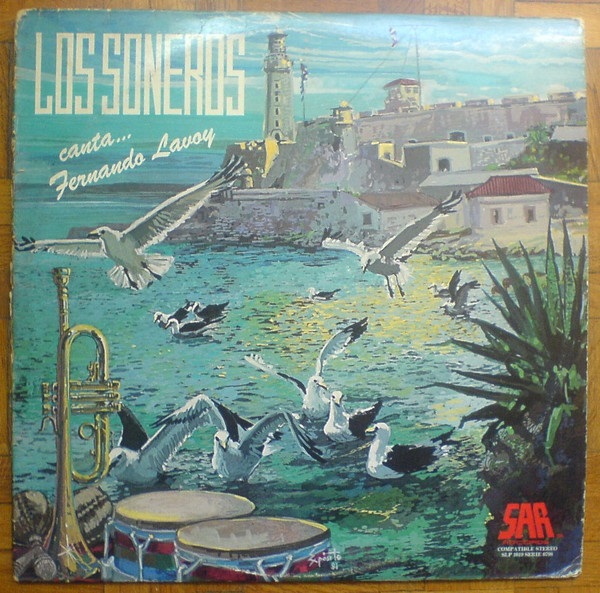
Los Soneros Canta Fernando Lavoy 1981.

Although the norm at SAR was to use the talented house band to back soloists, Los Soneros presented themselves as an autonomous group with their own identity, produced by the infallible Roberto Torres.

The ensemble stood out for its solid instrumentation led by trumpeter Juan González, who served as director and arranger, accompanied by his son Juan González Jr. on piano and the virtuoso Juan Méndez on bongo.

The band was formally structured as a classic, old-school conjunto: four powerful trumpets, bass, conga, bongo, and three backing vocalists stylishly led by Norman Rodríguez.

Analysis of a Masterpiece: The 1982 Album

The 1982 record is absolute proof of Lavoy’s musical maturity; he composed 50% of the repertoire.

  • “No voy a dormir”: The album opens electrifyingly, where a powerful trumpet introduction gives way to Fernando’s entrance, followed by a masterful trumpet solo by Juan González and an explosive bongo breakdown by Juan Méndez that builds into a montuno climax.
  • “Cóquela suave”: A son montuno penned by Lavoy that, true to its name, begins with a smooth, gentle cadence before transforming into a hard-hitting, danceable son, enriched by a sublime piano solo from Juan González Jr.
  • “Pegaditos”: A famous composition by Miguel Matamoros who, along with Arsenio Rodríguez, stands as one of the pillars of son is reinterpreted while respecting the purity of its traditional structure. The track shines with a high, piercing trumpet that floats above the Cuban singer’s vocals, experimenting with tempo variations that gradually increase the rhythmic intensity alongside flawless backing vocals.
  • “Juana la sin goma” & “No vuelo contigo”: The album closes with the former, a track packed with playfulness, dance energy, and high-octane lyrics, and the latter, a more laid-back son that, without quite becoming a bolero, maintains the majestic structure of Cuban son with a vibrant closing montuno.
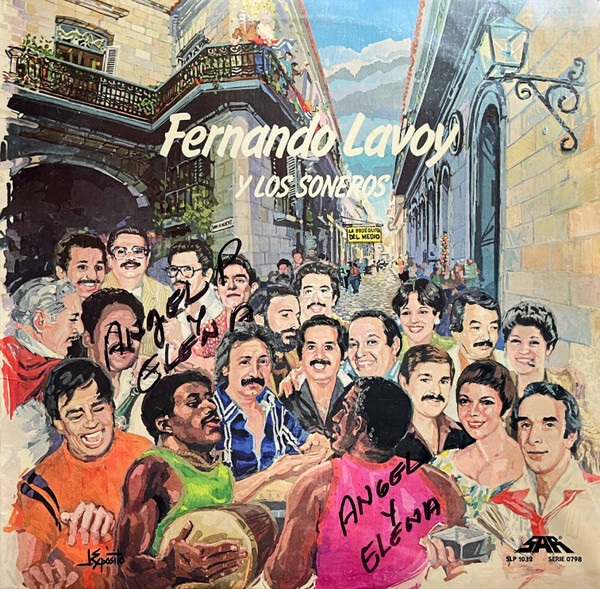
Fernando Lavoy Y Los Soneros 1982

Ultimately, Fernando Lavoy’s work remains a foundational pillar that vindicates the sabor, rhythm, and eternal essence of son montuno.

Text courtesy of Maida Lorena Lavoy.

Foto Museo De La Salsa, en Barrio Obrero, en su visita en 1991 junto al gran cantante puertorriqueño Yayo El Indio y Carlos Molina Castellanos, actual director del Museo De La Salsa

Also Read: Alfredo “Chocolate” Armenteros: The Golden Legacy of the Cuban Trumpet

Puerto Rican Trombonist and percussionist Arturo Vazquez Jr. from Projecto 7 Salsa & Latin Jazz Band

Trombonist and percussionist Arturo Vazquez Jr. is joining us today to talk about his career and his current band, Projecto 7. This salsa and jazz band features an interesting mix of Latin genres and is often invited to popular local venues in Illinois, where Arturo and his bandmates live, including Two Brothers Roundhouse, Joe’s on Weed, and MCM Pub.

Here is a summary of how much we talk about his early years, the foundation of the band, and his current professional activities.

Arturo Vazquez singing
Percussionist and trombonist Arturo Vazquez Jr singing live

Arturo’s beginnings in music while he was still a child 

As usual, before delving into other issues, we wanted to know a little about Arturo’s beginnings in music to establish a chronology, and he told us that he expressed interest in this world when he was just a 10-year-old boy. His grandfather was a musician, and he and his colleagues often organized parties in the municipality of Patillas, Puerto Rico, where the family lived, and jíbara music was always present in everyday life.

The first instruments he learned to play were the timbales and the bongo, but after his grandfather passed away, he was given the accordion his grandfather had played, although unfortunately it did not really catch his attention. That was why he remained focused on percussion. Furthermore, knowing how important it is to get a proper academic education, he studied at the Free School of Music in Puerto Rico for a time, but due to the financial difficulties that his parents were experiencing at the time, they decided to move with their son to New York.

In the mentioned city, he continued his percussion studies at the School of Liberal Arts, being Willie Colón and Tito Puente his greatest inspirations to become a professional musician.

Years later, specifically in the 1970s, his parents found work in Chicago and moved there. That was where Arturo studied high school and met many aspiring percussionists, so the competition was brutal. Therefore, the orchestra’s conductor offered him the trombone spot and gave him a large bass trombone. 

projecto 7 led by Arturo
This is Projecto 7 Salsa & Jazz Band led by Arturo Vazquez

After he graduated, he began studying at the University of Illinois in Chicago, where he learned to read music and improvise with Professor J.J. Johnson during symphony orchestra concerts. Once he had gained a more or less acceptable experience in trombone practice, he remembered why or who inspired him to play in the first place, so he began playing in way Willie Colón would. That was not very common in his time, since most trombonists were classical musicians, but he did not care at all, so he started to entirely focus on salsa.

At the same time, he also specialized as a bomba and plena percussionist, so he trained at the Segundo Ruíz Belvis Cultural Center with maestro Rafael Cepeda, better known as “The Patriarch of Bomba and Plena” in Puerto Rico, who traveled to Chicago to teach percussion alongside AfriCaribe, a nonprofit cultural organization led by bandleader and singer Evaristo “Tito” Rodriguez. That was how Arturo also learned to play the pandereta and the barril, but with a focus on bomba and plena.

Professional opportunities before Projecto 7

Before creating his own group, Arturo gained considerable musical proficiency. In the area where he lived in Chicago, there were many gangs recruiting young people to sell drugs, resulting in the emergence of numerous initiatives that sought to keep kids off the streets such as El Congreso Puertorriqueño, whose main goal was to introduce them to Latin music. It was then that the artist met a record label called Caribe, thanks to which he made his first recording as a trombonist with the Orquesta La Unión. This was essentially one of several orchestras that served as a warm up for major groups and artists such as Hector Lavoe, Willie Colón, Ismael Miranda, Ray Barretto, and many others.

Projecto 7 playing at the Cubby Bear
Projecto 7 Salsa & Jazz Band playing at the Cubby Bear in Chicago

Before becoming a soloist, he put aside his career as a musician for more than 10 years because it was not enough to support his family, which already included two daughters. During those years, he studied psychology at the University of Chicago, studied therapy and rehabilitation at the University of Puerto Rico, and taught psychology and therapy at the Elgin Community College.

He worked in Puerto Rico from 1981 to 1988, when he moved to Miami to test the atmosphere in the city, but competition among Latino, especially Cubans, made it impossible for him to make a name for himself there, so he went to try his luck in Elgin, located about 31 miles from Chicago, where he eventually worked as a professional therapist and psychology professor. 

Projecto 7 Salsa & Latin Jazz Band

His group, Projecto 7, started at a parranda in which Arturo and Los Hnos Rodriguez in Elgin. The artists invited him to join them and propose new things for the project. When the brothers’ orchestra disbanded, Arturo received a call from a former member of Orquesta La Selecta, Joe González, who moved to Elgin to care for his sick father. González proposed Arturo and other musicians to form a new group called Projecto 7, since there would be seven artists in the group.

Since then, they have made efforts to keep the same lineup of musicians, including musical director, pianist, and bassist Juan Rivera; trombonist Tony Morales; singer Ricky Rodríguez; and bongo player Luis Angel Palermo.

Read also: Steel pan percussionist Brad Shores shows us the best of Caribbean music in Florida

Club Lite: Salsa on Thutsday with Salsa Social

Europe / Netherlands / Amsterdam

“Club Lite is an oasis of freedom in Amsterdam: Freedom. To be who you are without pretense. To meet warm, welcoming people of all ages, from all walks of life. Come and feel the difference of what a true down-to-earth dance club can be like.” These are the words of many dancers in Amsterdam who assure Club Lite is one of the best dance clubs in Europe.

Photo 1: Club Lite
Photo 1: Club Lite

Club Lite is a very special venue in Amsterdam. The standard idea of a nightclub has been re- invented to create something fresh and vibrant, unlike anywhere else in Amsterdam or The Netherlands. People come here not just to dance, but to nourish their soul.

To explore a wide variety of music & dance experiences throughout the week and weekend. And especially, the freedom to dance barefoot!

Photo 2: Club Lite
Photo 2: Club Lite

On the agenda you will find a wide variety of music and experiences that range from tantric dance to techno to yoga. The DJ’s, the people, the music and the barefoot freedom all join together to make this a dance sanctuary right on the Jan van Galenstraat! A pearl among the pebbles, Club Lite needs to be experienced to believe that yes, it is actually real. Open nearly every day and on every weekend, we are here to indulge you in the dance.

Photo 3: Club Lite
Photo 3: Club Lite

On Thursdays, Lite becomes Latin with Extremos, the salsa dance school. For over 15 years Extremos has been teaching Salsa and other Latin dances to the people of Amsterdam. They regularly start new courses for all levels, so whether you are an absolute beginners or advanced dancer, the school always has a salsa course that fits you. Join the Free Try- Out salsa classes that they organize almost every month.

Just outside of the center, this is a cool social party one of the best in town. The Master Class begins at 11pm and then the party starts, many students stay so there are definitely good dancers around!

Photo 4: Club Lite
Photo 4: Club Lite

Nu Salsa The dynamic duo of dance in Belfast

Europe / Ireland / Belfast

Nu Salsa is a new concept of dance classes. They are taught by David Hynes and Suzanne Coates, which are the best duo of salsa in Ireland. Both have been dancing salsa for a long time and are well established as the top teaching couple in the Belfast salsa scene. They will be teaching at the Scottish Salsa Congress in Edinburgh and Irish Salsa School in Maynooth plus a lot of other events.

Nu Salsa - Learn Salsa
Nu Salsa – Learn Salsa

Nu Salsa are always known to do things their own way, even if that means doing things differently from everyone else, but the proof of this approach shows in the good dancers that come through our classes. They have been taught by some of the best teachers in the world and it is our mission to pass on that teaching to our own students in Belfast and around Ireland.

Every two Fridays they teach salsa in different locations (night clubs, academies, congresses).

Suzanne Coates & Davis Hynes - Dancing
Suzanne Coates & Davis Hynes – Dancing

David and Suzanne have taught previously at Irish Salsa School, the Cork Salsa Bonanza and Donegal Dance Asylum, along with many guest teaching slots throughout the country. Our aim is to pass on our knowledge of salsa to our students in Belfast and help them fall in love with salsa as much as we enjoy it. If you would like to talk to us about our classes, teaching style or anything related to salsa dancing, please get in touch as we would love to chat.

Suzanne Coates

Suzanne is widely regarded as the top female salsa dancer and teacher in Belfast. She has been teaching with Nu Salsa for several years and also runs ladies styling and technique classes under the Salsa Style brand in Belfast.

Suzanne Coates
Suzanne Coates

David Hynes

David has been dancing for many years and has been teaching as Nu Salsa since 2004. During this time, he has learned from a lot of the top teachers in the UK and recently has spent a long time in London studying under Gil and Shelley of Pexava Dance.

Suzanne Coates & Davis Hynes

Friday Night Salsa Classes Belfast

They’re running classes every second Friday until the end of the year. See below for the current schedule. They will have 2 levels of class each night, one for Improver dancers and one for Intermediate/Advanced.

Classes will run from 7-8.30pm and then 30 mins of social dancing so you can practice what you have learned and we can give some individual help if you have any questions.

Suzanne Coates & Davis Hynes Selfie

Lessons will be held on the following dates:

  • Fri 6th Nov – Guest teachers K4 Kizomba Konnexions
  • Fri 20th Nov – classes as normal
  • Fri 4th Dec – special Christmas classes
Suzanne Coates & Davis Hynes - Dance Lessons
Suzanne Coates & Davis Hynes – Dance Lessons

Alkemia Salsa, Bachata & Kizomba

Europe / Luxembourg

The Alkemia academy welcomes to the new participants to the new season which begins with new projects to teach Latin rhythms to everyone. The academy is known as one of the greatest dance academies in Luxembourg, sharing the culture and teaching people how to dance in all different styles, specially Salsa, Bachata and Kizomba.

Alkemia Salsa, Bachata & Kizomba

Teamwork

GILLES CAVIGLIA

Creator of Alkemia academy in 2012. Rugby player, he discovered Latin rhythms in 2005. After went to many different salsa schools like Salsa Fever, Salsa Wave Chazomba, and after many different festivals and international presentations, he discovered passion for dancing. Today, he has that same. passion for rhythms like Kizomba, Salsa & Bachata.

Gilles Caviglia
Gilles Caviglia

PAULINE LOPEZ VELTER

Discovers dance at the age of 4. Classic, modern jazz, contemporary. It’s at the age of 13 that she discovers couple, latin et standard dances (rock, chacha, valse, samba, tango, etc…). His strong passion for dancing made it her job today. In love of latin Salsa, Bachata, Kizomba, Chacha, she teaches now different styles and she produces too in spectacles in a diversity of discipline in couple or in group.

Pauline Lopez Velter

NADEGE KARRENBAUER

At the age of 8 years, she discovered the dance universe and the show performances joining an academy of Jazz (Dance Mania) for 18 years. Later, she discovered the sensuality of afro-Latin rhythms. She joined the Alkemia’s team, with Kizomba as main subject.

Nadage Karrenbauer
Nadage Karrenbauer

RAQUEL SIMOES

Active since 2007 in the world of the Salsa in Luxembourg in the teaching and choreography, Raquel has joined as an intermittent in the group Alkemia in 2014, and teaches the 3 dances Salsa, Bachata and Kizomba.

Raquel Simoes
Raquel Simoes

CARLA

Started intensively with salsa in 2005, together with other rhythms like bachata, rock and roll, americano, tango and so on. In 2007, with her dancing partner, they started the company “Rock and roll fever”. Teaching rock and roll, preparing choreographies, performing shows and animations, she was part of the Buenos Aires Savoy Dancers, a group of Lindy Hop in Argentina. Since 2012 in Luxembourg, she discovered Kizomba, and Alkemia!

Carla
Carla


  • « Go to Previous Page
  • Page 1
  • Page 2
  • Page 3
  • Page 4
  • Interim pages omitted …
  • Page 418
  • Go to Next Page »

International Salsa Magazine (ISM) is a monthly publication covering salsa activities around the world and has been publishing since 2007. It is a worldwide network of volunteers coordinated by ISM Magazine. Together, we work to strengthen salsa events around the world.