• Skip to primary navigation
  • Skip to main content

International Salsa Magazine

  • Home
  • Previous editions
    • 2025
      • ISM / November 2025
      • ISM / October 2025
      • ISM / September 2025
      • ISM / August 2025
      • ISM / July 2025
      • ISM / June 2025
      • ISM / May2025
      • ISM / April 2025
      • ISM / March 2025
      • ISM / February 2025
      • ISM / January 2025
    • 2024
      • ISM / December 2024
      • ISM / November 2024
      • ISM / October 2024
      • ISM / September 2024
      • ISM / August 2024
      • ISM / July 2024
      • ISM / June 2024
      • ISM / May 2024
      • ISM / April 2024
      • ISM / March 2024
      • ISM / February 2024
      • ISM / January 2024
    • 2023
      • ISM / December 2023
      • ISM / November 2023
      • ISM / October 2023
      • ISM – September 2023
      • ISM – August 2023
      • ISM July 2023
      • ISM Edition June 2023
      • ISM – May 2023
      • ISM April 2023
      • ISM March 2023
      • ISM February 2023
      • ISM January 2023
    • 2022
      • ISM December 2022
      • ISM November 2022
      • ISM October 2022
      • ISM September 2022
      • ISM August 2022
      • ISM July 2022
      • ISM June 2022
      • ISM May 2022
      • ISM February 2022
      • ISM January 2022
    • 2021
      • ISM December 2021
      • ISM November 2021
      • ISM October – 2021
      • ISM September 2021
      • ISM August 2021
      • ISM July 2021
      • ISM May 2021
      • ISM April 2021
      • ISM June 2021
      • ISM March 2021
      • ISM February 2021
      • ISM January 2021
    • 2020
      • ISM December 2020
      • ISM November 2020
      • ISM October 2020
      • ISM September 2020
      • ISM August 2020
      • ISM July 2020
      • ISM June 2020
      • ISM May 2020
      • ISM April 2020
      • ISM March 2020
      • ISM February 2020
      • ISM January 2020
    • 2019
      • ISM December 2019
      • ISM November 2019
      • ISM October 2019
      • ISM Septembre 2019
      • ISM August 2019
      • ISM July 2019
      • ISM June 2019
      • ISM May 2019
      • ISM April 2019
      • ISM March 2019
      • ISM February 2019
      • ISM January 2019
    • 2018
      • ISM December 2018
      • ISM November 2018
      • ISM October 2018
      • ISM September 2018
      • ISM August 2018
      • ISM July 2018
      • ISM June 2018
      • ISM May 2018
      • ISM April 2018
      • ISM March 2018
      • ISM February 2018
      • ISM January 2018
    • 2017
      • ISM December 2017
      • ISM November 2017
      • ISM October 2017
      • ISM September 2017
      • ISM August 2017
      • ISM July 2017
      • ISM June 2017
      • ISM May 2017
      • ISM April 2017
  • Download Salsa App
    • Android
    • Apple
  • Spanish

Search Results for: samba

The Soul of Latin American culture – Salsa, Merengue y Lambada

Latin American / Venezuela / Caracas

Did you know that Salsa, Merengue and Lambada are rhythms that have been enjoyed in the last decade? Well, this link that unites them is the energy and passion for life, expressing itself in music, showing itself in the romance of couples dancing in harmony and with dance it unites them even more in a sentimental way as in fellowship.

These rhythms were born from a very urban environment, where each dancer can freely show their personality in the movement, however, following certain rules that each genre has, where one can follow each step and technique or do it spontaneously. For example:

✓ Never use the same foot twice, it must be alternated (right, left, right…).

✓ Dance with your partner as a mirror, that is, if you go to the right, your partner goes to the left.

✓ Transfer of weight from one foot to another as steps are performed.

Salsa is a rhythm that originates from the synthesis of Cuban son and other Caribbean music genres, with jazz and other American rhythms. One of the main contributors comes from the African rumbas along with the cumbia, the guaguancó, the guajira, the Cuban son, the mambo, the montuno son, the cha cha cha, among others.

It can be said that salsa is one of the most important rhythms in the music industry where it has many characteristics of its contributors, for example, “salsa” is close to “mambo” due to the steps executed in counts of eight, its movements and patterns are unique, however, it is a side-by-side dance with different turns.

Couple dancing Salsa

The Merengue has its origin in the Dominican Republic and has a huge degree of popularity in the Caribbean area, it is a slow rhythm that increases its speed at the end of the dance, it is similar to the bolero but it is danced more than anything in groups than with a partner.

The secret of the dance is based on the transfer of weight from one foot to another, where each Latin genre has a characteristic that differentiates them, the best example is the similarity that everyone believes that “salsa” has with “merengue”, where Salsa has 4 beats, where the first beat touches the floor lightly with the tip of the foot quickly, which is known as “TAP” and this is repeated in four “4” and eight “8”, instead The merengue does not exist, this “TAP” is only 2 beats, it is a constant rhythm, very simple, whose speed of steps is marked by the musical rhythm.

But both genres have to have in the dance a movement of the hip, shoulders and position of the hands that characterizes them, marking the sensuality of Latin rhythms.

The “Lambada, a Brazilian genre that originated from the small cafes and bars that came from the garrafa dance, is believed to have been the product of rhythms such as the “Carimbo” and the “Merengue” with influences brought from the “Forro” and the “Samba” so it has a lot of Caribbean music influences, but the melody is the combination of Caribbean drums, brass and electric guitars with an added touch of Spanish elements and the flavor of the local indigenous people. It first spread to Bahia, Europe, Japan, the USA and the Middle East. It is currently danced in nightclubs and dance clubs, since its creation its jiv, merengue, rumba, even sevillanas and acrobatic maneuvers have evolved.

It is a 3-beat dance (fast – slow – fast) where the first step is taken with the first beat of the music, the second is the movement of one of the 2 senses and the third is the transfer of the weight back to the center moving the leg more slowly.

This dance is danced with the whole body, women dance pointe, flex the knees and the trunk moves in the opposite direction to the lower part of the body, if the hip rotates in one direction the rib cage rotates in the opposite direction. It can be danced alone or as a couple (they dance very close together giving the impression that it is one person), where the man molds his partner in the dance and the woman can embellish the dance with head movements or a controlled intentional fall producing a wave from the knee to the hips and shoulders.

If you want to know and learn some basic steps of the mentioned rhythms, look for the book in movement Latin Dance Dessi and Orod Ohanian and get passionate with these three “3” hot dances. Or follow us and watch the following videos to learn how to dance merengue, salsa and lambada.


Tracy Jenkins from Lula World Records spoke exclusively with us

There are many Latin artists residing in Canada who have gone to the North American country to seek opportunities in music and, little by little, they have found them thanks to people like Tracy Jenkins and her label Lula World Records.   

Tracy Jenkins, with whom we had the opportunity to talk a few days ago, is one of the co-founders of Lula World Records, part of the Lula Lounge nightclub team and an artist manager.   

We found it very interesting to discover a record label belonging to a project focused on managing artists who make Latin music, which is a great opportunity to further promote our culture and genres that have been disseminated throughout the world in recent years. 

Tracy has done an immeasurable work to guide and make known soloists and groups from all over Latin America and we want to recognize her great work with the most important details of the conversation we had with her.   

Tracy Jenkins from Lula
Tracy Jenkins, co-founder of Lula World Records

Lula World Records 

When we wanted to know a little about the context of creating Lula World Records, Tracy told us that this was a project born from the vibrant Latin music scene at the Lula Lounge club, which has 21 years of operation in the city of Toronto. 

During this time, the venue has established itself as one of the best places to enjoy live Latin music throughout the city of Toronto and Canada in general. Attendees can usually enjoy live singers, orchestras and DJs on Fridays and Saturdays, although there can be more days. 

Currently, it is the only place in Canada that offers a total of 12 salsa orchestras and each one has its own sound and repertoire. It is the club that gave rise to what would later become known as Lula World Recodrs, which was born as a means to share the best quality salsa music produced in Toronto with a much more global audience. 

The first official release of the project took place in 2012, but in the form of a musical complication under the name ”Lula Lounge Essential Tracks”, including the best tracks from artists such as Roberto Linares Brown, Yani Borrell, The Puentes Brothers and many other important names in the Canadian music industry. 

Tracy says that, from that moment, they saw the opportunity to continue producing and releasing albums and tracks from other renowned singers and groups such as Lula All Starts, Conjunto Lacalú, Lengaïa Salsa Brava, Salsotika, La Borinqueña and El Charangon del Norte led by Wilver Pedrozo.   

Yani Borrell managed by Lula
Yani Borrell, one of the artists managed by Lula World Records

Why Lula World Records focuses on Latin Music 

”We have centered our efforts on Latin music because of the relationship this project has with Lula Lounge, which opened its doors in 2022 with a concert by Isaac Delgado. From that point, the club has been remaining current for more than 20 years, time in which it has been the birthplace of new projects and emerging artists who have used the venue as a platform to develop and promote their music to local salsa fans,” Tracy said. 

Among the many genres supported by Lula World Records all this time, we can mention salsa, Latin jazz, merengue, Cuban son, samba, bossa nova, reggae, classic tumbao, Latin-leaning funk, among many others. However, Tracy and his team are not limited to Latin genres, as they have also promoted Caribbean, Arab and European styles.   

Something else Tracy said is that it is highly unlikely that the line followed by the label will change, since there are many migratory waves from Latin America that Canada continues to receive, so he knows that the Latin scene will keep growing in the coming years.   

Charangon Del Norte managed by Lula
Multi-instrumentalist Wilver Pedrozo, leader of Charangon Del Norte, ne of the groups managed by Lula World Records

What Lula World Records looks for in an artist   

As with any other music label, Lula World Records has its own requirements for managing an artist, Tracy explained that she and her team generally engage with artists who have made great strides in recording, mixing and mastering their own music. 

During the evaluation process carried out by them, aspects such as the quality of the songs, excellence in production, catchiness of the tunes and the overall authenticity and originality of the project are taken into consideration.   

The label has a particular interest in original and innovative mixes of diverse musical elements and used as an example an Afro-indigenous punk rock group of Brazilian origin called Xocô, which recently released one of its latest albums. Two other great examples of this diversity are Ahmed Moneka, the creator of Arabic and Afro-Iraqi jazz, and Nastasia, a Ukrainian soul singer.   

Another detail they take into consideration is the artist’s ability to collaborate with them during the process of releasing their albums. Releasing a record production requires a lot of work from start to finish and a lot of things to do such as marketing and promotion of music. Lula World Records wants artists who fully live up to their commitment and use all the platforms and tools available to promote what they are doing. 

To close the conversation, Tracy told us that any artist who want their musical work to be promoted can submit their EPK to the company for evaluation by the board of directors. They are still a small label, but hope to grow a lot more over the next two years and even manage artists outside of Canada. 

Read also: Christmas salsa albums to listen to this December 

Latin America – October 2019

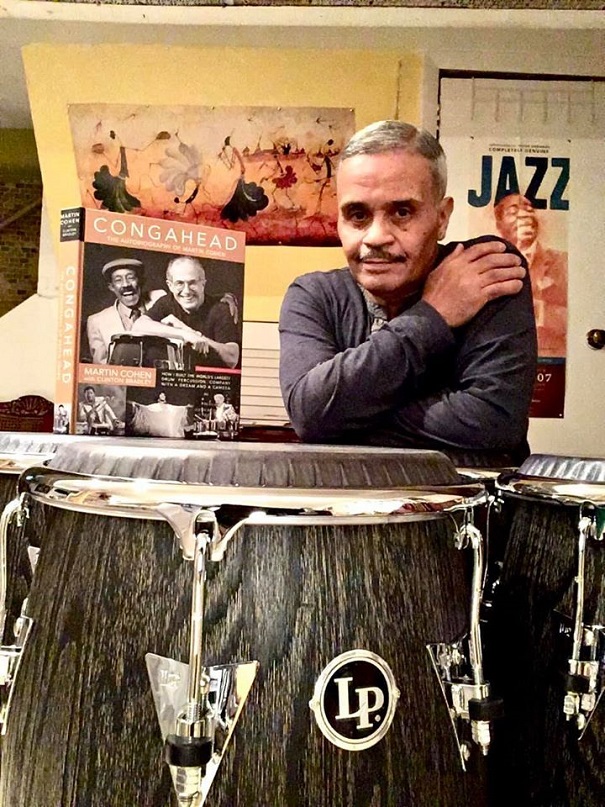
Wilson “Chembo” Corniel Jr.

Wilson “Chembo” Corniel Jr.“A sprinkling of be-bop, a touch of swing with a dollop of bomba, rumba, tango and danzón topped with ‘un chin’ de charanga.”

Grammy award nominated percussionist Wilson “Chembo” Corniel was born in Manhattan on November 22, 1953 of proud Puerto Rican parents; Chembo was raised in the humble streets of Red Hook, Brooklyn.

1- Wilson “Chembo” Corniel Jr

Wilson “Chembo” Corniel Jr

It was during these years, as a quick-witted youngster, that he had the privilege and honor to study with such percussion luminaries as, Tommy Lopez Sr., “Little Ray” Romero, Louie Bauzo, and Cachete Maldonado.

Chembo honed his skills at The Harbor Conservatory for the Performing Arts in New York, and also at the prestigious La Escuela Nacional de Arte in Havana, Cuba under the direction of the great Chucho Valdés.

His intense studies with such legends noted above channeled his energy onto a path where Wilson “Chembo” Corniel has now created a reputation for himself among musicians and the public. Today, he is considered as one of the best hard-hitting, versatile percussionists around.

Chembo teaches percussion to students at the SUNY Purchase Conservatory of Music and leads numerous clinics throughout the United States where he brings awareness to others of the rich Afro-Caribbean traditions.

Among his credits, Chembo was chosen to create his own instructional DVD called, “An Introduction to Hand Percussion: Volume I—Congas”. It was released in December of 2000 and with distribution by Warner Brothers it has been a success.

He’s been a vital endorser of Latin Percussion instruments since 1982 as he is currently for Remo drum heads, Vic Firth sticks and Sabian cymbals.

His touring credits are as long as his performing credits. Chembo has toured with many major artists throughout Europe, Asia, North & South America, and the Caribbean. Television credits include an appearance on the “Bill Cosby Show” and a recurring recording gig on Nickelodeon’s children show, “Dora the Explorer”.

Chembo continues to perform and/or record with many artists of different genres. He is currently concentrating on leading his own Latin Jazz quintet, “Chembo Corniel Quintet”. Chembo received a GRAMMY NOMINATION by NARAS IN 2009 for “BEST LATIN

JAZZ ALBUM” for his 2009 cd “Things I Wanted To Do”. This is a well-balanced Latin Jazz group that incorporates many rich traditions, such as writer Aurora Flores states:

“A sprinkling of be-bop, a touch of swing with a dollop of bomba, rumba, tango and danzón topped with ‘un chin’ de charanga.”

Wilson “Chembo” Corniel Jr. ARTISTS: RECORDINGS:

  • Wilson “Chembo” Corniel – “Land Of The Descendants” – 2016
  • Wilson “Chembo” Corniel – “Blue Monk” (ASM) – 2012
  • Wilson “Chembo” Corniel – “Things I Wanted To Do” – 2009
  • Akiko Tusuruga – Orient Express – 2009
  • Wilson “Chembo” Corniel – “For The Rest Of Your Life” – 2007
  • Mark Sherman – Family – 2007
  • Carlos Jimenez – El Flautista – 2007
  • Akiko Tusuruga – Sweet And Funky – 2006
  • Chris Washburne & SYOTOS – Land Of Nod – 2006
  • Chembo Corniel & Andrea Brachfeld – Beyond Standards 2006
  • Willie Martinez – La Familia – 2005
  • Hilton Ruiz – Steppin’ With T.P. – 2005
  • Wilson “Chembo” Corniel – Portrait In Rhythms – 2004
  • Ray Vega – Squeeze Squeeze2004
  • Chris Washburne & SYOTOS – Paradise In Trouble – 2003
  • Steve Wilson – Soulful Songs – 2003 Larry Harlow’s
  • Latin Jazz – Live At Birdland -12/02
  • Chico Freeman – By The Way -4/2002
  • Ray Vega – Pa’lante -3/2002
  • Blood, Sweat & Tears – Christmas Album -12/02
  • Chris Washburne & SYOTOS – The Other Side – 4/2001
  • David Gonzalez & LLB – Sofrito3/2000
  • Bobby Sanabria BIG BAND-Live At Birdland -2/2000
  • (Grammy Nominated) Chris Washburne & SYOTOS – Nuyorican Nights -10/99
  • Ray Vega – Boperation- 8/99
  • Larry Harlow – Latin Legends Band – 5/98
  • The Bronx Horns – Silver in the Bronx – 4/98
  • Greg Abate – Sweet Samba – 3/98
  • Buddy Montgomery Trio – Here Again -1/98
  • Ray Vega – Ray Vega -12/97
  • Willie Colón – Honra y Cultura Louie Ramirez – El Genio de la Salsa Jose Bello – Jose Bello y su Orchestra Bobby Rodriguez y la Compañia – Hay Que Cambiar La Rutina

ARTISTS: TOURS/PERFORMANCES:

  • Chucho Valdés
  • Hilton Ruiz
  • Buddy Montgomery
  • Angela Boll
  • Tito Puente
  • Grady Tate
  • Machito
  • Willie Colón
  • Toshiko Akiyoshi
  • Jane Bunnett & Spirits of Havana
  • Bobby Sanabria Big Band
  • Charlie Sepulveda
  • Andrea Brachfeld
  • Ray Vega
  • Bob Baldwin
  • Jose Alberto “El Canario”
  • Pete “El Conde” Rodriguez
  • Larry Harlow
  • Tito Nieves
  • Louie Ramirez
  • Chico Freeman
  • Chris Washburne & the Syotos Band
  • Chico O’Farrill Big Band
  • Bobby Rodriguez y Compañia
  • Lainie Kazan
  • Celia Cruz

Influence of Latin Music in Europe and Vice Versa


European union 


When we refer to any Latin element that has been influential at the European continent or vice versa, it is almost inevitable that we think back to the Discovery of the Americas on the part of Christopher Columbus.

It was about this time when various instruments present in cumbia and salsa started to be used. No wonder we attach so much importance to this event, as this is how Spanish and the Portuguese arrived in the so-called New World. It is no coincidence that these languages are the protagonists of these rhythms at this time.

While it is true that Europe gave its languages to Latin music, we cannot fail to mention that the African slave trade played a major role in this context. Its beats and drums closely tied to religious ceremonies were inspirational for salsa, bachata and samba and African-American music, in which the famous Jazz may be included.

Neither can we leave out the fact that many pre-Colombian civilizations created many types of percussion music instruments, which are very present in Andean music and its very traditional flute-like sounds.

 What has led Latin American music to become so popular in recent times?

There is no denying that Latin music has achieved a tremendous global reach in recent years, but things were not always like this. In the past, it was ballads of love with heartbreaking lyrics that dominated this market and its primary target audience was female.

With the passing of years, this reality radically changed. We can see it in the emergence of an encouraging number of commercial songs and very simple to dance like La Macarena by Los Del Rio, Livin La Vida Loca by Ricky Martin, A Dios Le Pido by Juanes, among others. These pieces of theme music were the ones that broke the barrier of traditional radio in due course.

Later, hip hop and R&B gave origin to other urban rhythms that took hold of everyone’s attention

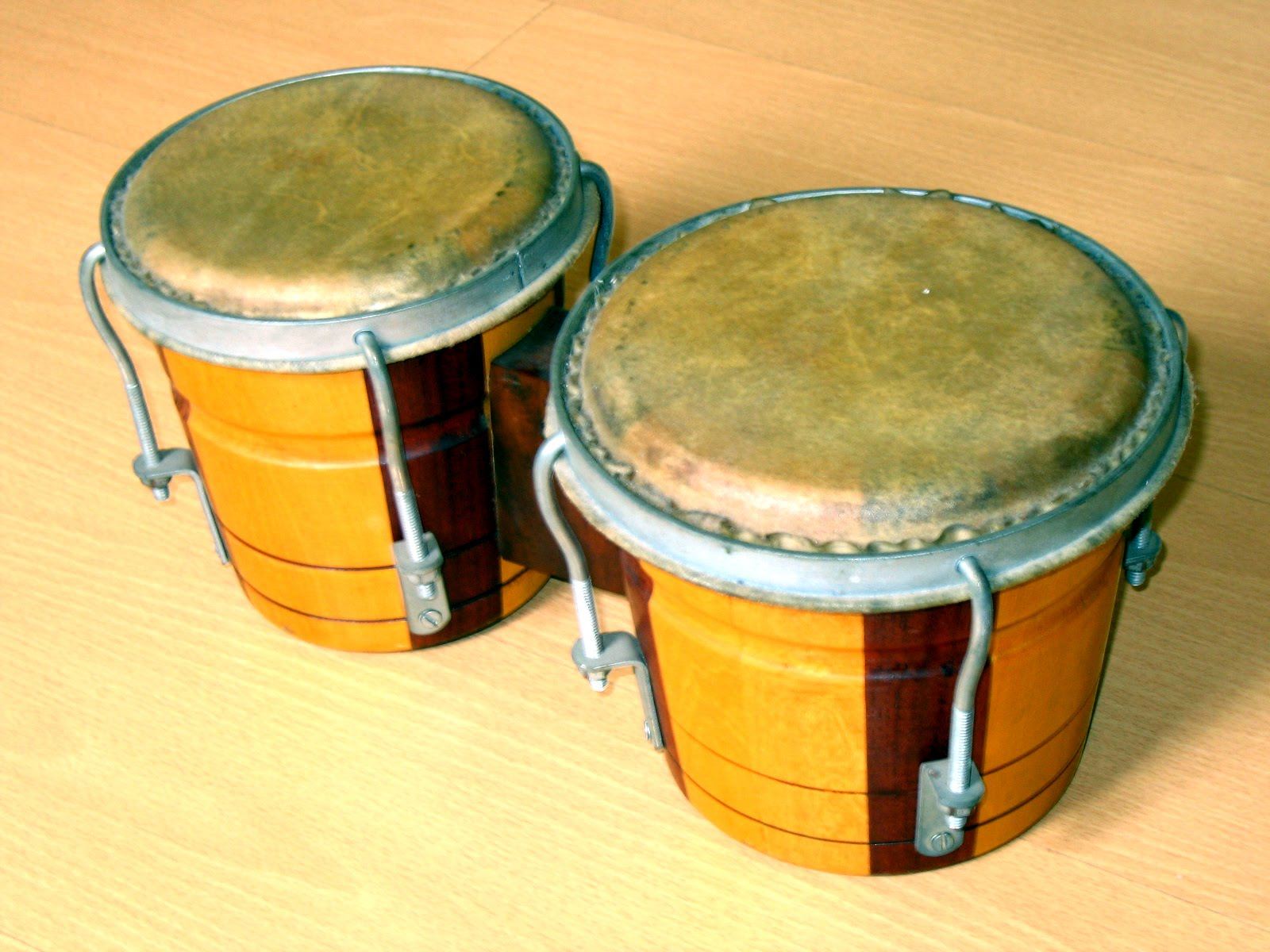
Bongos
Bongos


Latin music for some time now

That mode of nightclubs of Latin origin that have been inaugurated  the length and breadth of the old continent is nothing new. What is new though is the type of attendees received in these places in recent years. There’s a very large audience of all ages who show real interest in rhythms whose language they don’t even know, but they do not seem to care at all. In fact, this peculiarity seems to give an extra touch of excitement to the point. They see Latin music as an array of sounds and rhythms that may not understand, but that simply cannot stop dancing them.

When making a comparison of the monotonous pop style with this recent wave of Latino artists that have been conquering hearts throughout the world, it is evident that things are different now and did not seem to go back to the way they were. What is true is that traditional styles have been overthrown surprisingly.

It is not a secret that singers such as Shakira or Ricky Martin became immensely popular in the late nineties and the early 200All Posts0s, but now things go much further. We are saying that there is a very important number of musicians in these genres that have drawn the attention of all audiences of all ages and countries.

Further, there is a lot of Americans who have appropriated these styles and the Spanish language to give a lot of freshness to their musical projects. A telling example is the Canadian Justin Bieber who has worked with Luis Fonsi and other artists from Latin America, giving as a result a fan base that became interested in these genres and the Spanish language.

It looks like musical lyrics no longer need to be in English to reach all corners of the globe and make everyone dance. In fact, many people look for this type of music to enjoy it, even if they understand little to nothing about it.

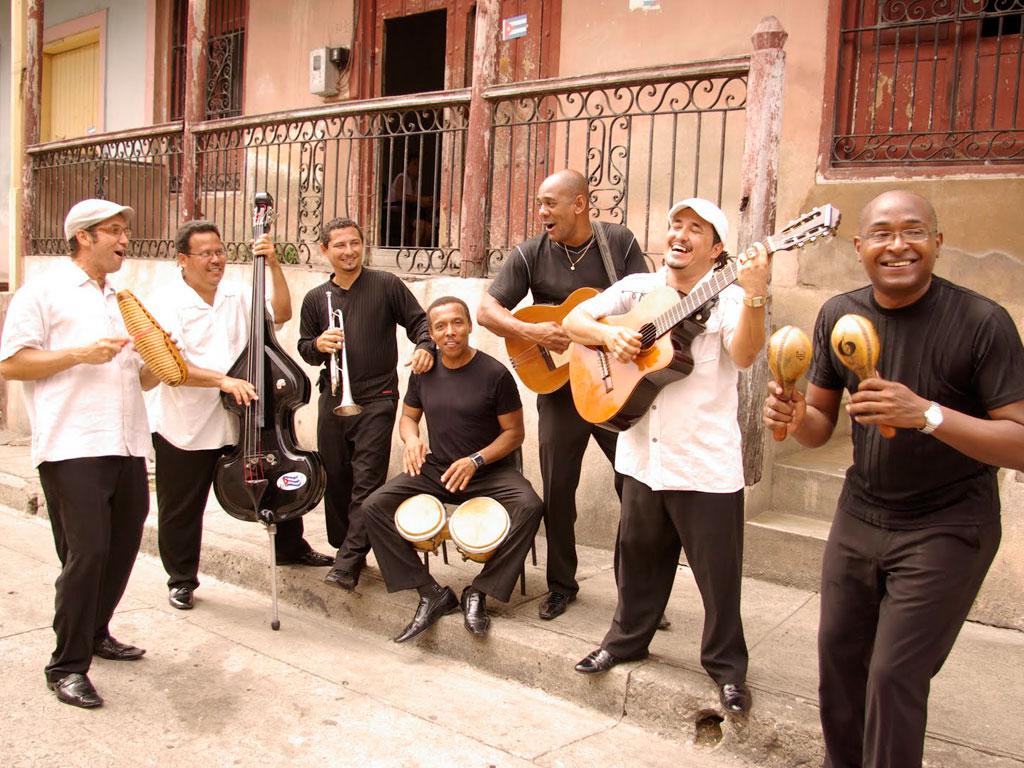
Orchestra Latin music playing in the roads

What can we deduce from all this?

After having analysed all these data, we can say that Latin music is a very rich and intense mix of a cluster of cultures that were linked up between them until we find the heterogeneity that we see today. Undeniably, this whole process of miscegenation between so many rhythms would not have been possible under the influence of pre-Columbian, African and European culture. However, the same can be said in the opposite case.

Yes, this also occurs in the contrary case. Europeans’s musical tastes are no longer those of a few decades ago. Nowadays, there are many adults and young people who cannot stop dancing when they listen to certain salsa or merengue songs that have gone across all possible borders.

In short, we are talking about a continuous feedback loop between both cultures that keeps going until now. No musical rhythm is completely pure and Latin rhythms are the perfect example.

Image source 1: http://nuevacaravana.blogspot.com/2010/08/bongo.html

Image source 2: https://presencia.unah.edu.hn/noticias/los-origenes-de-la-musica-y-la-identidad-en-america-latina-4-de-4/

Image source 3: https://www.correo.ca/2015/07/willie-colon-la-clave-es-la-experimentacion/

Image source 4: https://www.youtube.com/watch?v=QH_3h43nGf4


  • « Go to Previous Page
  • Page 1
  • Page 2
  • Page 3
  • Page 4
  • Page 5
  • Page 6
  • Interim pages omitted …
  • Page 8
  • Go to Next Page »

International Salsa Magazine (ISM) is a monthly publication about Salsa activities around the world, that has been publishing since 2007. It is a world network of volunteers coordinated by ISM Magazine. We are working to strengthen all the events by working together.