• Skip to primary navigation
  • Skip to main content

International Salsa Magazine

  • HOME
  • Previous editions
    • 2026
      • ISM / April 2026
      • ISM / March 2026
      • ISM / February 2026
      • ISM / January 2026
    • 2025
      • ISM / December 2025
      • ISM / November 2025
      • ISM / October 2025
      • ISM / September 2025
      • ISM / August 2025
      • ISM / July 2025
      • ISM / June 2025
      • ISM / May2025
      • ISM / April 2025
      • ISM / March 2025
      • ISM / February 2025
      • ISM / January 2025
    • 2024
      • ISM / December 2024
      • ISM / November 2024
      • ISM / October 2024
      • ISM / September 2024
      • ISM / August 2024
      • ISM / July 2024
      • ISM / June 2024
      • ISM / May 2024
      • ISM / April 2024
      • ISM / March 2024
      • ISM / February 2024
      • ISM / January 2024
    • 2023
      • ISM / December 2023
      • ISM / November 2023
      • ISM / October 2023
      • ISM – September 2023
      • ISM – August 2023
      • ISM July 2023
      • ISM Edition June 2023
      • ISM – May 2023
      • ISM April 2023
      • ISM March 2023
      • ISM February 2023
      • ISM January 2023
    • 2022
      • ISM December 2022
      • ISM November 2022
      • ISM October 2022
      • ISM September 2022
      • ISM August 2022
      • ISM July 2022
      • ISM June 2022
      • ISM May 2022
      • ISM February 2022
      • ISM January 2022
    • 2021
      • ISM December 2021
      • ISM November 2021
      • ISM October – 2021
      • ISM September 2021
      • ISM August 2021
      • ISM July 2021
      • ISM May 2021
      • ISM April 2021
      • ISM June 2021
      • ISM March 2021
      • ISM February 2021
      • ISM January 2021
    • 2020
      • ISM December 2020
      • ISM November 2020
      • ISM October 2020
      • ISM September 2020
      • ISM August 2020
      • ISM July 2020
      • ISM June 2020
      • ISM May 2020
      • ISM April 2020
      • ISM March 2020
      • ISM February 2020
      • ISM January 2020
    • 2019
      • ISM December 2019
      • ISM November 2019
      • ISM October 2019
      • ISM Septembre 2019
      • ISM August 2019
      • ISM July 2019
      • ISM June 2019
  • Spanish
  • Download Salsa App
    • Android
    • Apple

Search Results for: samba

The best Salsa-Latin bands in London! Are you in London?

Europe / England / London

London: Here we bring you the best Latin bands you must check right now!

London - Photo
London – Photo

PALENKE, the Latin dance leader in London

Palenke was born in 1990 to the collective talents of Fernando Suarez – “Kinacho” and Lisandro Zapata from Colombia. Both are highly professional performers and are widely experienced in the Latin and Jazz scene.

Photo 1 - The best Salsa-Latin bands in London
Photo 1 – The best Salsa-Latin bands in London

The Band’s eclectic repertoire is passionate, dynamic and eminently danceable: from the characteristically hot blooded tempos of Cuban Salsa and Brazilian Lambada, the traditional folk rhythms of Colombian cumbia and Dominican Merengue, to the latest Caribbean Reggae and universally popular Spanish style “Gypsy Kings”. This all singing band includes the traditional latin rhythm section, piano, guitar, bass, congas, bongos and timbale. It is fronted by Adriana Santana also Colombian, who has become the “Queen of Salsa” in London captivating the audience with her magnetic voice and sensual dancing.

Over the years Palenke has toured: Switzerland (Montreaux Festival), France, Italy, Spain, Tunisia, Morocco, Malaysia, Indonesia, Ireland and Turkey. The band has performed for dignitaries such as Prince Charles, the late King Hussein of Jordan, King Juan Carlos of Spain and has become a spicy ingredient at hotels, clubs and many pop stars parties.

In the UK, the band is well known from North to South as a leading Latin band spreading the Latin fever from small to big audiences. Palenke has been invited to the Barbican Centre, the South Bank, The Edinburgh Festival and several TV shows. Palenke over the years had worked with the collaboration of great Musicians such as: Oscar Ruiz, timbale; Bill Bland, congas; Alejandro Martinez, multi-percussionist and Luis Carlos Fuentes, Drummer.

Photo 3 - The best Salsa-Latin bands in London
Photo 3 – The best Salsa-Latin bands in London

SAMBOSSA, a band playing the sounds & rhythms of Brazil

With music ranging from sultry Bossa Nova & grooving Afro-funk to blistering samba, Sambossa have everything needed to delight both the listener & the dancer.

Featuring the unique vocal talents of ELISANGELA MAHOGANY, who brings originality to some classic Brazilian tunes.

Also from Rio is hugely talented multi-instrumentalist MARCELO ANDRADE who showcases his saxophone & flute styles.

Guitarist PAUL RUMBOL leads this band as well as being band leader of the celebrated group Viramundo. He also sings & plays the cavquinho (small Brazilian guitar) & has been working alongside the most talented Brazilian performers for more than 20 years.

Completing the quartet is XAVIER OSMIR from São Paulo, Brazil who brings his wonderful percussion & vocal talents. The band is also available as a trio and duo for smaller events/budgets. SAMBOSSA, a compact but very powerful Brazilian/Latin group.
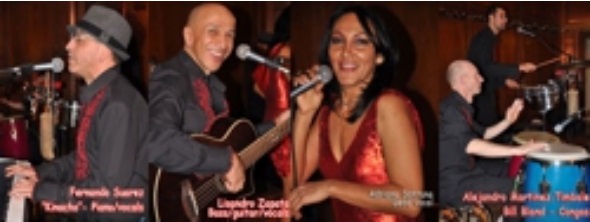
Photo 4 - The best Salsa-Latin bands in London
Photo 4 – The best Salsa-Latin bands in London

RIAMBA: the professionals of rhythm!

With flair for performing, Riamba is one of the most sought after and lively Latin music bands on the London scene today. Its flexible 3 to 7 piece line-up is led by a superb female vocalist and backed by a strong rhythm section which includes: piano, trumpet, bass and typical Latin American percussion.

With their combined musical talents, the group is perfectly suited for the many different occasions and requests that Riamba receives; from a fully blown Salsa dance band with optional dance tuition, to a more relaxed event where lively background music in the Latin style is required.

Photo 5 - The best Salsa-Latin bands in London
Photo 5 – The best Salsa-Latin bands in London

Riamba’s musicians, who are from Latin America, Europe and the UK, have had an eclectic musical training with professional experiences to match, encompassing: Latin American, jazz, pop and classical music.

As individuals this has led them to perform on tours in the UK and around the world with artists such as: Björk, Jason Rebello, The Ghana Dance Ensemble, Stewart Copeland (The Police), and at venues which include: Pizza on the Park, The 606 Club, The Royal Festival Hall, Glastonbury Festival, The Sydney Festival (Australia) and The National Theatres (London and Ghana).

Photo 2 - The best Salsa-Latin bands in London
Photo 2 – The best Salsa-Latin bands in London

Riamba has performed for many private clients and at venues which include: The National Theatre (London), The National Portrait Gallery, The Dorchester Hotel, The Cultural Olympiad, Battersea Park and Regent’s Park Festival as well as travelling abroad for European performances.


De Tierra Caliente founder Bronson Tennis talks about his career and band

There have been many American musicians who have fallen to the charms of Latin music, which is a practically inexhaustible source of genres allowing them to experiment with in many ways. One of them is Bronson Tennis, with whom we have been fortunate to talk about his interesting career and current musical group, De Tierra Caliente.

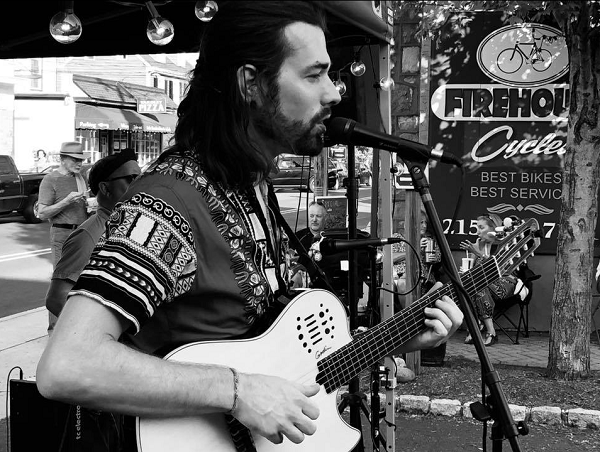
Bronson playing
De Tierra Caliente founder Bronson Tennis playing the guitar

Bronson’s beginnings in music

Bronson Tennis began to put his eyes on music when he was just a child, when he was very attracted to the 1990s alternative rock movement in the United States. When he was only 11 years old, his parents bought him his first bass guitar and later he also wanted to learn to play the guitar and sing.

In family matters, Bronson and his three brothers are musicians and several of his cousins and uncles have also been musicians. In addition, his mother was a fine artist and his grandmother was an art teacher.

Both in school and church, the boy always chased opportunities to sing and show his vocal skills to anyone who wanted to hear. He also took advantage of all these spaces to learn as much as he could about music until he was old enough to exercise it professionally. 

Today, his main instrument is the guitar, although he also plays the cavaquinho (an instrument of Portuguese origin which is widely used in samba) and the roncoco, which is an adaptation of the Andean charango that he uses to play salsa and Cuban son.

Bronson posing for the camera
Bronson Tennis playing the guitar while posing for the camera

Professional debut in music

Bronson also told us that he began his career path as a bassist and chorister in several musical groups in the city of San Diego between 2006 and 2009. He then spent some time in Philadelphia, where he also played with other bands from a variety of genres.

It is interesting that he lived in Buenos Aires, Argentina, where he also worked as a bassist and singer in some bands. In fact, in that same country, he helped form a Caribbean funk band in which he learned a lot about these genres so foreign to what he played in his childhood and youth. He stayed about four years in Argentina, specifically between 2009 and 2012, until he moved to Brazil for about six months to continue learning more and more about Latin music, but it was not his last stop in South America, as he was also in Colombia for a while more.

Following this, he returned to Philadelphia and decided to form his own orchestra which he named De Tierra Caliente.

Prior to De Tierra Caliente

When Bronson returned to Philadelphia, he had the chance to meet some musicians from the Puerto Rican music scene in that city and saw that they had similar outlooks on music, so they got back in the saddle to prepare a formal project amongst themselves.

The artist assures that it was in Argentina where he learned what it takes to move forward with his band. ”Argentines are people who do everything with strength and confidence, whether in music or in soccer. No matter who or what they have to face, as they take on all the challenges with confidence and that is something we could all learn from Argentina.” Bronson said of his stay in that country.

Bronson and his band
(L to R) Papo Buda, Bronson Tennis, Eubie Nieves, Andy Meyer and Steve Cochran

In Brazil, he studied percussion and learned Portuguese, while Colombia taught him to play salsa, champeta, vallenato and many other genres. In short, each country he has visited gave him tools to facilitate his learning in everything about Latin music in various areas.

Precisely thanks to all this acquired knowledge is that Bronson finally felt able to form his own band in 2014 in union with fellow musicians who understood what he wanted to carry out.

How De Tierra Caliente started

Upon his return to the United States, Bronson was very clear that he wanted to incorporate all those elements learned in South America and the Caribbean, but giving them his own touch. It was then that he met conguero Papo Buda, with whom he agreed on much and began the recruiting process for the rest of the musicians.

After that, Bronson and Papo could add more artists to the group, resulting in a fairly consistent group over time. Since its founding, very few musicians have left the band and Bronson and those who remain have an excellent relationship with all of them despite no longer being band mates.

Among his greatest inspirations, Bronson mentioned many artists and groups of various nationalities and genres such as El Gran Combo de Puerto Rico, the Brazilian composer and singer Paulinho da Viola, the group Caribe Funk and many others.

De Tierra Caliente playing
De Tierra Caliente playing live in Yardley

Read also: Latin jazz and mambo trumpeter Jonathan Powell and his great collaborations

Chick Corea Pianist, composer, arranger, producer, teacher. Acoustic and Electric

Surrounded by music since childhood, Armando Anthony Corea walked a path in which he shone like few others, accompanied by musicians who make up an encyclopedia of jazz.

Pianist, composer, arranger, producer, teacher. Acoustic and electric. Chick Corea was one of the most influential musicians in the vast universe that is jazz and surely one of the most important figures in global music of this time. In addition to being artistically prolific, he was commercially successful. For this reason, it would also be impossible to explain the music of this time without the example of Chick Corea.

Chick Corea Pianist, composer, arranger, producer, teacher. Acoustic and Electric

Armando Anthony “Chick” Corea was born in Chelsea, Massachusetts, on June 12, 1941, to a family of Calabrian origin. At the age of four, he began to play the piano, encouraged by his father, a jazz trumpeter who led a Dixieland band in Boston in the 1930s and 1940s.

Surrounded by music, young Armando was soon introduced to the heroes of bebop. The music of Dizzy Gillespie, Charlie Parker, Bud Powell, Horace Silver, and Lester Young would leave a notable mark on his education. At the age of eight, he began studying classical piano with Salvatore Sullo, an Italian-born concert pianist who, in addition to his love of Mozart, opened up the world of composition to him.

Always tied to a confusing timeline, the first released recording of the original configuration of Return to Forever was actually its second session.

An initial ECM studio date made in February 1972 was not released until after the band had changed in 1975.

The Polydor/Verve recording from October 1972 is actually this 1973 release, which features the same band with Chick Corea, Stanley Clarke, Airto Moreira, Joe Farrell, and Flora Purim. There is no need to make distinctions, as both are five-star albums, showcasing many of the keyboardist’s enduring, instantly recognizable and highly melodic compositions.

Farrell’s joyous flute, Purim’s wordless vocals, Airto’s electrifying percussion and Clarke’s deft electric bass lines are wrapped up in a stew of Brazilian samba and Corea’s Fender Rhodes electric piano, and certainly set the tone and the highest bar for the music of the groups that will come after. “Captain Marvel,” the seed of the Farrell- and Purim-less band that expanded into a full concept album with Stan Getz, is here as a vaporous fusion samba with Corea dancing on the keys.

Chick Corea y Gary Borto

By now, the beautiful “500 Miles High” has become Purim’s signature song with Neville Potter lyrics and Corea’s stabbing chords, and unfortunately became a hippie anti-drug anthem.

Perhaps Corea’s definitive song of all time, and covered ad infinitum by professional and school bands, “Spain” retains the quirky melody, clapping interlude, up-and-down dynamics, exciting improvisational section and variation in time, tempo and colourations that always spark interest despite a length of close to ten minutes.

“You’re Everything” is a romantic classic that has surely been heard at many a wedding, with another Potter lyric sung to heaven by Purim, while the title track is Purim’s lyrics in a looser musical framework, with Clarke’s graphic merging with Corea and Farrell’s piercing flute work.

Chick Corea - John Patitucci - Dave Weckl
Chick Corea – John Patitucci – Dave Weckl

As much as the others have become icons, Farrell’s extraordinary sound on this date should never be trivialised or underestimated.

The final track, “Children’s Song,” was a springboard for several of Corea’s full-length album projects, and is heard here for the first time in trio format with a slow, Christmas motif.

The expanded version of this recording includes many alternate takes of four of these selections, but also includes “Matrix,” which was not on any RTF album, and there are four versions of “What Game Shall We Play Today?”, which was only available on the ECM release.

From a historical perspective, this is the most important work of Corea’s career, very different from his earlier progressive or improvisational efforts, and the pivotal beginning of his career as the most popular contemporary jazz keyboardist in history. Michael G. Nasto.

Chick Corea And Return To Forever – Light As A Feather (1973)

Tracks:

  1. You’re Everything
  2. Light As A Feather
  3. Captain Marvel
  4. 500 Miles High
  5. Children’s Song
  6. Spain

Musicians:

Chick Corea (Fender Rhodes, electric piano)

Stanley Clarke (Double bass)

Joe Farrell (Tenor sax, soprano sax, flute)

Flora Purim (Voice, percussion)

Airto Moreira (Drums)

Chick Corea And Return To Forever - Light As A Feather (1973)
Chick Corea And Return To Forever – Light As A Feather (1973)

Information provided (February 21, 2009)

Sources:

L’Òstia Latin Jazz

Santiago Giordano: He is a musician, teacher and music critic

Also Read: Yilian Cañizares, an excellent Cuban musician, studied in her hometown in the strictest tradition of the Russian school of violin

The Soul of Latin American culture – Salsa, Merengue y Lambada

Latin American / Venezuela / Caracas

Did you know that Salsa, Merengue and Lambada are rhythms that have been enjoyed in the last decade? Well, this link that unites them is the energy and passion for life, expressing itself in music, showing itself in the romance of couples dancing in harmony and with dance it unites them even more in a sentimental way as in fellowship.

These rhythms were born from a very urban environment, where each dancer can freely show their personality in the movement, however, following certain rules that each genre has, where one can follow each step and technique or do it spontaneously. For example:

✓ Never use the same foot twice, it must be alternated (right, left, right…).

✓ Dance with your partner as a mirror, that is, if you go to the right, your partner goes to the left.

✓ Transfer of weight from one foot to another as steps are performed.

Salsa is a rhythm that originates from the synthesis of Cuban son and other Caribbean music genres, with jazz and other American rhythms. One of the main contributors comes from the African rumbas along with the cumbia, the guaguancó, the guajira, the Cuban son, the mambo, the montuno son, the cha cha cha, among others.

It can be said that salsa is one of the most important rhythms in the music industry where it has many characteristics of its contributors, for example, “salsa” is close to “mambo” due to the steps executed in counts of eight, its movements and patterns are unique, however, it is a side-by-side dance with different turns.

Couple dancing Salsa

The Merengue has its origin in the Dominican Republic and has a huge degree of popularity in the Caribbean area, it is a slow rhythm that increases its speed at the end of the dance, it is similar to the bolero but it is danced more than anything in groups than with a partner.

The secret of the dance is based on the transfer of weight from one foot to another, where each Latin genre has a characteristic that differentiates them, the best example is the similarity that everyone believes that “salsa” has with “merengue”, where Salsa has 4 beats, where the first beat touches the floor lightly with the tip of the foot quickly, which is known as “TAP” and this is repeated in four “4” and eight “8”, instead The merengue does not exist, this “TAP” is only 2 beats, it is a constant rhythm, very simple, whose speed of steps is marked by the musical rhythm.

But both genres have to have in the dance a movement of the hip, shoulders and position of the hands that characterizes them, marking the sensuality of Latin rhythms.

The “Lambada, a Brazilian genre that originated from the small cafes and bars that came from the garrafa dance, is believed to have been the product of rhythms such as the “Carimbo” and the “Merengue” with influences brought from the “Forro” and the “Samba” so it has a lot of Caribbean music influences, but the melody is the combination of Caribbean drums, brass and electric guitars with an added touch of Spanish elements and the flavor of the local indigenous people. It first spread to Bahia, Europe, Japan, the USA and the Middle East. It is currently danced in nightclubs and dance clubs, since its creation its jiv, merengue, rumba, even sevillanas and acrobatic maneuvers have evolved.

It is a 3-beat dance (fast – slow – fast) where the first step is taken with the first beat of the music, the second is the movement of one of the 2 senses and the third is the transfer of the weight back to the center moving the leg more slowly.

This dance is danced with the whole body, women dance pointe, flex the knees and the trunk moves in the opposite direction to the lower part of the body, if the hip rotates in one direction the rib cage rotates in the opposite direction. It can be danced alone or as a couple (they dance very close together giving the impression that it is one person), where the man molds his partner in the dance and the woman can embellish the dance with head movements or a controlled intentional fall producing a wave from the knee to the hips and shoulders.

If you want to know and learn some basic steps of the mentioned rhythms, look for the book in movement Latin Dance Dessi and Orod Ohanian and get passionate with these three “3” hot dances. Or follow us and watch the following videos to learn how to dance merengue, salsa and lambada.

Tracy Jenkins from Lula World Records spoke exclusively with us

There are many Latin artists residing in Canada who have gone to the North American country to seek opportunities in music and, little by little, they have found them thanks to people like Tracy Jenkins and her label Lula World Records.   

Tracy Jenkins, with whom we had the opportunity to talk a few days ago, is one of the co-founders of Lula World Records, part of the Lula Lounge nightclub team and an artist manager.   

We found it very interesting to discover a record label belonging to a project focused on managing artists who make Latin music, which is a great opportunity to further promote our culture and genres that have been disseminated throughout the world in recent years. 

Tracy has done an immeasurable work to guide and make known soloists and groups from all over Latin America and we want to recognize her great work with the most important details of the conversation we had with her.   

Tracy Jenkins from Lula
Tracy Jenkins, co-founder of Lula World Records

Lula World Records 

When we wanted to know a little about the context of creating Lula World Records, Tracy told us that this was a project born from the vibrant Latin music scene at the Lula Lounge club, which has 21 years of operation in the city of Toronto. 

During this time, the venue has established itself as one of the best places to enjoy live Latin music throughout the city of Toronto and Canada in general. Attendees can usually enjoy live singers, orchestras and DJs on Fridays and Saturdays, although there can be more days. 

Currently, it is the only place in Canada that offers a total of 12 salsa orchestras and each one has its own sound and repertoire. It is the club that gave rise to what would later become known as Lula World Recodrs, which was born as a means to share the best quality salsa music produced in Toronto with a much more global audience. 

The first official release of the project took place in 2012, but in the form of a musical complication under the name ”Lula Lounge Essential Tracks”, including the best tracks from artists such as Roberto Linares Brown, Yani Borrell, The Puentes Brothers and many other important names in the Canadian music industry. 

Tracy says that, from that moment, they saw the opportunity to continue producing and releasing albums and tracks from other renowned singers and groups such as Lula All Starts, Conjunto Lacalú, Lengaïa Salsa Brava, Salsotika, La Borinqueña and El Charangon del Norte led by Wilver Pedrozo.   

Yani Borrell managed by Lula
Yani Borrell, one of the artists managed by Lula World Records

Why Lula World Records focuses on Latin Music 

”We have centered our efforts on Latin music because of the relationship this project has with Lula Lounge, which opened its doors in 2022 with a concert by Isaac Delgado. From that point, the club has been remaining current for more than 20 years, time in which it has been the birthplace of new projects and emerging artists who have used the venue as a platform to develop and promote their music to local salsa fans,” Tracy said. 

Among the many genres supported by Lula World Records all this time, we can mention salsa, Latin jazz, merengue, Cuban son, samba, bossa nova, reggae, classic tumbao, Latin-leaning funk, among many others. However, Tracy and his team are not limited to Latin genres, as they have also promoted Caribbean, Arab and European styles.   

Something else Tracy said is that it is highly unlikely that the line followed by the label will change, since there are many migratory waves from Latin America that Canada continues to receive, so he knows that the Latin scene will keep growing in the coming years.   

Charangon Del Norte managed by Lula
Multi-instrumentalist Wilver Pedrozo, leader of Charangon Del Norte, ne of the groups managed by Lula World Records

What Lula World Records looks for in an artist   

As with any other music label, Lula World Records has its own requirements for managing an artist, Tracy explained that she and her team generally engage with artists who have made great strides in recording, mixing and mastering their own music. 

During the evaluation process carried out by them, aspects such as the quality of the songs, excellence in production, catchiness of the tunes and the overall authenticity and originality of the project are taken into consideration.   

The label has a particular interest in original and innovative mixes of diverse musical elements and used as an example an Afro-indigenous punk rock group of Brazilian origin called Xocô, which recently released one of its latest albums. Two other great examples of this diversity are Ahmed Moneka, the creator of Arabic and Afro-Iraqi jazz, and Nastasia, a Ukrainian soul singer.   

Another detail they take into consideration is the artist’s ability to collaborate with them during the process of releasing their albums. Releasing a record production requires a lot of work from start to finish and a lot of things to do such as marketing and promotion of music. Lula World Records wants artists who fully live up to their commitment and use all the platforms and tools available to promote what they are doing. 

To close the conversation, Tracy told us that any artist who want their musical work to be promoted can submit their EPK to the company for evaluation by the board of directors. They are still a small label, but hope to grow a lot more over the next two years and even manage artists outside of Canada. 

Read also: Christmas salsa albums to listen to this December 

  • « Go to Previous Page
  • Page 1
  • Page 2
  • Page 3
  • Page 4
  • Page 5
  • Page 6
  • Interim pages omitted …
  • Page 8
  • Go to Next Page »

International Salsa Magazine (ISM) is a monthly publication about Salsa activities around the world, that has been publishing since 2007. It is a world network of volunteers coordinated by ISM Magazine. We are working to strengthen all the events by working together.