
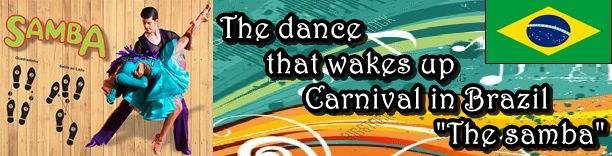
Grammy award nominated percussionist Wilson “Chembo” Corniel was born in Manhattan on November 22, 1953 of proud Puerto Rican parents; Chembo was raised in the humble streets of Red Hook, Brooklyn.

Wilson “Chembo” Corniel Jr
It was during these years, as a quick-witted youngster, that he had the privilege and honor to study with such percussion luminaries as, Tommy Lopez Sr., “Little Ray” Romero, Louie Bauzo, and Cachete Maldonado.
Chembo honed his skills at The Harbor Conservatory for the Performing Arts in New York, and also at the prestigious La Escuela Nacional de Arte in Havana, Cuba under the direction of the great Chucho Valdés.
His intense studies with such legends noted above channeled his energy onto a path where Wilson “Chembo” Corniel has now created a reputation for himself among musicians and the public. Today, he is considered as one of the best hard-hitting, versatile percussionists around.
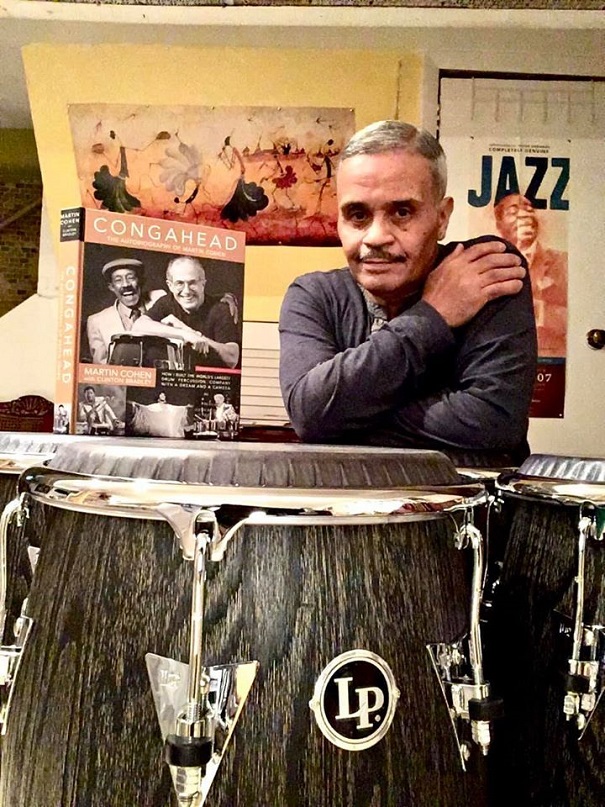
Chembo teaches percussion to students at the SUNY Purchase Conservatory of Music and leads numerous clinics throughout the United States where he brings awareness to others of the rich Afro-Caribbean traditions.
Among his credits, Chembo was chosen to create his own instructional DVD called, “An Introduction to Hand Percussion: Volume I—Congas”. It was released in December of 2000 and with distribution by Warner Brothers it has been a success.
He’s been a vital endorser of Latin Percussion instruments since 1982 as he is currently for Remo drum heads, Vic Firth sticks and Sabian cymbals.
His touring credits are as long as his performing credits. Chembo has toured with many major artists throughout Europe, Asia, North & South America, and the Caribbean. Television credits include an appearance on the “Bill Cosby Show” and a recurring recording gig on Nickelodeon’s children show, “Dora the Explorer”.
Chembo continues to perform and/or record with many artists of different genres. He is currently concentrating on leading his own Latin Jazz quintet, “Chembo Corniel Quintet”. Chembo received a GRAMMY NOMINATION by NARAS IN 2009 for “BEST LATIN
JAZZ ALBUM” for his 2009 cd “Things I Wanted To Do”. This is a well-balanced Latin Jazz group that incorporates many rich traditions, such as writer Aurora Flores states:
“A sprinkling of be-bop, a touch of swing with a dollop of bomba, rumba, tango and danzón topped with ‘un chin’ de charanga.”
Wilson “Chembo” Corniel Jr. ARTISTS: RECORDINGS:


ARTISTS: TOURS/PERFORMANCES:


European union
It was about this time when various instruments present in cumbia and salsa started to be used. No wonder we attach so much importance to this event, as this is how Spanish and the Portuguese arrived in the so-called New World. It is no coincidence that these languages are the protagonists of these rhythms at this time.
While it is true that Europe gave its languages to Latin music, we cannot fail to mention that the African slave trade played a major role in this context. Its beats and drums closely tied to religious ceremonies were inspirational for salsa, bachata and samba and African-American music, in which the famous Jazz may be included.
Neither can we leave out the fact that many pre-Colombian civilizations created many types of percussion music instruments, which are very present in Andean music and its very traditional flute-like sounds.
There is no denying that Latin music has achieved a tremendous global reach in recent years, but things were not always like this. In the past, it was ballads of love with heartbreaking lyrics that dominated this market and its primary target audience was female.
With the passing of years, this reality radically changed. We can see it in the emergence of an encouraging number of commercial songs and very simple to dance like La Macarena by Los Del Rio, Livin La Vida Loca by Ricky Martin, A Dios Le Pido by Juanes, among others. These pieces of theme music were the ones that broke the barrier of traditional radio in due course.
Later, hip hop and R&B gave origin to other urban rhythms that took hold of everyone’s attention
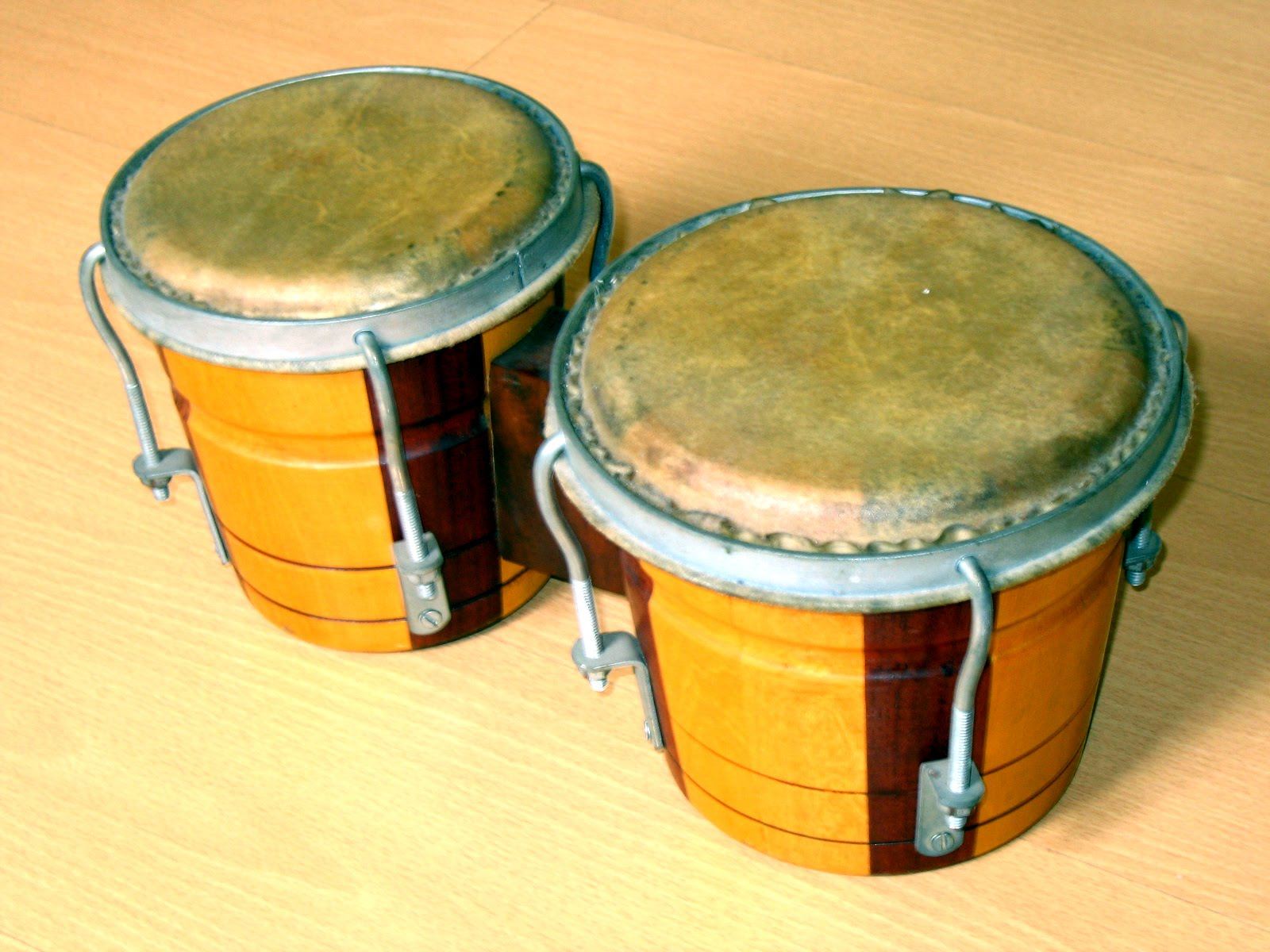
Latin music for some time now
That mode of nightclubs of Latin origin that have been inaugurated the length and breadth of the old continent is nothing new. What is new though is the type of attendees received in these places in recent years. There’s a very large audience of all ages who show real interest in rhythms whose language they don’t even know, but they do not seem to care at all. In fact, this peculiarity seems to give an extra touch of excitement to the point. They see Latin music as an array of sounds and rhythms that may not understand, but that simply cannot stop dancing them.
When making a comparison of the monotonous pop style with this recent wave of Latino artists that have been conquering hearts throughout the world, it is evident that things are different now and did not seem to go back to the way they were. What is true is that traditional styles have been overthrown surprisingly.
It is not a secret that singers such as Shakira or Ricky Martin became immensely popular in the late nineties and the early 200All Posts0s, but now things go much further. We are saying that there is a very important number of musicians in these genres that have drawn the attention of all audiences of all ages and countries.
Further, there is a lot of Americans who have appropriated these styles and the Spanish language to give a lot of freshness to their musical projects. A telling example is the Canadian Justin Bieber who has worked with Luis Fonsi and other artists from Latin America, giving as a result a fan base that became interested in these genres and the Spanish language.
It looks like musical lyrics no longer need to be in English to reach all corners of the globe and make everyone dance. In fact, many people look for this type of music to enjoy it, even if they understand little to nothing about it.
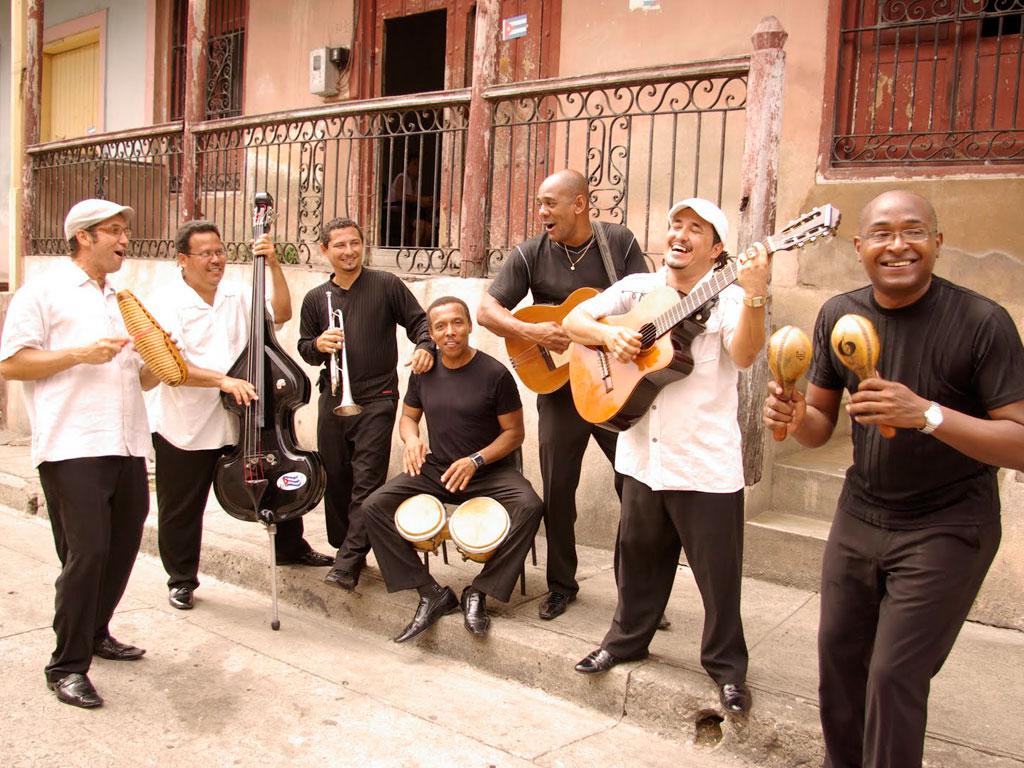
What can we deduce from all this?
After having analysed all these data, we can say that Latin music is a very rich and intense mix of a cluster of cultures that were linked up between them until we find the heterogeneity that we see today. Undeniably, this whole process of miscegenation between so many rhythms would not have been possible under the influence of pre-Columbian, African and European culture. However, the same can be said in the opposite case.
Yes, this also occurs in the contrary case. Europeans’s musical tastes are no longer those of a few decades ago. Nowadays, there are many adults and young people who cannot stop dancing when they listen to certain salsa or merengue songs that have gone across all possible borders.
In short, we are talking about a continuous feedback loop between both cultures that keeps going until now. No musical rhythm is completely pure and Latin rhythms are the perfect example.
Image source 1: http://nuevacaravana.blogspot.com/2010/08/bongo.html
Image source 2: https://presencia.unah.edu.hn/noticias/los-origenes-de-la-musica-y-la-identidad-en-america-latina-4-de-4/
Image source 3: https://www.correo.ca/2015/07/willie-colon-la-clave-es-la-experimentacion/
Image source 4: https://www.youtube.com/watch?v=QH_3h43nGf4

EFG London Jazz Festival celebrates its 30th birthday with the innovation and musical freedom that has always characterized the London Jazz scene.
This festival, the largest and in constant transition in North London, opens its space from Friday, November 11th to Sunday, November 20th to present a program of live and digital presentations with world-class artists, emerging talents, collaborations specials, avant-garde sounds, and the latest music for a massive audience that has established the EFG London Jazz Festival https://efglondonjazzfestival.org.uk/ as one of the main international Jazz events in Europe.
This emblematic event in the United Kingdom has three outstanding aspects that have characterized it over the years, they are Character, Impulse, and Wealth. The Character is evidenced in each edition with the contribution of special collaborations, discoveries, and exclusive commissions. The second aspect of this festival is the Impulse, being this event the highlight of the Jazz calendar in the capital. Finally, the third aspect is the Wealth that can be easily found in a club or concert hall packed with spectators to enjoy 300 live shows in more than 70 places attracting around 100,000 people daily.
In this 2022 edition, the star lineup is represented by nine international Latin Jazz artists such as Fiona Ross (Friday, November 11th), Katriona Taylor Quintet presenting “La Reina de la Bossa Nova” (Saturday, November 12th), Yuri Hernández (Sunday, November 13th), Colectiva (Thursday, November 17th), Mexico’s Woman of the Year for Arts and Culture, Migdalia Van Der Hoven (Thursday, November 17th), the Jazz/Latin group led by Steve Rubie from the 606 Club, Samara (Friday, November 18th), Trombonist Laura Impallomeni (Saturday, November 19th), Osvaldo Chacón (Sunday, November 20th) and Chucho Valdés (Sunday, November 20th).
“Voices celebrate the power, connection, and expression of song, beauty, and aptitude…”

Vocalist, pianist, songwriter, and producer, Fiona Ross, has become known for having an authentic contemporary Jazz sound obtained by mixing the fast rhythm of Latin Jazz, a brief flirtation with vintage Jazz, a bit of Neo Soul, and a touch of melancholy ballads.
Multi-award-winning Jazz artist, editor-in-chief, journalist, and founder of the award-winning organization Women in Jazz Media Fiona Ross was Director of the British Academy of New Music in London for nearly a decade, where she was responsible for the formation of Ed Sheeran, Rita Ora, among many others. Fiona’s date will be on November 11th at 8:30 PM at the London Polish Jazz Café Posk (238-246 Kings St. W6 0RF), and the ticket is £15.
“…Celebrating unity with the power of music.”

This multifaceted 10-day event brings to its lineup the established singer within the Latin music industry for the last two decades, Yuri Hernández. The establishment that will host it will be Juju’s Bar & Stage (Ely’s Yard, 15 Hanbury St, London E1 6QR) on Sunday, November 13th from 6 PM, and the cost of the ticket doesn’t exceed £9.
Hernández is one of the most sought-after musicians in northern Spain and is introduced to the UK Latin Jazz scene through Loco Soñador, his second studio album released in 2020. Joining this musical genius will be DJ Flecha (Joel Verdecia) with his supporting act promoting Cuban music. This veteran DJ (25 years of career) has been nominated three times as Best Latin Tropical DJ in a European country for his technique and originality when mixing.
“Beyond the margins, some of the most innovative artists at the forefront of Jazz are pushing its limits and expanding the definition of the genre while drawing influences from a wide range of other languages.”

This Afro-Latin and Jazz music band, Colectiva, reflects on themes of sisterhood and female empowerment. They are rooted in the sounds of Africa, Latin America, and the diaspora, creating a genre that the group has dubbed Jazz Tropicaliente (Hot/Tropical/Jazz). Their debut single is Under The, written in collaboration with pianist María Grapsa and released in April 2021. This track received great support from global radio stations and famous DJs in the music industry.
Colectiva will be presented on November 17th at 8:30 PM at the London Kings Place-Hall Two-(90 York Way, N1 9AG), and tickets have a permanent price of £15.
On the other hand, Osvaldo Chacón’s band is the leading Timba orchestra in the UK and has been nominated multiple times for the prestigious LUKAS awards. Osvaldo Chacón, composer, producer, and singer-songwriter, has shared the stage with great Salsa figures such as Adalberto Santiago, Azuquita, Tito Allen (Fania All Stars), Salsaceltica, Eddie Palmieri, as well as the greatest world-famous stars such as Celia Cruz, Oscar D’León, Rubén Blades, and Alberto “El Canario”. Supporting Osvaldo Chacón will be DJ Javier La Rosa mixing Salsa, Cuban Timba, Reggaeton, Latin Hip-Hop, and R&B. Sunday, November 20th is the date when you can enjoy these presentations. Time: 8 PM. Venue: Juju’s Bar & Stage. Ticket: £10.
“The Icons are the living legends of Jazz and the leading heroes of the genre who paved the way and continue to create, inspiring artists, and audiences alike.
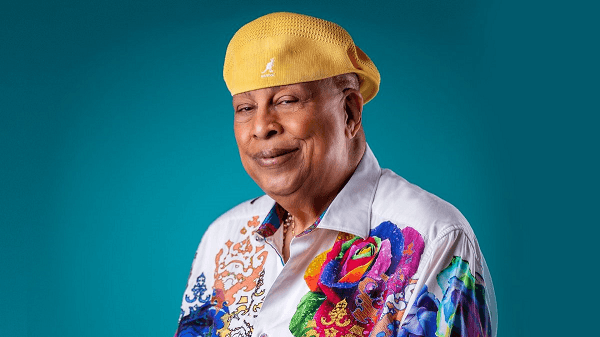
The EFG London Jazz Festival brings the Cuban pianist, composer, and arranger Chucho Valdés, who celebrates his 80th birthday with his extraordinary work La Creación with the Yoruban Orchestra and Hilario Durán & John Beasley.
The winner of six Grammy Awards and three Latin Grammy Awards is the most influential figure in Afro-Cuban Jazz of the 20th and 21st centuries. In an extensive career spanning six decades, Valdés has pushed the boundaries of new expressions in Afro-Cuban music. His influence and inspiration in the genre are immeasurable to the point that his work sets the standard by which new generations are governed and drives their careers. To see Chucho Valdés head to the London Southbank Center (Royal Festival Hall, Belvedere Road SE1 8XX) at 7:30 PM. and tickets range from £30 – £45.
Along with Chucho will be the cellist, vocalist, composer, and niece Ana Carla Maza. Within her discography is the album La Flor (2020) which incorporates Latin rhythms, Pop melodies and Jazz harmonies along with classical techniques. Bahía (June 26, 2022) is her most recent production inspired by Cuban Son, Samba, Bossa Nova, Tango, Jazz, and Chanson with a rich mix of classical cello and voice.
Today we are going to talk with Tiffany Joy and Maqui Reyes from IndiviDúo, which is a famous and successful musical duo. Great to be with you. How are you?
Tiffany: super! Very well, thank you very much.

You two met in 2010 in Buenos Aires while both were recording your respective musical productions separately. How was that first meeting and conversation about music?
Tiffany: you are very well informed, Karina, I love it. We met at a musical party for Colombians living in Buenos Aires. We were introduced by a mutual friend, who is also from the US, but she was living in Buenos Aires at the time. Maqui had invited me to that event through Facebook, so I went with my guitar and a liter of beer. There was a moment when he started singing ohis riginal music and I do the same later. I think that’s where a connection and mutual respect began to be created, which led to us singing together later that night.
He sang Tabaco y Chanel by Bacilos and since I knew it by heart, I started singing the harmonies. The time when our voices found each other was very magical and everyone at the party thought something beautiful was happening there. Really, since that night we haven’t stopped singing and composing music together.
What did you see in each other to form a musical duo?
Tiffany: I think Maqui has a special sensitivity towards lyrics and I admire his role as a poet. In addition, he also has a musicality related to my tastes, so it is very common for us to be on the same page about some melodies with the guitar. Melodically, I feel that we get along very well.
Obviously we don’t agree on everything all the time, but I do think we have very similar taste in music, which makes us be attracted each other musically. Personally, my partner has a very powerful energy in terms of positivity, light, pushing forward and making everyone feel special.

What has been the biggest disagreement that you’ve had musically?
Tiffany: generally speaking, I tend to fall in love with ideas so fast. If I hear a chord, progression, melodic line or lyrics that I like, I don’t want us to change them. On the other hand, Maqui is super thoughtful and likes to try a lot of things before going back to the first thing and even make it better, but I think my anxiety about finishing it and singing it sets us at odds. He is very slow in terms of his process and that makes us different.
Considering that Maqui is Colombian and you are Californian, how did this influenced your musical styles?
Tiffany: Maqui is from Bogota while I am from right here in the Bay Area. I grew up listening to James Taylor, Kenny Loggins and the great singer-songwriters in blues, jazz and other typically American genres. I also did musical theater for many years, which led me to listen to the great Broadway plays. My love for Latin music began much later when I started listening to pop artists like Juanes, Shakira, Rocky Martin, Bacilos, among others. Then, I entered into the world of Latin music and started composing in Spanish. To that I must add that I loved dancing salsa and tango since I was really little.
On the side of Maqui, he comes from a completely different music background where he listened to salsa, bambuco, cumbia, merengue and many other Latin genres. Later, he moved to Argentina where he lived for 13 years and traveled throughout the country to learn to play chamame, samba and other Argentinean rhythms. This made him have a huge range of Latin American music, which we incorporate into our music. That is why our repertoire includes reggae, bolero, pop, salsa, rock, bossa-nova and much more.

Your music talks about many positive and reflection messages. It talks a lot about all the important things we humans put aside because we are way too concerned with superficial things. In that sense, what kind of connection are you looking for with the audience?
Maqui: among the responsibilities of a singer-songwriter or a musician, we have to say some important things, so we believe and live the music like that. The subject treated in a song has always been important to us.
I think we have managed to connect with ourselves and people like you who, for some reason, get to listen to one of our songs and identify with it. Songs like Pelea invite you to fight against your own vices, your own demons and your own problems. It is a song that people of any age can identify with, which leads us to have a connection with them beyond music.
What are the age ranges of the people who listen to your music the most?
Tiffany: I would venture to say that those who listen to us the most are people between 25 to 55 years old.
Maqui: However, I must say that we get along very well with children. When we play in theaters or places suitable for minors, there are many families with children. In fact, we don’t rule out recording an album focused exclusively on them. Of course, we know that children don’t like the more traditional genres that we used to listen to and reggaeton is the current trend. Same way, we would include some traditional music so that little ones have the opportunity to listen to it in a fun way.

On that issue, a young salsa singer told me that what he does is a mix of rhythms, while still getting the essence of salsa. Do you plan to add urban genres to your music?
Tiffany: We don’t reject the idea of incorporating urban rhythms to our music because they are good to dance to, easy to defend live and attractive for a generic and large audience. We haven’t yet, but we are open to the possibility.
Maqui: this is a great question because everything has become polarized so much that just listening to the rhythm makes us qualify it as urban, but that’s not necessarily true. What I qualify as urban is attitude and lyrics, things that we know we will never adopt for ourselves.
It’s not our style, although we’ve got nothing against these rhythms. We would like to play them in a more elegant and familiar way.
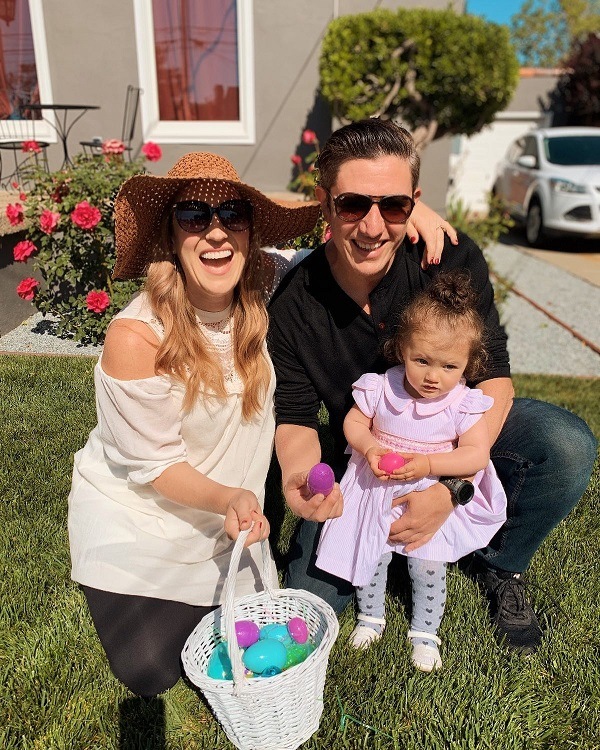
You have been part of the soundtracks of several soap operas such as La Ley del Corazón and Si Dejo de Creer. How did this help you advance your careers?
Tiffany: It helped us get a little more exposure on Spotify, YouTube and other music platforms. It also gave us the opportunity to be much better known, as many people started to see what else we’ve done and listen to other pieces of ours.
What did you do during the pandemic?
Tiffany: because all the shows being cancelled, we dedicated ourselves to hosting a Facebook Live every Friday afternoon. At the beginning, it was very difficult because we didn’t know how to connect, but when we finally learned how to do it, we had a lot of people listening to us. We played original music, did a lot of covers, had a drinkie and toasted people from time to time.
During this time, we also found out we were pregnant, which was a surprise for us because we never thought about having children. We were composing at the time, so we ended up including a song for the baby on our album. Right when Melody (our daughter’s name) was born we did the official album release.
Read also: Story of achievement and dedication of Yoshie Akiba