• Skip to primary navigation
  • Skip to main content

International Salsa Magazine

  • HOME
  • Previous editions
    • 2026
      • ISM / August 2026
      • ISM / July 2026
      • ISM / June 2026
      • ISM / May 2026
      • ISM / April 2026
      • ISM / March 2026
      • ISM / February 2026
      • ISM / January 2026
    • 2025
      • ISM / December 2025
      • ISM / November 2025
      • ISM / October 2025
      • ISM / September 2025
      • ISM / August 2025
      • ISM / July 2025
      • ISM / June 2025
      • ISM / May2025
      • ISM / April 2025
      • ISM / March 2025
      • ISM / February 2025
      • ISM / January 2025
    • 2024
      • ISM / December 2024
      • ISM / November 2024
      • ISM / October 2024
      • ISM / September 2024
      • ISM / August 2024
      • ISM / July 2024
      • ISM / June 2024
      • ISM / May 2024
      • ISM / April 2024
      • ISM / March 2024
      • ISM / February 2024
      • ISM / January 2024
    • 2023
      • ISM / December 2023
      • ISM / November 2023
      • ISM / October 2023
      • ISM – September 2023
      • ISM – August 2023
      • ISM July 2023
      • ISM Edition June 2023
      • ISM – May 2023
      • ISM April 2023
      • ISM March 2023
      • ISM February 2023
      • ISM January 2023
    • 2022
      • ISM December 2022
      • ISM November 2022
      • ISM October 2022
      • ISM September 2022
      • ISM August 2022
      • ISM July 2022
      • ISM June 2022
      • ISM May 2022
      • ISM February 2022
      • ISM January 2022
    • 2021
      • ISM December 2021
      • ISM November 2021
      • ISM October – 2021
      • ISM September 2021
      • ISM August 2021
      • ISM July 2021
      • ISM May 2021
      • ISM April 2021
      • ISM June 2021
      • ISM March 2021
      • ISM February 2021
      • ISM January 2021
    • 2020
      • ISM December 2020
      • ISM November 2020
      • ISM October 2020
      • ISM September 2020
      • ISM August 2020
      • ISM July 2020
      • ISM June 2020
      • ISM May 2020
      • ISM April 2020
      • ISM March 2020
      • ISM February 2020
      • ISM January 2020
    • 2019
      • ISM December 2019
      • ISM November 2019
      • ISM October 2019
      • ISM Septembre 2019
      • ISM August 2019
      • ISM July 2019
      • ISM June 2019
      • ISM May 2019
      • ISM April 2019
      • ISM March 2019
      • ISM February 2019
      • ISM January 2019
    • 2018
      • ISM December 2018
      • ISM November 2018
      • ISM October 2018
      • ISM September 2018
      • ISM August 2018
      • ISM July 2018
      • ISM June 2018
      • ISM May 2018
      • ISM April 2018
      • ISM March 2018
      • ISM February 2018
      • ISM January 2018
    • 2017
      • ISM December 2017
      • ISM November 2017
      • ISM October 2017
      • ISM September 2017
      • ISM August 2017
      • ISM July 2017
      • ISM June 2017
      • ISM May 2017
      • ISM April 2017
      • ISM March 2017
      • ISM February 2017
      • ISM January 2017
    • 2016
      • ISM December 2016
      • ISM November 2016
      • ISM October 2016
      • ISM September 2016
  • Spanish
  • Download Salsa App
    • Android
    • Apple

Search Results for: violinist

Argentine tango bassist and Latin Grammy winner Pedro Giraudo returned to his roots

Latin Grammy winner Pedro Giraudo spoke exclusively to us for International Salsa Magazine, so we are very pleased to bring you the best of our conversation with the Argentinian bassist and composer. Next, these are the highlights of his beginnings and his exciting career in his native country and in the United States, where he currently resides.
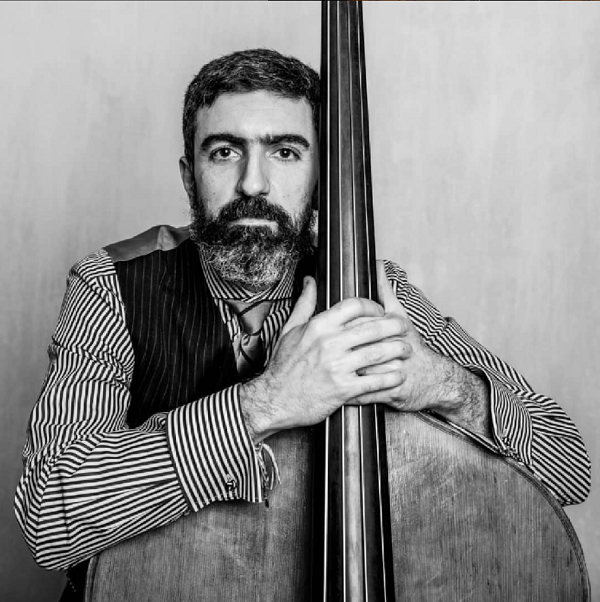
Pedro Giraudo posing
Argentine bassist Pedro Giraudo posing for the camera

Pedro’s beginnings in music

Pedro comes from a family of musicians. In fact, his father was a bandleader and his mother sang in a choir, so he was surrounded by music practically since he was born. He has memories of him watching his parents rehearse and play instruments when he was very young, so he was always very familiar with this kind of thing.

During his adolescence, he performed recitals with various ensembles, some of which played classical music, jazz, and tango. His professional advancement was very gradual, but he was doing some activities that prepared him for what was to come years later.

His love for this world grew so big that, once he turned 19, he moved to the United States precisely to study music and learn everything he could about what can be expressed through it. His musical interests initially focused on jazz, but that changed over time. 

Already at the end of his last year in college in New York, he was working regularly with various groups of different genres.

Interest in tango

Although, as we have said, Pedro comes from Argentina, he had not been particularly interested in tango at first, but his numerous trips around the world made him feel a little uprooted and detached from his beginnings. For this reason, nostalgia made him reconnect with the traditional music of his homeland. In addition, the fact that he was Argentinean encouraged many groups to call him, even though his knowledge of tango was not yet very deep at that time.

After giving himself the opportunity to play tango more formally, he also set to work to study it much more to learn about its most famous composers, its various styles, its ways to write music in the genre, among other things. In addition to that, he started to transcribe a lot of music to know what it sounded like in different styles and to gain practice. 

This path eventually led the artist to become part of many tango bands and even to lead some ensembles.
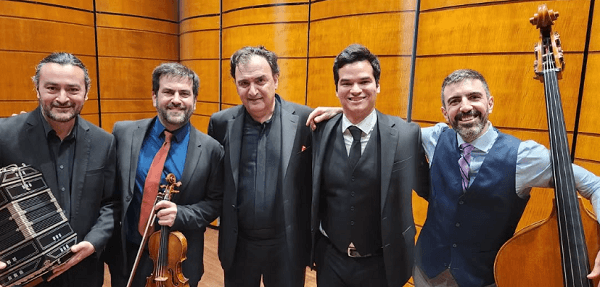
Pedro and friends
Pedro Giraudo, pianist Ahmed Alom, symphonic director Sergio Alessandro Bušlje, violinist Sami Merdinian, and accordionist Javier Sanchez

Groups Pedro was in

Pedro’s main goal in arriving in the United States was to become a double bassist, and after finally achieving it, he graduated from college and started to explore his role as a composer and leader of his own ensemble. From there, the band varied for characteristics and changed members and in size over the next 15 years. The last thing was a 17-piece big band.

Then, in the year 2014, due to the death of a great friend, Argentine pianist Octavio Brunetti, the Lincoln Center for The Performing Arts asked him to lead an event to celebrate his life and music. Therefore, in 2015, the musician started his tango project, which he would name Pedro Giraudo Tango Quartet, taking this request as a starting point. 

Today, he focuses all his efforts on tango ensembles, although he does recognize that he is increasingly angling for the classical side. For example, for his latest album, Pedro used a symphony orchestra, and since the last few months, he has been conceiving his next project with a chamber orchestra. 

Great collaborations in his career

Throughout his career, Pedro has been able to work with great music glories such as Paquito D’ D’Rivera, Rubén Blades, Pablo Ziegler, William Cepeda, and many others. One of the nicest things about this work for the Argentine is that he is always surrounded by very talented people from whom he can learn a lot.

One of them was bandoneonist Hector Del Curto, who was one of the first people Pedro started playing tango with in New York. Del Curto, in turn, had the great honor of playing with the greats of the golden age of Argentine music, such as Osvaldo Pugliese. 

It was through Hector that Pedro was able to meet and play with Pablo Ziegler, who was the principal pianist of Astor Piazzolla’s Second Quintet and greatly influenced the way tango is played on the piano. In fact, playing along with him on the double bass was an experience of which he learned so much, which he appreciated. 

Pedro and his Grammy
Pedro Giraudo holding his Latin Grammy in Las Vegas

In the case of William Cepeda, the artist made some arrangements for him and he received many valuable lessons from him, such as the importance of keeping musicians engaged with sheet music to prevent them from getting too lax. It was also with Zepeda that he made his first arrangements for a symphony orchestra.

On the other hand, Paquito taught him how to be a practical musician and to make perfect, well done arrangements for any occasion. 

Latin Grammy winner

Pedro is fortunate to be a Latin Grammy winner thanks to his album “Vigor Tanguero” in the category Best Tango Album in 2018. When we asked him about his experience, the double bassist said that there are some details he does not fully understand, such as the elements taken into consideration when voting for an artist in a category. However, that did not overshadow the joy of winning such an important award.

He says his victory was a surprise. At the time, he remembers being on tour with Pablo Ziegler, and after a four-hour rehearsal, his phone had about 40 missed calls congratulating him, while he did not even know that the nominations were being announced that day. To his amazement, he was included.

The final event was in Las Vegas, where Pedro finally heard his name and felt a total joy and pride for all he had achieved. In this respect, he said, “I’m not a person who collects awards, but this is a recognition I’m very proud of, to be honest.”

Read also: French flamenco dancer Fanny Ara lets us know the most important details of her career

Multi-instrumentalist Ian Dobson talks about his trips and academic background

American artist Ian Dobson, like many of his compatriots, could not resist the charms of Latin music and its huge diversity of rhythms, so today he talked with us about the way he walked to become the talented multi-instrumentalist he is today.

Enjoy Ian’s incredible story in the following lines and learn everything he has to share.

Ian with his drum
Ian Dobson posing for the camera with his steel drum and ukulele

How Ian became interested in music

With just five years old, Ian already took a genuine interest in playing the drums and did not have any other family members who also liked music, except his aunt, who was a violinist. Although he does not have a very special motivation to love this instrument, he remembers that when he was 12, someone showed him a samba rhythm on his own drums, and he liked it so much that he continued playing it himself until perfectioning it. As a teenager, he was very involved in jazz, which also led him to Latin jazz and other genres derived from it. 

On reaching majority, he had already discovered a little more of Latin music, so he began studying Spanish in order to understand it better, which of course helped him a lot for the following years. His curiosity about this colorful culture was such that he embarked on a series of trips to many Latin American countries, one of which was Venezuela, more specifically Margarita Island, in 1988. Ian wanted to practice his Spanish and see what rhythms he could find in that country, the most popular being salsa and merengue.

Genres and countries that most influenced Ian

Among the Latin American countries we can name are Venezuela, Colombia, Guatemala, Honduras, Mexico, and Cuba. He also had the opportunity to play on several cruise ships and visit many Caribbean islands.

Each and every one of these countries had things that caught his attention musically. In the case of Venezuela, Ian was able to study the maracas during his master’s degree in percussion in Washington. One of his teachers was Euclides Aparicio, with whom he was able to learn much more about the music of this nation. 

Ian playing the marimba
Ian Dobson playing the marimba in Mexico

The artist points out that the country that most aroused his attention was Cuba, but he assures us that he liked all of them due to the musical and cultural diversity he found on all his trips, and he hopes to return to the same destinations someday. 

Mexico was the country where he spent more time, staying there for a total of six months. 

Academic background

Ian has a very interesting academic background that has provided him with a huge amount of knowledge applicable to his career. We can mention the University of Lisbon, where he was studying Portuguese and found it fascinating because there were many people from the African colonies, resulting in this music permeating Portugal and mixing with local music. One of its most renowned composers was Fernando Lopez-Graça, whom Ian had the opportunity to meet during his stay in the European country.

He became so interested in this subject that he wrote essays on how Brazilian music influenced Portuguese music and what role Africa played in all of this. Ian had already earned his bachelor’s degree from Pomona College, so he found all these topics very interesting and took them into account when it comes to studying music.

He also studied jazz at the Oberlin Conservatory, and although he did not complete his classes there, everything he learned obviously helped him a lot later on. At the University of Washington, he earned a bachelor’s degree in percussion and learned much more about music from a purely academic point of view.

Ian with a child
Ian giving classes to a little child some years ago

Ian the multi-instrumentalist

Ian studied timpani, marimba, vibraphone, piano, drums, percussion, and many other instruments throughout his career, so he can be considered a multi-instrumentalist who has sought to specialize in as many areas of music as possible.

During our conversation, Ian showed us through video call some of the instruments he was going to play that same day, such as steel drums, an electronic marimba, a drum set, a ukulele, DJ equipment, and so on.

He assures us that he is capable of playing these instruments and others during his performances, but he loves steel drums and the ukulele, which are a fundamental part of his repertoire.

Ian the teacher

While it is true that Ian has no private students right now, he previously offered music lessons for some time, gave workshops and created online spaces for his students and followers to learn from his experience.

Today, he only offers concerts, but he always tries to make them as educational as possible. In fact, he always has a few extra pairs of drumsticks that he offers to some of his concertgoers so they can play themselves while Ian explains what to do. This makes the performance much more interactive and dynamic thanks to audience participation.

The most satisfying aspect of being a teacher was to see his students gain much more self-confidence, which led them to pursue their goals with greater intensity. No matter how bad his mood may be at any given moment, he is always happy to see others learn and enjoy what they do.

Read also: Efrain ‘‘Junito’’ Davila, Victor Manuelle and Ricardo Arjona’s producer in International Salsa Magazine

Javi Jiménez from Barrio Manouche talks about his career in Spain and then in San Francisco

Javi Jiménez from Barrio Manouche graces us with his presence in this July 2025 edition after several months of wanting to talk to the artist. After witnessing one of his wonderful shows at Cascal Restaurant, where the group performs regularly, we have checked the high quality of Javi’s work and that of his bandmates, so we could not miss the opportunity to share the most important aspects of his career, both in his native Spain and in San Francisco.

Javi with his guitar
Javi Jiménez with his gypsy jazz guitar

Javi’s beginnings in the musical world

The first contact with music in Javi’s life was made thanks to his parents, and in the neighborhood where he grew up, music was always present. From an early age, he and his brother listened to all kinds of genres at home, which awoke in them an interest in this art form beyond seeing it as simple entertainment. He remembers that since he was six, he saw his uncle playing the guitar until a few years later, when he turned 10, his uncle gave him this instrument so that he could play it himself.

Although his family did not have many musicians, he mentioned a cousin of his who was a bassist and actually wrote him his first chords on a piece of paper so that he could experiment with his new guitar and he did.

First professional experiences

He describes his taste in music after the age of 12 as an “obsession,” and at that time, he was very into rock and punk, nothing to do with what he plays today. He then started hanging out with several schoolmates who shared his hobby of playing music, which ended up giving rise to his first band, Mulatask. Currently, there is nothing about this online, as the internet did not exist at that time, so all evidence that this alternative rock and grunge band ever existed is on CDs and MP3 files that are not public.

In addition to that, the music his parents listened to continued to influence him to some extent. Among their favorite artists were Silvio Rodríguez, Victor Jara, Canción Protesta and Paco Ibañez. These singers impacted him so much that he began to study a little the classics and play them, but rock and electric guitar were still his favorites above all else. In fact, his favorite artists were Jimmy Page of Led Zeppelin, Pink Floyd, Jimmy Hendrix, among others. 

Javi and his brother
Javi Jiménez and his brother Luis Jiménez sitting to his right

This was the kind of music he played with his friends in the neighborhood and they even gave small recitals in front of audiences of 200-300 people when they were 15 or 16 years old at the time, which made the teenage Javi love to show his art to the world. 

Transition to gypsy jazz, modern jazz, and flamenco

Javi’s transition to gypsy jazz (inspiration for the name of his future band), modern jazz, and flamenco began when he moved to Barcelona, where he studied at a jazz and modern music conservatory. There he discovered a lot of genres and styles he had never heard before, one of which was bebop, also known simply as bob, which is a jazz style developed in the United States during the 1940s. At that time, he also discovered Charlie Parker, John Coltrane, Thelonious Monk, Dizzy Gillespie, among others.

Although Javi did not really identify with that language, he wanted to truly understand music so he could interpret it as best as possible. He did everything he could to understand bebop, but he found it very difficult until he started listening to Belgian gypsy jazz guitarist of Roma descent, Django Reinhardt, who was also a fan of Louis Armstrong. When he listened to Armstrong, he wanted to play the same thing, but with his own Roma touch, so he formed a band with two guitars, a bass, and a violin.

One of this band’s favorite genres is gypsy jazz manouche, which Javi loved and was passionate about since the first time he listened to it, to the point that he would name his future group Barrio Manouche (Gypsy jazz in Spanish).

On the side of flamenco, there were many gypsies and immigrants in his home neighborhood, including the Porrina family, which consisted of world-renowned percussionists such as Ramón Porrina, who has played with Concha Buika and Israel Suarez ‘‘El Piraña’’, a flamenco guitarist who was in Paco de Lucía’s last lineup.

Album release party
”Despierta” album release party at The New Parish in 2019

Javi tells us this to show that flamenco was very present in the environment he grew up, largely because there were many migrants. In his family’s case, they came from Andalusia and Cordoba.

He continues to insist that he still did not like it very much and his thing was rock. It was in California that he finally had nostalgic about the music of his homeland and wanted to reconnect with his roots in foreign lands. 

Moving to California

Javi had never thought about trying his luck in California until he met Adam Rouch, a Californian tattoo artist and musician who became his friend and with whom he toured Europe. In 2009, Adam had to return to his city because his parents were not in good health, and he told his Spanish friend to go with him to see how he liked the place. 

Although the artist was not convinced by the idea, he ended up accepting and discovered in San Francisco fun, cultural exchange, diversity, and many things that fascinated him. The best thing was the opportunity for its inhabitants to express themselves through practically any type of art or genre without fear of judgment, which made him decide to definitely stay living and finally become an American citizen.

Javi and Fanny Ara
Javi Jiménez and dancer Fanny Ara at the 62nd Monterrey Jazz Festival

How Barrio Manouche was formed

After he met with many musicians and made many contacts, Javi and his brother Luis, who is also part of the group on cajón and percussion, met Salvadoran percussionist Marcos Odara, French saxophonist Cyril Guiraud, violinist Magali Sanscartier, bassist Chris Bastian, his future replacement Gary Johnson, and guitarist Ross Howe. Finally, they included Colombian bongo player and flutist Iván Rondón, with whom they collaborated until he became a permanent member of the band.

The previous artists make up the instrumental part, but the dancing part includes Fanny Ara and Brazilian dancer Emaye Ama. 

Thanks to the huge number of nationalities and cultures present in the group, they have managed to get a unique sound Javi describes as a “bomb” due to the mixture of elements that are so diverse from one another.

 He says he feels a deep appreciation and respect for each of them, which makes the unity of the group stronger and more lasting despite the crises and the passage of time.

Read also: Sizzling Summer Nights dancer April Connella breaks silence on Orlando Delgado and her career

The best of Cuban music in Tampa with Cuband Son Band

We are very happy to be able to talk with Lizandro Muñoz, Liaudriz Fuentes, and Alfredo Sotolongo, who are part of the Cuban music group Cuban Son Band. We will know a little about each of them and the orchestra as such so that the public can get to know them and identify them.

Although all the musicians are coming from Cuba such as the genres they play, they met in Tampa, Florida, where they currently reside and have developed their respective musical careers.

Lizandro playing
Lizandro Muñoz playing at Water Street Tampa in April

How Lizandro, Liaudriz, and Alfredo became interested in music

Lizandro was the first who talked a little about himself and started by describing how his father played the guitar and began teaching his son to do the same. After attending the pre-university studies and playing guitar along with a group for about four years, he did his military service and moved to Spain to work with a number of groups at many Latin music events, especially Cuban music, which was what he played most.

Itis at this point in the conversation that Liaudriz, the group’s keyboardist, joined the meeting. After saying hello and introducing himself, he began to explain that he started in music at a very young age in Cuba, more specifically on the Isle of Youth or the Isle of Pines, as it was known before. As a child, he already had a lot of affinity for the guitar just like Lizandro, but also for everything related to percussion, which led him to take the respective tests to enter a music school.

That was when he went through the elementary, middle, and part of the upper levels. He did not complete the latter, as he got the opportunity to move to the United States. 

When Alfredo, Cuban Son’s violinist, slipped into the conversation, he and the boys joked about whether he remembered how he started in music due to his age. He then relates starting in music at about 10 and is now 66, so much water has flowed under the bridge since then. He studied at the National School of Art up to the fifth level for five years, where he trained as a percussionist, singer, and violinist, but had to withdraw due to family problems. However, his great strength helped him keep the lights on.

By not being enrolled in any institution, he began his training at home. Several members of his family were helping him to continue his dream and one of whom was his uncle, a flutist who played in Los Van Van, who inspired him to follow his path in the world of music. This is how he resumed his academic training and received an A grade in singing and an A grade in violin lessons. 

Liaudriz playing
Liaudriz Fuentes playing the keyboard live

He was in the Cuban Institute of Radio and Television Orchestra, better known as ICRT for its acronym in Spanish, and made some recordings with Los Van Van as a violinist. In 1998, he emigrated to Israel, where he worked as a musician for 10 years and even played in an orchestra known as Jerusalem Salsa Band, in which he alternated with several great artists such as Alfredo de La Fe, Buena Vista Social Club, and many others.

After those 10 years, he moved to the United States in search of new opportunities, which led him to make contact with Lizandro and Liaudriz from Cuban Son, which he joined about two years ago.

Alfredo added that one of the things that brought them together was that his now bandmates were following the way of son, the same path as their ancestors, who were soneros. It is in their blood and they had that in common.

How Cuban Son Band got started

Liaudriz again takes the floor and assures that the affinity between them was also due to the need Cubans feel to continue making music from their native land despite the distance and the way many of them come together to do this work. This is something that has mushroomed in Tampa in recent years due to the large number of Cubans who have arrived there.

“Cuban Son Band emerged from our need to share the music of our country not only here in Tampa, but also in other cities in Florida,” said the young keyboardist on this subject.

Lizandro added that several members of the group came from a much larger orchestra, but for economic and practical reasons, they left it and opted for a smaller, more compact format. This also gave them the freedom to make the music they wanted without consulting many people. 

Alfredo playing
Alfredo Sotolongo playing the violin during a concert

The biggest challenges Cuban Son faced at first

Regarding the receptivity of the people to Cuban Son Band’s work, Alfredo pointed out that they always try to make their music as traditional as possible so that the audience may know it. What has made things easier for them was his senior audience that misses these genres and enjoys listening to them, even if they are not what is trendy right now. There are many new genres in Cuba, such as reggaeton and cubatón, but the audience between 30 and 40 years old are not fans of that kind of music, but of more traditional genres such as bolero, bachata, changuí, and others.

Lizandro also added that as long as they offer something traditional, original, and authentic, language barriers should not be a problem, even though most of their fans are American. One of the biggest challenges for the group has been communication, precisely because of the language of their lyrics, but that has not prevented them from being listened to and fervently supported. 

In addition to that, they rely on covers of well-known English songs to connect even more with their non-Latin listeners, which has made them accept their work even more willingly. Their traditional foundation and open mind to new things have been the key to their progress.

Lizandro, Liaudriz, Alfredo, and Raysel
Trumpet player Raysel Reyes, keyboardist Liaudriz Fuentes, Violinist Alfredo Sotolongo, and guitarist Lizandro Muñoz

Current members of Cuban Son Band

Alfredo pointed out that they always try to be as loyal as possible to their main project, which is Cuban Son Band, but they are also aware that it will not always be possible for them to play only with their main orchestra, as they will have to work on other projects due to their economic situation.

Liaudriz also said that something that benefits them is that Tampa is a city that is growing a lot as for the Latin music scene, resulting in more and more work for them and groups with the same characteristics. This allows them to call each other and help each other without egos or pettiness.

Inspirations for each one

Alfredo was inspired as a singer by artists such as Ibrahim Ferrer, Pacho Alonso, Felix Chappottín, Pedrito Calvo, Oscar D’ León, Gilberto Santa Rosa, among others. in one way or another, all of them have honored Cuban music and that makes them bastions of what Cuban Son wants to achieve.

For his part, Lizandro mentioned Buena Vista Social Club, Omara Portuondo, Compay Segundo, Adalberto Álvarez, Chucho Valdez, Juan Formell, Bebo Valdéz, and Benny Moré.

Read also: Tito Planas talked to us about his Orquesta Afinke and its members

Beatriz Márquez Castro, an exponent of romantic songs, “Feeling” and Bolero

Beatriz Márquez Castro is a singer, composer, and pianist, born on February 17, 1952, in Havana.

Beatriz Márquez Castro. Cantante, compositora y pianista

She is the daughter of the prestigious composer and performer René Márquez. She began her artistic career in 1968.

An exponent of romantic songs, “feeling,” and bolero, she gracefully delved into these genres, performing pieces by prolific authors such as René Márquez, Marta Valdés, Juanito Márquez, Silvio Rodríguez, and Germán Nogueira, among others.

Her mezzo-soprano range has enabled her popular “descents” to low tones, as well as her unexpected and no less appreciated “ascents” to much higher tessituras, without losing her defining style. This style is very appropriate for songs and boleros, genres in which she has remained one of Cuba’s leading cultivators.

She is known as “La Musicalísima.”

We are witnessing the realization of a long-cherished project with which the performer, pianist, and composer Beatriz Márquez settles a debt both on a family level and within Cuban discography.

After several years of searching through archives and old recordings, thanks to the collaboration of Cuban audiovisual producer Felipe Morfa, it was possible to prepare “Este encuentro” (Colibrí Productions, 2023). This album features a selection of known and unreleased pieces by singer and composer René Márquez Rojo (1914-1986), some of which were popularized in their time by internationally renowned figures like Antonio Machín or the Puerto Rican Daniel Santos, to name just two examples.

Beatriz Márquez Castro, an exponent of romantic songs, "Feeling" and Bolero
Beatriz Márquez Castro, an exponent of romantic songs, “Feeling” and Bolero

Given the influence René had on the career of his daughter and grandchildren, this is an album full of love and, above all, gratitude.

While he was best known for his songwriting, it is important to highlight the mark he left as a charanga singer.

Among others, we can mention his work with the charangas of violinist Cristóbal Paulín, Oscar Muñoz Bouffartique, and René Touzet.

He debuted at the Mil Diez radio station with the group led by Julio Cueva, to which he dedicated himself for ten years.

From the late 1930s onwards, the lyrics by the artist from Villa Clara quickly resonated with the public.

“El Inquieto Anacobero” recorded “El disgusto de bigote” with the Sonora Matancera in 1949 and also sang other Cuban songs such as “Soltando chispas,” “A San Lázaro,” and “El granito de maíz.”

René’s songs, among which “El quinqué” cannot be missed, speak of his natural ingenuity for storytelling.

Upon his death at 72, he left a musical legacy that has since been defended by his descendants.

In over five decades of her artistic life, Beatriz has become her father’s most faithful interpreter, having recorded songs for several albums such as “No respondo,” “Explícame por qué,” and the now famous “Espontáneamente,” initially included in the LP “Es soledad” (Egrem, 1970) and re-recorded on multiple occasions.

In “La Musicalísima”‘s discography, prior to this material, there were only two phonograms exclusively dedicated to the work of a single author: “Beatriz canta a Juan Almeida” (Egrem, 1978), followed forty years later by “Libre de pecado” (Colibrí Productions, 2018), a tribute to maestro Adolfo Guzmán, thus contributing to the rescue of the island’s musical memory.

“Este encuentro” spans traditional trova and moves from guaracha to son, without forgetting some of the composer’s most notable boleros.

It also allows us to appreciate René Márquez’s interpretive qualities by hearing his voice, rescued from old recordings.

The special participation of singers Evelyn García and Michel Maza, continuators of the family saga, is noteworthy.

Now, the 2015 National Music Award winner and the main architect of this phonogram invites us to explore René Márquez’s immense body of work, one that will by no means be forgotten, across eleven tracks._ Jaime Masó

Beatriz Márquez - Este Encuentro (2023)
Beatriz Márquez – Este Encuentro (2023)

Beatriz Márquez – Este Encuentro (2023)

Tracks:

  1. Este Encuentro
  2. La Vida Es Un Momento
  3. Muchachito Inocente
  4. No Respondo
  5. Nunca Habrá Distancia
  6. Soltando Chispas
  7. En El Cielo De Mi Vida
  8. Imposible Amor 09. Popurrit 10. Espontáneamente 11. Mi Placer

By:

L’Òstia Latin Jazz

Augusto Felibertt

Ecured

Instituto Cubano de la Música

Also Read: Enrique “Culebra” Iriarte, master of the piano and musical composition

  • « Go to Previous Page
  • Page 1
  • Page 2
  • Page 3
  • Page 4
  • Interim pages omitted …
  • Page 8
  • Go to Next Page »

International Salsa Magazine (ISM) is a monthly publication covering salsa activities around the world and has been publishing since 2007. It is a worldwide network of volunteers coordinated by ISM Magazine. Together, we work to strengthen salsa events around the world.